Key Takeaways
- Price difference is massive: AI Peekaboo starts at $99/mo with white-label included, while Limy AI starts at $449/mo -- that's 4.5x more expensive for the entry tier
- Target audience diverges: AI Peekaboo is built for agencies and SaaS companies needing client reporting, while Limy AI targets enterprise brands focused on revenue attribution from AI search
- Optimization approach differs: Limy AI emphasizes step-by-step optimization actions and sentiment analysis, while AI Peekaboo focuses on visibility tracking and white-label reporting
- Both cover the same AI models: ChatGPT, Perplexity, Gemini, Google AI Overviews, and Claude -- no meaningful difference in coverage
- Limy AI positions itself as "B2A" infrastructure: They're betting on a future where AI agents make purchase decisions autonomously, not just answer questions
- AI Peekaboo wins on agency features: White-label reporting is included at the base tier, making it the obvious choice for agencies managing multiple clients
Overview
AI Peekaboo
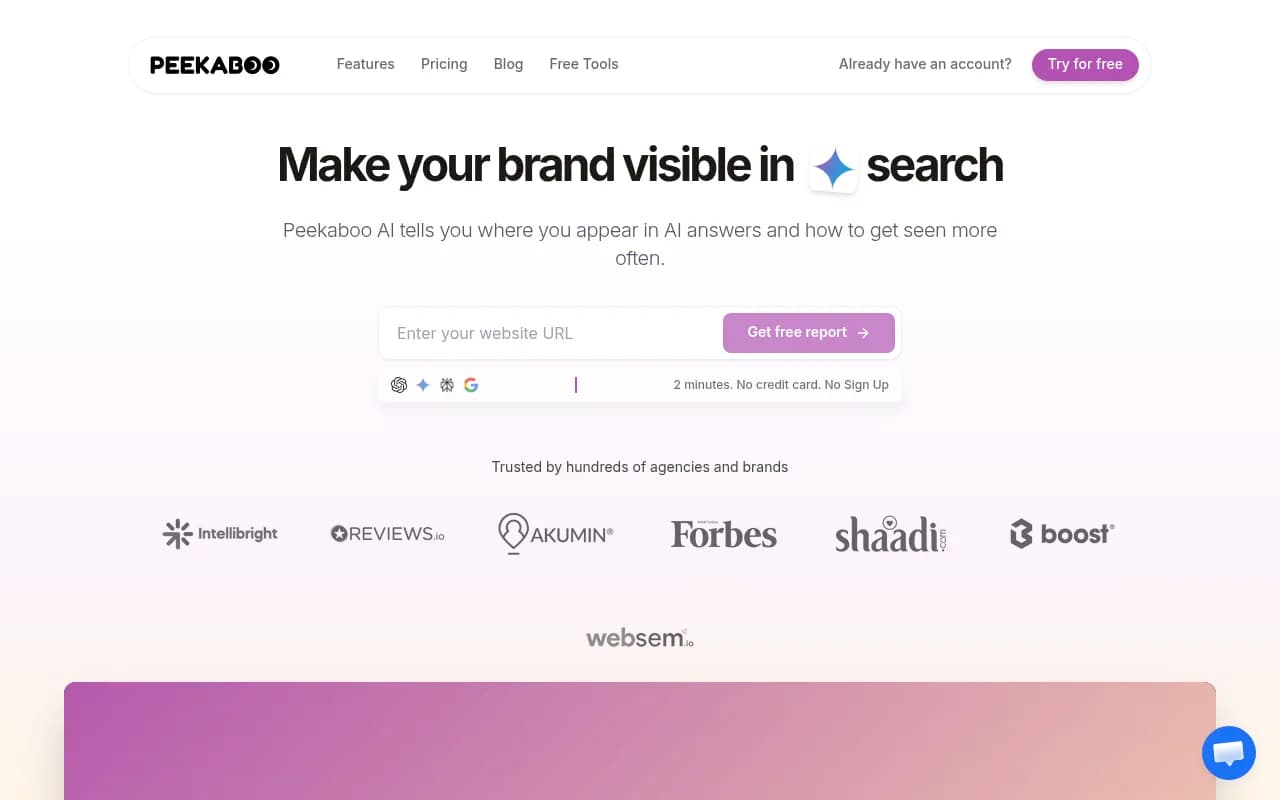
AI Peekaboo is a specialized AI visibility tool designed specifically for SaaS companies and agencies. The platform tracks how brands appear in AI answer engines like ChatGPT, Gemini, Perplexity, and Google AI Mode. The core workflow is straightforward: select prompts you want to monitor, analyze your visibility score, and see when AI models mention your brand. The white-label feature at the $99/mo tier makes it particularly attractive for agencies that need to deliver client reports without the platform branding.
Limy AI
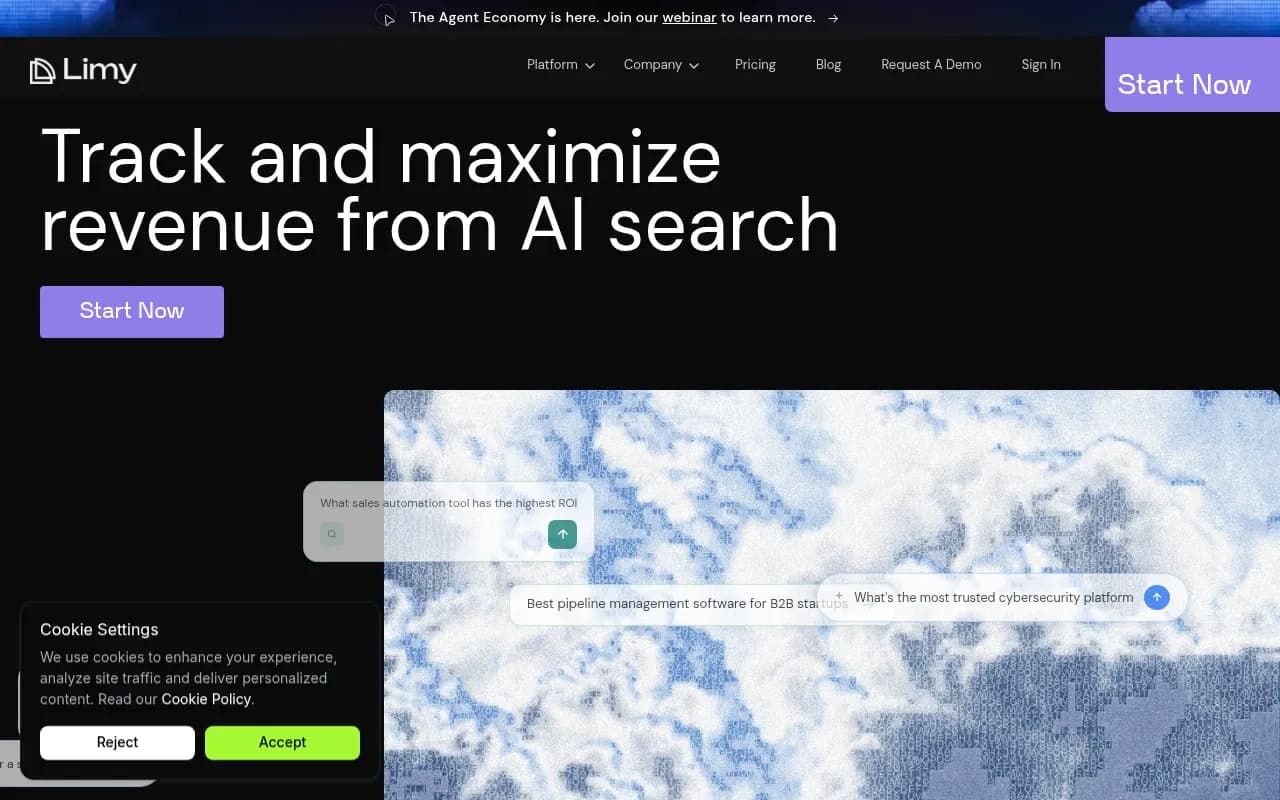
Limy AI positions itself as "B2A" (Business-to-Agent) optimization infrastructure -- they're explicitly building for a world where AI agents evaluate and choose products on behalf of humans. The platform goes beyond monitoring to provide optimization actions, sentiment analysis, and revenue attribution from AI search. At $449/mo starting price, Limy AI is targeting enterprise brands with serious budgets who want to treat AI search as a measurable revenue channel, not just a visibility metric.
Side-by-Side Comparison
| Feature | AI Peekaboo | Limy AI |
|---|---|---|
| Starting price | $99/mo | $449/mo |
| White-label reporting | ✓ Included at base tier | Unknown |
| AI models tracked | ChatGPT, Gemini, Perplexity, Google AIO, Google AI Mode | ChatGPT, Perplexity, Claude, Gemini, Google AIO |
| Optimization actions | Basic visibility tracking | Step-by-step optimization guidance |
| Sentiment analysis | Not mentioned | ✓ Included |
| Revenue attribution | Not mentioned | ✓ Included |
| Target audience | Agencies, SaaS companies | Enterprise brands |
| Prompt tracking | Custom prompt selection | Custom prompt selection |
| Free tier | No | No |
| Agency features | Strong (white-label included) | Unknown |
| API access | Not mentioned | Not mentioned |
| Multi-brand tracking | Likely (agency-focused) | Likely (enterprise-focused) |
Pricing comparison
The pricing gap is the most striking difference between these two platforms.
| Plan | AI Peekaboo | Limy AI |
|---|---|---|
| Entry tier | $99/mo (Pro plan, white-label included) | $449/mo (base plan) |
| Mid-tier | Not publicly listed | Not publicly listed |
| Enterprise | Custom pricing | Custom pricing |
| Annual discount | Unknown | Unknown |
| Free trial | Unknown | Unknown |
Limy AI's $449/mo starting price is 4.5x higher than AI Peekaboo's $99/mo. For agencies managing 5-10 clients, AI Peekaboo's white-label feature at $99/mo means you can charge clients $200-300/mo and still maintain healthy margins. With Limy AI at $449/mo, you'd need to charge clients $700+ to make the economics work -- a harder sell for most agencies.
For enterprise brands with serious AI search budgets, the $449/mo might be justified if Limy AI's optimization actions and revenue attribution actually deliver measurable lift. But that's a big "if" that depends on your specific use case.
Feature deep-dive
AI model coverage
Both platforms cover the major AI search engines that matter in 2026: ChatGPT, Perplexity, Gemini, and Google AI Overviews. AI Peekaboo explicitly lists Google AI Mode as a separate tracked model, while Limy AI mentions Claude. In practice, this is a wash -- you're getting visibility into the AI engines that drive actual traffic and influence purchase decisions.
Neither platform appears to track DeepSeek, Grok, Mistral, or Meta AI, which limits their coverage compared to more comprehensive platforms. If you need monitoring across 10+ AI models, you might want to look at tools like Promptwatch that cover a broader range.

Prompt tracking and selection
Both platforms let you select custom prompts to monitor. AI Peekaboo's interface shows a grid of example prompts ("Which team chat tool is best for a 10-person startup?", "What features should a paid team messenger absolutely include?") that you can track. The workflow is: find the prompt, track it, analyze your visibility score.
Limy AI shows similar prompt examples in their marketing materials but doesn't reveal much about the selection interface. The real question is: do either of these platforms help you discover which prompts actually matter? Prompt volume data, difficulty scoring, and query fan-outs would be useful here, but neither platform mentions these capabilities in their public materials.
Optimization and action items
This is where Limy AI claims a meaningful edge. They explicitly position themselves as an optimization platform, not just a monitoring dashboard. The promise: step-by-step actions to improve your visibility, sentiment analysis to understand how AI models talk about your brand, and revenue attribution to connect visibility to actual dollars.
AI Peekaboo's marketing focuses on tracking and reporting -- "understand and improve your brand's visibility" -- but doesn't detail what those improvement actions look like. For agencies delivering monthly reports to clients, this might be fine. You show the visibility score, note whether it went up or down, and move on. For enterprise teams that need to justify the spend, Limy AI's optimization focus is more compelling.
The catch: neither platform shows concrete examples of what these "optimization actions" actually are. Are they content recommendations? Technical fixes? Link building suggestions? Without seeing the product, it's hard to judge whether the optimization guidance is genuinely useful or just generic advice.
White-label and agency features
AI Peekaboo wins decisively here. White-label reporting is included at the $99/mo Pro tier, which means agencies can rebrand the reports and dashboards with their own logo and colors. This is table stakes for agency tools, and AI Peekaboo gets it right.
Limy AI doesn't mention white-label capabilities anywhere in their public materials. That suggests they're not prioritizing the agency use case -- they want direct relationships with enterprise brands, not to be a white-labeled backend for agencies.
If you're an agency, this alone makes AI Peekaboo the obvious choice. If you're an in-house team at an enterprise brand, white-label doesn't matter.
Revenue attribution and measurement
Limy AI emphasizes "track and maximize revenue from AI search" and claims to make AI visibility "convertible and measurable." This is the right framing -- visibility scores are vanity metrics unless they connect to actual business outcomes. The question is how Limy AI actually does this attribution. Do they use UTM parameters? A tracking pixel? Server log analysis? The marketing copy doesn't say.
AI Peekaboo doesn't mention revenue attribution at all. Their focus is on visibility scores and tracking mentions. For SaaS companies trying to understand whether AI search drives signups or upgrades, this is a gap.
Sentiment analysis
Limy AI includes sentiment analysis to understand how AI models talk about your brand. This is useful -- there's a big difference between "Brand X is a solid option" and "Brand X is the best choice for enterprise teams." Tracking sentiment over time helps you see whether your optimization efforts are working.
AI Peekaboo doesn't mention sentiment analysis. You get visibility scores and mention tracking, but not the qualitative layer of how you're being described.
User interface and experience
Both platforms show polished marketing sites with screenshots of dashboards, but neither offers a free trial or demo that would let you actually test the interface. AI Peekaboo's screenshots show a clean grid of prompts and a visibility score chart. Limy AI's screenshots show more complex dashboards with multiple metrics and graphs.
Without hands-on testing, it's hard to judge which interface is more intuitive. My guess: AI Peekaboo is simpler and faster to onboard (important for agencies managing multiple clients), while Limy AI is more complex but potentially more powerful (important for enterprise teams with dedicated analysts).
Integration and API
Neither platform publicly documents API access or integrations with other tools. This is a missed opportunity -- connecting AI visibility data to your existing analytics stack (Google Analytics, Looker Studio, Tableau) would make these platforms much more useful.
If API access is a requirement for your team, you'll need to contact both vendors directly to ask about availability and pricing.
Support and documentation
Both platforms are relatively new (2024-2025 launches based on the market landscape), so documentation and community resources are likely thin. Neither site shows a public knowledge base, community forum, or detailed help docs. Expect to rely on direct support from the vendor, which is fine for enterprise contracts but frustrating for self-service users.
Pros and cons
AI Peekaboo pros
- Much cheaper starting price ($99/mo vs $449/mo)
- White-label reporting included at base tier -- perfect for agencies
- Clean, focused interface designed for SaaS companies
- Tracks Google AI Mode explicitly
AI Peekaboo cons
- No mention of optimization actions or guidance
- No sentiment analysis
- No revenue attribution capabilities
- Limited information about advanced features
- Doesn't appear to track as many AI models as comprehensive platforms
Limy AI pros
- Step-by-step optimization actions (claimed)
- Sentiment analysis included
- Revenue attribution and measurement focus
- Positioned for the "B2A" future where AI agents make autonomous purchase decisions
- Likely more robust for enterprise use cases
Limy AI cons
- 4.5x more expensive than AI Peekaboo at entry tier
- No white-label features mentioned (bad for agencies)
- Optimization actions not clearly documented -- could be generic advice
- Higher price requires stronger ROI justification
- Limited public information about actual capabilities
Who should pick which tool
Pick AI Peekaboo if:
- You're an agency managing multiple clients and need white-label reporting
- You're a SaaS company with a limited budget ($99/mo is much easier to justify)
- You primarily need visibility tracking and don't require deep optimization guidance
- You want a simple, focused tool that does one thing well
- You're managing 5-10 brands and need cost-effective per-client economics
Pick Limy AI if:
- You're an enterprise brand with a serious AI search budget
- You need revenue attribution and want to treat AI search as a measurable channel
- Sentiment analysis matters for your brand positioning
- You want optimization guidance, not just monitoring
- You're betting on the "B2A" future and want infrastructure built for that world
- Price isn't a primary constraint
Consider alternatives if:
- You need tracking across 10+ AI models (ChatGPT, Claude, Perplexity, Gemini, DeepSeek, Grok, Mistral, Meta AI, Copilot)
- You want content gap analysis and AI content generation, not just monitoring
- You need crawler logs to see how AI engines are actually reading your site
- You want prompt volume data and difficulty scoring to prioritize which prompts to target
Final verdict
AI Peekaboo wins for agencies and budget-conscious SaaS companies. The $99/mo price with white-label included is unbeatable if you're managing multiple clients or just getting started with AI visibility tracking. The interface is clean, the focus is narrow, and it does what it promises without overcomplicating things.
Limy AI is the better bet for enterprise brands that can justify the $449/mo spend and actually need the optimization actions, sentiment analysis, and revenue attribution. But here's the thing: Limy AI's marketing promises a lot without showing much. The "B2A infrastructure" positioning is forward-thinking, but you're paying a 4.5x premium for capabilities that aren't fully documented. That's a risk.
For most teams reading this comparison, AI Peekaboo is the safer starting point. You can always upgrade to a more expensive platform later if you outgrow it. Starting with Limy AI at $449/mo and discovering it's just a fancier monitoring dashboard would be a costly mistake.
One final note: if you're serious about AI search optimization and not just monitoring, look at platforms that close the loop from visibility tracking to content creation to results measurement. Neither AI Peekaboo nor Limy AI appears to offer content generation or deep gap analysis -- they show you where you're invisible but don't help you fix it. That's the difference between a monitoring tool and an optimization platform.