Key Takeaways
- Price gap is massive: AI Peekaboo starts at $99/mo with white-label included; Bluefish starts around $4,000/mo with annual contracts -- that's a 40x difference
- Target audience couldn't be more different: AI Peekaboo is built for SaaS companies and agencies; Bluefish explicitly positions itself for Fortune 500 enterprise marketing teams
- Feature depth vs accessibility trade-off: Bluefish offers deeper enterprise controls, custom audiences, and advanced segmentation; AI Peekaboo focuses on core tracking with agency-friendly features like Looker Studio integration and API access
- Both are monitoring-focused: Neither platform includes content generation or gap analysis tools -- they show you where you stand but don't help you create content that improves visibility
- White-label capability: AI Peekaboo includes white-labeling in the Pro plan; Bluefish offers it only in custom enterprise packages
- If you're deciding between these two, your company size probably already made the choice: startups and agencies go with AI Peekaboo; Fortune 500 brands with dedicated AI marketing budgets go with Bluefish
Overview
AI Peekaboo
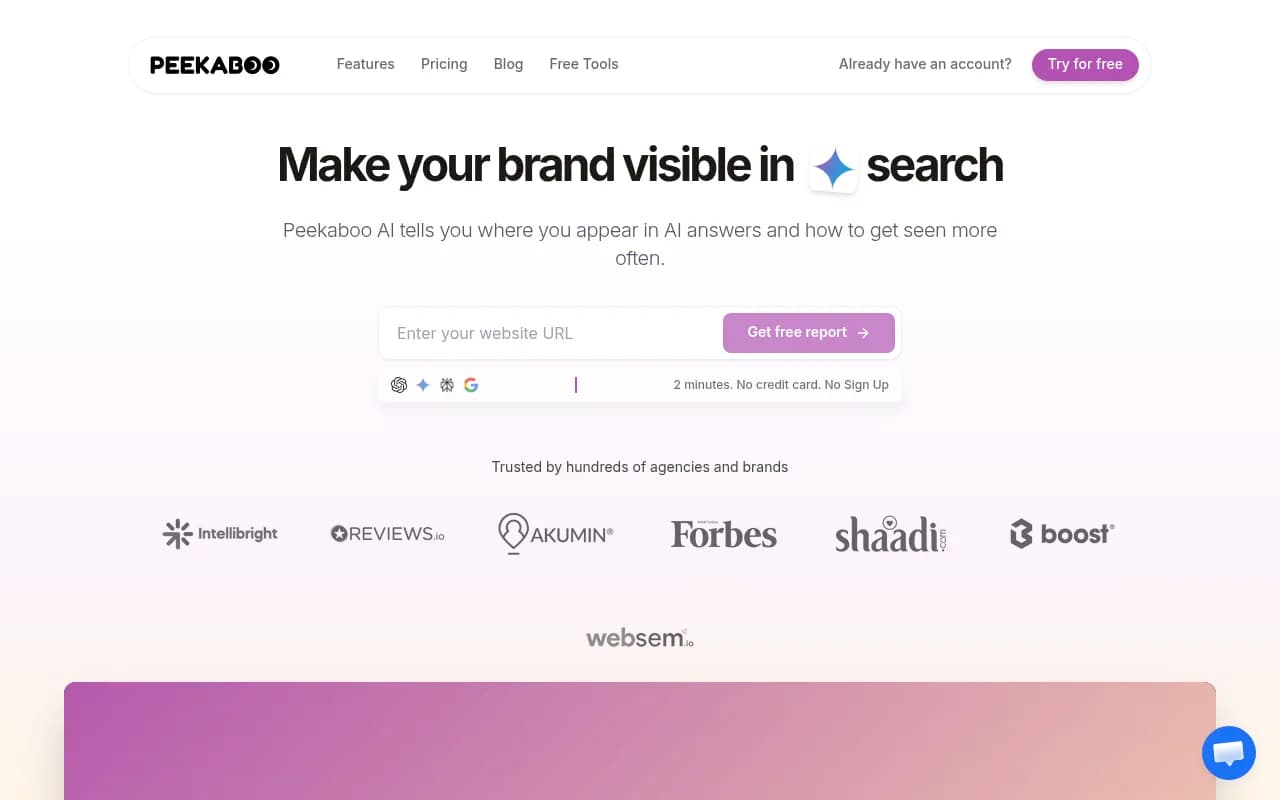
AI Peekaboo is a bootstrapped AI visibility platform built by a 2-person team (Filipe and John) specifically for SaaS companies and agencies. It tracks brand mentions across ChatGPT, Gemini, Google AI Overviews, Perplexity, and Google AI Mode. The platform's standout feature is white-label capability included in the $99/mo Pro plan -- a rarity at this price point. It also offers Looker Studio integration and API access, making it a practical choice for agencies that need to report AI visibility metrics to clients alongside traditional SEO data.
Bluefish
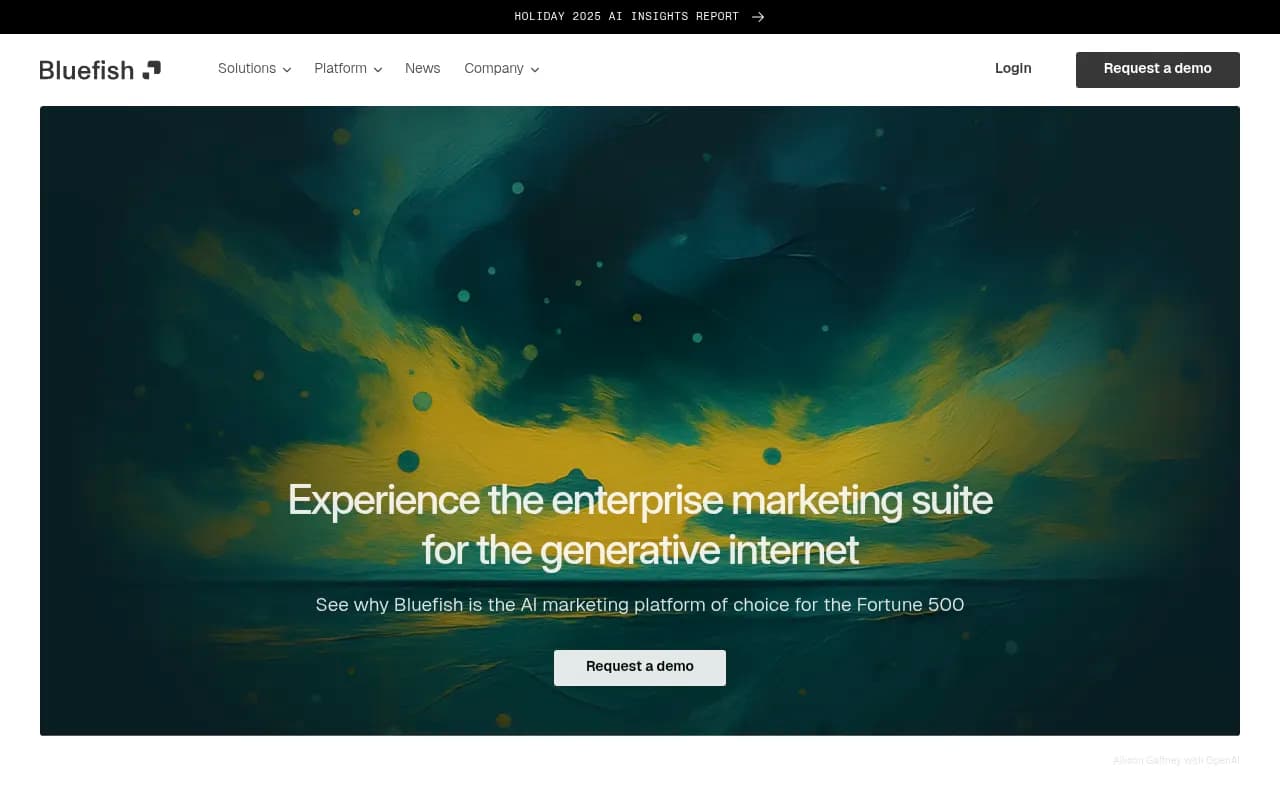
Bluefish positions itself as "the AI marketing platform of choice for the Fortune 500" and the pricing reflects that ambition. Starting around $4,000/mo with annual contracts required, Bluefish targets large enterprise marketing teams that need deep control over brand reputation in AI channels. The platform emphasizes "understanding how AI thinks" with custom audiences, tailored prompts, and what they call advanced performance tools. Bluefish also tracks AI commerce -- monitoring product recommendations in shopping contexts -- which most competitors skip entirely.
Side-by-Side Comparison
| Feature | AI Peekaboo | Bluefish |
|---|---|---|
| Starting price | $99/mo | ~$4,000/mo |
| Contract terms | Monthly billing | Annual contracts |
| Target audience | SaaS companies, agencies | Fortune 500 enterprises |
| AI models tracked | ChatGPT, Gemini, Google AIO, Perplexity, Google AI Mode | ChatGPT, Perplexity, other major AI engines |
| White-label | ✓ (included in Pro) | ✓ (enterprise only) |
| API access | ✓ | ✓ |
| Looker Studio integration | ✓ | Custom integrations available |
| Custom audiences | Limited | ✓ (deep customization) |
| AI commerce tracking | ✗ | ✓ |
| Content generation | ✗ | ✗ |
| Gap analysis | ✗ | ✗ |
| Team size | Built by 2-person team | Enterprise vendor |
| Infosec reviews | Standard | Passes Fortune 500 reviews |
Pricing comparison
The pricing structures are so different that a direct table comparison is almost misleading -- these tools operate in completely different market segments.
| Plan type | AI Peekaboo | Bluefish |
|---|---|---|
| Entry point | $99/mo (Pro plan, white-label included) | ~$4,000/mo (custom quote) |
| Mid-tier | Not disclosed | Custom enterprise pricing |
| Enterprise | Custom | Custom (significantly higher) |
| Billing | Monthly | Annual contracts standard |
| Free trial | Not specified | Demo-based sales process |
AI Peekaboo's pricing is transparent and accessible. Bluefish doesn't publish pricing publicly -- you go through a sales process, and based on market research, entry points start around $4,000/mo for basic enterprise access. The gap reflects the target customer: AI Peekaboo serves the long tail of SaaS companies and agencies; Bluefish serves brands with dedicated AI marketing budgets.
If you're also tracking how your brand shows up in AI search results and want tools that help you actually improve visibility (not just monitor it), Promptwatch covers that angle with content gap analysis and an AI writing agent built on 880M+ citations.

User interface and ease of use
AI Peekaboo's interface is straightforward -- you select prompts to track, view visibility scores, and analyze where your brand appears. The Looker Studio integration means agencies can pull AI visibility data into existing client dashboards without building custom reporting infrastructure. The 2-person team behind it keeps the product focused: core tracking features without enterprise bloat.
Bluefish's interface is built for enterprise marketing teams that want granular control. Custom audiences let you segment by persona, geography, or buying stage. Tailored prompts mean you're not stuck with generic datasets -- you can test the exact questions your target customers ask. The trade-off: more complexity, steeper learning curve, and a sales-led onboarding process instead of self-serve signup.
Verdict: AI Peekaboo wins on simplicity and speed to value. Bluefish wins if you have a dedicated team managing AI visibility and need deep customization.
AI model coverage
Both platforms cover the major AI engines: ChatGPT, Perplexity, Google AI Overviews. AI Peekaboo explicitly lists Google AI Mode as a tracked channel. Bluefish mentions "all AI native experiences" but is less specific about the full list in public materials.
Neither platform tracks as many models as some competitors -- for reference, Promptwatch monitors 10 AI engines including Claude, Gemini, Meta/Llama, DeepSeek, Grok, and Mistral. But for most brands, ChatGPT and Perplexity coverage is the baseline requirement, and both AI Peekaboo and Bluefish deliver that.
Verdict: Roughly equivalent for core use cases. If you need exhaustive multi-model coverage, look elsewhere.
White-label and agency features
This is where AI Peekaboo clearly wins for agencies. White-label capability is included in the $99/mo Pro plan -- you can rebrand the platform and resell AI visibility tracking to clients. The Looker Studio integration and API access mean you can pull data into custom dashboards or build automated reporting workflows.
Bluefish offers white-label only in custom enterprise packages, and the $4,000+/mo entry point makes it impractical for most agencies to resell. Bluefish is designed for in-house enterprise marketing teams, not agency resale.
Verdict: AI Peekaboo is the obvious choice for agencies. Bluefish isn't built for that use case.
Enterprise features and customization
Bluefish's core value proposition is depth and control for large brands. Custom audiences let you test how AI responds to different personas -- budget-conscious buyers vs enterprise decision-makers, for example. Tailored prompts mean you're not relying on generic datasets; you can track the exact questions that matter in your category. Bluefish also emphasizes passing infosec reviews, which matters when you're dealing with Fortune 500 procurement processes.
AI Peekaboo doesn't position itself as an enterprise platform. It's a focused tool for SaaS companies that want to track AI visibility without enterprise complexity or enterprise pricing.
Verdict: Bluefish wins for enterprises that need deep customization and have the budget for it. AI Peekaboo wins for everyone else.
AI commerce tracking
Bluefish tracks "agentic commerce" -- monitoring when and how your products appear in AI-powered shopping recommendations. This matters for e-commerce brands and consumer products companies where AI engines are starting to influence purchase decisions directly.
AI Peekaboo doesn't mention commerce tracking in its public materials. It's focused on brand visibility in informational AI responses, not transactional ones.
Verdict: If AI commerce is a priority, Bluefish is one of the few platforms addressing it. Most brands can skip this for now.
Content optimization and gap analysis
Neither platform offers content generation or gap analysis. Both are monitoring tools -- they show you where you stand but don't help you create content that improves visibility.
This is a significant limitation. Knowing you're invisible for a set of prompts is useful, but the next question is always "what content do I need to create to fix this?" Tools like Promptwatch answer that question with Answer Gap Analysis (showing exactly which prompts competitors rank for but you don't) and an AI writing agent that generates content grounded in citation data. AI Peekaboo and Bluefish leave you to figure out the optimization part on your own.
Verdict: Tie -- both platforms have the same gap. If content optimization matters, you'll need a separate tool.
Reporting and integrations
AI Peekaboo's Looker Studio integration is a practical advantage for agencies and marketing teams already using Google's reporting stack. The API gives you flexibility to build custom workflows or pull data into other systems.
Bluefish offers "custom integrations" for enterprise clients but doesn't specify what's available out of the box. Enterprise platforms typically offer more integration options, but you're going through a sales process to find out what's included.
Verdict: AI Peekaboo's transparent integrations (Looker Studio, API) are easier to evaluate. Bluefish's custom approach works if you have enterprise IT resources to manage integrations.
Support and onboarding
AI Peekaboo is a bootstrapped 2-person team. Expect lean support -- likely email-based with reasonable response times, but not 24/7 enterprise SLAs.
Bluefish positions itself as an enterprise vendor, which typically means dedicated account management, onboarding support, and faster response times. The $4,000+/mo price point should include that level of service.
Verdict: Bluefish wins for enterprises that need white-glove support. AI Peekaboo's support model matches its price point and target audience.
Pros and cons
AI Peekaboo pros
- Accessible $99/mo pricing with no annual contract lock-in
- White-label included at entry price point -- huge for agencies
- Looker Studio integration and API access for flexible reporting
- Straightforward interface, fast time to value
- Built specifically for SaaS companies and agencies
AI Peekaboo cons
- No content generation or gap analysis -- monitoring only
- Limited enterprise features and customization
- Small team means slower feature development and limited support capacity
- No AI commerce tracking
- Less depth in audience segmentation and custom prompts
Bluefish pros
- Deep customization with custom audiences and tailored prompts
- AI commerce tracking for product recommendation monitoring
- Built for enterprise scale with infosec compliance
- Dedicated account management and support
- Advanced segmentation and performance tools
Bluefish cons
- $4,000+/mo starting price with annual contracts -- prohibitive for most companies
- No transparent pricing -- requires sales process
- Overkill for small teams and startups
- No content generation or gap analysis despite premium pricing
- Not designed for agency resale
Who should pick which tool
Choose AI Peekaboo if:
- You're a SaaS company or startup with a limited AI visibility budget
- You're an agency that wants to resell AI visibility tracking to clients
- You need white-label capability without enterprise pricing
- You want Looker Studio integration or API access for custom reporting
- You prefer monthly billing and want to avoid annual contracts
- You value simplicity and speed over deep customization
Choose Bluefish if:
- You're a Fortune 500 brand with a dedicated AI marketing budget
- You need deep audience segmentation and custom prompt testing
- AI commerce tracking matters for your product category
- You require enterprise-grade infosec compliance and support SLAs
- You have a team dedicated to managing AI visibility (not a side project)
- Budget isn't a primary constraint -- you're optimizing for control and depth
Choose something else if:
- You want content generation and gap analysis, not just monitoring -- look at Promptwatch, which combines tracking with optimization tools
- You need broader AI model coverage beyond ChatGPT and Perplexity
- You're looking for a middle ground between $99/mo and $4,000/mo with more features than AI Peekaboo but less complexity than Bluefish
Final verdict
These tools serve completely different markets, so the "better" choice depends entirely on your company size and budget. AI Peekaboo is the clear winner for SaaS companies, startups, and agencies -- it delivers core AI visibility tracking at an accessible price with agency-friendly features like white-labeling and Looker Studio integration. Bluefish is built for Fortune 500 enterprises that need deep customization, AI commerce tracking, and are willing to pay 40x more for those capabilities.
The bigger limitation both platforms share: they're monitoring-only tools. They show you where you're invisible but don't help you fix it. If you want to close the loop -- track visibility, identify content gaps, generate optimized content, and measure the results -- you'll need a platform that combines monitoring with optimization. That's where tools like Promptwatch differentiate themselves by turning visibility data into actionable content improvements.
For most readers of this comparison, AI Peekaboo is the practical choice. Unless you're managing AI visibility for a Fortune 500 brand with a dedicated team and budget, Bluefish's enterprise positioning and pricing will be overkill.