Kontent.ai Review 2026
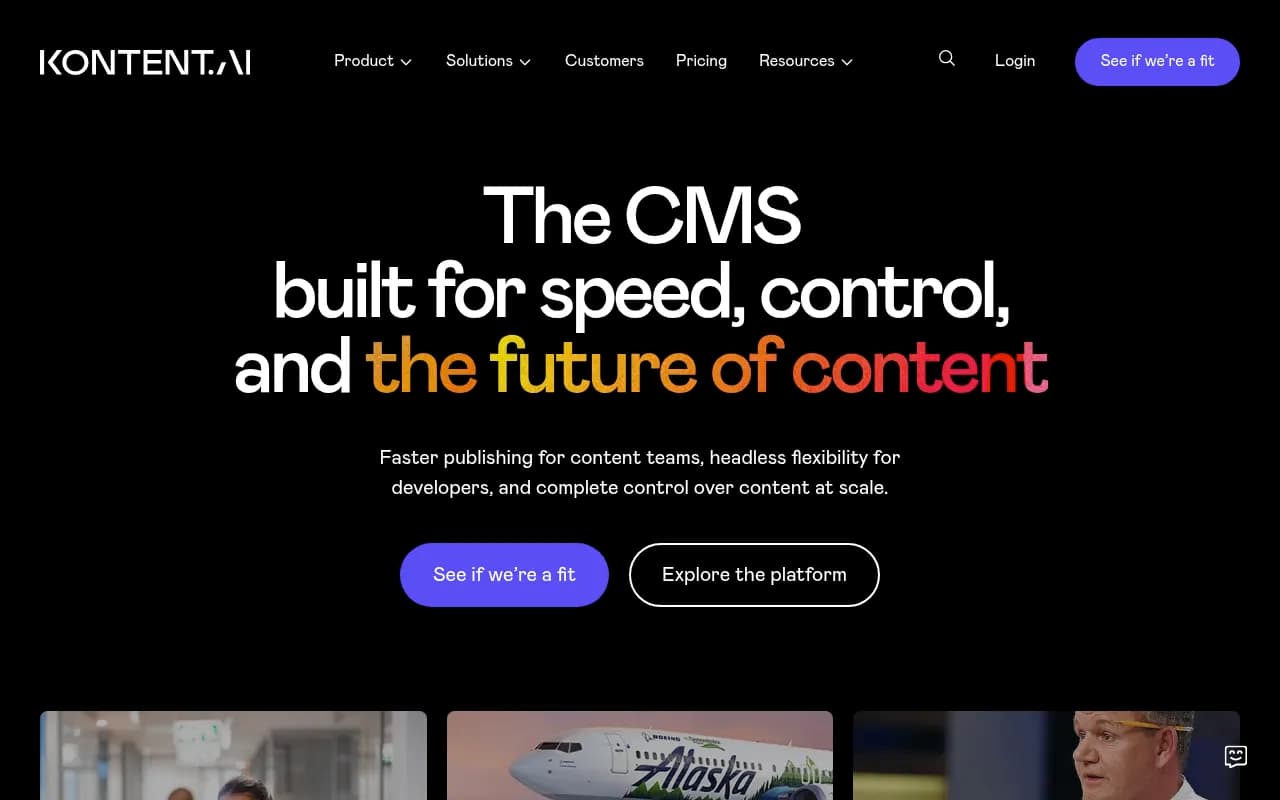
Headless CMS platform with built-in AI writing tools that help content teams write faster, maintain consistency, and manage structured content at scale.
Key takeaways
- Kontent.ai is a mature, enterprise-grade headless CMS with a free-forever tier and usage-based paid plans -- no complicated tier lock-in
- Built-in AI agents handle content writing, localization, auditing, and governance, which sets it apart from most headless CMS competitors
- Strong developer experience with open APIs, SDKs, and a composable stack philosophy
- Forrester TEI study found a 320% ROI for a composite organization, with 90% faster content deployment
- G2 Leader in Web Content Management for six consecutive years, with strong user ratings on ease of use and support
- Not a GEO/AI search visibility tool -- if you need to track or optimize how your brand appears in ChatGPT, Perplexity, or other AI engines, that's a separate problem that tools like Promptwatch address
Kontent.ai is a cloud-native, API-first headless CMS built by Kentico (now operating as a standalone brand). It targets content teams at mid-market and enterprise companies who need structured content management across multiple channels -- websites, apps, digital signage, voice interfaces, and more. The platform has been around since 2019 as a rebrand of Kentico Kontent, and it has matured considerably since then, adding AI capabilities, workflow automation, and what the company now calls "Agentic CMS" functionality.
The pitch is straightforward: give content editors a clean, structured environment to create and manage content, give developers full API flexibility to deliver that content anywhere, and use AI agents to handle the repetitive governance and localization work that usually slows teams down. Customers like Alaska Airlines (35% faster content creation), WebMD Ignite (content publishing from months to minutes), and Gordon Ramsay Restaurants (70% increase in web traffic) are cited as real-world proof points.
The target audience spans digital agencies managing multiple client sites, enterprise marketing teams with complex localization needs, and development teams building composable digital experiences. It's not a tool for solo bloggers or small businesses looking for a simple website builder -- the platform's depth and pricing model are clearly aimed at organizations with real content operations.
Key features
Agentic CMS and AI automation
The headline feature in 2026 is what Kontent.ai calls its "Agentic CMS" approach. Rather than just offering an AI writing assistant that suggests copy, the platform deploys AI agents that can autonomously handle content audits, governance checks, and localization workflows. In practice, this means an agent can scan your content library for outdated or off-brand items, flag issues, and in some cases resolve them -- without a human having to manually review every piece. For large content operations with thousands of items across multiple locales, this is a genuine time-saver.
Structured content and content modeling
Kontent.ai's core is its content modeling system. You define content types (think: Article, Product, Landing Page) with specific fields -- rich text, assets, linked items, custom elements -- and every piece of content must conform to that structure. This is standard headless CMS behavior, but Kontent.ai's implementation is notably clean. The content type editor is visual and intuitive, and the system supports nested content types, content components, and reusable snippets. Unlimited content types and locales are available even on the free plan.
AI writing tools
Beyond the agentic layer, there are inline AI writing tools for content editors. These include tone adjustment, content expansion, summarization, and SEO metadata generation. The AI is integrated directly into the rich text editor, so editors don't need to leave the CMS to use it. The quality is comparable to what you'd get from a standalone AI writing tool, but the advantage is context -- the AI has access to your content model and existing content, which helps it stay on-brand.
Localization and translation management
Localization is a first-class feature. You can manage multiple language variants of any content item, set up translation workflows, and use AI agents to handle initial machine translation passes. The system tracks translation status per locale and per content item, which is useful for large multilingual sites. This is an area where Kontent.ai is genuinely stronger than many competitors -- Contentful's localization, for example, requires more manual setup and third-party integrations.
Workflow and governance
Content workflows are configurable -- you can define custom workflow steps (Draft, Review, Legal Approval, Published, etc.) and assign roles to each step. The platform supports role-based access control at a granular level, which matters for enterprise teams where different people should have different permissions. Content scheduling, content locking, and audit logs are all available. The governance story is solid and gets stronger with the AI audit agents.
Delivery API and developer tools
The Delivery API is RESTful and well-documented. There's also a GraphQL API for more flexible querying, which developers tend to prefer for complex front-end builds. Kontent.ai publishes SDKs for JavaScript/TypeScript, .NET, Java, PHP, and Swift. The Management API allows programmatic content creation and updates, which is useful for migration projects and automated content pipelines. The developer experience is generally well-regarded -- the documentation is thorough and the API design is consistent.
Customizable content workspaces
Workspaces let you organize content and users within a single project. This is useful for agencies managing multiple brands under one subscription, or enterprises with distinct business units. Each workspace can have its own content types, workflows, and user permissions. It's a feature that Contentful charges significantly more for (via Spaces and Organizations) and that Sanity handles differently through its project structure.
Webhooks and event-driven architecture
Kontent.ai supports webhooks for content events -- publish, unpublish, workflow step changes, etc. This makes it straightforward to trigger downstream processes: cache invalidation, build triggers for static site generators, notifications to Slack, or custom business logic. The webhook system is reliable and well-documented, which matters for teams building JAMstack or composable architectures.
Security and compliance
The platform holds SOC 2, ISO 27001, ISO 27017, GDPR, HIPAA, CSA STAR, and GLBA certifications. For healthcare, finance, and other regulated industries, this compliance coverage is a real differentiator. Many headless CMS platforms offer GDPR compliance but stop there -- Kontent.ai's HIPAA compliance in particular opens doors for healthcare content teams.
Who is it for
The clearest fit is mid-market to enterprise content teams that need structured content management across multiple channels and locales. Think a global retail brand managing product descriptions, marketing copy, and campaign content in 15 languages across a website, mobile app, and in-store displays. Or a healthcare publisher like WebMD Ignite that needs to manage thousands of articles with strict governance and compliance requirements. These are teams with dedicated content operations roles, not just a marketing manager who also updates the website.
Digital agencies building composable digital experiences for clients are another strong fit. The multi-workspace support, robust APIs, and developer-friendly tooling make it practical to manage multiple client projects under one subscription. Agencies that have standardized on a headless CMS for client work will find Kontent.ai's developer experience and documentation competitive with Contentful and Sanity.
Who should probably look elsewhere: solo developers or small teams building simple websites. The platform's depth is overkill for a five-page marketing site, and the free tier's limitations (2 datasets, 20 user seats) may feel constraining for small projects that need more flexibility. Also, teams that want a traditional page-builder experience with drag-and-drop visual editing will find the headless model frustrating -- Kontent.ai is fundamentally a content repository, not a website builder.
Integrations and ecosystem
Kontent.ai connects to a wide range of tools through native integrations and webhooks. Notable integrations include:
- Netlify and Vercel for JAMstack deployments with automatic build triggers
- Gatsby, Next.js, Nuxt via official starter templates and SDKs
- Salesforce and HubSpot for CRM-connected content workflows
- Bynder and Cloudinary for digital asset management
- Smartling and Phrase for professional translation management
- Algolia for search indexing
- Google Analytics and Adobe Analytics for content performance tracking
The GitHub organization (github.com/kontent-ai) is active and includes SDKs, starter templates, and community-contributed integrations. The Management API and Delivery API are both well-documented and support custom integrations for teams with specific needs.
There's a Discord community (kontent.ai/discord) and a broader community hub for developers and content practitioners. The community is reasonably active, which matters when you're debugging an edge case at 11pm.
No dedicated mobile app for content editing, which is a gap -- editors who need to publish on the go are stuck with the mobile browser experience, which is functional but not optimized.
Pricing and value
Kontent.ai uses usage-based pricing with volume discounts, which is a more honest model than the rigid tier structures common in this space.
- Free forever: 20 user seats, 2 datasets (public), unlimited content types and locales, customizable workspaces. This is a genuinely usable free tier for small projects or evaluation.
- Paid plans: Pricing scales based on actual usage -- API calls, bandwidth, number of environments, and additional features like AI agents and advanced governance. Specific numbers aren't published on the website; you get a custom quote based on your usage profile.
The lack of public pricing on paid tiers is a minor frustration -- it makes comparison shopping harder. That said, the usage-based model means you're not paying for seats or features you don't use, which tends to work out well for teams with variable content volumes.
Compared to Contentful, which can get expensive quickly as you add environments and locales, Kontent.ai's model is generally considered more predictable. Sanity's pricing is similarly usage-based and competitive. For enterprise teams, the Forrester TEI study's 320% ROI claim is worth reading -- it's a commissioned study, so take it with appropriate skepticism, but the methodology is transparent.
Strengths and limitations
What it does well:
- The AI agent layer for governance, auditing, and localization is genuinely differentiated. Most headless CMS platforms bolt on a basic AI writing assistant; Kontent.ai is building toward autonomous content operations.
- Compliance coverage (SOC 2, ISO 27001, HIPAA, GDPR) is broader than most competitors, which matters for regulated industries.
- The developer experience is strong -- consistent APIs, good documentation, active GitHub presence, and SDKs for major languages.
- Localization is a first-class feature, not an afterthought. For multilingual content operations, this is a real advantage over Contentful and many other headless CMS platforms.
- Six years as a G2 Leader in Web Content Management reflects genuine user satisfaction, not just marketing.
Honest limitations:
- No public pricing on paid tiers makes it hard to budget without a sales conversation. For teams that want to self-serve their way to a decision, this is annoying.
- No native visual page builder. Teams coming from WordPress or Webflow will miss the ability to visually compose pages. You need a front-end framework to render content, which means developer involvement for initial setup.
- The "Agentic CMS" positioning is still maturing. The AI agent capabilities are real but the product is evolving quickly, and some features that are marketed prominently are still in early access or limited rollout.
- No mobile app for content editors. The mobile browser experience works but isn't great for teams that need to publish on the go.
Bottom line
Kontent.ai is a serious headless CMS for content teams that have outgrown simpler tools and need structured content management, strong governance, and multi-channel delivery at scale. The AI agent layer is the most interesting differentiator in 2026 -- if autonomous content auditing and localization workflows matter to your operation, it's worth a close look.
Best use case in one sentence: enterprise and mid-market content teams that need API-first content delivery across multiple channels and locales, with AI-assisted governance and localization built in.
Frequently asked questions
What is Kontent.ai?
Is there a free plan?
How much does Kontent.ai cost?
How does Kontent.ai compare to Contentful or Sanity?
What integrations does Kontent.ai support?
Who is Kontent.ai best suited for?
Similar and alternative tools to Kontent.ai