Key takeaways
- AI search engines like ChatGPT don't automatically see your website -- they need crawlable content, clear structure, and topical authority to cite you
- Most invisibility issues stem from technical blocks (robots.txt, JavaScript-heavy sites), thin content, or lack of citations from authoritative sources
- You can diagnose the problem by checking AI crawler logs, testing specific prompts, and analyzing which pages competitors get cited for
- Fixing it requires a mix of technical optimization (allowing AI crawlers), content improvements (depth, structure, E-E-A-T signals), and strategic link building from sources AI models trust
- Tracking tools help you monitor which AI models cite you, for which queries, and how your visibility changes over time
The problem: you're invisible to AI search
You've spent years building SEO authority. Your site ranks on Google. You have backlinks, traffic, and decent content. But when someone asks ChatGPT, Claude, or Perplexity a question your site should answer, you're nowhere in the response.
This isn't a fluke. AI search engines operate differently than traditional search. They don't just index pages and rank them by keywords. They read content, synthesize it, and decide which sources are worth citing based on factors Google never cared about. If your site isn't built for this new reality, you're invisible.
The stakes are real. A 2025 study found that 40% of users now start product research with ChatGPT instead of Google. If you're not showing up in AI responses, you're losing traffic, leads, and revenue to competitors who are.
Why AI models ignore your website
AI search engines like ChatGPT, Claude, and Perplexity don't see the web the way Google does. They rely on a combination of pre-training data, real-time web crawling, and retrieval-augmented generation (RAG) to answer queries. If your site falls outside these systems, you don't exist.
Here's what typically goes wrong.
You're blocking AI crawlers
Many sites accidentally block AI crawlers in their robots.txt file. OpenAI's GPTBot, Anthropic's ClaudeBot, and Perplexity's PerplexityBot all respect robots.txt directives. If you've blocked them -- either explicitly or with a blanket "Disallow: /" rule for unknown bots -- they can't read your content.
Check your robots.txt file at yoursite.com/robots.txt. Look for lines like:
User-agent: GPTBot
Disallow: /

User-agent: ClaudeBot
Disallow: /
If you see this, you've told AI models to stay away. Remove these blocks or change Disallow: / to Allow: / for the crawlers you want to permit.
Some sites block AI crawlers on purpose, worried about content scraping or copyright issues. That's a business decision. But if your goal is visibility in AI search, blocking crawlers guarantees invisibility.
Your content is too thin or generic
AI models prioritize depth and specificity. A 500-word blog post that skims the surface of a topic won't get cited when a competitor has a 3,000-word guide with examples, data, and nuanced takes.
Generic content is even worse. If your page reads like every other page on the topic -- same structure, same talking points, same lack of original insight -- AI models have no reason to cite you. They'll pick the source that adds something new.
This is different from traditional SEO, where you could rank with thin content if you had enough backlinks. AI models read the actual text. They judge quality directly. If your content doesn't answer the query better than alternatives, you're out.
You lack E-E-A-T signals
Google's E-E-A-T framework (Experience, Expertise, Authoritativeness, Trustworthiness) matters even more for AI search. AI models look for signals that a source is credible:
- Author bylines with credentials
- Citations to primary sources and research
- Mentions in authoritative publications
- Domain authority (backlinks from trusted sites)
- Recency (updated content beats stale content)
If your site lacks these signals, AI models treat it as low-confidence. They'll cite a university study or a well-known publication instead, even if your content is technically correct.
Your site is JavaScript-heavy or poorly structured
AI crawlers can handle JavaScript, but they prefer clean HTML. If your site relies on client-side rendering, lazy loading, or complex JavaScript frameworks without server-side rendering, crawlers might miss your content entirely.
Poor structure also hurts. AI models parse headings, lists, and semantic HTML to understand content. If your page is a wall of text with no headings, or if your HTML is a mess of divs with no semantic meaning, crawlers struggle to extract useful information.
You're not cited by sources AI models trust
AI models don't just crawl your site in isolation. They also look at what other sources say about you. If authoritative sites, research papers, or well-known publications cite your content, AI models are more likely to trust you.
This creates a chicken-and-egg problem. You need citations to get cited. If you're a new site or a niche player without much external validation, AI models default to safer, more established sources.
Your content isn't optimized for how people prompt AI
Traditional SEO targets keywords. AI search optimization targets prompts -- the actual questions and requests people type into ChatGPT or Perplexity.
Prompts are longer, more conversational, and more specific than keywords. "Best project management software" is a keyword. "What's the best project management software for a remote team of 15 people who need Gantt charts and Slack integration?" is a prompt.
If your content answers the keyword but not the prompt, you won't show up. AI models look for content that matches the user's intent at a granular level.
How to diagnose the problem
Before you fix anything, figure out what's actually broken. Here's how to diagnose why your site isn't showing up.
Check if AI crawlers are visiting your site
Look at your server logs or use a tool that tracks AI crawler activity. You're looking for user agents like:
GPTBot(OpenAI/ChatGPT)ChatGPT-User(ChatGPT browsing mode)ClaudeBot(Anthropic/Claude)PerplexityBot(Perplexity)Google-Extended(Google Bard/Gemini training data)
If these bots aren't hitting your site at all, you've likely blocked them in robots.txt or your site isn't discoverable through backlinks and sitemaps.
If they are visiting but only hitting a few pages, those are the only pages AI models can cite. Expand coverage by improving internal linking and submitting a sitemap.

Tools like Promptwatch include AI crawler log tracking, showing you exactly which pages AI bots visit, how often, and whether they encounter errors. This is one of the fastest ways to spot technical issues.
Test specific prompts manually
Pick 10-20 prompts your site should rank for. Go to ChatGPT, Claude, and Perplexity and type them in. See if your site gets cited.
If you're never cited, you're invisible. If you're cited sometimes but inconsistently, you're on the edge -- AI models know about you but don't trust you enough to cite you reliably.
Pay attention to which competitors do get cited. What do their pages have that yours don't? Longer content? Better structure? More external citations?
Use a tracking tool to see your visibility score
Manual testing doesn't scale. If you want to track visibility across hundreds of prompts and multiple AI models, you need a tool.



Most AI visibility platforms let you input a list of prompts, then track whether your site gets cited, how often, and by which AI models. They'll also show you competitors' visibility scores so you can benchmark your performance.
Some platforms (like Promptwatch) go further, showing you which specific pages get cited, which prompts you're missing, and what content gaps exist on your site.
Analyze your content vs competitors
Pick a prompt where a competitor gets cited but you don't. Compare your content to theirs:
- Is their content longer?
- Do they have more examples, data, or case studies?
- Is their page structure clearer (headings, lists, tables)?
- Do they cite sources?
- Do they have author bylines or credentials?
- Is their content more recent?
This isn't about copying competitors. It's about understanding what AI models value. If competitors consistently beat you on depth, structure, or authority signals, those are your gaps.
How to fix it: technical optimization
Start with the technical stuff. If AI crawlers can't access your site, nothing else matters.
Allow AI crawlers in robots.txt
Edit your robots.txt file to explicitly allow the AI crawlers you care about:
User-agent: GPTBot
Allow: /

User-agent: ClaudeBot
Allow: /

User-agent: PerplexityBot
Allow: /

User-agent: Google-Extended
Allow: /
If you want to allow all bots by default, use:
User-agent: *
Allow: /
Be careful with this -- it also allows scraper bots and spam bots. A safer approach is to allow specific AI crawlers and block everything else.
Improve site structure and semantic HTML
AI crawlers parse HTML to understand content. Use semantic tags:
<h1>for the main title<h2>,<h3>for section headings<ul>,<ol>for lists<table>for comparison tables<blockquote>for quotes<cite>for citations
Avoid relying on CSS classes or JavaScript to create structure. AI crawlers don't render your site the way a browser does. They read raw HTML.
Fix JavaScript and rendering issues
If your site uses client-side rendering (React, Vue, Angular without SSR), AI crawlers might not see your content. Implement server-side rendering (SSR) or static site generation (SSG) so crawlers get fully rendered HTML.
Test this by disabling JavaScript in your browser and visiting your site. If the content disappears, crawlers can't see it either.
Add structured data (JSON-LD)
Structured data helps AI models understand your content. Use schema.org markup for:
- Articles (
Article,BlogPosting) - Products (
Product,Offer) - FAQs (
FAQPage,Question,Answer) - Reviews (
Review,AggregateRating) - Organizations (
Organization,LocalBusiness)
This isn't a magic fix, but it gives AI models more context about what your content is and why it's authoritative.
How to fix it: content optimization
Technical fixes get you in the door. Content optimization gets you cited.
Write longer, deeper content
AI models favor comprehensive content. Aim for 2,000-4,000 words for pillar pages and guides. Go deeper than competitors:
- Add examples and case studies
- Include data and research findings
- Address edge cases and nuances
- Provide step-by-step instructions
- Anticipate follow-up questions
This doesn't mean padding content with fluff. It means covering the topic thoroughly enough that AI models see your page as the definitive source.
Structure content for scannability
AI models parse content quickly. Help them by:
- Using clear, descriptive headings
- Breaking up text with short paragraphs (2-4 sentences)
- Adding bulleted and numbered lists
- Including comparison tables
- Using bold text for key terms (but don't overdo it)
Think of your content as a reference document, not a narrative essay. AI models want to extract facts quickly.
Add E-E-A-T signals
Boost credibility with:
- Author bylines with credentials ("Written by Jane Doe, PhD in Computer Science")
- Citations to primary sources (link to research papers, official documentation, data sources)
- Publication dates and "last updated" timestamps
- About pages that establish your expertise
- Case studies and original research
If you're citing statistics or claims, link to the original source. AI models check citations. If you're just repeating what other sites say without attribution, you're less trustworthy.
Optimize for prompt intent, not just keywords
Think about how people actually ask questions in ChatGPT. They're specific. They include context. They ask for comparisons, recommendations, and step-by-step guidance.
Create content that answers these prompts directly:
- "What's the best X for Y use case?"
- "How do I do X if I have constraint Y?"
- "What's the difference between X and Y?"
- "Why does X happen and how do I fix it?"
Use tools to find high-volume prompts in your niche. Some AI visibility platforms surface prompt data and difficulty scores, showing you which queries are winnable.
Create content for gaps competitors miss
AI models cite you when you have something competitors don't. Look for:
- Subtopics competitors ignore
- Specific use cases or personas
- Comparisons between tools or approaches
- Troubleshooting guides for common problems
- Data-driven analyses (original research, surveys, case studies)
If you're in a crowded space, differentiation is everything. Generic content gets ignored.
How to fix it: build authority and citations
AI models trust sources that other authoritative sources trust. You need external validation.
Get backlinks from high-authority sites
This is traditional link building, but it matters for AI search too. Focus on:
- Guest posts on authoritative blogs
- Mentions in industry publications
- Citations in research papers or whitepapers
- Listings in curated directories
- Partnerships with established brands
AI models crawl the web by following links. If authoritative sites link to you, you're more discoverable and more trustworthy.
Get cited in sources AI models already trust
AI models have favorite sources: Wikipedia, government sites, academic journals, major news outlets, well-known SaaS companies. If these sources cite you, your credibility skyrockets.
This is hard to game. You can't force Wikipedia to cite you. But you can:
- Publish original research that journalists and researchers cite
- Contribute to open-source projects or public datasets
- Get featured in industry reports or case studies
- Build relationships with journalists who cover your niche
Leverage Reddit and community discussions
AI models increasingly cite Reddit, Quora, and niche forums. If your brand or content gets mentioned in these discussions, you're more likely to show up in AI responses.
Participate authentically in relevant communities. Answer questions, share insights, and link to your content when it's genuinely helpful. Don't spam.
Update and refresh old content
AI models favor recent content. If your best pages are from 2019, they're stale. Update them with:
- New data and examples
- Recent developments in the topic
- Improved structure and depth
- Fresh citations and links
Change the publication date to reflect the update. AI models check timestamps.
Tools to track and optimize AI visibility
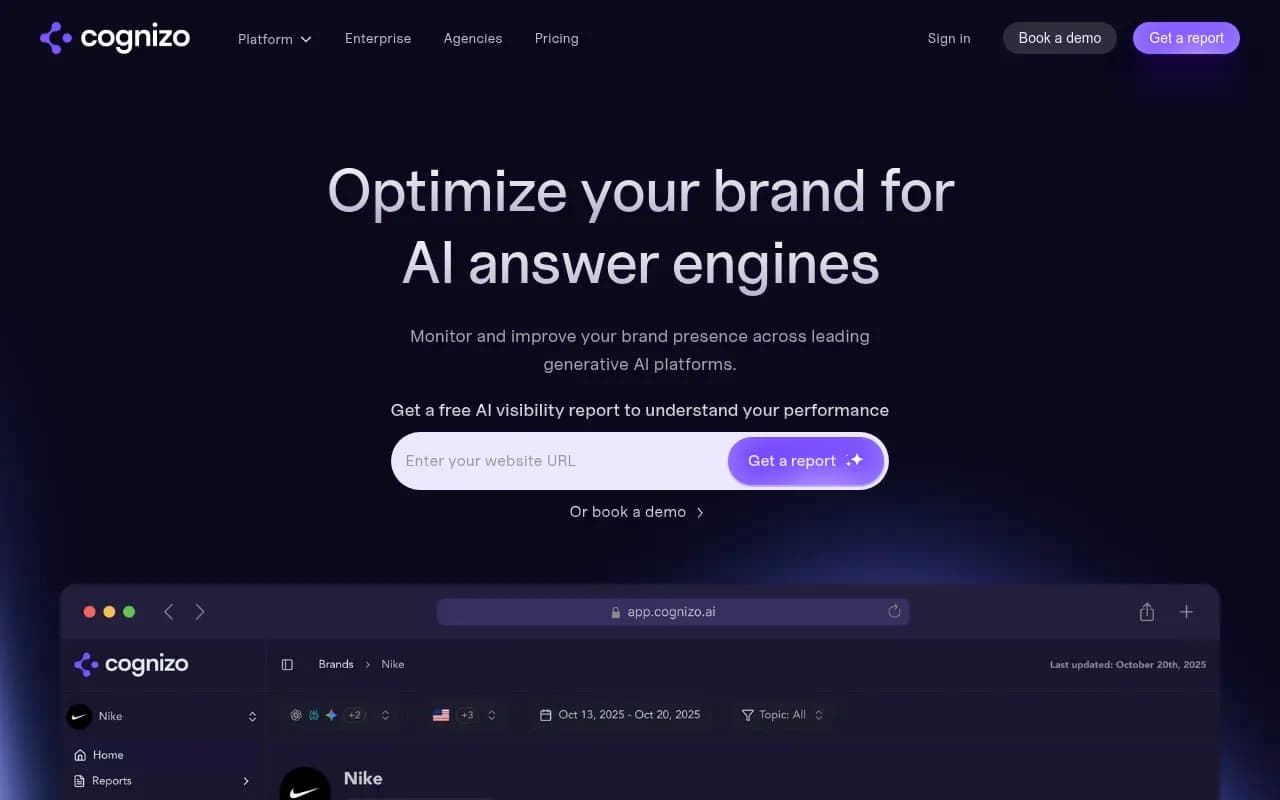
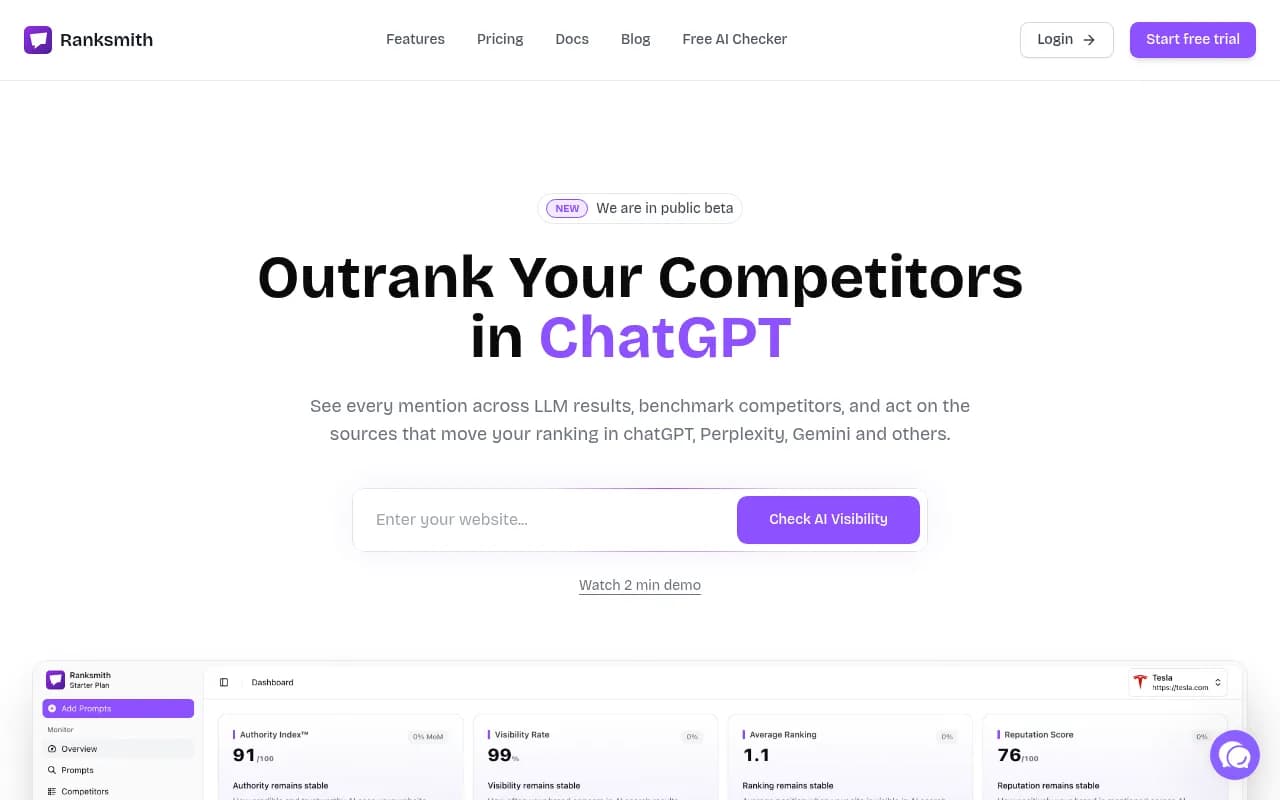
You can't improve what you don't measure. Here are tools that help you track visibility, find content gaps, and optimize for AI search.
| Tool | Key features | Best for |
|---|---|---|
| Promptwatch | Crawler logs, content gap analysis, AI content generation, 10+ AI models | Teams that want to take action, not just monitor |
| Otterly.AI | Affordable monitoring, multi-model tracking | Small businesses on a budget |
| AthenaHQ | 8+ AI engines, prompt tracking | Marketing teams focused on monitoring |
| Peec.AI | Multi-language support, global tracking | International brands |
| Profound | Persona customization, detailed analytics | Agencies managing multiple clients |
Most platforms let you:
- Track which AI models cite you and how often
- Monitor specific prompts and see your visibility score
- Compare your performance vs competitors
- Get alerts when your visibility changes
Some platforms (like Promptwatch) go further by showing you exactly which content gaps exist on your site and generating optimized articles to fill them. This closes the loop between tracking and action.

What to expect: timelines and results
AI visibility doesn't improve overnight. Here's a realistic timeline:
- Week 1-2: Fix technical issues (robots.txt, crawlability, site structure). AI crawlers start visiting your site.
- Week 3-4: Publish new, optimized content or update existing pages. AI models begin indexing the changes.
- Month 2-3: Start seeing citations in AI responses for low-competition prompts. Visibility score improves gradually.
- Month 4-6: Build authority through backlinks and external citations. AI models trust you more, cite you for competitive prompts.
- Month 6+: Consistent visibility across multiple AI models. You're cited regularly for your core topics.
This assumes you're actively optimizing. If you fix technical issues but don't improve content, you'll stay invisible. If you publish great content but block AI crawlers, same problem.
The brands that win in AI search treat it like a continuous process: track visibility, find gaps, create content, build authority, repeat.
Common mistakes to avoid
Don't do this:
- Blocking AI crawlers out of fear: If you're worried about content scraping, you're choosing invisibility over risk. Most AI models respect robots.txt and copyright. If you want visibility, you have to let them in.
- Copying competitor content: AI models detect duplicate or near-duplicate content. If you're just rephrasing what others wrote, you won't get cited.
- Ignoring E-E-A-T signals: AI models care about credibility. If your content lacks author bylines, citations, and external validation, you're fighting uphill.
- Optimizing for one AI model only: ChatGPT, Claude, Perplexity, and Gemini all work differently. Optimize broadly -- clean HTML, deep content, strong authority -- and you'll show up across models.
- Expecting instant results: AI visibility takes months, not weeks. Be patient and consistent.
Final thoughts
Your website isn't showing up in ChatGPT because AI search engines operate differently than Google. They need crawlable content, clear structure, topical depth, and external validation. If you're missing any of these, you're invisible.
The fix isn't a single tactic. It's a combination of technical optimization (allowing AI crawlers, improving site structure), content improvements (depth, E-E-A-T signals, prompt optimization), and authority building (backlinks, citations from trusted sources).
Start by diagnosing the problem. Check if AI crawlers are visiting your site. Test specific prompts manually. Use a tracking tool to see where you stand vs competitors. Then fix the gaps systematically.
AI search is still evolving, but the fundamentals are clear: AI models cite sources that are accessible, authoritative, and genuinely useful. If you build for that, you'll show up.