Key takeaways
- ChatGPT and Google AI Overviews recommend different brands roughly 62% of the time, so visibility on one does not mean visibility on the other.
- Google AI Overviews favor structured, authoritative content with strong backlink signals; ChatGPT rewards narrative mentions, conversational context, and third-party discussion.
- Only 30% of brands that appear in an AI-generated answer show up again in the very next response to the same query -- AI visibility is inherently unstable without active management.
- Blocking AI crawlers (often by accident) is one of the most common and easily fixed reasons brands disappear from both platforms.
- Tracking your visibility separately across each AI model is the only way to know what's actually happening -- and where to focus your effort.
Here's something that trips up almost every marketing team the first time they look at their AI search data: your brand might appear confidently in ChatGPT's responses for a given category, and be completely absent from Google AI Overviews for the same query. Or the reverse. You've done the same SEO work, published the same content, built the same backlinks -- and the two platforms are giving you completely different results.
This isn't a bug. It's by design. ChatGPT and Google AI Overviews are built on different architectures, trained on different data, and optimized for different output formats. They don't agree on what counts as a credible source, and they don't weight the same signals. According to research from GenRankEngine, the two platforms recommend different brands about 62% of the time. That number should reframe how you think about AI visibility entirely.
Let's get into why this happens and what you can actually do about it.
How the two platforms decide what to cite
The clearest way to understand the divergence is to look at what each platform is actually trying to do when it generates a response.
Google AI Overviews: structured authority, fast answers
Google AI Overviews are built to answer questions quickly and confidently, drawing from sources that Google's existing index already trusts. That means the signals that have always mattered for traditional SEO -- backlinks, domain authority, structured data, E-E-A-T signals -- still matter here, but they're filtered through an additional layer: does this content directly answer the query in a concise, citable way?
Average AI Overview responses run around 997 characters. That's short. Google is synthesizing, not narrating. It wants content that is easy to extract a clear answer from, which means well-structured pages with headers, lists, and explicit answers near the top of the page perform better than long-form narrative content.
One finding that surprises most people: 60% of AI Overview citations come from pages that don't rank in the top 20 organic results. Google isn't just pulling from its top-ranked pages. It's pulling from pages that answer the specific question well, even if those pages don't have massive domain authority. That's actually an opportunity if you're a smaller brand -- but only if your content is structured to be extracted.
ChatGPT: narrative context and conversational relevance
ChatGPT works differently. It's a language model that was trained on a massive corpus of text, and it generates responses based on what it learned during training (plus, for newer versions, real-time web browsing). Its responses average around 1,686 characters -- nearly twice the length of an AI Overview. It's not summarizing; it's explaining.
This changes what gets cited. ChatGPT rewards brands that appear naturally within detailed narratives and explanations across the web. If your brand is discussed in depth on Reddit, in industry publications, in comparison articles, in YouTube transcripts, and in third-party reviews, ChatGPT is more likely to surface you. It's picking up on the texture of how your brand is talked about, not just whether your own website has good structured data.
Traditional SEO metrics like backlinks and domain authority don't translate cleanly to ChatGPT visibility. What matters more is how your brand gets discussed in the broader web ecosystem -- the quality and frequency of third-party mentions, the contexts in which your name appears, and whether those mentions are substantive or just passing references.
The instability problem that nobody talks about
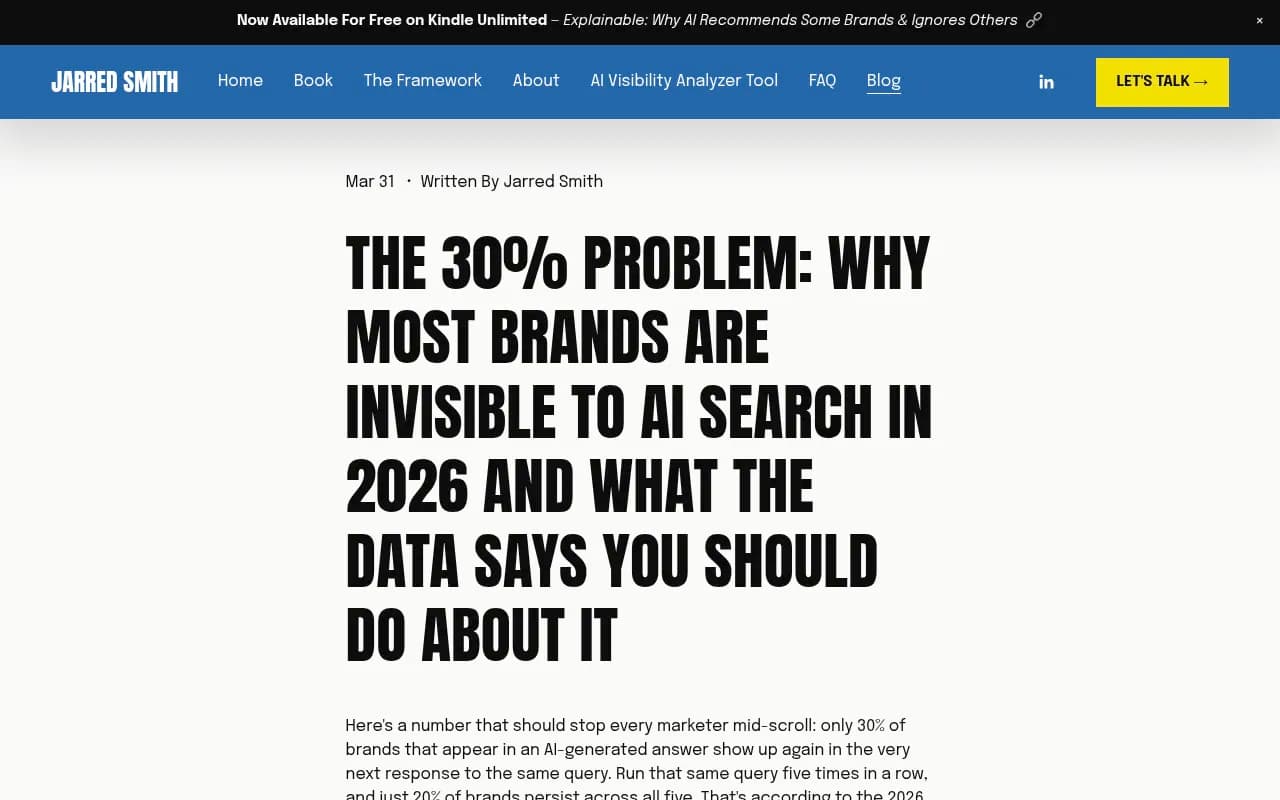
Before getting into fixes, it's worth sitting with a number from the 2026 State of AI Search report by AirOps and Kevin Indig: only 30% of brands that appear in an AI-generated answer show up again in the very next response to the same query. Run that query five times, and just 20% of brands persist across all five responses.
This is genuinely strange if you're used to thinking about SEO rankings. In traditional search, your position might fluctuate by a few spots, but you're generally either on page one or you're not. In AI search, there's no stable position. The model regenerates its response each time, and the cast of cited brands rotates. If your brand isn't deeply embedded in the training data or the live web in a way that consistently pulls you back in, you're going to be invisible more often than not.
This is why monitoring matters so much. You can't assume that because you showed up once, you're "ranking." You need to know how often you appear, across which models, for which prompts.
The most common reasons brands are invisible on one platform but not the other
You're optimized for one format but not both
If your content strategy has been built around traditional SEO, you probably have well-structured pages with clear headers and explicit answers. That helps with Google AI Overviews. But if you haven't been generating third-party discussion -- getting mentioned in industry publications, forums, comparison sites, and community spaces -- ChatGPT may not know much about you.
The reverse is also true. Some brands have strong community presence and lots of organic mentions across the web, but their own website content is thin, poorly structured, or doesn't directly answer the questions their customers are asking. They show up in ChatGPT but not in AI Overviews.
You're accidentally blocking AI crawlers
This one catches a lot of brands off guard. If your robots.txt file blocks GPTBot (OpenAI's crawler), ClaudeBot, or PerplexityBot, those models can't read your content for real-time retrieval. You might still appear in ChatGPT's training-based responses, but you'll be invisible in any context where the model is doing live web retrieval -- which is increasingly common.
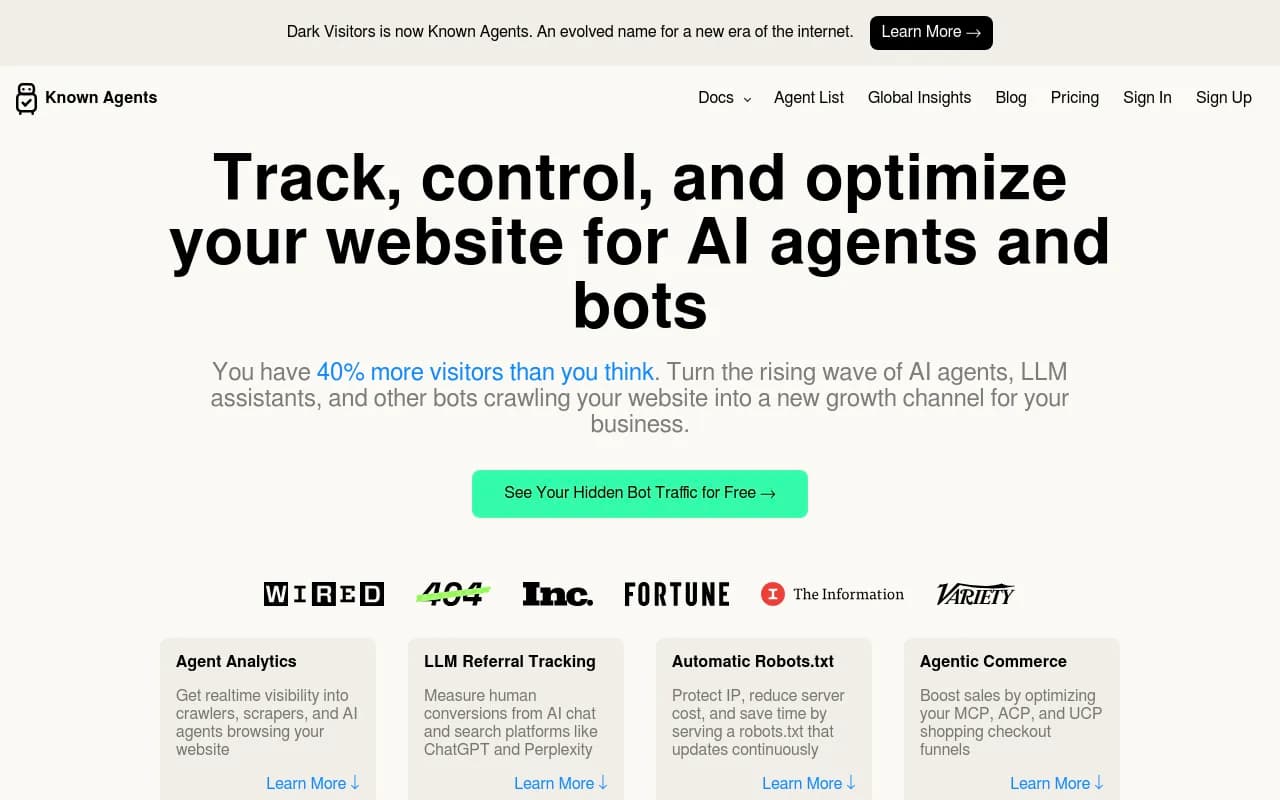
Google's AI crawlers are separate from Googlebot, and some sites block them without realizing it. Check your robots.txt file and your server logs. Tools like DarkVisitors can help you see which AI crawlers are hitting your site and which ones are being turned away.
Your content doesn't answer the right questions
Both platforms are trying to answer user questions. If your content is primarily product-focused or brand-focused rather than question-focused, it's going to struggle on both. But the specific questions each platform prioritizes can differ.
Google AI Overviews tend to surface for informational queries with clear, factual answers. ChatGPT is more likely to be used for comparison queries, recommendation requests, and "what should I use for X" questions. If you're not producing content that directly addresses those comparison and recommendation prompts, you're leaving ChatGPT visibility on the table even if your Google Overviews performance is solid.
Your brand lacks third-party validation
Google AI Overviews can pull from your own website if it's authoritative enough. ChatGPT is much more dependent on what other people say about you. If the only substantial content about your brand lives on your own domain, ChatGPT has less to work with.
This is where Reddit, YouTube, industry publications, and review platforms become genuinely important -- not just for brand awareness, but as direct inputs into what ChatGPT knows and says about you.
What to do about Google AI Overviews specifically
Structure your content for extraction
Write content that answers specific questions directly and early. Use clear H2 and H3 headings that mirror how people phrase their queries. Include concise answer paragraphs at the top of each section, followed by supporting detail. Think of it as writing for someone who wants to pull one clean sentence out of your page.
Schema markup helps here. FAQ schema, HowTo schema, and Article schema all give Google explicit signals about what your content is answering and how it's structured.
Target queries where AI Overviews actually appear
Not every query triggers an AI Overview. Conductor's analysis of 21.9 million queries found that AI Overviews appear in roughly 25% of Google searches. They're most common for informational queries and much less common for transactional or navigational ones. Focus your AI Overview optimization on the informational content in your funnel -- the "what is," "how does," and "which is better" queries.
Build topical authority, not just individual pages
Google's AI systems reward sites that cover a topic comprehensively. A single well-optimized page won't cut it if your site has thin coverage of the surrounding topic. Build out your content so that your site is a credible source on the whole subject, not just one angle of it.
What to do about ChatGPT specifically
Get your brand into third-party conversations
This is the most important lever for ChatGPT visibility, and it's the one most brands underinvest in. Actively pursue coverage in industry publications. Participate in relevant Reddit communities. Encourage genuine reviews on platforms that ChatGPT tends to pull from. Get mentioned in comparison articles and "best of" listicles.
The goal is to make your brand a natural part of the conversation that already exists around your category -- not just a presence on your own website.
Write content that reads like a recommendation
ChatGPT's longer, more narrative responses mean it can surface brands that appear in detailed explanations, not just structured lists. Content that explains why your brand is the right choice for a specific use case, written in a way that sounds like a genuine recommendation rather than a product page, tends to perform better.
Don't ignore YouTube and Reddit
Both platforms are significant sources for ChatGPT's responses. A detailed YouTube video that mentions your brand in the context of solving a real problem, or a Reddit thread where your brand is recommended by actual users, can directly influence how ChatGPT talks about you. Most brands treat these as secondary channels. For ChatGPT visibility, they're primary.
Tracking visibility across both platforms (and why you need to do it separately)
The biggest mistake brands make is treating AI visibility as a single metric. It's not. Your visibility in ChatGPT, Google AI Overviews, Perplexity, Claude, and Gemini can all look completely different for the same set of prompts. You need to track them separately.
A tactic that works for Google AI Overviews might do very little for ChatGPT, and vice versa. Without platform-specific data, you're optimizing blind.
Promptwatch tracks your brand's visibility across 10 AI models simultaneously -- including ChatGPT, Google AI Overviews, Claude, Perplexity, and Gemini -- and shows you exactly which prompts you're appearing for, which competitors are beating you, and which pages are being cited. The Answer Gap Analysis feature shows you the specific prompts where competitors are visible but you're not, which gives you a concrete list of content to create rather than a vague directive to "produce more content."

For brands that want to start simpler, there are a range of tools at different price points:


Here's a quick comparison of how the main platforms differ in what they prioritize, so you can map your strategy accordingly:
| Signal | Google AI Overviews | ChatGPT |
|---|---|---|
| Structured content (headers, schema) | High priority | Low-medium priority |
| Domain authority / backlinks | High priority | Low priority |
| Third-party mentions | Medium priority | High priority |
| Reddit / forum discussions | Low priority | High priority |
| Response length | Short (~997 chars) | Long (~1,686 chars) |
| Own website content | Frequently cited | Less relied upon |
| Real-time web retrieval | Yes (Googlebot signals) | Yes (GPTBot, browsing) |
| Training data mentions | N/A | High priority |
One more thing: sentiment isn't the same either
A Fortune analysis from March 2026 found that Google AI Overviews are 44% more likely than ChatGPT to speak negatively about a brand in their responses. That's a meaningful difference if you're in a category where your brand has any controversy or mixed reviews attached to it.
This matters because the platforms aren't just different in who they cite -- they're different in how they characterize the brands they do cite. Monitoring what each platform actually says about you, not just whether you appear, is part of the picture.
Putting it together
The core insight here is simple but easy to miss: ChatGPT and Google AI Overviews are not the same channel with the same rules. They have different architectures, different training signals, and different ideas about what makes a source credible. A brand that's done everything right for one platform can be invisible on the other.
The practical response is to treat them as separate channels with overlapping but distinct strategies. Structured, authoritative content on your own site for AI Overviews. Third-party narrative presence and community discussion for ChatGPT. And separate tracking for each, so you actually know what's working.
The brands that figure this out early are going to have a significant advantage over the ones still treating AI search as a single monolithic thing to optimize for.