Key takeaways
- Peec.ai built early momentum in 2025 as an AI visibility tracker, but users consistently ran into data accuracy issues and a hard ceiling on what the tool could actually do.
- The core problem: monitoring without action. Peec.ai shows you where you're invisible -- but doesn't help you fix it.
- Promptwatch closes the loop with content gap analysis, an AI writing agent, crawler logs, and traffic attribution -- features Peec.ai doesn't offer.
- The switch wasn't driven by one thing. It was a combination of reporting credibility, missing features, and the growing pressure to show ROI from AI search.
- Both tools have their place, but if you're past the "just curious" stage and need to actually move the needle, the gap between them is significant.
The context: why 2025 was a turning point for AI visibility tools
By mid-2025, AI search wasn't a trend to watch anymore -- it was a budget line item. ChatGPT, Perplexity, Google AI Overviews, and Claude were pulling real traffic away from traditional search results, and marketing teams were being asked to account for it.
That created a rush toward any tool that could answer the question: "Is our brand showing up in AI answers?" Peec.ai was one of the first to market with a clean answer to that question, and it picked up a lot of attention early in 2025 as a result.
But "early to market" and "best fit for the job" are different things. As teams moved from exploration to execution, the gaps started showing.

What Peec.ai does well (and why people tried it first)
To be fair: Peec.ai isn't a bad tool. It tracks brand mentions across AI platforms, supports 115+ languages, and has a reasonably clean interface. For teams that just needed to answer "are we mentioned in AI search?" it worked.
The multi-language support in particular made it a go-to for international brands and agencies working across markets. That's a real differentiator, and it's worth acknowledging.
But the use case it serves well is narrow: passive monitoring. You set up your prompts, you watch the numbers, and you get a sense of your share of voice in AI responses. That's useful for a quarterly report or a client check-in. It's not useful when you need to actually do something about what you find.
The data credibility problem
The first crack in confidence wasn't about features -- it was about trust.
A thread on Reddit's r/AISearchLab captured it well. An agency marketer wrote: "The client thinks I'm making up numbers because Peec AI's reports don't match what's on his phone." The post was asking for alternatives, and it got a lot of engagement from people who'd hit the same wall.
This is a real problem. AI search results are highly variable -- they change based on the model version, the user's location, their browsing history, the phrasing of the prompt, and a dozen other factors. A tool that doesn't account for that variability will produce numbers that look authoritative but don't hold up when a client opens ChatGPT and checks for themselves.
When a client can't reproduce what your report shows, you don't just have a data problem -- you have a credibility problem. And for agencies especially, that's existential.
The "now what?" problem
Even when the data was accurate, Peec.ai users kept running into the same wall: the tool tells you where you're not showing up, but it doesn't tell you what to do about it.
That's not a minor gap. It's the whole job.
Knowing that a competitor ranks in Perplexity's response to "best project management software for remote teams" and you don't is useful information. But what do you do with it? You need to know:
- Which specific content is missing from your site
- What angle the AI model is looking for that you're not covering
- How to write something that will actually get cited
Peec.ai doesn't answer any of those questions. It stops at the diagnosis.
SE Ranking's analysis of AI visibility tools put it plainly: Peec.ai is suited for "marketers who want to know about AI SERPs without manually configuring prompts." That's a specific and limited use case. Once you need to go deeper -- prompt volumes, content gaps, competitor analysis, traffic attribution -- you're out of scope.
What the switch to Promptwatch actually looked like
The migration pattern was pretty consistent across teams. They'd use Peec.ai for a few months, get comfortable with the concept of AI visibility tracking, and then hit one of two triggers:
- A client or executive asked "what are we doing about this?" and they had no answer
- They needed to show ROI and couldn't connect AI visibility to actual traffic or revenue
Promptwatch was the most common landing spot, partly because of its feature depth and partly because it was the only platform in the space that was built around taking action, not just watching.

The core difference is what Promptwatch calls the action loop:
- Find the gaps (Answer Gap Analysis shows which prompts competitors rank for that you don't)
- Create content that fixes those gaps (built-in AI writing agent generates articles grounded in citation data)
- Track whether it worked (page-level visibility tracking + traffic attribution)
That cycle -- find, fix, verify -- is what most teams were trying to build manually with Peec.ai data and a separate content workflow. Promptwatch just does it in one place.
Feature-by-feature: where the gap is most visible
Here's a direct comparison of the capabilities that came up most often in switching decisions:
| Feature | Peec.ai | Promptwatch |
|---|---|---|
| AI brand monitoring | Yes (6 platforms) | Yes (10 platforms) |
| Multi-language support | Yes (115+ languages) | Yes (multi-language + multi-region) |
| Custom prompt tracking | Yes (added mid-2025) | Yes |
| Prompt volume & difficulty scores | No | Yes |
| Answer Gap Analysis | No | Yes |
| AI content generation | No | Yes (built-in writing agent) |
| AI crawler logs | No | Yes (Professional plan+) |
| Traffic attribution | No | Yes (GSC, code snippet, server logs) |
| Reddit & YouTube insights | No | Yes |
| ChatGPT Shopping tracking | No | Yes |
| Competitor heatmaps | No | Yes |
| Query fan-outs | No | Yes |
| Page-level citation tracking | No | Yes |
The monitoring columns are roughly comparable. Everything below that line is where Promptwatch runs away with it.
The agency angle: reporting that holds up
For agencies, the switch had an extra dimension. Client reporting in AI visibility is still a new discipline, and there's no established standard for what "good" looks like. That means the tool you use shapes the story you can tell.
Peec.ai's reports are clean but shallow. You can show a client their mention rate across AI platforms, maybe a trend line over time. But when the client asks "why is this number going up?" or "what should we do to improve it?" the report doesn't have an answer.
Promptwatch's reporting goes to the page level. You can show a client exactly which pages are being cited, by which AI models, for which prompts -- and then show them the new content you created to fill the gaps, and the visibility improvement that followed. That's a story. That's a case for continued investment.
The traffic attribution piece matters here too. Promptwatch connects AI visibility to actual website visits through a code snippet, Google Search Console integration, or server log analysis. When you can show a client that their AI visibility improvement drove X sessions last month, the conversation changes entirely.
What Peec.ai users say they miss
It's not all one-sided. Teams that switched to Promptwatch from Peec.ai do occasionally mention things they found easier in Peec.ai:
- The onboarding is faster in Peec.ai -- you can get a basic dashboard running in minutes
- The 115+ language support in Peec.ai is broader than what most teams need, but for truly global operations it's a real advantage
- Peec.ai's pricing is lower at entry level, which matters for small teams or solo consultants just getting started
If you're an individual consultant doing basic AI visibility audits for clients and you don't need to generate content or show traffic attribution, Peec.ai might still be the right fit. It's a simpler tool for a simpler job.
But for teams that are past the "let's see what's happening" phase and into "let's actually improve our AI search presence," the calculus shifts.
The broader market context
Peec.ai isn't the only monitoring-only tool that's been losing ground to more action-oriented platforms. The same pattern shows up across the category.
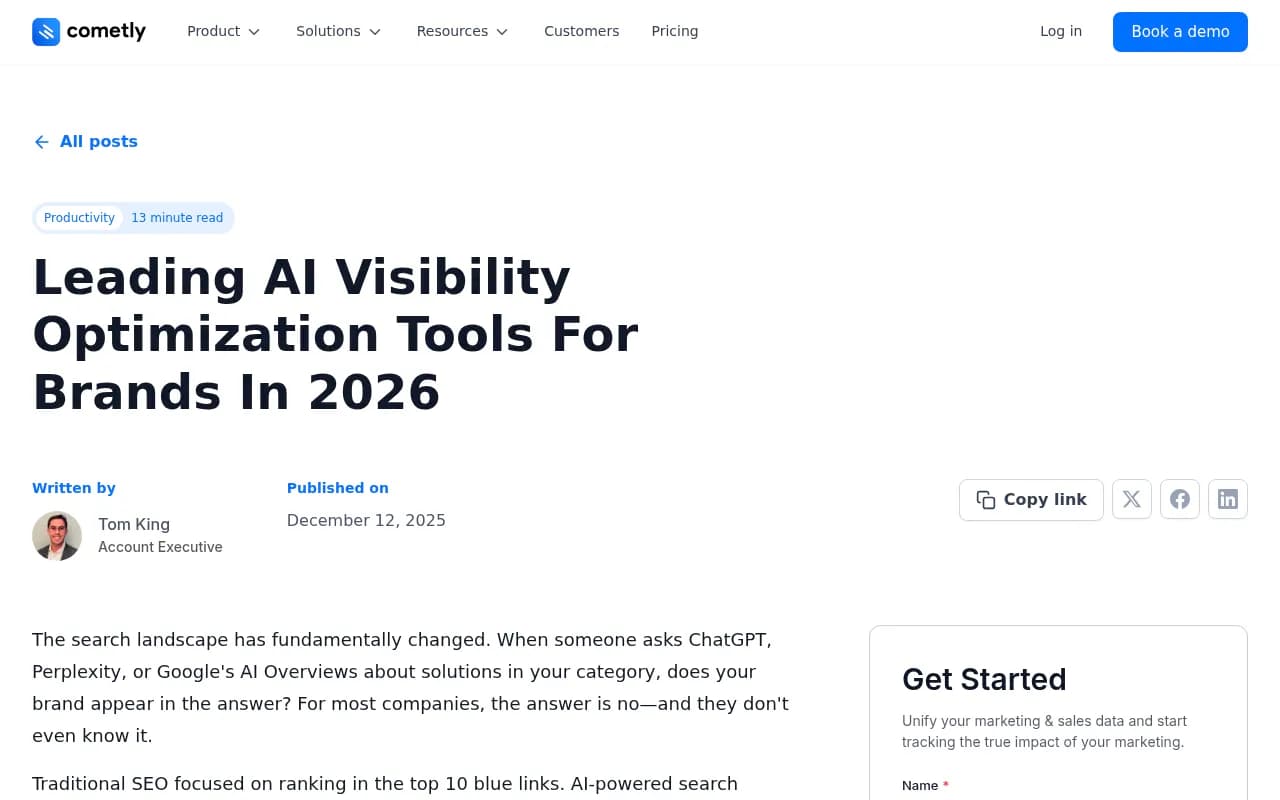
Tools like Otterly.AI and AthenaHQ sit in a similar position -- solid monitoring, limited action. The platforms that have pulled ahead in 2025 and into 2026 are the ones that answer "now what?" not just "what's happening."


That's not a knock on monitoring tools -- they served a real purpose when the market was figuring out what AI visibility even meant. But the market has moved. Teams now have budgets, KPIs, and clients expecting results. A dashboard that shows you a problem without helping you solve it is harder to justify.
Other alternatives worth knowing about
If you're evaluating options beyond just Peec.ai vs. Promptwatch, a few other tools are worth a look depending on your specific needs:
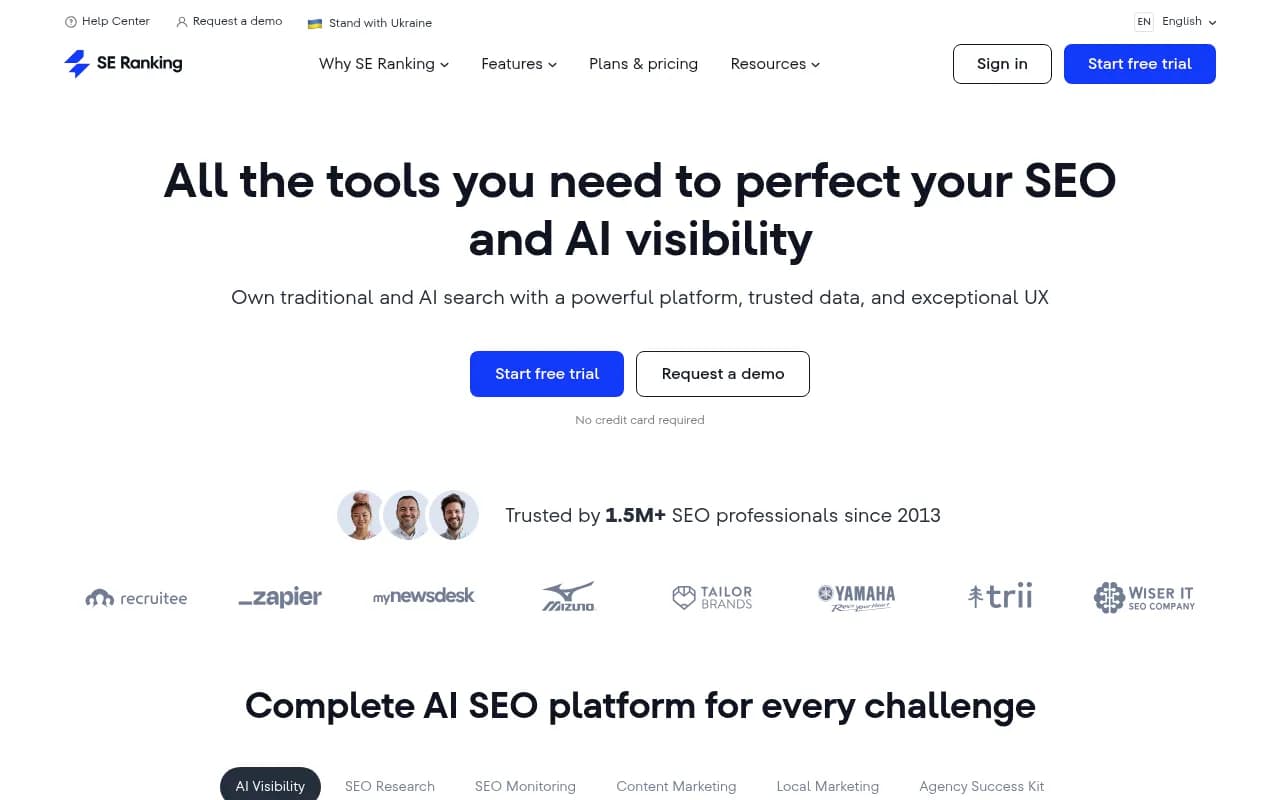
SE Ranking has built out an AI visibility toolkit as part of its broader SEO platform -- useful if you're already in their ecosystem and want AI monitoring without switching tools entirely.
Profound has strong feature depth and is worth evaluating for enterprise teams, though it comes at a higher price point and lacks some of Promptwatch's content generation capabilities.

AthenaHQ tracks across 8+ AI engines and has a clean interface, but like Peec.ai it's primarily a monitoring tool without content optimization built in.
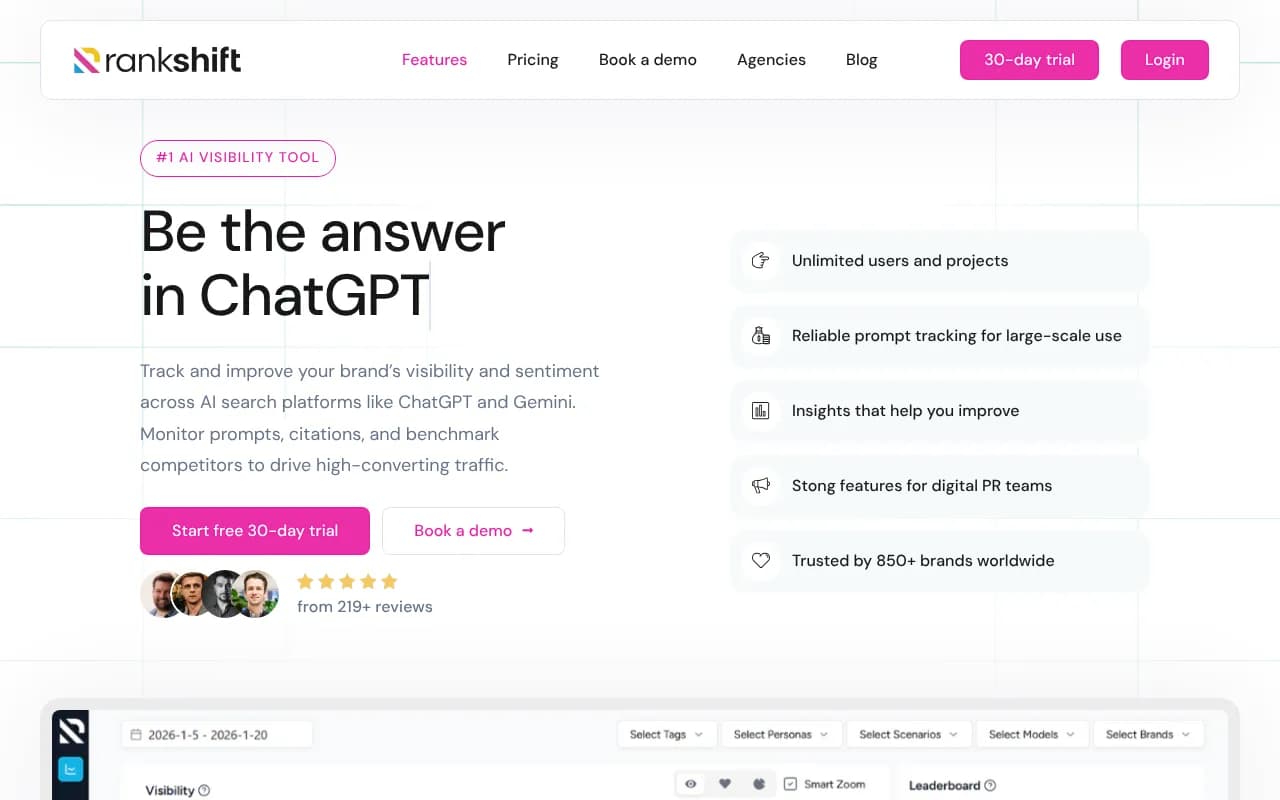
For agencies specifically, Rankshift offers solid core tracking with clean dashboards that are easy to share with clients.
The bottom line
Peec.ai had a good run as an early-mover in AI visibility tracking. It still does what it was built to do. But "track mentions across AI platforms" turned out to be the beginning of the job, not the whole job.
The marketers who switched to Promptwatch in 2025 weren't unhappy with monitoring -- they'd outgrown it. They needed to know which content to create, have help creating it, and be able to prove the results. That's a different product category, and Peec.ai isn't in it.
If you're still in the monitoring phase, Peec.ai works. If you've moved past it, the gap between what it offers and what you need is real, and it's not going to close.