Key takeaways
- Most enterprise teams started 2025 and 2026 with a pile of point tools: a prompt tracker, a crawler tool, a content tool, a reporting layer. Consolidation is a reaction to the overhead of stitching these together.
- The real divide between platforms is what happens after visibility: intelligence only, guidance, or execution. Compare on that, not on prompt counts.
- AI engines behave differently, so a consolidated stack still has to measure each one separately.
- Consolidating does not mean one vendor for everything. It means fewer handoffs between observation, diagnosis, content, and measurement.
- Run a 30-day overlap before cutting anything, and check your own crawler logs against any vendor's claims.
What consolidation actually means here
I keep hearing the same story from enterprise SEO leads. Twelve months ago they bought a prompt tracker. Then a second one, because the first one missed a market. Then a crawler analytics tool, a content optimizer, a sentiment product, and a dashboard layer to glue the exports together. Now someone in finance is asking why there are six line items for "AI visibility" and nobody can say which one moved revenue.
That is the pressure behind consolidation. It is less about a grand strategy and more about overhead: duplicated prompt sets, conflicting numbers, and a content team that waits on an SEO analyst who waits on a CSV.
One caveat before going further. I could not find solid survey data on how many enterprises are actually consolidating, so treat the "trend" here as something visible in how vendors are repositioning and how buyers are asking questions, not a measured percentage.
Why the point-tool stack stopped working
The category stopped being one category
A year ago, most tools could be described as platforms that showed where a brand appeared in ChatGPT, Gemini, and Perplexity. That description no longer holds. Publive's enterprise comparison guide puts it well: some platforms went deeper into prompt and market intelligence, some connect to existing SEO infrastructure, and others track AI-agent traffic, diagnose technical barriers, generate content, or analyze how AI describes a brand. They compete for the same budget but solve different jobs.
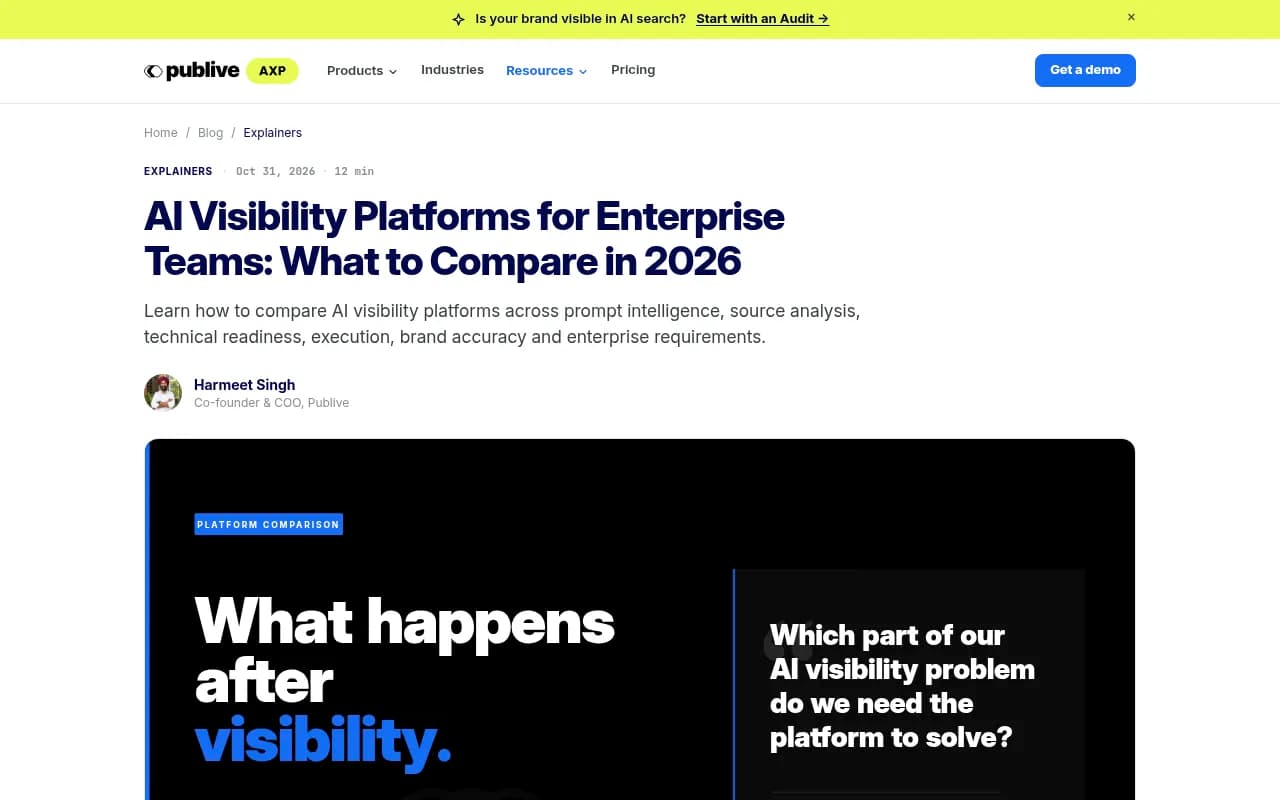
That is why buying gets harder. You can no longer ask "which tool has the most features?" The better question is which part of your AI visibility problem you need solved.
Monitoring without action is a reporting cost
Tracking is cheap to buy and expensive to live with. Frase cites a GlobeNewswire stat from April 2026 that 89% of brands appear in AI-generated results while only 14% of marketers track those citations. I have not verified that independently, but the gap it describes matches what I see: plenty of teams have a dashboard, few have a loop that turns a gap into a published page and then checks whether it worked.
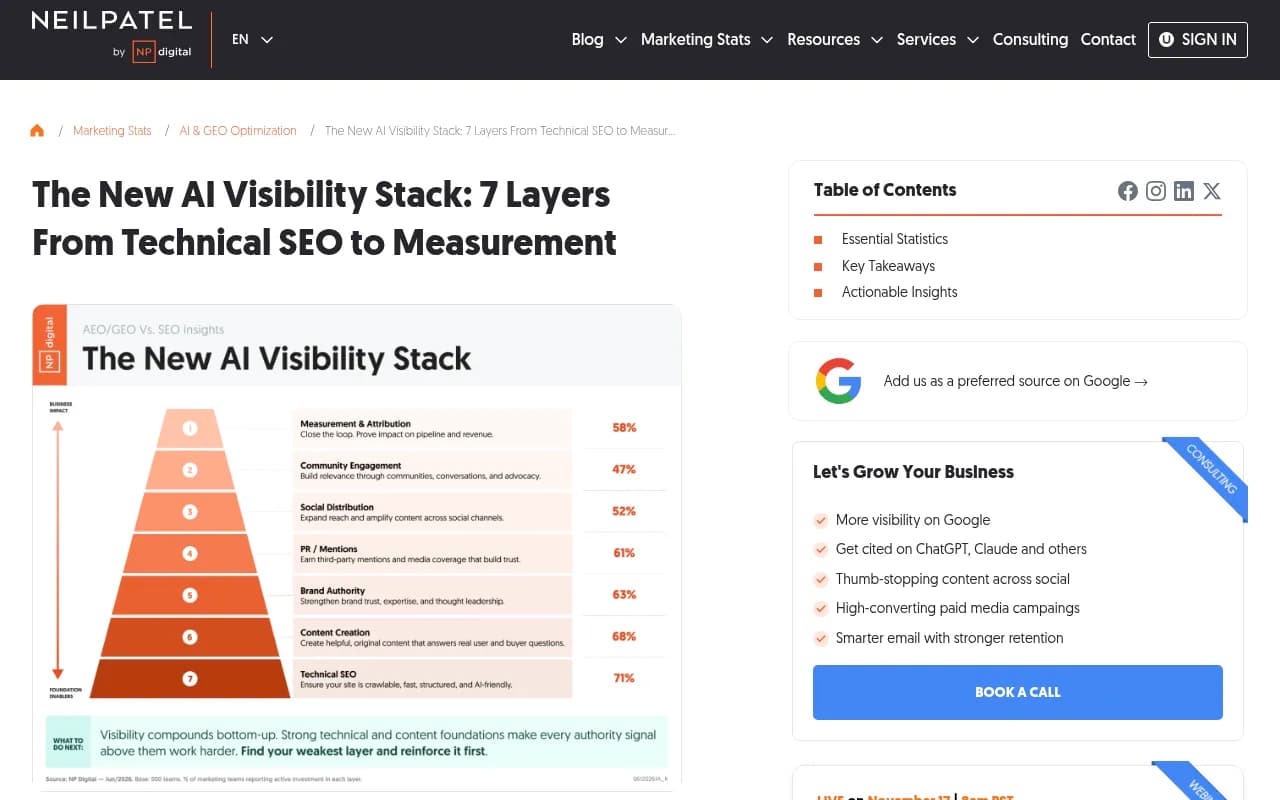
Neil Patel's write-up of the new AI visibility stack makes a related point. Most teams invest in the lower foundational layers, and fewer than half invest in the upper layers where business impact is highest. Consolidation is partly an attempt to move budget up the stack, away from collecting data and toward acting on it.
Engines disagree, and the data is fragmented
Point tools often cover a subset of engines or collect data through APIs rather than the real interfaces. That matters because engines differ in structural ways. According to Promptwatch's average sources per response report, ChatGPT cites about 5 sources per web-search answer, while Google AI Overviews and Perplexity sit near 10. Microsoft Copilot swung from under 2 to nearly 17 within a few weeks before settling low.
If your tools each measure a different slice, you end up reconciling numbers by hand. The report's advice is to measure each engine separately rather than assume one predicts another. A consolidated platform makes that comparison routine instead of a spreadsheet project.
Crawler data lives somewhere else
The technical side is the most common silo. Crawler logs sit with the engineering or CDN team, citation data sits with SEO, and nobody joins them. Promptwatch's AI crawler traffic data for June 8 to September 6, 2026 shows why that hurts: OpenAI's share of verified AI crawler requests fell from 94.8% in the week of June 8 to 14 to 79.8% in the week of August 31 to September 6. The mix is shifting, and a provider that is large in the aggregate but near zero in your own logs probably means you are blocked somewhere in robots.txt, CDN, or WAF rules.
You only catch that when logs and citation data are in the same view.
The six things enterprise buyers compare now
Publive's framework is the most useful one I found, so here it is in condensed form, with my own notes.
| Criterion | The question to ask | Why it matters for consolidation |
|---|---|---|
| Prompt and visibility intelligence | Are we measuring the questions that matter? | More prompts is not better intelligence. Ask whose methodology covers your decisions. |
| Source intelligence | Which pages and domains shape AI answers? | Tells you where to act, not just where you rank. |
| Technical readiness | Can AI agents access and process our site? | Separates access problems from content problems. |
| Execution | Does it flag a gap or help close it? | The biggest divide between platforms. |
| Brand accuracy | Does it catch AI describing us wrongly? | Matters most in regulated industries. |
| Enterprise fit | Markets, controls, data, workflows? | SSO, audit logs, security certifications, API access. |
Publive also adds a seventh criterion, claim governance, for regulated enterprises where public claims about rates or eligibility carry real consequences. It is not universal, but if you are in finance or healthcare it can decide the whole purchase.
The point I would underline: observation, diagnosis, and delivery are three different technical capabilities, not one checkbox. A vendor that says "we do it all" should be asked to show each one separately.
What a consolidated stack looks like
The market is splitting into a few shapes. None is universally right.
| Approach | Examples | Strength | Watch out for |
|---|---|---|---|
| Extend your existing SEO suite | BrightEdge, seoClarity, Semrush | One vendor, familiar workflows, procurement already done | AI data can be shallower and prompt sets more fixed |
| Enterprise monitoring and sentiment | Bluefish, Profound, Evertune | Deep multi-engine visibility and brand analysis | Often stops before content execution |
| Infrastructure-level retrievability | Scrunch | Changes what agents receive when they visit | Needs engineering input |
| End-to-end visibility and action | Promptwatch | Monitoring, crawler logs, content, publishing, and measurement in one loop | Fewer fit if you only want a standalone reporting layer |
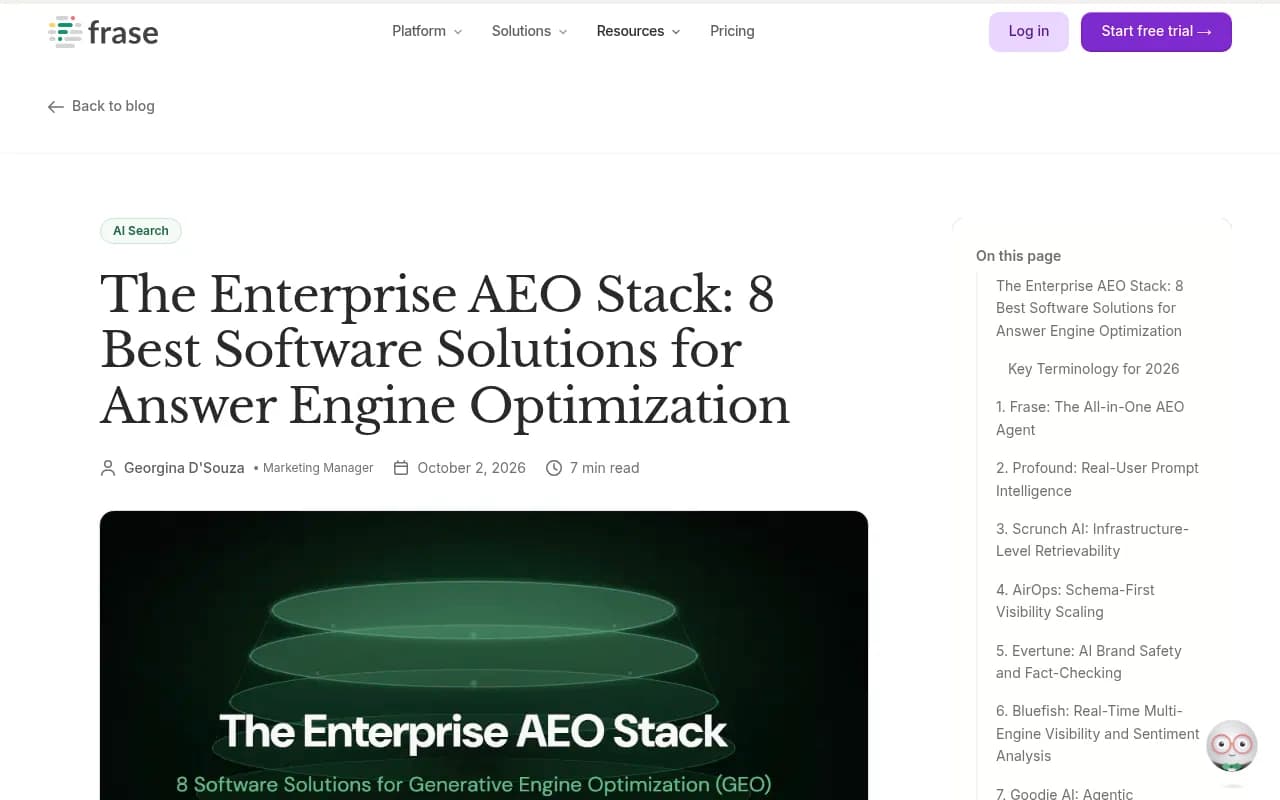
Frase's own enterprise guide frames the stack as consolidated workflows combining tools like Frase, Bluefish, and BrightEdge, and positions Scrunch as infrastructure-level retrievability that needs engineering support. That is a vendor's framing of its own category, so read it with that in mind, but the structure is a fair way to sort the market.
Where Promptwatch fits
Promptwatch is the option I would look at first if the goal is to collapse the monitor, diagnose, act, and measure steps into one product. It tracks brands across ChatGPT, Gemini, Claude, Perplexity, Google AI Overviews, Google AI Mode, Copilot and others using the real interfaces, then ties that to IP-verified crawler logs, visitor analytics, an Action Board, and a Content Agent that writes and publishes to WordPress, Webflow, or Framer. It is ISO/IEC 27001 certified and GDPR compliant, which tends to matter in enterprise security reviews.

The part relevant to consolidation is that crawler data, citation data, and traffic are in the same place, so you can tell whether a page is not being read, not being cited, or not driving visits. If you want to compare it directly, there are head-to-head pages such as Promptwatch vs Profound and the 2026 GEO platform comparison. Pricing is on the pricing page; check it there, since plans differ on things like the Content Agent and faster-than-daily tracking, which start at the Business tier.
The enterprise suite route
If your team already lives in BrightEdge or seoClarity, adding their AI modules is the path of least resistance.
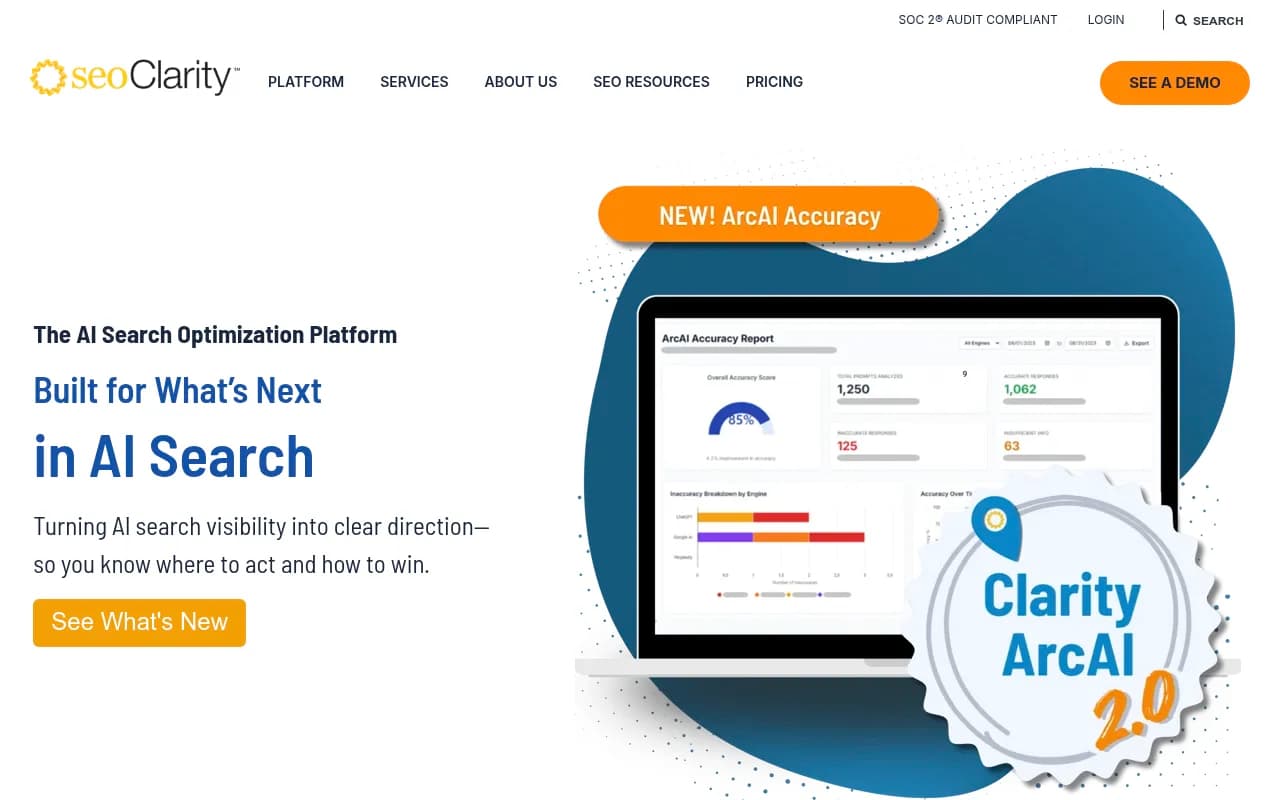
The tradeoff is depth. Suites tend to bolt AI tracking onto a keyword-centric model, and you should test whether prompt sets, per-engine reporting, and crawler visibility meet your needs before assuming they will.
The monitoring-first route
Bluefish and Profound are strong on multi-engine visibility and sentiment, which suits brand and communications teams that mainly need to know what AI says.

If you go this way, plan for how content and technical fixes get done elsewhere, because that is where the handoffs return.
The infrastructure route
Scrunch is the one that goes furthest into changing what an AI agent sees on your site, which is powerful and also means an engineering ticket.
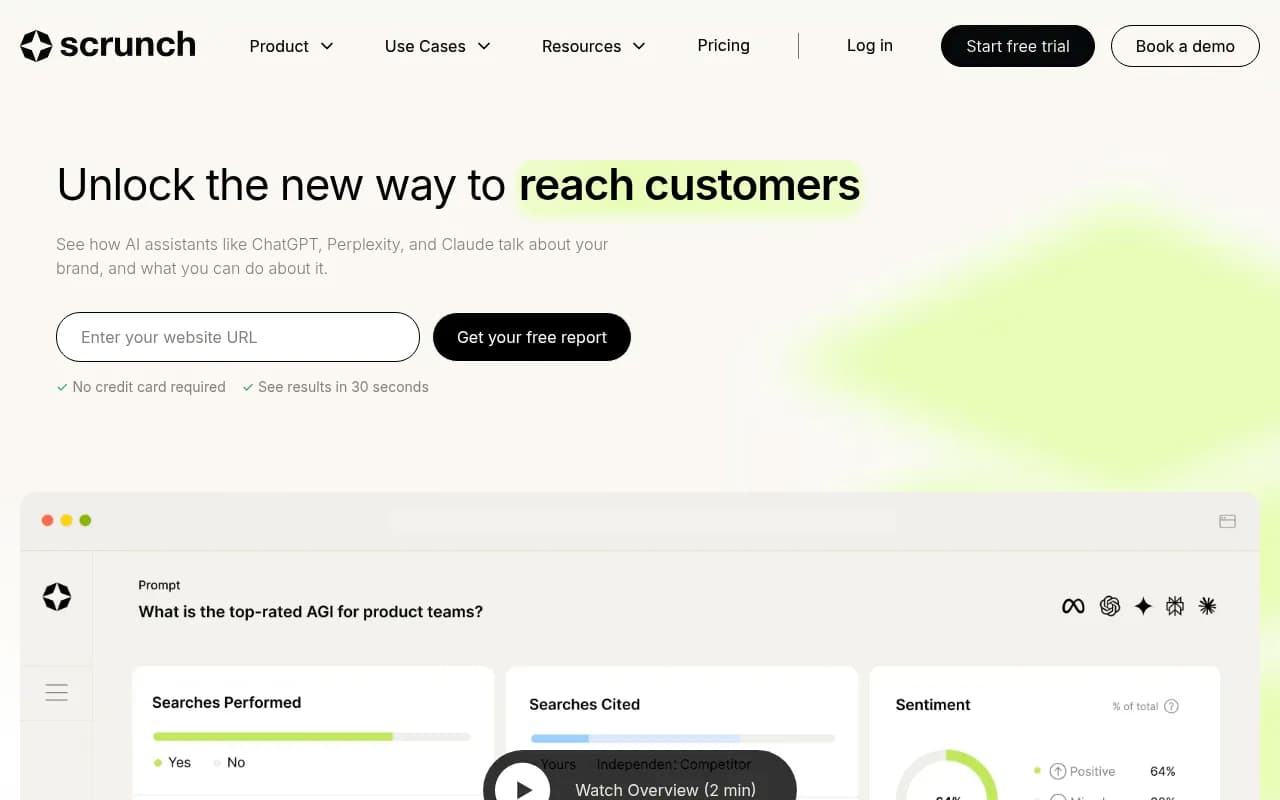
If you want to browse beyond these, the GEO software directory at bestgeosoftware.com lists a much wider set.
How to consolidate without losing coverage
1. Inventory what each tool does
List every AI-visibility-related subscription and mark which of the six criteria it covers. You will usually find two or three tools doing the same prompt tracking and nobody doing technical readiness.
2. Decide your post-visibility model
This is the choice that drives everything. Do you want intelligence (reports your team acts on), guidance (prioritized recommendations), or execution (the platform helps ship content and fixes)? Smaller content teams often benefit most from execution. Large teams with strong in-house content may only need intelligence.
3. Check engine and market coverage
Confirm the platform covers the engines your buyers use, in the countries and languages you operate in. Check whether it collects from real interfaces or APIs, since user-facing answers and citations can differ.
4. Test crawler visibility against your own logs
Compare the vendor's crawler picture to your server or CDN logs. Use the AI crawler traffic benchmark as a sanity check on the overall mix. If a major provider shows up in the benchmark but not in your logs, fix access before anything else.
5. Run a 30-day overlap
Keep the old stack running while the new one collects data. Numbers will not match exactly, because prompt sets and methodologies differ. What you are checking is whether trends agree and whether the new platform catches things the old one missed.
6. Move reporting last
Leadership dashboards are the stickiest part. Rebuild them in the new platform, or connect through Looker Studio or an API, before you cancel anything that feeds them.
What not to consolidate
Two things I would keep separate even in a consolidated stack. First, your classic rank tracking and technical crawler, such as Screaming Frog or Lumar, still do jobs that AI platforms do not. Second, if you are in a regulated industry, claim governance may need its own workflow with legal review, regardless of what any AI visibility vendor promises.
And be skeptical of "one platform does everything." The honest version is that consolidation reduces handoffs, not specialization. Verify each capability on its own.
Common mistakes
- Buying on prompt count. More prompts only helps if they map to decisions you want to influence.
- Ignoring execution. A great dashboard with no way to ship fixes just moves the bottleneck to your content team.
- Treating all engines as one. Measure ChatGPT, AI Overviews, and Perplexity separately.
- Cutting reporting first. You will lose historical context and leadership trust.
- Skipping security review. Check certifications, SSO, audit logs, and data handling early, not at contract stage.
The bottom line
Enterprise teams are consolidating because the cost of stitching together monitoring, crawler data, content, and measurement became higher than the cost of a single platform's gaps. Start by deciding whether you need intelligence, guidance, or execution, score vendors on the six criteria, and run an overlap before you cut anything. If a fast first read helps, Promptwatch's free AI visibility report shows how ChatGPT, Gemini, and Perplexity currently describe your brand, which is a decent baseline to compare any shortlist against.