Key takeaways
- Siftly's biggest strength is fit for the earliest stage: it's simple, cheap to start with, and gets a founder from zero to a first visibility report fast.
- It's a monitoring tool at heart. Once you need to know why you're invisible, not just whether you are, the product runs out of road.
- The most common reasons teams switch: no AI crawler logs, no traffic or revenue attribution, no content workflow, and limited prompt/model coverage at scale.
- Model updates can reshuffle visibility overnight, which makes monitoring-only tooling risky as your only GEO investment.
- If you're evaluating replacements, prioritize crawler analytics, citation-level detail, and an action path, not just dashboards.
What Siftly actually is
Siftly sits in the AI visibility camp of GEO tools: you give it a set of prompts you care about ("best CRM for solo founders," "alternatives to [your competitor]," and so on), and it checks how AI assistants like ChatGPT, Perplexity, and Gemini respond, flagging whether your brand shows up, where you rank in the answer, and who gets cited instead of you.
That's a genuinely useful thing for a seed-stage SaaS to know. Two years ago, almost nobody was checking this. In 2026, buyers are asking ChatGPT and Perplexity for shortlists before they ever land on your website, and if you're absent from those answers, you're losing deals you never knew existed. The market reflects this shift: AI-specific SaaS spend is growing far faster than the broader market, and 92% of SaaS companies are actively increasing AI investment in and around their products, per Brocoders' 2026 market analysis.
One caveat before we go further: there's an unrelated D2C logistics company also called Siftly, and some business directories mix the two up. If you're researching pricing or funding details and something looks off (shipping, fulfillment, founded 2021), you're looking at the wrong company. This guide is about the AI visibility tool.
What Siftly gets right for early-stage SaaS
Time-to-value, which is the whole ballgame right now
The single best thing about Siftly is how quickly it produces something useful. You sign up, enter prompts, and get a report. No implementation project, no onboarding calls, no data pipeline to configure.
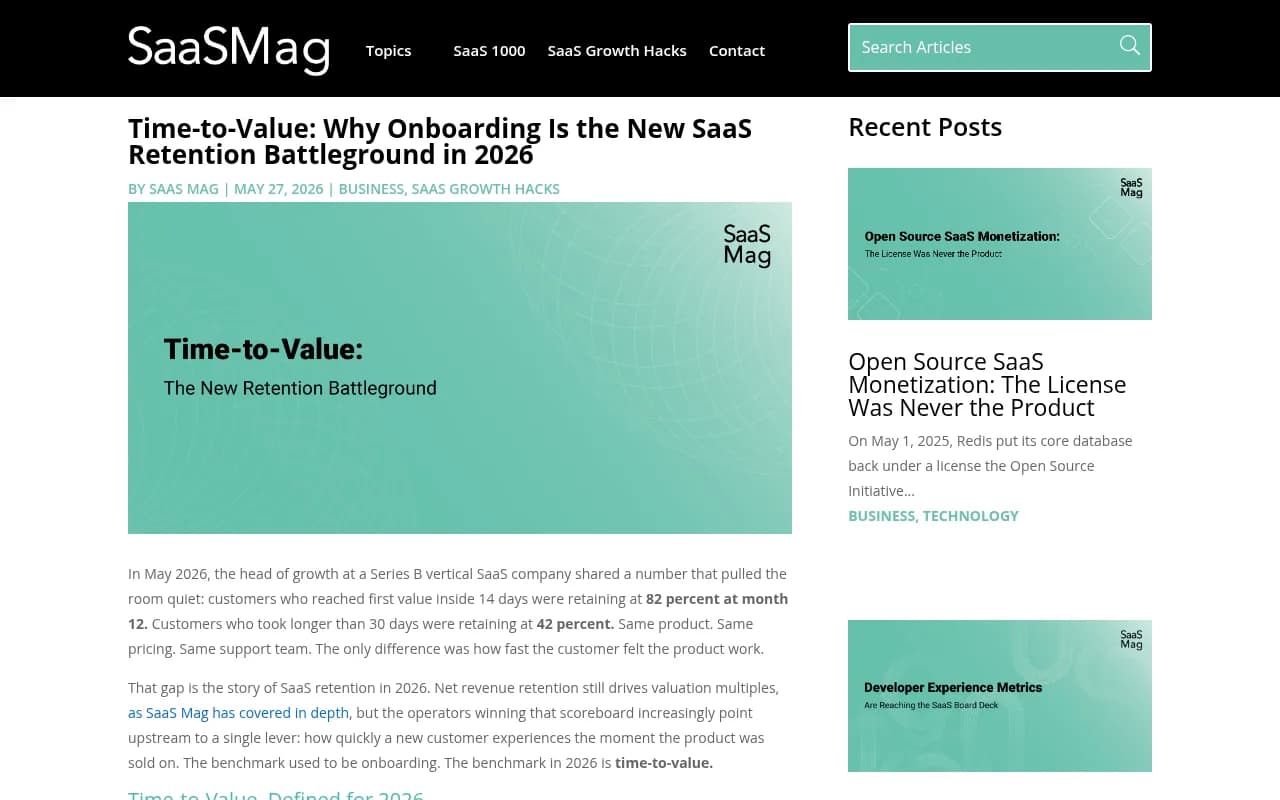
That matters more than it sounds. SaaS Mag's 2026 research on time-to-value found that customers who reach first value within 14 days retain at 82% at month 12, versus 42% for those who take longer than 30 days. That research is about your customers, but the same logic applies to the tools you buy: a visibility tool you can actually use in week one gets used. A tool that takes a month to configure becomes shelfware while your team ships product.
For a two-person founding team where nobody owns "GEO" as a job, this is the difference between having AI visibility data and having good intentions.
Pricing that doesn't need a conversation
Early-stage SaaS teams can't justify $500/month for a monitoring dashboard, and honestly, they shouldn't have to. Siftly's positioning is squarely at the low end of this category, which is the right call for its audience. At the stage where you're validating whether anyone will pay for your product at all, a lightweight visibility check is a reasonable expense. A full GEO platform is not.
This is the same "validate first, build second" logic that Brocoders identifies as the winning founder pattern in 2026: 42% of SaaS startups fail because nobody wanted what they built, and the cheap way to avoid that is to test before committing. Siftly fits that pattern for the GEO question specifically. Is AI search even sending interest toward your category? Who does it recommend? That's a validation question, and Siftly answers it cheaply.
Focus is a feature
Siftly doesn't try to do everything, and at the seed stage that's a strength. The interface shows you prompts, mentions, and competitors without burying you in enterprise-grade configuration. Founders I've heard from describe it as the first AI visibility tool they didn't need a tutorial for. When your entire marketing org is one person who also does support and sales calls, a tool you can check in ten minutes on a Friday matters.
The gaps that push teams to look elsewhere
The problems start when the questions change. "Are we mentioned?" is a seed-stage question. "Why aren't we mentioned, and what do we do about it?" is the question you ask once you have customers, a content budget, and a board slide about pipeline. Siftly answers the first well and the second poorly. Here's where teams hit walls.
No crawler logs, so no "why"
The most common complaint I've seen from teams that outgrow Siftly: it tells you that you're invisible but not why. The why usually lives in AI crawler behavior. When ChatGPTBot, ClaudeBot, or PerplexityBot visit your site, which pages do they read? Do they hit redirect loops, 404s, or robots.txt blocks? Is your key comparison page even being crawled?
This is the difference between a prompt tracker and a visibility platform. Platforms like Promptwatch log AI crawler requests against your site and trace the crawl-to-citation path per page, so you can see that, say, your pricing page gets crawled constantly but never cited while a competitor's comparison page gets both. That's diagnostic information. A mention score is not.

Crawler data also tells you where the traffic is heading industry-wide. Meta's crawler, for instance, went from roughly 2% to nearly 38% of all tracked AI crawler requests between mid-July and August 2026, per Promptwatch's Meta web indexer data. If a new AI search surface is ramping up its index, you want to know whether it can read your site. A prompt tracker can't tell you.
Monitoring only, no action path
Siftly surfaces gaps. It doesn't close them. There's no content brief generation, no CMS publishing, no prioritized task list. That's fine when your content strategy is "write blog posts when we have time." It stops being fine when you have a content cadence and want your GEO work plugged into it.
The tools winning this category in 2026 are the ones that move from insight to output: content gap analysis mapped against actual AI responses, briefs built from what the models cite, and in Promptwatch's case, automated Content Agents that plan, write, and publish GEO-optimized articles straight to Webflow, Framer, or WordPress. The comparison is stark. One tool tells you the answer is wrong; the other hands you the corrected answer and a publishing schedule.
No traffic or revenue attribution
Mentions are a proxy. What a Series A SaaS actually needs to know is whether AI-driven traffic converts, and how those conversions compare to organic search or paid. Siftly doesn't do visitor analytics, so you can't see whether that Perplexity citation produced a trial signup or just a curious click. When your CMO has to defend the GEO budget in a growth review, "we got mentioned 14% more" is a much weaker slide than "AI traffic converts at 2x our blended rate," which is the kind of result Crisp reported after moving to a full visibility stack.
Scale limits on prompts, models, and geography
Early on, tracking 20 prompts in ChatGPT is plenty. Then you notice Gemini answers differently. Then you expand to the UK and Germany and discover the answers are completely different there. Then you want to know which sources the models are actually citing, because Promptwatch's data on average sources per response shows citation behavior varies meaningfully across ChatGPT, Claude, Perplexity, and Gemini, and a tool that only samples one or two surfaces gives you a distorted picture of your visibility.
Lightweight trackers tend to hit limits here: fixed model sets, limited prompt volumes, no country-level breakdowns. Fine at seed. Constricting by Series A.
Model volatility punishes monitoring-only stacks
One more thing that doesn't get enough attention: AI search behavior is unstable. When GPT-5.3 rolled out in March 2026, the average number of citations per ChatGPT response dropped across all models, per Promptwatch's citation drop research. Fewer citations per answer means the competitive window per prompt got tighter overnight. Similar shifts happen regularly: ChatGPT Search started using the site: operator at scale in August 2026, roughly doubling searches per response, and Reddit's citation share in ChatGPT collapsed from about 4% to 0.5% in a single day.
The lesson isn't that any particular tool is doomed. It's that visibility is a moving target, and a tool that only snapshots mentions without tracking citation trends, source types, and crawler behavior will mislead you during exactly the transitions when you most need accurate data.
How Siftly compares to the alternatives
If you're shopping around, here's how the realistic options stack up for a SaaS that's past the seed stage:
| Tool | Monitoring depth | Crawler logs | Content workflow | Traffic attribution | Best for |
|---|---|---|---|---|---|
| Siftly | Basic prompt tracking | No | No | No | Pre-seed/seed teams getting a first read |
| Promptwatch | Full: prompts with volumes, citations, sentiment, Reddit/YouTube | Yes, 400+ crawlers | Yes, automated agents with CMS publishing | Yes | Teams that want to fix visibility, not just watch it |
| Peec AI | Multi-language prompt tracking | No | Limited | No | Teams needing non-English market coverage |
| Otterly.AI | Affordable prompt tracking | No | No | No | Budget-conscious solo monitoring |
| Airefs | Low-cost AI visibility tracking | No | No | No | Side-project and very early stage budgets |


A few notes on that table. Peec AI earns its spot if your market is genuinely multilingual; its language coverage is better than most at its price. Otterly and Airefs compete with Siftly directly on price and simplicity, so if Siftly's specific gaps bother you but you're not ready for a full platform, those are the like-for-like swaps. Promptwatch is the step-change: it's the option when you want the diagnostic layer (crawler logs, citation analytics) and the execution layer (content generation, publishing, prioritized actions) in one place. It's also the only one on this list that will tell you what to do on Monday morning.
If you want a broader view of this category, the AI rank tracking tools directory at ai-rank-tools.com has a much longer list with pricing and feature breakdowns.
When to stay, and when to switch
Stay on Siftly if you're pre-revenue or pre-seed, your prompt list is under 30, you only care about one or two markets, and your content strategy is still aspirational. It answers the question you can afford to ask at that stage, and moving to a heavier tool prematurely is a classic early-startup mistake: paying for capabilities you don't have the team to use.
Start looking elsewhere when any of these become true:
- You've had the "why aren't we showing up?" conversation and nobody could answer it.
- AI platforms are showing up in your analytics as a traffic source, and you can't connect that traffic to signups or revenue.
- You're publishing content on a schedule and want GEO baked into the briefs rather than bolted on afterward.
- You're tracking more than one market, or your prompt list has outgrown what your plan covers.
- An investor or customer asked for your AI visibility numbers and your answer was a screenshot.
What to demand from your next platform
Whatever you switch to, evaluate against these, because the category is full of trackers dressed up as platforms:
- AI crawler logs, so visibility scores come with an explanation.
- Citation analytics at the page and source level, including offsite mentions on Reddit and YouTube, since those surfaces influence recommendations even as their citation shares swing.
- Real traffic attribution from AI platforms to your site, ideally down to conversions.
- Prompt intelligence beyond binary mention: volumes, difficulty, and how AI expands a prompt into sub-queries.
- A content path: gap analysis, briefs, and ideally publishing, so insight turns into output.
- Multi-model and multi-region coverage, because answers genuinely differ by model and country.
The verdict
Siftly is a good product for the stage it's built for. It gets a founder from "I have no idea what ChatGPT says about us" to a clear picture of mentions and competitors in an afternoon, at a price that doesn't require approval from anyone. That's not a small thing, and teams that start there are making a rational choice.
The honest limitation is that it's a thermometer, not a treatment. It tells you the temperature, and the moment your business depends on changing that temperature, you need tooling that explains the reading and helps you act on it. In 2026's market, where AI answers increasingly decide shortlists and citation behavior shifts with every model update, the teams that win aren't the ones watching the dashboard most closely. They're the ones whose tools close the loop from "invisible" to "published and cited."