Key takeaways
- AEO isn't one task, it's at least four: monitoring what AI engines say about you, auditing why they say it, restructuring content for extraction, and distributing to places AI actually cites.
- Schema markup and llms.txt files, the two tactics everyone recommends, show little to no measurable effect on AI citations according to controlled tests from Ahrefs and Otterly.AI in 2026.
- Mid-authority domains (DR 46-75) now pull in nearly half of all ChatGPT citations, so you don't need Forbes-level authority to show up.
- ChatGPT started using the
site:operator at scale on August 8, 2026, meaning thin or poorly indexed category pages now directly cost you citations. - Tools in this space split into three real categories, monitoring-only trackers, audit tools, and platforms that also generate and publish content, and which one you need depends on where your AEO program actually is.
AEO is a label for four different jobs, not one
Everyone defines answer engine optimization slightly differently, but strip away the marketing copy and it comes down to the same thing: structuring content and brand signals so ChatGPT, Google AI Overviews, Perplexity, and the rest pick your page as the source behind their answer, instead of a competitor's.
That's a clean definition. It's also useless until you break it into tasks, because "optimizing for answer engines" in practice means four separate jobs, and most tools only do one or two of them.
- Monitoring: running prompts against AI engines on a schedule and tracking whether your brand shows up, how often, and what gets said.
- Diagnosis: figuring out why you're invisible, which means crawler logs, citation-type analysis, and domain authority checks.
- Content restructuring: rewriting pages so they're extractable, answer-first, and backed by evidence.
- Distribution and publishing: getting optimized content live, and getting mentioned on the third-party sites AI engines actually cite.
I'll go through what each job looks like concretely, with the tools that handle it, because the gap between "AEO strategy" slide decks and what a $99/month tool actually does is bigger than most people expect.
Job 1: Monitoring, the part everyone starts with
Monitoring tools run a set of prompts against ChatGPT, Perplexity, Gemini, Claude, and Google's AI surfaces, then report whether your brand got mentioned and where. This is the most crowded part of the market by far, there are easily 150+ tools doing some version of this.
Profound is the best-funded name here, having raised $96M at a $1B valuation, and its Growth plan at $399/month covers ChatGPT, Perplexity, and Google AI Overviews with 100 tracked prompts. Scrunch AI runs $250/month for 125 prompts across four platforms and leans into what it calls "Agent Pages," serving structured data to bots and visuals to humans on the same URL.
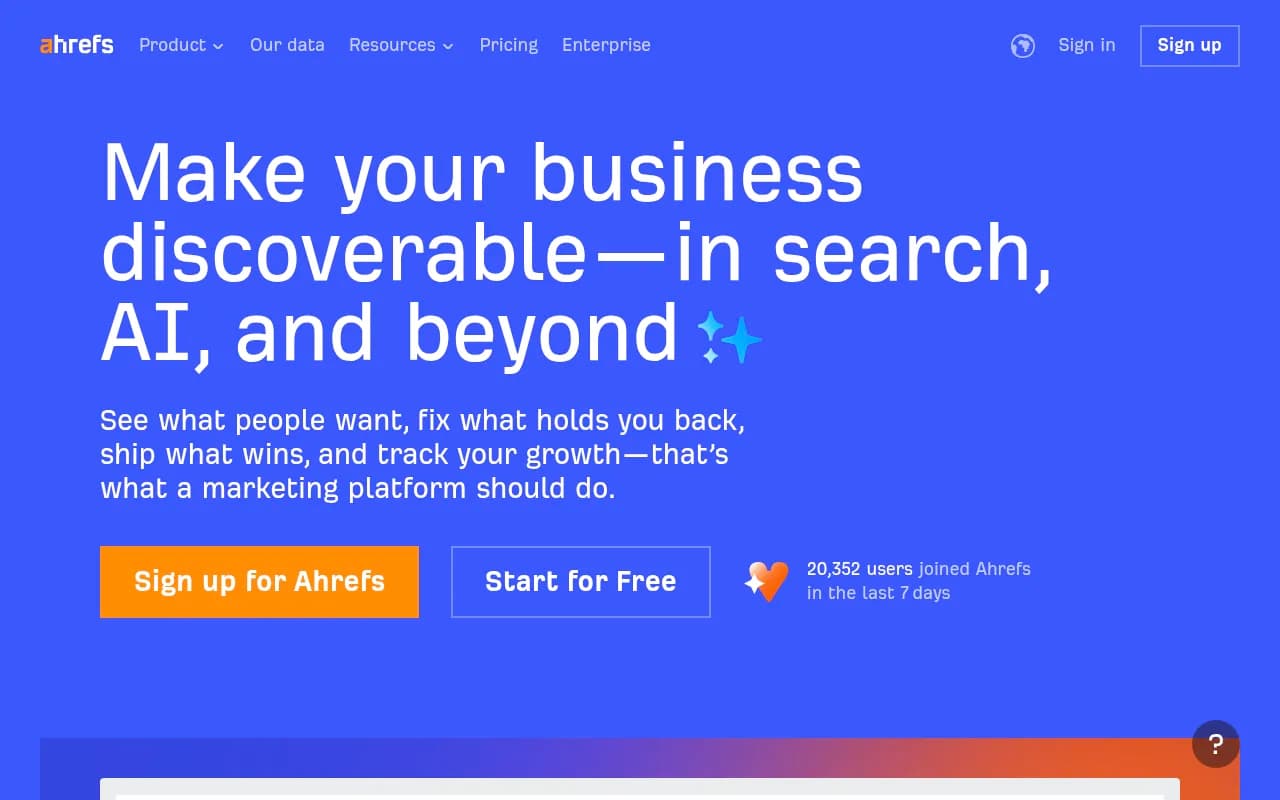
Ahrefs Brand Radar prices per AI index, $199/month for one, $699/month for all six, with 2,500 tracked prompts included. Worth knowing: its prompt database is built from Google's People Also Ask data rather than native AI search queries, which is a real limitation if your buyers phrase questions differently in ChatGPT than in Google.

At the budget end, Otterly.AI and Peec AI offer narrower but cheaper monitoring, and HubSpot's AEO tool starts at $50/month with 25 prompts, which is about the lowest entry point for a dedicated tool rather than a bundled feature.


The problem with monitoring-only tools is they answer "was I mentioned?" and stop there. They don't tell you why you weren't, or what to actually fix.
Job 2: Diagnosis, the part most tools skip
This is where things get more interesting, and where most of the market has a gap. Diagnosis means understanding the mechanics behind citations, not just counting mentions.
Peec AI has pushed into this with server-log integration that audits 40+ AI crawler agents and checks robots.txt crawlability in real time, which is more infrastructure-focused than most competitors bother with. Promptwatch goes further with full AI crawler logs, showing exactly when ChatGPTBot, ClaudeBot, PerplexityBot, and 400+ other crawlers visit your site, what they read, and whether they hit errors, then connects that to a citation rate per page so you can see the crawl-to-citation path directly.

This matters more than it sounds like. Promptwatch's own data shows the ground shifting under this discipline constantly. On August 8, 2026, ChatGPT started using the site: operator at scale, site-scoped fanout queries jumped from 0.37% to 16.8% of all fanout queries overnight, roughly a 46x increase, and stayed there. That means ChatGPT is now actively searching specific domains directly, so a thin category page or a weak internal search setup costs you a citation in a way it didn't two months earlier. A tool that only counts mentions can't tell you that's happening. A tool with crawler logs can.
Domain authority is another place diagnosis tools earn their keep. Promptwatch's citation-share data for August 2026 found mid-authority domains, DR 46-75, pulled in nearly half of all ChatGPT citations, while top-tier DR 91-100 sites shrank from about 7% to roughly 3% of citations after August 14. If your AEO strategy assumes you need Forbes-level authority to get cited, that data says otherwise, you need to be in the DR 46-90 range and structurally extractable, which is a much more achievable target for most brands.
The schema markup myth
Here's where diagnosis tools have actually been useful in a way most AEO advice hasn't: testing whether the standard recommendations even work.
Ahrefs ran a controlled experiment across 1,885 pages in 2026 and found adding JSON-LD schema produced no meaningful citation uplift on ChatGPT or Google's AI Mode, and was associated with a small decline in AI Overview citations on the treated pages. A separate academic analysis on SSRN found schema presence had a significant negative association with AI citation, with Google's organic rank position being the dominant predictor instead. Otterly.AI's own direct-fetch testing found six of seven AI platforms couldn't even access raw schema data when fetching pages live.
The likely explanation is that LLMs tokenize JSON-LD as plain text rather than parsing it as structured data. Schema's real value is indirect, it helps Google's Knowledge Graph, which helps organic rank, which helps AI Overview citation odds since most AI Overview citations draw from the top-10 organic results anyway. It's not a direct lever on LLM citation the way the SEO industry has been pitching it.
Similarly, llms.txt, the proposed convention for giving AI systems a clean markdown version of your site, has basically no effect on consumer AI search. Promptwatch's own data found HTML pages account for 99.94% of AI search citations across ChatGPT, Claude, Perplexity, and Google AI Overviews, markdown files are just 0.05%. Google confirmed in June 2026 that it doesn't use llms.txt at all for Search. Where it does work is AI coding agents, Cursor, Claude Code, GitHub Copilot actively fetch /llms.txt when pointed at documentation. That's a real use case, it's just not an AEO one.
Job 3: Content restructuring, the part that actually moves numbers
This is the job with the most agreement across sources: answer-first structure, atomic paragraphs, and evidence beat tactics like schema stuffing.
The pattern most practitioners converge on is a direct 30-60 word answer at the top of a section, followed by two or three short paragraphs of supporting detail, a scannable list, and a concrete example. Headings should mirror how people actually phrase questions in a chat interface, not formal keyword phrases.
What gets cited has shifted meaningfully through 2026. Promptwatch's citation-type data for ChatGPT in August 2026 shows product pages at roughly 28.7% of citations, listicles at 10.1%, how-tos at 6.3%, with how-to content more than doubling from 4.3% to 9.1% in the back half of the month. For Google AI Overviews in July 2026, product pages overtook listicles as the top cited format for the first time, a shift that mirrors ChatGPT's move toward brand-owned commercial pages over third-party aggregators.
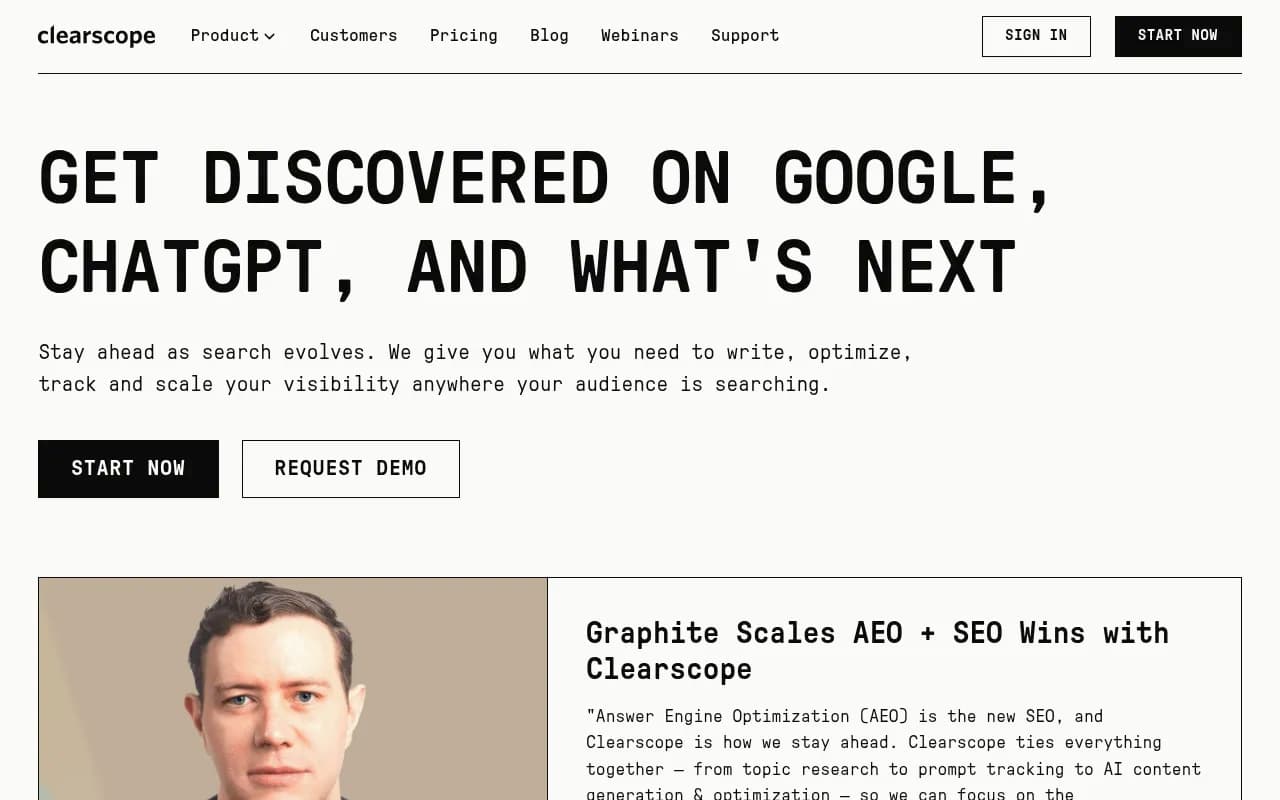
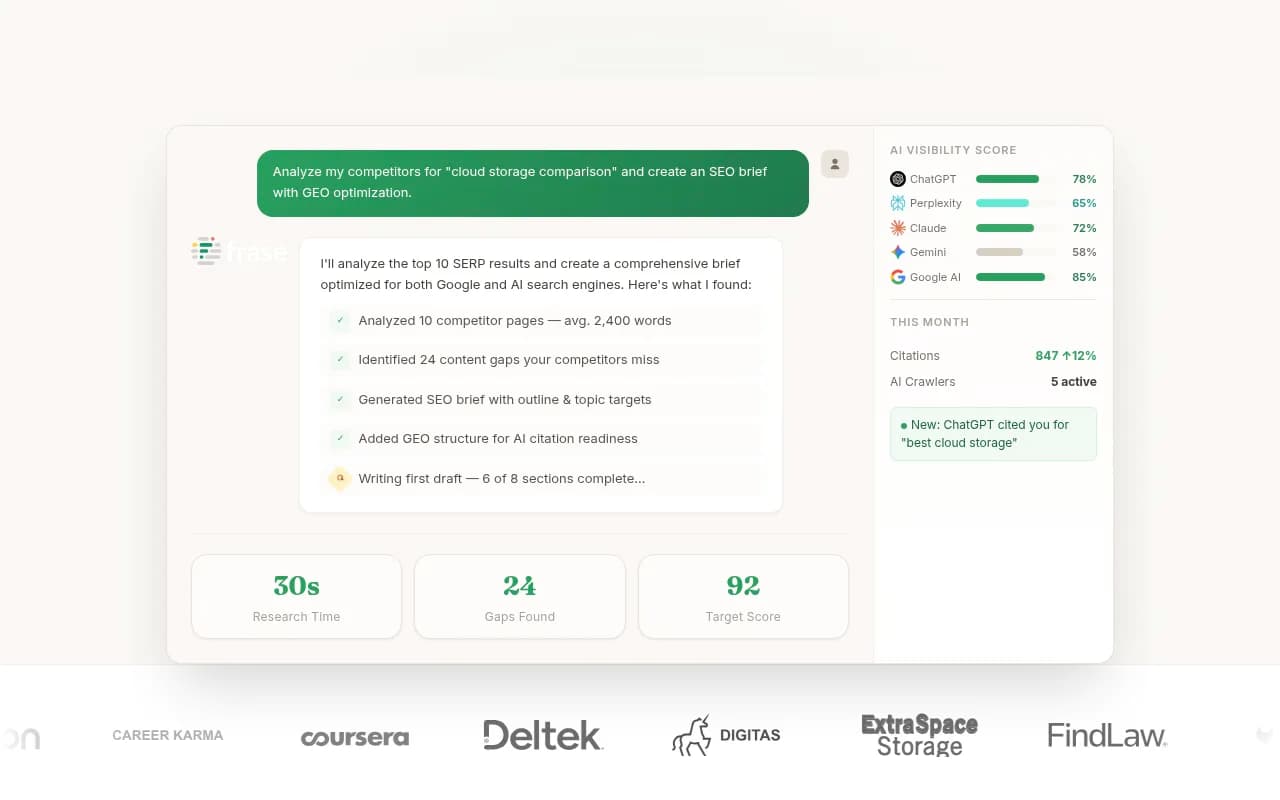
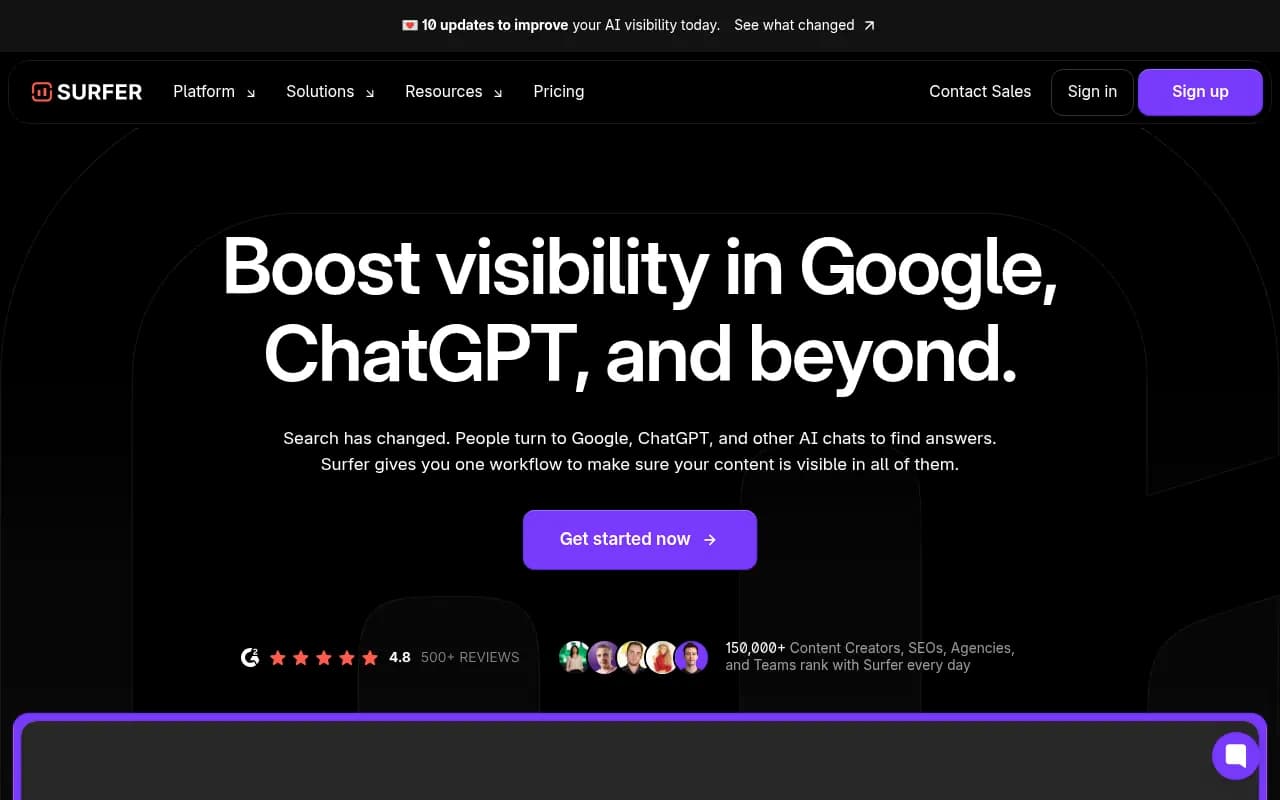
Tools built specifically for this restructuring work include Clearscope and Frase for content optimization with AI-search scoring layered in, and Surfer SEO for structural guidance grounded in what's already ranking.
Promptwatch also runs content gap analysis here, mapping your existing pages against what AI engines are actually answering, with coverage scores that flag where you have nothing and competitors do.
Job 4: Distribution and publishing, the part most AEO advice ignores
The fourth job gets talked about least but might matter most: getting your optimized content live, and getting referenced on third-party sites AI engines already trust.
HubSpot's own AEO guidance points out that a strong AEO strategy has to go beyond your own domain, to LinkedIn, Reddit, YouTube, third-party blogs, and review sites, essentially everywhere answer engines look for consensus. That's harder to execute than it sounds, because it requires someone, or something, actually writing and publishing content on a schedule, not just identifying where the gaps are.
This is the piece most monitoring tools simply don't touch. Profound has moved into it with its Agents feature for brief-to-draft generation. Scrunch's content generation was still listed as "coming soon" at the time most comparisons were written. Promptwatch's Content Agents plan, write, and publish directly to Webflow, Framer, or WordPress on a schedule, either through a review inbox or fully automated, and pair that with Unified Actions, a prioritized to-do list generated from your actual visibility and crawler data rather than generic best-practice advice.
Comparing the three tiers in practice
| Category | What it does | Example tools | What it misses |
|---|---|---|---|
| Monitoring only | Runs prompts, tracks mentions and sentiment | Otterly.AI, Peec AI, HubSpot AEO | No crawler data, no content fixes, no publishing |
| Monitoring + audit | Adds crawler logs, domain analysis, technical checks | Ahrefs Brand Radar, Scrunch AI | Content generation often limited or absent |
| Full stack (monitor, diagnose, create, publish) | Connects visibility data to actual content fixes and CMS publishing | Promptwatch, Profound (Agents) | Higher price point, more setup |
What this actually means for a team starting from zero
If you're setting up an AEO program for the first time, the order matters more than the tool list. Running content restructuring before you know where you're invisible is guesswork with extra steps.
Start with monitoring to establish a baseline, which queries trigger a mention, which trigger a competitor instead. Then move to diagnosis, specifically crawler logs and citation-type breakdowns, to understand why. Only then does content restructuring have a target to aim at. Distribution closes the loop, but it's the step most teams underinvest in because it requires ongoing production, not a one-time audit.
Tools like Promptwatch are built around that exact sequence rather than stopping at step one, which is the main reason it's worth evaluating alongside the cheaper trackers even if the sticker price is higher. For a broader side-by-side of platforms in this category, the GEO software directory at bestgeosoftware.com is a reasonable starting point to see how pricing and feature sets compare across the full field.
The pitfalls that show up across every source
A few mistakes come up repeatedly in 2026 commentary on AEO, regardless of which tool vendor is writing it.
Treating AEO as a replacement for SEO rather than a complement to it is the most common one. Good SEO fundamentals, crawlability and organic rank position, still heavily influence AI citation odds, since a meaningful share of AI Overview citations pull straight from top-10 organic results.
Publishing dozens of thin pages targeting slight prompt variations is another, and Google has explicitly warned this can trip its scaled content abuse policies. Adding unsupported statistics or AI-generated claims without evidence is a third, answer engines increasingly reward verifiable sourcing, not confident-sounding prose.
And treating AEO as a one-time project rather than continuous monitoring is maybe the biggest one, given how fast the mechanics change. Reddit's share of ChatGPT citations held steady around 3.8% for weeks, then collapsed to under 1% in a single day on August 14, 2026, an 86% relative drop with no warning. Whatever strategy assumed steady Reddit presence that morning was wrong by that afternoon. That's the kind of shift a quarterly audit will always catch too late, and it's the argument for ongoing monitoring over a one-off AEO checklist.
If your team is weighing whether to build this in-house or bring in outside help, an agency focused on AI search and GEO, like 1001 SEO Media, can shortcut a lot of the trial and error described above, particularly on the diagnosis and distribution steps most teams underbuild on their own.