Key takeaways
- Passionfruit makes the strongest revenue claims (URL-level revenue attribution, GA4 integration), but they are vendor claims and its pricing is inconsistent across its own pages.
- Trakkr offers a GA4 attribution workflow that compares AI traffic with prompt rankings and citations. That is correlation reporting, not proven revenue attribution.
- LLMclicks.ai is an accuracy and hallucination tool. I found no GA4, revenue or conversion attribution feature, so it does not answer the revenue question.
- All three depend on your own GA4 or CRM data. Industry estimates say only about 30-40% of AI-driven visits show up as AI referrals in GA4.
- I found no independent head-to-head test of these three tools, so treat every ROI number below as unverified.
What "proving revenue impact" actually requires
Most AI visibility tools answer one question: was my brand mentioned? That is useful, but a CFO does not care about mentions. They care about pipeline.
Proving revenue from AI search takes three links in a chain. First, you need to know which prompts and answers mention or cite you. Second, you need to know which of those lead to a visit. Third, you need to tie those visits to conversions and closed revenue in GA4 or a CRM.
The first link is what every tracker does. The second and third are where tools diverge, and where the marketing copy gets ahead of the evidence.
There is also a structural problem nobody can fully fix. Swydo estimates that only about 30-40% of AI-driven visits appear as AI referrals in GA4. Untagged AI clicks land in Direct, and traffic from AI Overviews and AI Mode sits inside Organic, according to ThriveStack's research on AI search attribution. Last-click models give AI zero credit when a later touchpoint closes the deal. So any tool claiming clean revenue attribution is working with a leaky pipe.
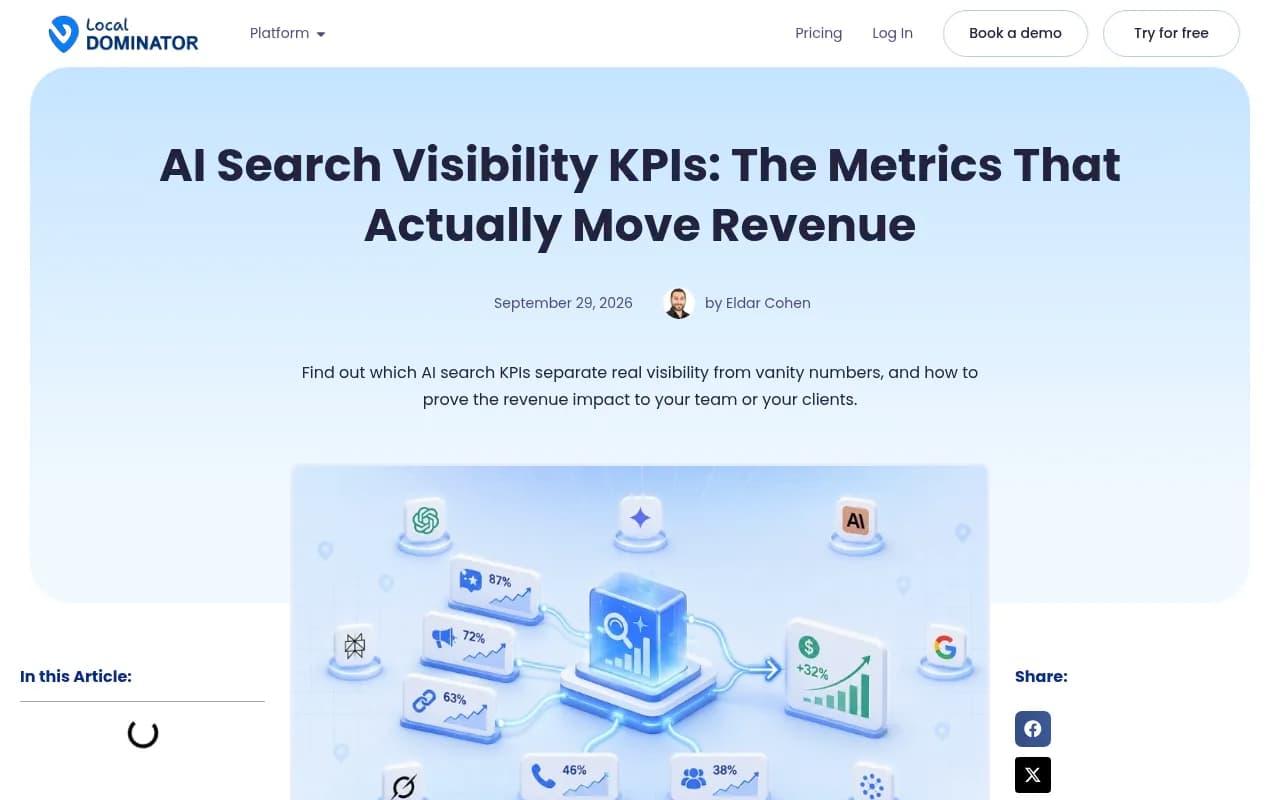
The Local Dominator piece above frames the measurement gap well: a customer asks ChatGPT for a recommendation, no click happens, and the sale is credited to Direct or branded organic search.
The three tools at a glance
| Trakkr | Passionfruit Labs | LLMclicks.ai | |
|---|---|---|---|
| Core angle | Daily multi-model tracking, reporting, agency portals | GEO tracking plus revenue attribution claims | Accuracy and hallucination detection |
| Models covered | ChatGPT, Claude, Gemini, Perplexity, AI Overviews, Grok, DeepSeek, Meta AI | ChatGPT, Gemini, Perplexity, Claude | ChatGPT, Perplexity, Claude, Gemini, Copilot |
| Revenue feature | GA4 AI search attribution workflow (correlation) | Revenue-by-keyword attribution, GA4 integration, Revenue Decay Alerts (vendor claims) | None found |
| Entry price | $100/mo (Growth) | $19/mo (Starter) per terms page, but conflicting on other pages | Lifetime deals from $159; $49/mo cited on vendor blog |
| Trial | 14 days, card required | 7 days | 14 days |
| Best for | Teams that want broad tracking and reporting | Teams who want revenue mapping and will verify it | Brands worried about wrong AI answers |
Trakkr: solid tracking, correlation-based revenue story
Trakkr is the most conventional of the three. It refreshes daily across eight models and bundles content and reporting features on top.
Pricing, as listed on its pricing page (last checked 5 Oct 2026):
- Growth: $100/mo. 1 brand, 50 prompts, daily refresh, 3 seats, all 8 models, 25 articles a month, MCP access, CSV export and Google Sheets sync.
- Scale: $500/mo. 10 brands, unlimited seats, 100 articles a month, REST API and white-label client portals.
- Enterprise: from $1,000/mo, billed annually, with SSO and custom integrations.
- ChatGPT shopping tracking is a $49 per brand add-on.
How Trakkr handles revenue
Trakkr has a GA4 AI search attribution workflow. It lines up GA4 AI traffic movement against prompt rankings, citations, competitor share and cited pages, then builds a recurring report.
That is useful. It is also not attribution in the strict sense. If AI traffic rose in the same weeks your citations rose, the report will show both lines moving together. It cannot tell you that Deal X closed because of a ChatGPT answer. I would call this directional evidence you can show a stakeholder, not proof.
The one customer outcome on the pricing page is Futuro saying AI citation traffic more than tripled in 60 days. It is a testimonial, not an independent result. Also note the trial catch: it requires a card, and historical scores start fresh.
I also found no confirmed CRM integrations for Trakkr.
Passionfruit Labs: boldest revenue claims, messiest pricing
First, a naming warning. GTM 8020 points out that "Passionfruit" covers separate things: the managed GEO/SEO service at getpassionfruit.com, the self-serve tracker Passionfruit Labs at getpassionfruit.ai, and the unrelated Passionfroot. Make sure you are evaluating the right one.
Passionfruit Labs launched in November 2025. As of March 2026 it had no verified reviews on G2 or Trustpilot, so there is little third-party feedback to lean on.
Revenue claims
This is where Passionfruit stands apart on paper:
- It claims "first-of-its-kind revenue-by-keyword attribution" that maps queries to revenue at URL level.
- It lists Revenue Decay Alerts.
- It claims native GA4 integration and revenue attribution.
- Its older benchmarking guide describes an ROI Dashboard that integrates with CRM and analytics tools.
- Its Product Hunt copy cites "$375M+ in attributable revenue" for the team's overall system. That figure is about the company's wider work, not a measurement of the self-serve tool.
The features are the closest match to what a revenue-minded buyer wants. The caveat is that reviews note a recurring issue: even when AI cites a brand, there is often no referral traffic and no clear GA4 attribution. A dashboard cannot attribute revenue that the underlying data never recorded.
Pricing: verify before you buy
Passionfruit's pricing differs depending on which page you read:
| Source | Tiers |
|---|---|
| Terms page (via GTM 8020) | Starter $19 (20 daily prompts), Growth $49 (70), Scale $99 (150), Enterprise $499+ |
| Passionfruit vs Gauge comparison page | $99 / $599 / Enterprise; Growth at $599 has 600 daily prompts, 10 seats, $1 per test overage |
| Older blog guide | $199-$999 tiers |
The pricing has clearly changed over time. Check the live site and ask sales exactly which plan includes the revenue attribution features before assuming the $19 plan has them.
LLMclicks.ai: an accuracy tool, not a revenue tool
LLMclicks.ai was built by a founder whose product was being mentioned in ChatGPT with the wrong pricing. Prospects showed up to demos quoting a $79 plan that actually cost $49. Its testing found that of 18 AI responses mentioning the brand, several contained outdated pricing, feature confusion or a made-up integration.
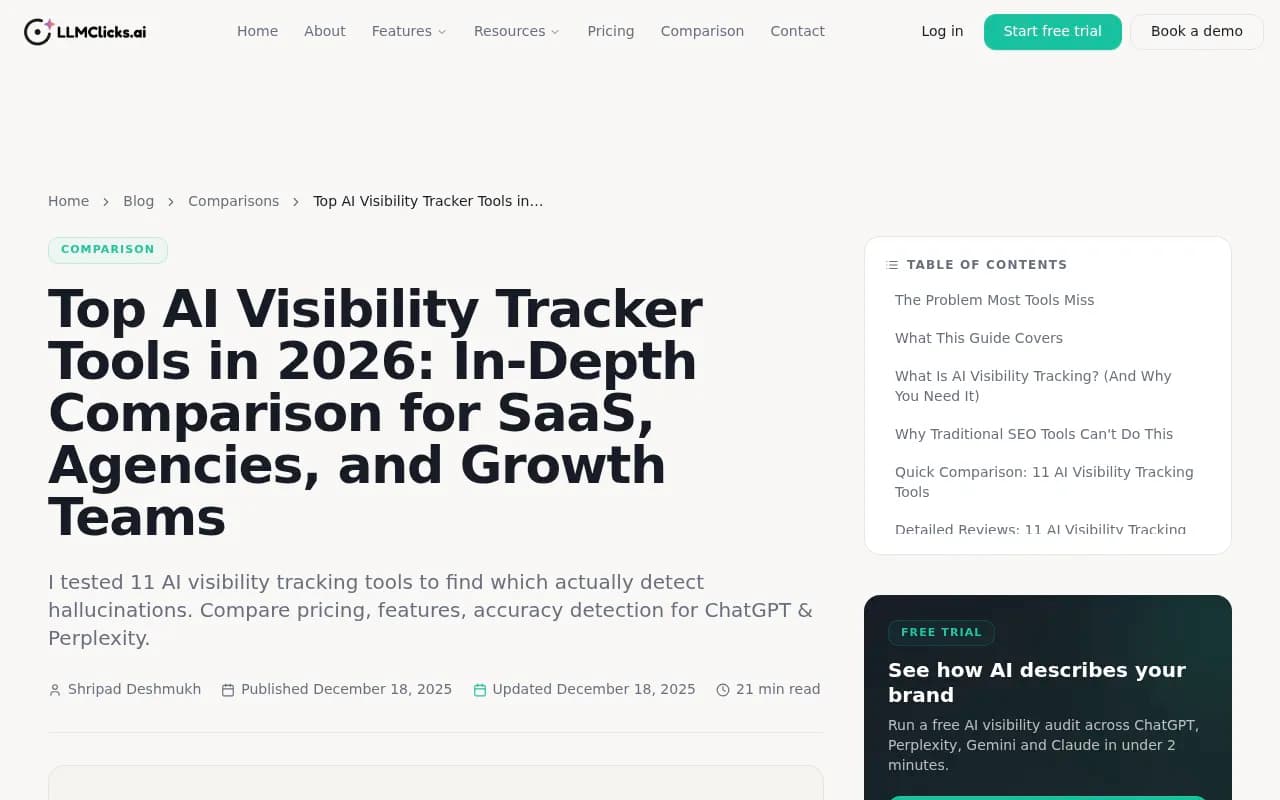
That is a real and underserved problem. Wrong AI answers cost you deals, and most trackers just count mentions. LLMclicks covers ChatGPT, Perplexity, Claude, Gemini and Copilot, with citation analysis, industry benchmarks and executive summary reports.
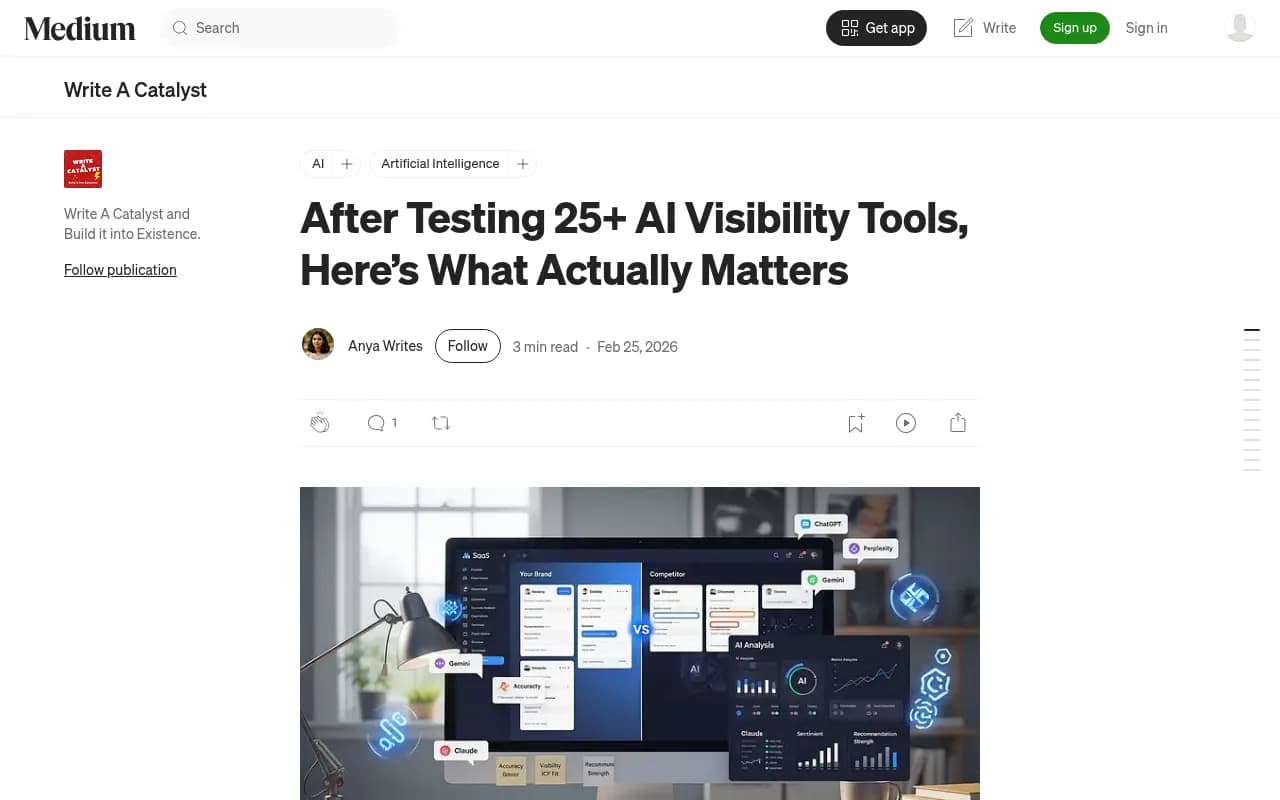
But on the revenue question, I found no GA4, revenue or conversion attribution feature on the pricing page or in the material I reviewed. A Medium review describes it as "audit-style" and "more diagnostic than dashboard-heavy", which fits.
Pricing needs a double check. The pricing page currently shows only lifetime-deal plans, each with a 14-day trial:
- Starter: $159 (was $199), 300 checks a month, 1 project, 50 page audits.
- Professional: $239 (was $299), 700 checks, 10 projects, unlimited audits, custom branding.
- Agency: $399 (was $499), 1,500 checks, 30 projects.
The $49/mo figure comes from the vendor's own blog and may be stale. Confirm whether a monthly subscription still exists.
To be fair, "does the AI say true things about us" is a revenue-adjacent question. Fixing a wrong price quote protects pipeline. It just is not the same as measuring revenue.
Head-to-head on revenue proof
| Capability | Trakkr | Passionfruit Labs | LLMclicks.ai |
|---|---|---|---|
| GA4 connection | Yes, reporting workflow | Claimed, native | Not found |
| Revenue by query or URL | No | Claimed | No |
| CRM integration | Not confirmed | Claimed (older guide) | Not confirmed |
| Catches wrong AI answers | Not a focus | Not a focus | Core feature |
| Independent reviews | Limited | None verified on G2 or Trustpilot (March 2026) | Limited |
| Honest verdict | Good correlation report | Best on paper, needs verification | Protects revenue, does not measure it |
If the question is strictly "which of these three proves revenue impact," Passionfruit Labs has the most explicit features, Trakkr has a credible but softer reporting workflow, and LLMclicks is not built for it. None of them has been independently tested against the others, and no vendor can see the sales that never produced a click.
Which page types to track so revenue reports mean something
Revenue proof gets easier when you know which of your pages AI tends to cite. Promptwatch's data on ChatGPT citation share by content type (Sep 28 to Oct 4, 2026) shows product pages take 22.4% of citations, landing pages 16.8% and listicles 13.6%. Product and landing pages together are about 39%.
For commercial prompts the skew is stronger: product pages get 26.0%, landing pages 20.6%, listicles 15.0% and comparisons 7.9%, almost 70% combined. For branded prompts, product pages get 23.3% and landing pages 22.8%, while reviews rise to 5.6%.
The practical lesson: split your reporting by intent (commercial, informational, branded) and by page type. A tool that only says "you were mentioned 40 times" cannot tell you which landing page deserves the credit for a conversion. Whichever of the three you pick, check that it reports at the cited-URL level.
A realistic attribution setup, whichever tool you pick
Tools alone will not close the loop. A setup that holds up in a finance meeting looks like this:
- Create a GA4 channel group for AI referrers (chatgpt.com, perplexity.ai, gemini.google.com, claude.ai, copilot.microsoft.com) and keep it separate from Referral.
- Use data-driven attribution rather than last-click, so AI gets credit when it assists.
- Add a "how did you hear about us" field to demo and signup forms, with AI assistants as explicit options. Self-reported attribution catches what GA4 misses.
- Track branded search and direct traffic trends alongside AI citation share. Lifts in both after citation gains are a signal.
- Push conversions to your CRM and compare closed-won rates of AI-sourced leads with other channels.
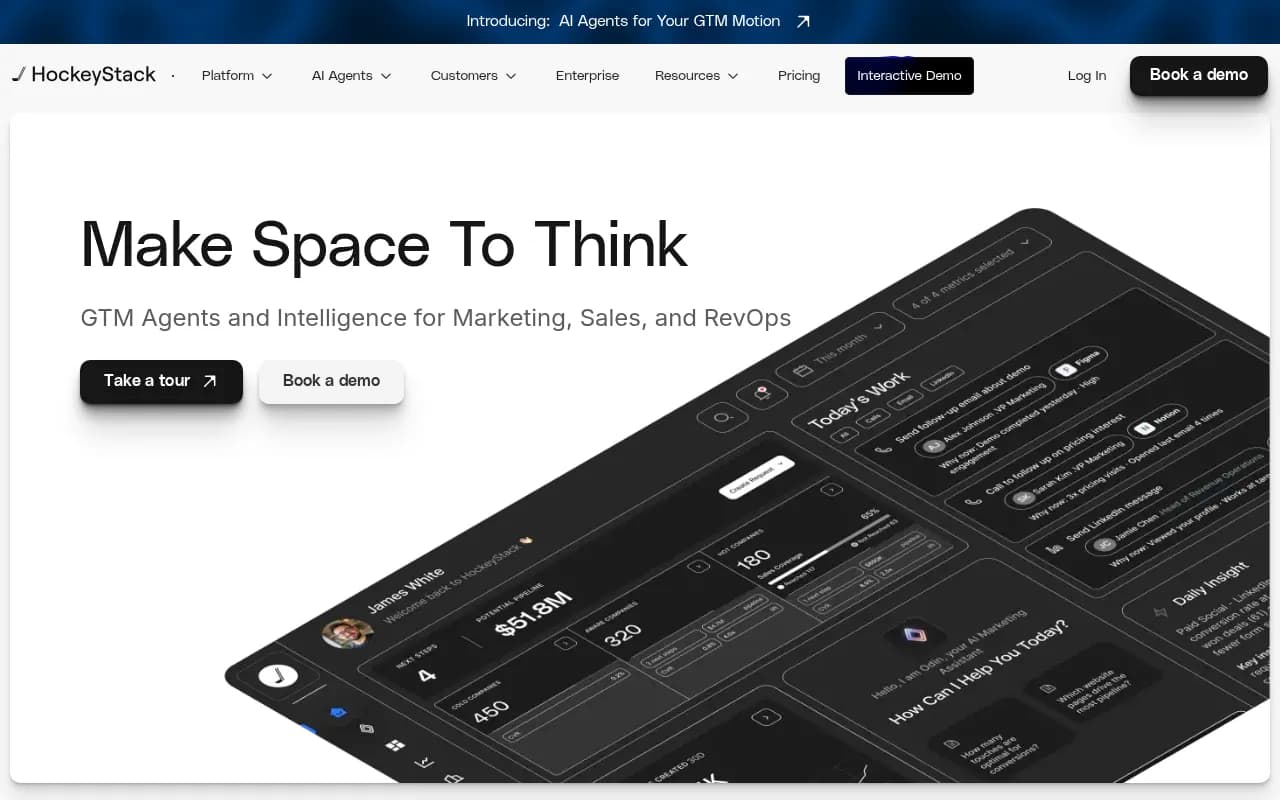
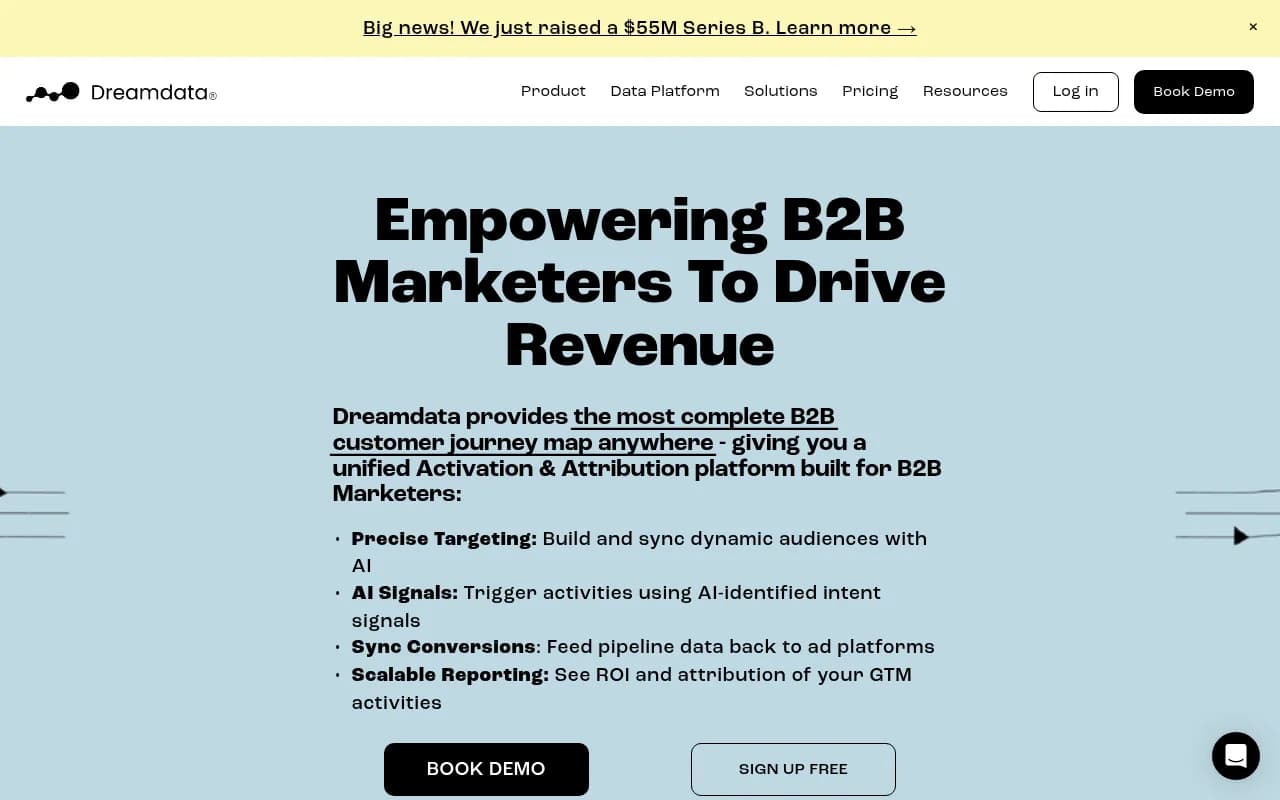
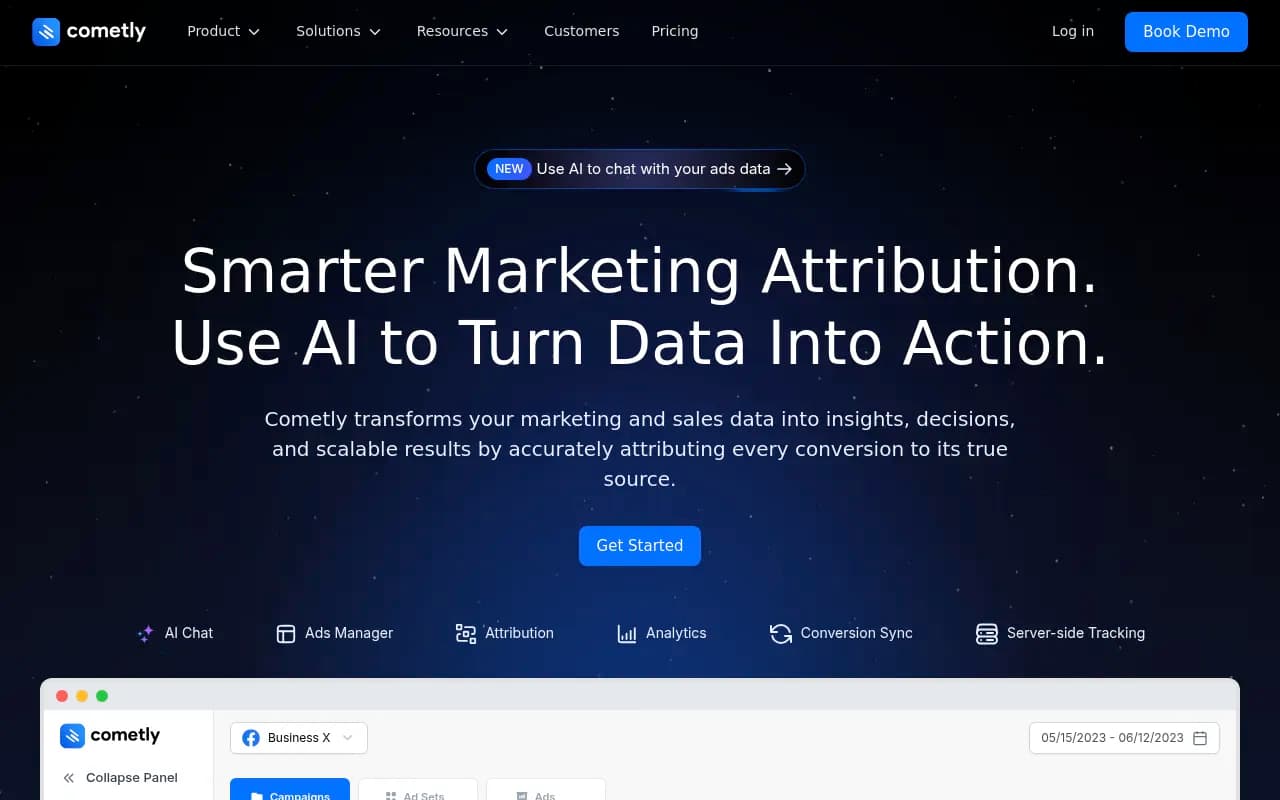
If you want dedicated attribution software to sit under any of these trackers, the catalog has several options: HockeyStack and Dreamdata for B2B pipelines, and Cometly for marketing attribution with an AI visibility angle.
Where the wider market fits
These three are not the only options. If revenue proof is your priority and you want more than monitoring, Promptwatch pairs prompt tracking with IP-verified AI crawler logs and visitor analytics that track actual traffic and conversions from AI platforms, then adds content tooling to act on gaps. Its tracking also runs on the real interfaces of ChatGPT, AI Overviews and others rather than only APIs.

Other trackers worth a look for specific needs include Peec AI for multi-language tracking, Otterly.AI for low-cost monitoring, and Profound for enterprise teams. For a broader scan, the GEO software directory at bestgeosoftware.com lists far more.



Which one should you choose?
- Pick Passionfruit Labs if revenue mapping is your top priority and you will run a trial specifically to test whether the attribution works on your own GA4 data. Get the plan and price in writing first.
- Pick Trakkr if you need broad daily coverage across eight models, white-label reporting for clients, and a GA4 comparison report you can hand to a stakeholder without overclaiming.
- Pick LLMclicks.ai if your pain is AI saying wrong things about pricing or features. Pair it with a separate attribution tool for revenue.
Questions to ask every vendor
- Does attribution use my GA4 and CRM data, or only modeled estimates?
- What share of my AI visits is untagged, and how do you handle it?
- Can I see revenue at the cited-URL level, and on which plan?
- Can I export raw data to check your numbers?
Bottom line
None of these three tools can prove revenue from AI search by itself, because the underlying click data is incomplete. Passionfruit Labs promises the most, Trakkr delivers a respectable correlation report, and LLMclicks.ai guards against costly misinformation rather than measuring sales. Run a 7 to 14 day trial of your shortlist against your own GA4 property, and judge by what shows up in your numbers, not the vendor's case studies.