Key takeaways
- ChatGPT holds 87% of global AI referral traffic, but regional alternatives like DeepSeek, Grok, and Gemini are capturing significant share in non-English markets
- Emerging markets aren't just adopting AI search later -- they're adopting it differently, with mobile-first usage patterns and local-language LLMs changing the citation landscape
- Google AI Overviews now trigger on 25% of searches globally, but penetration rates vary sharply by region and language
- Brands targeting non-English audiences need separate visibility strategies per region -- a single global GEO approach leaves major gaps
- Tracking AI visibility across multiple LLMs and languages requires purpose-built tooling, not just English-market dashboards
The global AI search story in 2026 is usually told through a single lens: ChatGPT dominates, Google AI Overviews are everywhere, Perplexity is growing. That narrative is accurate for English-speaking markets. But zoom out to Latin America, Southeast Asia, the Middle East, sub-Saharan Africa, or Eastern Europe, and the picture gets considerably messier -- and more interesting.
Different LLMs are winning different regions. Local-language models are emerging as real competitors. And the brands that assume their English-market AI visibility strategy will translate globally are finding out the hard way that it doesn't.
This guide breaks down which LLMs dominate where, why the dynamics differ from Western markets, and what you actually need to do about it.
The global baseline: what the numbers say
Before getting into regional specifics, it's worth anchoring on the global data. According to Q1 2026 benchmarks from Conductor, ChatGPT accounts for 87.4% of AI referral traffic. Google AI Overviews now appear in 25.11% of all searches, up from around 16% at the end of 2025. Traditional Google search volume has dropped roughly 25% year over year as users migrate to AI-native interfaces.
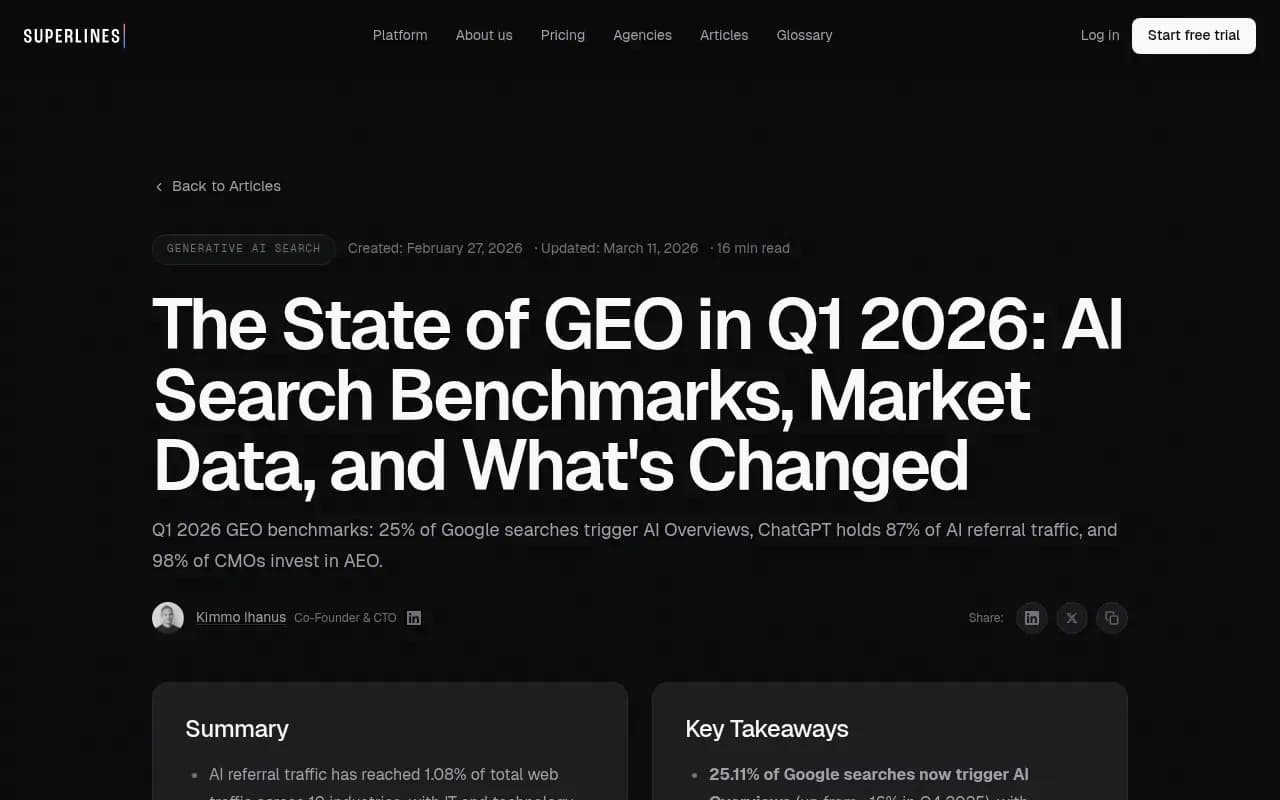
These figures are real, but they're heavily weighted toward English-language data. The research institutions tracking AI search are mostly US- and Europe-based. The 87% ChatGPT figure likely overstates its dominance in markets where it faces stronger local competition or where internet infrastructure shapes which AI tools people actually use.
What we know with more confidence: AI search is no longer a niche behavior anywhere. The question is which AI, in which language, and for which queries.
Latin America: ChatGPT leads, but Gemini is closing fast
Latin America is one of the most interesting regions to watch. Spanish and Portuguese are among the best-supported non-English languages in the major LLMs, which means the region got access to capable AI search tools earlier than many others.
ChatGPT maintains a strong lead here, partly because OpenAI invested early in Spanish-language training data and partly because the brand recognition is strong among younger, urban demographics. But Gemini has been gaining ground quickly, driven by Google's existing dominance in search across the region. In Brazil, where Google holds over 95% of the traditional search market, Google AI Overviews and Gemini are the natural beneficiaries of the AI search shift.
A few dynamics worth noting:
- Mobile-first usage is more pronounced than in North America. Most AI search queries in Latin America happen on mobile, which favors tools with strong mobile apps -- currently Gemini and ChatGPT, with Perplexity trailing.
- Voice search integration matters more here. AI tools that handle voice queries in regional Spanish dialects (Mexican, Argentine, Colombian) or Brazilian Portuguese perform better than those trained primarily on Castilian Spanish.
- Local content gaps are significant. AI models frequently struggle to cite authoritative local sources for queries about regional businesses, local regulations, or country-specific topics -- creating both a problem and an opportunity for brands that produce well-structured local content.
For brands targeting Latin American markets, the practical implication is that optimizing for Google AI Overviews and Gemini deserves roughly equal priority to ChatGPT -- a different weighting than you'd use for North America.
Southeast Asia: a fragmented market with no clear winner
Southeast Asia is where the "ChatGPT dominates AI search" narrative breaks down most visibly. The region spans 11 countries, hundreds of languages and dialects, and wildly different levels of AI adoption.
In Singapore and the Philippines, English proficiency is high and ChatGPT usage patterns look similar to Western markets. But in Indonesia, Vietnam, Thailand, and Malaysia, the picture is different.
Gemini has a structural advantage in markets where Google search dominance is strong -- which is most of Southeast Asia. But local-language quality varies significantly. Thai, Vietnamese, and Bahasa Indonesia are reasonably well-supported in the major LLMs, but the quality of AI responses in these languages still lags behind English by a meaningful margin.
The more interesting development is the rise of regional AI tools. Several Southeast Asian tech companies have launched or are developing LLMs with stronger regional language support. These haven't yet reached the scale to compete with ChatGPT or Gemini for AI search traffic, but they're attracting enterprise adoption in specific verticals like government services, banking, and healthcare.
DeepSeek deserves a specific mention here. Its Chinese-language capabilities are obviously strong, but its multilingual performance -- particularly in Southeast Asian languages -- has improved substantially. In markets with significant Chinese-speaking populations (Singapore, Malaysia, parts of Indonesia), DeepSeek is a real presence.
Key considerations for Southeast Asia:
- There's no single regional strategy. Indonesia alone has over 700 languages; even focusing on Bahasa Indonesia requires different content than targeting Singapore's English-dominant market.
- Citation sources differ by language. AI models responding in Thai or Vietnamese often cite different types of sources than they do in English -- local news sites, government portals, and regional platforms carry more weight.
- Mobile and messaging app integration is critical. In markets where WhatsApp, LINE, or Zalo dominate communication, AI tools embedded in those platforms reach users that standalone AI search apps don't.
The Middle East: Arabic AI search is growing fast, with Grok as a surprise player
Arabic is the fifth most spoken language in the world, and AI search adoption in the Middle East has accelerated sharply in 2025-2026. Saudi Arabia, the UAE, and Egypt are the three largest markets by AI search volume.
ChatGPT's Arabic support has improved substantially, and it remains the most-used AI search tool across the region. But the quality of Arabic-language responses -- particularly for Modern Standard Arabic versus regional dialects like Egyptian Arabic or Gulf Arabic -- is still inconsistent.
Grok has emerged as a notable player here, partly because of its integration with X (formerly Twitter), which has a large and active user base in the Arab world. Brands and publishers that are active on X have found that their content is more likely to surface in Grok responses for Arabic-language queries.
Google AI Overviews are rolling out in Arabic, but the coverage is uneven. Healthcare, finance, and government-related queries trigger AI Overviews frequently; local business and lifestyle queries less so.
A few structural factors shape this market:
- Right-to-left text rendering and Arabic script support vary across AI interfaces, affecting user experience and adoption.
- Content moderation requirements differ by country. Some AI tools have adjusted their responses for regional regulatory compliance, which affects what gets cited and what doesn't.
- The Gulf states (UAE, Saudi Arabia, Qatar) have significantly higher AI adoption rates than North Africa, partly due to higher smartphone penetration and younger demographics.
For brands in the Middle East, the most underserved opportunity is producing high-quality, well-structured Arabic content that AI models can actually cite. The supply of citable Arabic-language content is still relatively thin compared to English, which means the competition for AI citations is lower.
Africa: mobile-first, multilingual, and largely underserved by current AI tools
Sub-Saharan Africa is the most complex region to generalize about, and any attempt to do so risks oversimplification. The continent has 54 countries, over 2,000 languages, and AI adoption rates that vary enormously by country, urban/rural split, and income level.
What's clear: AI search is growing fast in Nigeria, Kenya, South Africa, Ghana, and Egypt (which straddles North Africa and the Middle East). In these markets, English and French are common enough that the major LLMs are usable, but local-language support is still very limited.
Swahili, Yoruba, Zulu, Amharic, and Hausa are among the most spoken languages in the region, and none of them are well-supported in current AI search tools. This creates a significant gap: the majority of the continent's population either uses AI search in a second language (with all the friction that implies) or doesn't use it at all.
The practical implications for brands:
- English-language AI search strategies work reasonably well for targeting urban, educated demographics in Nigeria, Kenya, and South Africa.
- French-language strategies matter for West and Central Africa, where Francophone countries have significant populations.
- For truly local reach, the current AI search tools are limited. This will change -- Meta's multilingual AI models and Google's efforts on low-resource languages are making progress -- but it's not there yet.
One tool worth watching in this context is Meta AI (powered by Llama), which has been integrated into WhatsApp. Given WhatsApp's dominance across Africa, Meta AI has a distribution advantage that ChatGPT and Perplexity simply don't have. It reaches users who may never open a standalone AI app.
Eastern Europe and Central Asia: DeepSeek and local models gain ground
Eastern Europe and Central Asia present a different dynamic. Russian was historically one of the better-supported non-English languages in AI tools, but geopolitical factors have complicated the picture. Yandex's AI tools (including YandexGPT) remain dominant for Russian-language queries in Russia itself, while markets like Ukraine, Poland, and the Czech Republic have shifted more toward Western AI tools.
DeepSeek has gained notable traction in Central Asia, particularly in Kazakhstan and Uzbekistan, where Russian is widely spoken and Chinese business relationships are significant. Its multilingual capabilities -- strong in both Russian and Chinese -- give it a structural advantage in this corridor.
For brands targeting Eastern European markets, the key insight is that the LLM landscape is more fragmented than in Western Europe. A strategy that works well for Germany or France may need significant adjustment for Poland, Romania, or the Balkans.
What this means for your AI visibility strategy
The regional breakdown above points to a few practical conclusions.
You need per-region visibility tracking
A single global AI visibility dashboard that tracks your brand's mentions in ChatGPT responses won't tell you how you're performing in Gemini's Arabic responses, or in DeepSeek's Chinese-language outputs, or in Google AI Overviews in Brazilian Portuguese. These are different systems, different citation patterns, and different content requirements.
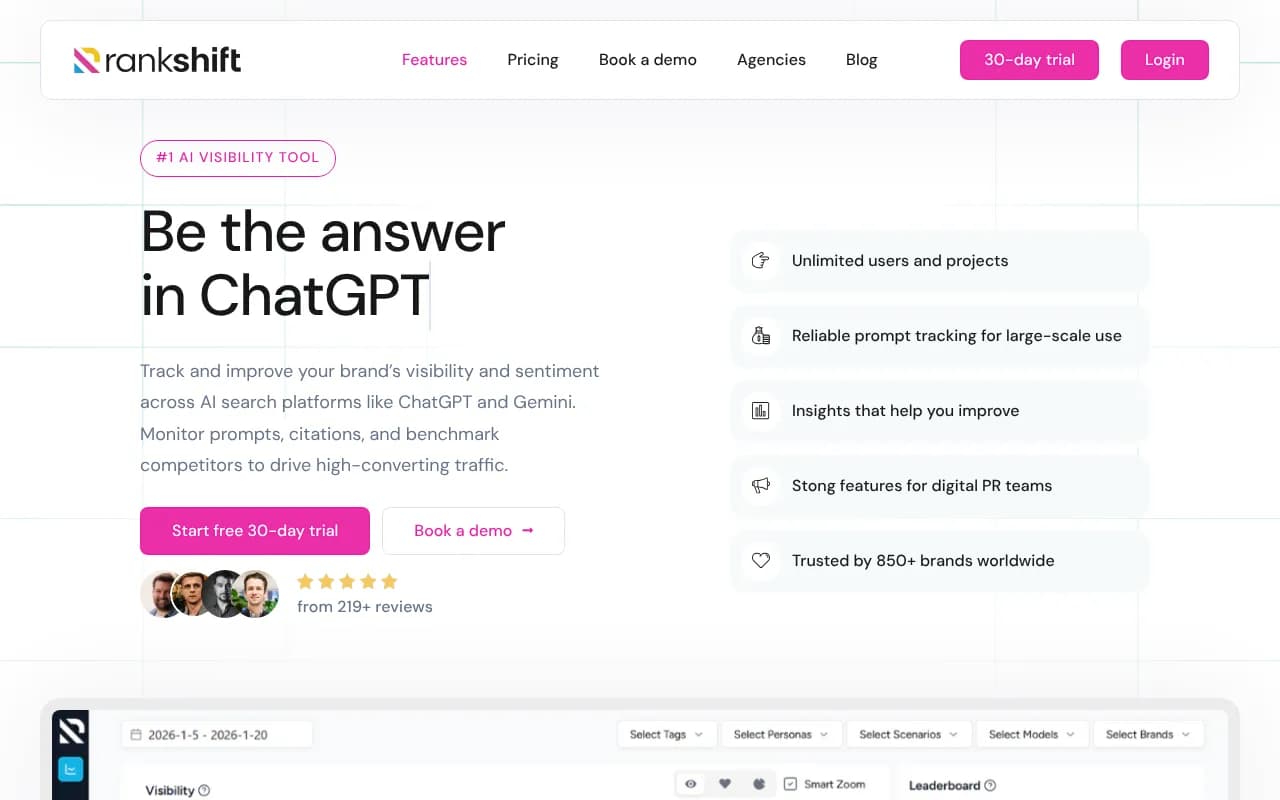
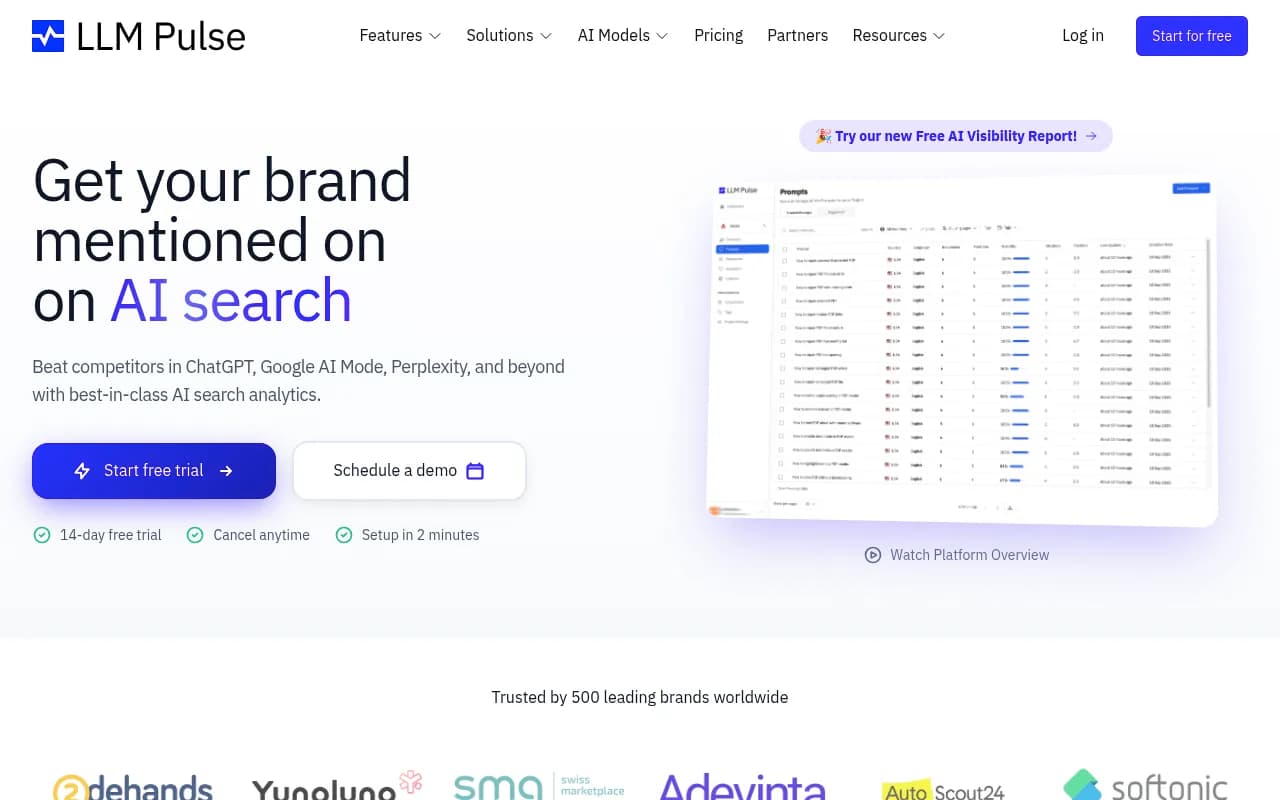
Tools like Promptwatch support multi-language and multi-region monitoring -- you can track AI responses in any language, from any country, with customizable personas that match how your actual customers prompt. That kind of granularity matters when your audience is spread across multiple non-English markets.

The LLM landscape by region (2026 snapshot)
| Region | Primary LLM | Secondary LLM | Key local factor |
|---|---|---|---|
| Latin America | ChatGPT | Gemini | Google's search dominance in Brazil |
| Southeast Asia | Gemini | ChatGPT / DeepSeek | Fragmented languages, mobile-first |
| Middle East | ChatGPT | Grok / Gemini | Arabic dialect variation, X usage |
| Sub-Saharan Africa | ChatGPT (English) | Meta AI (WhatsApp) | Low-resource language gaps |
| Eastern Europe | ChatGPT / Gemini | DeepSeek / YandexGPT | Geopolitical fragmentation |
| Central Asia | DeepSeek | ChatGPT | Russian/Chinese bilingual market |
| South Asia | ChatGPT | Gemini | Hindi support improving rapidly |
Content localization is not optional
AI models cite sources that match the language and cultural context of the query. An English-language article about your product won't get cited in a Thai-language AI response. If you want visibility in non-English AI search, you need content in those languages -- and it needs to be structured in a way that AI models can parse and cite.
This isn't just about translation. It's about producing content that answers the specific questions people in those markets are asking, in the formats those AI models prefer (structured comparisons, specific statistics, clear methodology).
Citation sources differ by region
In English-language AI responses, Reddit, Wikipedia, and major news outlets are heavily cited. In other markets, the citation mix looks different. Local news sites, government portals, regional forums, and country-specific review platforms carry more weight. Understanding which sources AI models actually cite in your target region is a prerequisite for knowing where to publish and what to optimize.
Several tools in the AI visibility space can help with this analysis:



Peec AI is worth highlighting specifically for non-English markets -- it has multi-language tracking built in, which is more than most competitors offer.
Watch the models that aren't ChatGPT
The 87% ChatGPT referral traffic figure is real, but it's a global average weighted toward English-language markets. In specific non-English regions, the share of other models is meaningfully higher. Brands that only track ChatGPT visibility are flying blind in markets where Gemini, DeepSeek, Grok, or Meta AI are the dominant AI search tools.
The content gap opportunity in non-English markets
Here's the counterintuitive upside: because most brands are still optimizing for English-language AI search, the competition for citations in non-English AI responses is significantly lower. The supply of high-quality, well-structured content in Arabic, Bahasa Indonesia, Swahili, or Bengali that AI models can cite is thin.
That's an opportunity. Brands willing to invest in genuinely useful, well-structured content in these languages -- not just translated versions of English content, but content that addresses local questions and contexts -- have a real chance to capture AI citations before the market gets crowded.
The answer gap analysis approach that works in English markets applies equally here: find the prompts your target customers are asking in their language, identify which ones your competitors are visible for and you're not, and create content that fills those gaps. The mechanics are the same; the execution requires local language expertise and regional market knowledge.
What to watch in the second half of 2026
A few developments worth tracking:
- Google's AI Overviews expansion into more languages and regions is accelerating. Markets that currently see low AI Overview rates will see them jump as Google rolls out language support.
- Meta AI's WhatsApp integration is the most underrated distribution story in AI search. If it improves its citation behavior (currently it cites sources less consistently than ChatGPT or Perplexity), it could become a major AI search player in Africa, Latin America, and South Asia.
- Local LLM development in Southeast Asia and the Middle East is picking up investment. Regional models with stronger dialect support could disrupt the current ChatGPT/Gemini duopoly in specific markets within 12-18 months.
- DeepSeek's multilingual capabilities continue to improve. Its performance in Southeast Asian and Central Asian languages is already better than most Western observers realize.
The brands that will win AI search in non-English markets aren't the ones that translate their English strategy. They're the ones that treat each region as a distinct market with its own LLM landscape, citation patterns, and content requirements -- and build their visibility strategy accordingly.