Key takeaways
- Most AI visibility platforms only monitor — they show you data but leave you to figure out what to do with it. The best platforms close the loop from gap identification to content creation to traffic attribution.
- Coverage matters more than you think: a tool that tracks 2-3 AI engines will miss how your brand appears to the majority of users.
- Prompt-level measurement (share of answer, citation rate, prompt volume) is fundamentally different from traditional rank tracking — make sure your tool is built for the former.
- AI crawler logs, Reddit/YouTube source tracking, and traffic attribution are rare features that separate serious platforms from basic dashboards.
- Always run a structured pilot before committing: test with real prompts from your category, not vendor-supplied demos.
The GEO tool market has exploded. There are now dozens of platforms claiming to track your brand's visibility in ChatGPT, Perplexity, Gemini, and Google AI Overviews — and most of them look similar in a demo. Clean dashboards, colorful charts, a handful of AI engine logos in the header.
The problem is that "looks similar in a demo" doesn't mean "works similarly in practice." Some platforms are genuine optimization engines. Others are monitoring dashboards with a GEO coat of paint. The difference matters a lot when you're paying $200-$600/month and trying to justify the spend to a CMO.
This checklist gives you 12 concrete questions to ask during any vendor evaluation. Some of them will feel uncomfortable to ask. Ask them anyway.
1. Does it measure share of answer, or just mentions?
This is the most important distinction in the whole category. A mention tracker tells you "your brand appeared in X responses this week." A share-of-answer platform tells you "your brand appeared in 34% of relevant prompts, up from 22% last month, and here are the 47 prompts where competitors are cited but you're not."
Those are completely different products. The first is a vanity metric. The second is a diagnostic.
Research from AirOps found that brands earning both a mention and a citation in AI-generated answers are up to 40% more likely to maintain ongoing visibility. That kind of insight only comes from prompt-level measurement, not aggregate mention counts.
Ask vendors specifically: "How do you calculate share of voice or share of answer? Can you show me a prompt-level breakdown with citation rates?"
2. Which AI engines does it actually cover — and how?
The minimum viable coverage in 2026 is ChatGPT, Google AI Overviews, Perplexity, and Gemini. Google confirmed AI Overviews reached over one billion monthly users by late 2024. Perplexity is growing fast in research-oriented queries. ChatGPT is where a huge chunk of product discovery happens.
But coverage claims are easy to make and hard to verify. Some tools "support" an engine by scraping public outputs inconsistently. Others run live queries through the actual APIs. The difference shows up in data freshness and reliability.
Ask: "How do you query each engine — API, browser automation, or scraping? What's the refresh frequency per engine?" Also ask whether they cover Claude, Grok, DeepSeek, Copilot, and Meta AI. If you're in a global market, those engines matter.
3. Can it identify gaps, not just current performance?
Monitoring what you already have is table stakes. The real value is finding what you're missing.
Answer gap analysis — showing you exactly which prompts competitors rank for that you don't — is the feature that separates optimization platforms from dashboards. Without it, you're staring at a score with no clear path to improving it.
This is also where prompt volume data becomes critical. Not all gaps are equal. A gap on a high-volume, high-intent prompt ("best project management software for remote teams") is worth far more than a gap on an obscure long-tail query. Ask whether the platform provides volume estimates and difficulty scores for individual prompts, so you can prioritize.
Promptwatch is one platform that does this explicitly — its Answer Gap Analysis shows which prompts competitors are visible for but you're not, with prompt volume data attached so you can prioritize by impact.

4. Does it help you create content, or just tell you what's missing?
This is the question that separates the top tier from everyone else.
Most platforms stop at diagnosis. They'll show you the gap. They won't help you fill it. That means you take the data, hand it to a content team, wait weeks for briefs and drafts, and by the time the content goes live, the competitive landscape has shifted.
A handful of platforms now include AI-assisted content generation built directly into the workflow — generating articles, listicles, and comparisons grounded in real citation data, not generic SEO filler. The best implementations use actual citation patterns (what sources AI models are currently citing in your category) to inform the content structure.
Ask: "If I identify a gap, what does your platform do to help me close it? Is there a content generation feature, or do I export the data and work elsewhere?"
5. Does it track which of your pages are actually being cited?
Brand-level visibility scores are useful for executive reporting. Page-level citation tracking is useful for actually doing the work.
You need to know: which specific URLs on your site are being cited by ChatGPT? Which pages are being cited by Perplexity but not Gemini? Which pages have dropped out of citations in the last 30 days?
Without page-level data, you can't connect your content efforts to visibility outcomes. You're flying blind on what's working.
Ask for a demo of page-level tracking specifically. Some tools only show brand mentions in aggregate — that's not enough.
6. Does it have AI crawler logs?
This one surprises people, but it's genuinely important. AI crawler logs show you when AI engines (ChatGPT's GPTBot, Perplexity's PerplexityBot, Claude's ClaudeBot, etc.) are crawling your website — which pages they read, how often they return, and whether they're hitting errors.
If an AI engine can't crawl your content, it can't cite it. Full stop. Crawler logs let you diagnose indexing problems before they become visibility problems.
This feature is rare. Most monitoring-only tools don't have it at all. If a vendor can't show you crawler log data during a demo, that's a meaningful gap.
7. Does it connect AI visibility to actual traffic and revenue?
Visibility scores are great. Revenue attribution is better.
The question is whether the platform can tell you: "Your AI visibility improvement drove X sessions and Y conversions last month." That requires either a tracking snippet on your site, a Google Search Console integration, or server log analysis that separates AI-referred traffic from other sources.
Without this, you're reporting on a metric that's disconnected from business outcomes. That's fine for a pilot, but it becomes a problem when you're trying to justify ongoing spend.
Ask specifically how the platform handles traffic attribution. Does it use a JavaScript snippet? GSC integration? Can it identify AI-referred sessions separately from organic?
8. Does it track Reddit, YouTube, and third-party sources?
Here's something most marketers don't realize: AI models don't just cite brand websites. They cite Reddit threads, YouTube videos, review sites, industry publications, and forum discussions. A lot of what shapes how ChatGPT describes your product category comes from third-party sources, not your own content.
If your platform only monitors your own domain's citation rate, you're missing half the picture. You need to know which Reddit discussions are influencing AI recommendations in your category, which YouTube videos are being cited, and which third-party domains are consistently appearing alongside competitor mentions.
Ask: "Does your platform surface Reddit and YouTube content that AI models are citing in my category? Can I see which third-party domains are most cited alongside my competitors?"
9. Does it support the personas and geographies that matter to your business?
AI models give different answers to different people in different contexts. A query about "best CRM for small business" gets a different response in the US vs. Germany, and potentially a different response when framed from the perspective of a sales manager vs. a founder.
If you're a global brand or you serve distinct customer segments, persona and geo-targeting in your prompt monitoring isn't optional — it's essential. Some platforms only monitor from a single location with a generic user context. That data is fine for a rough baseline but misleading for anything more specific.
Ask: "Can I set custom personas for my prompts? Can I monitor from specific countries or cities? What languages do you support?"
10. How does it handle prompt volume and prioritization?
Not all prompts are worth tracking. A platform that lets you add 500 prompts without any guidance on which ones matter will generate a lot of data and very little insight.
Good platforms provide volume estimates for prompts (how often real users are asking this question), difficulty scores (how hard it is to get cited for this prompt given current competition), and query fan-outs (how one broad prompt branches into related sub-queries). These signals let you focus your optimization efforts on high-value, winnable prompts instead of spreading effort evenly across everything.
Ask to see how the platform handles prompt prioritization. If the answer is "you add the prompts you want to track and we report on them," that's a monitoring tool. If the answer includes volume data, difficulty scores, and recommendations, that's closer to an optimization platform.
11. What does the reporting actually look like for stakeholders?
This is a practical question that often gets skipped in demos. You'll need to report AI visibility results to someone — a CMO, a client, a board. What does that reporting look like?
Check for: exportable dashboards, Looker Studio or Data Studio integrations, API access for custom reporting, white-label options if you're an agency. Also check whether the platform can generate competitive heatmaps — showing your visibility vs. named competitors across different AI engines and prompt categories. That kind of visual is very effective in executive presentations.
Ask to see an actual sample report, not a screenshot of the dashboard. The report is what your stakeholders will see.
12. What does a realistic pilot look like?
Every vendor will offer a free trial or pilot. The question is whether you can structure it to actually test what matters.
A useful pilot has three components: you bring your own prompts (not the vendor's suggested ones), you test across at least three AI engines, and you run it long enough to see data stabilize (usually 2-4 weeks). If a vendor pushes back on any of those conditions, that's worth noting.
Also ask: what happens to your data if you don't subscribe? Can you export it? Is there a contract lock-in after the trial?
How the main platforms stack up
Here's a quick comparison of how the major GEO platforms handle the most important checklist items:
| Feature | Promptwatch | Otterly.AI | Peec AI | AthenaHQ | Profound | Semrush |
|---|---|---|---|---|---|---|
| Share of answer tracking | Yes | Basic | Basic | Yes | Yes | Limited |
| AI engines covered | 10+ | 4-5 | 4-5 | 8+ | 6+ | 3-4 |
| Answer gap analysis | Yes | No | No | No | Partial | No |
| Content generation | Yes | No | No | No | No | Separate tool |
| AI crawler logs | Yes | No | No | No | No | No |
| Page-level citation tracking | Yes | No | Partial | Partial | Yes | No |
| Reddit/YouTube tracking | Yes | No | No | No | No | No |
| Traffic attribution | Yes | No | No | No | Partial | Partial |
| Prompt volume/difficulty | Yes | No | No | No | Partial | No |
| Persona/geo targeting | Yes | Limited | Yes | Partial | Yes | No |
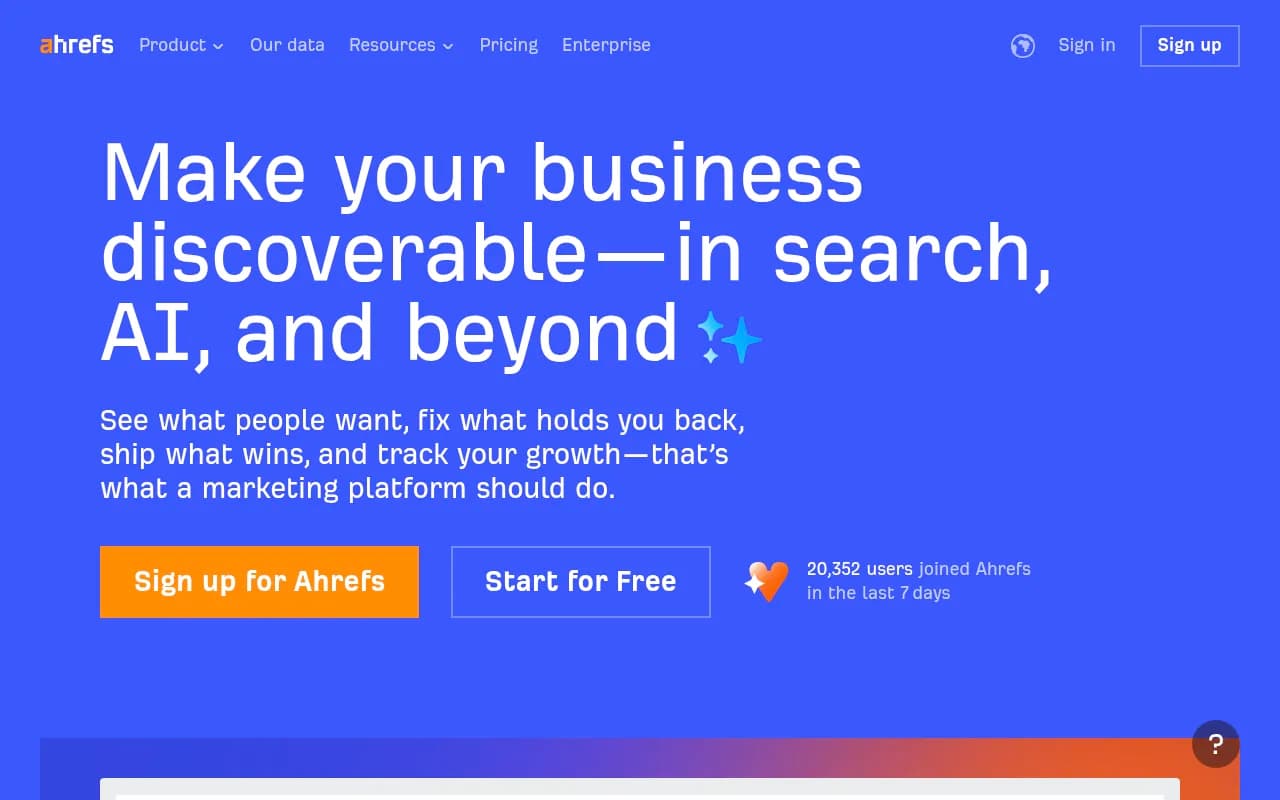
A few notes on the table. Semrush and Ahrefs are traditional SEO tools that have added AI visibility features — they're useful if you're already in those ecosystems, but the AI tracking is shallow compared to purpose-built GEO platforms. Otterly.AI and Peec AI are affordable entry points for basic monitoring, but they stop well short of optimization. Profound has solid tracking features but sits at a higher price point without the content generation side.



A few tools worth knowing about
Beyond the major players, a few tools in the catalog are worth a look depending on your use case:
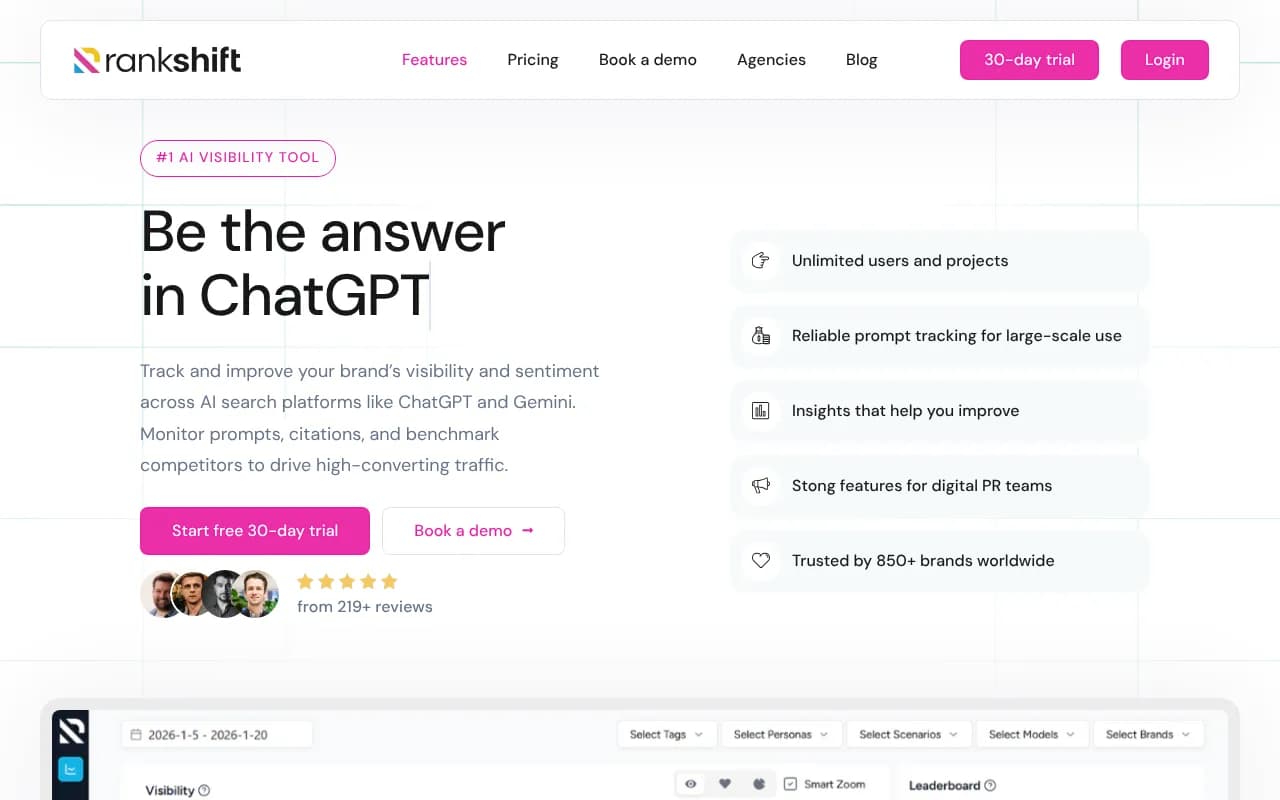
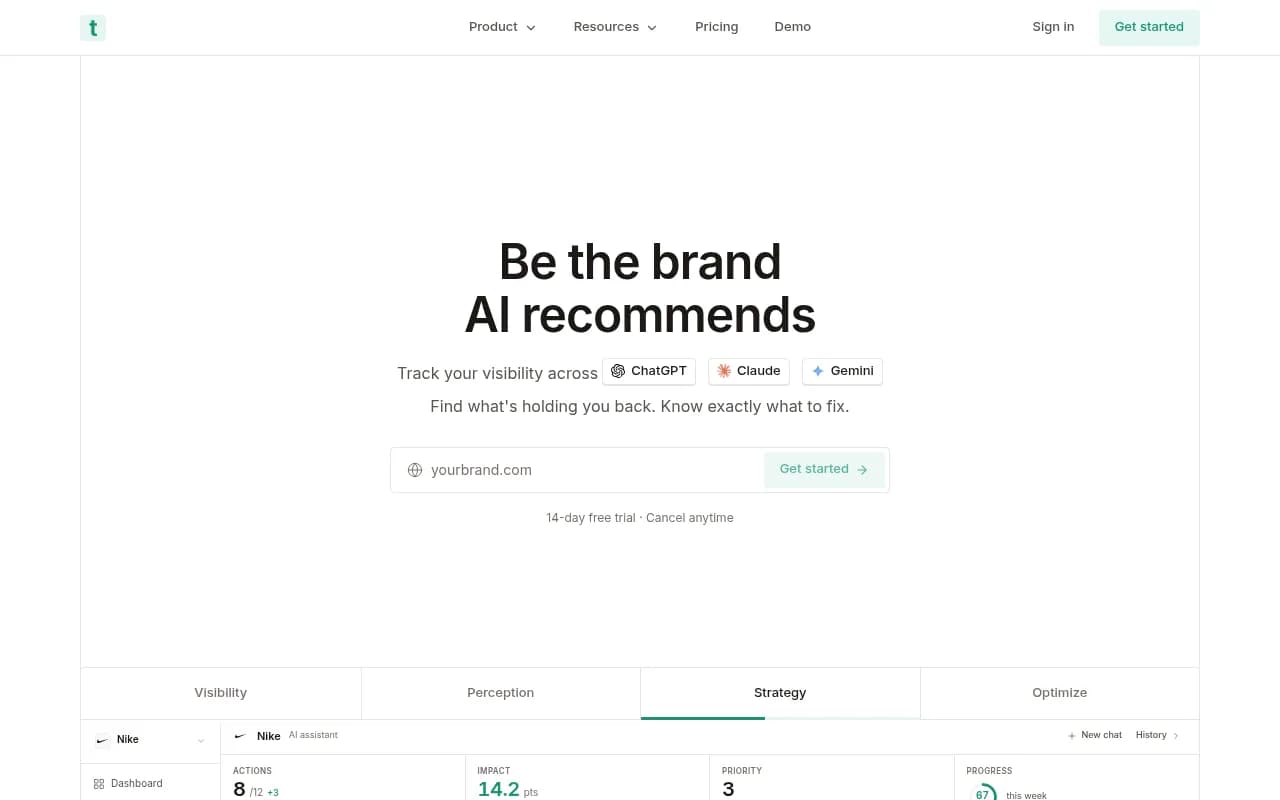
For tracking brand mentions across AI engines with a simpler setup, Rankshift and Trakkr.ai are lightweight options that work well for smaller teams or early-stage monitoring.
For enterprise teams that need deep competitive intelligence alongside AI visibility, AthenaHQ and Profound both have strong tracking capabilities, though neither closes the loop into content creation.

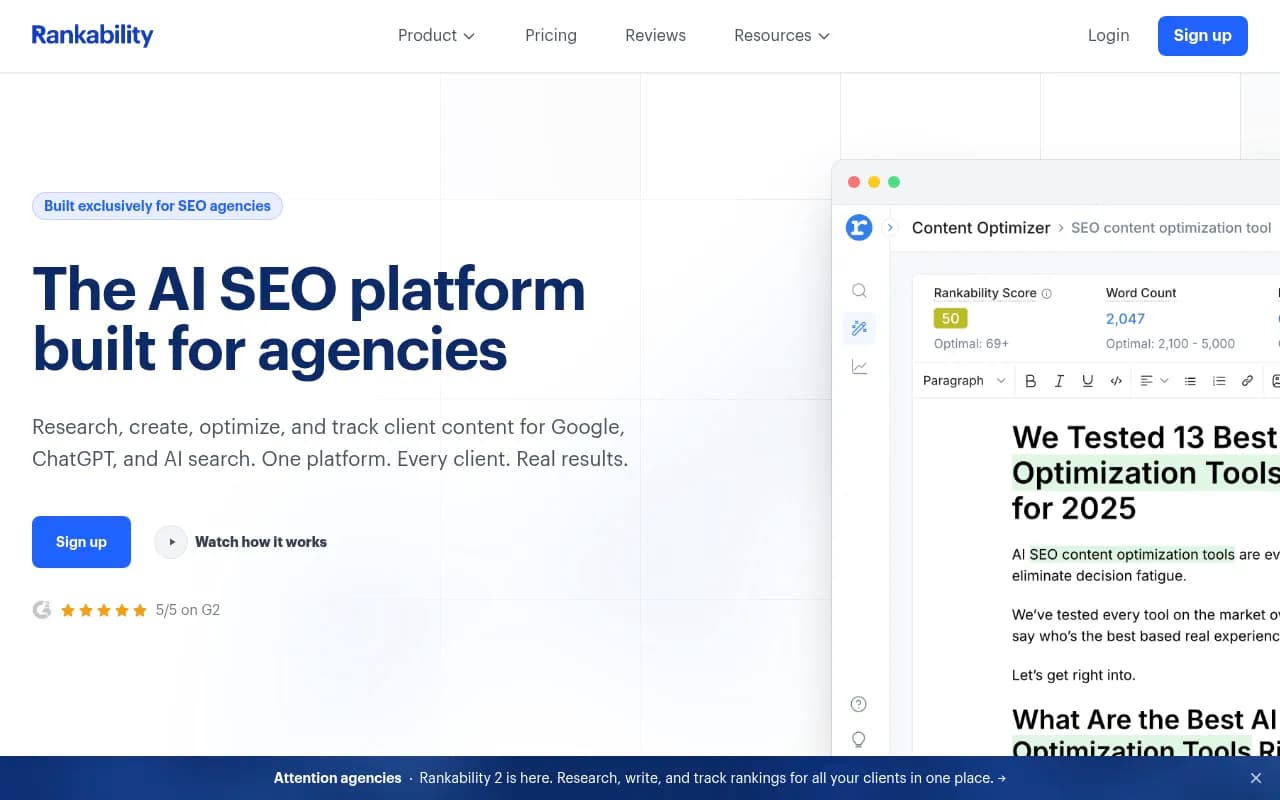
For agencies managing multiple clients, Search Party and Rankability are worth evaluating for their multi-client reporting structures.
The bottom line
The most common mistake in GEO tool selection is buying a monitoring dashboard and expecting it to drive results. Monitoring tells you where you stand. Optimization tells you what to do about it and helps you do it.
Before you sign anything, run through these 12 questions in a live demo. The vendors with strong answers will welcome the specificity. The ones with weak answers will try to redirect you to the dashboard tour.
The market is moving fast enough that a platform that was adequate six months ago might already be behind. Prioritize tools that are actively shipping features, have real citation data at scale, and can show you a clear path from "here's your gap" to "here's your content" to "here's your traffic."
That loop — find gaps, create content, track results — is what makes the difference between a GEO tool that justifies its cost and one that becomes a line item you quietly cancel after three months.