Key takeaways
- Prompt intelligence in 2025 split into two camps: platforms that show you data and platforms that help you act on it
- Profound led on enterprise analytics and depth of LLM response tracking, but its price point kept it out of reach for most teams
- Searchable offered solid monitoring coverage but gated advanced features behind higher-tier plans and lacked content generation
- Promptwatch was the only platform of the three to close the full loop: find prompt gaps, generate content to fill them, then track whether that content gets cited

Why prompt intelligence became the metric that mattered
In 2025, the question marketers stopped asking was "where do we rank on Google?" The question they started asking was "what does ChatGPT say when someone asks for a product like ours?"
That shift created a new category almost overnight. Prompt intelligence -- the ability to understand which queries AI models are responding to, which sources they're citing, and where your brand fits in those answers -- went from a niche concern to a core marketing function.
Three platforms got a lot of attention in that conversation: Searchable, Profound, and Promptwatch. Each took a meaningfully different approach. This guide breaks down exactly how they compared on the dimensions that actually matter for prompt intelligence work.
What "prompt intelligence" actually means
Before getting into the platforms, it's worth being precise about what prompt intelligence covers. The term gets used loosely, but there are really four distinct capabilities bundled inside it:
- Prompt discovery: finding the queries people are actually asking AI models in your category
- Volume and difficulty scoring: understanding which prompts are worth targeting vs. which are too competitive or too low-traffic to bother with
- Gap analysis: identifying prompts where competitors appear in AI responses but you don't
- Query fan-outs: understanding how a single prompt branches into related sub-queries that AI models also answer
A platform that only does the first two is a research tool. A platform that does all four -- and then connects that intelligence to content creation -- is an optimization platform. That distinction matters a lot when you're evaluating these three.
Profound: the enterprise benchmark
Profound built its reputation on depth. The platform tracks LLM responses across ChatGPT, Claude, Gemini, and Perplexity with a level of granularity that enterprise teams genuinely appreciate. You can see not just whether your brand appears, but where in the response it appears, what sentiment surrounds it, and how that changes over time.

For prompt intelligence specifically, Profound's strength was its structured approach to prompt libraries. Enterprise clients could build out large prompt sets organized by funnel stage, persona, and product category. The reporting was clean and the data was reliable.
The limitations were real, though. Profound's pricing reflects its enterprise positioning -- it's not a tool you casually spin up to test. And while the monitoring was excellent, the platform's approach to content optimization was more advisory than hands-on. It could tell you that you were missing visibility for a cluster of prompts, but the work of fixing that gap still landed on your team.
Reddit and YouTube tracking -- two channels that increasingly influence what AI models cite -- weren't part of Profound's core offering. Neither was ChatGPT Shopping monitoring, which became relevant for e-commerce brands as 2025 progressed.
For a large enterprise with a dedicated SEO team and the budget to match, Profound was (and is) a serious tool. For everyone else, the cost-to-capability ratio was harder to justify.
Searchable: solid monitoring, limited action
Searchable positioned itself as a more accessible alternative to the enterprise-tier players. The platform covered the core monitoring use cases reasonably well -- brand mentions across AI models, basic prompt tracking, competitor visibility comparisons.
Where Searchable ran into friction was at the edges of the prompt intelligence workflow. Advanced features, including data warehouse integrations and some engine-specific tracking, were gated behind higher-tier or custom plans. For teams that wanted to go deep on prompt gap analysis, that created a ceiling.
More importantly, Searchable didn't offer content generation. You could identify that you were invisible for a set of prompts. You could see which competitors were winning those prompts. But the platform stopped there. The actual work of creating content to close those gaps happened outside the tool, which meant the insight and the action lived in different places.
That's not a fatal flaw -- plenty of teams are comfortable doing content work in separate tools. But it does mean Searchable functions as a monitoring dashboard rather than an optimization platform. If your team already has strong content production capacity and just needs reliable data, that might be fine. If you're trying to run a tighter loop between insight and output, it creates friction.
Promptwatch: the full loop
Promptwatch took a different architectural bet. Rather than building the best possible monitoring dashboard, the platform was designed around a three-step cycle: find the gaps, create content to fill them, track whether it works.
On prompt intelligence specifically, this showed up in a few concrete ways.
The Answer Gap Analysis feature didn't just show you which prompts you were missing -- it showed you the specific prompts where competitors were appearing and you weren't, ranked by prompt volume and difficulty. That's a prioritization tool, not just a report. You could look at the list and immediately know which gaps were worth attacking first.
Query fan-outs extended that further. When you're tracking a prompt like "best project management software for remote teams," Promptwatch would surface the related sub-queries that AI models also generate in response -- the follow-up questions, the comparison queries, the use-case variants. That gives you a much more complete picture of the content territory you need to cover.
The built-in AI writing agent then let you act on that intelligence directly inside the platform. It generated articles, listicles, and comparison pieces grounded in citation data from over 880 million citations analyzed. The output wasn't generic SEO content -- it was structured around what AI models actually cite, which is a different optimization target than traditional search.
Promptwatch also tracked AI crawler activity in real time. You could see when ChatGPT, Claude, or Perplexity crawled your site, which pages they read, and whether they encountered errors. That kind of crawl-level visibility was largely absent from both Profound and Searchable, and it matters because a page that AI crawlers can't read properly won't get cited regardless of how good the content is.
The platform covered 10 AI models (ChatGPT, Perplexity, Google AI Overviews, Google AI Mode, Claude, Gemini, Meta/Llama, DeepSeek, Grok, Mistral, and Copilot), included Reddit and YouTube tracking for off-site citation intelligence, and offered traffic attribution through a code snippet, Google Search Console integration, or server log analysis.
Head-to-head comparison
| Capability | Searchable | Profound | Promptwatch |
|---|---|---|---|
| Prompt discovery | Yes | Yes | Yes |
| Volume & difficulty scoring | Limited | Yes | Yes |
| Answer gap analysis | Basic | Yes | Yes (with competitor context) |
| Query fan-outs | No | No | Yes |
| Content generation | No | No | Yes (built-in AI writing agent) |
| AI crawler logs | No | No | Yes |
| Reddit/YouTube tracking | No | No | Yes |
| ChatGPT Shopping tracking | No | No | Yes |
| Traffic attribution | No | Limited | Yes (snippet, GSC, server logs) |
| Number of AI models tracked | Limited | 4-5 | 10 |
| Multi-language/region | Limited | Yes | Yes |
| Pricing accessibility | Mid | Enterprise | $99-$579/mo |
| Free trial | Yes | No (demo) | Yes |
The question of "best" prompt intelligence
Calling one platform definitively "best" at prompt intelligence depends on what you mean by the term.
If best means deepest enterprise-grade monitoring with structured prompt libraries and detailed response analytics, Profound was the strongest in 2025. The data quality was high and the reporting was built for large organizations with complex tracking needs.
If best means the most actionable prompt intelligence -- the kind that connects directly to content creation and closes the loop between insight and outcome -- Promptwatch was ahead. The combination of gap analysis, query fan-outs, volume scoring, and built-in content generation meant that prompt intelligence wasn't just a reporting function. It was the input to an optimization workflow.
Searchable sat in a reasonable middle ground for teams that needed monitoring without the enterprise price tag, but the ceiling on advanced features and the absence of content tools meant it functioned more as a data source than a complete solution.
Which platform fits which team
The honest answer is that these three platforms aren't really competing for the same buyer.
Profound makes sense for enterprise marketing teams at large brands where the budget exists and the need is for rigorous, defensible data across a complex prompt landscape. If you're reporting AI visibility to a C-suite and need audit-quality data, Profound's depth is worth the cost.
Searchable makes sense if you're a smaller team that needs basic AI visibility monitoring and doesn't require content generation or deep prompt analytics. It's a reasonable starting point, especially if you're already comfortable doing content work in other tools.
Promptwatch makes sense if you want to actually improve your AI visibility, not just measure it. The platform's value isn't just in knowing where you're invisible -- it's in having a clear path from that knowledge to content that gets cited. For marketing teams, SEO teams, and agencies that are trying to move the needle on AI search visibility, that end-to-end workflow is the core difference.
Other platforms worth knowing
The three-way comparison above covers the most-discussed platforms in this space, but the market has more options worth considering depending on your specific needs.
Otterly.AI is worth a look if budget is the primary constraint. It's one of the most affordable entry points into AI visibility monitoring.

Peec AI stood out in 2025 for multi-language support across a large number of languages -- useful if your brand operates in non-English markets where AI visibility tracking is harder to come by.

AthenaHQ covers monitoring across 8+ AI search engines with a clean interface, though like Searchable it stops short of content generation.

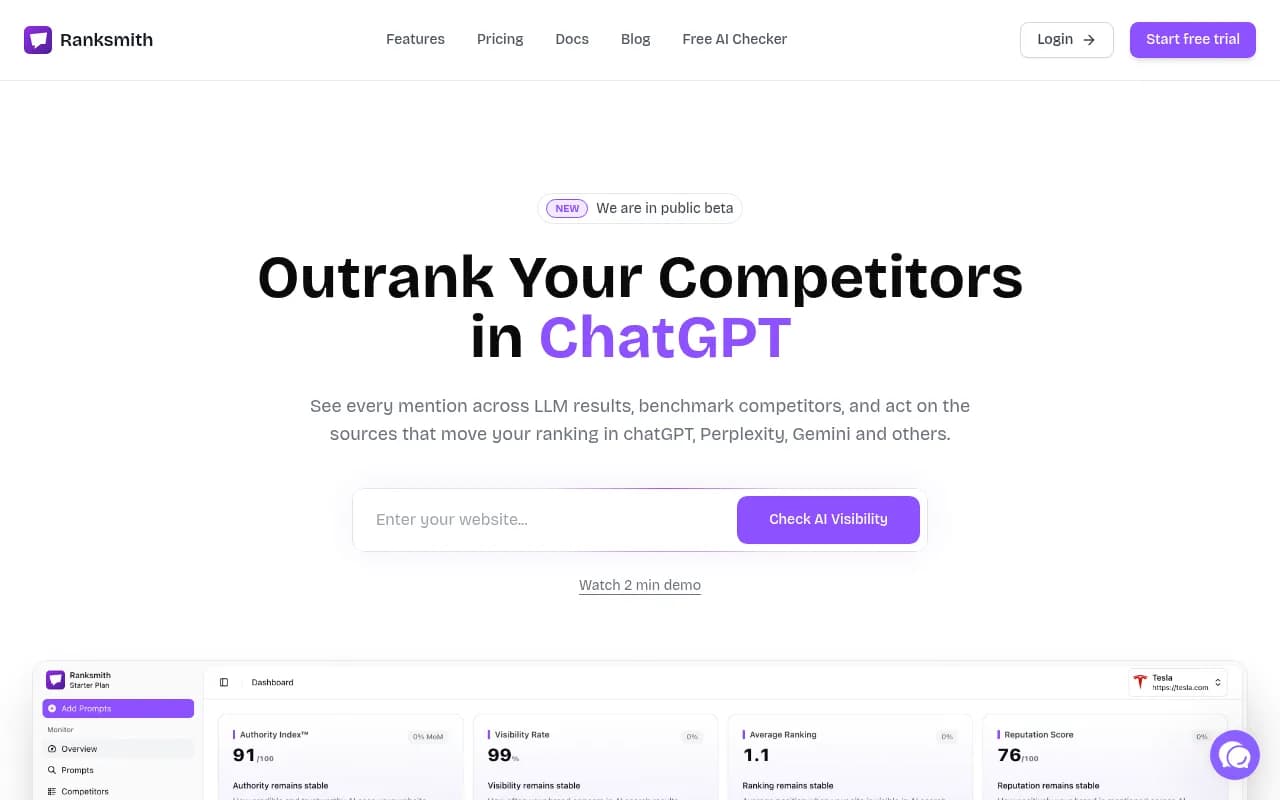
For agencies managing multiple clients, Search Party and Ranksmith both offered agency-oriented workflows, though neither matched Promptwatch's depth on prompt intelligence or content generation.
What 2026 looks like from here
The prompt intelligence category is moving fast. In 2025, the differentiator was whether a platform could track AI responses reliably. In 2026, the differentiator is whether a platform can help you do something about what it finds.
That's why the monitoring-only platforms are under pressure. Knowing you're invisible for 40 high-volume prompts is useful information. Having a clear workflow to fix that -- with content generation grounded in citation data, crawler diagnostics to catch indexing issues, and traffic attribution to connect visibility to revenue -- is what actually moves the business.
The platforms that built that workflow in 2025 are the ones worth watching in 2026. Promptwatch is the clearest example of that bet paying off, but the broader direction of the market is toward action, not just observation.