Summary
- YouTube now appears in 16% of AI-generated answers vs Reddit's 10% -- a reversal from earlier periods when Reddit dominated citations
- Reddit received a 1,328% traffic spike in 6 months after Google's algorithm update, but its dominance in AI search is more complex than raw traffic suggests
- AI models cite user-generated content differently than traditional search engines rank it -- transcripts, community signals, and moderation quality all play hidden roles
- Tools like Promptwatch can track exactly which Reddit threads and YouTube videos AI models cite, revealing optimization opportunities competitors miss

The citation hierarchy just flipped
For most of 2024 and early 2025, Reddit was the undisputed king of AI search citations. ChatGPT, Perplexity, Claude -- they all loved pulling answers from Reddit threads. Then something shifted.
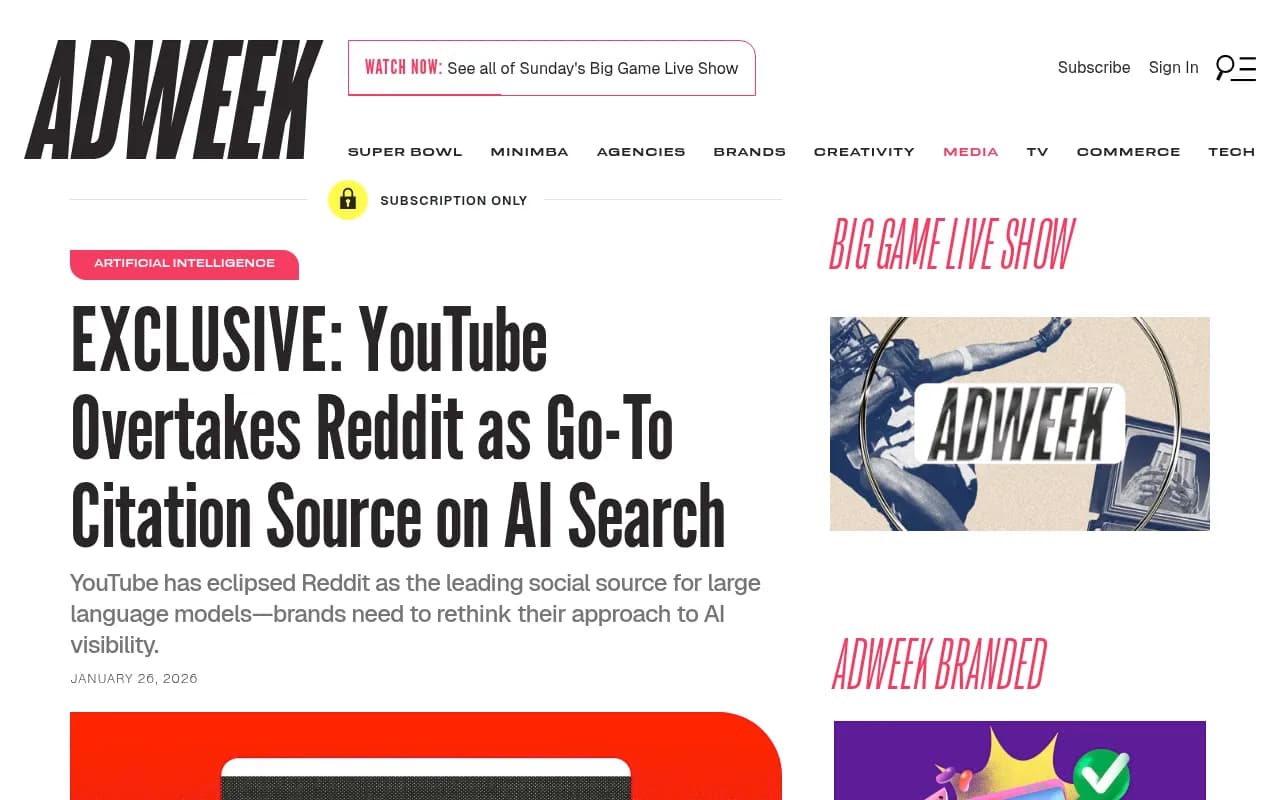
New data from Bluefish shows YouTube now appears as a cited source in 16% of large language model answers over the past six months, compared with 10% for Reddit. That's a complete reversal. YouTube, which struggled earlier because LLMs couldn't easily parse video content, figured out the game: transcripts, descriptions, and structured metadata made videos machine-readable without sacrificing the human value.
Reddit's traffic exploded -- a 1,328% increase in six months according to LinkedIn analysis by Brittany Trafis -- but citation rates tell a different story. Traffic and citations aren't the same thing. Google sending more users to Reddit doesn't automatically mean AI models trust Reddit more for synthesizing answers.
Why YouTube won the AI citation war
YouTube's rise isn't about video quality or production value. It's about structured data that AI models can consume without guessing.
Every YouTube video comes with:
- Transcripts: automatically generated or creator-uploaded, giving LLMs exact text to cite
- Timestamps: allowing models to reference specific moments in long-form content
- Metadata: titles, descriptions, tags that contextualize the content before the model even watches
- Engagement signals: views, likes, comments that indicate trustworthiness
Reddit has some of this -- upvotes, comment threads, subreddit context -- but it's messier. A Reddit thread can veer off-topic in the comments. A YouTube video with a transcript stays on-message. AI models prefer clean, structured information they can confidently cite.
The shift also reflects what people are actually asking AI. "How do I fix X?" queries increasingly get YouTube tutorial citations. "What do people think about Y?" still pulls Reddit, but less often than before.
Reddit's traffic spike vs citation reality
Reddit's 1,328% traffic increase is real, but it's not evenly distributed. Google's algorithm update didn't boost all of Reddit -- it boosted specific types of Reddit content:
- High-moderation subreddits with active communities
- Threads with detailed, experience-based answers (not just opinions)
- Discussions where multiple users contribute complementary information
- Subreddits covering topics where traditional websites offer thin, SEO-optimized garbage
Low-moderation subreddits and automated spam communities didn't see the same lift. Google (and by extension, AI models) learned to distinguish between valuable Reddit content and noise.
But here's the tension: Reddit's value to AI search comes from authentic human discussion. As more marketers flood Reddit with "helpful" posts that are actually disguised ads, the signal degrades. AI models are already adjusting. Perplexity and ChatGPT now cite Reddit less frequently for commercial queries than they did six months ago.
What AI models actually see when they cite Reddit and YouTube
AI search engines don't just scrape content and cite it randomly. They evaluate sources based on:
For Reddit:
- Subreddit authority (subscriber count, post frequency, moderation quality)
- Thread engagement (upvotes, comment depth, time to first response)
- User credibility (account age, karma, post history)
- Content freshness (recent threads rank higher for time-sensitive queries)
For YouTube:
- Channel authority (subscriber count, video consistency, engagement rate)
- Video metadata quality (accurate titles, detailed descriptions, proper tags)
- Transcript accuracy (auto-generated transcripts with errors get cited less)
- Watch time and retention (signals that the content delivers on its promise)
Neither platform gets cited just for existing. The content has to answer a specific query better than alternatives. That's why a 50-view YouTube tutorial can get cited over a 500K-view entertainment video -- relevance beats popularity.
The parasite SEO cycle is repeating
Barry Schwartz and David Quaid discussed this on the "SEO in 2026" podcast: Reddit's dominance follows the same pattern as every other parasite SEO opportunity. A platform gets algorithmic favor, marketers flood it with optimized content, the platform's quality degrades, the algorithm adjusts.
We've seen this with:
- Medium in 2017-2018
- Quora in 2019-2020
- LinkedIn articles in 2021-2022
- Reddit in 2024-2025
YouTube might be next. As more brands realize YouTube gets cited in AI answers, we'll see an influx of low-effort "educational" videos designed purely for citation capture. AI models will adapt by weighing other signals more heavily -- maybe channel history, maybe engagement quality, maybe something we haven't identified yet.
The cycle doesn't mean these platforms stop working. It means the easy wins disappear. Early movers who built genuine communities and content libraries will keep getting cited. Late arrivals trying to game the system will struggle.
How to track what AI models are actually citing
Most brands have no idea which Reddit threads or YouTube videos AI models cite when answering queries about their industry. They're optimizing blind.
Promptwatch solves this by tracking citations across ChatGPT, Perplexity, Claude, Gemini, and other AI search engines. You see:
- Which specific Reddit threads get cited for queries related to your brand or competitors
- Which YouTube videos AI models reference when users ask about your product category
- How often your own content (website, social, video) appears vs competitors
- Which prompts trigger citations and which get ignored
Other tools in this space include:


The difference: most competitors show you aggregate data ("you were cited 47 times this month"). Promptwatch shows you the actual Reddit threads and YouTube videos getting cited, so you can reverse-engineer what's working and create similar content.
The Reddit strategy that still works in 2026
Despite the citation decline, Reddit remains valuable for AI visibility -- if you approach it correctly.
What doesn't work:
- Dropping links to your blog in every relevant thread
- Creating accounts just to promote your product
- Posting generic "helpful" answers that are thinly veiled ads
- Targeting low-moderation subreddits because they're easier
What does work:
- Genuinely participating in communities related to your expertise
- Answering questions in detail without mentioning your product (let others discover it)
- Sharing specific experiences and data, not generic advice
- Focusing on high-moderation subreddits where quality matters
AI models cite Reddit when the answer is authentically helpful and can't be found elsewhere. If your Reddit presence feels like marketing, it won't get cited.
The YouTube strategy AI models reward
YouTube's citation advantage comes from doing a few things exceptionally well:
Transcript optimization:
- Upload your own transcript instead of relying on auto-generation
- Structure the transcript with clear sections that match common queries
- Include specific terminology and phrases people actually search for
Metadata precision:
- Write descriptions that summarize key points in the first 200 characters
- Use timestamps to break long videos into cite-able segments
- Tag videos with the exact questions they answer, not just broad topics
Content depth:
- AI models cite videos that fully answer a question, not surface-level overviews
- Longer videos (10-30 minutes) get cited more than short clips for complex topics
- Tutorial and explainer formats outperform entertainment or opinion content
The goal isn't to trick AI models into citing you. It's to make your valuable content as easy as possible for them to understand and reference.
Industry-specific citation patterns
Not all industries see the same Reddit vs YouTube citation split. Analysis from Brittany Trafis shows:
Reddit dominates citations for:
- Software and SaaS (people want peer reviews and comparisons)
- Finance and investing (community wisdom and experience)
- Gaming and entertainment (opinions and recommendations)
- Health and wellness (personal experiences and support)
YouTube dominates citations for:
- Technical tutorials (how to fix, build, or configure something)
- Product reviews (visual demonstrations matter)
- Educational content (explaining complex topics)
- DIY and crafts (step-by-step visual guidance)
If you're in B2B SaaS, Reddit citations still matter more than YouTube. If you're in technical education, YouTube is where AI models look first. Optimize accordingly.
Comparison: Reddit vs YouTube for AI visibility
| Factor | YouTube | |
|---|---|---|
| Citation rate (2026) | 10% of LLM answers | 16% of LLM answers |
| Best for | Opinions, comparisons, peer advice | Tutorials, explanations, demonstrations |
| Content format | Text threads, comments | Video + transcript + metadata |
| Moderation impact | High -- quality subreddits get cited more | Medium -- channel authority matters |
| Effort to optimize | Medium -- requires genuine participation | High -- video production + transcript quality |
| Longevity | Threads stay relevant for months | Videos stay relevant for years |
| Spam resistance | Declining as marketers flood in | Still relatively clean |
What this means for AI search optimization in 2026
The Reddit and YouTube citation shift reveals something bigger: AI models are getting better at evaluating source quality. They're not just scraping the most popular platforms -- they're weighing factors like:
- Moderation quality: well-moderated communities get cited more
- Content depth: surface-level answers get skipped
- User credibility: established accounts and channels matter
- Freshness: recent content wins for time-sensitive queries
- Structure: machine-readable formats (transcripts, clear headings) help
This is good news for brands willing to invest in quality. The lazy approach -- drop links everywhere, game the algorithm -- stops working. The patient approach -- build authority, create genuinely helpful content, participate authentically -- compounds over time.
Traditional SEO focused on ranking for keywords. AI search optimization focuses on being the best answer for a specific question. Reddit and YouTube succeed because they host specific, detailed answers. Your website needs to do the same.
Tools for tracking and optimizing AI citations
Beyond Promptwatch, several platforms help you monitor and improve your visibility in AI search:


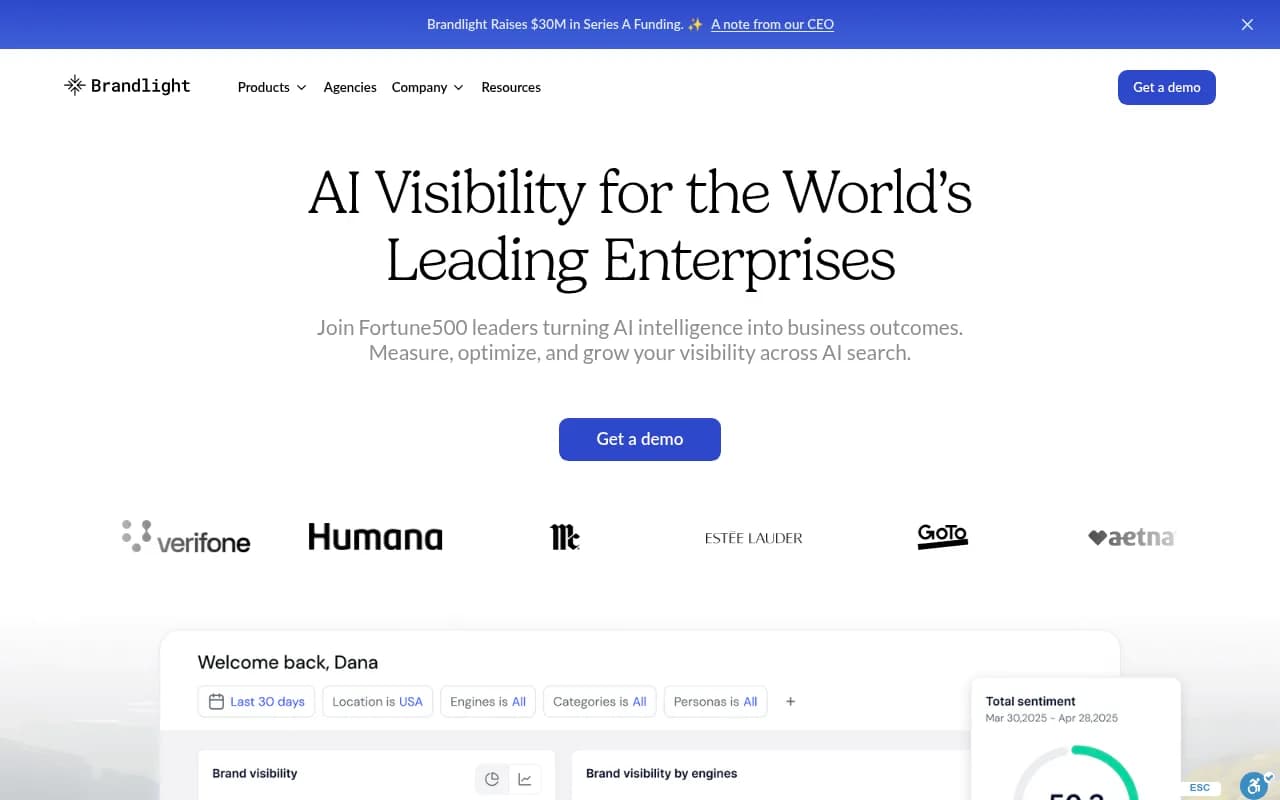
Each tool has strengths. Promptwatch excels at showing you the actual Reddit threads and YouTube videos getting cited, plus it includes content gap analysis and an AI writing agent to help you create citation-worthy content. Peec.ai offers strong multi-language tracking. Profound has detailed competitor analysis. Searchable combines monitoring with content optimization tools.
The key is picking a tool that shows you actionable data -- not just "you were cited X times" but "here's the specific content getting cited and why."
The measurement problem nobody's solving
Here's the uncomfortable truth: we still don't have good attribution for AI search visibility.
You can track:
- How often AI models cite your content
- Which queries trigger citations
- How your visibility compares to competitors
You can't reliably track:
- How many people saw the citation
- How many clicked through to your website
- How many converted after discovering you via AI search
Some platforms (Promptwatch, Searchable) offer traffic attribution via code snippets or Google Search Console integration, but it's incomplete. AI models don't always pass referrer data. Users often read the AI-generated answer and never click through.
This makes it hard to justify AI search optimization budgets. You're optimizing for visibility that may or may not drive traffic. The best argument: if you're not visible in AI search, your competitors are. And when users do click through, they're already pre-qualified -- they've read an AI-generated answer that mentioned you favorably.
The skills that matter now
Barry Schwartz made a point on the podcast that resonates: the hardest part of SEO in 2026 isn't ranking, it's measurement and explanation. The same applies to AI search optimization.
You need:
- Critical thinking: understanding why AI models cite certain sources over others
- Content quality judgment: recognizing what makes an answer cite-worthy vs generic
- Platform fluency: knowing how Reddit, YouTube, and other platforms actually work
- Data interpretation: making sense of incomplete attribution and visibility metrics
- Communication skills: explaining AI search value to stakeholders who want traditional ROI
Tactical knowledge -- how to optimize a Reddit post, how to structure a YouTube transcript -- matters less than strategic understanding. The tactics change as AI models evolve. The strategy (be the best answer for specific questions) stays constant.
What's next for Reddit and YouTube in AI search
YouTube's citation lead will likely hold through 2026, but the gap will narrow as:
- Reddit improves content structure and moderation
- AI models get better at parsing video content directly (not just transcripts)
- Other platforms (TikTok, LinkedIn, X) optimize for AI citations
The bigger shift: AI models will start citing more diverse sources. Right now, Reddit and YouTube dominate because they're easy to parse and have clear quality signals. As AI models improve, they'll cite niche forums, personal blogs, and specialized communities that offer better answers for specific queries.
The brands that win will be the ones creating cite-worthy content wherever their audience gathers -- not just chasing the platforms that currently dominate citations.
Reddit and YouTube's influence on AI search rankings isn't hidden anymore. The data is clear. The question is whether you're tracking it, understanding it, and optimizing for it before your competitors do.