Key takeaways
- Most AI visibility platforms track mentions -- they tell you when an AI cited your brand, not why or how the crawler got there
- Real crawler behavior data (logs, crawl frequency, indexing errors, page-level citation paths) is only available in a small subset of tools
- Promptwatch is the only platform in this comparison that combines crawler log access with content generation and traffic attribution in one place
- Profound and Evertune are strong enterprise options but come at higher price points and don't expose raw crawler logs
- ZipTie.dev takes a browser-simulation approach that captures what users actually see, which is different from (and complementary to) server-side crawler data
- Scriptbee is not a recognized GEO or AI visibility platform -- if you've seen it mentioned alongside these tools, it's likely confused with another product
There's a question most AI visibility guides don't answer directly: when an AI model cites your page, what actually happened before that? What did the crawler read? Which pages did it visit? Did it hit an error? Did it come back?
That's the gap this guide focuses on. Not which tool has the prettiest dashboard, but which platforms actually expose AI crawler behavior -- the raw, mechanical process of how AI engines discover, read, and decide to cite your content.
The answer is: fewer than you'd think.
What "AI crawler behavior" actually means
Before comparing tools, it's worth being precise about what we're talking about. There are two very different things people mean when they say a tool "tracks AI crawlers":
The first is mention monitoring. The tool sends prompts to ChatGPT, Perplexity, Claude, etc., records whether your brand appears in the response, and shows you a visibility score. This is useful, but it's the output -- not the process. You know you were cited; you don't know why.
The second is actual crawler log analysis. When GPTBot, ClaudeBot, PerplexityBot, or Google's AI crawler hits your server, it leaves a trace in your server logs. A platform that ingests those logs can tell you which pages AI crawlers are reading, how often they return, what HTTP errors they encounter, and -- critically -- which pages move from "crawled" to "cited." That's the causal chain most tools skip entirely.
A third approach sits in between: browser-level simulation. Instead of calling AI APIs directly, some tools open a real browser, type prompts into ChatGPT or Perplexity's actual interface, and capture the full response including citations, shopping recommendations, and UI elements that API calls miss.
Each approach answers a different question. The best tools combine at least two of them.
The platforms in this comparison
A quick note on Scriptbee: it doesn't appear in any credible GEO or AI visibility platform database, comparison site, or practitioner community as of mid-2026. It's possible the name is confused with another tool, or it's a very early-stage product with no public track record. We won't include it in the feature breakdown below -- there's simply nothing to evaluate.
The four real platforms here are Profound, Promptwatch, ZipTie.dev, and Evertune. Here's how they approach the crawler behavior question.
Profound
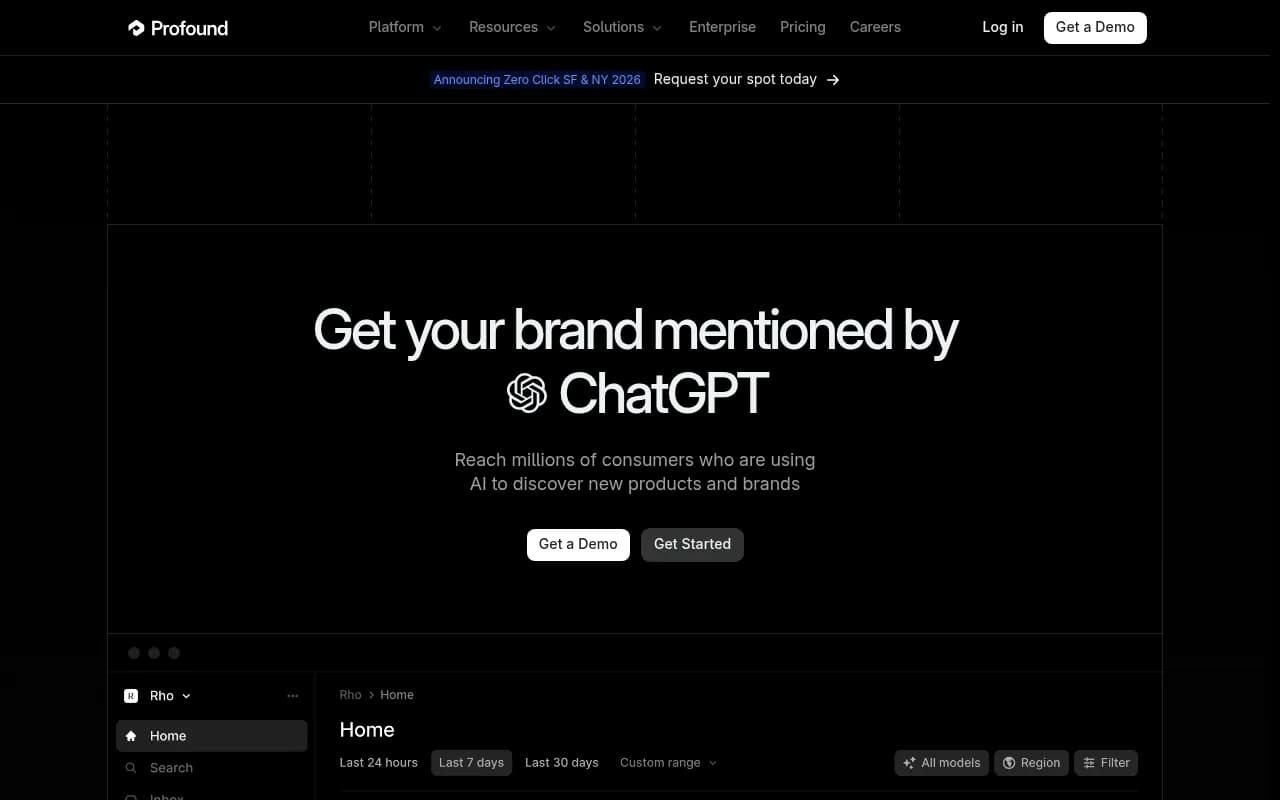
Profound is one of the more mature platforms in this space. It monitors AI mentions across ChatGPT, Claude, Perplexity, and Google Gemini, and in early 2026 it shipped autonomous Agents and MCP (Model Context Protocol) support -- a meaningful step toward agentic workflows.
What Profound does well is prompt-level tracking at scale. You can set up a large library of prompts, track brand mentions and competitor share of voice, and get structured reporting. For enterprise teams that need to demonstrate AI visibility to stakeholders, it's a solid choice.
What Profound doesn't expose is raw crawler log data. There's no mechanism to connect your server logs to the platform and see which pages GPTBot visited last Tuesday, or why a page that gets crawled regularly still isn't being cited. The platform shows you the output (citations) but not the input (crawler behavior). That's a meaningful gap if you're trying to diagnose why certain pages aren't getting picked up.
Profound also sits at a higher price point than most alternatives, which makes it harder to justify for smaller teams or agencies managing thin-margin clients.
ZipTie.dev
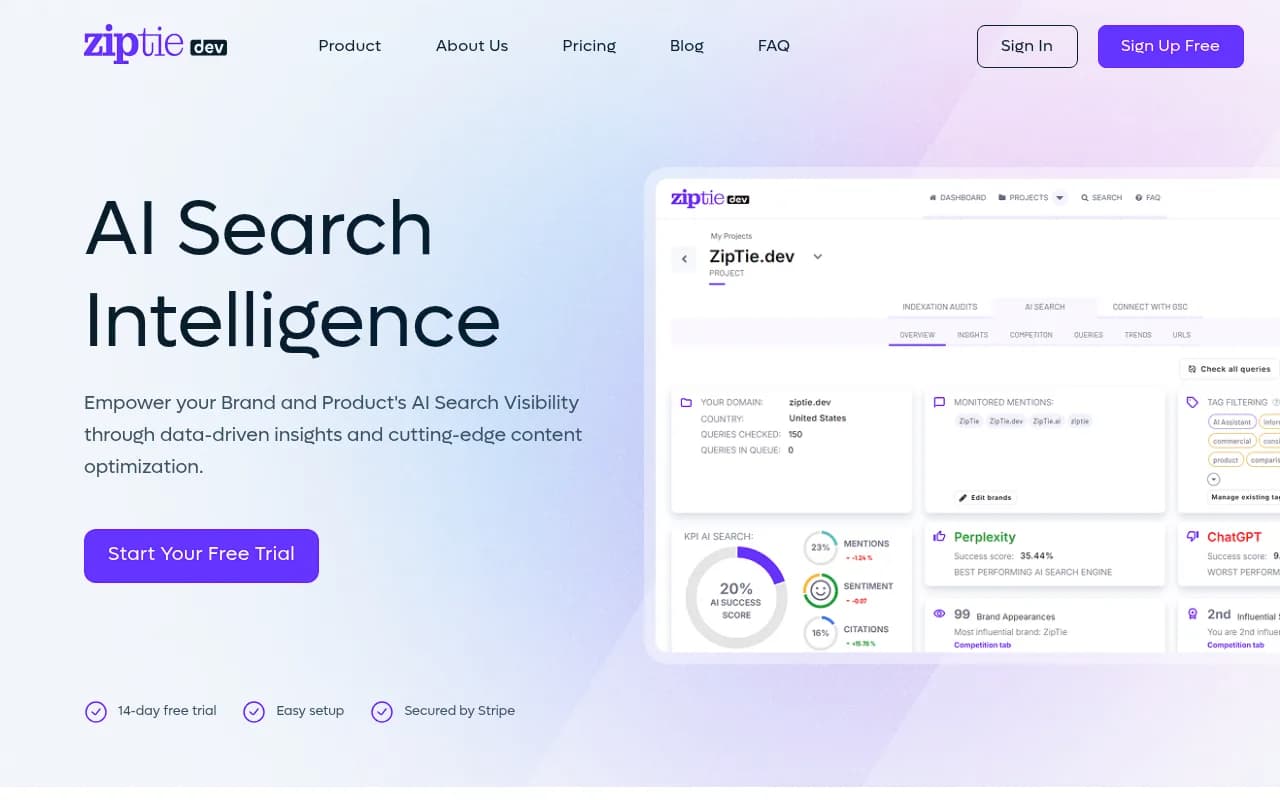
ZipTie.dev takes a different approach from most platforms. Rather than calling AI APIs directly, it simulates real browser sessions -- opening ChatGPT, Perplexity, and Google AI Overviews in an actual browser environment and capturing what users see. This matters more than it sounds.
API responses and user-facing responses can differ. Shopping recommendations, citation carousels, and follow-up suggestions often appear in the UI but not in API outputs. ZipTie's browser-level tracking captures those elements, which means its data is closer to what your actual customers experience when they ask an AI about your product category.
ZipTie also includes page-specific optimization guidance -- it doesn't just tell you that you're invisible, it points to specific pages and suggests what's missing. That's a step toward actionability that pure monitoring tools skip.
The limitation is coverage. ZipTie focuses on three platforms: Google AI Overviews, ChatGPT, and Perplexity. That covers the majority of AI-driven referral traffic (ZipTie's own research puts it around 95%), but if you need visibility into Claude, Gemini, Grok, DeepSeek, or Copilot, you'll need another tool. ZipTie is also newer with a smaller public review base, so there's less community validation to draw on.
On the crawler log question: ZipTie's browser simulation approach is about capturing what AI models show users, not about analyzing how AI crawlers behave on your server. These are complementary but distinct. ZipTie is strong on the former, not the latter.
Evertune
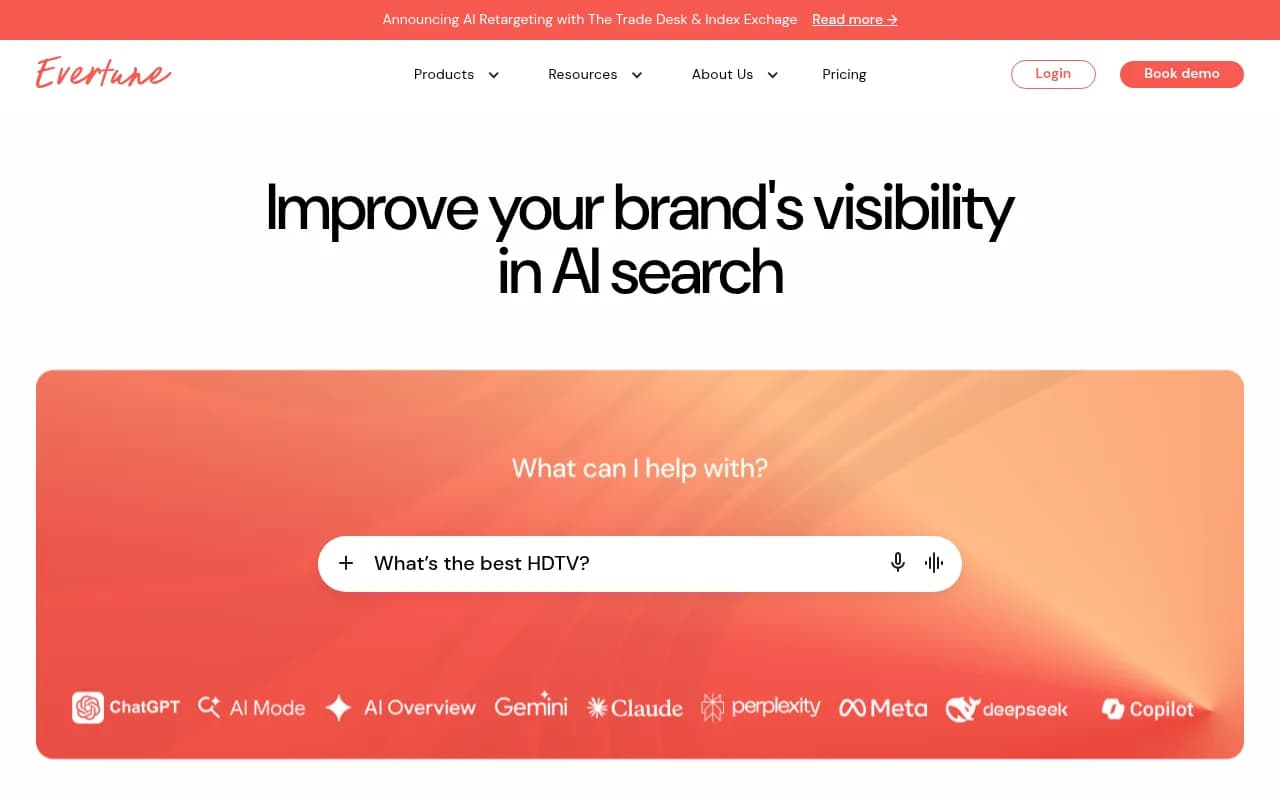
Evertune positions itself as an enterprise GEO platform, and it's genuinely built for large organizations. Fortune 500 brands are its target market, and the feature set reflects that: deep competitive analysis, brand narrative tracking, and structured reporting for executive stakeholders.
Evertune tracks AI mentions across multiple models and provides share-of-voice comparisons that are useful for brands competing in crowded categories. The platform has appeared on multiple "best AI visibility tools" lists in 2026, which suggests it's building a real track record.
The honest limitation: Evertune is monitoring-oriented. It tells you where you stand and how you compare to competitors. It doesn't expose AI crawler logs, and it doesn't include content generation tools to help you close the gaps it identifies. For a Fortune 500 brand with a dedicated content team, that's fine -- the insights feed into existing workflows. For a mid-market company or agency that needs the full loop from diagnosis to fix, it leaves a gap.
Pricing is also enterprise-tier, which puts it out of reach for most SMBs and smaller agencies.
Promptwatch
Promptwatch is the platform in this comparison that comes closest to exposing actual AI crawler behavior, and it's worth explaining specifically how.

The key feature is AI Crawler Logs (called Agent Analytics in the platform). When you connect your website through Cloudflare, Fastly, Vercel, server logs, or a tracking snippet, Promptwatch starts ingesting real-time data about which AI crawlers are hitting your pages -- GPTBot, ClaudeBot, PerplexityBot, and others. You can see which pages they read, what HTTP errors they encounter, how often they return, and -- this is the part most tools miss entirely -- when a page moves from "crawled" to "cited."
That last point is the causal chain. Most tools show you citations. Promptwatch shows you the path from crawl to citation, which means you can identify pages that are getting crawled but not cited (a content quality or structure problem) versus pages that aren't getting crawled at all (a discoverability or technical problem). Those require completely different fixes.
Beyond crawler logs, Promptwatch covers the full optimization loop:
- Answer Gap Analysis shows which prompts competitors rank for that you don't, with specific content recommendations
- Content Agents generate articles, listicles, and comparison pages grounded in real prompt data and citation patterns
- Page-level tracking shows exactly which of your pages are being cited, by which models, and how often
- Traffic attribution connects AI citations to actual site visits and revenue
The platform monitors 10 AI models: ChatGPT, Perplexity, Google AI Overviews, Google AI Mode, Claude, Gemini, Meta/Llama, DeepSeek, Grok, Mistral, and Copilot. It also tracks Reddit discussions and YouTube content that influence AI recommendations -- a channel most competitors ignore.
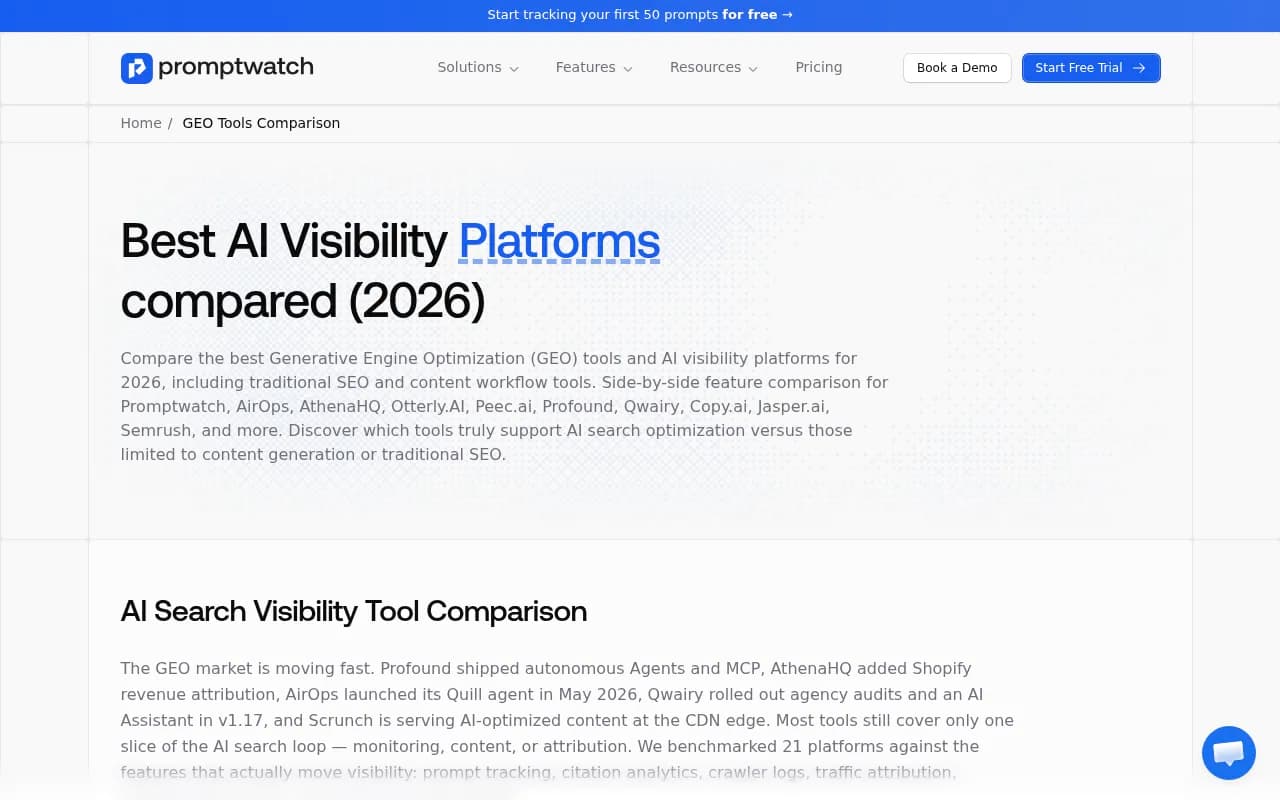
Promptwatch's comparison page benchmarks 21 platforms and positions itself as the only tool with the full AEO stack in one place. That's a self-serving claim, but the feature set backs it up: no other platform in this comparison combines crawler log access, content generation, and traffic attribution in a single product.
Pricing runs from $99/month (Essential: 1 site, 50 prompts) to $579/month (Business: 5 sites, 350 prompts, 30 articles). A free trial is available.
Feature comparison
| Feature | Profound | Promptwatch | ZipTie.dev | Evertune |
|---|---|---|---|---|
| AI model coverage | 4+ | 10 | 3 | Multiple |
| Browser-level simulation | No | No | Yes | No |
| Server-side crawler logs | No | Yes | No | No |
| Page-level citation tracking | Limited | Yes | Yes | No |
| Content generation | No | Yes | Limited | No |
| Answer gap analysis | Partial | Yes | Yes | No |
| Traffic attribution | No | Yes | No | No |
| Reddit/YouTube tracking | No | Yes | No | No |
| ChatGPT Shopping tracking | No | Yes | No | No |
| Competitor heatmaps | Yes | Yes | Limited | Yes |
| Enterprise/agency pricing | Yes | Yes | Yes | Yes |
| Entry price (approx.) | Higher | $99/mo | Lower | Enterprise |
Which tool answers which question
The honest way to think about this: each platform answers a different question, and the "best" choice depends on which question matters most to you right now.
If your question is "what do users actually see when they ask AI about my category?" -- ZipTie's browser simulation approach is the most direct answer. It captures the real UI, including elements that API-based tools miss.
If your question is "why is my content getting crawled but not cited?" -- Promptwatch's crawler logs are the only tool in this comparison that can answer that. No other platform here exposes the crawl-to-citation path.
If your question is "how does my brand narrative compare to competitors across AI models?" -- Profound and Evertune are both strong, with Evertune skewing more toward enterprise reporting and Profound offering more agentic workflow features.
If your question is "how do I fix the gaps I'm finding?" -- Promptwatch is the only platform here with built-in content generation tied to real prompt and citation data. The others identify problems; Promptwatch identifies problems and helps you address them.
The crawler log gap is bigger than it looks
It's worth dwelling on why crawler log access matters so much. Most AI visibility discussions focus on outputs: citation counts, share of voice, mention sentiment. Those metrics are useful for reporting. They're not useful for diagnosing problems.
When a page isn't being cited, there are several possible reasons: the crawler never found it, the crawler found it but couldn't read it (rendering issues, blocked resources, slow load times), the crawler read it but the content didn't answer the prompts AI models are receiving, or the content answered the prompts but wasn't authoritative enough relative to competitors.
Without crawler log data, you're guessing which of those is true. With crawler log data, you can eliminate possibilities systematically. That's the difference between optimization and hope.
Most platforms in this space were built as monitoring tools first. Crawler log analysis requires a different kind of infrastructure -- server integrations, real-time log ingestion, error parsing -- and it's genuinely harder to build. That's probably why so few platforms offer it.
A note on the broader market
The AI visibility tool market in 2026 is crowded and moving fast. Profound shipped autonomous Agents. AthenaHQ added Shopify revenue attribution. Scrunch is serving AI-optimized content at the CDN edge. New tools appear monthly.
In that environment, the tools that will hold their value are the ones that expose why things are happening, not just what is happening. Crawler logs, crawl-to-citation paths, and content gap analysis tied to real prompt data are the features that answer "why." Mention counts and share-of-voice scores answer "what."
Both matter. But if you're trying to actually improve your AI visibility rather than just report on it, you need at least some of the "why" infrastructure.
Bottom line
For teams that need to understand real AI crawler behavior -- not just citation counts -- the honest ranking looks like this:
Promptwatch is the strongest option for the full picture: crawler logs, content generation, traffic attribution, and 10-model coverage in one platform. It's the only tool here that shows you the crawl-to-citation path and helps you act on it.
ZipTie.dev is the best choice if browser-level accuracy is your priority -- capturing what users actually see rather than what APIs return. Strong for the three platforms that drive most AI referral traffic.
Profound is worth considering for enterprise teams that need agentic workflow features and are less concerned about raw crawler data.
Evertune fits large brands that need executive-level reporting and competitive narrative analysis, and have separate teams to act on the insights.
Scriptbee doesn't have a verifiable presence in this market. If you encountered it in a comparison, verify the source before spending time on it.
The crawler behavior question is the right one to be asking. Most tools aren't built to answer it yet.