Key takeaways
- Peec.ai is a solid monitoring tool with strong multi-language support (115+ languages), but it stops at tracking -- there's no content generation or optimization workflow.
- Rankshift uses credit-based pricing and is more flexible for agencies and scaling brands, but it's still primarily a monitoring and benchmarking platform.
- Promptwatch is the only one of the three that closes the full loop: find visibility gaps, generate content engineered to get cited by LLMs, then track whether it worked.
- If you need to actually improve your AI search visibility -- not just measure it -- Promptwatch is the most complete option in 2026.
The GEO tool market has exploded. Two years ago, "AI visibility tracking" was a niche experiment. Now there are dozens of platforms, and the differences between them matter a lot depending on what you're trying to accomplish.
This guide focuses on three tools that come up constantly in GEO discussions: Peec.ai, Rankshift, and Promptwatch. They're all in the same general category -- LLM tracking and AI search visibility -- but they're built around very different assumptions about what marketers actually need.
Let's get into it.
What each tool is trying to do
Before comparing features, it's worth understanding the core philosophy behind each platform. Tools built for different jobs will always disappoint you if you're using them for the wrong one.
Peec.ai
Peec.ai is built for monitoring. You set up prompts, it runs them across AI models, and you get visibility scores and competitive benchmarks. Its standout strength is language coverage -- 115+ languages -- which makes it genuinely useful for international brands or regional teams tracking AI visibility in non-English markets. The UI is clean and reporting is agency-friendly.
The limitation is that Peec.ai is a measurement tool. It tells you where you stand. It doesn't tell you what to do about it, and it doesn't help you create content to improve your position. One honest review put it bluntly: Peec.ai is "more about benchmarking than fixing."

Rankshift
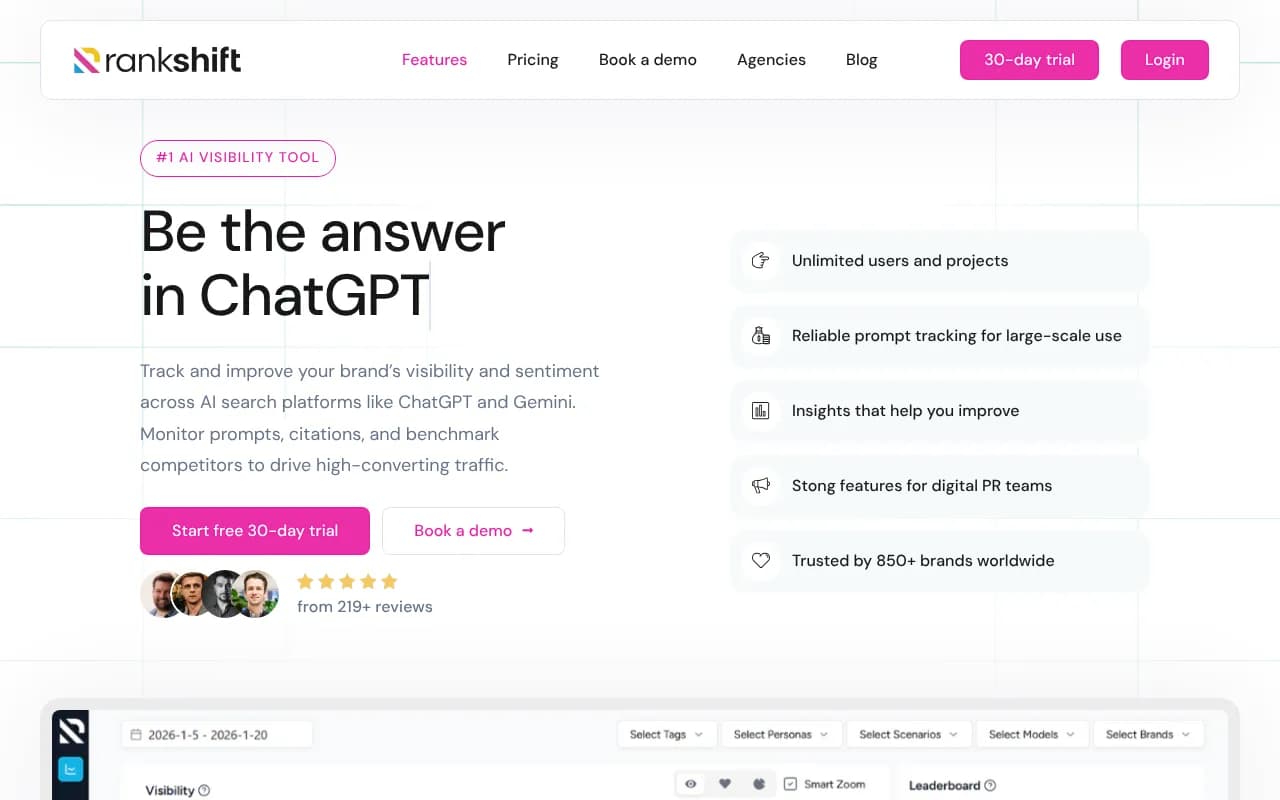
Rankshift takes a similar monitoring-first approach but with a more flexible commercial model. Instead of prompt-based tiers with country limits, it uses credit-based pricing -- which matters if you're running multi-market campaigns or managing multiple client accounts. Entry is around €77/month with a 30-day free trial, and there's no cap on users or projects.
The comparison from Rankshift's own blog (which, yes, has an obvious bias) makes a fair structural point: Peec.ai's pricing scales awkwardly for teams that need coverage across multiple countries, while Rankshift's credit model stays predictable. For agencies managing 10+ brands, that's a real difference.
But Rankshift is still fundamentally a tracking and benchmarking tool. You get dashboards, competitor comparisons, and visibility scores. The "actionable suggestions" mentioned in some reviews are fairly surface-level -- not a content generation engine.
Promptwatch
Promptwatch is built around a different premise: tracking is only useful if it leads to action. The platform is designed as an end-to-end optimization loop, not just a dashboard.
The sequence is: find the prompts where competitors appear but you don't (Answer Gap Analysis), generate content specifically engineered to get cited by those LLMs (built-in AI writing agent trained on 880M+ citations), then track whether your new content actually moved the needle. Page-level tracking shows which specific pages are being cited, by which models, and how often.
That's a fundamentally different product from a monitoring dashboard.

Feature comparison
Here's how the three tools stack up across the dimensions that matter most for a GEO campaign:
| Feature | Peec.ai | Rankshift | Promptwatch |
|---|---|---|---|
| LLM monitoring | Yes (multi-model) | Yes (multi-model) | Yes (10 models) |
| Competitor benchmarking | Yes | Yes | Yes |
| Content gap analysis | No | No | Yes (Answer Gap Analysis) |
| AI content generation | No | No | Yes (built-in writing agent) |
| AI crawler logs | No | No | Yes |
| Page-level citation tracking | Limited | Limited | Yes |
| Prompt volume & difficulty scores | No | No | Yes |
| Reddit & YouTube insights | No | No | Yes |
| ChatGPT Shopping tracking | No | No | Yes |
| Multi-language support | 115+ languages | Limited | Yes (multi-language) |
| Traffic attribution | No | No | Yes (GSC, code snippet, server logs) |
| Agency/multi-client support | Yes | Yes (unlimited users) | Yes (agency plans) |
| Free trial | Yes | 30-day free trial | Yes |
| Entry pricing | ~€89/month | ~€77/month | $99/month |
The monitoring columns are roughly comparable across all three. The gap opens up when you look at everything below "competitor benchmarking."
Pricing breakdown
Pricing structures are genuinely different here, and the differences matter depending on how you work.
Peec.ai pricing
Peec.ai uses prompt-based tiers with country limits. Entry-level plans start around €89/month but come with only 25 prompts and coverage for 3 countries. If you're running a multi-market campaign -- say, tracking your brand across Germany, France, Spain, and the UK -- costs climb quickly. For smaller regional teams with modest prompt needs, it's fine. For anyone scaling internationally, the math gets uncomfortable fast.
Rankshift pricing
Rankshift's credit-based model is more predictable for agencies. Entry is around €77/month, there are no limits on users or projects, and credits roll over more flexibly than prompt-based caps. If you're managing multiple client accounts or running campaigns across many markets, this structure works better. The 30-day free trial (no credit card required) is also a genuine advantage for evaluation.
Promptwatch pricing
Promptwatch runs three main tiers: Essential at $99/month (1 site, 50 prompts, 5 articles), Professional at $249/month (2 sites, 150 prompts, 15 articles, plus crawler logs and local tracking), and Business at $579/month (5 sites, 350 prompts, 30 articles). Agency and enterprise pricing is custom.
The pricing looks higher at first glance, but it includes the content generation capability that neither Peec.ai nor Rankshift offer. If you're paying for a monitoring tool and then separately paying for content creation, Promptwatch's bundled approach often works out cheaper -- and more coherent.
Where each tool wins
Peec.ai wins for: international monitoring on a budget
If your primary need is tracking AI visibility across many languages and you don't need to generate content or run optimization workflows, Peec.ai is a reasonable choice. The 115+ language support is genuinely hard to match, and the competitive benchmarking is clean. It's a good fit for regional marketing teams that need to report on AI visibility without a large budget or complex workflow.
The catch: if you ever want to do something about what you're seeing, you'll need other tools.
Rankshift wins for: agencies managing multiple clients
The credit-based model and unlimited users/projects make Rankshift more practical for agencies than Peec.ai's tiered structure. If you're running GEO campaigns for 10 clients across different markets, Rankshift's pricing stays predictable in a way that prompt-based tools don't.
It's still a monitoring-first platform, but the commercial model is better suited to agency work.
Promptwatch wins for: actually improving AI visibility
This is the key distinction. Peec.ai and Rankshift both tell you what's happening. Promptwatch tells you what's happening and helps you change it.
The Answer Gap Analysis shows you exactly which prompts competitors are visible for that you're not. The AI writing agent generates content grounded in real citation data -- not generic SEO articles, but pieces specifically structured to get cited by ChatGPT, Claude, Perplexity, and other models. Then the tracking closes the loop: you can see whether your new content is being cited, by which models, and whether it's driving actual traffic.
For any brand that's serious about GEO as a growth channel -- not just a reporting metric -- that full loop matters.
The monitoring-only problem
It's worth being direct about something. Most GEO tools in 2026 are monitoring dashboards. They show you visibility scores, sentiment, competitive share of voice. That data is genuinely useful. But it creates a specific frustration: you can see the problem clearly, and then you're on your own to fix it.
A review on Medium that tested 25+ AI visibility tools made this observation about Peec.ai specifically: "Great competitive comparison; agency reporting friendly. More about benchmarking than fixing." That's a fair summary of the entire monitoring-only category.
The tools that are starting to differentiate themselves are the ones that connect the data to action. Content gap analysis, citation-grounded content generation, and closed-loop tracking are what separate an optimization platform from a reporting tool.
Which tool should you use?
Here's the honest breakdown:
If you're a small regional team that needs to track AI visibility in multiple languages and report on competitive benchmarks, Peec.ai covers the basics at a reasonable price. Don't expect it to help you improve your position.
If you're an agency managing multiple client accounts and need flexible, scalable pricing without per-seat or per-project limits, Rankshift's commercial model is worth a look. The monitoring features are comparable to Peec.ai, and the pricing structure scales better.
If you're a marketing team or brand that wants to actually grow AI search visibility -- not just measure it -- Promptwatch is the most complete option available. The combination of gap analysis, content generation, crawler logs, and traffic attribution is something neither Peec.ai nor Rankshift can match.
The question to ask yourself is simple: do you need a dashboard, or do you need a system that helps you rank in AI search?
Other tools worth knowing
The three-tool comparison above covers the most common options in this space, but it's not exhaustive. A few others worth knowing:
Otterly.AI is the most affordable entry point in the monitoring category, with a GEO Audit feature that's genuinely useful for quick assessments.

Profound has strong enterprise analytics but comes with pricing to match -- better suited to large brands with dedicated SEO teams than mid-market companies.
AthenaHQ covers 8+ AI search engines and is monitoring-focused, similar to Peec.ai in its overall approach.

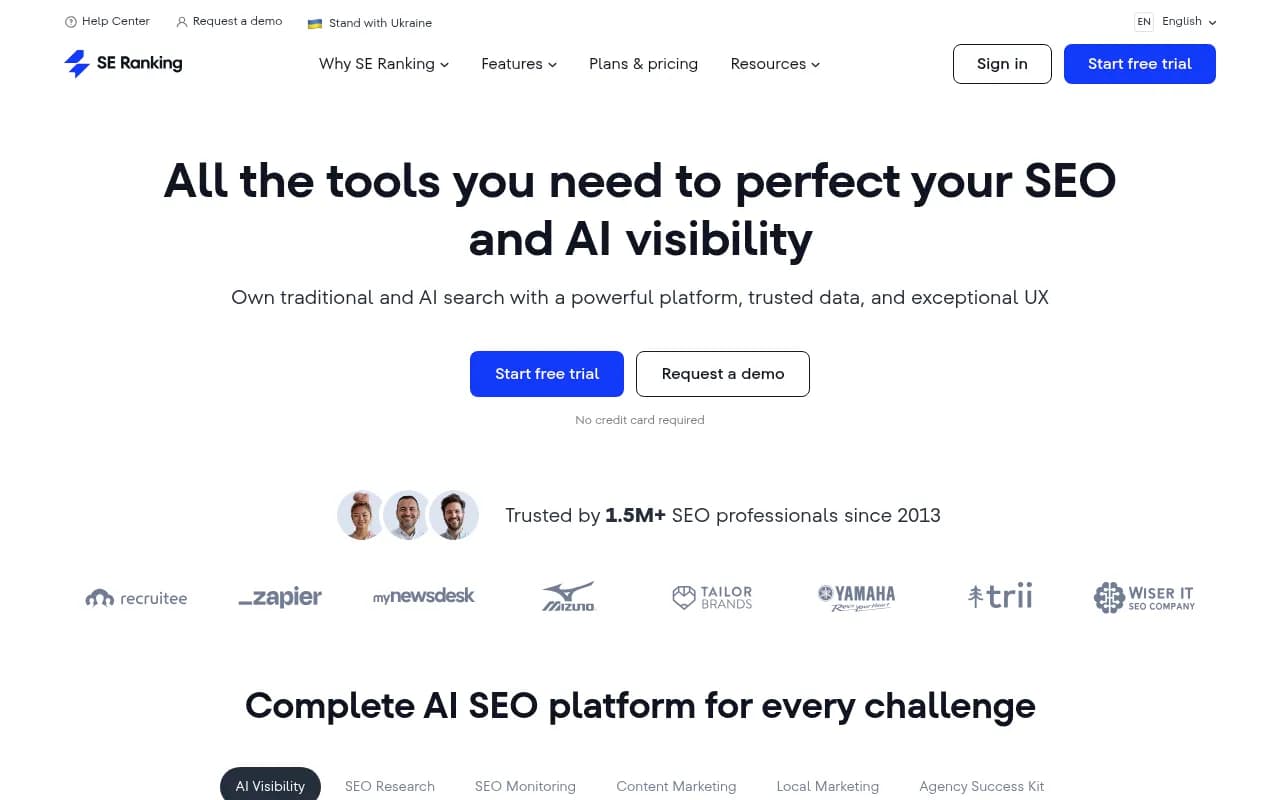
SE Ranking has added AI visibility tracking to its broader SEO platform, which is useful if you want traditional rank tracking and GEO monitoring in one place.
Final thought
The GEO tool market is maturing fast. In 2024, any tool that could show you an AI visibility score felt novel. In 2026, that's table stakes. The real question is what the tool does with that data.
Peec.ai and Rankshift are solid monitoring tools. They do what they say. But if you're running GEO campaigns with actual growth targets -- not just reporting requirements -- you need a platform that helps you close the gap between "here's where you're invisible" and "here's what to do about it."
That's the difference that matters most right now.