Key takeaways
- Peec AI, Promptwatch, Gauge, and Nightwatch all sit in a similar price range, but they're built around very different ideas of what "AI visibility" means
- Nightwatch is primarily an SEO rank tracker that added AI monitoring as an add-on — useful if you already use it, but not purpose-built for GEO
- Peec AI and Gauge are solid monitoring tools, but both stop at showing you data without helping you act on it
- Promptwatch is the only platform in this group that closes the loop: find gaps, generate content, track results — all in one place
- If your team is actively trying to grow AI search visibility (not just measure it), the platform you pick matters a lot
Why this comparison matters in 2026
A year ago, most marketing teams were still asking "should we care about AI search?" That question has been answered. ChatGPT, Perplexity, Claude, and Google's AI Mode are now real traffic sources — and for some categories, they're already the primary discovery channel.
The harder question now is: which tool do you actually use to manage this?
The mid-market is crowded. There are platforms built for enterprise budgets (Profound, Evertune), platforms built for agencies, and a long tail of lightweight trackers. But for a growing team — say, an in-house marketing team at a Series B company, or a 10-person agency managing 5-10 clients — the sweet spot is somewhere between "too basic" and "too expensive."
Peec AI, Promptwatch, Gauge, and Nightwatch all land in that zone. They're all accessible, they all track AI mentions, and they all have legitimate use cases. But they're not the same product, and picking the wrong one costs you months.
This guide breaks down how each platform actually works, where each one falls short, and which team profile fits which tool.
The four platforms at a glance
Before getting into specifics, here's a quick orientation:
| Platform | Core identity | Starting price | AI models tracked | Content generation |
|---|---|---|---|---|
| Promptwatch | End-to-end GEO platform (monitor + optimize + create) | $99/mo | 10+ (ChatGPT, Perplexity, Claude, Gemini, Grok, DeepSeek, Copilot, Meta AI, Google AI Overviews, Google AI Mode) | Yes — built-in AI writing agent |
| Peec AI | Multi-model AI visibility tracker | ~€85/mo | Up to 10 (add-on based) | No |
| Gauge | Brand mention tracking across AI engines | Varies | Multiple | No |
| Nightwatch | SEO rank tracker + AI monitoring add-on | $32/mo base + $99/mo AI add-on | 4 | No |
The table tells most of the story. Three of these tools are monitoring dashboards. One of them is an optimization platform.
Promptwatch: the one that actually helps you fix things
Promptwatch is built around a specific idea: tracking your AI visibility is only useful if it leads somewhere. Most platforms show you a score. Promptwatch shows you a score and then tells you exactly why it's low and what to do about it.

The core workflow is what they call the action loop. First, Answer Gap Analysis surfaces the specific prompts where competitors are getting cited but you're not. You see the actual questions — not vague topic clusters, but the specific queries AI models are answering without mentioning your brand. Second, a built-in AI writing agent generates content designed to close those gaps: articles, listicles, comparisons, all grounded in citation data from 880M+ analyzed citations. Third, page-level tracking shows you which new pages are getting picked up by which AI models, and traffic attribution (via code snippet, GSC integration, or server log analysis) connects that visibility to actual revenue.
That loop is genuinely different from what the other tools in this comparison offer. It's not just a dashboard — it's a workflow.
A few other things worth knowing: Promptwatch has AI crawler logs that show you in real time which AI bots (ChatGPT, Claude, Perplexity, etc.) are crawling your site, which pages they're reading, and what errors they're hitting. It tracks Reddit and YouTube as citation sources, which most competitors ignore entirely. It has ChatGPT Shopping tracking. And it covers 10 AI models, including Google AI Mode and DeepSeek — more than any other tool in this comparison.
Pricing: $99/mo (Essential, 1 site, 50 prompts, 5 articles), $249/mo (Professional, 2 sites, 150 prompts, 15 articles, crawler logs), $579/mo (Business, 5 sites, 350 prompts, 30 articles). Free trial available.
The honest limitation: Promptwatch is more complex than a pure monitoring tool. If you just want a quick weekly report on whether your brand appeared in ChatGPT, it might feel like more than you need. But if you're serious about growing AI visibility — not just measuring it — that complexity pays off.
Peec AI: flexible monitoring with good prompt coverage
Peec AI is a purpose-built AI visibility tracker that's been around long enough to have a real feature set. It tracks brand mentions across multiple LLMs, supports up to 10 models through an add-on system, and offers unlimited seats — which is genuinely useful for teams where multiple people need access to the data.

The platform tracks Google AI Overview visibility, brand presence in AI-generated summaries, and prompt-level analytics. It's flexible in the sense that you can customize which models you're tracking and adjust your prompt set without being locked into a rigid structure. Compared to some enterprise tools, it's relatively affordable and accessible.
Where Peec AI runs into trouble is the same place most monitoring-only tools do: it shows you what's happening but doesn't help you change it. You can see that a competitor is getting cited for a prompt you care about. You can see your mention rate is 12% while theirs is 47%. But the platform doesn't tell you what content to create, doesn't generate that content for you, and doesn't help you track whether new content you publish actually improves your score.
For teams that already have a strong content operation and just need the data layer, that's fine. For teams that are trying to build an AI visibility strategy from scratch, it's a significant gap.
Gauge: clean interface, solid monitoring
Gauge is a newer entrant in the AI visibility space, focused on tracking brand mentions across AI engines and helping teams understand their share of voice.
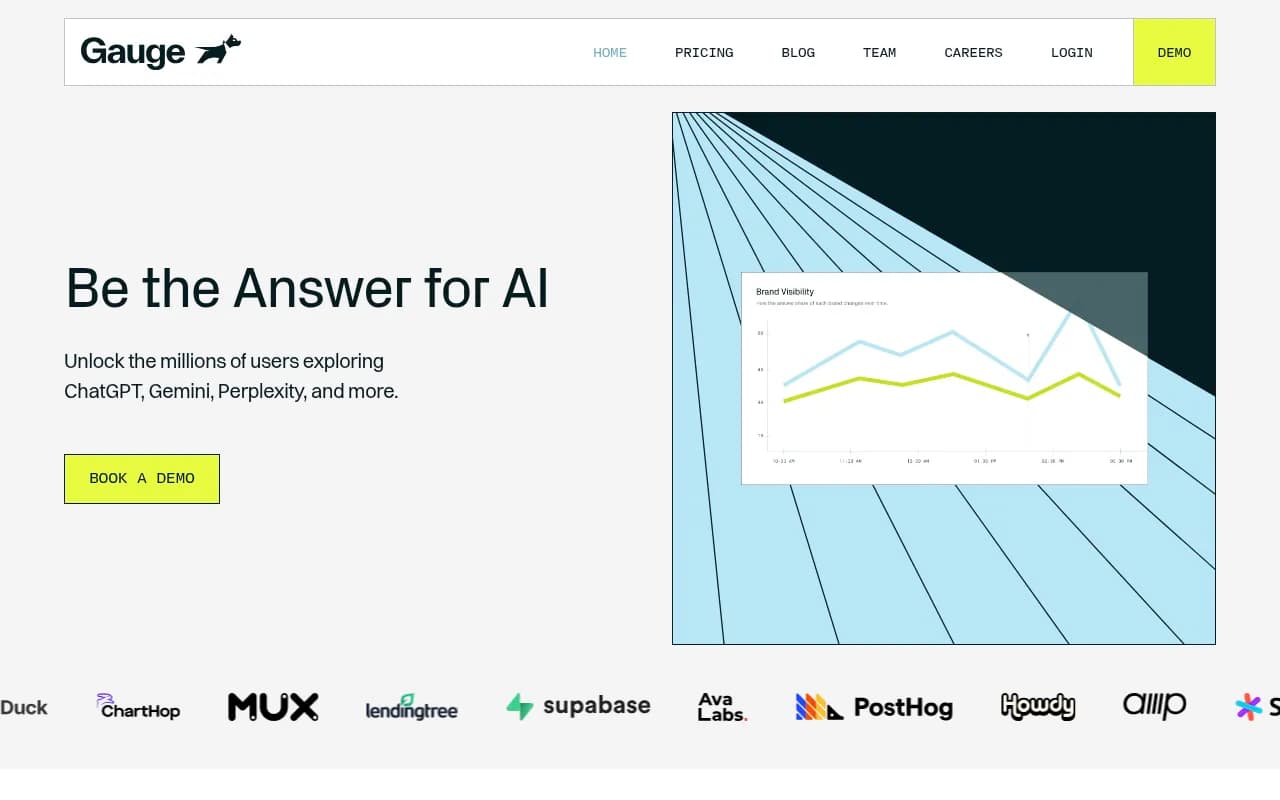
The interface is clean and the setup is straightforward. Gauge works well for teams that want a quick read on how their brand is performing in AI-generated responses without a steep learning curve. It covers multiple AI models and gives you comparison data against competitors.
The limitation is similar to Peec AI: Gauge is a monitoring tool. It tells you where you stand. It doesn't have content gap analysis, doesn't generate content, and doesn't have the crawler log functionality that helps you understand how AI bots are actually interacting with your site. For a team that's just getting started with AI visibility and wants a simple, low-friction way to check in on brand mentions, Gauge is a reasonable starting point. For a team that wants to actively move the needle, it's not enough on its own.
Nightwatch: SEO-first, AI monitoring as an add-on
Nightwatch is fundamentally an SEO rank tracking platform. It's been around for years and has a solid reputation for SERP monitoring. The AI visibility features were added later, which shows in how they're structured: you pay the base subscription for traditional rank tracking, then add $99/mo on top for LLM monitoring.
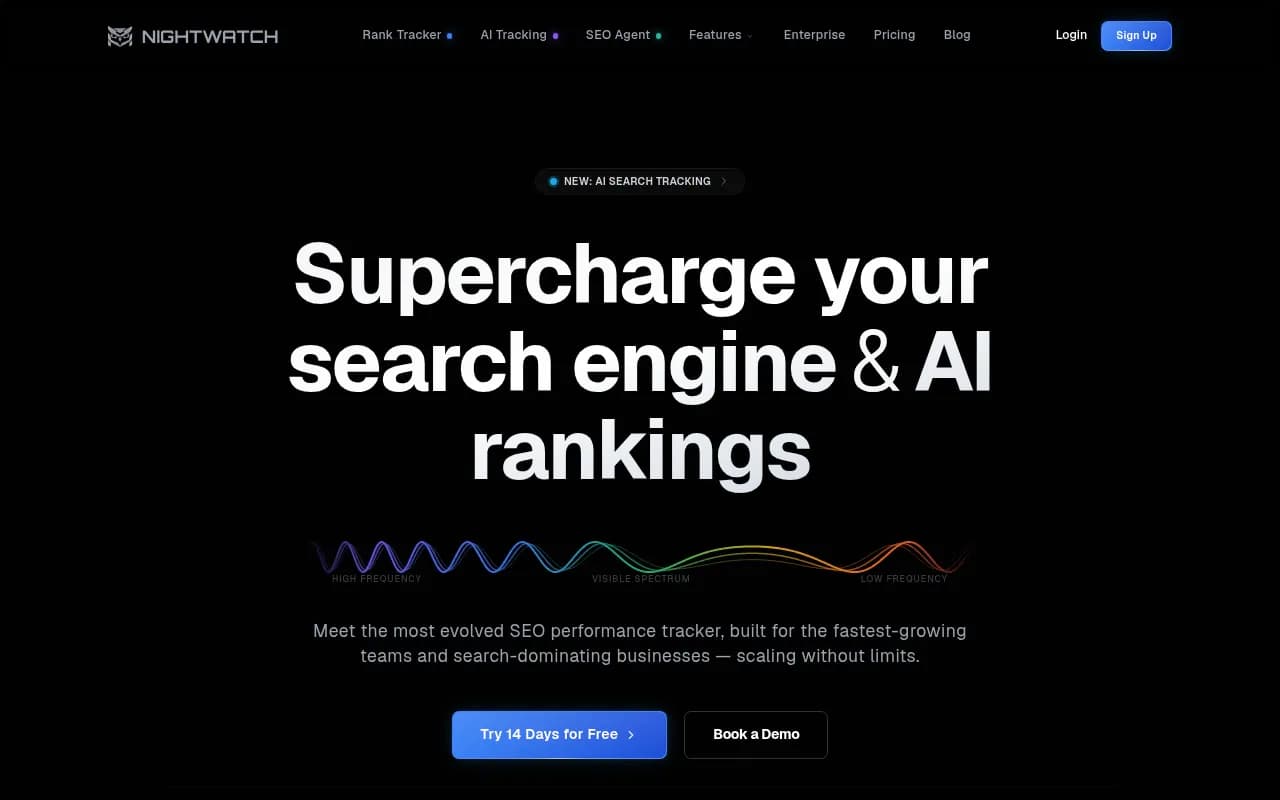
The upside of this approach is obvious if you're already a Nightwatch user. You get traditional SEO data and AI visibility data in one subscription, which simplifies your stack. The SERP monitoring is genuinely good, and having both datasets in the same interface can surface interesting correlations.
The downside is that the AI monitoring piece covers only 4 models — significantly fewer than Peec AI or Promptwatch. And like the other monitoring tools here, it doesn't help you act on what you find. There's no content generation, no gap analysis, no crawler logs. It's a reporting layer.
If you're a team that uses Nightwatch for SEO and wants a basic read on AI visibility without adding another tool, the add-on makes sense. If AI visibility is a primary concern and you're evaluating tools specifically for that purpose, Nightwatch probably isn't where you'd start.
Head-to-head: what each platform actually does
| Capability | Promptwatch | Peec AI | Gauge | Nightwatch |
|---|---|---|---|---|
| AI model coverage | 10+ models | Up to 10 (add-ons) | Multiple | 4 models |
| Brand mention tracking | Yes | Yes | Yes | Yes |
| Competitor comparison | Yes (heatmaps) | Yes | Yes | Limited |
| Content gap analysis | Yes (Answer Gap Analysis) | No | No | No |
| Built-in content generation | Yes (AI writing agent) | No | No | No |
| AI crawler logs | Yes | No | No | No |
| Reddit/YouTube citation tracking | Yes | No | No | No |
| ChatGPT Shopping tracking | Yes | No | No | No |
| Traffic attribution | Yes (snippet, GSC, server logs) | No | No | No |
| Prompt volume & difficulty scores | Yes | Limited | No | No |
| Traditional SEO tracking | No | No | No | Yes |
| Starting price | $99/mo | ~€85/mo | Varies | $32/mo + $99/mo AI add-on |
Which platform fits which team
The right choice depends less on features in the abstract and more on what your team is actually trying to do.
You're trying to grow AI visibility, not just measure it. Promptwatch is the clear choice. The content gap analysis and built-in writing agent mean you can go from "we're invisible for this prompt" to "we published content targeting this prompt" without leaving the platform. The crawler logs and traffic attribution close the loop on whether it worked.
You have a strong content team and just need the data. Peec AI is a reasonable option. It gives you solid multi-model tracking, flexible prompt configuration, and unlimited seats. If your writers and strategists can take raw visibility data and turn it into a content plan on their own, you don't necessarily need the optimization layer.
You want something simple to start with. Gauge is accessible and low-friction. It's a good way to get a basic read on AI visibility without committing to a complex setup. Just know you'll probably outgrow it as your strategy matures.
You're already using Nightwatch for SEO. The AI add-on is worth considering if you want a single platform. But if AI visibility is a strategic priority rather than a secondary concern, you'll likely want a dedicated tool eventually.
The monitoring-only problem
It's worth being direct about something: most AI visibility tools in 2026 are still monitoring dashboards. They show you a number. They show you a trend. They show you how you compare to competitors. And then they stop.
That's useful data. But data without action is just a report. The teams that are actually winning in AI search aren't the ones with the best dashboards — they're the ones publishing content that AI models want to cite.
The gap between "we know we're invisible for these prompts" and "we published content that got cited for these prompts" is where most teams get stuck. It requires understanding what content AI models actually cite (not just what ranks on Google), generating content that fits that pattern, and tracking whether it worked.
That's the problem Promptwatch is built to solve. The other tools in this comparison are useful inputs, but they don't close that loop.
Final take
If you're a growing team that's serious about AI search visibility as a channel — not just curious about it — the platform you pick matters. Monitoring tools give you awareness. Optimization platforms give you leverage.
Peec AI and Gauge are solid for teams that want to track what's happening. Nightwatch makes sense if you're already invested in it for SEO. But if you want to actually move your visibility scores and connect that work to revenue, Promptwatch is the most complete option in this price range.
The free trial is worth taking. The action loop — find gaps, generate content, track results — is a lot more concrete once you see it working on your own data.