Key takeaways
- Peec.ai covers core AI models but gates Gemini, Claude, and Google AI Mode behind paid add-ons, making full coverage more expensive than it first appears.
- LLM Pulse includes Google AI Mode and Gemini on all plans, with simpler pricing and solid analytics -- but runs weekly by default and lacks content generation.
- Promptwatch monitors 10+ AI models out of the box, and is the only one of the three that closes the loop: find gaps, generate content, track results.
- If your goal is just to watch dashboards, any of the three will do. If you want to actually improve your AI visibility, the platform with built-in content tools wins.
The AI monitoring space moved fast in 2025. What started as a handful of scrappy dashboards counting brand mentions in ChatGPT responses turned into a crowded market of 50+ tools, each claiming to be the most comprehensive LLM visibility platform on the planet.
Three names kept coming up in real conversations: Peec.ai, LLM Pulse, and Promptwatch. They're all serious tools. They all track how brands appear in AI search engines. But they're built around very different philosophies -- and those differences matter a lot depending on what you're actually trying to accomplish.
This guide breaks down how each platform performed on LLM coverage depth in 2025, what they do well, where they fall short, and which one makes sense for which type of team.
What "LLM coverage" actually means
Before comparing the three, it's worth being precise about what we mean by coverage depth. There are really three dimensions:
- Model breadth: How many AI engines does the platform track? ChatGPT is obvious. But what about Claude, Gemini, Google AI Mode, DeepSeek, Grok, Mistral, Meta AI, Perplexity, Copilot?
- Response depth: Does it just detect whether your brand was mentioned, or does it capture the full response, analyze sentiment, track citations, and flag inaccuracies?
- Prompt coverage: How many prompts can you track, and does the platform help you discover which prompts matter?
Each platform handles these three dimensions differently.
Peec.ai: solid foundation, but coverage is gated

Peec.ai raised $29M (including a $21M Series A in November 2025), which tells you something about its ambitions. It's a well-funded, professionally built platform with a clean interface and a focus on daily monitoring cadence.
On paper, the model coverage sounds reasonable. In practice, the base plans cover ChatGPT, Perplexity, and Google AI Overviews. If you want Claude, Gemini, Google AI Mode, or DeepSeek, those are paid add-ons. For teams that need true multi-model coverage, the actual cost climbs quickly.
That's not necessarily a dealbreaker -- it depends on which models your audience uses. But it does mean the headline pricing doesn't reflect what you'll pay for comprehensive coverage. A team that needs 5+ models tracked is going to pay significantly more than the base plan suggests.
Where Peec.ai does well: the daily run cadence is genuinely useful for fast-moving brands in competitive categories, and the agency workflow features are solid. If you're running a digital agency managing multiple clients and you need clean daily snapshots, Peec.ai is built for that use case.
What it doesn't do: there's no content generation, no answer gap analysis, and no built-in tools for acting on what you find. You get the data; you're on your own for the fix.
LLM Pulse: better value, honest pricing, but monitoring-only
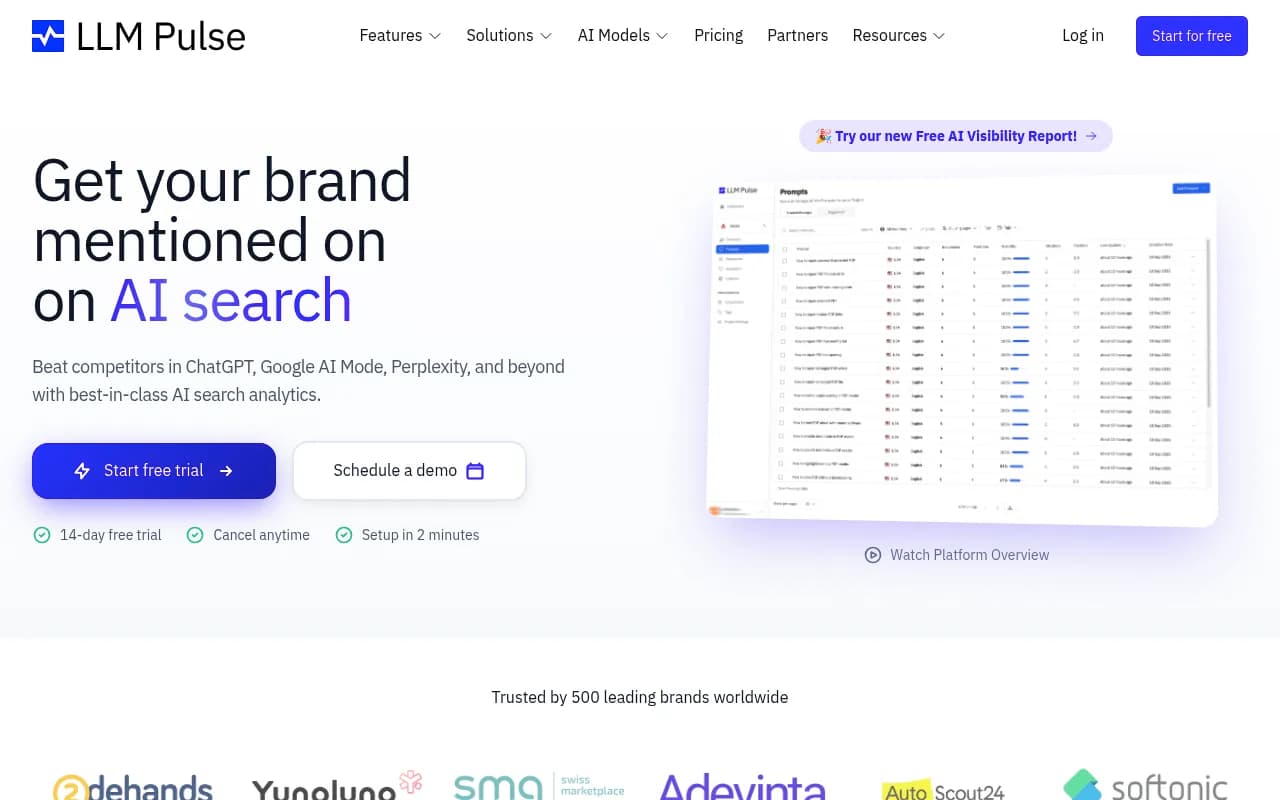
LLM Pulse is bootstrapped, which shows in the pricing philosophy. Where Peec.ai gates models behind add-ons, LLM Pulse includes Google AI Mode and Gemini on all plans alongside ChatGPT, Perplexity, and AI Overviews. For teams that need 5-model coverage without add-on fees, that's a real advantage.
The pricing comparison is stark. According to LLM Pulse's own published comparison (reviewed for factual accuracy by their team), tracking 150 prompts costs roughly €99 on LLM Pulse versus €205 on Peec.ai -- about 52% cheaper for equivalent prompt counts.
LLM Pulse also includes features that Peec.ai doesn't lead with: brand sentiment analysis, GA4 integration, a Chrome extension, and API access. The Looker Studio connector is available on both platforms.
The main limitation is monitoring cadence. LLM Pulse runs weekly by default, with daily available on demand. For most brand visibility use cases, weekly is fine -- visibility in AI responses doesn't shift dramatically day-to-day. But if you're in a fast-moving category or managing a PR situation, the weekly default might feel slow.
The bigger limitation is the same one that affects Peec.ai: LLM Pulse is a monitoring platform. It shows you where you stand. It doesn't help you improve your position. There's no content gap analysis, no AI writing tools, no prompt discovery beyond what you manually configure.
Promptwatch: the only one that closes the loop
Promptwatch takes a different approach entirely. Where Peec.ai and LLM Pulse are fundamentally dashboards -- very good dashboards, but dashboards -- Promptwatch is built around an action cycle.

The three-step loop: find the prompts where competitors are visible but you're not, generate content specifically engineered to get cited by AI models, then track whether that content actually improves your visibility scores. Most platforms stop at step one. Promptwatch runs all three.
On raw model coverage, Promptwatch monitors 10 AI engines: ChatGPT, Perplexity, Google AI Overviews, Google AI Mode, Claude, Gemini, DeepSeek, Grok, Mistral, Meta AI, and Copilot. That's the broadest coverage of the three platforms, and it's included across plans rather than gated behind add-ons.
A few capabilities that neither Peec.ai nor LLM Pulse offer:
- AI Crawler Logs: Real-time logs of AI crawlers (ChatGPT, Claude, Perplexity) hitting your website -- which pages they read, how often they return, errors they encounter. This is genuinely rare in the market.
- Answer Gap Analysis: Shows exactly which prompts competitors rank for that you don't. Not just "you're missing coverage" but the specific questions and topics.
- Built-in content generation: An AI writing agent that generates articles and comparisons grounded in citation data from 880M+ analyzed citations. The output is designed to get cited, not just to fill a content calendar.
- Reddit and YouTube tracking: Surfaces discussions that directly influence AI recommendations -- a channel most monitoring tools ignore entirely.
- ChatGPT Shopping tracking: Monitors when your brand appears in ChatGPT's product recommendation carousels.
- Traffic attribution: Connects AI visibility to actual revenue through a code snippet, GSC integration, or server log analysis.
Pricing runs from $99/month (Essential: 1 site, 50 prompts, 5 articles) to $249/month (Professional: 2 sites, 150 prompts, 15 articles, crawler logs) to $579/month (Business: 5 sites, 350 prompts, 30 articles). A free trial is available.
Head-to-head comparison
| Feature | Peec.ai | LLM Pulse | Promptwatch |
|---|---|---|---|
| AI models tracked | 3 base + add-ons | 5 (all plans) | 10+ (all plans) |
| Google AI Mode | Add-on | Included | Included |
| Claude | Add-on | Not listed | Included |
| DeepSeek / Grok | Add-on | Not listed | Included |
| Monitoring cadence | Daily | Weekly (daily on demand) | Configurable |
| Brand sentiment | Yes | Yes | Yes |
| Answer gap analysis | No | No | Yes |
| AI content generation | No | No | Yes |
| AI crawler logs | No | No | Yes |
| Reddit/YouTube tracking | No | No | Yes |
| ChatGPT Shopping | No | No | Yes |
| Traffic attribution | Limited | GA4 integration | Full (snippet/GSC/logs) |
| Looker Studio | Yes | Yes | Yes |
| API access | Yes | Yes | Yes |
| Pricing (150 prompts) | ~€205/mo | ~€99/mo | $249/mo |
| Funding | VC ($29M) | Bootstrapped | -- |
| Free trial | Yes | Yes | Yes |
Which platform is right for which team?
The honest answer is that these tools serve different needs, and the "best" one depends entirely on what you're trying to do.
Choose Peec.ai if you're running a digital agency that needs clean daily monitoring for multiple clients, you're already in their ecosystem, and you're willing to pay for add-on model coverage. The daily cadence and agency workflow features are genuinely good.
Choose LLM Pulse if you want solid multi-model monitoring at a lower price point, you're comfortable with weekly cadence, and you don't need content generation. For budget-conscious teams that just want honest visibility data across 5 models, it's hard to beat on price.
Choose Promptwatch if monitoring alone isn't enough -- if you want to actually improve your AI visibility, not just measure it. The answer gap analysis + content generation + tracking loop is what separates it from both alternatives. Teams that have tried monitoring-only tools and found themselves stuck with data but no clear next step will recognize the problem Promptwatch solves.
The monitoring trap
One thing worth naming directly: there's a pattern in this market where teams sign up for a monitoring tool, get excited about the dashboard, and then... don't know what to do with the data.
You can see that a competitor appears in 73% of responses for "best project management software" and you appear in 12%. That's useful to know. But the dashboard doesn't tell you why, and it definitely doesn't help you close the gap.
This is the core limitation of monitoring-only platforms. The data is real and the dashboards are often well-designed. But visibility in AI search is a content problem. AI models cite you when they have good content to cite. If your site doesn't have the right articles, comparisons, and answers, no amount of monitoring will change that.
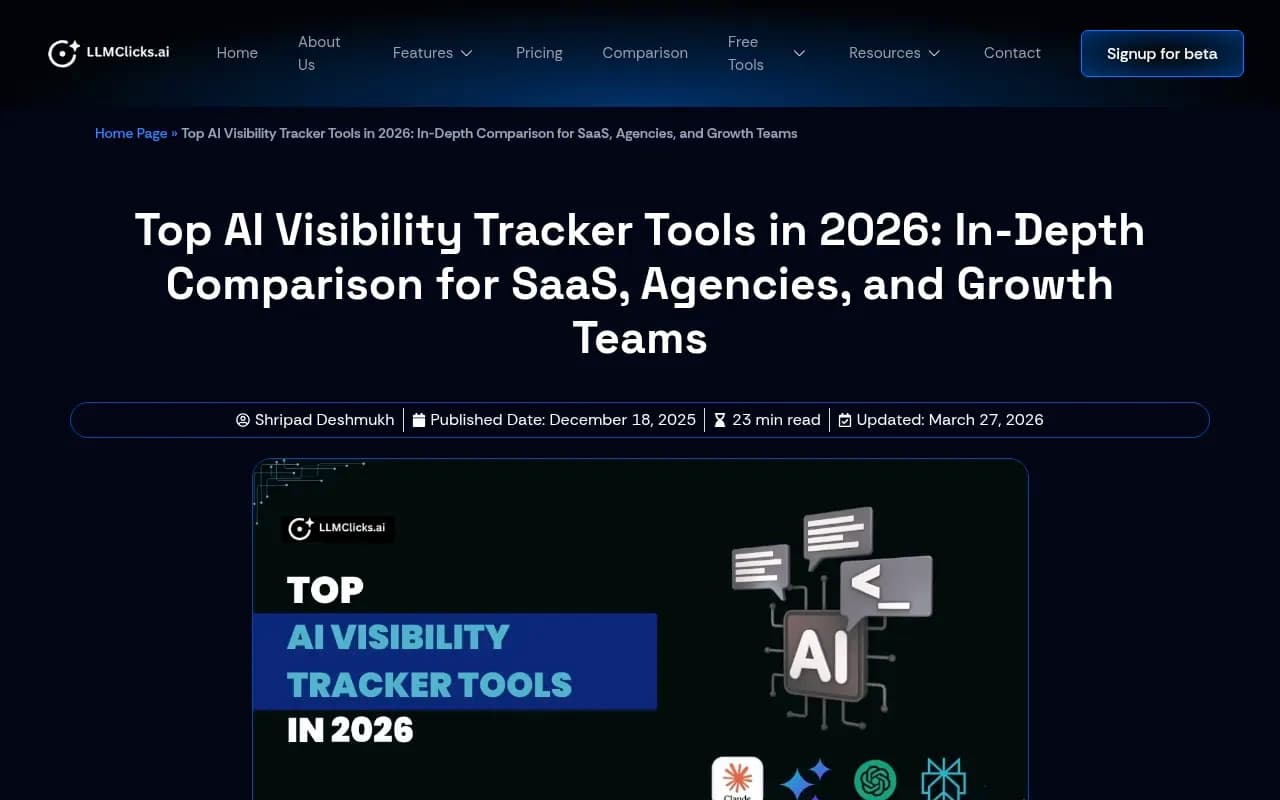
The platforms that will matter most in 2026 are the ones that connect the monitoring data to content action. That's a small subset of the market right now.
Other tools worth knowing about
If none of the three above fit your specific situation, a few other platforms are worth a look:
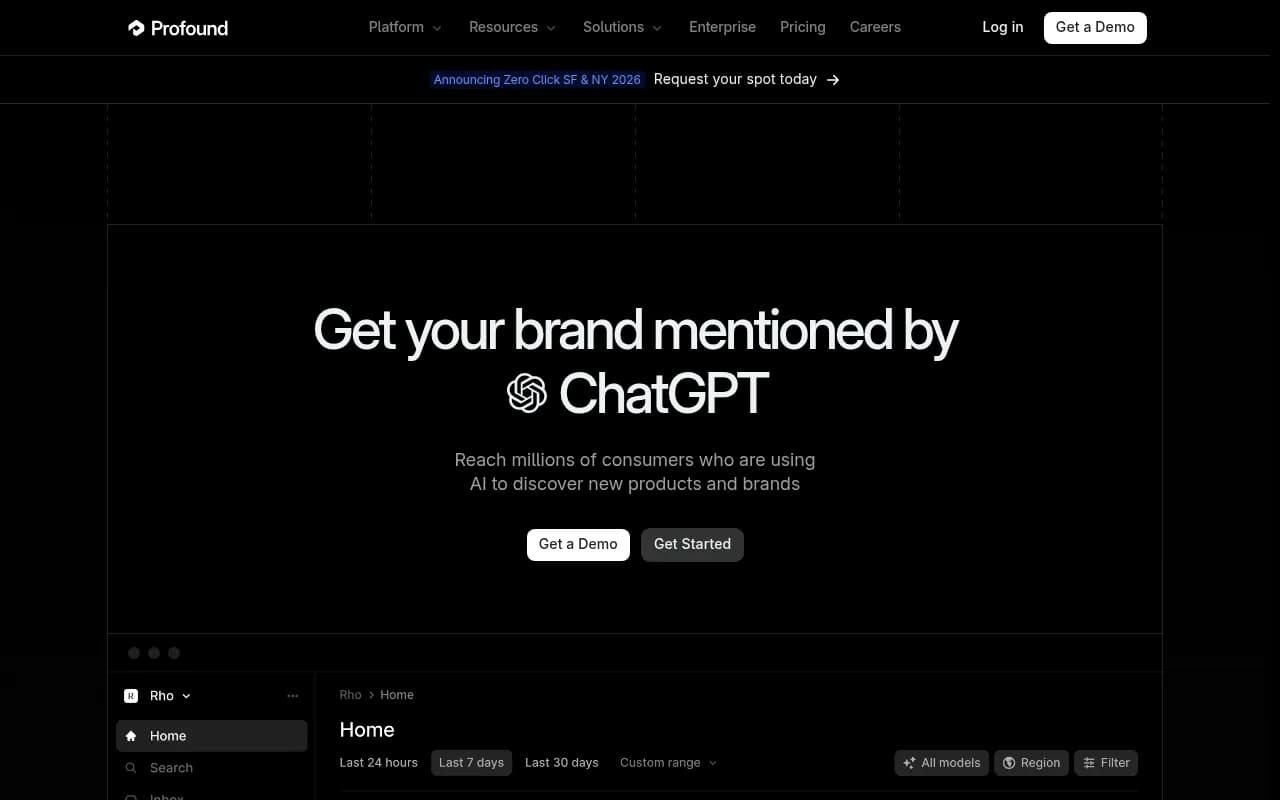
Profound has strong enterprise features and good analytics depth, though it comes at a higher price point and lacks Reddit tracking and ChatGPT Shopping coverage.

Otterly.AI is one of the more affordable monitoring options, good for smaller teams that need basic AI visibility tracking without a large budget.

AthenaHQ tracks 8+ AI search engines and has a clean interface, though it's primarily monitoring-focused without content optimization tools.
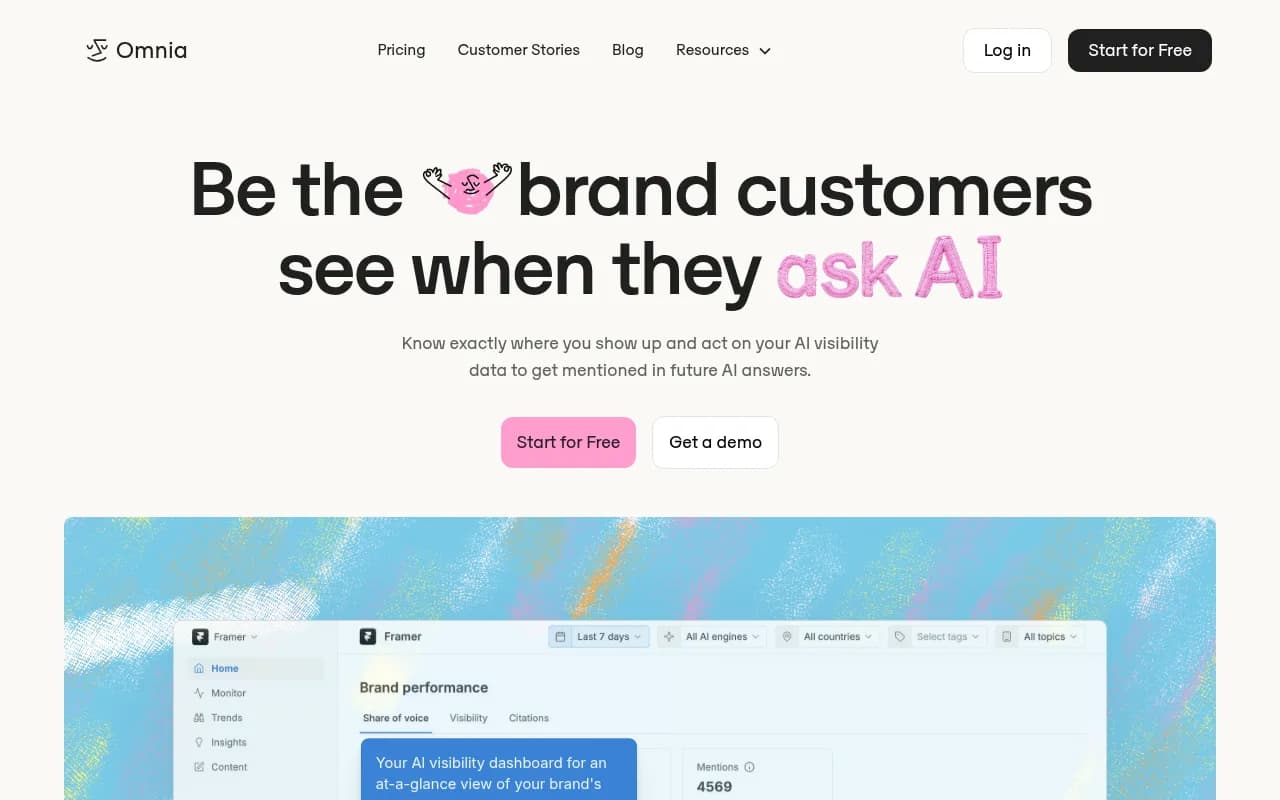
Omnia is worth considering for mid-market teams that need broader model coverage and strong analytics, particularly if you need BI integrations.
The bottom line
In 2025, Peec.ai had the best-funded operation and the cleanest agency workflows. LLM Pulse had the most honest pricing and the best value for teams that need 5-model coverage without add-on fees. Promptwatch had the deepest LLM coverage and -- more importantly -- was the only platform that helped you do something about what you found.
If the question is purely "which had the deepest LLM coverage in 2025," Promptwatch wins on model count (10+ vs. 5 vs. 3-base) and on the depth of what it does with that coverage. But coverage alone isn't the right metric. The more useful question is: which platform helps you actually improve your position in AI search? On that measure, the gap between monitoring-only tools and action-oriented platforms is significant -- and it's only going to widen.