Key takeaways
- Mention tracking and traffic attribution are different jobs. Most prompt trackers only do the first. Crawler logs and AI referral analytics are what tell you whether visibility turns into visits.
- Vendor blogs disagree on what Peec AI includes. One says it offers Agent Analytics and server-log traffic, another calls it reporting-only. Check Peec's current docs before ruling it in or out.
- Promptwatch, Profound and Otterly.AI all cover some form of crawler or agent analytics. Ahrefs shows AI referrals as a channel. Many cheaper trackers stop at prompts and citations.
- Verify crawler IPs against operator ranges. User agents are easy to spoof, and raw bot counts can mislead.
- Treat every price in this guide as a starting point and confirm it on the vendor's pricing page.
Why people look past Peec AI for logs and attribution
Peec AI is a clean, fast prompt tracker. Reviewers like the interface, the unlimited seats and the source and citation reporting. The complaint I see most often in comparison posts isn't about tracking quality. It's that tracking ends at the dashboard.

Two questions come up once a team has a few months of mention data:
- Are AI systems actually reading our pages, and where do they hit errors?
- When AI cites us, does anyone click, and do they convert?
The first needs server or CDN logs. The second needs visitor analytics that recognize AI referrers. Neither comes from asking ChatGPT a list of prompts and counting brand names. You can fake an answer with a few Google Analytics filters, but a purpose-built setup is less painful.
A caveat on the Peec question. Per ContentMonk's comparison, Peec, Profound and Otterly all offer Agent Analytics, and Peec adds server-log traffic. AmICited describes Peec as reporting-only. These claims come from competitor blogs and I could not verify them independently, so open Peec's docs and pricing page before you decide you need to leave.
What to look for
Before comparing tools, decide which of these you need. They are not equally common.
- IP-verified crawler logs. Not just a user-agent count. Only requests from the operator's published IP ranges should count, otherwise scrapers pretending to be GPTBot pollute the data.
- Answer-time vs training crawls. A GPTBot hit is not the same as ChatGPT-User fetching your page to answer someone's question. You want them separated.
- Error reporting. 403s, 429s and timeouts on specific bots are the most actionable thing logs give you.
- AI referral attribution. Visits from chatgpt.com, perplexity.ai, gemini.google.com and claude.ai, tied to pages and conversions.
- The link between the two. Crawl, then citation, then click, per page. This is where most tools fall short.
- Log source support. Cloudflare, Vercel, Fastly, CloudFront or a WordPress plugin, depending on your stack.
Why crawler data matters more than it did a year ago
The crawler mix is shifting fast. In Promptwatch's AI crawler traffic data (June 8 to September 6, 2026), OpenAI made up 79.8% of IP-verified AI crawler requests in the week of August 31 to September 6, down from 94.8% in the week of June 8 to 14. Other providers are taking a bigger slice.
The starkest example is Meta. Promptwatch Data on Meta-WebIndexer shows it going from about 2.2% of tracked AI crawler requests in mid-July 2026 to 37.8% on August 9, which made it the heaviest AI crawler in their logs. The report notes that the link to Meta building its own web index is alleged, based on a social post, so treat the cause as unconfirmed. The surge itself is measured.
Two practical lessons from that report. First, compare your own logs to the overall mix: a provider that is big in the mix but near zero in your logs probably means you are blocked or unreachable for it. Second, shares add up to 100%, so one provider's share can fall while its raw requests rise. Don't read a share chart as a volume chart.
You can only spot any of this if you have logs. A prompt tracker will never tell you that a CDN rule is silently blocking a crawler.
Comparison table
This table summarizes what each option does on the two features this guide cares about. Entries for vendors other than Promptwatch come from third-party comparison posts and vendor pages, and pricing was not verified live.
| Tool | Crawler or agent logs | AI traffic attribution | Reported entry price | Notes |
|---|---|---|---|---|
| Promptwatch | IP-verified logs, spoofed bots filtered | Yes, visitor analytics with conversions | $95/mo, logs and more from higher tiers | Also writes and publishes content |
| Profound | Agent Analytics (crawler-log based) | Reported by reviewers | From $99/mo (ChatGPT only), three engines $399/mo | Enterprise tier covers more engines, SOC 2 |
| Otterly.AI | Agent Analytics on Standard plans and up | Referral tracking from logs | From $29/mo | Budget-friendly monitoring |
| Peec AI | Reported both ways, verify | Reported server-log traffic | Check peec.ai | Strong on citations and reporting |
| Ahrefs Brand Radar | No | AI referral channel via Ahrefs Web Analytics | From $50/mo for prompt tracking | Fits teams already in Ahrefs |
| ContentMonk | No crawler log analysis | Via Google Analytics and Search Console | From $99/mo | Combines SEO and AI visibility |
| DarkVisitors | Agent and bot tracking, LLM referrals | Yes | Check vendor | Narrow, logs-first tool |
The alternatives
Promptwatch
Promptwatch is the one I'd shortlist first for this specific requirement, mainly because the log data and the visitor data live in the same product as the prompt tracking. Its Agent Analytics reads IP-verified logs for crawlers like GPTBot, OAI-SearchBot, ChatGPT-User, ClaudeBot, PerplexityBot and Meta-WebIndexer, explains crawl failures in plain language, and shows a crawl-to-citation path with a citation rate per page. Spoofed bots are filtered out.

On attribution, visitor analytics counts traffic and conversions from ChatGPT, Perplexity, Gemini, Claude, Copilot, DeepSeek and others, installed through a script, a Google Tag Manager template or the WordPress plugin. Its 360 Insights view overlays Google Search Console and Bing data, so you can find pages that rank in Google but never get cited by AI. Log ingestion works through Cloudflare, Vercel, Fastly, CloudFront, Netlify, Akamai, a custom endpoint or the WordPress plugin.
The case study worth reading is TreeHouse, the company behind Pararius. They fixed crawler access, published proprietary rental data, and reached roughly 25% of organic conversions from AI search, almost all of it from ChatGPT. Crisp reported 2x higher conversion rates from AI traffic than from traditional channels. Those are customer-reported results, not guarantees.
Pricing: Essential is $95/month for 50 prompts and includes site audit and 360 Insights; Professional at $245/month adds 25M crawler logs and 1M visitor events. Business at $579/month adds the automated Content Agent. Confirm at promptwatch.com/pricing. The honest downside is price: it costs more than the budget trackers, and you need access to your CDN or server logs to get the full value.
Profound
Profound is the enterprise pick. Reviewers note crawler-log-based Agent Analytics and SOC 2 compliance, and the Enterprise plan covers up to nine answer engines. Entry pricing quoted in comparisons is steep for what you get at the bottom: $99/month for ChatGPT only and $399/month for three engines. It is strong monitoring with agent workflows, but it has no Google side at all according to Frase's comparison.

Otterly.AI
Otterly.AI is the budget route. Ranketta's roundup lists Agent Analytics with crawler and AI referral tracking from logs on Standard plans and up. If you want a cheap way to test whether log data changes your decisions, this is the lowest-risk experiment. Expect a monitoring-first product rather than a content or optimization platform.

Ahrefs Brand Radar
If your team already lives in Ahrefs, Ahrefs Brand Radar plus Ahrefs Web Analytics gives you AI referral traffic as its own channel. It does not read crawler logs, so you get the attribution half only. Prompt tracking starts around $50/month, while the prompt-database index runs $199/month for one platform and $699 for all models, per Frase.

DarkVisitors
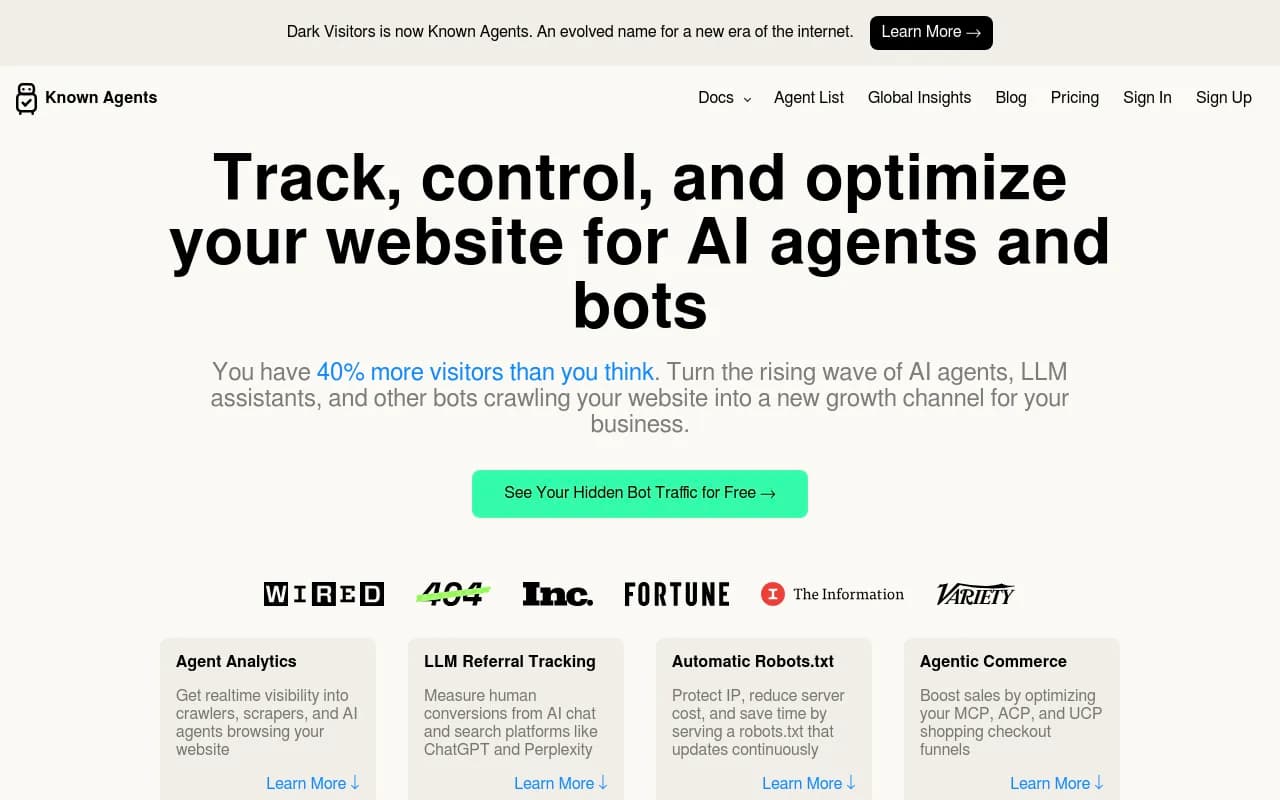
DarkVisitors comes at the problem from the other end. It tracks AI agents, bots and LLM referrals visiting your site, with none of the prompt-tracking layer. It makes sense as a bolt-on if you already have a visibility tracker you like and only need the bot data. You will end up stitching two tools together, which is its own cost.
ContentMonk and Frase
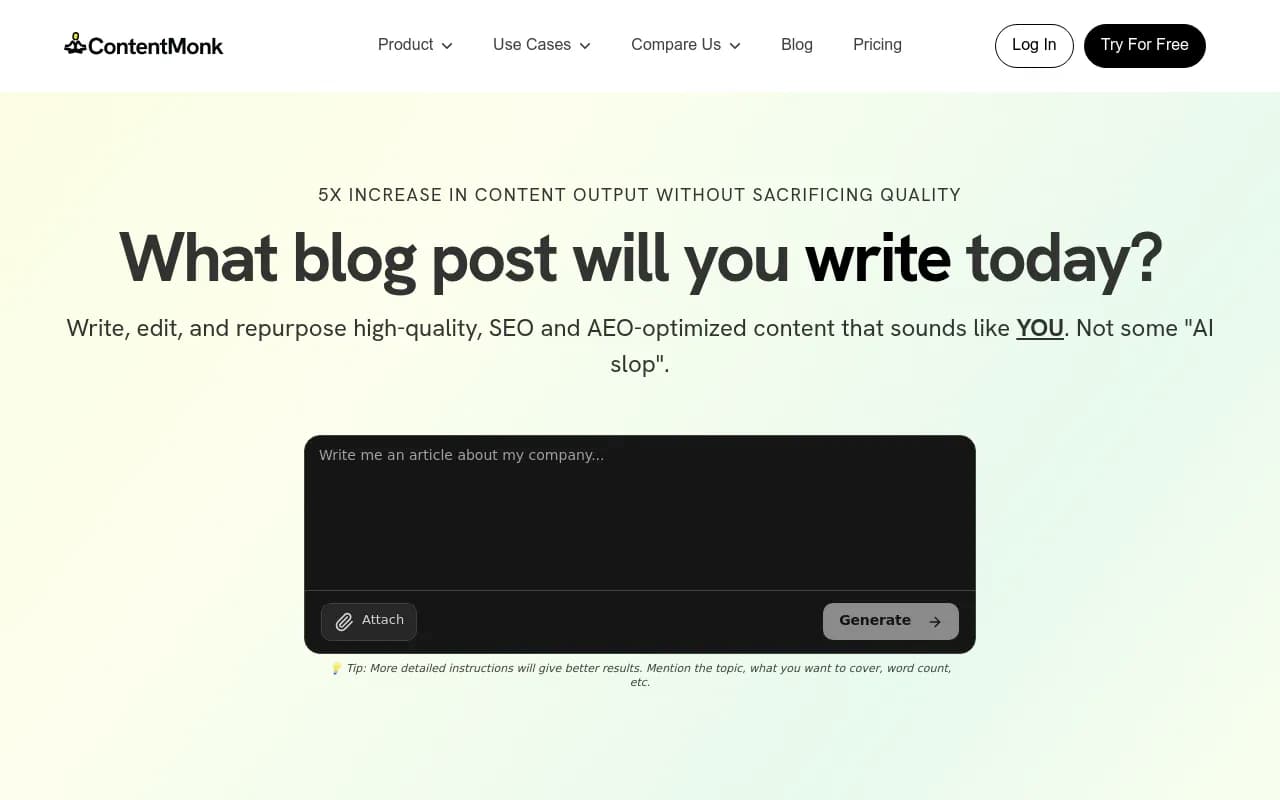
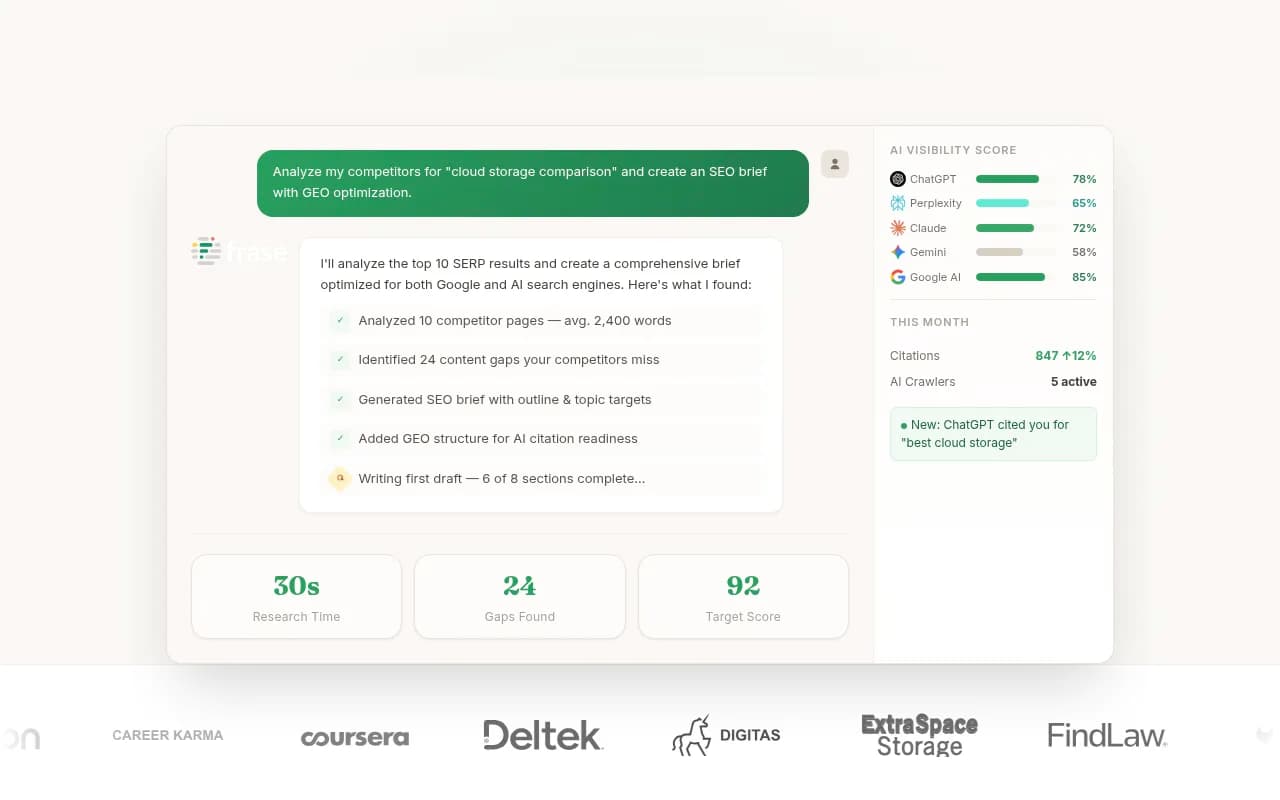
Two options that skip crawler logs but connect traffic and content. ContentMonk links Google Analytics and Search Console so traffic sits next to AI visibility, and it says plainly that it does not analyze crawler logs. Frase starts at $39/month billed yearly and ends its workflow in published content. Both suit teams whose main gap is turning findings into pages, not diagnosing bot access.
How to verify a vendor's log claims
Every vendor says "AI crawler tracking." Ask these before paying.
- Do you verify IPs, or just match user agents? User-agent-only counting inflates numbers with spoofers.
- Which bots, specifically? Ask whether answer-time fetchers like ChatGPT-User and Claude-User are separated from training crawlers like GPTBot and ClaudeBot.
- How do logs get in? If it needs a Cloudflare Logpush job and you run on a host you can't configure, you won't get data.
- What happens at your volume? Crawler log quotas differ widely by plan. Check the monthly cap.
- Can it connect a crawl to a citation to a click? If not, you have three separate dashboards.
A useful sanity test during any trial: pull a week of raw logs yourself and compare. If the vendor's count of verified GPTBot requests is wildly above yours, something is wrong.
Setting up attribution without a new tool
If you want to try before buying, you can get partial AI referral data in a standard analytics tool. Build a channel group matching referrers from chatgpt.com, perplexity.ai, gemini.google.com, copilot.microsoft.com and claude.ai. You will miss traffic where the referrer is stripped, and you will not see crawl behavior at all, but it tells you whether AI traffic is large enough to justify a paid tool.
For robots.txt and CDN rules, check every major provider, as the Promptwatch crawler report advises. Include Meta's crawlers in that review, since they are now a large part of AI bot traffic. If you bill by request, budget for sustained crawl load.
Which one to pick
- You want logs, attribution and content action in one place: Promptwatch.
- You are an enterprise buyer with a procurement checklist: Profound, with Promptwatch also being ISO/IEC 27001 certified and GDPR compliant.
- You want the cheapest way to test log data: Otterly.AI.
- You already pay for Ahrefs and only need referrals: Ahrefs Brand Radar.
- You have a tracker you like and want bot data only: DarkVisitors.
- Your gap is content, not diagnostics: ContentMonk or Frase.
If you want more options in the category, the GEO software directory at bestgeosoftware.com lists dozens of trackers with reviews. For research on how AI engines choose sources, browse Promptwatch Data.
One last point. Don't switch tools purely because a blog post says Peec lacks a feature. Run a two-week trial, send real logs through it, and see whether the data changes a decision. If it doesn't, the extra price isn't worth paying.