Key takeaways
- Meta AI (including the new Muse agent) and Alexa both answer local questions, but neither company has published a clear rulebook for how they pick businesses. Treat anything that claims otherwise with suspicion.
- The safest strategy is boring and effective: accurate, consistent listings on Google Business Profile, Yelp, and Bing Places, plus complete public Facebook and Instagram profiles.
- Third-party mentions matter. Promptwatch Data found that 47.6% of ChatGPT responses cite 10 or more domains (Sep 28 to Oct 4, 2026), so crowded answers reward businesses that appear on reviews and listings, not just their own site.
- You cannot improve what you do not measure. Ask the assistants real customer questions every month and log whether you show up.
Why personal assistants now matter for local businesses
For years, local search meant a map pack and ten blue links. Now a customer can say, "Hey Alexa, find me a plumber who can come tonight," or message Meta AI in WhatsApp, "Where should my sister and I eat Friday?" and get one or two names back. Not a list. A recommendation.
Meta is pushing hard here. According to CNBC's reporting, its Muse personal agent has been topping app store charts, Mark Zuckerberg calls it the centerpiece of the company's AI strategy, and Meta is pitching it to consumers and small businesses alike. Muse is free to use, with paid plans at $20 or $100 a month depending on token usage. Meta AI is also built into WhatsApp, Instagram, Messenger, and Facebook, so people can ask for help inside apps they already use all day.
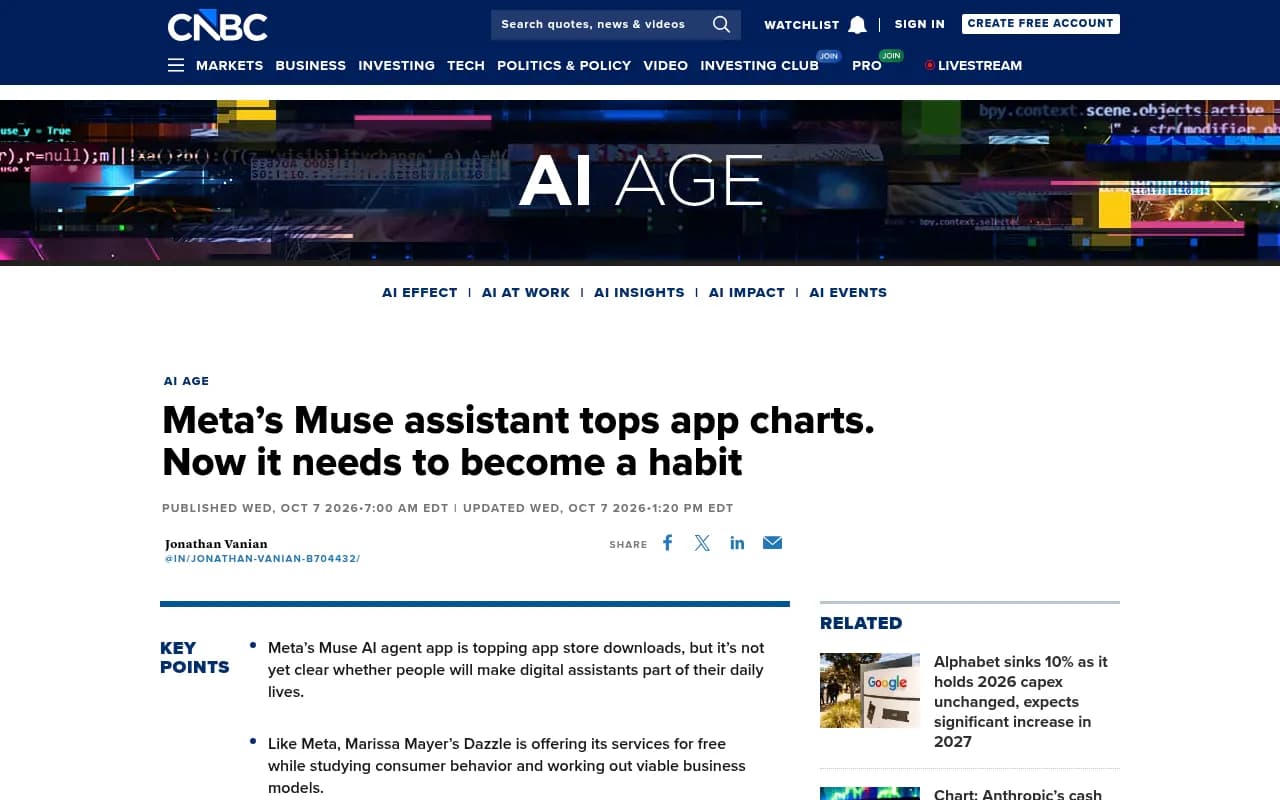
Here is the honest caveat. IDC's Meredith Whalen told CNBC that for Meta, "the real question is trust," and it is not yet clear whether people will make these assistants a daily habit. Some of this may fizzle. But the downside of being ready is small, and the upside of being the name an assistant says out loud is large.
What we actually know (and don't)
I want to be upfront about the evidence, because most articles on this topic bluff.
Known from primary sources:
- Meta AI for Business can use first-party business data on Meta platforms, and it analyzes Facebook and Instagram content and engagement. It also looks at similar businesses on Instagram using publicly available information. That is the business-owner side: it helps you run your marketing.
- Meta AI lives inside WhatsApp, Instagram, Messenger, and Facebook, and can be pulled into group chats with an @Meta AI mention.
Not verified:
- Neither Meta nor Amazon has published documentation we could confirm on exactly how Meta AI or Alexa+ select local businesses to recommend. We found no Muse-specific local data either.
- Several SEO agencies say Alexa pulls local answers from Google Business Profile, Yelp, and Bing Places. That is plausible and consistent with how voice assistants have historically worked, but those are agency blogs, not Amazon documentation.
- Promptwatch's own research does not cover Meta AI or Alexa citations, so I will not pretend it does.
So what follows is a strategy built on the sources that are most likely to feed these assistants, labeled by how confident we can be.
The local data foundation
This is the part that works no matter which assistant wins. Every assistant needs facts about your business, and it gets them from somewhere.
| Source | Why it matters | Confidence it feeds assistants |
|---|---|---|
| Google Business Profile | Core local data used across Google surfaces and widely cited by others | High |
| Yelp | Commonly named as an Alexa local source by SEO agencies | Medium (third-party claim) |
| Bing Places | Free, and reported as part of Alexa's local data ecosystem | Medium (third-party claim) |
| Facebook page | Public data Meta AI can see on its own platform | Medium to high (Meta owns it) |
| Instagram profile | Same, plus content and engagement signals | Medium to high |
| Your own website | Source of truth for services, prices, hours | High |
Claim and fix your listings
Start with the three listings agencies keep naming. Claim Google Business Profile, Yelp, and Bing Places (the latter is free at bing.com/forbusiness). Then make the basics identical everywhere: business name, address, phone number, hours, services, and photos.
Inconsistency is the quiet killer. If your Yelp page says "Smith & Sons Plumbing" and your Facebook page says "Smith and Son Plumbers," an assistant has to guess whether they are the same company. Machines guess badly.
Make your Meta presence complete
Meta AI runs inside Meta's own apps, so your public Facebook page and Instagram profile are the most obvious data it can read. Promptwatch's October 2026 social citation data points the same way for Google: Facebook made up 2.38% of Google AI Overviews citations and Instagram 1.61%, with social platforms as a whole at 12.2% of AI Overviews citations. That is Google, not Meta AI, so do not read it as proof of how Meta's assistant behaves. It does show public Facebook and Instagram pages get cited by AI systems in some contexts. The full numbers are in Promptwatch's social citations by AI model report.
A practical checklist for your Meta pages:
- Fill every field: category, services, hours, location, phone, website.
- Post regularly with real photos and clear descriptions of what you sell.
- Answer questions and reviews publicly. Engagement is something Meta AI's business tools explicitly analyze.
- Use plain language in your bio. "Emergency water heater repair in Austin, same-day" beats "Your trusted home solutions partner."
Write like a human is asking
Assistants answer conversational questions. Your content should contain the answers in the same shape.
Take your top ten customer questions and put them on a service page or FAQ in plain words. "Do you do weekend appointments?" "How much does a root canal cost?" "Do you take walk-ins?" Answer in the first sentence, then add detail.
This also helps because assistants lean on many sources at once. Promptwatch Data shows 47.6% of ChatGPT responses cite 10 or more unique domains, and 66.1% cite at least eight (Sep 28 to Oct 4, 2026). Brand-specific prompts are narrower: only 21.3% cite 10 or more. See the unique domains per response report. Again, that is ChatGPT. The lesson that probably transfers is that answers pull from a crowd of sources, so being mentioned on review sites, local directories, and news pages is worth more than polishing one homepage.
Get mentioned off your own site
If the assistant is stitching together an answer from many places, then your reputation across those places is your ranking factor. Things worth doing:
- Ask happy customers for reviews on Google and Yelp, not just one.
- Get listed in niche directories for your trade (legal, medical, home services, whatever applies).
- Pitch the local paper or a local blogger. One genuine mention beats ten thin directory entries.
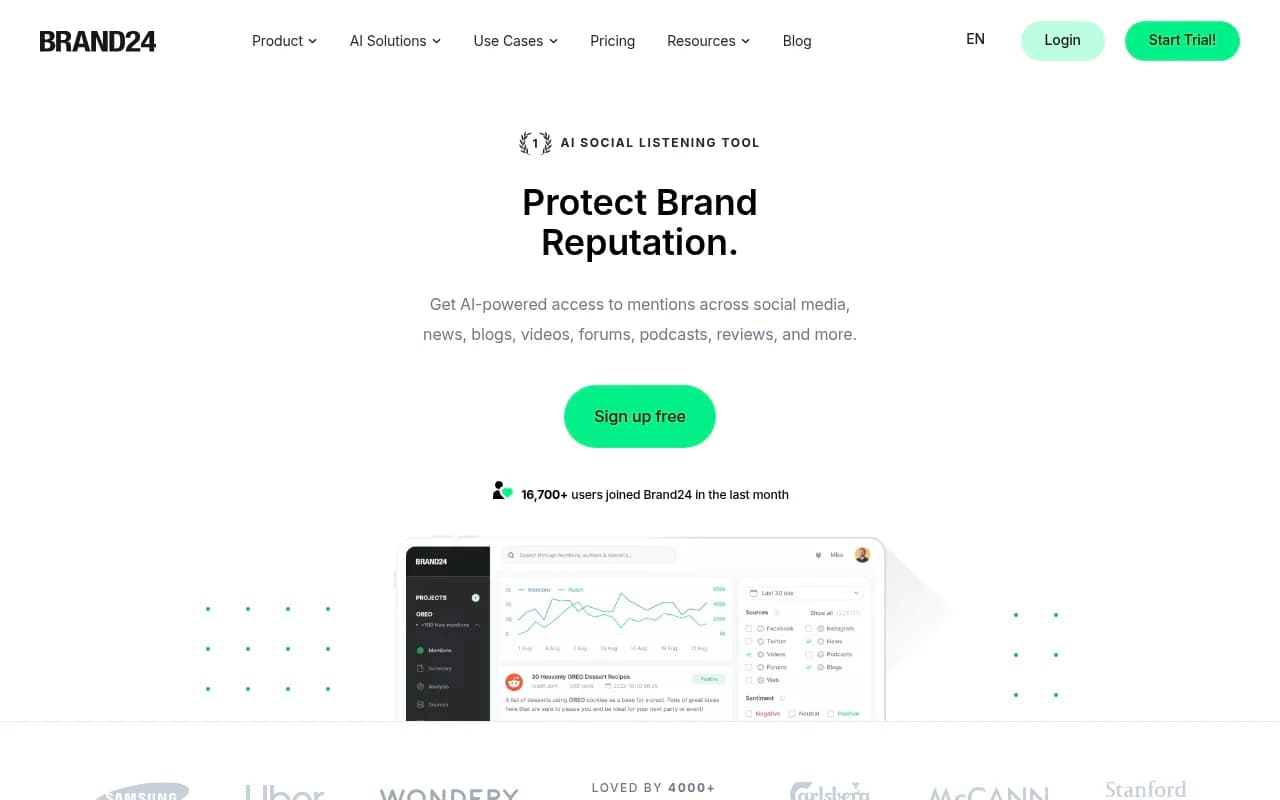
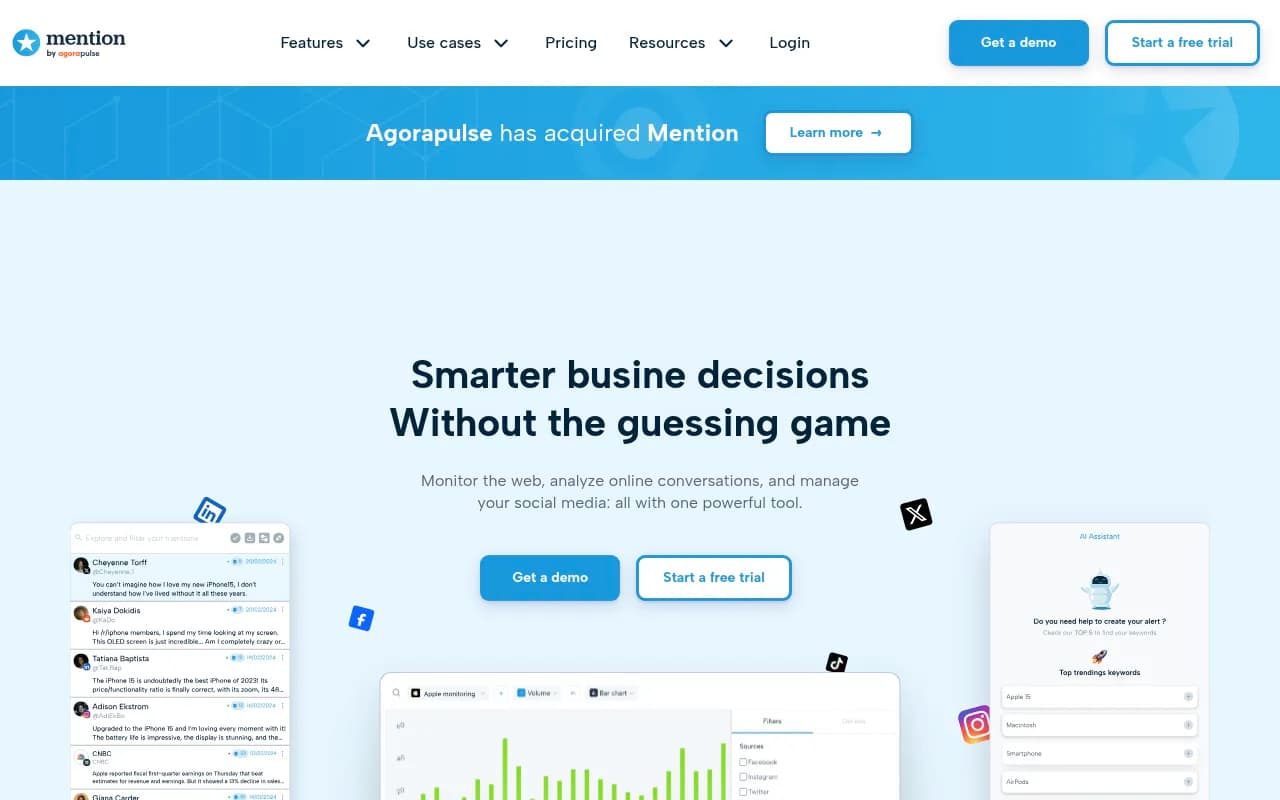
- Watch for mentions you do not control. Brand monitoring tools such as Brand24 and Mention can alert you when your name shows up.
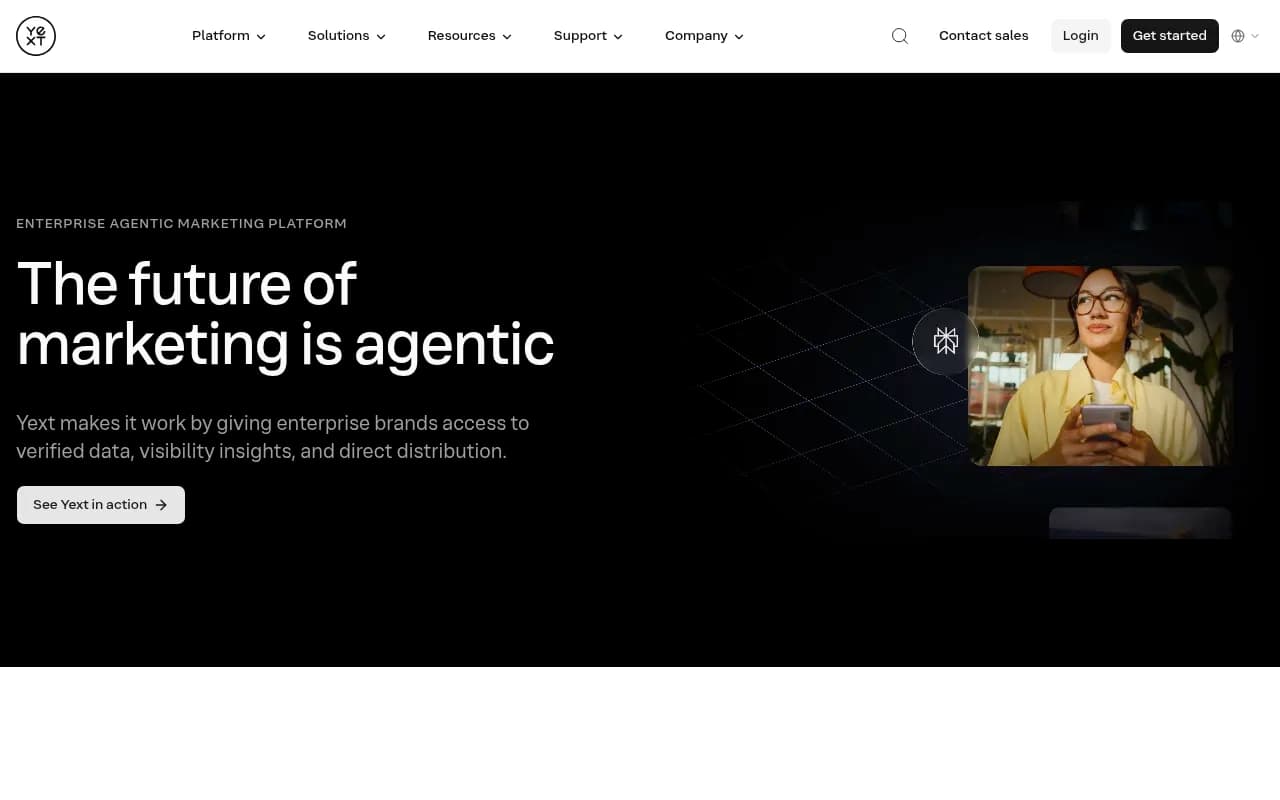
If you manage many locations, a listings platform like Yext keeps names, hours, and addresses synced across directories, which cuts the inconsistency problem. SOCi covers local search, social, and reviews for multi-location brands. Birdeye is another option for reputation and review management.
Using Meta AI for Business to your advantage
There is a second angle that is easy to miss. Meta AI is not only a place where customers find you; it is a tool you can use. Meta AI for Business can review recent ad performance, analyze your Facebook and Instagram content and engagement for recommendations, and show how similar businesses on Instagram are positioning themselves, based only on public information. It is available in the Meta AI app, on meta.ai, and in a Mac app.
Use it for the dull but useful stuff: figure out which posts get replies, tighten your descriptions, and spot gaps competitors are filling. Better content on your own Meta pages is the closest thing to a controllable lever you have on that side. Just do not assume that using Meta's business tools makes its consumer assistant recommend you. Nobody has shown that.
Alexa: the directories-first approach
Alexa has historically answered local questions with data from partner directories. The most consistent advice from SEO agencies, which I could not verify against Amazon documentation, is to:
- Claim and complete your Yelp listing, with accurate name, address, phone, hours, photos, and services.
- Verify your Bing Places listing.
- Keep Google Business Profile current.
- Make sure hours and holiday hours are right, since voice answers often just read them out.
Because I could not find Amazon's own documentation on Alexa+, treat this as a sensible baseline, not a guarantee. Check Amazon's developer and business help pages before spending money on anything beyond the free listings.
Voice answers also reward short, speakable facts. If your hours, price range, and a one-sentence description of what you do are consistent everywhere, you give the assistant something clean to read aloud.
How to test whether you are getting recommended
Do not guess. Run a simple monthly audit:
- Write 10 to 20 questions a real customer would ask, such as "best Italian restaurant near me open late" or "emergency dentist in [city]."
- Ask each one in Meta AI (app, WhatsApp, or meta.ai) and to Alexa, from a phone or device in your service area.
- Record whether you are named, in what position, and what facts the assistant gets wrong.
- Fix the source of any wrong fact, usually a stale listing.
- Repeat monthly and compare.
This manual approach is tedious but honest. If you want it automated for the assistants and search engines it supports, an AI visibility platform helps. Promptwatch tracks the real interfaces of Meta AI and Amazon Alexa alongside ChatGPT, Google AI Overviews, and Gemini by country and language, and its Business plan adds state and city tracking and local targeting pinned to exact coordinates, which suits "near me" queries.

Other trackers exist too, and the directories at bestgeosoftware.com and ai-rank-tools.com are a decent place to compare options. Check each tool's supported platforms before you buy, since few cover Meta AI or Alexa.
Quick comparison: what to do on each assistant
| Task | Meta AI | Alexa |
|---|---|---|
| Core listings | Facebook page, Instagram profile | Yelp, Bing Places, Google Business Profile |
| Content to prioritize | Public posts, descriptions, engagement | Accurate hours, name, phone, short descriptions |
| Evidence level | Meta owns the data, but no published ranking rules | Agency claims, no Amazon documentation found |
| Business-side tools | Meta AI for Business | Not verified |
| Best first step | Complete every profile field | Claim Yelp and Bing Places |
What to do this week
If you only have an afternoon, here is the order I would go in:
- Pick one canonical version of your name, address, phone, and hours. Write it down.
- Update Google Business Profile, Yelp, Bing Places, Facebook, and Instagram to match.
- Add a plain-language FAQ to your website answering your top customer questions.
- Ask your five best recent customers for reviews on two different platforms.
- Run your 10-question test in Meta AI and Alexa and save the results as your baseline.
If you would rather hand this off, an SEO and GEO agency can run the listings, content, and tracking for you. 1001 SEO Media handles local SEO and AI search work, though plenty of owners can do the basics above themselves.
The bottom line
Nobody outside Meta and Amazon knows exactly how these assistants choose a local business, and anyone selling a secret formula is guessing. What you can do is make your business easy to understand: consistent facts, complete profiles, real reviews, and plain answers to customer questions. Then test it monthly and fix what the assistants get wrong. That work pays off in Google, ChatGPT, Meta AI, and Alexa at the same time.