Key takeaways
- Over 40% of marketers say content review and approval is the biggest bottleneck in their social workflow, and only about 12% report having no bottlenecks at all, according to Planable's 2026 survey of 1,000 marketers.
- Most approval processes don't fail because people are slow. They fail because feedback is scattered across Slack, email, and comments on a Google Doc, and nobody is clearly the one person who says yes or no.
- The fix is a named decision-maker per stage, a tool that centralizes comments on the exact version being reviewed, and SLAs that are actually enforced with reminders, not just written down somewhere.
- AI drafting has quietly multiplied how much content hits the review queue without adding more reviewers, so 2026 workflows need to build AI drafts into the same approval gate instead of treating them as a separate step.
- Pick your tool based on team size and how many non-paid stakeholders (clients, legal, execs) need to weigh in, because per-seat pricing is where most teams get burned.
Why approval is where social media workflows go to die
Here's the pattern, and if you run a social team you've lived it: a post is written, it looks good, and then it just... sits. Someone's in meetings. Feedback shows up in three different places and contradicts itself. By the time anyone agrees on a final version, the moment the post was built around has passed.
It's not a people problem. It's a structure problem. Planable's 2026 survey found that content review and approval is the single most common bottleneck social teams report, ahead of reporting, scheduling, or content ideation. A separate 2026 industry estimate puts it bluntly: a large share of approval delays trace back to feedback loops with no named decision-maker, meaning the post wasn't stuck because the content was bad, it was stuck because nobody knew whose job it was to say "yes, ship it."
There's a newer wrinkle for 2026 specifically. Teams are now generating first drafts with AI tools, which means review volume has gone up several times over while the number of human reviewers has stayed exactly the same. If your AI drafting tool and your approval tool are two separate things, every single draft now needs a copy-paste step between them, and that's one more place for the approved version and the published version to quietly drift apart.
None of this means you need more process. It means you need the right process, built once, documented, and enforced with actual deadlines instead of good intentions.
Step 1: map the real workflow before you build a new one
Before you touch a tool, write down what actually happens today. Not what's supposed to happen, what actually happens. Every handoff: who drafts, who comments, where the comments live, who gives the final yes.
Most teams discover their real workflow has four or five informal stages that nobody ever wrote down:
- Draft created and submitted
- Internal review for grammar, tone, and brand voice
- Compliance or strategic review, if the content type requires it
- Final approval
- Schedule or publish
If you can't draw this out in five minutes, that's your first sign the process lives in people's heads rather than on paper, and that's exactly why it breaks the moment someone goes on vacation.
Step 2: assign exactly one accountable person per stage
This is the single highest-leverage fix in this whole guide. The RACI framework (Responsible, Accountable, Consulted, Informed) exists for exactly this problem: too many reviewers with equal say, none of them actually on the hook.
Applied to a social post, it looks like this: the social media specialist is Responsible for creating and submitting the post. The campaign or marketing manager is Accountable, meaning they are the one person whose sign-off actually moves the post forward. Legal or a paid media specialist might be Consulted for input on a specific post. Leadership might just be Informed after the fact.
The mistake most teams make is treating every stakeholder as equally able to block a post. That's how you end up with one reviewer saying "shorten it" and another saying "add more detail" at the same time, and nobody breaking the tie.
Step 3: choose a workflow structure that matches your team's size
Not every team needs the same complexity. Match the structure to how many people actually need to weigh in and how regulated your industry is.
| Workflow type | Best for | How it works |
|---|---|---|
| Linear (single approver) | Small teams, low compliance risk | One creator, one reviewer, done. Start here if you're unsure. |
| Sequential / tiered | Mid-size teams, multiple review stages | Draft goes through reviewer A, then reviewer B, in order. Nobody skips a step. |
| Parallel | Teams needing several stakeholders at once | Multiple reviewers see the draft simultaneously, cutting total turnaround time. |
| Conditional / hybrid | Enterprise, multi-brand, multi-region | Routing changes based on content type: a product post skips legal, a claims-related post doesn't. |
One caution worth repeating from the field: multi-level approval chains only work if everyone in the chain is actually responsive. If your client or your CMO takes three days to click approve, adding more sequential stages just adds more days. Start with a single required approval gate and only add tiers once you have proof you genuinely need the extra checkpoint.
Step 4: set SLAs and actually enforce them
A deadline nobody enforces isn't a deadline, it's a suggestion. Set specific turnaround windows per stage, for example drafts due 48 hours before the publish date, internal review completed within 24 hours, and revisions returned the same day they're requested.
The enforcement part matters more than the number itself. Pair every SLA with automated reminders sent 24 to 48 hours before the deadline, and track how often each stage actually hits its window. That data tells you exactly where posts are stalling, whether it's a specific reviewer, a specific content type, or a specific day of the week.
Step 5: centralize feedback in one place, and lock posts after approval
The number one reason approval processes fall apart is scattered communication. Comments in Slack, a reply-all email thread, a sticky note on a shared doc. Nobody ends up sure which version is actually final.
Two rules fix most of this:
- Attach every comment, revision, and sign-off to the specific post it describes, inside one tool, not spread across four.
- Lock the post after it's approved. If someone edits the copy after sign-off, the version that goes live isn't the version that was reviewed. In a regulated industry, that gap isn't just sloppy, it's a compliance problem.
.png&w=3840&q=75)
Step 6: build pre-approved buckets for your repeatable content
Not every post deserves the same scrutiny. Weekly tips, routine event announcements, job postings, standard product launches: these follow the same shape every time, so make legal, the CMO, or whoever owns final sign-off approve a template or category once, not every single instance.
One agency reported on Reddit that it had fifteen to twenty creatives stuck in approval limbo, and because its contract only paid out after approval, that backlog was also a cash-flow problem, not just a scheduling annoyance. Pre-approved buckets for low-risk, high-volume content are the direct fix: reviewers only need to check what actually changed, not re-approve the whole post from scratch.
Choosing the right tool for your team size
This is where most of the actual slowdown gets created or solved. The wrong tool either makes every occasional reviewer pay for a full seat, or it doesn't gate publishing at all, meaning unapproved posts can still slip out.
| Tool | Approval depth | Pricing model (2026) | Best fit |
|---|---|---|---|
| Hootsuite | Multi-level approvals, role-based permissions, locked approval chains per account | Advanced tier, $399/user/month | Enterprises already in the Hootsuite ecosystem who want the deepest compliance integrations |
| Agorapulse | Simple one-step approval on Professional; multi-step only on Custom enterprise tier | Professional $119-149/user/month, Custom quote-based | Teams that want Canva integration and a shared calendar clients can comment on without a paid seat |
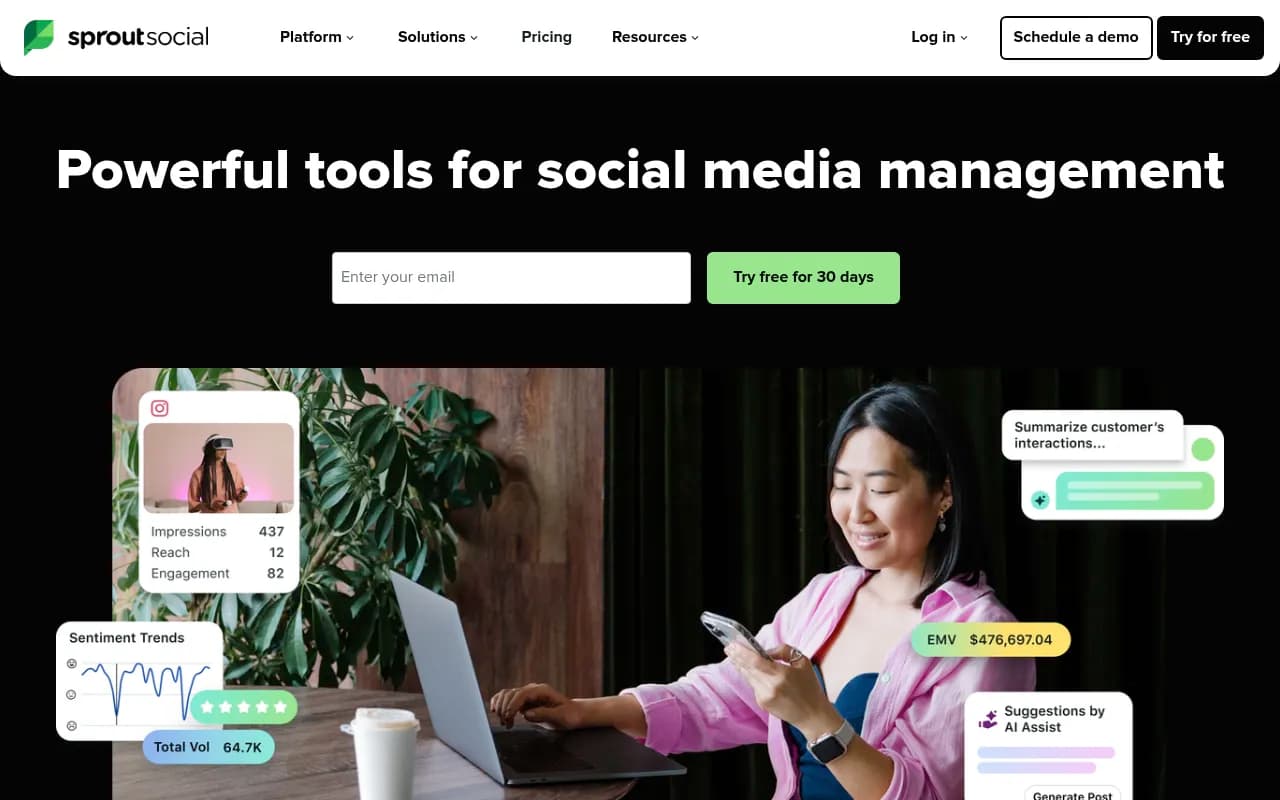
| Sprout Social | Multi-step, multi-reviewer, up to 3 free external approvers on Advanced | Advanced $399/seat/month (approvals require this tier) | Enterprise teams with budget already allocated, who need deep analytics alongside approvals |
| Planable | None, Optional, Required, and Multi-level (Enterprise only) approval modes | Basic from $33/workspace/month, unlimited users | Small teams where the review loop is the whole problem |
A few honest notes worth knowing before you commit. Sprout Social's approval workflows only exist on its top-tier plan, so if you need approvals you're paying enterprise pricing even for a small team. Agorapulse keeps multi-step sequential approval locked behind its custom enterprise tier too, meaning mid-size teams often end up with just a single approval gate unless they negotiate up. Hootsuite's approval features are solid but the interface carries years of accumulated complexity, so onboarding takes longer than it should for a team that just wants to get moving.
For project tracking and documenting the workflow itself, a flexible database tool like
can work well as the single source of truth for your RACI chart, SLAs, and content calendar, especially if your approval tool doesn't have a great way to visualize the whole pipeline.
If you're already using

or

for scheduling, it's usually worth testing their native approval features before adding a separate proofing tool, since every extra tool is one more place feedback can get lost.
For teams relying on AI tools to draft first versions, something like Canva's AI features can speed up the creative pass, but make sure that output still routes through your single approval gate rather than becoming a side channel nobody reviews consistently.

Automating the boring parts
A lot of approval friction is just notification lag: nobody tells the reviewer a post is waiting, so they find out two days late. Automation platforms like
or
can push a Slack or email alert the moment a post enters a reviewer's queue, and trigger an escalation message if it's still sitting there after your SLA window closes. This is a cheap fix that solves a disproportionate amount of the "I didn't see it" excuse.
A simple template to copy
If you want to start today without picking a tool yet, write down these five things and share them with your whole team:
- Content stages: draft, internal review, compliance review (if needed), final approval, publish
- One accountable approver per stage, named by job title, not just "marketing team"
- SLA per stage: how many hours each person has before it counts as late
- Escalation rule: what happens if someone misses their window, and who steps in
- Pre-approved content categories that skip full review entirely
Put this on one page, share it during onboarding, and revisit it whenever your team size or publishing volume changes. It won't fix everything on day one, but it removes the single biggest source of delay: nobody knowing whose turn it is.
Measuring whether it's actually working
Don't set this up once and walk away. Track average time-to-publish broken down by stage. If drafts move through internal review fast but stall at compliance, that's your signal to add a parallel reviewer there, not to add more process everywhere. If a specific person is consistently the bottleneck, that's a conversation, not a workflow redesign.
The goal isn't zero friction, some friction is the whole point, it's what catches the typo or the off-brand claim before it goes live. The goal is making sure the friction happens once, on purpose, by a named person, within a deadline that actually gets enforced. Everything else is just noise dressed up as process.