Key takeaways
- Investors fund evidence, not visibility screenshots. Frame AI search as a capital-efficient acquisition channel and show the chain from mentions to pipeline to gross profit.
- Report in four layers (visibility, demand, conversion, revenue) and label each number as measured, self-reported, sampled, or modeled.
- Use first-party evidence your board can't get elsewhere: AI crawler logs, citation data, and AI-referred sessions tied to your CRM.
- Be honest about attribution gaps. GA4 folds some AI clicks into organic, and many AI visits arrive as Direct. Investors trust founders who say so.
- Expect a 30-day lag for visibility signals and a full sales cycle for revenue. Set that expectation before the board asks.
Why this is harder than it sounds
Most early-stage founders walk into a board meeting with a slide that says "we're now mentioned in ChatGPT." The board nods. Then someone asks what it's worth, and the room goes quiet.
That is the problem. Visibility is a means, not a result. AI search ROI, as SeoProfy's measurement guide defines it, is the financial return from more visibility in AI answers relative to the cost of the work, and it should be judged on attributable gross profit rather than revenue.
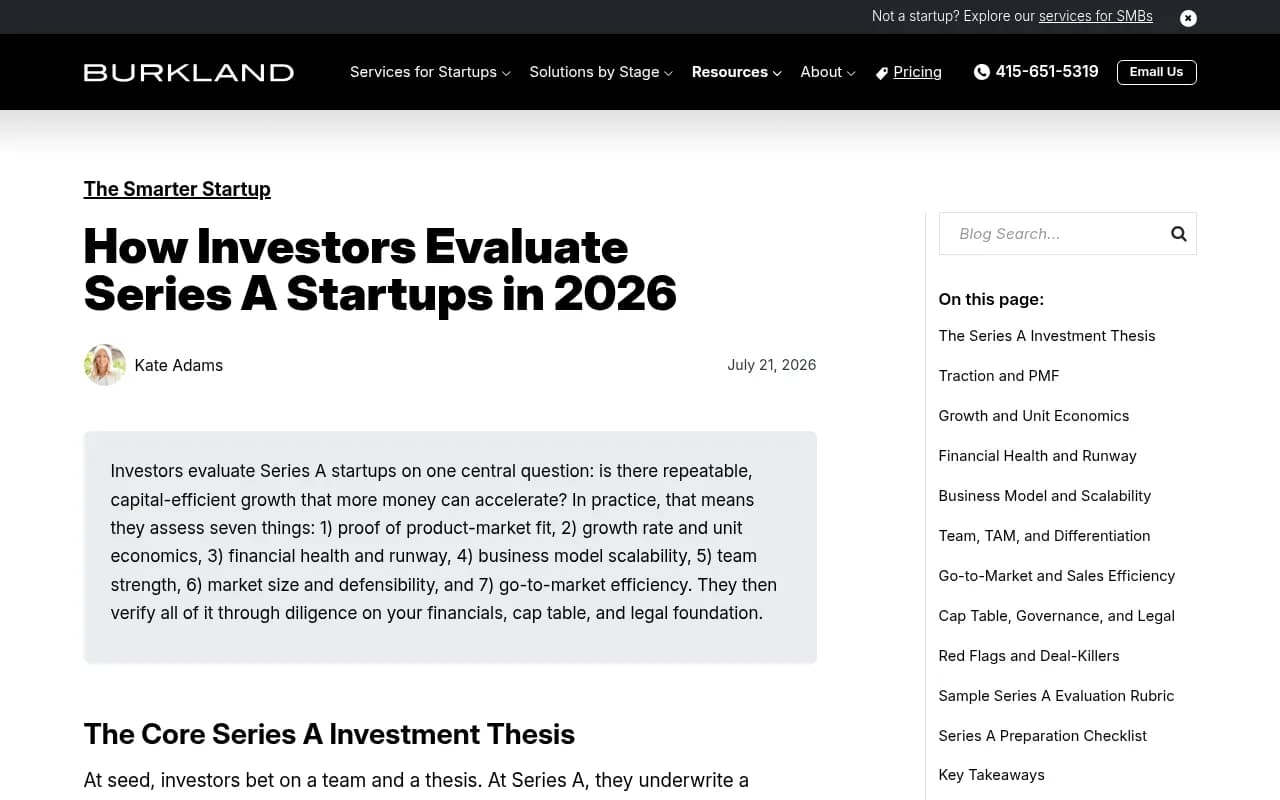
The second problem is the audience. Burkland's July 2026 breakdown of how investors evaluate Series A startups boils it down to one central question: is there repeatable, capital-efficient growth that more money can accelerate? At seed, investors bet on a team and a thesis. At Series A, they underwrite a machine. Your AI search story has to sound like part of the machine.
CRV makes a similar point from the AI investing side: durable companies combine real traction with advantages that outlast the foundation models beneath them. If your product is itself AI-flavored, investors are already skeptical of stories with a good pitch deck and thin evidence. Your channel metrics need to be the opposite of thin.
What investors actually want from a channel
Before picking metrics, decide what question the board is asking. For an early-stage startup it is usually one of these:
- Is this channel producing customers, or just attention?
- What does it cost to acquire a customer here compared with paid or outbound?
- Is it repeatable without the founders personally pushing it?
- Will it still work in a year, when the models and interfaces have changed?
AI search can answer the first three if you set up measurement early. The fourth is a judgment call, and you should say so. Treat it as a bet on where buyers are researching, backed by evidence that it already works today.
The four-layer reporting model
SeoProfy's framework splits AI search reporting into four layers. I like it because each layer carries a different level of certainty, and a board can see that at a glance.
| Layer | What you report | Typical sources | Evidence level |
|---|---|---|---|
| Visibility | AI share of voice, citations, mentions | Fixed prompt checks, AI visibility tools | Sampled |
| Demand | AI referral traffic, branded search trends, landing-page visits | GA4, Search Console | Measured for tracked AI sessions; modeled for inferred influence |
| Conversion | Demo requests, signups, qualified leads | GA4, forms, CRM | Measured or self-reported |
| Revenue | Closed-deal revenue, gross profit attributed to AI search | CRM, financial records | Measured, self-reported, or modeled |
The reporting rule that matters most: keep measured, self-reported, sampled, and modeled results separate. Never add them into one blended "AI-influenced revenue" number. The first investor who asks how you calculated it will take it apart, and then they'll doubt every other number in the deck.
Layer 1: visibility
This is the layer founders over-index on, and it is the weakest evidence. Prompt checks are samples. Answers vary by run, by country, and by model.
Still, you need it. Pick a fixed set of prompts your buyers would really ask (category, comparison, and brand queries), run them on a consistent schedule, and track share of voice and citations against two or three named competitors. Fixed prompts matter because a baseline you can't repeat is not a baseline.
Tools like Promptwatch can run those prompt sets daily across ChatGPT, Gemini, Perplexity, Google AI Overviews and more, and show citation data per page. Alternatives for lean budgets include Otterly.AI and Peec AI.



If you want to compare more options, the GEO software directory at bestgeosoftware.com lists a lot of them.
Layer 2: demand
Now connect visibility to behavior. Three signals are worth putting in front of a board:
- AI referral sessions in GA4 (ChatGPT, Perplexity, Gemini, Claude and similar sources)
- Branded search trends in Search Console, since people often hear about you in an AI answer and then Google your name
- Visits to the landing pages you've been optimizing for AI citation
SeoProfy notes that visibility and branded-search changes can show up within about 30 days. That's your early proof point. It won't be revenue, but it is a measurable move that follows an action you took.
Layer 3: conversion
Here you track what AI-referred visitors do: demo requests, signups, trials, qualified leads. Use GA4 events, form submissions, and your CRM. If you're pre-scale and have 30 AI sessions a month, say so plainly and show the conversion rate with its sample size next to it. A small honest number beats a rounded-up one.
A cheap trick that works: add a "How did you hear about us?" field to your demo form with an AI option, and ask sales to confirm on the first call. This is self-reported, so label it that way. It catches the visits analytics miss.
Layer 4: revenue
Tie closed deals back to AI-touched leads in the CRM and report gross profit, not just revenue. HubSpot is a common choice for the CRM side at this stage.
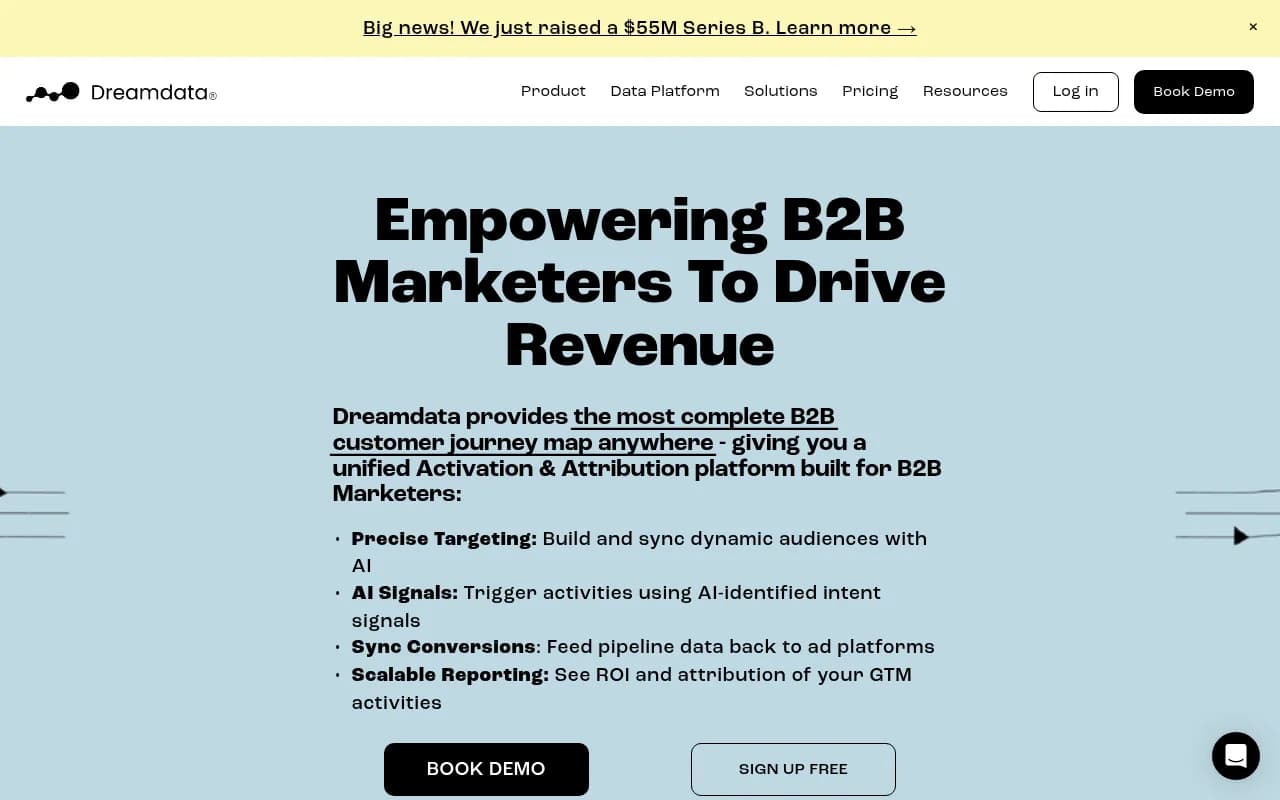
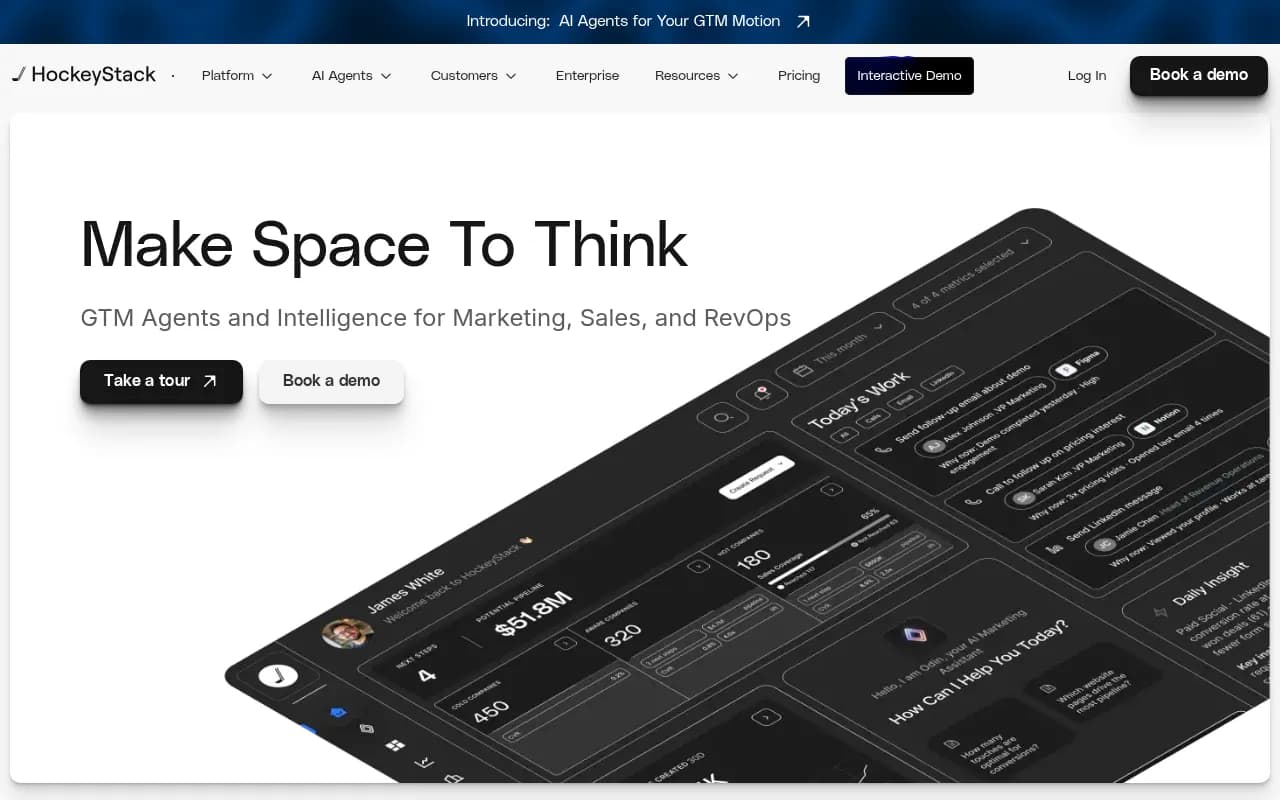
If you sell B2B with a longer cycle, a revenue attribution tool such as Dreamdata or HockeyStack can stitch touchpoints together.
Don't expect revenue in month two. SeoProfy's advice is to report across several consistent periods and allow for your sales cycle before drawing a financial conclusion. If your cycle is 90 days, your first honest revenue read is a quarter out. Put that on the slide.
The attribution gaps you should name before the board does
AI search attribution leaks. Naming the leaks yourself is the single fastest way to look credible. The known ones:
- Some AI answers produce no visit at all. Pew Research's 2025 study found users clicked a traditional result in 8% of Google visits with an AI summary, versus 15% without one.
- Visits from apps and in-app browsers can arrive with no referrer and land in Direct.
- GA4 folds clicks from AI Overviews and AI Mode into Organic Search, so they're hard to separate.
- Last-click attribution credits the later branded search and misses the earlier AI interaction.
So present AI referral sessions as a floor, not the total. Then show the corroborating signals: branded search growth, direct traffic lift on AI-optimized pages, and self-reported source in forms. Three imperfect signals pointing the same way are more convincing than one precise-looking number.
First-party evidence boards haven't seen before
Most startups will show the same screenshots of brand mentions. You can stand out with data your competitors don't show.
Crawler logs
If AI systems can't read your site, nothing downstream works. Promptwatch Data's AI crawler traffic report (June 8 to September 6, 2026, IP-verified requests) found OpenAI accounted for 79.8% of verified AI crawler requests in the week of August 31 to September 6, down from 94.8% in the week of June 8 to 14. The mix is diversifying.
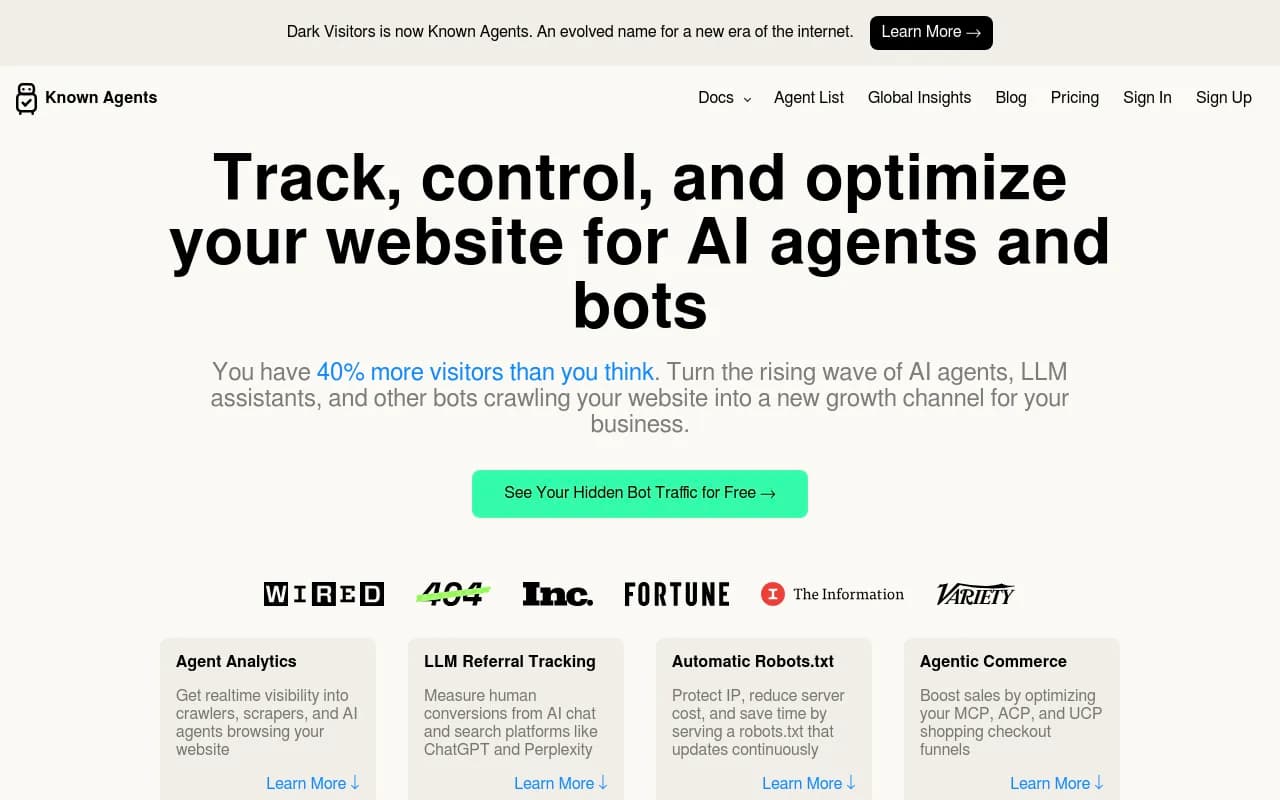
The practical use: compare your own logs to that mix. If a provider is large in the benchmark but near zero in your logs, your robots.txt, CDN, or WAF rules may be blocking it. Fixing that is a cheap, concrete action you can report, and logs are hard evidence you can put in a board report. A tool like DarkVisitors can help you see AI agents hitting your site.
Citation data by page type
Promptwatch's content type report (September 28 to October 4, 2026) shows product pages are the most cited type in ChatGPT at 22.4% of classified citations, with landing pages next at 16.8%. Together that is about 39% of citations going to pages that describe what a company sells. For commercial prompts, product pages hit 26.0% and landing pages 20.6%.
This matters for a startup board because it tells you where to spend a small budget. You don't need a 200-article blog first. You need strong product and landing pages, a presence in the listicles buyers read (13.6% of citations), and reviews on trusted sites. You can show the board which of those you shipped and whether citations followed.
Build the board slide: a template
Here is a one-slide structure that works for a seed or Series A update. Adapt the numbers to your own data.
| Section | What to show | Label |
|---|---|---|
| Investment | Monthly spend: tools, content, contractor or agency time | Measured |
| Visibility | Share of voice vs. 2-3 competitors on a fixed prompt set, trend over 90 days | Sampled |
| Demand | AI referral sessions, branded search clicks, top landing pages | Measured / modeled |
| Conversion | AI-referred leads, conversion rate with sample size, self-reported source | Measured / self-reported |
| Revenue | Pipeline and closed gross profit tied to AI-touched leads | Measured / modeled |
| Next quarter | The two actions you'll take and the metric each should move | Plan |
Then add one line on cost efficiency. If AI search work costs you $X a month and produced Y qualified leads, state the cost per qualified lead next to your paid channel's. Don't oversell it with a small sample, but do show the comparison. It's the metric that maps straight to Burkland's capital-efficiency question.
Setting expectations on timing
The quickest way to lose a board's trust is to promise revenue on a timeline AI search can't deliver. A realistic sequence:
- Weeks 1-4: baseline prompt set, crawler access fixed, tracking in GA4 and CRM live
- Month 2-3: citation and share of voice movement, branded search lift
- Month 3-6: AI-referred leads appearing in the CRM
- Sales cycle plus a buffer: first defensible revenue read
Tell the board at the start which metrics you'll report each quarter and which ones will be blank until later. A blank labeled "expected after sales cycle" is fine. A blank nobody explained is not.
Tooling: what you need and what you don't
You don't need an enterprise stack at seed. A lean setup covers it:
- An AI visibility tracker for the prompt baseline and citations
- GA4 and Search Console with AI referral sources segmented
- A CRM with a source field that sales actually fills in
- Optional: an attribution tool once you have enough volume to justify it
For the visibility layer, the choice depends on whether you need monitoring only or want help acting on what you find.
| Tool | Best for | Notes |
|---|---|---|
| Promptwatch | Teams that want to track, then act | Crawler logs, AI traffic analytics, citation data, content tools in one place |
| Otterly.AI | Lean monitoring | Affordable prompt tracking |
| Peec AI | Multi-language tracking | Simple visibility reporting |
| Profound | Larger budgets | Enterprise-oriented monitoring |
| Semrush One | Teams already in Semrush | Bolts AI visibility onto an SEO suite |

Whatever you choose, confirm current pricing on the vendor's site. And if you'd rather hand the work to specialists, an agency like 1001 SEO Media runs technical SEO, content, and generative engine optimization with monthly reporting, which can make the board report easier to produce. That is the only place agency help comes up in this guide because it's a choice, not a requirement.
Common mistakes that kill credibility
- Blending sampled and measured numbers into one headline figure
- Reporting revenue "influenced" by AI with no method behind it
- Treating a single week of mention growth as a trend
- Changing the prompt set between reports so trends can't be compared
- Hiding the attribution gaps instead of explaining them
- Promising results before the sales cycle has run
One more: don't pitch AI search as a replacement for everything else. The honest version is that it's an additional channel with early signals and a measurement plan. Investors have heard "this changes everything" too many times.
A 30-day plan to get board-ready
- Week 1: define 25-50 buyer prompts and pick two or three competitors. Record the baseline.
- Week 1: set up AI referral segments in GA4 and check Search Console for branded query trends.
- Week 2: audit robots.txt, CDN, and WAF rules against the major AI crawlers. Fix blocks.
- Week 2: add the source field to forms and CRM, and brief sales on filling it in.
- Week 3: improve your product and landing pages first, since those are the main citation surface in ChatGPT, and pitch for inclusion in relevant listicles.
- Week 4: build the one-slide report using the table above, labeling every number's evidence level.
That gets you a baseline, a working measurement chain, and an honest story. The revenue numbers come later. What the board sees first is that you know what you are measuring and how reliable each number is. For fresh benchmarks on how AI engines cite sources, Promptwatch's research hub is updated regularly.