Key takeaways
- AI visibility tools split into two camps: legacy SEO platforms with bolt-on AI features, and native GEO platforms built from scratch for AI search. They behave very differently.
- Monitoring alone is not a strategy. The most important question to ask any vendor is: "After I see the data, what can I actually do with it?"
- LLM coverage, prompt scale, citation depth, and content optimization capabilities are the four dimensions that separate useful tools from expensive dashboards.
- Your team size, budget, and whether you're an in-house marketer or agency will push you toward very different tools.
- Start with your goal, not the feature list. The framework below walks you through it in order.
The market for AI search visibility tools went from almost nothing to genuinely crowded in under eighteen months. There are now dozens of platforms claiming to track your brand across ChatGPT, Perplexity, Gemini, Google AI Overviews, and more. Most of them run prompts, count mentions, and hand you a dashboard.
The problem isn't the tools. It's how buyers evaluate them.
Most evaluation frameworks being used right now were built for a world that no longer exists -- one where "search visibility" meant Google rankings and keyword positions. Applying that lens to AI visibility leads to bad decisions: buying a monitoring tool when you actually need an optimization platform, or paying for enterprise features when a lightweight tracker would do the job.
This guide gives you a practical decision framework. Work through it in order and you'll know which category of tool you need before you ever book a demo.
Step 1: Understand the two types of tools
Before evaluating any specific platform, you need to know which category it belongs to. There are two:
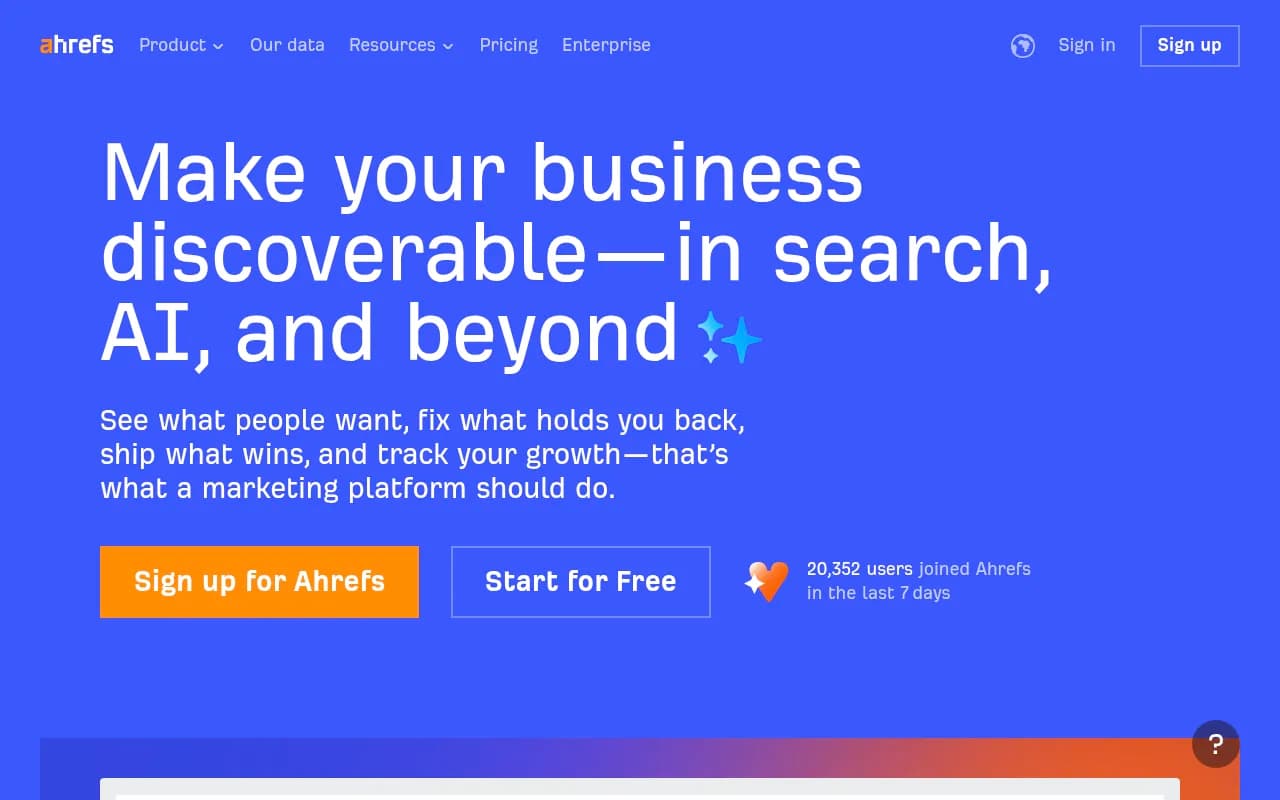
Legacy SEO tools with AI features added. Semrush, Ahrefs, Moz -- these platforms built their reputations on keyword rankings and backlink analysis. They've added AI visibility modules in response to market demand. The upside is that you get everything in one place. The downside is that AI visibility is often a secondary feature, not a core competency. Prompt coverage tends to be limited, and the AI tracking is less granular than what native platforms offer.
Native GEO platforms. These were built specifically to track and improve how brands appear in AI-generated answers. They vary enormously in depth -- some are simple mention counters, others are full optimization platforms with content generation, crawler logs, and traffic attribution. This is where most of the interesting tool development is happening right now.
The distinction matters because the two categories have different strengths. If you already pay for Semrush and just want a basic read on your AI visibility, the built-in module might be enough. If AI search is a serious channel for your business, you'll almost certainly need a native platform.
Step 2: Define what you actually need
This is where most evaluations go wrong. Buyers look at feature lists and try to find the tool with the most checkboxes. But features don't matter if they don't map to your actual situation.
Ask yourself three questions before you look at a single demo:
What's my primary goal right now?
- "I want to know if my brand is showing up in AI answers" -- you need monitoring.
- "I want to know why competitors show up and I don't" -- you need gap analysis.
- "I want to create content that gets cited by AI models" -- you need optimization and content generation.
- "I want to prove AI search is driving actual traffic and revenue" -- you need attribution.
What's my team's capacity? A solo marketer at a startup has different needs than a 10-person SEO team at an enterprise. Some platforms are genuinely self-serve. Others require onboarding, configuration, and ongoing management to get value from.
What's my budget ceiling? Native GEO platforms range from free tiers and $50/month tools to $500+/month platforms. The price difference usually reflects prompt volume, number of AI models tracked, and whether content optimization is included. Know your ceiling before you start.
Step 3: Evaluate the four core dimensions
Once you know what you need, score every tool you're considering across these four dimensions.
LLM coverage
Which AI models does the tool actually track? The minimum viable set in 2026 is ChatGPT, Perplexity, Google AI Overviews, and Gemini. Serious platforms also cover Claude, Grok, DeepSeek, Meta AI, Copilot, and Mistral.
Coverage gaps matter more than they look. If 40% of your audience uses Perplexity and your tool doesn't track it, your visibility data is structurally incomplete. Ask vendors for their exact model list and update frequency.
Prompt scale and quality
How many prompts can you track, and how are they selected? This is where a lot of tools fall short.
Manual prompt entry is common but limited -- you can only track what you think to ask. Better platforms offer prompt suggestions based on competitor analysis, prompt volume estimates (so you know which queries actually matter), and query fan-outs that show how a single prompt branches into related sub-queries.
A tool that lets you track 50 prompts you chose yourself is very different from one that helps you discover the 50 highest-value prompts you didn't know existed.
Citation depth
Does the tool just tell you whether your brand was mentioned, or does it show you which specific pages are being cited, how often, and by which models?
Page-level citation tracking is the difference between "you appeared in 23% of responses" and "your /best-accounting-software page is being cited by Perplexity 4x more than by ChatGPT, and this Reddit thread is outranking you on both." The second version is actually actionable.
Content optimization capabilities
This is the biggest differentiator in the market right now. Most tools stop at monitoring -- they show you data and leave you to figure out what to do with it. A smaller number of platforms have built content generation and optimization into the loop.
If you're serious about improving your AI visibility (not just measuring it), the presence or absence of this capability should be a deciding factor.
Step 4: Match tool type to your situation
Here's how the tool landscape maps to common marketer profiles:
| Profile | Primary need | Tool type to look for |
|---|---|---|
| Solo marketer / startup | Basic brand monitoring | Lightweight native tracker |
| In-house SEO team | Gap analysis + content optimization | Full GEO platform |
| Digital agency (multiple clients) | Multi-site tracking + reporting | Agency-tier GEO platform |
| Enterprise brand | Attribution + competitive intelligence | Enterprise GEO platform |
| Already using Semrush/Ahrefs | Quick AI visibility read | Built-in AI module |
The monitoring-only trap
Here's something worth saying plainly: most AI visibility tools on the market right now are monitoring-only dashboards. They show you where you're visible and where you're not. That's useful information, but it's not a strategy.
The question that separates useful tools from expensive dashboards is: "After I see the data, what can I actually do with it?"
If the answer is "export a CSV and figure it out yourself," you're looking at a monitoring tool. If the answer involves content gap analysis, AI-assisted content generation grounded in citation data, and page-level tracking that closes the loop back to traffic and revenue -- that's an optimization platform.
Promptwatch is one of the few platforms that's built this full loop: find the gaps, create content engineered to get cited, then track whether it worked. Most competitors stop at step one.

Tools like Otterly.AI and Peec.ai are solid for monitoring, but they don't help you act on what you find.


Profound has a strong feature set and is worth evaluating, particularly for B2B brands that need deep competitive analysis.

AthenaHQ covers a good range of AI engines but is primarily monitoring-focused.

A closer look at the tool landscape
Here's a comparison of the main platforms across the dimensions that matter most:
| Tool | LLM coverage | Prompt scale | Citation depth | Content optimization | Best for |
|---|---|---|---|---|---|
| Promptwatch | 10+ models | High (volume + difficulty scores) | Page-level + Reddit/YouTube | Yes (AI writing agent) | Full optimization loop |
| Profound | Strong | Medium | Good | Limited | B2B competitive analysis |
| AthenaHQ | 8+ models | Medium | Medium | No | Brand monitoring |
| Otterly.AI | Core models | Low-medium | Basic | No | Budget monitoring |
| Peec.ai | Core models | Medium | Basic | No | Multi-language monitoring |
| Semrush | Core models | Fixed prompts | Basic | No | Existing Semrush users |
| Ahrefs Brand Radar | Core models | Fixed prompts | Basic | No | Existing Ahrefs users |
| Search Party | Medium | Limited | Medium | No | Agency reporting |
A few other tools worth knowing about depending on your use case:
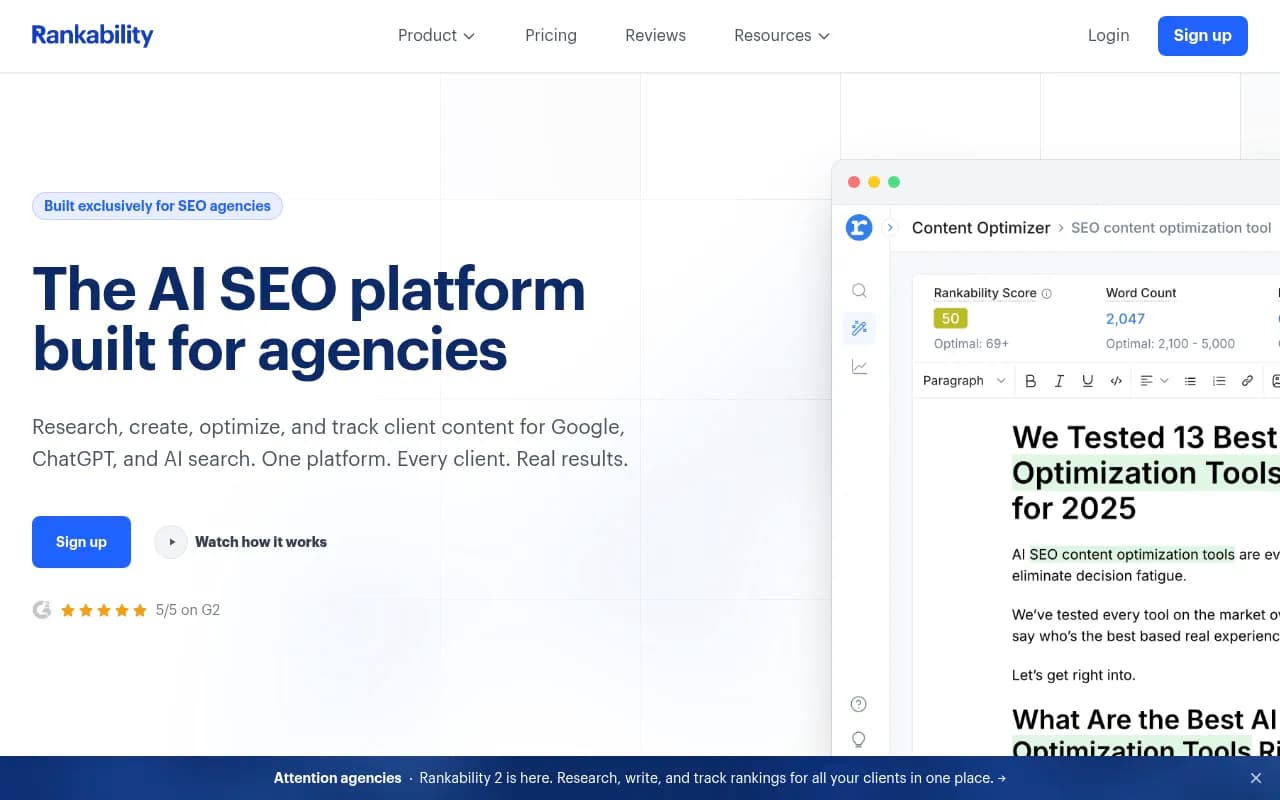
For agencies managing multiple client accounts, Rankability has a reporting-focused setup that works well.
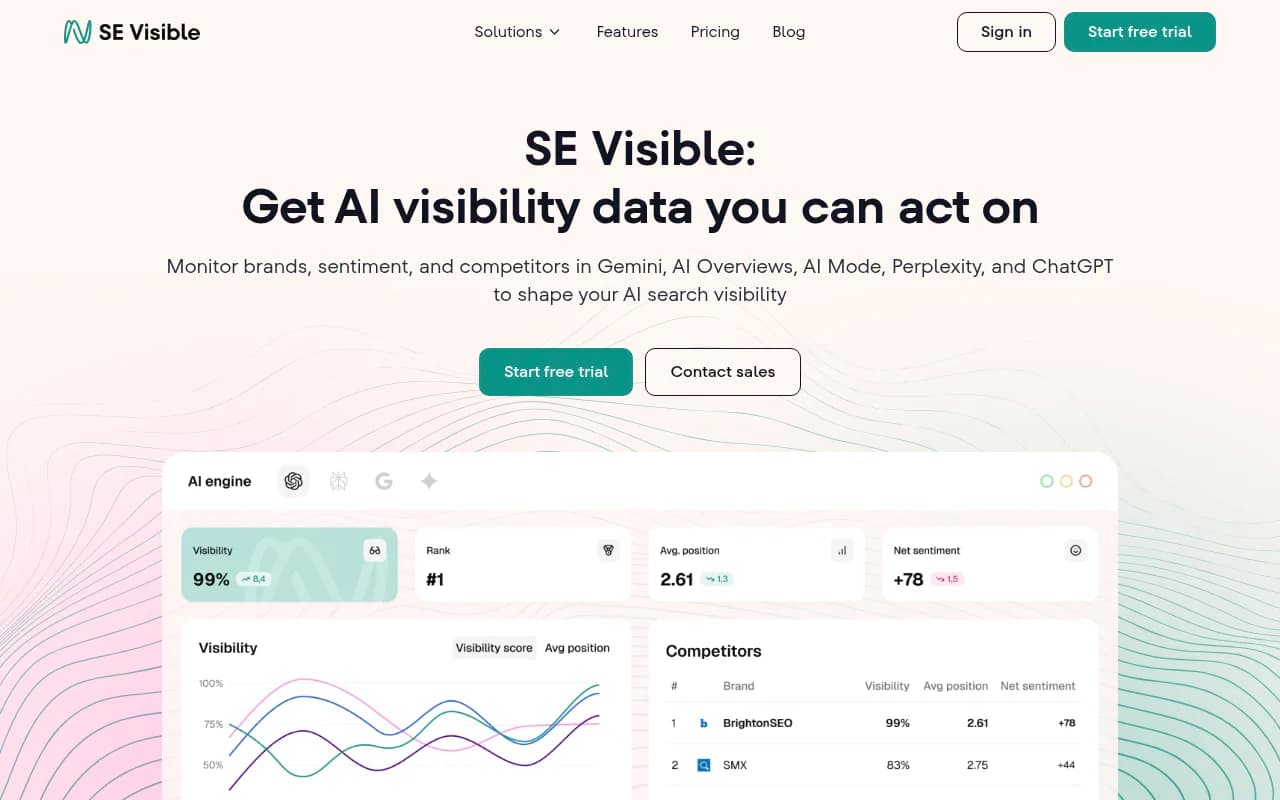
For teams that want a simpler entry point, SE Visible (from SE Ranking) offers a user-friendly interface at a lower price point.
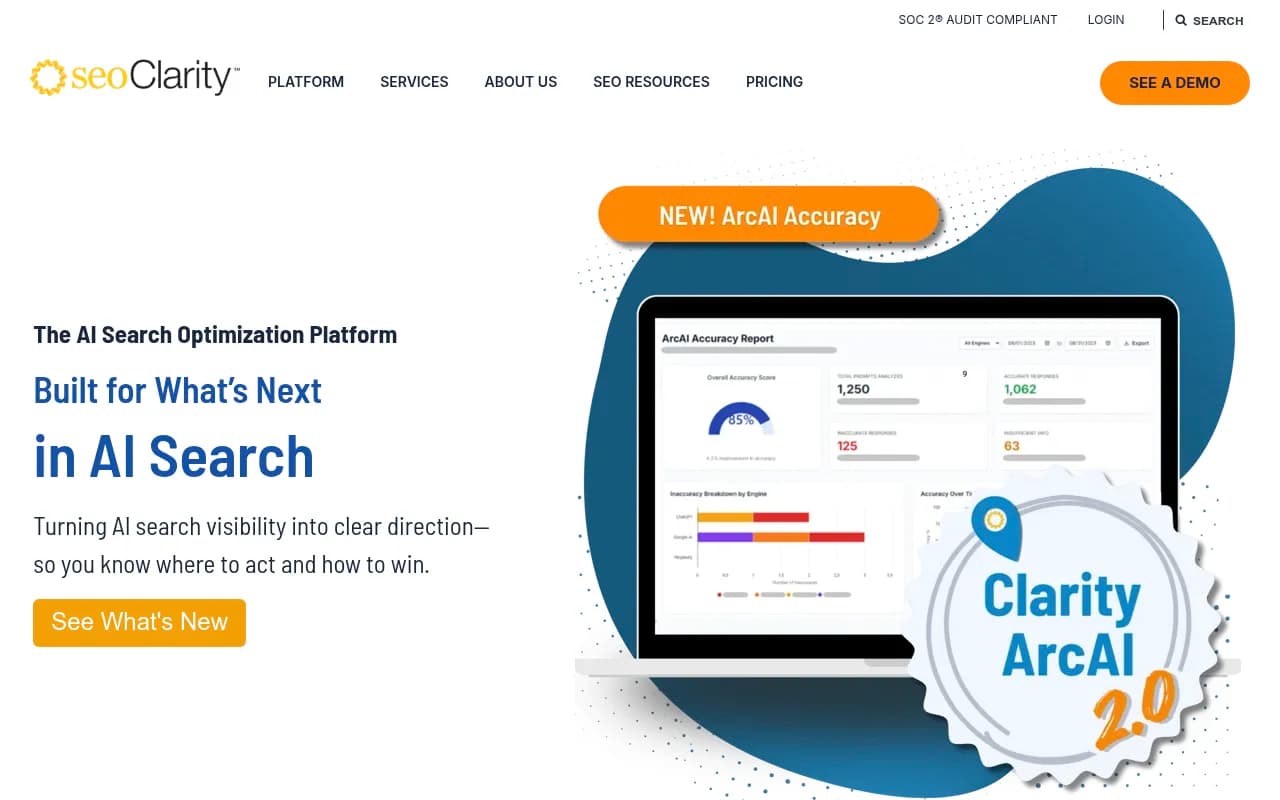
For enterprise teams already invested in BrightEdge or seoClarity, both platforms have added AI visibility tracking that integrates with their existing workflows.
What to actually ask in a demo
Most vendor demos follow the same script: impressive dashboard, lots of charts, a mention count that looks reassuring. Here are the questions that cut through that:
"Show me a specific prompt where a competitor is visible and I'm not. Now show me what I should do about it." This tests whether the tool has gap analysis and whether it connects that gap to an action.
"Which of my pages are being cited by which AI models, and how often?" Page-level citation data is a proxy for how deep the platform's tracking actually goes.
"How do you handle prompt variation?" AI responses shift with small changes in phrasing. A tool that runs each prompt once and calls it a day will give you unreliable data. Ask how they handle this.
"Can you show me traffic or revenue that came from AI search?" Attribution is hard, but the best platforms have at least one method -- code snippet, Google Search Console integration, or server log analysis. If a vendor can't answer this at all, you're buying a visibility score with no business connection.
"Do you track AI crawlers hitting my site?" This is a newer capability that most tools lack. Knowing which AI crawlers are reading your pages (and which pages they're ignoring) is genuinely useful for diagnosing indexing issues.
Red flags to watch for
A few patterns that should give you pause during evaluation:
Fixed prompt libraries. Some tools only let you track from a pre-set list of prompts. This sounds convenient but means you're measuring what the vendor decided matters, not what your actual customers are asking.
Mention counts without context. "Your brand appeared in 34% of responses" is almost meaningless without knowing which prompts, which models, which pages, and whether that number is going up or down.
No data on prompt volume. Not all prompts are equal. A tool that treats "best CRM software" and "best CRM for a 3-person startup in the healthcare industry" as equally important is giving you misleading prioritization.
Vague attribution claims. Some tools claim to track AI-driven traffic without explaining their methodology. Ask specifically how they connect AI citations to site visits.
Making the final call
The framework in order:
- Decide whether you need monitoring, gap analysis, optimization, or attribution (or some combination).
- Set your budget ceiling and team capacity constraints.
- Score your shortlist on LLM coverage, prompt scale, citation depth, and content optimization.
- Run the demo questions above on your top two or three candidates.
- Pick the tool that matches your current need -- not the one with the most features you might use someday.
One last thing: this market is moving fast. The tool that's right for you today might not be the right tool in twelve months. Pick something with a reasonable contract length and revisit the decision when your needs change.
The goal isn't to find the perfect platform. It's to stop flying blind in AI search while your competitors are not.