Key takeaways
- Traditional SEO metrics like keyword rankings don't capture AI search value -- you need a separate measurement framework for GEO
- The four metrics that actually matter are Citation Rate, Share of Voice, AI-referred traffic quality, and pipeline contribution
- Semrush research shows AI-sourced traffic converts 2.3x better than traditional organic search, which changes the ROI math significantly
- Attribution is the hard part: most analytics tools weren't built for AI search, so you need to combine UTM tracking, CRM tagging, and branded search lift analysis
- Tools like Promptwatch connect page-level citation data to traffic and revenue, closing the loop between visibility and business outcomes
Why your current analytics are lying to you about AI search
Here's a scenario that's playing out in marketing teams everywhere right now. Your agency sends a monthly report: organic traffic is up 8%, you're ranking on page one for 34 keywords, everything looks fine. Then your sales team mentions that three prospects this week said they found you through ChatGPT -- and none of them show up in your attribution data.
That's not a tracking glitch. It's a structural problem with how analytics were built.
Traditional analytics assume a user clicks a link to reach your site. AI search breaks that assumption. When someone asks Perplexity "what's the best project management tool for remote teams?" and your brand gets cited in the answer, a few things might happen: they visit your site directly, they search your brand name on Google, they remember you later and come back through a different channel, or they just act on the recommendation without ever clicking anything. Your GA4 dashboard sees none of the first three as "AI-referred" and completely misses the fourth.
Gartner predicted a 25% drop in traditional search volume by 2026 as AI assistants capture discovery traffic. That traffic doesn't disappear -- it just flows through different channels and shows up in your data wearing different clothes. Branded direct traffic spikes. Branded search volume increases. Conversion rates on "unknown" traffic improve. These are all signals of AI visibility working, but they're invisible if you're only looking at organic keyword rankings.
The fix isn't abandoning your existing analytics. It's building a parallel measurement layer on top of them.
The four metrics that actually matter for GEO ROI
Before getting into attribution models and tooling, it helps to get clear on what you're actually measuring. There are dozens of GEO metrics floating around, but most of them are proxies. These four connect most directly to revenue.
Citation rate
Citation rate is how often AI platforms mention your brand when responding to relevant queries. You define a set of prompts that represent your buyers' actual questions -- "best CRM for small business," "how to reduce customer churn," whatever fits your category -- and track what percentage of those prompts result in your brand being cited.
This is your top-of-funnel AI visibility metric. It tells you whether you exist in AI search for the queries that matter. A brand with 0% citation rate on buyer-intent prompts is effectively invisible to AI-assisted buyers, regardless of how well they rank in traditional search.
Share of voice in AI
Citation rate tells you if you're showing up. Share of voice tells you how you're showing up relative to competitors. If you're cited in 40% of relevant prompts but your main competitor is cited in 75%, you're losing the AI search battle even though your absolute numbers look decent.
Share of voice is the metric that tends to resonate most with executives because it maps to competitive positioning they already understand. It also gives you a benchmark for improvement -- you're not just trying to increase your own citations, you're trying to close the gap on specific competitors.
AI-referred traffic quality
When AI citations do drive clicks to your site, the quality of that traffic matters more than the volume. Research from Semrush puts AI-sourced traffic conversion rates at 2.3x higher than traditional organic search. That's a significant multiplier, and it changes the ROI calculation considerably.
To measure this, you need to isolate AI-referred sessions in your analytics. Some AI platforms (Perplexity, in particular) pass referrer data that GA4 can capture. Others don't. The practical approach is a combination of referrer tracking, UTM parameters on any links you control, and behavioral analysis of sessions that arrive with AI-platform referrers.
Pipeline contribution
This is the metric that closes the loop. It connects AI visibility to actual revenue outcomes by tracking AI-referred visitors through your funnel: how many become leads, how many become opportunities, how many close, and at what deal value.
Pipeline contribution is also the hardest metric to measure cleanly, because the attribution path from "AI cited us" to "deal closed" is rarely linear. A buyer might see your brand in a ChatGPT response, then do a branded Google search, then download a whitepaper, then talk to sales three weeks later. The AI citation was the first touch, but it won't show up that way in most CRMs.
Building your attribution model
Attribution is where most GEO measurement efforts fall apart. The problem isn't that attribution is impossible -- it's that there's no single model that works for every business. Here's how to think through the options.
Direct referral tracking
The simplest approach: look at your analytics for sessions where the referrer is an AI platform. Perplexity.ai, chat.openai.com, claude.ai, and gemini.google.com all pass referrer data in many cases. Set up a segment in GA4 that captures these sources and track conversion rates, session quality, and revenue attribution for that segment.
The limitation is coverage. ChatGPT in particular often doesn't pass referrer data, especially on mobile. You'll capture some AI-referred traffic this way, but not all of it.
Branded search lift analysis
This one is underused and genuinely powerful. When AI models cite your brand, people who weren't previously aware of you start searching for your brand name on Google. You can measure this lift in Google Search Console by tracking branded keyword impressions and clicks over time, then correlating spikes with increases in AI citation activity.
It's not a perfect 1:1 attribution, but it gives you a directional signal that's hard to explain any other way. If your branded search volume increases 30% in the three months after a focused GEO campaign, and nothing else changed in your marketing mix, that's a reasonable case for AI visibility driving brand awareness.
First-touch AI attribution
For B2B companies with longer sales cycles, first-touch attribution is often the most honest model. Tag leads in your CRM with the channel that first brought them to your site. If that first touch was an AI platform referral, mark it as "AI search." Then track those leads through the funnel and calculate close rates, deal sizes, and revenue contribution.
This requires some setup work -- you need UTM parameters on any links in AI-cited content, and you need your CRM to capture and preserve first-touch data. But once it's running, it gives you a clean pipeline contribution number you can take to leadership.
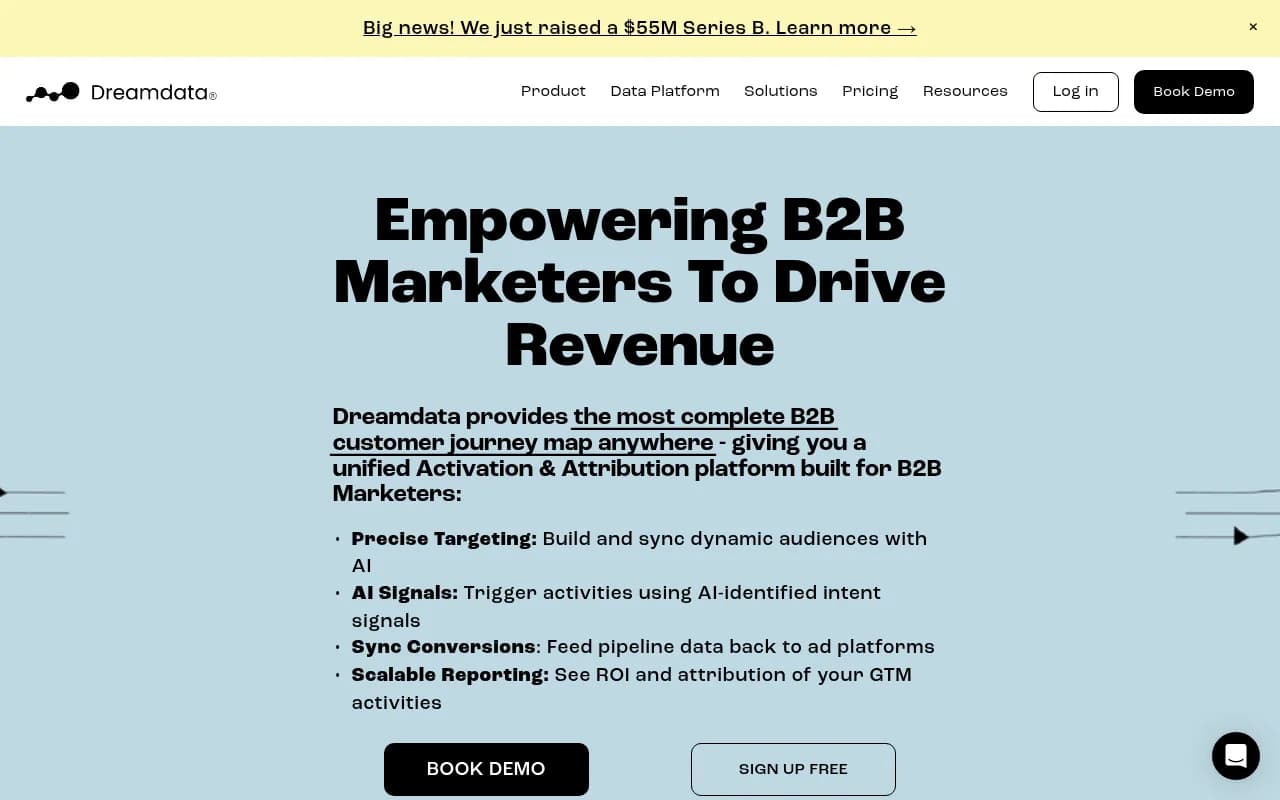
Tools like HubSpot and Dreamdata can handle the CRM-side attribution tracking.

Incrementality testing
The most rigorous approach, and the hardest to execute. Run a GEO campaign in one market or product category, hold another as a control, and measure the difference in pipeline contribution between the two groups. This isolates the incremental revenue impact of AI visibility from everything else happening in your marketing.
Most companies don't have the scale or the clean market segmentation to run proper incrementality tests. But if you do, it's the gold standard for proving GEO ROI.
The measurement stack: what tools you actually need
You need three layers of tooling to measure GEO ROI properly: visibility tracking, traffic attribution, and revenue connection.
Layer 1: AI visibility tracking
This is where you monitor citation rates, share of voice, and which prompts your brand appears in. The market for these tools has exploded in 2026, ranging from basic monitoring dashboards to full optimization platforms.
Promptwatch sits at the more comprehensive end of this spectrum. Beyond tracking citations across ChatGPT, Perplexity, Google AI Overviews, Claude, Gemini, and others, it includes page-level tracking that shows exactly which pages are being cited and how often, plus AI crawler logs that show when AI agents are visiting your site and which pages they're reading. That crawler data is genuinely useful for ROI measurement because it lets you connect the dots from "AI crawled this page" to "AI started citing this page" to "traffic from AI citations increased."

For teams that want a simpler starting point, tools like Otterly.AI and Peec AI offer basic citation monitoring at lower price points.


Qwairy is worth mentioning for its ROI framework focus -- their platform is built specifically around the business case for GEO, which makes it useful for teams trying to justify budget.

Layer 2: Traffic attribution
Once you know you're being cited, you need to track what happens when people click through. This is mostly standard analytics work, but with some AI-specific additions.
Set up a custom channel group in GA4 that captures known AI referrers. The list to include: perplexity.ai, chat.openai.com, claude.ai, gemini.google.com, bing.com/chat (Copilot), grok.com, and any others relevant to your audience.
For tracking AI-referred traffic that doesn't pass referrer data, LLM Clicks is designed specifically for this problem -- it helps capture and attribute traffic from AI sources that would otherwise show up as direct or unknown.

Layer 3: Revenue connection
The final layer connects traffic to pipeline and revenue. This is where your CRM and attribution tools come in.
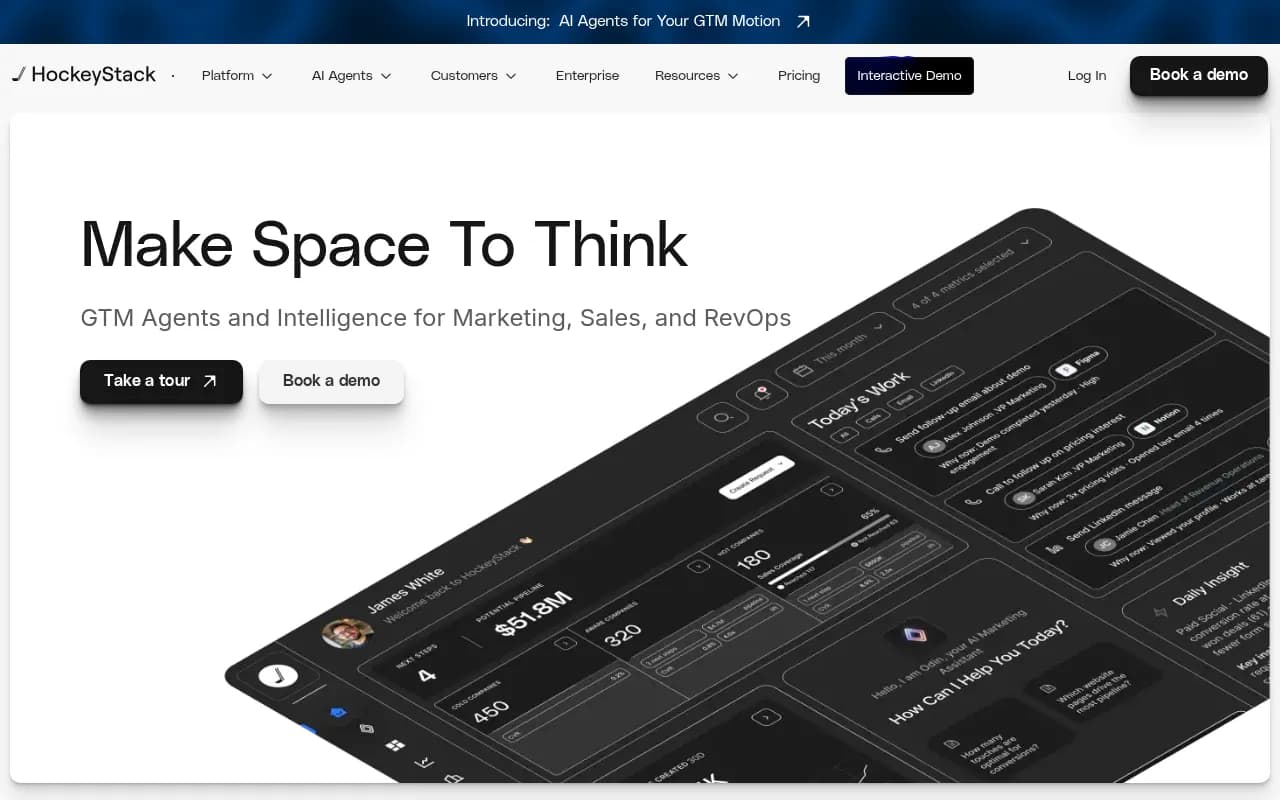
HockeyStack is particularly good for B2B teams because it unifies marketing touchpoints with CRM data and can handle multi-touch attribution across long sales cycles. If a prospect first encountered your brand through a Perplexity citation six months before closing, HockeyStack can surface that.
For ecommerce, Triple Whale handles multi-touch attribution with first-party data and can be configured to include AI referral sources as a distinct channel.

A practical ROI calculation framework
Once you have your measurement stack in place, here's how to calculate GEO ROI in a way that holds up to executive scrutiny.
Step 1: Establish your baseline
Before calculating ROI, you need a baseline. Run your visibility tracking for 30-60 days without any optimization activity. Record your citation rate, share of voice, and AI-referred traffic volume. This is your starting point.
Step 2: Calculate AI-referred revenue
Take your AI-referred sessions from the attribution layer. Apply your site's conversion rate for that traffic segment (remember, it's likely higher than your overall organic conversion rate). Multiply by average deal value or average order value.
AI-referred revenue = AI sessions × conversion rate × average deal value
If you have 500 AI-referred sessions per month, a 4% conversion rate (vs. 2% for regular organic), and an average deal value of $2,000:
500 × 0.04 × $2,000 = $40,000/month
Step 3: Add branded search lift value
Estimate the revenue contribution from the branded search lift driven by AI citations. Take the increase in branded search sessions since your GEO program started, apply your branded search conversion rate, and multiply by average deal value.
This is an estimate, not a precise number, and you should label it as such. But it's a real effect and it belongs in the calculation.
Step 4: Calculate total GEO investment
Include everything: platform costs (visibility tracking tools, content generation), staff time (hours spent on GEO optimization × loaded hourly cost), and any agency fees.
Step 5: Calculate ROI
GEO ROI = (AI-referred revenue + branded lift revenue - total investment) / total investment × 100
A European B2B SaaS company documented by Qwairy increased AI visibility by 147% over 90 days. The revenue impact calculation follows this exact framework -- the specific numbers vary by company, but the methodology is consistent.
Common measurement mistakes to avoid
A few things that consistently trip up teams trying to measure GEO ROI:
Measuring too early. AI visibility takes time to build. Content needs to be crawled, indexed, and cited. Measuring ROI at 30 days will almost always look disappointing. Give campaigns 90 days before drawing conclusions.
Ignoring the conversion quality difference. If you measure AI-referred traffic at the same conversion rate as regular organic traffic, you're understating the ROI. AI-referred visitors typically arrive with more context and higher intent. Measure their conversion rate separately.
Conflating correlation with causation on branded search lift. Branded search can increase for lots of reasons -- PR coverage, paid campaigns, word of mouth. When attributing branded search lift to GEO, be conservative and look for timing correlations with specific citation increases rather than just overall trend lines.
Not tracking which pages are being cited. Aggregate citation numbers are useful, but page-level citation data is where the optimization insights live. If one product page is driving 60% of your AI-referred traffic and another similar page is driving nothing, that's a signal worth acting on.
Comparison: GEO measurement tools at a glance
| Tool | Citation tracking | Traffic attribution | Revenue connection | Crawler logs | Best for |
|---|---|---|---|---|---|
| Promptwatch | Yes (10 models) | Yes (page-level) | Yes (traffic attribution) | Yes | Full-funnel GEO measurement |
| Qwairy | Yes | Limited | ROI framework | No | Building the business case |
| Otterly.AI | Yes | No | No | No | Basic monitoring |
| Peec AI | Yes | No | No | No | Multi-language monitoring |
| HockeyStack | No | Yes | Yes | No | B2B revenue attribution |
| Triple Whale | No | Yes | Yes | No | Ecommerce attribution |
| LLM Clicks | Partial | Yes | No | No | AI traffic capture |
Putting it together: a 90-day measurement plan
Days 1-30: Set up your measurement stack. Configure your visibility tracking tool, set up the AI channel group in GA4, tag your CRM for first-touch AI attribution, and establish your baseline metrics. Don't optimize yet -- just measure.
Days 31-60: Start optimizing and track changes. Begin your GEO content work (filling citation gaps, improving existing pages, building topical authority). Track citation rate and share of voice weekly. Watch for early signals in branded search volume.
Days 61-90: Connect visibility to traffic and pipeline. By now you should have enough data to see whether citation increases are translating to traffic increases. Pull your AI-referred conversion data and calculate preliminary pipeline contribution. Adjust your content strategy based on which pages are getting cited and which aren't.
At 90 days, you have enough data for a credible ROI calculation. Not a perfect one -- attribution is never perfect -- but one that's defensible to a CFO or CMO who wants to know if GEO spending is justified.
The honest answer for most brands right now is that GEO ROI is real but takes time to show up cleanly in the data. The brands that start measuring now will have the baseline data to prove it when the numbers mature. The ones that wait will be starting from scratch in a more competitive environment.