Key takeaways
- Gemini pulls citations from sources it deems trustworthy and authoritative -- E-E-A-T signals matter more here than on almost any other AI platform
- Structured, factual content written for extraction (not just reading) is what gets cited; conversational fluff rarely makes the cut
- Technical signals like Schema markup, clean crawlability, and an
llms.txtfile give Gemini's crawlers a clearer picture of what your site covers - Gemini is deeply integrated with Google Search, so traditional SEO authority (backlinks, indexing, Google Business Profile) still feeds into its citation decisions
- Tracking your Gemini visibility requires dedicated tooling -- standard Google Search Console won't show you AI citation data
Gemini is not just another AI chatbot. It's Google's AI, baked into Search, integrated with Google Workspace, and increasingly the first thing users interact with when they type a query. When Gemini answers a question about the best project management tools, the top accounting software for small businesses, or how to fix a leaky faucet, it cites a handful of sources. If your brand isn't one of them, you've lost that customer before they even considered clicking.
This guide is specifically about Gemini -- not a generic "optimize for all AI" overview. Gemini has its own quirks, its own trust signals, and its own relationship with the broader Google ecosystem. Understanding those specifics is what separates brands that get cited from brands that watch their competitors get cited instead.
Why Gemini is different from other AI models
Most AI models (ChatGPT, Claude, Perplexity) were built independently of traditional search infrastructure. Gemini wasn't. It's a Google product, trained on Google's data, and deeply connected to Google's index, Knowledge Graph, and Search Quality Evaluator Guidelines.
That means a few things that don't apply to other platforms:
Your Google footprint matters. A brand with strong traditional SEO signals -- authoritative backlinks, a well-indexed site, a complete Google Business Profile, Google reviews -- has a head start on Gemini visibility that it doesn't necessarily have with Perplexity or ChatGPT.
E-E-A-T is not optional. Google's concept of Experience, Expertise, Authoritativeness, and Trustworthiness was already central to traditional search rankings. For Gemini, it's the primary filter. If your content doesn't demonstrate genuine expertise, Gemini will find someone else's that does.
Gemini reads structured data. Because it's built on Google's infrastructure, Gemini is particularly good at interpreting Schema markup. A page with proper FAQ schema, HowTo schema, or Article schema gives Gemini a machine-readable summary of what the content covers -- making it much easier to extract and cite.
Freshness counts. Google has always weighted recency for certain query types. Gemini inherits this. Outdated content, even if it's well-written, loses to fresher sources on time-sensitive topics.
What Gemini actually looks for when choosing citations
Before you optimize anything, it helps to understand the selection process. When a user asks Gemini a question, it doesn't just grab the top-ranked Google result. It looks for sources that:
- Directly answer the specific question being asked (not just tangentially related pages)
- Come from domains with established authority in the relevant topic area
- Contain factual, verifiable claims (not vague assertions)
- Are structured in a way that makes the relevant passage easy to extract
- Have been recently updated or published
The practical implication: a 3,000-word blog post that buries the answer in paragraph 12 is less likely to get cited than a 600-word page that answers the question in the first two paragraphs, with supporting facts and a clear structure.
Gemini also tends to favor sources that appear across multiple formats and contexts. If your brand is mentioned in news articles, cited in industry reports, discussed in forums, and has its own well-structured content, that cross-referencing builds the kind of authority Gemini trusts.
Content strategy for Gemini citations
Write for extraction, not just engagement
Traditional content marketing optimizes for time-on-page and scroll depth. Gemini optimization is different -- you're writing for a machine that needs to pull a specific passage and attribute it to you.
This means:
- Put the direct answer at the top, before any context or backstory
- Use clear, declarative sentences ("X does Y" rather than "X may potentially be considered to do Y in some circumstances")
- Include specific numbers, dates, and named examples -- vague claims don't get cited
- Break content into clearly labeled sections so Gemini can find the relevant part quickly
Build topical authority, not just keyword coverage
Gemini doesn't just look at individual pages -- it evaluates your domain's overall authority on a topic. A site that has 40 well-researched articles about supply chain management will consistently outperform a site that has one great article and 200 unrelated posts.
This is why topical clustering matters so much for Gemini optimization. Pick the 3-5 topic areas where you want to be cited, and build genuine depth in each one. Cover the main topic, the subtopics, the adjacent questions, the common misconceptions. Become the source Gemini reaches for when anything in that space comes up.
Use question-based headings
Gemini frequently cites content in response to direct questions. If your headings match the way users phrase questions ("How does X work?", "What is the difference between X and Y?", "When should you use X?"), you're making it trivially easy for Gemini to match your content to the query.
This isn't about keyword stuffing. It's about structuring your content around the actual questions your audience asks -- which is good writing practice anyway.
Include original data and expert quotes
Gemini, like all AI models, has a strong preference for primary sources. If you publish original research, surveys, or data, you become a citable source rather than just another page summarizing what others have said.
If original research isn't feasible, expert quotes work similarly. A piece that includes a named expert's perspective on a topic carries more authority than one that synthesizes existing information without adding anything new.
Technical optimization for Gemini
Schema markup
This is probably the highest-leverage technical change you can make for Gemini specifically. Implement:
ArticleorBlogPostingschema on all editorial content, withauthor,datePublished,dateModified, andpublisherfields filled inFAQPageschema on pages that answer common questionsHowToschema on instructional contentOrganizationschema on your homepage and about page, includingsameAslinks to your social profiles and Wikipedia page if you have onePersonschema for key authors and executives
The sameAs property in Organization and Person schema is particularly valuable for Gemini because it connects your entity to Google's Knowledge Graph. Once you're in the Knowledge Graph, Gemini has a structured understanding of who you are, what you do, and why you're authoritative.
The llms.txt file
This is a relatively new convention (modeled on robots.txt) that lets you tell AI crawlers which pages are most important and how to interpret your site. Place a plain-text file at yourdomain.com/llms.txt that lists your key pages, describes what each section covers, and flags any content you don't want AI models to use.
Gemini's crawlers don't officially document their support for llms.txt the way some other AI platforms do, but given Google's track record of adopting structured signals, it's worth implementing. At minimum, it signals that you're a technically sophisticated publisher -- which is itself a trust signal.
Crawlability and indexing
Gemini can only cite what it can read. Run a technical audit to make sure:
- Your key pages are indexed (check Google Search Console's Coverage report)
- No important pages are blocked by
robots.txtornoindextags - Page load times are reasonable -- slow pages get crawled less frequently
- Your internal linking structure makes it easy for crawlers to discover all your important content
Tools like Screaming Frog are useful for identifying crawl issues quickly.
Google Business Profile and Knowledge Panel
If you haven't claimed and fully completed your Google Business Profile, do it now. For local and brand queries, Gemini pulls heavily from this data. A complete profile with accurate business information, categories, photos, and regular posts signals to Google (and by extension Gemini) that your brand is active and legitimate.
Similarly, if your brand has a Wikipedia article or Wikidata entry, make sure it's accurate and up to date. These are primary sources for Google's Knowledge Graph, which feeds directly into Gemini's entity understanding.
Authority signals that influence Gemini
Backlinks from authoritative domains
Traditional link building still matters for Gemini, because Gemini inherits Google's understanding of domain authority. A link from a major industry publication or a university carries more weight than 50 links from low-quality directories.
Focus on earning links from:
- Industry trade publications and associations
- News outlets that cover your sector
- Research institutions and universities
- Government or official sources where relevant
Press mentions and media coverage
When your brand is mentioned in news articles, Gemini picks up on this as a trust signal. A brand that's been covered by the Wall Street Journal or TechCrunch has a different authority profile than one that hasn't. PR isn't dead -- for Gemini optimization, it's more valuable than ever.
Reviews and third-party validation
Gemini cites third-party sources, not just brand-owned content. Your presence on review platforms (G2, Trustpilot, Capterra for software; Google Reviews for local businesses) contributes to the overall picture Gemini builds of your brand. High ratings and a substantial number of reviews signal that real people have validated your claims.
Monitoring your Gemini visibility
Knowing whether your optimization efforts are working requires tracking. Google Search Console doesn't show AI citation data, so you need dedicated tooling.
Promptwatch monitors your brand's visibility across Gemini specifically, alongside ChatGPT, Claude, Perplexity, and other AI models. It shows you which prompts your brand appears in, which competitors are getting cited instead of you, and which pages on your site are being pulled as sources. The Answer Gap Analysis feature is particularly useful here -- it surfaces the specific questions where competitors are visible in Gemini but you're not, so you know exactly what content to create next.

Other tools worth considering for Gemini visibility tracking:

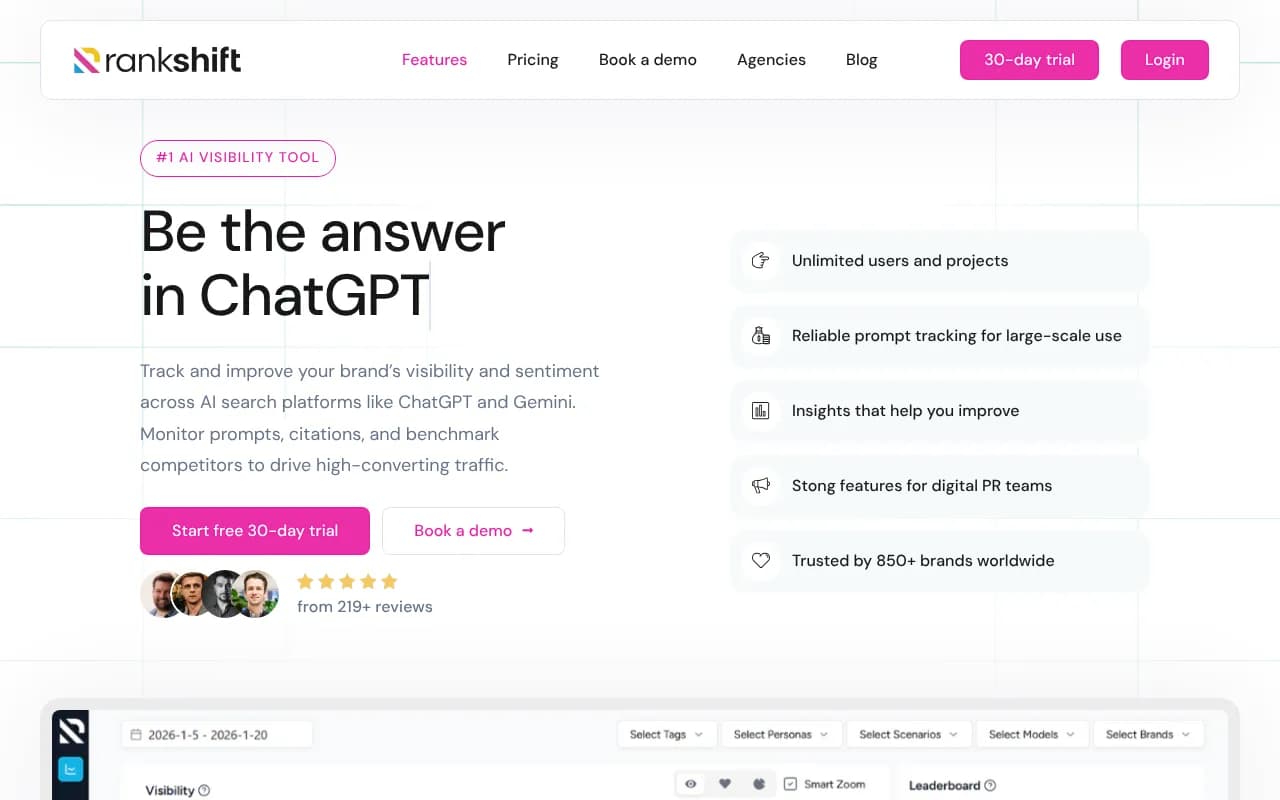
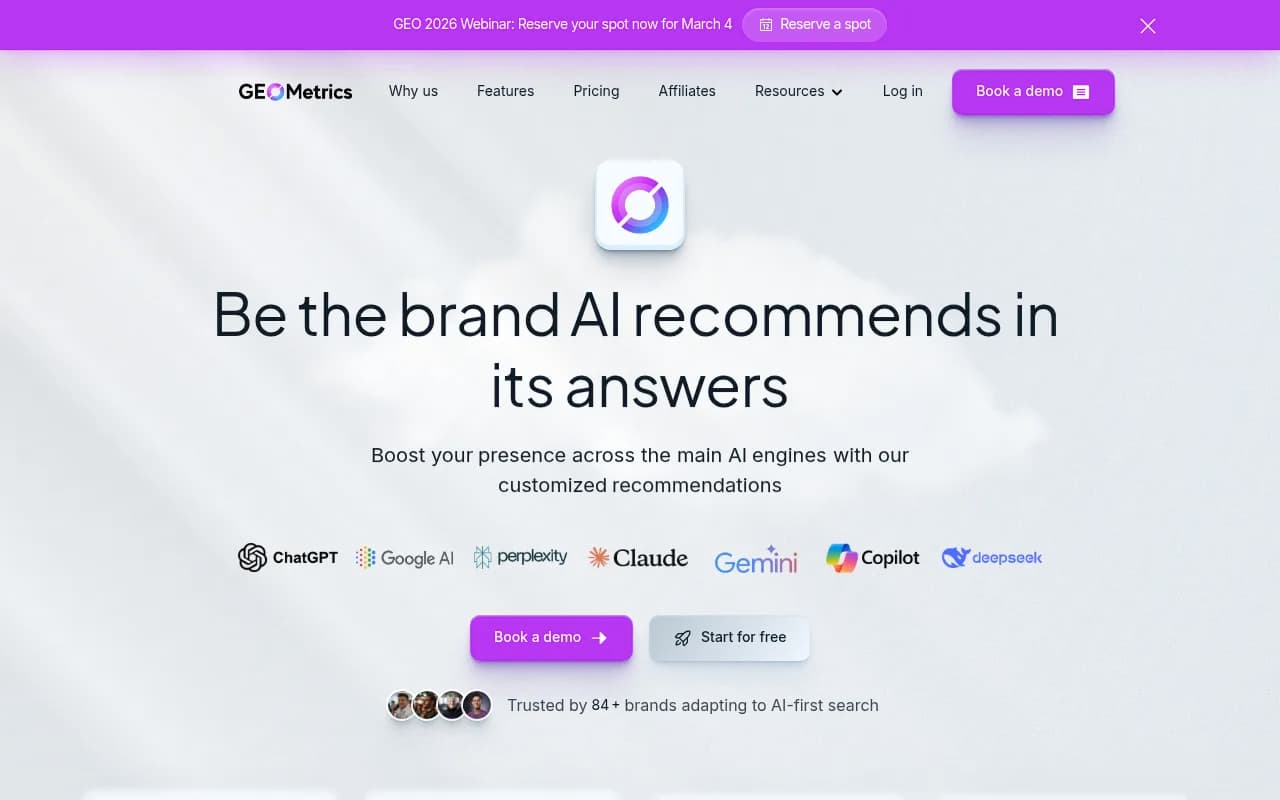
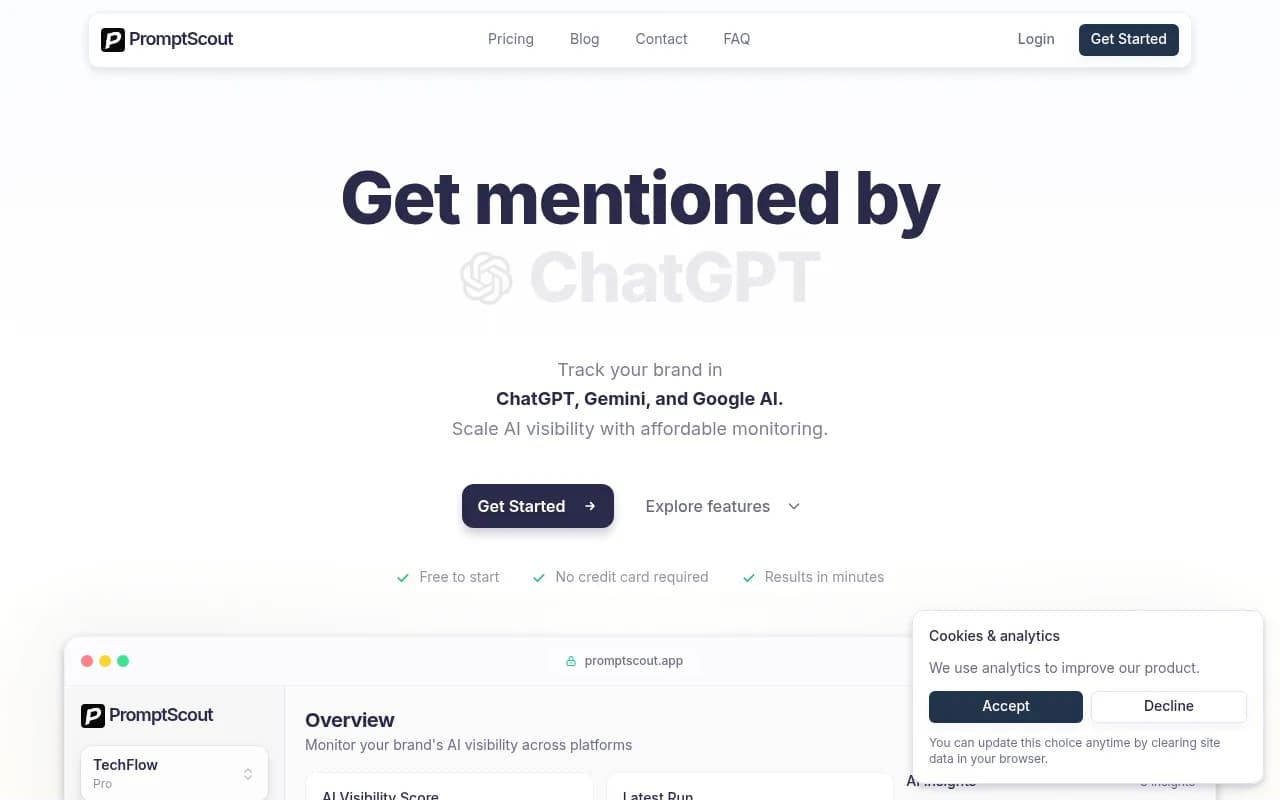
Here's a quick comparison of how these tools handle Gemini monitoring:
| Tool | Gemini tracking | Content gap analysis | AI content generation | Crawler logs |
|---|---|---|---|---|
| Promptwatch | Yes | Yes | Yes | Yes |
| Profound | Yes | Limited | No | No |
| Rankshift | Yes | No | No | No |
| GEO Metrics | Yes | No | No | No |
| Promptscout | Yes | No | No | No |
The pattern is consistent: most tools will tell you whether you're appearing in Gemini. Promptwatch is the one that tells you why you're not, and helps you fix it.
A practical 90-day action plan
Getting cited in Gemini isn't a one-week project. Here's a realistic timeline:
Days 1-30: Foundation
- Audit your current Gemini visibility (use a tracking tool or manually test 20-30 relevant prompts)
- Identify the 3-5 topic areas where you want to be cited
- Run a technical audit: indexing, Schema markup, page speed, crawlability
- Claim and complete your Google Business Profile if you haven't
- Implement Organization and Person schema on your key pages
Days 31-60: Content
- Map out the questions your target audience asks in each topic area
- Create or update 10-15 pages specifically structured for extraction (direct answers, clear headings, specific data)
- Add FAQ schema to your most important pages
- Publish at least one piece of original research or data in your primary topic area
- Reach out to 5-10 industry publications for guest posts or expert quotes
Days 61-90: Authority and iteration
- Track your Gemini visibility weekly and note which pages start getting cited
- Identify gaps where competitors still outperform you
- Build internal links between your new content and your existing authority pages
- Update any outdated content that covers topics where you want to be cited
- Review your Google Business Profile for completeness and recent activity
Common mistakes that keep brands out of Gemini citations
Writing for humans but not for machines. Content that's engaging to read but poorly structured is hard for Gemini to extract from. Both matter.
Ignoring entity optimization. If Gemini doesn't have a clear understanding of what your brand is, who it serves, and what it's authoritative about, it won't cite you even if your content is excellent. Schema markup and Knowledge Graph presence fix this.
Treating Gemini like ChatGPT. Strategies that work for ChatGPT (Reddit presence, community mentions, user-generated content) matter less for Gemini, which leans more heavily on Google's traditional quality signals. Know the platform you're optimizing for.
Publishing and forgetting. Gemini weights freshness. A page that was great in 2024 but hasn't been touched since is losing ground to fresher sources every month. Build content maintenance into your workflow.
Optimizing for visibility without tracking it. You can't improve what you don't measure. Set up Gemini-specific tracking before you start making changes, so you have a baseline to compare against.
The bigger picture
Gemini's market position is only going to grow. Google AI Overviews already appear on a significant portion of searches, and Google AI Mode is expanding rapidly. The brands that establish citation authority now, while the space is still relatively uncrowded, will have a durable advantage over those who wait until Gemini optimization becomes table stakes.
The good news is that most of what Gemini rewards -- genuine expertise, clear writing, technical credibility, real-world authority -- is the same thing that makes a brand worth recommending in the first place. The optimization work and the brand-building work point in the same direction.