Key takeaways
- A GEO program has three core phases: measure where you stand, fix the gaps, and track whether it worked. Most tools only cover phase one.
- Promptwatch is built around the full loop: visibility tracking, answer gap analysis, AI content generation, and traffic attribution in one platform.
- The fastest wins come from finding prompts where competitors are cited but you aren't, then publishing content that directly answers those prompts.
- AI crawler logs are an underused signal. Knowing which pages ChatGPT and Perplexity actually read (and which they skip) changes your prioritization.
- GEO is not a one-time project. The brands winning in AI search in 2026 are running it as an ongoing program, not a quarterly audit.
Search has changed more in the last 18 months than in the previous decade. When someone asks ChatGPT "what's the best project management tool for remote teams?" or asks Perplexity "which accounting software do small businesses trust?", they get a direct answer with citations. Blue links are optional. Your brand either shows up in that answer or it doesn't.
That shift is what Generative Engine Optimization (GEO) is about. And while the concept is straightforward, actually building a GEO program from scratch is where most teams get stuck. What do you track? Where do you start? How do you know if it's working?
This playbook walks through the full process using Promptwatch as the operational backbone. It's the platform I'd recommend for this because it covers the entire loop, not just the monitoring piece.

Phase 1: Set up your baseline
Before you can improve anything, you need to know where you stand. This sounds obvious, but most teams skip it and jump straight to publishing content. That's a mistake, because without a baseline you can't prove ROI later.
Step 1: Define your prompt universe
Your first task is building a list of prompts that matter to your business. These are the questions real buyers ask AI models when they're in your market.
Think in three categories:
- Category prompts: "what is [your product category]?", "how does [category] work?"
- Comparison prompts: "best [category] tools", "[your brand] vs [competitor]", "alternatives to [competitor]"
- Problem prompts: "how do I [solve the problem your product solves]?", "what's the best way to [job to be done]?"
Start with 30-50 prompts. You can expand later. The goal is coverage across the buyer journey, not exhaustive volume.
In Promptwatch, add these prompts to your workspace and assign them to your domain. The platform will start querying them across ChatGPT, Perplexity, Claude, Gemini, Google AI Overviews, and the other models it monitors.
Step 2: Configure personas and regions
AI models give different answers depending on who's asking and from where. A prompt like "best CRM for small businesses" gets different results in the US vs. Germany, and different results when the persona is a "startup founder" vs. "enterprise IT manager."
Promptwatch lets you set custom personas and locations per prompt. Take 20 minutes to configure this properly at the start. It means your data reflects how your actual customers are prompting, not some generic average.
Step 3: Let the baseline data accumulate
Give it 7-10 days before drawing conclusions. You want enough data to see patterns rather than noise. While you wait, move on to the competitor setup.
Step 4: Add your competitors
Add 3-5 direct competitors to your Promptwatch workspace. The platform will track their visibility alongside yours across every prompt, so you can see exactly where they're being cited and you're not.
This competitor data is what powers the gap analysis in Phase 2.
Phase 2: Find your gaps
This is where most GEO programs either get serious or fall apart. Monitoring is easy. Acting on what you find is harder.
Step 5: Run answer gap analysis
Once you have baseline data, open the Answer Gap Analysis in Promptwatch. This shows you prompts where competitors are appearing in AI responses but your brand isn't.
The output is specific: you'll see the exact prompt, which competitor is being cited, and what content they have that you don't. This isn't a vague "you should write more content" recommendation. It's a precise list of content gaps with evidence.
Prioritize gaps by two factors:
- Prompt volume: how often is this question being asked? Promptwatch provides volume estimates and difficulty scores for each prompt.
- Competitor advantage: how many competitors are being cited for this prompt while you're invisible?
The highest-priority items are high-volume prompts where multiple competitors are cited and you're absent. Start there.
Step 6: Analyze which sources AI models are citing
Before you write a single word, understand why your competitors are being cited. Is it their homepage? A specific comparison page? A Reddit thread? A YouTube video?
Promptwatch's citation and source analysis shows you exactly which URLs are being pulled into AI responses for each prompt. This tells you:
- What type of content AI models prefer for this topic (long-form guides vs. quick comparison pages vs. forum discussions)
- Whether you need to create new content or optimize existing pages
- Whether there are third-party channels (Reddit, YouTube, industry publications) where you should also be publishing
This step saves you from writing the wrong kind of content. If AI models are citing Reddit threads for a particular prompt, a polished blog post alone won't cut it.
Step 7: Check your AI crawler logs
This is a step most GEO guides skip entirely, and it's genuinely useful.
Promptwatch's AI Crawler Logs show you real-time data on when AI crawlers (ChatGPT, Claude, Perplexity, etc.) visit your site, which pages they read, how often they return, and any errors they hit.
Look for two things:
- Pages that AI crawlers visit frequently but that don't appear in citations. This suggests the content exists but isn't authoritative enough to cite.
- Pages that AI crawlers never visit. These are invisible to AI models, which means no amount of content quality will help until you fix the crawlability issue.
Common crawlability problems include pages blocked by robots.txt, slow load times that cause crawlers to time out, and thin content that crawlers deprioritize on return visits.
Fix the technical issues before creating new content. There's no point publishing 20 new articles if crawlers can't read them.
Phase 3: Create content that gets cited
This is the part most GEO platforms skip. They show you the gap and leave you to figure out the fix. Promptwatch has a built-in AI writing agent that generates content specifically designed to be cited by AI models.
Step 8: Use the content agent to generate AI-optimized articles
The Promptwatch content agent isn't a generic AI writer. It generates content grounded in:
- The specific prompt you're trying to win
- Citation data from 880M+ analyzed citations (what content structures AI models actually cite)
- Competitor analysis (what the currently-cited pages cover and how to go further)
- Prompt volume and persona targeting
The output types include articles, listicles, and comparison pages. For most GEO programs, comparison pages and "best X for Y" listicles are the fastest wins because they directly match the comparison prompts that drive purchase decisions.
Step 9: Structure content for AI citation
Whether you're using Promptwatch's content agent or writing manually, certain structural patterns get cited more reliably:
- Direct answers early. AI models scan for the answer to the question, not a preamble. Put the core answer in the first 100 words.
- Clear entity mentions. Name your brand, your product, your category, and your competitors explicitly. AI models need clear signals about what the content is about.
- Structured data where relevant. FAQ schema, HowTo schema, and article schema all help AI models parse your content.
- Specific claims with evidence. Vague statements get ignored. Specific, verifiable claims ("reduces setup time by 40%") get cited.
- Comprehensive coverage. AI models prefer sources that cover a topic thoroughly. Thin content rarely gets cited even if it technically answers the question.
Step 10: Publish and index quickly
Speed matters. If a competitor is currently being cited for a prompt, every week you're not publishing is another week they're building citation authority.
After publishing:
- Submit the URL to Google Search Console for fast indexing
- Link to the new page from relevant existing pages on your site (internal linking helps AI crawlers find new content faster)
- Check Promptwatch's crawler logs within 48-72 hours to confirm AI crawlers have visited the new page
Phase 4: Track results and close the loop
Publishing content is not the end of the program. It's the beginning of the measurement phase.
Step 11: Monitor visibility score changes
Promptwatch tracks your visibility score per prompt over time. After publishing new content, you should see movement within 2-4 weeks for most prompts, though some models are slower to update their training data or retrieval indexes.
Watch for:
- Visibility score increases on the specific prompts you targeted
- New citation appearances (your page being referenced in AI responses)
- Competitor visibility changes (are they responding to your new content?)
Page-level tracking shows exactly which of your pages are being cited, how often, and by which AI models. This is how you identify which content is working and which needs revision.
Step 12: Connect visibility to traffic and revenue
Visibility scores are useful, but the question your CMO will ask is "what did it do for revenue?"
Promptwatch offers three methods for traffic attribution:
- JavaScript snippet: add a small code snippet to your site to track visitors arriving from AI-referred sessions
- Google Search Console integration: connect GSC to see AI-driven traffic alongside traditional search traffic
- Server log analysis: for teams with more technical resources, server log analysis gives the most complete picture of AI-referred visits
The goal is a clean line from "we appeared in ChatGPT's response to this prompt" to "this visitor came from that citation and converted." It's not always a clean line, but getting directional data is enough to justify the program internally.
Step 13: Run the loop monthly
GEO is not a quarterly project. AI models update their responses continuously. Competitors publish new content. New prompts emerge as your market evolves.
A sustainable monthly cadence looks like this:
| Week | Activity |
|---|---|
| Week 1 | Review visibility scores, identify prompts that dropped or haven't moved |
| Week 2 | Run gap analysis, prioritize new content targets |
| Week 3 | Generate and publish 2-4 new articles or comparison pages |
| Week 4 | Review crawler logs, fix any technical issues, check attribution data |
At this pace, a team of one or two people can run a meaningful GEO program alongside other work.
Comparing GEO program approaches
Not every team will use Promptwatch for every part of this. Here's how different approaches stack up:
| Approach | Gap analysis | Content generation | Crawler logs | Traffic attribution | Best for |
|---|---|---|---|---|---|
| Promptwatch (full program) | Yes | Yes (built-in agent) | Yes | Yes (3 methods) | Teams wanting one platform |
| Monitoring-only tools (Otterly.AI, Peec.ai) | No | No | No | No | Teams just starting to measure |
| AthenaHQ | Partial | No | No | No | Monitoring-focused teams |
| Profound | Yes | No | No | Limited | Mid-market monitoring |
| Manual (spreadsheets + ChatGPT) | Manual | Manual | No | No | Very early-stage, low budget |
The monitoring-only tools are fine for getting a sense of where you stand. But if you're building a program with the goal of improving visibility, you need the gap analysis and content generation capabilities. Otherwise you're just watching a number without a way to move it.
Common mistakes to avoid
Tracking too many prompts too early. Start with 30-50 prompts you actually care about. 200 prompts with no prioritization is noise.
Ignoring the citation source analysis. If you don't know why a competitor is being cited, you can't beat them. The source analysis step is not optional.
Publishing content without fixing crawlability first. Check your AI crawler logs before you publish anything. Blocked pages and crawl errors are silent killers.
Measuring too soon. Two weeks is not enough time to see meaningful movement. Give new content 4-6 weeks before concluding it's not working.
Treating GEO as separate from SEO. The content that gets cited by AI models is largely the same content that ranks well in traditional search. Good GEO content is good content, period. Don't create a parallel content strategy. Integrate it.
Tools worth knowing alongside Promptwatch
For teams building out a broader GEO stack, a few other tools are worth knowing:
Profound is worth a look for teams that want deeper brand sentiment analysis alongside visibility tracking.

AthenaHQ covers 8+ AI engines and has solid monitoring capabilities for teams that want a second data source.

For content optimization that complements AI-generated drafts, Clearscope remains one of the better tools for ensuring semantic coverage.

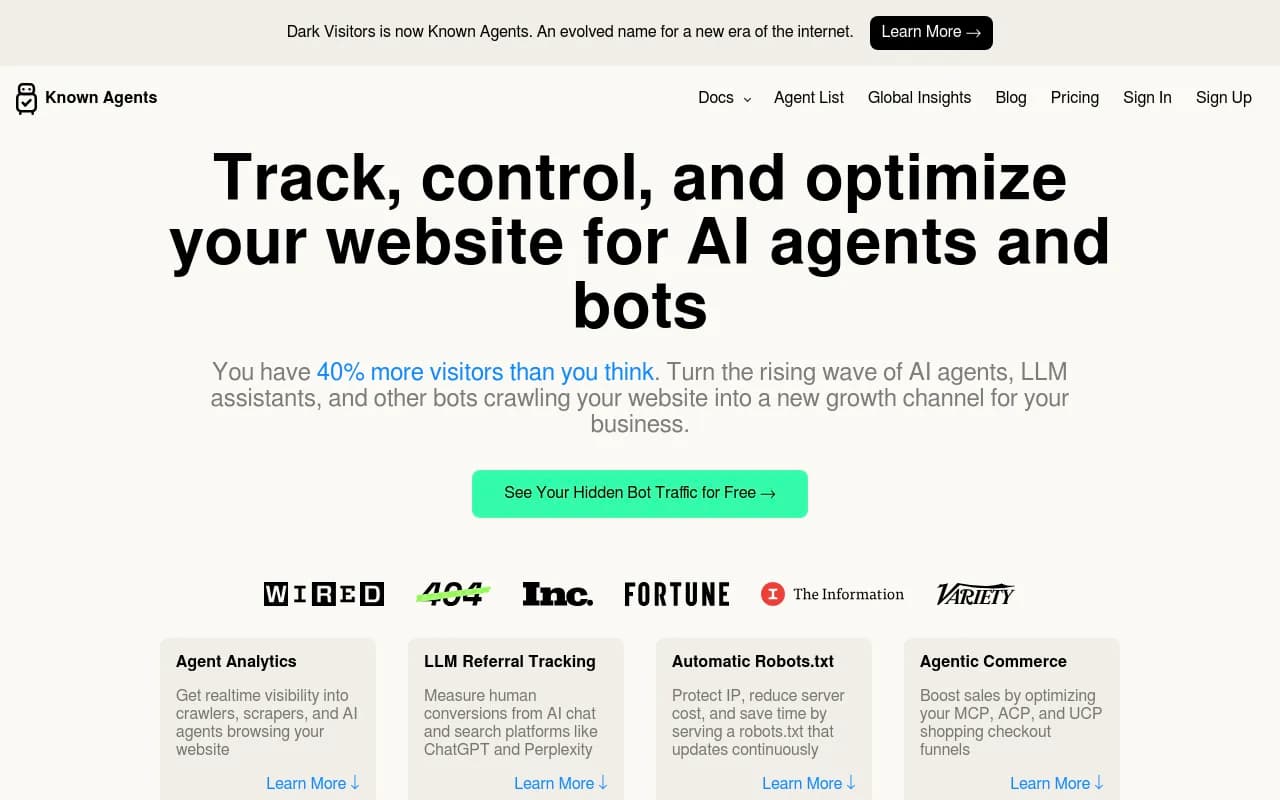
And if you need to track AI crawler activity in more detail, DarkVisitors gives you a clear view of which AI bots are hitting your site and what they're doing.
What a mature GEO program looks like
After 3-6 months of running this process, a mature GEO program has:
- A prompt universe of 100-200 tracked prompts across the buyer journey
- A content library of 30-50 pages specifically optimized for AI citation
- Clear attribution data showing which AI-referred sessions convert
- A monthly cadence for gap analysis and content publishing
- Visibility scores that are measurably higher than when you started
That last point matters more than any individual tactic. The brands winning in AI search right now aren't doing anything magical. They're running a consistent program, measuring it honestly, and iterating. The compounding effect of 6 months of consistent GEO work is significant.
The window to build that advantage is still open. Most competitors haven't started yet.