Key takeaways
- Publishing frequency matters less than topical coverage depth -- AI models cite sources that answer questions comprehensively, not sites that post daily
- Zero-click rates on Google AI Mode hit 93% in 2026, meaning visibility (citations) now matters more than click volume as a success metric
- For most brands, publishing 2-4 well-researched pieces per month outperforms publishing 20 thin ones
- AI crawlers (ChatGPT, Perplexity, Claude) re-crawl pages on their own schedule -- freshness signals work differently than in traditional SEO
- The biggest lever isn't how often you publish; it's whether you're covering the specific prompts your audience is asking AI models
There's a question that comes up constantly in marketing teams right now: "How often do we need to publish to show up in ChatGPT and Perplexity?" It's a reasonable question. In traditional SEO, publishing cadence was a real lever -- more pages meant more chances to rank, and Google's crawl budget rewarded active sites.
But AI search doesn't work the same way. And the data from 2026 makes this pretty clear.
What the data actually shows about publishing frequency
Let's start with the number that should reframe this entire conversation. Seer Interactive analyzed 25.1 million Google AI Mode impressions and found that 93% produced zero outbound clicks. A separate field experiment confirmed that when AI Overviews appear, organic clicks drop 38% and zero-click rates jump from 54% to 72%.
Meanwhile, Cloudflare's referral data shows all AI chatbots combined (ChatGPT, Gemini, Claude, Perplexity) sent 0.27% of search referral traffic in April 2026. Google sent 87.52%.
What does this mean for publishing strategy? It means the metric you're optimizing for has changed. You're no longer primarily chasing clicks from AI -- you're chasing citations. And citations are awarded based on one thing: whether your content is the most credible, complete answer to a specific question. That has almost nothing to do with how often you publish.
Forrester estimates AI-generated traffic is currently 2-6% of B2B organic traffic but growing at 40%+ month-over-month. The window to establish citation authority is now, not in two years when everyone else has figured this out.
Why frequency is the wrong question
The instinct to ask "how often?" comes from the old content marketing playbook. Post more, rank more. That logic made sense when Google was primarily counting pages and links.
AI models don't work that way. When ChatGPT or Perplexity generates a response, it's drawing on a training corpus and, increasingly, real-time retrieval. What gets cited is content that:
- Answers a specific question with depth and accuracy
- Comes from a domain with established topical authority
- Is structured in a way that's easy for AI to parse and excerpt
- Has been cited or referenced by other credible sources
None of those factors are a function of publishing frequency. A site that publishes one genuinely comprehensive guide per month can outperform a site publishing daily thin content -- and the data backs this up.
The Reddit community r/RankWithAI put it plainly: publishing frequency helps only if the site can maintain quality and topical focus. For news sites, freshness matters. For most brands, it doesn't.
The metric that actually matters: topical coverage
Here's the shift that changes everything. Instead of asking "how often should I publish?", ask "which questions are AI models being asked about my category that I'm not answering?"
This is what's called answer gap analysis. You find the prompts your target audience is typing into ChatGPT, Perplexity, and Google AI Mode -- and then you check whether your site shows up in the responses. The gaps are your content roadmap.
A brand publishing 20 articles per month on tangentially related topics will lose to a brand publishing 4 articles per month that directly answer the questions AI models are fielding. The second brand is building topical authority. The first is generating noise.
Tools like Promptwatch are built specifically for this -- they show you which prompts competitors are visible for that you're not, so you can create content that fills actual gaps rather than guessing.

How AI crawlers actually discover and re-crawl content
One thing most teams don't realize: AI crawlers operate on completely different schedules than Googlebot. ChatGPT's crawler, ClaudeBot, PerplexityBot -- they don't follow the same crawl budget logic.
What this means practically:
- Publishing a new article doesn't guarantee it gets picked up by AI crawlers within days or even weeks
- AI crawlers tend to prioritize pages that are already being cited or linked to
- Technical issues (blocked crawlers, slow load times, noindex tags applied incorrectly) can prevent AI models from ever seeing your content
So the "publish more to get crawled more" logic breaks down further. A single well-structured, well-linked page that AI crawlers can access cleanly will outperform ten pages with crawl errors.
If you want to understand how AI crawlers are actually interacting with your site -- which pages they're reading, how often they return, what errors they're hitting -- crawler log analysis is the only way to know. This is something most monitoring tools skip entirely.
What publishing cadence actually makes sense in 2026
Here's a practical framework based on what's working:
For most B2B and SaaS brands
Two to four substantial pieces per month is the right target. "Substantial" means 1,500+ words, structured around specific questions, with real data or original perspective. Not thin listicles. Not reworded press releases.
The goal is to build topical clusters -- a hub page on a core topic, supported by spoke pages that answer related sub-questions. AI models reward sites that own a topic, not sites that touch many topics lightly.
For e-commerce and product-focused brands
Product pages and comparison content matter more than blog frequency. AI models are increasingly fielding shopping queries, and what gets cited in those responses is specific, accurate product information -- specs, comparisons, use cases, reviews.
ChatGPT's shopping carousels are a real surface now. If your product pages aren't optimized for AI retrieval, publishing 30 blog posts per month won't fix that.
For news and media sites
This is the one category where frequency genuinely matters. AI models do factor in freshness for time-sensitive queries. But even here, the quality bar has risen -- a well-reported piece will outperform a quick wire rewrite.
For agencies managing multiple clients
The calculus shifts. You need to prioritize which clients have the most to gain from AI visibility investment, then build content programs around their specific prompt landscapes. A client in a low-competition category might need only 2-3 targeted pieces to start appearing in AI responses. A client in a crowded category might need a full topical cluster before citations start moving.
The content types AI models actually cite
This is where it gets specific. Based on citation pattern analysis, AI models consistently favor:
Comparison and "best of" content. When someone asks ChatGPT "what's the best CRM for a 10-person sales team?", it needs to cite something. Comprehensive comparison pages that cover multiple options with honest analysis get cited heavily.
Data-backed original research. If your content contains a statistic or finding that doesn't exist anywhere else, AI models will cite you because you're the primary source. This is one of the highest-leverage content investments you can make.
How-to guides with specific steps. AI models are answering procedural questions constantly. Guides that break down a process clearly, with concrete steps, get excerpted and cited.
FAQ-style content. Not the generic "what is X?" FAQ, but content that answers the specific questions real users are asking AI models. The more precisely your content matches the actual prompt, the more likely it gets cited.
What doesn't get cited much: generic thought leadership, brand storytelling, content that talks around a topic without directly answering questions.
Measuring whether your publishing strategy is working
This is the part most teams skip, and it's why they end up publishing a lot and not knowing if it's working.
The traditional metrics (organic traffic, rankings) are increasingly disconnected from AI visibility. A piece can lose Google clicks and gain LLM citations in the same month. If you're only looking at Search Console, you're flying blind.
What to track instead:
- Citation frequency: how often your pages are cited in AI responses to relevant prompts
- Prompt coverage: what percentage of the prompts your audience is asking do you appear in
- Share of voice vs competitors: are you gaining or losing ground in AI responses relative to your category
- AI referral traffic: the 0.27% average is growing fast; track it separately so you can see the trend
Several tools in the market track these metrics. They vary significantly in depth.
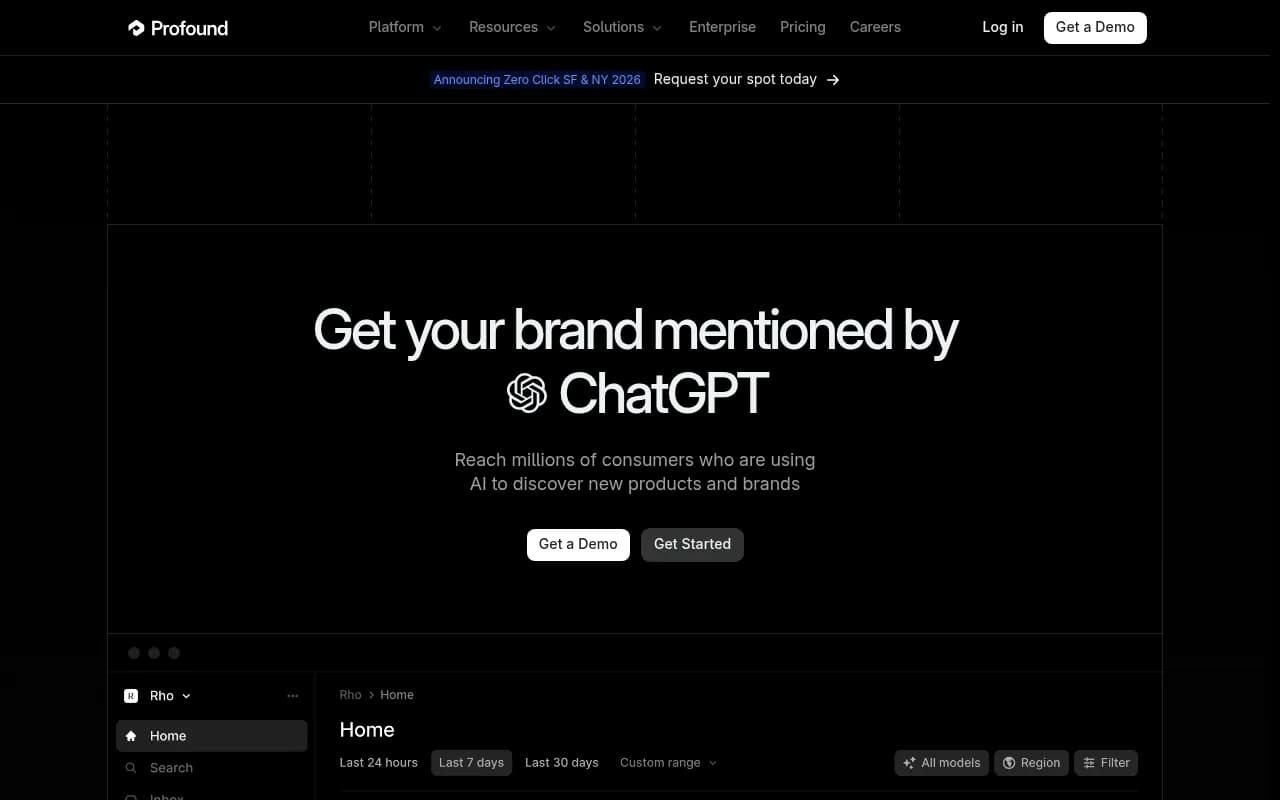



The key difference to watch for: some tools only show you where you're visible (or not). The more useful ones tell you why you're not visible and what content would fix it. Monitoring without action is just a more expensive way to feel bad about your numbers.
A comparison of approaches to content frequency
| Approach | Monthly output | AI citation potential | Risk |
|---|---|---|---|
| High volume, low depth | 20+ short posts | Low -- thin content rarely gets cited | Dilutes topical authority |
| Moderate volume, high depth | 4-8 long-form pieces | High -- comprehensive content earns citations | Slower to build coverage |
| Topical cluster strategy | 2-4 hub + spoke pieces | Very high -- builds entity authority | Requires upfront planning |
| Reactive/news-driven | Variable | Medium -- freshness helps for timely queries | Inconsistent authority signals |
| Zero publishing (existing content only) | 0 | Depends entirely on existing coverage | Gaps compound over time |
The topical cluster approach consistently outperforms high-volume strategies for AI visibility. The reason is simple: AI models are trying to identify the most authoritative source on a topic. A site with 5 deeply interconnected pieces on a subject looks more authoritative than a site with 50 loosely related posts.
The two-surface reality of content strategy in 2026
One thing worth being honest about: you're not just optimizing for AI search. Google still sends 87.52% of search referral traffic. You need content that works on both surfaces.
The good news is that the fundamentals overlap more than they diverge. Comprehensive, well-structured content that answers real questions performs well in both traditional search and AI search. The differences are at the margins -- schema markup, entity clarity, and citation-friendly formatting matter more for AI; backlinks and technical signals matter more for Google.
The mistake is treating them as completely separate strategies. Most brands don't have the resources to run two parallel content programs. The smarter move is building content that serves both surfaces, then using AI-specific metrics to identify where you're underperforming.
Search Engine Land's 2026 content strategy analysis put it well: you're auditing two search surfaces now, not one. Google rewards backlinks and technical signals. ChatGPT and Perplexity evaluate topical depth and credibility directly, with no link graph to lean on. That changes where content strategy starts.
What to do this month
If you're trying to improve AI search visibility right now, here's the practical sequence:
-
Audit your current AI visibility. Find out which prompts relevant to your business you're already appearing in, and which ones you're missing. This tells you where to focus.
-
Identify your highest-value gaps. Not all prompts are equal. Some have high volume and low competition -- those are your quick wins.
-
Create content that directly answers those prompts. Not content that's adjacent to the topic. Content that is the answer.
-
Check that AI crawlers can actually access your content. No robots.txt blocks, no crawl errors, clean page structure.
-
Track citations, not just traffic. Set up monitoring so you can see when your new content starts getting cited.
The frequency question answers itself once you have this framework. You publish when you have a gap to fill and the resources to fill it well. For most teams, that's somewhere between two and six pieces per month. The number matters far less than whether each piece is doing a specific job.
Publishing more won't hurt if the quality is there. But publishing more to hit an arbitrary cadence, without knowing which gaps you're filling, is how teams spend a lot of effort and see very little movement in AI visibility.
The brands winning in AI search right now aren't the ones publishing most often. They're the ones who know exactly which questions AI models are fielding in their category, and they've made sure their content is the best answer to those questions.
That's a strategy problem, not a scheduling problem.