Key takeaways
- Scaling GEO is mostly an operations problem. Structure, organization and governance decide whether more output means more visibility or more brand drift.
- Match content to prompt intent. Per Promptwatch Data (Sep 28 to Oct 4, 2026), product and landing pages make up about 39% of ChatGPT citations, so the pages that describe what you sell matter most.
- Set refresh cadences by content type. Landing pages and docs stay cited for months, while news loses half its pages within 36 days.
- Brand control needs three things in place before volume goes up: a knowledge base of approved facts, written voice rules, and a human review gate with an owner.
- Measure beyond a single prompt. Almost half of ChatGPT responses cite 10 or more domains, so third-party mentions are part of your content plan too.
Why scaling GEO content breaks brand control
Most enterprise teams hit the same wall around the third month of a GEO program. The first ten pages are carefully written. The next hundred are produced by a mix of freelancers, an agency, and an AI drafting tool, and somewhere in there the pricing language gets inconsistent, a product claim goes stale, and two pages contradict each other.
That matters more for GEO than for classic SEO. AI engines pull claims out of your pages and repeat them. If your site states three different things about your feature set, the model picks one, and you do not get to choose which.
The Infosys enterprise GEO guide frames this well: GEO is not a single-function problem. It is a content problem, a data architecture problem, a brand governance problem and a technical problem at the same time. Content teams can improve depth and structure, brand teams can enforce entity consistency, but no one function owns every lever. Their warning is that once portfolios reach tens of thousands of pages, manual GEO becomes operationally impossible.
Optimizely's report on content operations puts a number on the readiness gap: fewer than 30% of marketers feel they have the tools and systems to manage content effectively across their organization. Volume demands have outrun operational maturity.
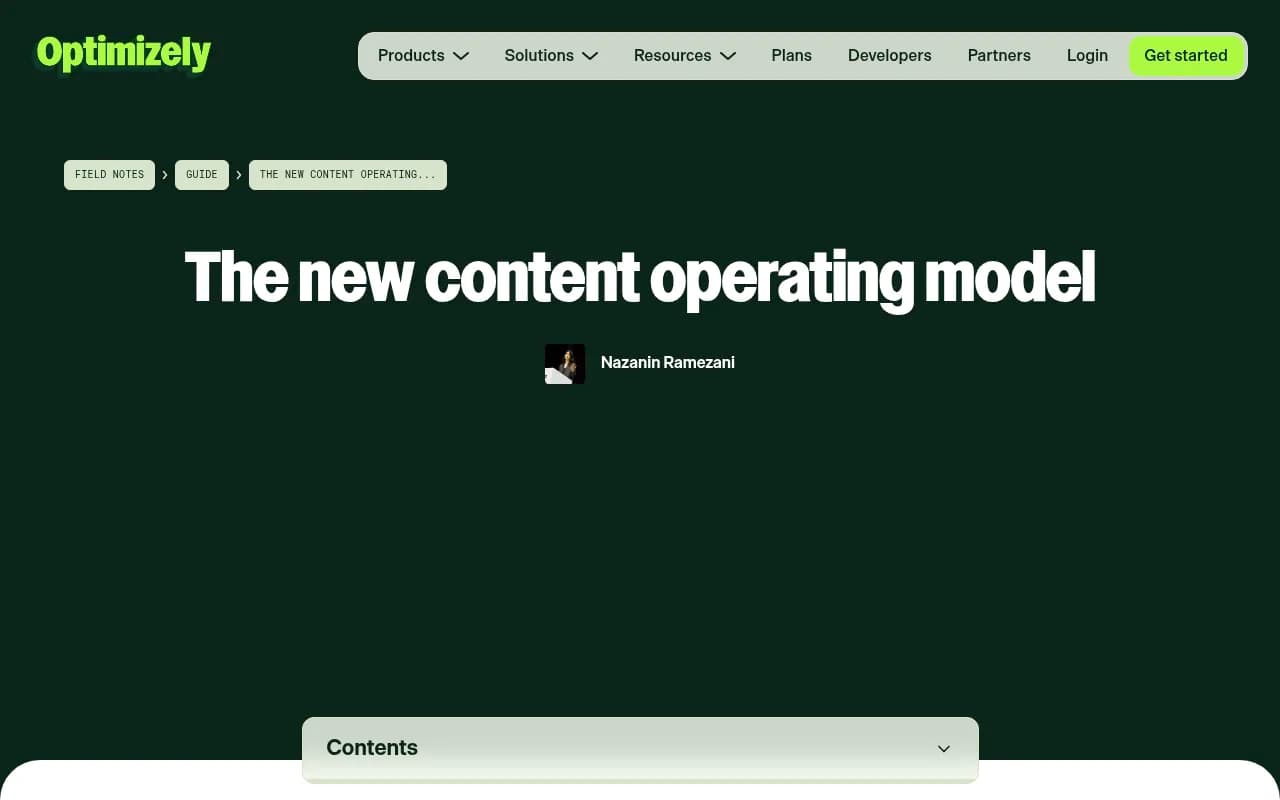
Optimizely names three foundations: structure (reusable components, consistent metadata, schema markup), organization (connected assets and workflows that reduce duplication), and governance (shared standards, prompt practices and review checkpoints). I think that is the right frame, and the rest of this guide builds on it.
Decide what to scale first, using citation data
The worst way to scale is to produce more blog posts because blog posts are easy. Start with what AI engines actually cite.
Promptwatch Data's report on ChatGPT citation share by content type (Sep 28 to Oct 4, 2026) breaks down every citation by format:
| Content type | Share of all ChatGPT citations |
|---|---|
| Product pages | 22.4% |
| Landing pages | 16.8% |
| Listicles | 13.6% |
| How-to guides | 8.7% |
| Documentation | 7.5% |
| General articles | 6.1% |
| Comparisons | 5.9% |
| News | 5.7% |
| FAQ pages | 3.3% |
| Reviews | 1.7% |
Product and landing pages together are 39% of citations. Editorial formats combined are about 43%. For commercial prompts like "best CRM for small businesses", product pages, landing pages, listicles and comparisons make up almost 70% of citations.
What this means for a scaling plan:
- Your highest-risk pages for brand control are not blog posts. They are product and landing pages, where specs, prices and positioning have to be complete and factual.
- Branded prompts lean on product pages (23.3%), landing pages (22.8%) and reviews (5.6%, over three times their share overall). Whatever AI says about your brand by name is shaped by those pages and by third-party reviews.
- Publishing your own comparison pages and a brand FAQ is a cheap way to own formats AI already likes.
- Keep docs public and crawlable. Docs are cited heavily in informational and software prompts.
The same report recommends mapping content to prompt intent, and I would go further: build your editorial calendar as a grid of prompt intent against content type, and fill the gaps in the order the data suggests.
Build a refresh cadence by content type
Scaled programs fail quietly when pages age. Promptwatch's content half-life data tracked every page ChatGPT cited on July 6, 2026 for 90 days. The decay differs a lot by type:
| Content type | Still cited after 60 days | Notes |
|---|---|---|
| Landing pages | 69% | 78% still cited at 30 days |
| Docs | 67% | 76% still cited at 30 days |
| Comparisons | 63% | 72% at 30 days |
| Listicles | 60% | Half-life likely near or past 90 days |
| Product pages | 55% | Half-life 74 to 77 days |
| Reviews | 55% | Half-life 74 to 77 days |
| How-tos | 55% | Half-life 74 to 77 days |
| News | 41% | Half gone after 36 days |
Treat landing pages and docs as long-term assets and put your best writers and strictest reviewers on them. Schedule product pages, reviews and how-tos for updates roughly every two to three months. Treat news as short bursts of visibility and do not expect it to compound.
One caveat: the longest-lived types only cross 50% in the final week because the window ends, so their real half-life is probably longer than the data can show.
A refresh cadence also gives your governance process something to hang on. Every refresh is a chance to re-check claims against your source of truth, which is where hallucinated or outdated statements get caught.
The governance layer: voice, facts and review
A line from the research summary I keep coming back to: the teams that keep their voice consistent, even with 20 writers, have three things in place, and the teams missing any one lose their voice within two quarters. The source (a Revv Growth article) was not fully retrievable, so treat the specific two-quarter claim as the author's, not a benchmark. The principle matches what I have seen, though. Here is how I would define the three.
A knowledge base of approved facts
Write down the things AI is allowed to say about you: product names, feature lists, pricing rules, supported regions, certifications, customer counts, approved comparisons. Every writer and every AI draft pulls from this one place. If a claim is not in the knowledge base, it needs a source before it ships.
This is the single biggest defense against brand drift in AI-assisted drafting. Models invent plausible details when they have nothing to ground on.
A brand book that is usable by a machine
Style guides written as PDFs full of adjectives do not constrain an AI draft. Write rules in plain, testable language: banned phrases, sentence length ranges, how to refer to the product, how to handle competitors, when to use first person. Include a handful of before-and-after examples. Keep the instructions short enough that people and tools actually follow them.
A review gate with a named owner
Decide which content types need human approval before publishing and who approves them. A reasonable split:
- Product pages, pricing, legal-adjacent claims and comparisons: always human-approved, with a subject expert.
- How-tos, listicles and FAQs: editor review, sampled fact checks.
- Refreshes of existing pages: diff review, so the reviewer sees only what changed.
Diff-based review is underrated. It cuts the reviewer's workload sharply and makes it easier to say yes quickly, which keeps the gate from becoming a bottleneck people route around.
Structure and technical foundations
Optimizely makes a point that is easy to skip over: if content is not structured and machine-readable, it can lose visibility in answer engines even if it still ranks in traditional search. Concretely, that means consistent headings, schema markup, reusable components for specs and pricing tables, and metadata applied by template rather than by hand.
Crawl access belongs on the same checklist. A beautiful page that AI bots cannot fetch cannot be cited. Teams should confirm which AI crawlers reach their pages and where they hit errors, and tools like Promptwatch expose IP-verified AI crawler logs for exactly that. Free options exist too, such as the Agentic Readiness Check and the AI Crawler URL Inspector.

The reasoning is the same as the governance layer: a structured, crawlable site gives you consistency by default instead of by policing.
Organize the team: who owns what
The GNW Consulting State of GEO research found that execution is already spread across functions, with marketing operations leading alongside content, SEO and brand teams. That is realistic. Nobody gets a clean new GEO department.
A split that works for most enterprises:
- A small in-house core owns strategy, brand rules, the knowledge base and relationships with subject experts.
- Content and SEO teams own the production pipeline and refresh calendar.
- Brand or legal owns the approval rules for high-risk page types.
- Marketing ops owns tooling, workflows and reporting.
- An agency or external partner can handle execution at volume, which a content-marketing source in the research notes describes as the pattern that works: in-house for strategy, brand and expert relationships, agency for execution. If you want outside help setting up the strategy and the AI search side, 1001 SEO Media does GEO and content work with senior specialists and no long-term contracts.
Budget realities vary widely. One source puts enterprise content spend at $30K to $100K a month depending on program size and whether AEO and SEO are bundled, and says only 41% of marketers measure ROI on content. Treat both as rough context, not benchmarks, and note the teams that do measure tend to keep their budgets.
Use agents and automation, with guardrails
You cannot hand-write your way to coverage across thousands of prompts, so automation is not optional at scale. The question is where to put it.
Good candidates for automation:
- Finding gaps: mapping your pages against the prompts AI answers and flagging missing coverage.
- Drafting from a brief that pulls in your knowledge base, internal links and competitor pages AI already cites.
- Refresh suggestions shown as diffs.
- Publishing to your CMS as drafts, not live, until review.
Bad candidates: unsupervised publishing of claims about pricing, compliance or comparisons.
Several tool categories fit here:
| Category | Examples from our catalog | What they do |
|---|---|---|
| End-to-end GEO platforms | Promptwatch, Profound, AthenaHQ | Track AI visibility, find gaps, some also generate and publish |
| Content engineering and optimization | AirOps, Clearscope, Surfer SEO, MarketMuse | Brief, draft and score content |
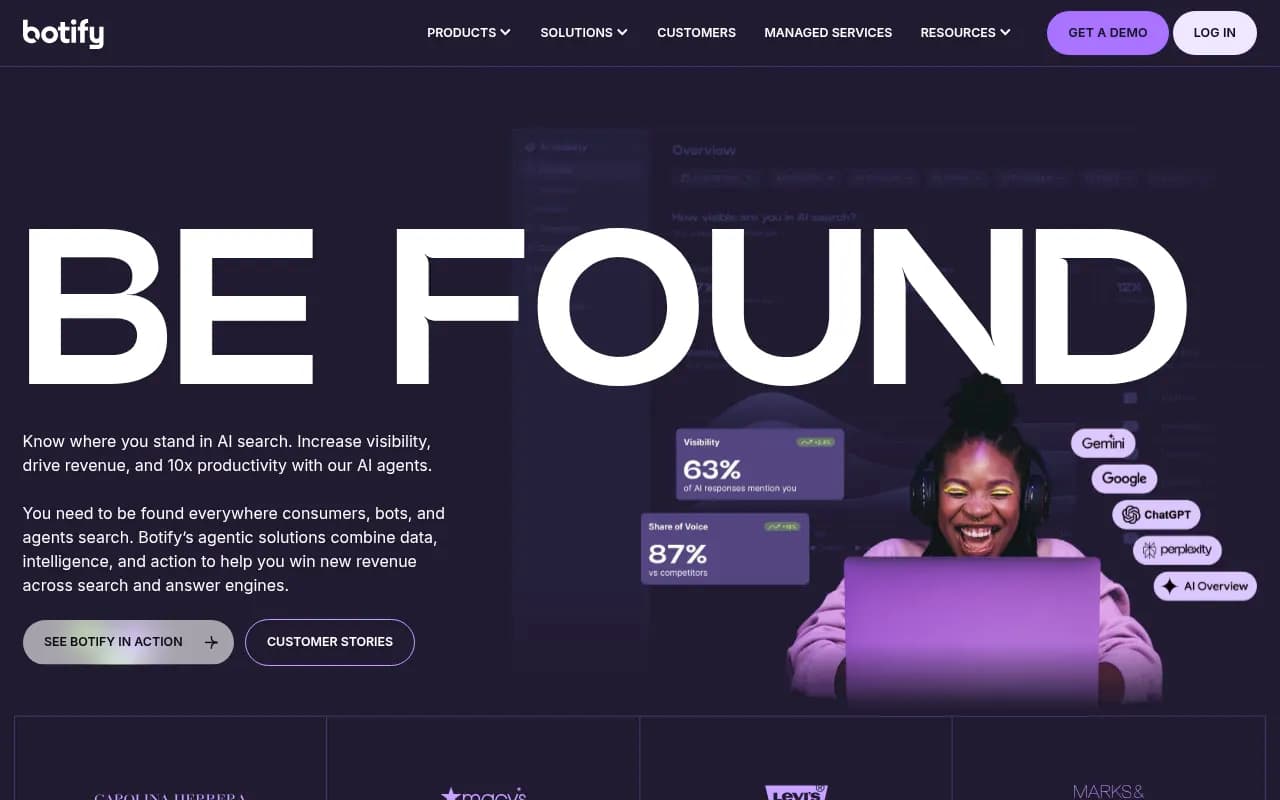
| Enterprise SEO suites | BrightEdge, Botify, seoClarity, Conductor | Large-site SEO with growing AI visibility modules |
| Content operations | Contently, Optimizely, Kontent.ai | Workflow, governance, structured content |
| Workflow automation | n8n, Zapier, Workato | Glue between review, CMS and reporting |



Most of these either monitor or draft. Few do both and then check whether the published page got crawled and cited. Promptwatch's Content Agent, available on its Business plan ($579/mo, confirm at promptwatch.com/pricing), plans, writes and publishes against visibility gaps with a review inbox, so you can run it hands-off or keep every piece behind approval. It also uses a Knowledge Base and Brand Book to keep output on-brand, and publishes to WordPress, Webflow or Framer. For a broader directory of options, the GEO software directory at bestgeosoftware.com is a good place to compare.
Measure across many prompts, not one
Brand control is partly about what happens off your site. Promptwatch Data on unique domains per ChatGPT response (Sep 28 to Oct 4, 2026) shows that 47.6% of responses with citations name 10 or more domains, and 66.1% cite at least 8. Only 6% cite three or fewer.
For brand-specific prompts the picture changes: 21.3% cite 10 or more domains, the most common count is 5, and 40.7% cite five or fewer. So when someone asks about your brand directly, your own site and a handful of review and forum sources have outsized influence on how you are described.
Two takeaways for enterprise teams:
- You share almost every answer with other brands. Third-party mentions in listicles, reviews and forums are part of the content plan, and the Ahrefs research cited in the notes found branded web mentions correlate 0.664 with AI Overview visibility, versus 0.218 for backlinks.
- A single prompt tells you almost nothing. Track a panel of prompts per topic, per market, and watch trends.
Useful metrics to review monthly:
- Visibility and share of voice by topic, not just overall.
- Citation share on your own domain versus third-party pages.
- What AI claims about you (and whether those claims are accurate), compared with your knowledge base.
- Crawl-to-citation path per page: did the bot read it, did AI cite it?
- AI-referred traffic and conversions. Crisp, for example, reported 2x higher conversion from AI traffic than from traditional channels in its Promptwatch case study.
If a claim about your brand is wrong, you need to find which of your pages teaches it. Promptwatch's Brand Narrative and Fact Check do this, and the Action Board turns findings into a prioritized to-do list. Plenty of other trackers in the catalog, like Peec AI, Otterly.AI and Scrunch, cover monitoring if that is all you need.


A 90-day rollout plan
Days 1 to 30: foundations
- Audit current content against prompt intent and content type. Find the gaps.
- Write the knowledge base and the machine-usable brand rules.
- Check crawl access and fix structural issues (schema, headings, templates).
- Define the review gate by page type and name the approvers.
Days 31 to 60: controlled production
- Fix product and landing pages first. They carry the most citations.
- Publish comparison pages and a brand FAQ.
- Start refreshing existing pages as diffs, with reviewer sign-off.
- Run AI drafting on low-risk formats only, with drafts going to review.
Days 61 to 90: scale and measure
- Raise volume on the formats that earned citations. Loosen review only where error rates stay low.
- Set the refresh calendar: 60 to 75 day cycles for product pages, reviews and how-tos; longer for landing pages and docs.
- Add off-site work: reviews, forum presence, third-party mentions.
- Report on visibility, citations, AI traffic and conversions in one place.
Promptwatch's own 90-day GEO program guide is a useful companion if you want a second framework to compare against.
Common mistakes
A few patterns I would watch for:
- Scaling news and blog output because it is easy, while product pages stay thin.
- No single source of truth, so each writer and each AI draft invents its own version of your positioning.
- Review gates that apply to everything equally. Reviewers drown, and the gate gets bypassed.
- Treating a one-off prompt check as proof. The data shows answers cite many domains and shift by prompt type.
- Never refreshing. Product pages and how-tos reach half-life in under three months.
The tooling will keep changing. The operating model underneath it is stable: structure, organization and governance first, then volume. For a wider look at tools in this space, see the directories at surferstack.com and the Promptwatch Data research hub.
Where to start this week
Pick your 20 highest-value product and landing pages and compare every factual claim against what your sales team would say. Fix the mismatches, write them into a knowledge base, and only then turn up the volume.