Key takeaways
- Few GEO tools document formal multi-step approval workflows with required reviewers and audit trails. Most offer something narrower: assignable action items, unlimited seats, or review before CMS publishing.
- Seat limits, per-domain fees and API/MCP gating are the real collaboration costs. Check them before you compare feature lists.
- Writesonic is the one GEO tool named in the roundups we reviewed for approval workflows aimed at multi-brand content teams.
- The practical setup is a GEO tool for gap-finding and tracking, plus your CMS or a dedicated approval tool for sign-off.
- Put docs, help-center pages and review-site profiles inside your approval process. Those earn the most citations in software prompts.
What "approval workflow" means for a GEO team
Search "GEO tools with approval workflows" and you will mostly find social media scheduling tools. Hootsuite, Sprout Social, Planable and Loomly all have proper multi-step approvals with required reviewers. That is a mature category. GEO software is not there yet.
I went looking for documented reviewer roles, required approvers and audit logs inside GEO platforms and found very little. That is worth saying plainly, because plenty of vendor pages use "collaboration" loosely. What does exist falls into four buckets:
- Shared seats and roles, so several people can see the same data.
- Assignable action items, so a gap becomes a task with an owner.
- Draft-then-publish flows into a CMS, where a human reviews before anything goes live.
- True multi-step sign-off for brands, legal and clients. This is the rare one.
Knowing which bucket a tool falls in saves you from buying on a slide that says "team workflows".
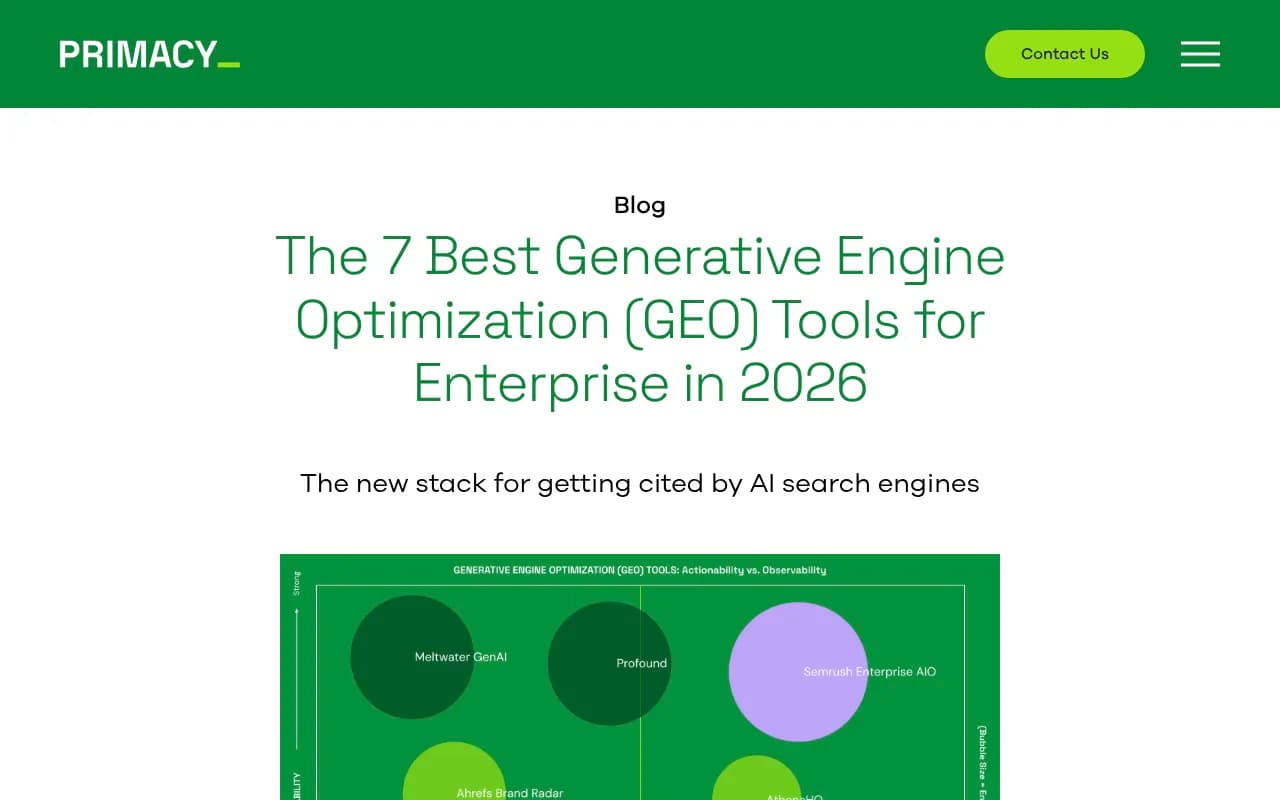
Primacy's enterprise roundup frames GEO tools as software that tracks how AI systems talk about a brand, what they cite, and where the brand is invisible, then helps teams find content gaps and fix them. Notice the emphasis: tracking and fixing. Sign-off is left to you.
Why approvals matter more in GEO than you might think
AI answers quote your pages. A wrong claim on a product page, an outdated help article or a sloppy comparison post can be repeated back to buyers by ChatGPT. Regulated industries feel this most, but anyone with a brand voice has the problem.
There is also the question of which content to guard. Promptwatch Data's software citation report (Sep 28 to Oct 4, 2026) found docs and help centers earned the largest source-type share at 2.64%, vendor sites 2.01%, and review sites and analysts 1.57%. Vendor pages and docs together earned 4.65%, about three times the review-site share. So your approval process should not stop at blog posts. Documentation, help-center articles and review-site profiles are where citations land, and they are often edited by people outside marketing.
Content also ages at different speeds. Promptwatch's content half-life report found that landing pages and docs stayed cited longest among pages ChatGPT cited on July 6, 2026, while news lost half its pages within 36 days. Long-lived pages deserve stricter review because mistakes persist.
What the tools actually offer
Promptwatch
Promptwatch is the closest fit I found to a full loop between insight and published content. Its Action Board is an AI-generated GEO to-do list where actions can be assigned to people, with comments. The Content Agent plans, writes and publishes to Webflow, Framer or WordPress, and it has a review inbox where you approve, edit or decline drafts, or run it hands-off if you prefer. Agent Chat can also work the Action Board, replying when someone @-mentions it.

That review inbox is the nearest thing to a real approval gate in a GEO product. It is a single-stage gate, not a multi-level legal and client chain, so be honest with yourself about whether that is enough. Roles are owner, editor and viewer, with an audit log on Business, Agency Scale and Enterprise, and SSO on Enterprise. Agencies get white-label workspaces and branded read-only client access.
Pricing, per Promptwatch's page (confirm at promptwatch.com/pricing): Essential $95/month, Professional $245, Business $579, Enterprise custom. The Content Agent sits in Business and Enterprise. One caveat: the comparison page I drew on is Promptwatch's own, so treat its comparison claims as vendor claims.
Writesonic
Writesonic is the only GEO tool in the roundups I read that is explicitly credited with approval workflows, described by Ansvisor as built for multi-brand content teams. Quattr also notes its GEO Action Center, which prioritizes daily tasks by impact and effort. If your problem is several brands sharing one content operation, it is worth a demo, and you should ask exactly what the approval steps look like.

Peec AI
Peec AI is the budget pick for large teams. Per Prismic and SearchEye, Starter is $95/month for 50 prompts, Pro $245 for 150, and Advanced $495 for 350, with unlimited users on every tier. Collaboration here means everyone can look at the data. It is a monitoring tool without assignable action items, per Promptwatch's comparison, so approvals happen elsewhere.

AthenaHQ
AthenaHQ lists unlimited seats on its $295/month Starter plan and has an Action Center for turning findings into tasks. It also publishes into a CMS, according to Promptwatch's comparison. Many of the model-count and pricing details come from AthenaHQ's own page, so verify them in a trial.

Profound
Profound is the enterprise name most teams shortlist. Starter is $99/month and tracks ChatGPT only with 50 prompts. Growth is $399/month with 3 engines and 100 prompts. Enterprise is custom, up to 9 engines. Prismic says agent workflows and MCP sit at Enterprise. Promptwatch's page says Profound brand plans were removed in September 2026 and agency plans now cost $399 per client workspace. Check that directly with sales.

Semrush, Ahrefs and the SEO suites
If your team already lives in Semrush, Primacy argues Semrush Enterprise AI Optimization is the most direct route to an enterprise GEO command center with executive-ready reporting. The trade-off is per-domain pricing for agencies, which Promptwatch's comparison flags for both Semrush and Ahrefs.

Comparison table
| Tool | Seats | Assignable tasks | Review before publish | Notes |
|---|---|---|---|---|
| Promptwatch | Owner, editor, viewer roles; 1 to 5 seats on standard plans, 10 on agency plans | Yes, with comments | Review inbox for Content Agent drafts | Audit log on Business and up |
| Writesonic | Check with vendor | Action Center | Approval workflows for multi-brand teams (per Ansvisor) | Ask for step-level detail |
| Peec AI | Unlimited users | No (per Promptwatch's comparison) | No | Monitoring only |
| AthenaHQ | Unlimited on Starter | Action Center | CMS publishing | Vendor-sourced claims |
| Profound | Plan dependent | Yes (per Promptwatch's comparison) | CMS publishing | Agent workflows at Enterprise |
| Semrush Enterprise AIO | Suite seats | Suite tooling | Via your own process | Per-domain fees for agencies |
Where formal approvals actually come from
The pattern that works today is plain: use a GEO platform to find gaps and measure results, then push content through a system built for sign-off. Treat that as my inference from the gap in the research, not a vendor-documented standard.
The social tools are good at this. Per Kuse, Hootsuite requires sign-off before publishing and Sprout Social supports multi-step approvals with designated reviewers. CloudCampaign says Planable adds comment threads on post previews, version history, and multi-level approvals for internal, legal and client review. LinkedIn commentary on the category notes that approval routing in schedulers stays simpler than in dedicated collaboration tools. Those are for social posts, but the review stages carry over to any content.

For pages rather than posts, your CMS usually does the job: draft status, an editor role, and a publish permission held by one or two people. Many teams also route tasks through Airtable, Notion or an automation layer like Zapier or n8n, so a GEO action creates a ticket and a reviewer gets pinged.
A workable review process
Define who can approve what
Split content into risk tiers. Docs, pricing and compliance pages need a subject expert and sometimes legal. Blog posts need an editor. Social-style or listicle updates may need only one reviewer. Write this down once and put it in your Brand Book or style guide.
Turn gaps into owned tasks
Every content gap should have an owner and a due date. If the tool supports assignment, use it. If it does not, create the ticket automatically in the system your writers already use.
Gate publishing, not drafting
Let AI or junior writers draft freely. The control point is the publish permission. In a tool with a review inbox, keep it on manual approval for the first month, then relax it for low-risk page types once you trust the output.
Close the loop
After publishing, check whether the page was crawled, cited and clicked. A page that earns nothing goes back into the queue. Teams that skip this step end up approving content forever without learning anything.
Cost traps for collaborative teams
- Seat limits. Peec and AthenaHQ advertise unlimited seats. Others cap at 1, 2 or 5 on standard plans.
- Per-domain fees. Check this before buying SEO-suite add-ons for agency work.
- API and MCP gating. Per Promptwatch's comparison, Profound limits MCP to Enterprise and Peec reserves the API for Enterprise. If you plan to wire approvals into your own tools, this matters.
- Engines at entry price. Profound's $99 tier covers ChatGPT only.
- Headline versus real price. Prismic notes that listed prices are not always entry prices.
- Client portals. White-label client access is often reserved for top tiers.
Questions to ask in a demo
- Can I require approval before anything is published to the CMS, and who can bypass it?
- Is there an audit log of who changed or approved what?
- Can I assign a gap to a named person, with comments?
- How many seats are included, and are viewers free?
- Can a client see results without seeing everything?
- Is the API or MCP included at my tier?
If a vendor cannot answer the first two clearly, assume you will build approvals outside the tool.
Which one to pick
If you want one platform that goes from gap to assigned task to reviewed draft to published page, with tracking afterwards, start with Promptwatch. If you run many brands and approval steps are your main pain, test Writesonic and press for specifics. If you have a large team that only needs to read dashboards, Peec AI's unlimited seats are hard to beat. If you are an enterprise already inside Semrush, the suite route avoids a new vendor, at the cost of per-domain pricing.
For wider shortlists, the GEO software directory at bestgeosoftware.com lists far more options. And if you would rather have specialists run the process, 1001 SEO Media runs GEO programs for brands and uses Promptwatch for its own AI visibility work.
Whatever you choose, test the approval path with a real page before you sign. The demo will always look smoother than your Tuesday afternoon.