Key takeaways
- AI-referred e-commerce orders are up 14x since January 2025 (Shopify data), making AI citation a real revenue channel -- not a vanity metric.
- Most product pages are invisible to AI engines because they're built for human browsing, not machine comprehension. Fixing this is mostly a content and structure problem, not a technical one.
- AI models favor pages with clear "answer blocks" (40-60 words), structured data markup, and strong third-party authority signals like reviews and backlinks.
- Sites with over 32,000 referring domains are roughly 3.5x more likely to be cited by ChatGPT than lower-authority sites (SE Ranking research).
- Tracking your AI visibility -- which prompts trigger your products, which pages get cited -- is now a core marketing function, not optional.
Why product pages are suddenly the most important page on your site
For years, product pages were optimized for one thing: converting the person already on them. Good photos, a clear CTA, some bullet points about features. That was enough.
It's not enough anymore.
When someone asks ChatGPT "what's the best noise-canceling headphone under $200?" or asks Perplexity "which protein powder is best for women over 40?", they get an answer with specific product recommendations. Those recommendations link to specific pages. If your product page isn't structured in a way that AI engines can read, parse, and trust, you won't be in that answer. Your competitor will.
Gartner predicted traditional search volume would drop 25% by 2026. Google's AI Overviews now reach over 2 billion monthly users. ChatGPT serves 800 million users weekly. These aren't future projections anymore -- they're the current reality. And Shopify's commerce data shows AI-referred traffic is up 9x and orders from AI searches are up 14x since January 2025.
The brands winning this aren't necessarily the biggest. They're the ones whose pages are machine-readable, authoritative, and structured to answer the exact questions AI models are trying to resolve.
This guide covers how to get there.
How AI engines actually decide what to recommend
Before optimizing anything, it helps to understand what you're optimizing for. AI engines like ChatGPT and Perplexity don't rank pages the way Google does. They're not returning a list of URLs -- they're synthesizing an answer and then citing sources that support it.
That means the question isn't "does my page rank for this keyword?" It's "does my page contain information that helps an AI model construct a confident, accurate answer to this question?"
A few things drive that decision:
Domain authority still matters -- a lot. SE Ranking's research found that sites with over 32,000 referring domains are 3.5x more likely to be cited by ChatGPT. This isn't surprising. AI models are trained to be risk-averse. They cite sources they've seen cited elsewhere. High-authority domains get that trust by default.
Content structure matters more than you think. AI models parse text differently from humans. They look for clear, self-contained answer blocks. A product page that buries its key specs in a wall of marketing copy is hard for an AI to extract useful information from. A page that leads with a clear summary, then supports it with structured details, is much easier to cite.
Third-party signals carry weight. Reviews, Reddit discussions, YouTube comparisons, and editorial mentions all feed into what AI models "know" about a product. If your product is only described on your own site, you're working with one data point. If it's discussed across multiple sources, AI models have more confidence recommending it.
Freshness helps. AI models, especially those with live web access like Perplexity, favor recently updated content. A product page that hasn't been touched in two years looks stale.
The product page audit: what to check first
Before adding anything new, audit what you already have. Most e-commerce product pages fail on a few predictable dimensions.
Is your page actually crawlable by AI bots?
This is more nuanced than standard SEO crawlability. AI crawlers (GPTBot, ClaudeBot, PerplexityBot, etc.) have their own user agents and sometimes get blocked by robots.txt rules that were written years ago for different purposes.
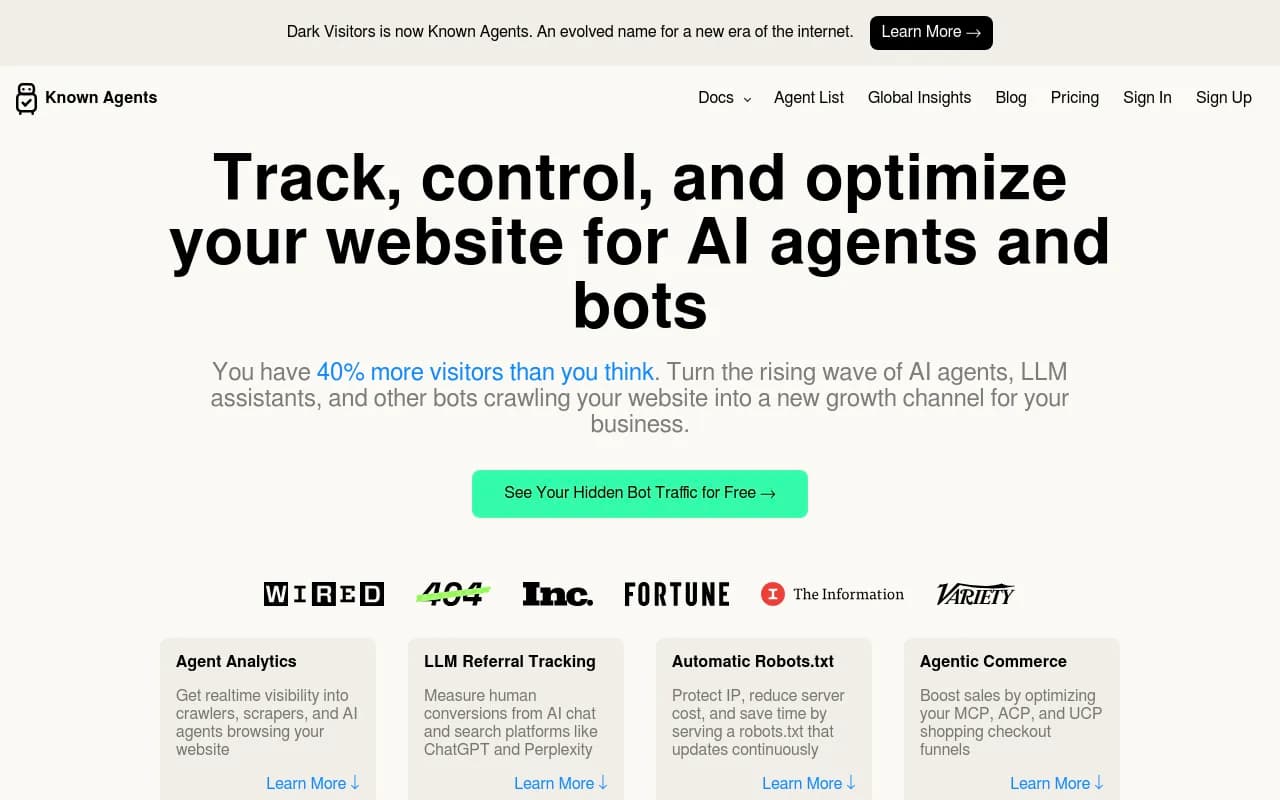
Check your robots.txt file. If you have blanket disallow rules for bots, you may be blocking AI crawlers without realizing it. Tools like DarkVisitors can help you understand which AI agents are hitting your site and what they're seeing.
Does your page answer a real question?
Most product pages describe. They don't answer. There's a difference.
"Premium noise-canceling headphones with 30-hour battery life" is a description.
"The best noise-canceling headphones for long flights, with 30-hour battery life and a foldable design that fits in a carry-on" is an answer to a question someone is actually asking.
Go through your top product pages and ask: what specific question does this page answer? If you can't identify one, that's your first problem.
Is your structured data in place?
Product schema markup (using Schema.org) is the clearest signal you can send to AI engines about what your page contains. At minimum, your product pages should have:
Productschema withname,description,image,brandOfferschema withprice,priceCurrency,availabilityAggregateRatingschema if you have reviewsReviewschema for individual reviews
This isn't just for Google anymore. AI models use structured data to extract product details quickly and confidently. Without it, they're guessing from your page text.
Rewriting product pages for AI citation
Here's where most guides stop at theory. Let's get specific.
The answer block: your most important 50 words
Every product page needs what you could call an "answer block" -- a 40-60 word paragraph near the top of the page that directly answers the most likely question a buyer would ask about this product.
It should include:
- What the product is
- Who it's for
- The one or two things that make it the right choice
Example for a standing desk:
"The FlexDesk Pro is an electric standing desk for home office users who need a quiet, fast motor and a stable surface for dual monitors. It adjusts from 24" to 50" in under 4 seconds, holds up to 300 lbs, and ships fully assembled."
That's 46 words. An AI model can extract that, verify it against the rest of the page, and cite it confidently. Compare that to "Transform your workspace with our premium standing desk solution" -- which tells an AI model nothing useful.
Spec tables: structured, not buried
Specifications should live in an HTML table, not a bulleted list of prose. Tables are easier for AI models to parse and extract. Each row should be a discrete, factual claim.
| Spec | Value |
|---|---|
| Height range | 24" – 50" |
| Motor speed | 1.5"/sec |
| Weight capacity | 300 lbs |
| Assembly required | No |
| Warranty | 5 years |
This format also makes it easy for AI models to compare your product against competitors when a user asks "compare FlexDesk Pro vs Uplift V2."
Use natural language questions in your content
AI models respond to prompts phrased as questions. Your product page content should mirror that. Add a short FAQ section that uses the actual questions people ask:
- "Is the FlexDesk Pro good for people with back pain?"
- "How long does delivery take?"
- "Can I use this desk with a treadmill?"
Each answer should be 2-4 sentences, direct, and factual. This isn't just good for AI citation -- it's also good for Google's AI Overviews and traditional featured snippets.
Don't ignore the "who it's for" framing
AI models often respond to persona-based queries: "best desk for a home office under $500" or "standing desk for someone with chronic back pain." Your product page should explicitly state who the product is designed for. This sounds obvious but most product pages don't do it.
A single sentence works: "Designed for home office workers who spend 6+ hours at a desk and want to reduce back and neck strain."
Building authority signals that AI models trust
Your product page is one data point. AI models want corroboration. Here's how to build the surrounding signal ecosystem.
Reviews: quantity, recency, and specificity
Generic five-star reviews ("Great product! Love it!") don't help AI models. Specific reviews that mention use cases, compare to alternatives, or describe outcomes do.
Encourage reviewers to be specific. Post-purchase emails that ask "what problem did this solve for you?" or "how does it compare to what you used before?" generate much more useful review content than "how would you rate this product?"
Platforms like Yotpo have documented that review content directly influences AI citation rates. The more your reviews read like mini-articles about the product's real-world performance, the more useful they are as AI training signals.
Get your product discussed outside your own site
Reddit threads, YouTube reviews, comparison articles on third-party blogs -- these are the external signals that give AI models confidence. A product that only exists on its own product page is a product with one source. A product discussed across ten sources is a product an AI model can recommend with confidence.
This means:
- Actively pursuing editorial coverage and product reviews
- Seeding Reddit discussions (genuinely, not spammy)
- Making it easy for YouTubers and bloggers to review your product (samples, affiliate programs, press kits)
Promptwatch tracks which Reddit threads and YouTube videos are being cited by AI models in your category -- useful for knowing where to focus your off-page efforts.

Build comparison content
"[Your product] vs [Competitor]" pages are citation gold. When someone asks ChatGPT "FlexDesk Pro vs Uplift V2," the AI model looks for a page that directly addresses that comparison. If you've written one, you have a real shot at being cited.
These pages should be honest and specific. AI models are good at detecting puffery. A comparison that acknowledges your competitor's strengths while clearly explaining where your product wins is more credible -- and more citable -- than a one-sided takedown.
Technical checklist for AI-ready product pages
Run through this before you call a page "optimized":
-
robots.txtallows GPTBot, ClaudeBot, PerplexityBot, and other AI crawlers - Product schema markup is implemented and validated (use Google's Rich Results Test)
-
AggregateRatingschema is present if you have reviews - Page loads in under 3 seconds (slow pages get deprioritized by crawlers)
- Answer block (40-60 words) appears in the first 200 words of body content
- Spec table uses proper HTML
<table>markup, not CSS-styled divs - FAQ section uses
FAQPageschema - Product images have descriptive
alttext with product name and key attribute - Page has been updated within the last 6 months (add a "last updated" date)
- Canonical URL is set correctly (no duplicate content issues)
- Internal links point to this page from relevant category and comparison pages
Tracking your AI visibility: the metrics that matter now
Traditional SEO metrics -- rankings, impressions, CTR -- don't capture what's happening in AI search. You need a different measurement framework.
The new KPIs for e-commerce AI visibility:
Citation rate: How often does your brand or product appear in AI-generated answers for relevant prompts? This is the AI equivalent of ranking position.
Prompt coverage: Which questions trigger your products? Which don't? The gap between where you appear and where you should appear is your optimization roadmap.
AI-referred traffic and revenue: Are sessions from ChatGPT, Perplexity, and other AI engines converting? What's the revenue per session compared to organic search?
Share of voice vs competitors: For a given product category, what percentage of AI recommendations go to you vs your competitors?
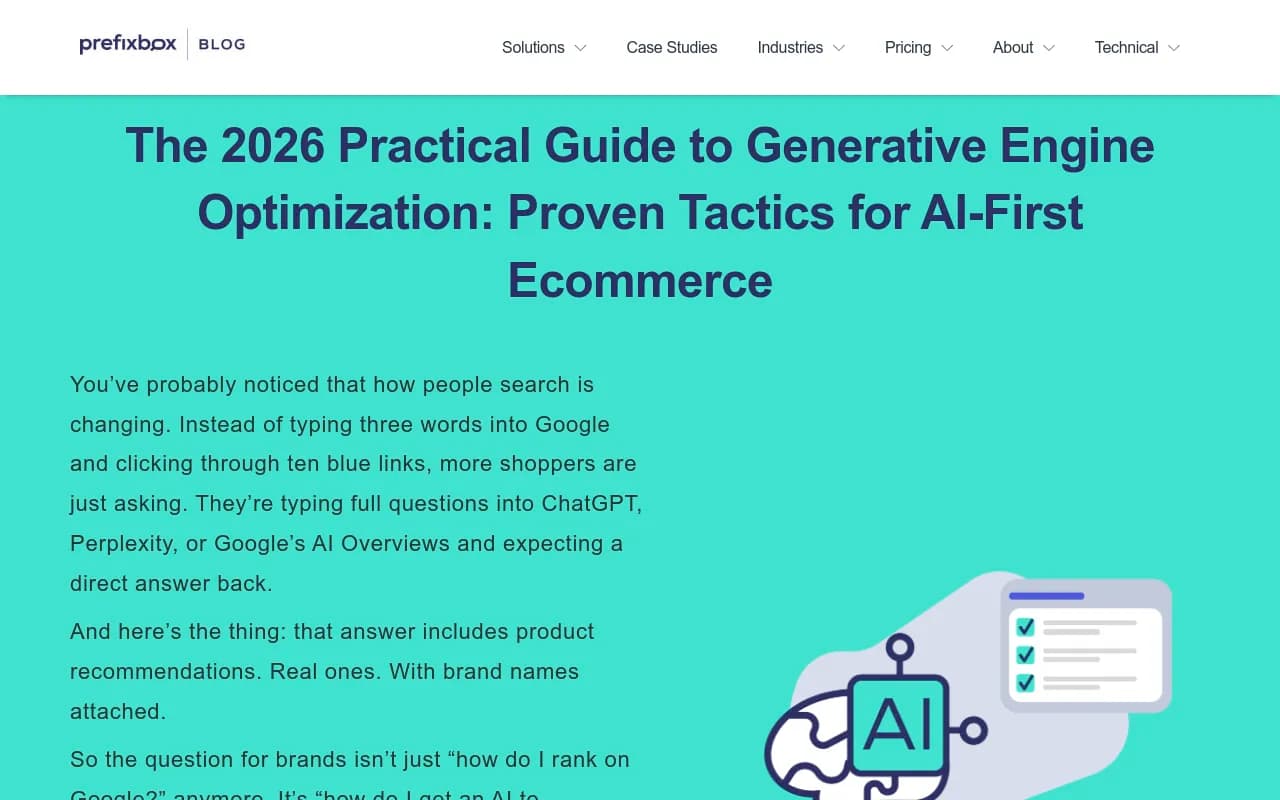
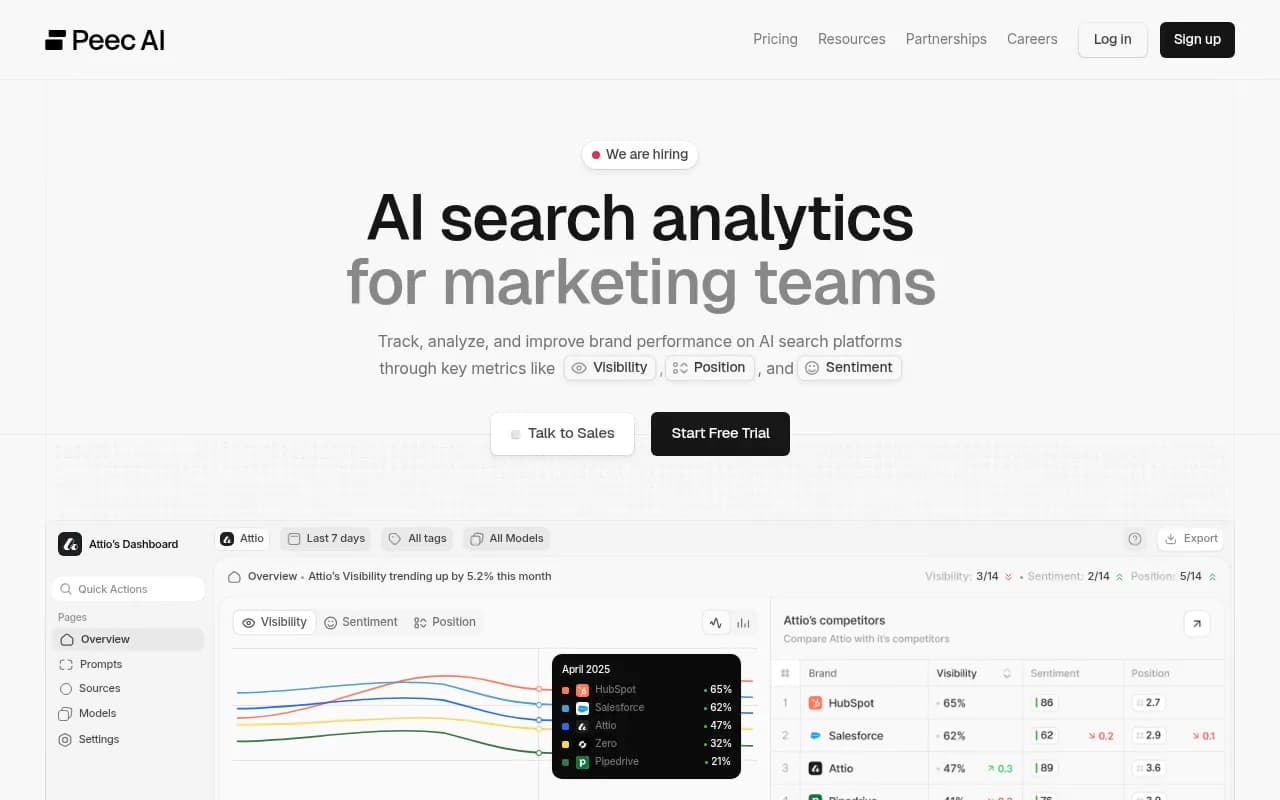
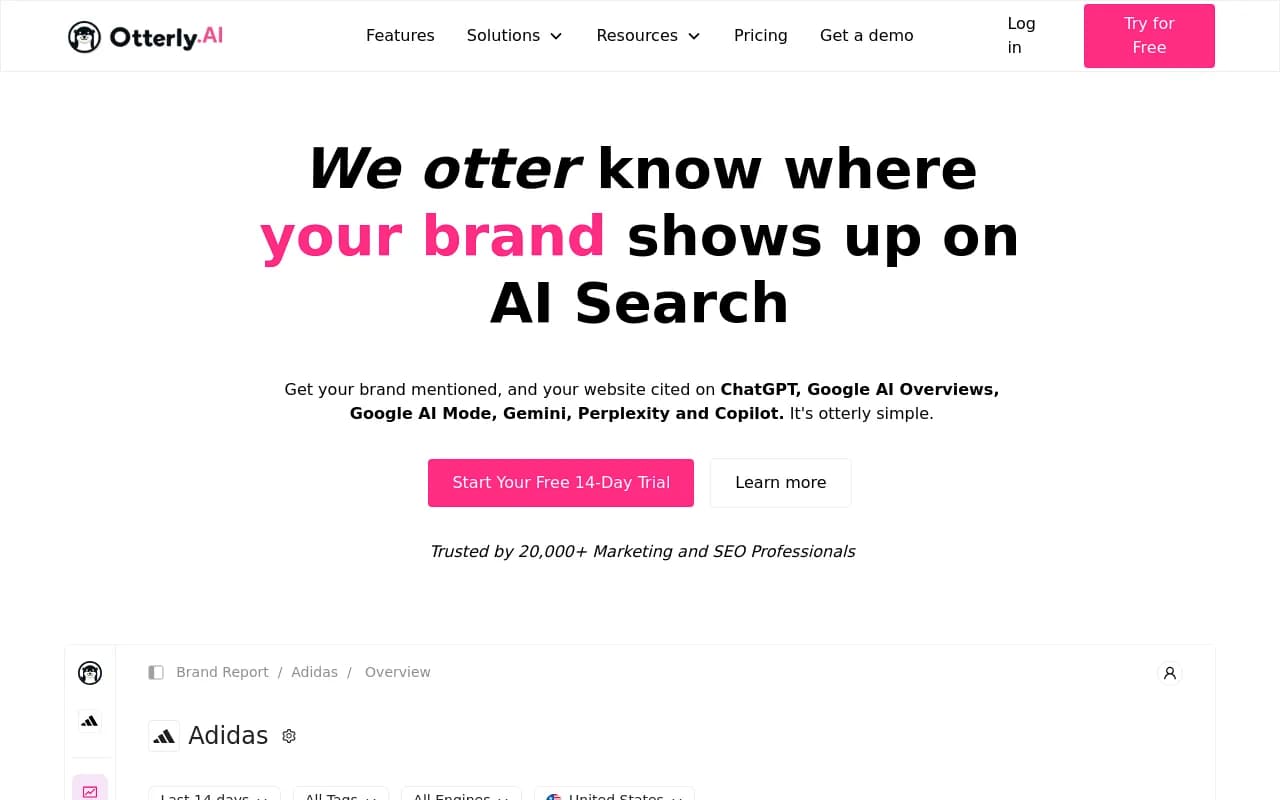
Several platforms now track these metrics. Here's a quick comparison of tools worth knowing:
| Tool | Citation tracking | Content gap analysis | AI traffic attribution | Crawler logs |
|---|---|---|---|---|
| Promptwatch | Yes | Yes | Yes | Yes |
| Profound | Yes | Limited | No | No |
| Peec AI | Yes | No | No | No |
| Otterly.AI | Yes | No | No | No |
| ZipTie | Yes | Yes | No | No |
| SE Ranking | Yes | No | No | No |
For e-commerce teams that want to go beyond monitoring and actually fix gaps, Promptwatch's Answer Gap Analysis shows exactly which prompts competitors are visible for that you're not -- and its built-in content agent can generate product-focused articles and comparisons grounded in real citation data.

Category-level content: the layer most e-commerce brands skip
Product page optimization is necessary but not sufficient. AI models also pull from category-level and editorial content when answering shopping queries.
If someone asks "what should I look for in a standing desk?", the AI model isn't going to cite your product page. It's going to cite a buying guide. If you don't have one, your competitor's guide gets cited instead -- and their product recommendations appear in the answer.
Every major product category you sell in should have:
- A buying guide that answers "what should I look for in [category]?"
- A "best [category] for [use case]" article for your top 2-3 use cases
- A comparison page for your product vs the top 1-2 competitors
These pages should link to your product pages and use consistent product names and descriptions. Consistency matters because AI models cross-reference multiple pages to build confidence. If your product is called "FlexDesk Pro" on your product page but "FlexDesk Professional Series" in your buying guide, that's a signal mismatch.
The agentic commerce angle: why this matters even more in 2026
Forrester forecasts that by 2028, "machine customers" -- AI agents that autonomously research and purchase products -- will be a significant commerce channel. We're already seeing early versions of this with ChatGPT's shopping features and Perplexity's commerce integrations.
For these agents, your product page isn't a browsing experience. It's a data source. The agent needs to extract product name, price, availability, specs, and shipping information programmatically. If that data is buried in JavaScript-rendered content or inconsistently formatted, the agent can't use it.
This is why technical legibility is becoming as important as human UX. A product page that looks beautiful but is hard for a machine to parse is going to lose business to a plainer page that's perfectly structured.
The brands building for this now -- clean structured data, machine-readable specs, consistent product naming across all pages -- are the ones who will have a real advantage when agentic commerce matures.
Where to start if you're doing this from scratch
If you're looking at a catalog of 500 product pages and wondering where to begin, here's a practical prioritization:
- Start with your top 20 revenue-generating products. These are worth the most and likely already have some authority signals.
- Run a prompt audit: manually ask ChatGPT and Perplexity the questions your customers ask, and see which products appear. Note the gaps.
- Fix structured data first -- it's the highest-leverage technical change you can make.
- Rewrite the opening paragraph of each priority page to include a clear answer block.
- Add or improve the FAQ section with real customer questions.
- Build one comparison page and one buying guide per priority category.
- Set up tracking so you can measure citation rate over time.
The prompt audit in step 2 is where a tool like Promptwatch earns its keep -- it automates what would otherwise be hours of manual querying across multiple AI models, and shows you exactly where your products are and aren't appearing.
The work isn't glamorous. But the brands that do it now, while most competitors are still treating AI search as a future problem, will have a compounding advantage that gets harder to close over time.