Key takeaways
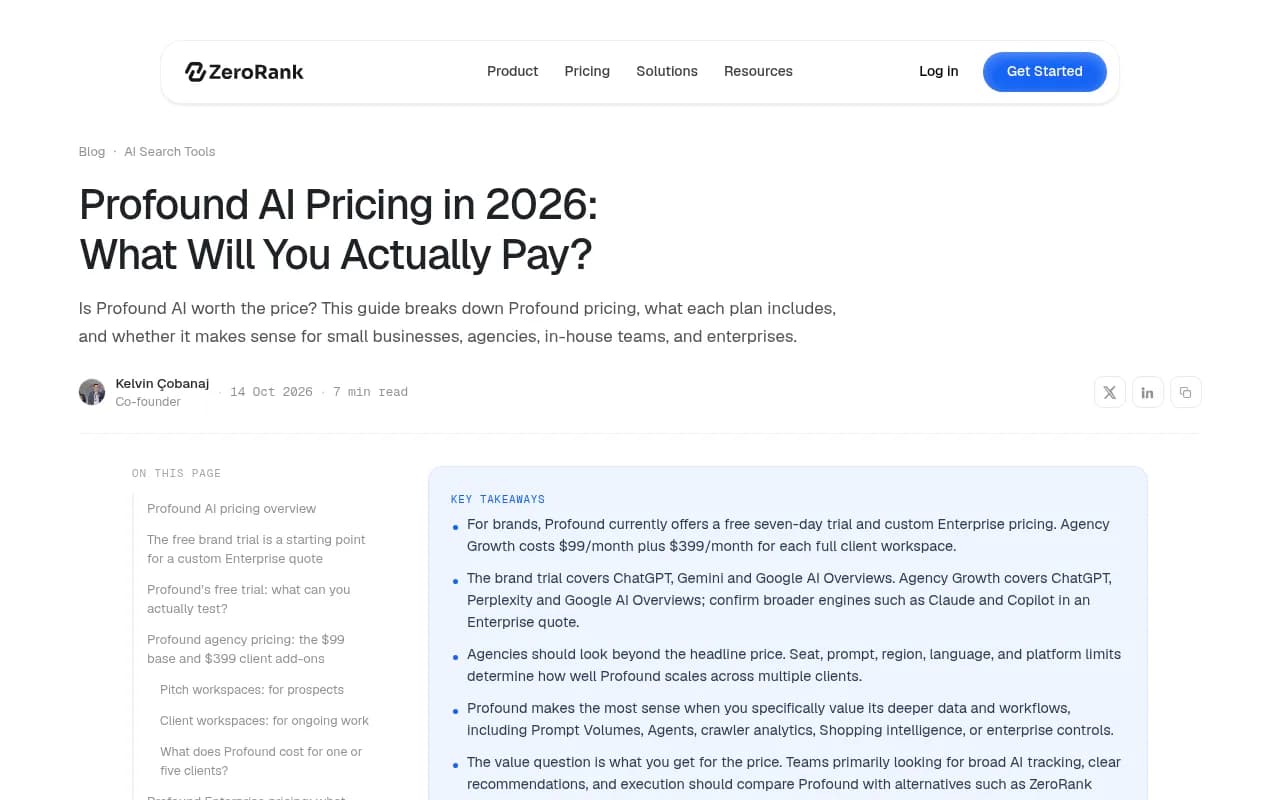
- Profound's brand plan is a free 7-day trial (50 fixed prompts a day on ChatGPT, Gemini and Google AI Overviews), then custom Enterprise pricing. There is no permanent free plan.
- Several alternatives let you start at no cost: AthenaHQ has a free tier, Alhena has a permanent free plan, Frase offers a free visibility checker and a 7-day trial, and 3RD gives 7 days with no card.
- Free trials differ more than their headlines suggest. The biggest differences are whether you can use your own prompts, how many AI models you get, and whether you can export data.
- Run every trial against the same prompt list in the same week, so you can compare results instead of impressions.
- Always confirm current terms on each vendor's pricing page. Free-credit amounts and trial paths change often, and third-party posts go stale fast.
Why free trials matter more now
A year ago you could look up Profound's price and decide. That is harder now. According to its pricing page as scraped for this guide, Profound shows two brand options: a free Trial and Enterprise at a custom price. Several third-party posts still mention a $99 plan or a "Growth" trial path. Treat those as stale. A separate self-serve Agency Growth plan exists at $99/month, with full client workspaces costing $399/month each, according to ZeroRank's pricing breakdown.
If you cannot get a number without a sales call, the next best thing is hands-on time with the product. That is why the free tier or trial is the real buying criterion for most teams evaluating AI visibility tools in 2026.
What Profound's own free trial actually gives you
Start with the baseline, because every alternative should be compared against it.
The Profound trial runs 7 days. You get 50 unique prompts a day across 3 engines (ChatGPT, Gemini and Google AI Overviews), 1 language, 1 region, unlimited seats, 5 Prompt Volumes searches and a small allotment of AI Marketer credits. You do not get ChatGPT Shopping, history, exports, an API, support or SSO.
The catch is prompts. Trial users get a recommended set based on their industry and cannot customize it. So you are testing Profound on Profound's idea of your market, not yours. That is fine for a demo and a poor way to judge whether the tool tracks the queries your buyers actually type.

Enterprise adds up to 9 engines, all-time history, CSV and JSON exports, an API and SOC 2 compliance. You only see those after the trial and a quote.
Free trials and free plans compared
Here is what the research turned up. Details move, so check each pricing page before you commit.
| Tool | Free option | Entry paid price | Can you use your own prompts? | Notes |
|---|---|---|---|---|
| Profound | 7-day trial | Custom Enterprise | No, recommended set only | 3 engines, no exports |
| 3RD | 7-day trial, no card | EUR 99/mo (EUR 84 annual) | Yes, on your brand | Up to 2 models on entry plan |
| AthenaHQ | Free tier | $295/mo Starter | Limited by credits | Sources disagree on free credits (300 credits vs $25) |
| Alhena | Permanent free plan | Check vendor | Snapshot on one engine | Good for a first look |
| Frase | Free AI Visibility Checker, 7-day trial | Check vendor | Checker is one-off | ChatGPT result with no signup |
| Peec AI | Not shown on pricing page | $95/mo Starter | Yes | Confirm trial in-app |
| Otterly.AI | Check vendor | $29/mo | Yes, 15 prompts | 4 engines at entry |
| Shop Mentions | 3-day trial | From $29/mo | Yes | Shopify only |
| Answer Socrates | Free check of GPT and AIO mentions | $19/mo | Limited | Cheapest paid tier in the roundup |
| Promptwatch | Free Explore plan; 7-day trial on monthly paid plans | $95/mo Essential | Yes | Free plan is ChatGPT only, 10 prompts |
One caution on AthenaHQ. One source says its free tier includes 300 credits, another says $25 of free credits. I could not reconcile these, so open the signup flow and read the number yourself.
The free options, one by one
AthenaHQ
The free tier is the reason AthenaHQ shows up in so many Profound-exit lists. You get a look at your visibility without a contract, and then there is a big step to Starter at $295/month with 11 engines. The jump is real, so use the free tier to decide whether the product earns that price.

3RD
3RD gives 7 days with no card, which removes the usual anxiety of remembering to cancel. Entry is EUR 99/month and covers up to 2 AI models, with 4 on Growth. If your team operates in several markets, note that multi-market support starts at the Pro tier (EUR 299). The pitch is a diagnosis, a ranked playbook and an agent that drafts the work for you to approve.
Peec AI
Peec's pricing page lists Starter at $95/month with 50 prompts, 3 models, daily tracking and unlimited users, and the page I checked did not mention a free trial. Another source quoted a different euro price, so verify the currency and amount. Open the signup and see whether you can test before paying.

Otterly.AI
Otterly is the budget pick at $29/month for 15 prompts across four engines. Fifteen prompts is thin, but for a small brand that wants a sanity check it is a cheap way to start. Lighter analytics are the tradeoff.

Alhena and Frase
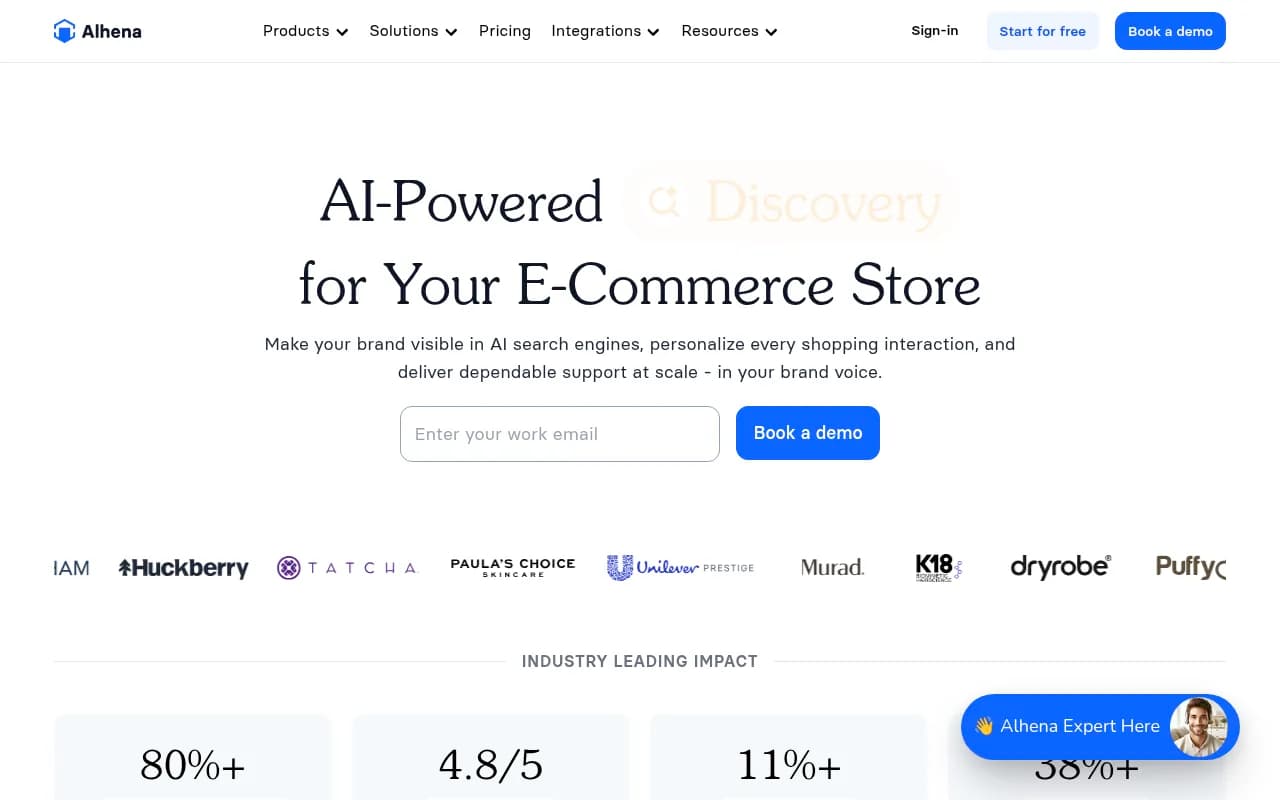
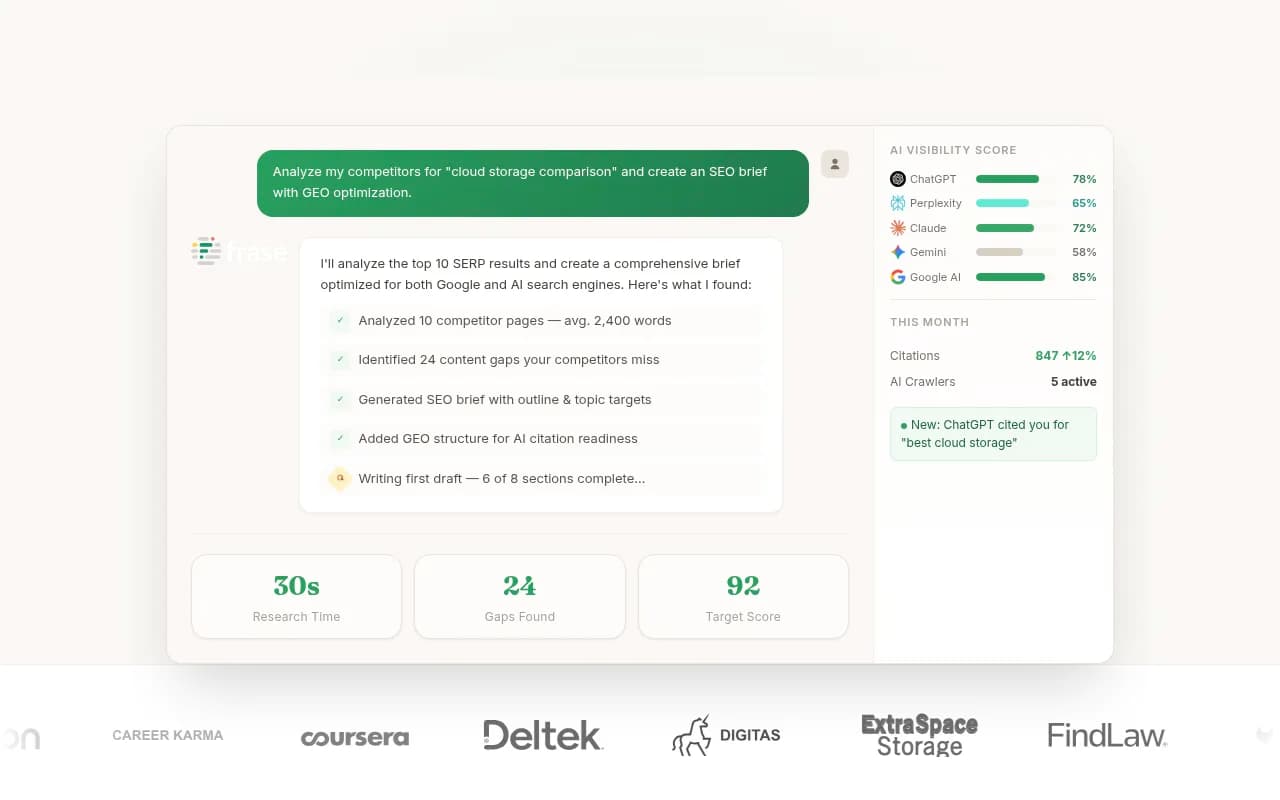
Both are good for a no-risk first look. Alhena's free plan gives a visibility snapshot on one engine and keeps it permanently free. Frase runs a free AI Visibility Checker that returns your ChatGPT result without signup, with an email unlocking Perplexity and Gemini. Neither replaces a tracker, but they tell you quickly whether you have a problem.
Promptwatch
Promptwatch has a free Explore plan (1 project, 10 prompts, ChatGPT only) and a 7-day free trial on monthly Essential and Professional plans, so you can run your own prompts rather than a preset list. Paid plans unlock all active models and add crawler logs, visitor analytics and a content workflow, which most pure trackers do not have. Confirm current terms at promptwatch.com/pricing.

Scrunch and Answer Socrates
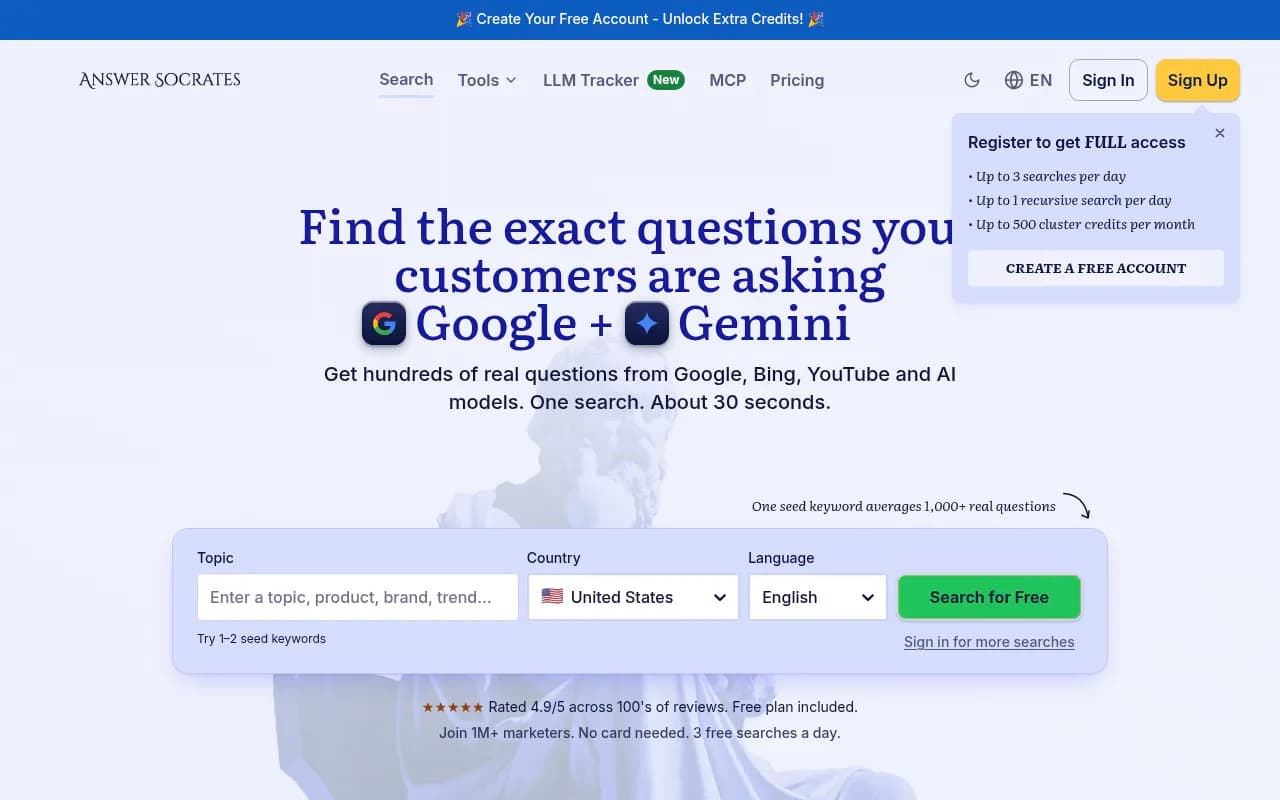
Scrunch starts around $300/month, so a trial matters more there. Answer Socrates is free to check GPT and AI Overview mentions and starts at $19/month. Both are covered in the roundups, but the details are thinner than for the tools above.
What to check before you start a trial
A trial is only useful if it answers the question you actually have. Before you sign up, check five things.
- Can you enter your own prompts? A fixed industry set tells you little.
- How many models are included? Free tiers often cover one to three. Engines behave differently: according to Promptwatch Data on average sources per response, ChatGPT cites about 5 sources per web-search answer, while Google AI Overviews and Perplexity cite about 10. A tool sampling only one engine shows you a partial picture.
- Does it track real interfaces or just APIs? Answers and citations in the user-facing product can differ from API output.
- Can you export data? Profound's trial cannot. If you want to keep your findings, this matters.
- What happens on day 8? Find out whether data disappears, whether the card is charged, and what the paid step costs.
A 7-day plan to test several tools fairly
Most people sign up, poke around, and decide on gut feel. Do this instead.
Before day one
Write a list of 20 to 30 prompts: some branded, some category questions, a few competitor comparisons. Save it in a spreadsheet. Pick three tools at most. More than that and you will not finish.
Days one to three
Enter the same prompts in each tool. Where a trial locks you to a preset list, note the mismatch and treat it as a mark against the tool. Let each run for a couple of days so you see more than one snapshot.
Days four to six
Compare results. Do the tools agree on whether you are mentioned? Where they disagree, run the prompt yourself in the real chatbot. Perplexity is the most stable engine in Promptwatch's data, citing almost exactly 10 sources per answer every day, so it works well as a test bench for before-and-after comparisons. Copilot swung from under 2 to nearly 17 sources over a few weeks, so be careful reading anything from it in a short window.
Day seven
Score each tool on four things: accuracy against your manual checks, how clear the next step is, export options, and the price at the tier you would actually need. Write the paid price down. Free trials are cheap, and the real cost is the plan you land on.
Which free option fits which team
| If you are | Start with | Why |
|---|---|---|
| A solo founder or tiny brand | Alhena free plan, Frase checker, Otterly | Low cost, quick answer |
| Leaving an expensive Profound quote | AthenaHQ free tier, 3RD trial | No card, real brand data |
| A Shopify store | Shop Mentions trial | Product-level tracking |
| A team that wants to act, not just track | Promptwatch trial | Own prompts plus content and crawler data |
| An agency | Agency plans with pitch workspaces | Test across several clients |
Common traps
Free tiers tend to cap prompts, models or history. That is reasonable. The trap is mistaking a capped sample for the full product. A one-engine snapshot cannot tell you your overall share of voice.
The second trap is stale pricing. If an article tells you Profound has a $99 plan, check the official page before building a budget around it.
Third, do not confuse a free checker with a tracker. Checkers answer "are we visible right now." Trackers tell you whether that changes after you publish something.
If you want to browse more options after this shortlist, the AI rank tracking directory and the GEO software directory list many more tools with their own trials.
Bottom line
Profound's free trial is real but narrow: 7 days, fixed prompts, no exports. Use it if you are curious about the enterprise product, but do not treat it as a fair test of your own market. For a more honest evaluation, run the same prompt list through two or three alternatives that let you use your own queries, then compare accuracy and price at the plan you would really buy.