Key takeaways
- In Promptwatch Data for August 2026, seven of the top eight domains ChatGPT cited for automotive prompts were marketplaces or research and review sites. Chevrolet.com was the only manufacturer in that group.
- Travel citations are far more fragmented. The 17 charted domains held only 4.18% of all travel citations (Sep 28 to Oct 4, 2026), so no single site owns the answer.
- Your own domain is only one of several places AI forms its opinion of you. Listings, reviews, and third-party guides matter as much.
- The practical job is a footprint audit across the sites AI already cites, followed by accurate data, stable model and destination pages, and ongoing measurement.
- Enterprise teams need tooling that tracks citations by source type, not just brand mentions.
Why this matters for automotive and travel specifically
Most AI visibility advice is written for SaaS companies, where the brand's own docs and a handful of review sites do most of the work. Automotive and travel are different. Both categories are dominated by intermediaries: buyers search for a car or a flight, and the sources AI trusts are the places that aggregate thousands of options.
That changes what "visibility" means. A manufacturer can have excellent product pages and still be invisible in the answer, because the answer is assembled from Autotrader listings, Edmunds-style research, and Reddit threads. A hotel group can rank first in Google for its own name and still lose the AI recommendation to a fare-deal site.
This guide walks through what the data shows for each vertical, what it implies for enterprise teams, and a practical process for adjusting. If you want to see the raw numbers yourself, start with Promptwatch Data.
What the automotive data shows
Promptwatch's ChatGPT citation share report for automotive, August 2026 covers real automotive prompts run through ChatGPT from Aug 1 to Aug 31, 2026. The headline findings are blunt:
- Autotrader.com leads with 5% of all automotive citations, with Cars.com next at 4.6%.
- Seven of the top eight domains are marketplaces or research and review sites.
- Chevrolet.com is the only manufacturer site in the top eight, ranking 4th at 2.62%.
- Reddit ranks 9th at 1.34%.
- Across all automotive citations (not just the top 31 domains), marketplaces and listings account for 14.65% and reviews and research for 12.62%. Together that is 27.27%, compared with 7.92% for manufacturer sites.
- Dealerships, community and news, and service and finance sources combined make up just 2.12%. One dealer group, birchwoodgroup.co.uk, squeezes into the top 31 at 0.28%.
Read that last pair of numbers again. Marketplaces and review sites collectively earn more than three times the citation share of every manufacturer website combined. If your automotive AI strategy is "improve our brand site," you are working on roughly a quarter of the problem.
Third-party signals point the same way
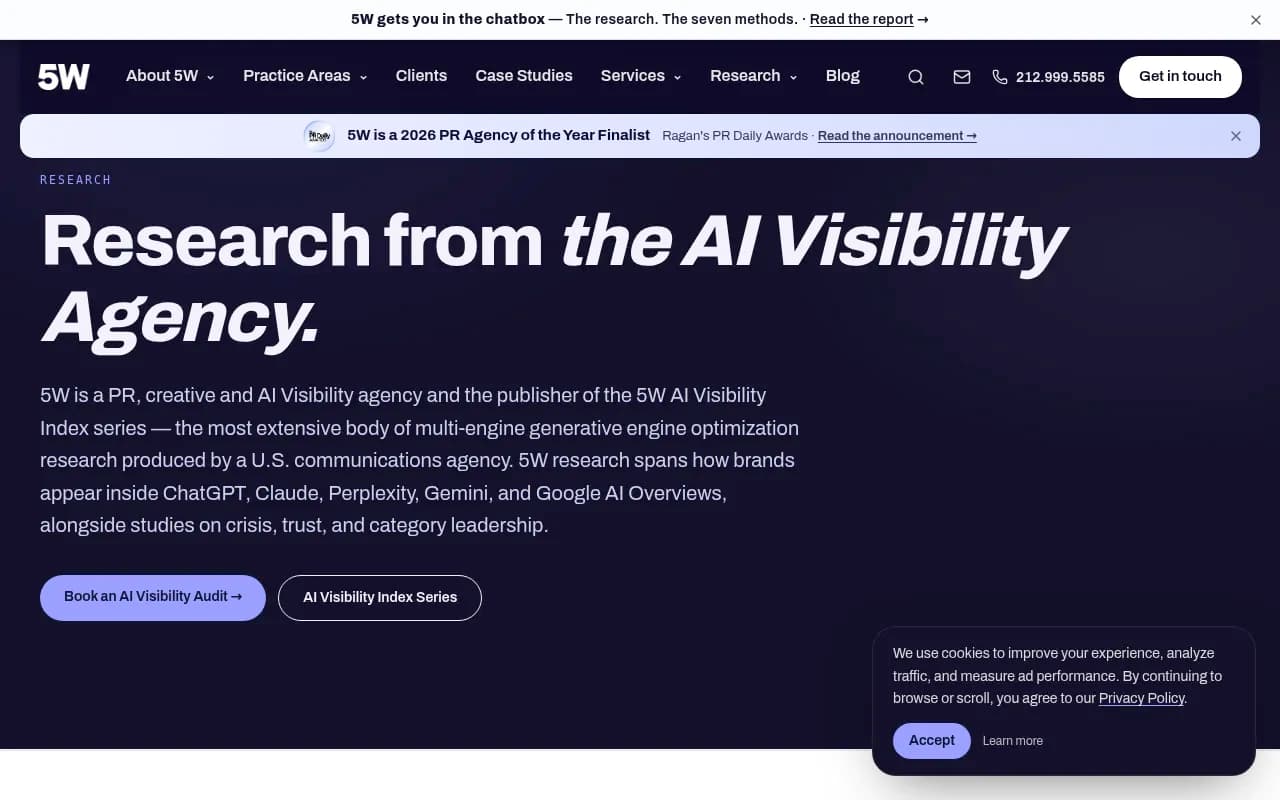
The pattern isn't unique to one dataset. 5W's AI visibility research reports that in automotive retrieval rankings, KBB, Edmunds, NHTSA, and IIHS anchor pricing and safety answers above Car and Driver and Motor Trend. I haven't verified 5W's methodology, and Promptwatch's scraped excerpt doesn't name KBB or Edmunds, but the direction matches: the sources AI trusts for price and safety questions are valuation tools and regulators, not magazines or brand sites.
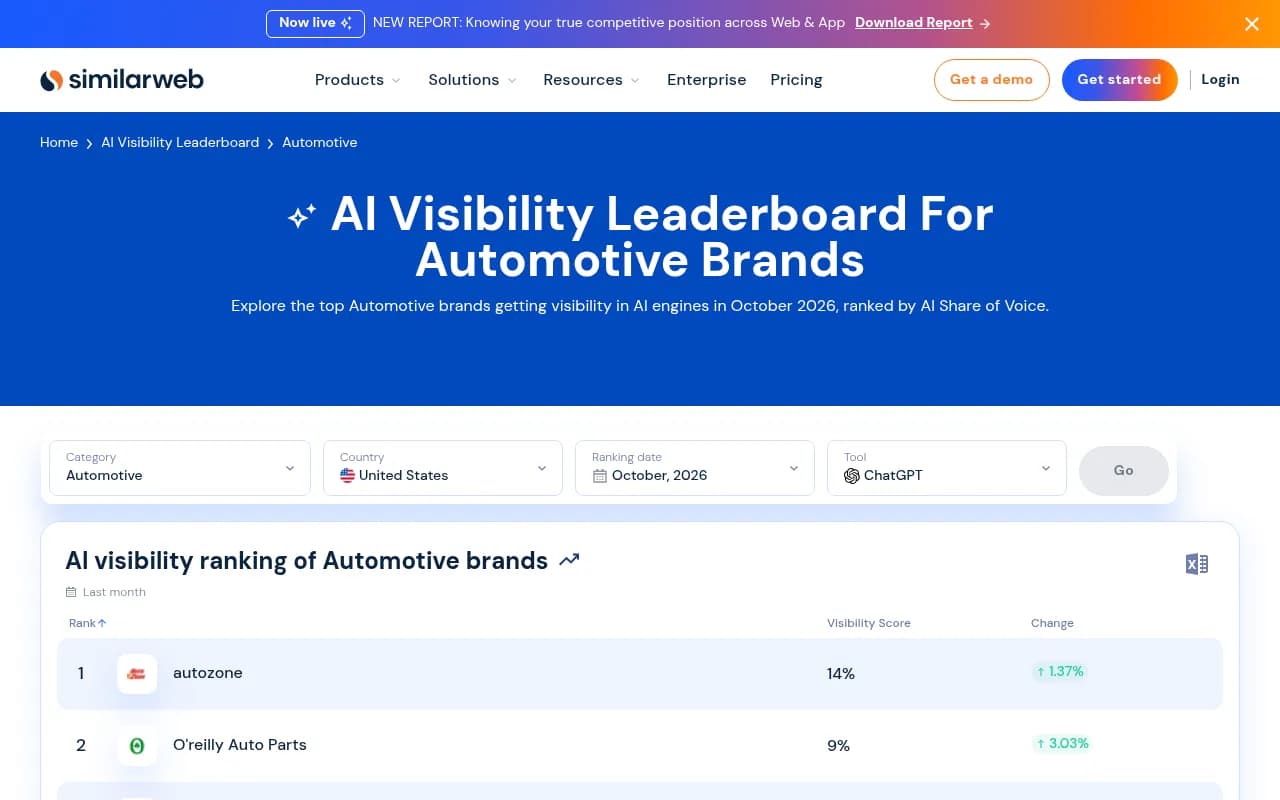
Similarweb's AI Visibility Leaderboard for automotive (October 2026, United States, ChatGPT) adds another angle. The top spots in that ranking go to AutoZone (14%) and O'Reilly Auto Parts (9%), followed by Toyota, Honda, and Consumer Reports. In other words, parts retailers and independent reviewers sit at the top of the board alongside the biggest manufacturers. Treat the leaderboard as a directional snapshot, since it measures a different thing from citation share, but it reinforces the same story.
What this means for OEMs and dealer groups
For OEMs, the implication is uncomfortable but useful. The prompts that matter ("best midsize SUV under $40k," "is the Tacoma reliable," "cost to own a hybrid") get answered mostly from sources you don't control. You influence them through data feeds, structured specs, review programs, and PR, not through your own homepage copy.
For dealer groups, the news is mixed. Dealer sites are a tiny slice of citations, but that is partly an opening: ChatGPT is not citing a lot of local dealer content, so complete profiles on DealerRater, Birdeye, and BBB, plus solid local pages, are cheap ways to appear where almost nobody else is.
What the travel data shows
Travel looks different. Promptwatch's October 2026 travel report covers organic travel prompts from Sep 28 to Oct 4, 2026:
| Domain | Share of travel citations |
|---|---|
| Skyscanner (.net and .com combined) | 0.78% |
| Going.com | 0.52% |
| Tripadvisor | 0.49% |
| Kayak | 0.37% |
| Airbnb | 0.27% |
| 0.27% | |
| Expedia | 0.13% |
Expedia sits level with Lonely Planet and Time Out at 0.13%. The long tail includes which.co.uk, trustpilot.com, travelstride.com, rvshare.com, viator.com, en.wikipedia.org, and even transportation.gov at 0.1%.
Two things stand out. First, a flight-deal service (Going.com) out-cites Tripadvisor, which is not what most travel marketers would have guessed. Second, the whole chart is small: those 17 domains together hold only 4.18% of travel citations. Travel answers are pulled from an enormous spread of sources, so there is no single site you can fix to win.
By source type, booking and search sites hold 2.42% of all travel citations, which is more than half of the charted total. Reviews and advice sit at 0.86%, guides and reference at 0.37%, Reddit at 0.27%, tours at 0.16%, and government at 0.1%.
The retrieval versus citation wrinkle
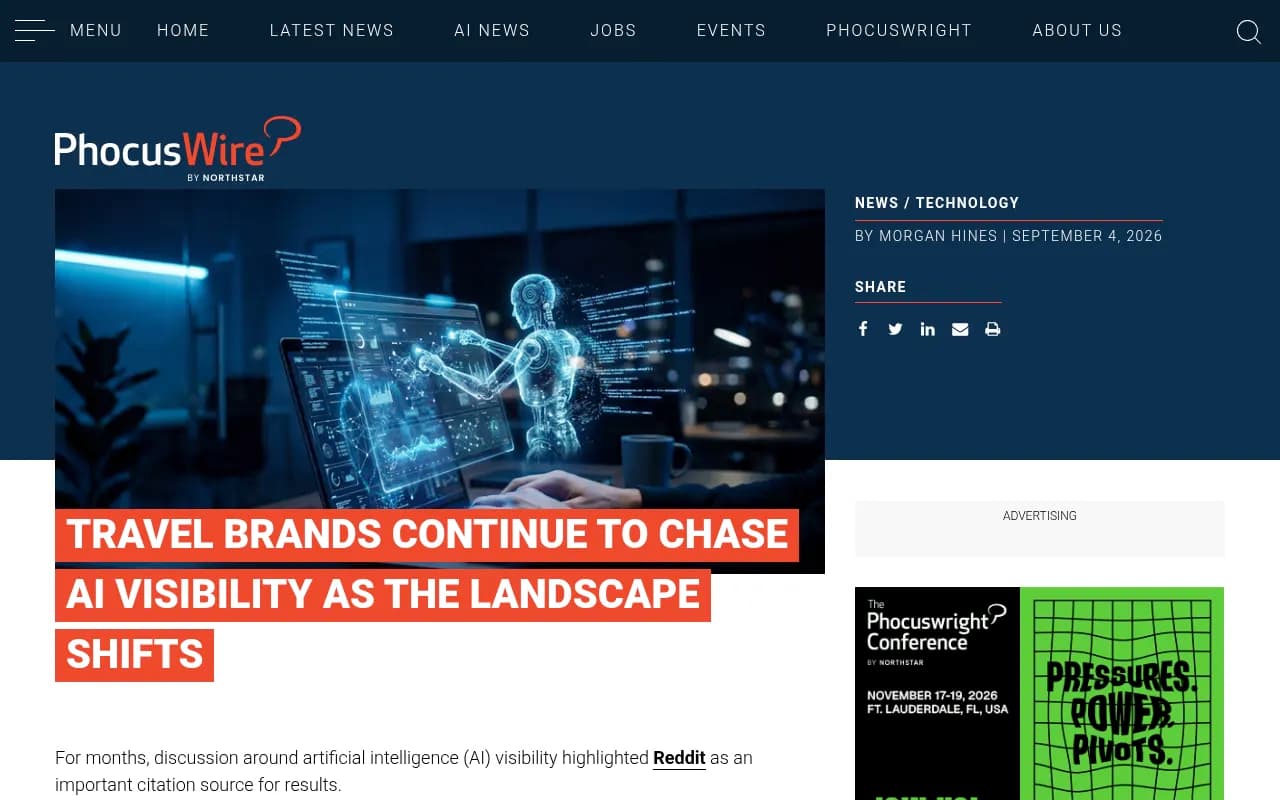
A PhocusWire piece on travel brands chasing AI visibility quotes a source saying that what has dropped are the citations visible in the answer, but not the retrieval: the model still reads the source, it just doesn't always name it. That quote is undated and I haven't verified it independently, but it matches a measurement problem every enterprise team runs into. If AI uses your page without showing a link, citation tracking undercounts your influence. This is where server-side evidence, such as AI crawler logs, becomes a useful second signal next to citation reports.
Why marketplaces win citations
It isn't a mystery, and it isn't unfair. Marketplaces and aggregators tend to have the properties AI retrieval rewards:
- They have a stable page for nearly every model, trim, route, or property.
- Their data is structured: price, specs, availability, ratings.
- They carry many sources of comparison on one page, which suits "best X for Y" prompts.
- They are updated constantly, which matters because Promptwatch Data on content half-life shows landing pages and docs stay cited longest while news loses half its pages within 36 days.
Product pages are also the most cited content type in ChatGPT overall, at 22.4% of citations (Sep 28 to Oct 4, 2026), per Promptwatch's content type report. Marketplaces are essentially product-page factories. Brands that only publish campaign pages and blog posts are playing a different game.
There is also a wider pattern in who gets cited. Promptwatch's domain rank report found sites with domain rank 46 to 75 earned almost half of ChatGPT citations in August 2026, while DR 91 to 100 fell to about 3%. Authority alone does not buy citations. Specificity does.
A framework for enterprise teams
1. Audit the footprint outside your own domain
Promptwatch's own recommendation for automotive is to audit your presence on listing and research sites before looking at your own domain. I agree with that ordering. List the 20 or 30 domains that show up most for your category prompts, then check what each says about you: is the inventory current, are specs right, is the pricing accurate, are reviews recent?
For automotive that list probably includes Autotrader, Cars.com, KBB-style valuation sites, and Reddit. For travel it includes Skyscanner, Kayak, Tripadvisor, Airbnb, Expedia, and deal sites in your market.
2. Fix the data, not the copy
The cheapest wins are data accuracy wins. Keep inventory, pricing, specs, and dealer information correct on the large marketplaces. Keep travel listings accurate on Skyscanner, Kayak, Airbnb, and Expedia. A wrong price on a feed that AI trusts will be repeated confidently in answers, and nobody on the model side will correct it for you.
The WSJ-published Adobe piece on brand visibility makes a related point: if your marketing promises aren't validated on review sites or in product documentation, you lack "signal alignment" and LLMs misunderstand your brand. That is a vendor-sponsored piece, so apply the usual salt, but the underlying logic is sound.
3. Build stable, specific pages
On your own domain, give every model and trim a permanent page with clear headings and structured specs. Build focused pages for pricing, ownership cost, and local availability questions. For travel, do the equivalent per destination, property type, and route. Stable URLs matter because citation history accrues to a page.
4. Earn the review and guide layer
Collect reviews on the platforms AI actually cites: Tripadvisor and Trustpilot for travel, DealerRater, Birdeye, and BBB for automotive. Aim for coverage in guides like Lonely Planet and Time Out, and in consumer outlets like Which?. This is digital PR with a measurable target, and it is where many brand teams under-invest.
5. Treat social and Reddit with realistic expectations
Reddit ranks 9th in automotive (1.34%) and sits at 0.27% in travel. But it is volatile. Promptwatch Data found reddit.com's share of ChatGPT citations fell from about 4% to 0.5% on August 14, 2026 (report), and ChatGPT drew only 0.46% of citations from social platforms in the week of Sep 28 to Oct 4, versus 12.2% for Google AI Overviews (report). The lesson: social strategy should be model-specific. Don't build a ChatGPT plan on Reddit, but don't ignore it for AI Overviews.
6. Monitor per model and per market
Automotive and travel are intensely local. A prompt run from Munich and one from Miami produce different answers, and local dealer or destination queries need location-aware tracking. Choose tooling that monitors real interfaces per country, language, and ideally city.
Tooling for enterprise AI visibility
The category is crowded, and the right pick depends on whether you need monitoring only or monitoring plus action. A few honest notes on what to look for in this vertical: citation tracking by source type, competitor and marketplace breakdowns, local targeting, crawler visibility, and a way to execute fixes.
Promptwatch is the platform I would start with for this kind of work, because it connects the citation data above to action. It tracks how ChatGPT, Gemini, Perplexity, Google AI Overviews, AI Mode, Copilot and others mention and cite a brand, classifies citations by source type (including directory and marketplace-style sites), logs IP-verified AI crawler hits so you can see retrieval even when a citation is not shown, and then helps teams act through its Action Board and Content Agent. Business-tier local GEO targeting lets you pin monitors to exact coordinates, which suits dealer networks and multi-location hospitality. Verify current pricing at promptwatch.com/pricing.

Other tools worth knowing, each with a different emphasis:

Profound is a well-known enterprise monitoring option.
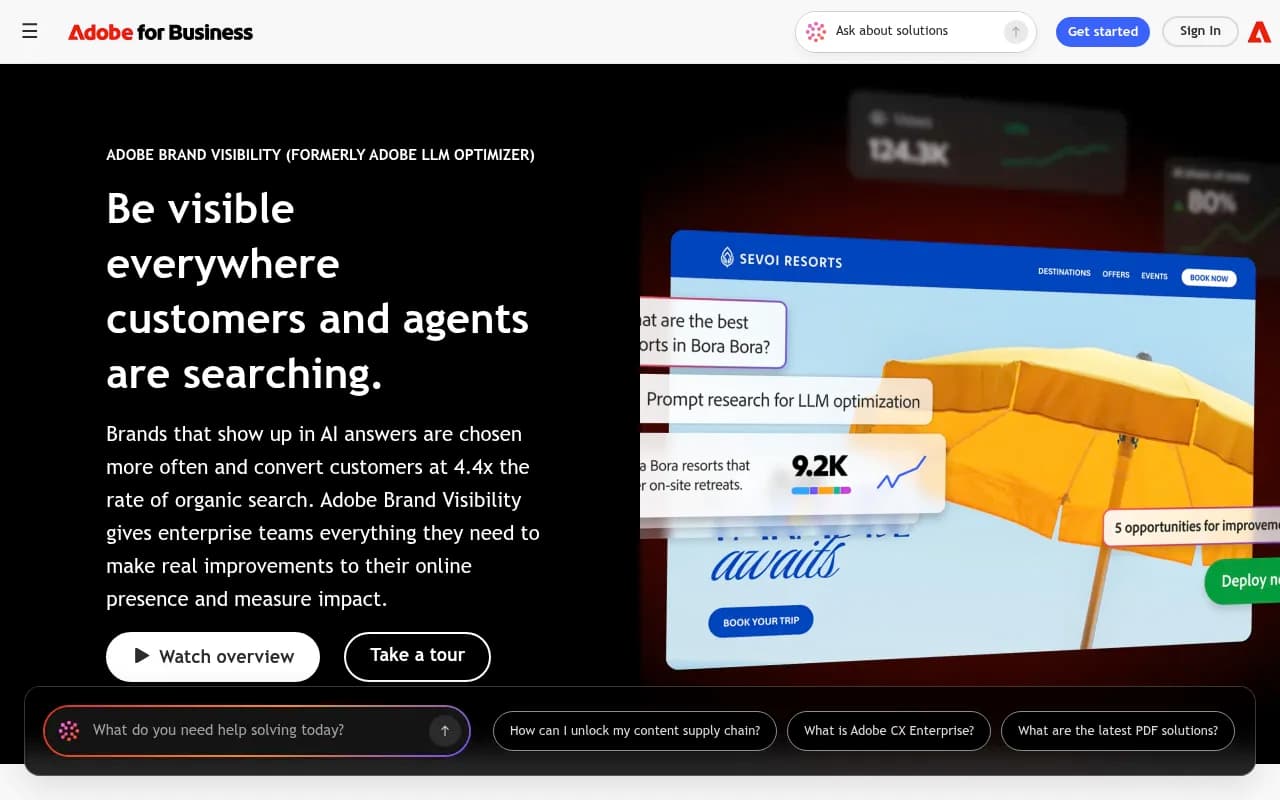
Adobe Brand Visibility suits teams already inside Adobe Experience Cloud and wanting citation tracking with edge-deployed fixes.
Bluefish targets Fortune 500 brand visibility.
Conductor adds persona customization to AI visibility tracking.
Similarweb is useful for the competitive benchmarking angle, like the leaderboard shown earlier.
Semrush One is a fit if you want AI visibility folded into an existing SEO suite.
Yext helps keep listings and local data consistent across the directories AI reads, which matters for dealers and hotels.
| Need | Tool type | Examples |
|---|---|---|
| Citations by source type plus action | End-to-end GEO platform | Promptwatch |
| Enterprise brand monitoring | Monitoring platform | Profound, Bluefish, Conductor |
| Adobe stack integration | Suite add-on | Adobe Brand Visibility, Adobe LLM Optimizer |
| Competitive benchmarking | Digital intelligence | Similarweb |
| Listings and local data accuracy | Listings management | Yext, BrightLocal, Reputation.com |
| Reviews and reputation | Review platforms | Birdeye, ReviewTrackers, GatherUp |
| SEO suite with AI layer | Traditional SEO | Semrush One, BrightEdge, seoClarity |
If you are comparing options broadly, the directory at bestgeosoftware.com lists GEO platforms side by side.
How to prioritize if you only have a quarter
Enterprise teams rarely get to do everything. A realistic 90-day order of operations:
- Weeks 1 to 2: build a prompt set from real buyer questions, per market and persona, and run baseline tracking.
- Weeks 2 to 4: map the top cited domains per prompt cluster and score your presence on each. Find wrong data first.
- Weeks 4 to 8: correct feeds and listings, claim and complete profiles, and fix crawl access on your own site.
- Weeks 6 to 12: publish stable model, trim, destination, and ownership-cost pages, and start a review and PR push targeted at cited guides.
- Ongoing: measure whether pages get crawled, cited, and clicked, and feed the losers back into the plan. Promptwatch's 90-day GEO program walks through a similar sequence.
What to be skeptical about
- Leaderboards differ in method. Similarweb's visibility score, 5W's retrieval rankings, and Promptwatch's citation share measure different things. Compare trends within one source rather than numbers across them.
- Single-week snapshots move. The travel data covers one week in October 2026, and the automotive data one month. Watch the trend lines, not one reading.
- Citation share is not revenue. A brand can be cited often and still lose the recommendation. Pair citation data with AI-referred traffic and conversions, bearing in mind that ChatGPT stopped sending a referrer on October 8, 2026, so tagged links and server-side signals matter more now.
Bottom line
In automotive, ChatGPT leans on marketplaces and review sites far more than on manufacturer sites. In travel, citations are spread so thinly that coverage across many source types beats winning any one. Either way, the work starts outside your own domain: accurate data on the sites AI trusts, reviews where they are collected, and stable pages on your own site for the questions buyers actually ask. Measure it per model and per market, and re-check monthly, because the sources change faster than your annual plan does.