Key takeaways
- A traditional rank tracker reports a position in an ordered list. A ChatGPT tracker reports a rate: how often your brand is mentioned or cited across many sampled answers. They are not interchangeable.
- "Accuracy" means different things for each. For Google trackers it is mostly location, device, timing and depth. For ChatGPT trackers it is sample size, prompt coverage, and whether the tracker reads the real interface.
- A single ChatGPT prompt tells you very little. Promptwatch Data found 47.6% of ChatGPT responses cite 10 or more domains (Sep 28 to Oct 4, 2026), so any one answer is a thin slice.
- ChatGPT's search behavior changes on OpenAI's side without notice, so a tracker's baseline can move overnight with no change on your site.
- No independent benchmark of ChatGPT tracker accuracy exists. Run your own 30-day side-by-side test.
The short version
People ask which kind of tracker is "more accurate." It is the wrong question. The two tools measure different things, and each has its own way of being wrong.
A Google rank tracker asks: where does this URL sit for this keyword, from this place, on this device, right now? There is a reasonably stable answer, even if it wobbles by location and time of day.
A ChatGPT tracker asks: when buyers ask questions like this, how often does ChatGPT name or cite us? There is no position 3. There is a frequency, and a frequency is only as good as the sample behind it.
That difference is why people argue past each other about accuracy. One camp is worried about a two-position gap between a tool and a manual search. The other is worried about whether a number built from one response means anything at all.
What a traditional rank tracker actually measures
A classic tracker, such as AccuRanker, Nightwatch or Advanced Web Ranking, simulates a search and records where your URL appears.

The output is a number between 1 and roughly 100. It is deterministic enough that two people searching from the same city on the same device a minute apart will mostly see the same order.
Where traditional accuracy breaks down
The errors here are well understood, and most are about context rather than the tool being wrong.
- Location. A tracker checking from New York and one checking from San Francisco can return different results for the same keyword.
- Device. Desktop and mobile SERPs can differ by several positions.
- Timing. Rankings move during the day, so two tools checking at different times see different snapshots.
- Tracking depth. If a tool only checks the top 100, a missing URL does not mean the page vanished.
- Search features. How a tool counts featured snippets, local packs and AI Overviews changes the reported position.
This is also why Google Search Console and a rank tracker rarely agree. Search Console shows an average position across all searchers and locations. A tracker records one check from one fixed spot. A GSC average of position 4 could be position 2 in one city and position 9 in another. Neither is wrong.
One of the research sources notes that review ratings are a poor stand-in for an accuracy test, since a good rating can reflect support or ease of use. Nightwatch has a 4.9/5 G2 accuracy rating in one comparison, but with only 43 reviews. I would treat that as a hint, not proof.
What a ChatGPT rank tracker actually measures
ChatGPT does not return ten blue links. It breaks a question into sub-searches, pulls sources, writes one answer, and names a handful of brands. So a ChatGPT tracker sends prompts on a schedule, parses the response, and records:
- whether your brand is mentioned
- whether your URL is cited as a source (a different thing; ChatGPT can name a brand while citing someone else's page)
- where in the answer you appear and how you are described
- who appears alongside you, which gives share of voice
The number you get out is a rate across many samples, not a rank.
Where ChatGPT tracker accuracy breaks down
The error sources are different, and in some ways harder to see.
Sample size. The same prompt can produce different answers on consecutive runs. A tracker that runs each prompt once per cycle is reporting one coin flip. Several vendors recommend running each prompt multiple times per cycle and averaging, with TopCited suggesting 3 to 10 repetitions.
Crowded answers. Promptwatch Data's unique domains report found 47.6% of responses with citations cite 10 or more domains, and 66.1% cite at least 8. For organic prompts, 52.5% cite 10 or more. With that many sources per answer, whether you are in or out on one run is noisy. Their advice is to measure across many organic prompts, not just one.
Brand-specific prompts behave differently: only 21.3% cite 10 or more domains, and 40.7% cite five or fewer. If a tracker mixes branded and non-branded prompts into one score, the number is hard to interpret. One review flagged that ProRankTracker cannot separate the two.
Platform drift. This one has no real equivalent in classic rank tracking. Promptwatch Data's query fanout report shows average fanouts per response falling from about 2.15 in early December to about 1.84 by early March, with average fanout query length dropping from roughly 117 characters to the high 80s. After a data gap, fanouts returned in April at exactly 1.0 per response.
Then on August 8, 2026, ChatGPT started using the site: operator at scale. The share of fanout queries using it jumped from 0.37% to 16.8% in one day, and average fanouts per response rose from about 1.08 to about 1.83. Nothing changed on anyone's website. A tracker's baseline moved anyway.
If you saw a visibility swing around that date, that is a reasonable first suspect before you rewrite any content.
Real interface vs API. User-facing ChatGPT answers and citations can differ from what the API returns. A tracker built on API calls may report something your buyers never see. Whether a tool reads the actual interface is worth asking directly. Searchable's comparison also splits tools by which surfaces they sample: model-only, ChatGPT Search, ChatGPT Shopping, and fan-out query visibility.
Side-by-side: where accuracy differs
| Dimension | Traditional rank tracker | ChatGPT rank tracker |
|---|---|---|
| Unit of measurement | Position in an ordered list | Mention or citation rate across samples |
| Determinism | Mostly stable for a given location, device, time | Probabilistic; same prompt gives different answers |
| Main accuracy risk | Location, device, timing, depth | Sample size, prompt coverage, interface vs API |
| Ground truth | Manual search (imperfect, but comparable) | None; any single manual check is one sample |
| Source of drift | Google algorithm updates, SERP features | Model changes, fanout behavior, retrieval changes |
| Comparing with analytics | Search Console (averaged position) | Visitor analytics, citation clicks, crawler logs |
| Minimum useful cadence | Daily for active work, weekly for trends | Weekly at minimum, daily for active programs |
| Independent accuracy benchmarks | Some (reviews, G2 scores) | None found as of late 2026 |
Why the two don't predict each other
It is tempting to assume that ranking well on Google means ChatGPT will name you. The evidence says otherwise. One source (Leapd) claims only 12% of URLs cited by ChatGPT overlap with Google's top 10 for the same query. I could not verify that figure independently, so take it as directional.
Promptwatch Data's domain rank report points the same way: sites with domain rank 46 to 75 earned almost half of ChatGPT citations in August 2026, while DR 91 to 100 fell to about 3%. Authority behaves differently when a model is picking sources.
Practically: you need both measurements. A Google tracker will not tell you whether ChatGPT says your name, and a ChatGPT tracker will not tell you whether you lost a ranking after a core update.
How to test accuracy yourself
There is no independent benchmark for ChatGPT tracker accuracy. TopCited says as much. So do your own, and do it for both kinds of tool.
For a traditional tracker
- Pick 20 to 30 representative queries.
- Match location, language, device and search engine across every tool you are comparing.
- Record check times, and compare the ranking URL as well as the position.
- Inspect SERP snapshots where tools disagree. A manual search is a useful check, but it has its own settings and timing differences. Do not treat it as ground truth.
- Check tracking depth before you read anything into a missing result.
For a ChatGPT tracker
- Build a prompt set of 30 to 50 prompts. Cover category questions, comparisons and how-to questions, and keep branded and non-branded prompts separate.
- Run the same set through two candidate tools for 30 days.
- Compare citation rates, competitor attribution and sentiment labels for consistency, not just the headline score.
- Ask each vendor how many samples they take per prompt, which surfaces they read, and whether they show fan-out queries.
- Mark known platform change dates (like August 8, 2026) on your charts so you do not blame yourself for a platform shift.
- Cross-check against something the tracker does not control: AI-referred visits in your analytics and AI crawler hits in your server logs.
That last step matters most. A tracker can be internally consistent and still wrong about your business. Traffic and crawl data are the closest you get to an external check.
Picking tools for each job
Some platforms bundle both types. Others do one well. Here is how I would sort the options from the catalog.
| Need | Tools worth a look |
|---|---|
| Precise Google positions at scale | AccuRanker, Advanced Web Ranking, Nightwatch |
| Google tracking plus AI visibility in one tool | SE Ranking, Semrush, Nightwatch, SISTRIX, SEOmonitor |
| Budget ChatGPT monitoring | Otterly.AI, Rankscale, ZipTie |
| ChatGPT tracking with fix-it workflow | Promptwatch, Profound, Searchable |
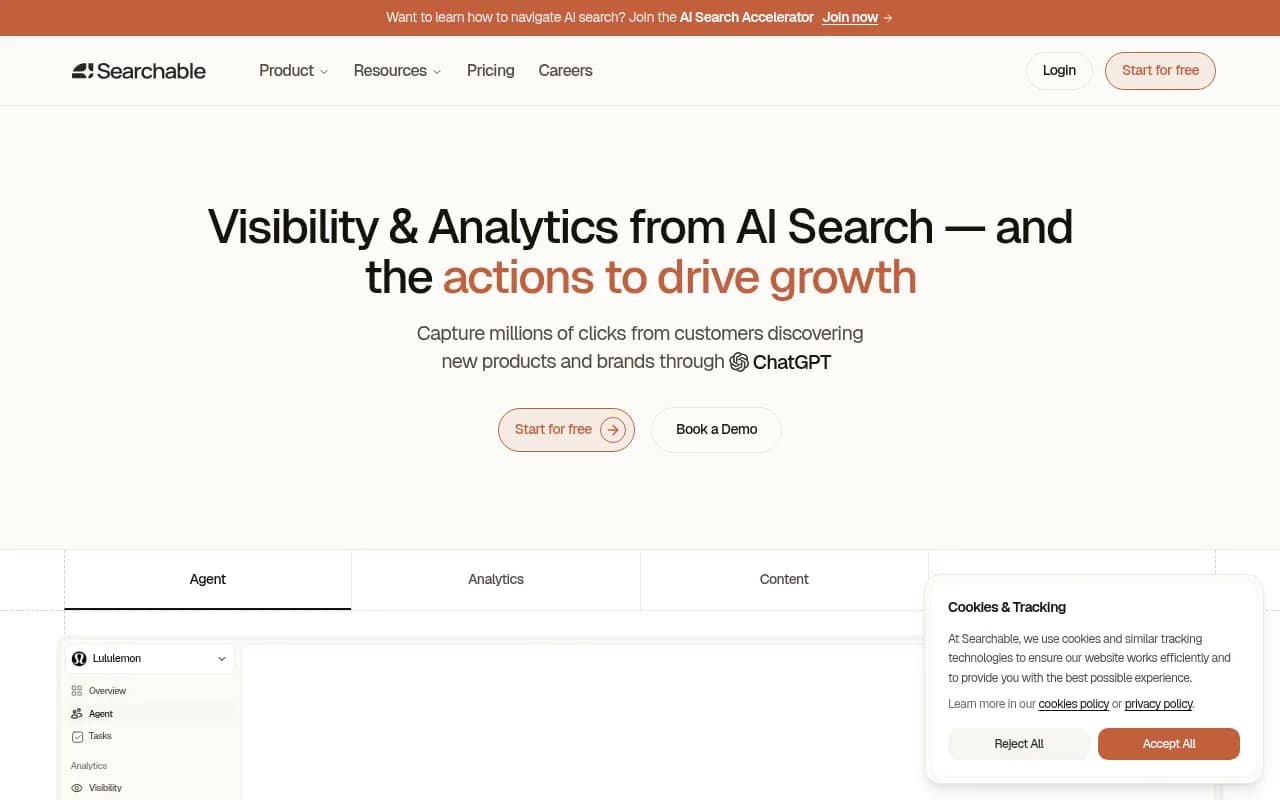
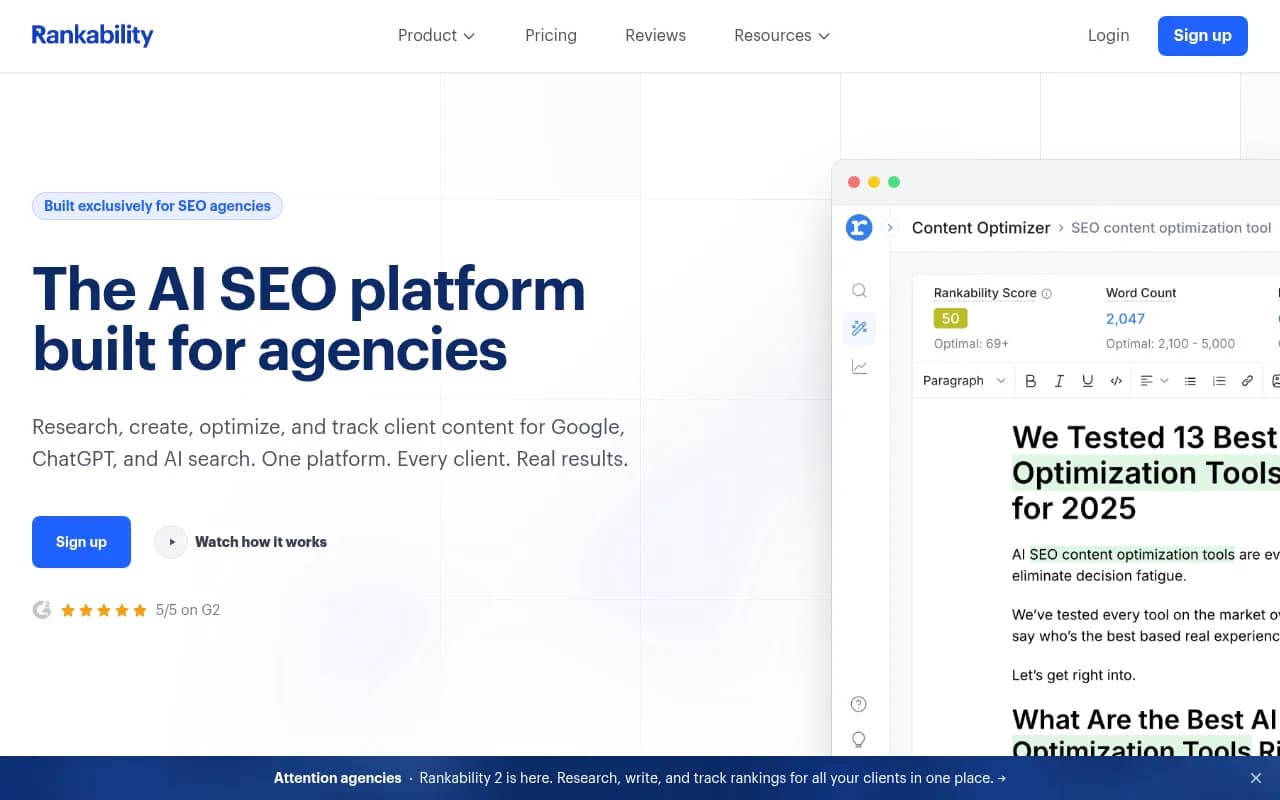
| Multi-sample ChatGPT tracking with fan-out visibility | Searchable, Rankability, Rankscale |



Hybrid tools are convenient, and I like having one invoice. The catch is depth. A Google-first suite that bolts on AI tracking often uses a fixed prompt set and shallow AI-specific data, so check how it samples before trusting the AI number.
Where Promptwatch fits
If your problem is the ChatGPT side, an end-to-end platform such as Promptwatch is built around the issues above. It collects answers from the real ChatGPT interface (not just the API) in the country and language you pick, shows query fan-outs, and pairs visibility with IP-verified AI crawler logs and AI-referred visitor analytics, which gives you that outside check on the tracker's numbers. It also has a Content Agent and Action Board for fixing the gaps it finds, rather than stopping at a dashboard. You can try it with the 7-day free trial or run the free AI visibility report first. Confirm current plans at promptwatch.com/pricing.

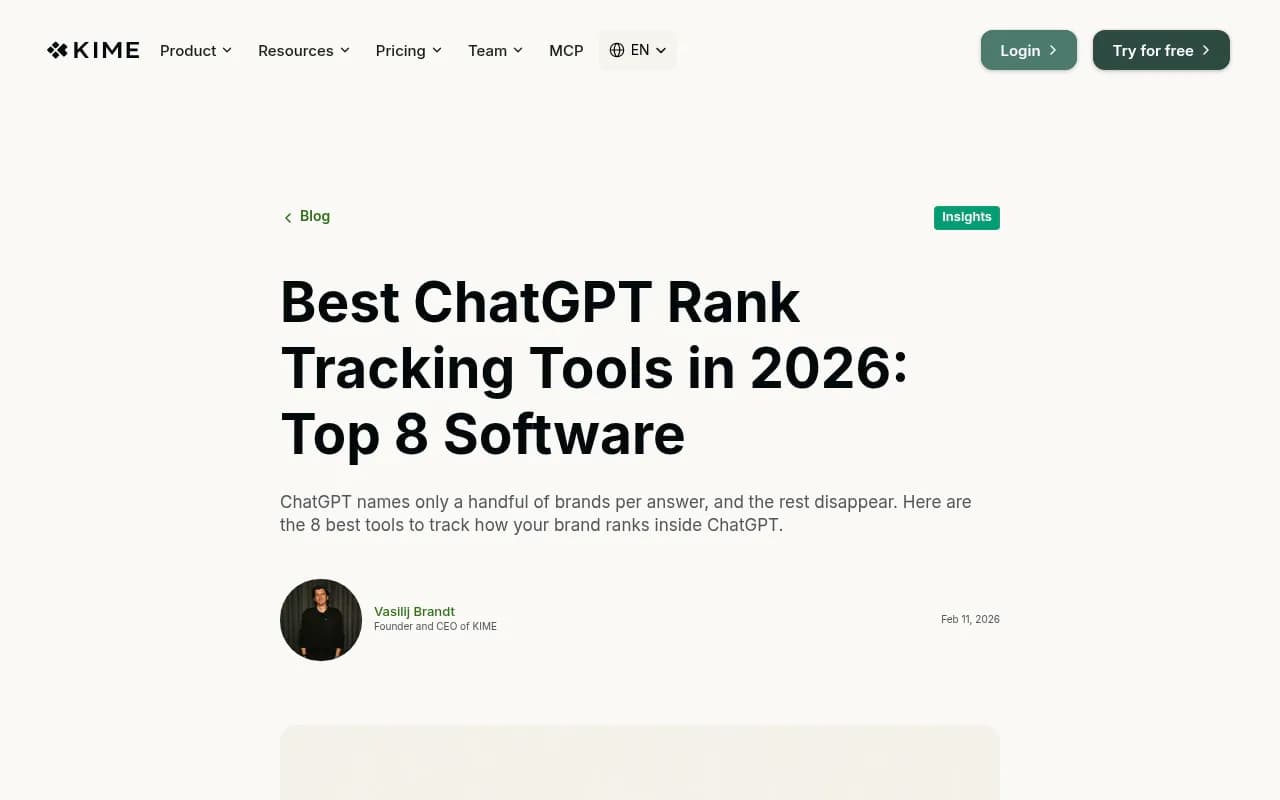
Vendor roundups like this one are useful for feature lists, but they are written by tools that compete in the category. Read them with that in mind, and note that claims like "60% of organic traffic now originates from AI responses" from one such roundup are unsupported.
For wider browsing, the AI rank tracking directory lists many more options.
Metrics to read together
Because there is no position number in ChatGPT, you need a small set of metrics, read as a group:
- Mention rate across a prompt set (not a single prompt)
- Citation rate, which is separate from mentions
- Share of voice against named competitors
- Where in the answer you appear
- Sentiment, or how the answer describes you
Low share of voice usually means a coverage problem. Mentions without citations often mean your own pages are not being read or are not the best source. If you are unsure about the difference, the Promptwatch Academy guide on citations vs mentions covers it.
Common mistakes
Treating one check as a result. Opening ChatGPT, asking one question and concluding you are invisible is the AI version of checking one keyword once. It is a sample of one.
Comparing numbers across tools. One tool's 40% and another's 40% are probably not the same measurement. Different prompts, different samples, different surfaces.
Ignoring the model's calendar. Platform changes shift baselines. Keep a log of dates when behavior changed, since the data shows it does so in steps.
Using keyword-to-heading maps from last quarter. The fanout data suggests the searches ChatGPT runs get shorter and fewer over time, so mappings built on old query shapes can go stale.
Dropping the traditional tracker. You still need Google positions. Google organic is still where a lot of the input comes from, and ChatGPT's retrieval draws on web indexes. Both numbers answer different questions.
A practical setup
For most teams, I would run this:
- One traditional tracker with daily checks on your core keywords, set to a fixed location and device, plus Search Console for averages and discovery.
- One ChatGPT tracker with multi-sample prompts, branded and non-branded prompts separated, run at least weekly.
- Analytics and crawler data as the sanity check on both.
- A short change log of platform events beside your charts.
- A 30-day side-by-side before you commit to an annual plan on any AI tracker.
Skip the hunt for the single most accurate tool. Instead, ask each tracker how it is wrong, and whether it makes that visible to you. The ones that show their sample sizes, snapshots and caveats are the ones I would trust.
The GEO tooling space moves quickly, so the GEO software directory is a decent place to recheck options before you renew.
FAQ
Is a ChatGPT rank tracker less accurate than a Google rank tracker?
Not exactly. They have different error profiles. A Google tracker is deterministic but sensitive to location, device and timing. A ChatGPT tracker deals with answers that vary run to run, so its accuracy depends on how many samples it takes and which interface it reads.
Can I use my Google rank to predict ChatGPT visibility?
Not reliably. Overlap between Google's top results and ChatGPT's cited sources looks low in the data available, and mid-authority sites earn a large share of ChatGPT citations. Track both separately.
How many times should a tracker run each prompt?
More than once. Vendors in the research suggest 3 to 10 runs per cycle, averaged. Across prompts, Promptwatch's advice is to measure many organic prompts, since nearly half of cited answers include 10 or more domains.
Why did my ChatGPT visibility change overnight?
It may be the platform, not you. On August 8, 2026, the share of ChatGPT fanout queries using the site: operator went from 0.37% to 16.8% in a day. Check the date of your change against known platform shifts before editing content.
Do I need both tools?
If both channels matter to you, yes. One tells you where your pages rank. The other tells you whether the answer names you.