Key takeaways
- Most brands fail at "Layer 1" -- ChatGPT doesn't recognize them as a real entity at all. Fix that before anything else.
- AI visibility has three layers: entity recognition, ranking in category responses, and being recommended over competitors. You need to test all three.
- The prompts below are copy-paste ready. Swap in your brand name, category, and competitors.
- Running these manually is fine for a one-time audit. For ongoing tracking, you'll want a dedicated tool.
- What you find in this audit should directly inform your content strategy -- the gaps are fixable.
Here's something most marketing teams don't know: ChatGPT might have completely wrong information about your brand. Or worse, it might not know you exist at all.
That's not a hypothetical. A 2026 audit of 40 SaaS brands by Friction AI found that only 12 of them (30%) cleanly passed basic entity recognition tests across ChatGPT and Claude. The other 28 had some combination of missing information, inaccurate descriptions, or no recognition at all. And upgrading from GPT-4o to GPT-5 didn't help -- the same 12 passed under both models. The bottleneck isn't the model. It's whether the model has reliable data about your brand in the first place.
This guide gives you 20 prompt templates organized into four diagnostic layers. Run them yourself in ChatGPT right now. The whole audit takes under an hour, and what you find will probably surprise you.
Why this matters more than you think
Search behavior has shifted fast. When someone asks ChatGPT "what's the best project management tool for remote teams" or "which CRM should I use for a 10-person sales team," they're not getting a list of links. They're getting a recommendation. And if your brand isn't in that recommendation, you don't exist for that buyer.
The difference between traditional SEO and AI visibility is stark. In Google, you can rank on page 2 and still get some traffic. In ChatGPT, if you're not mentioned, you get zero. There's no page 2.
This is why the audit below is structured as three sequential layers. You can't skip to "why isn't ChatGPT recommending me" if the model doesn't even know who you are.
Layer 1: Entity recognition (prompts 1-5)
These five prompts test the most basic question: does ChatGPT know your brand exists, and does it have accurate information about you?
This is where most brands fall apart. If ChatGPT gets your founding year wrong, your product description wrong, or confuses you with a competitor, everything downstream is compromised.
Prompt 1: Basic brand recognition
What is [YOUR BRAND NAME]? Describe what the company does, who it serves,
and what makes it different from competitors. Be specific about the product
or service category.
What to look for: Does ChatGPT know you exist? Is the description accurate? Does it confuse you with another brand? If the response is vague or wrong, that's a Layer 1 failure.
Prompt 2: Founding and factual accuracy
Tell me about [YOUR BRAND NAME]: when was it founded, who founded it,
where is it headquartered, and what is its core product or service?
What to look for: Factual accuracy on founding date, founder names, and location. Errors here suggest your brand's structured data (Wikipedia, Wikidata, Crunchbase, LinkedIn) needs updating.
Prompt 3: Product description accuracy
Describe the main features and use cases of [YOUR PRODUCT/SERVICE NAME]
by [YOUR BRAND NAME]. Who is it designed for and what problem does it solve?
What to look for: Does the feature description match your actual product? Is the target customer accurate? Outdated or wrong product descriptions usually mean your public documentation and press coverage haven't been updated recently.
Prompt 4: Brand sentiment check
What do customers generally say about [YOUR BRAND NAME]? What are the
most common compliments and criticisms? What is the brand's reputation in
its industry?
What to look for: Is the sentiment broadly accurate? Are there negative associations that surprise you? This tells you what signals ChatGPT is pulling from -- reviews, Reddit threads, press coverage.
Prompt 5: Disambiguation test
Is there more than one company called [YOUR BRAND NAME]? If so, describe
each one and clarify which is which.
What to look for: If you share a name with another company, ChatGPT may be mixing up information about both. This is more common than you'd think, especially for brands with generic names.
Layer 2: Category visibility (prompts 6-12)
Once you know ChatGPT recognizes your brand, the next question is whether it includes you when someone asks about your category. This is where most of the commercial value lives -- these are the prompts buyers actually use.
Prompt 6: Category listing
What are the best [YOUR PRODUCT CATEGORY] tools available in 2026?
List the top 5-7 options with a brief description of each.
What to look for: Are you on the list? Where do you rank? Which competitors appear above you? Run this prompt 3-4 times -- ChatGPT's responses vary, so a single run isn't reliable.
Prompt 7: Use-case specific recommendation
I'm a [YOUR TARGET CUSTOMER ROLE] at a [COMPANY SIZE] company looking
for [SPECIFIC USE CASE]. What tools would you recommend and why?
What to look for: This is closer to how real buyers prompt. If you don't appear here but you appear in Prompt 6, it means ChatGPT doesn't associate your brand with this specific use case -- a content gap.
Prompt 8: Budget-based recommendation
What are the best [YOUR PRODUCT CATEGORY] options for [BUDGET RANGE]?
Include both free and paid options if relevant.
What to look for: If you're a mid-market tool, do you appear in mid-market budget queries? Many brands appear in general category lists but disappear when budget constraints are added.
Prompt 9: Industry-specific query
What [YOUR PRODUCT CATEGORY] tools are best for [SPECIFIC INDUSTRY,
e.g., healthcare, e-commerce, agencies]? What should companies in this
industry specifically look for?
What to look for: Vertical-specific visibility. If you serve a specific industry, you need to appear in industry-specific queries, not just generic ones.
Prompt 10: Problem-first query
I'm struggling with [SPECIFIC PROBLEM YOUR PRODUCT SOLVES]. What are
my options for fixing this? What tools or approaches do you recommend?
What to look for: This mimics how buyers who don't know your category yet will search. If you're not appearing here, you're missing top-of-funnel AI traffic entirely.
Prompt 11: Comparison trigger
How does [YOUR BRAND] compare to [TOP COMPETITOR]? What are the main
differences and which is better for different use cases?
What to look for: Is the comparison accurate? Does ChatGPT favor your competitor unfairly? Are there factual errors in how it describes your product vs theirs?
Prompt 12: "Best for" framing
Which [YOUR PRODUCT CATEGORY] tool is best for [SPECIFIC FEATURE
OR CAPABILITY YOUR BRAND EXCELS AT]?
What to look for: If you're the market leader in a specific capability, you should appear here. If you don't, that capability isn't being associated with your brand in AI responses -- which is a fixable content problem.
Layer 3: Recommendation and selection (prompts 13-17)
This is the bottom of the funnel. The buyer has narrowed their options and is asking ChatGPT to help them choose. These prompts test whether you're being recommended at the moment of decision.
Prompt 13: Direct recommendation request
If you had to recommend just one [YOUR PRODUCT CATEGORY] tool for
[YOUR PRIMARY USE CASE], which would you choose and why?
What to look for: Do you get the top recommendation? If not, what reasons does ChatGPT give for choosing a competitor? Those reasons are your content gaps.
Prompt 14: Shortlist request
I've narrowed my [YOUR PRODUCT CATEGORY] search down to [YOUR BRAND],
[COMPETITOR 1], and [COMPETITOR 2]. Which should I choose and why?
What to look for: When you're explicitly included in the shortlist, does ChatGPT recommend you or a competitor? What reasons does it give? This is extremely valuable competitive intelligence.
Prompt 15: Objection handling
What are the main reasons someone might choose NOT to use [YOUR BRAND NAME]?
What are its biggest weaknesses compared to alternatives?
What to look for: Are the weaknesses accurate? Are there outdated criticisms that no longer apply? This tells you what negative signals ChatGPT has picked up about your brand.
Prompt 16: Switching scenario
I'm currently using [COMPETITOR NAME] and considering switching to
[YOUR BRAND NAME]. What should I know? Is it worth switching?
What to look for: Does ChatGPT support or discourage the switch? What migration concerns does it raise? If it's discouraging switches based on outdated information, that's a problem.
Prompt 17: Final decision prompt
I need to make a final decision between [YOUR BRAND] and [MAIN COMPETITOR].
I care most about [YOUR KEY DIFFERENTIATOR]. Which should I choose?
What to look for: When your key differentiator is explicitly named, do you win? If not, ChatGPT doesn't associate that differentiator with your brand strongly enough.
Layer 4: Competitive intelligence (prompts 18-20)
These three prompts flip the perspective. Instead of testing your own visibility, you're mapping the competitive landscape as ChatGPT sees it -- which tells you who you're really competing against in AI search.
Prompt 18: Competitor landscape
Who are the main competitors in the [YOUR PRODUCT CATEGORY] space in 2026?
Which companies are considered leaders and why?
What to look for: Who does ChatGPT consider the leaders? How is your brand positioned relative to them? If you're not mentioned as a leader, what attributes are being used to define leadership?
Prompt 19: Competitor strength analysis
What is [TOP COMPETITOR] known for? What do they do better than anyone
else in the [YOUR PRODUCT CATEGORY] market?
What to look for: Run this for your top 2-3 competitors. Understanding how ChatGPT frames their strengths tells you what you need to counter in your own content.
Prompt 20: Market gap query
What gaps exist in the current [YOUR PRODUCT CATEGORY] market?
What do existing tools fail to do well? What would an ideal solution look like?
What to look for: This is a goldmine for content strategy. If ChatGPT identifies gaps that your product actually fills, but it's not associating your brand with those gaps, you have a clear content opportunity.
How to score your audit
After running all 20 prompts, categorize each result:
| Layer | Prompts | Pass criteria | Common failure |
|---|---|---|---|
| Entity recognition | 1-5 | Accurate, complete brand description | Wrong facts, no recognition, brand confusion |
| Category visibility | 6-12 | Appears in category lists for relevant queries | Missing from use-case or industry-specific queries |
| Recommendation | 13-17 | Recommended at decision stage | Competitor preferred, outdated weaknesses cited |
| Competitive intel | 18-20 | Positioned as leader or strong contender | Not mentioned in competitive landscape |
A rough scoring guide: if you pass 16+ prompts, your AI visibility is solid. 10-15 means you have specific gaps to fix. Below 10 means you have foundational work to do before anything else.
What to do with what you find
The audit tells you where you're leaking. Here's how to fix each layer:
Layer 1 failures (entity recognition): Update your Wikidata entry, Crunchbase profile, LinkedIn company page, and Wikipedia article if you have one. Publish press releases with accurate founding information. Get cited in authoritative industry publications with correct facts.
Layer 2 failures (category visibility): Create content that explicitly connects your brand to the use cases, industries, and buyer personas where you're not appearing. If ChatGPT doesn't associate you with "healthcare CRM," publish detailed content about healthcare CRM use cases that features your product.
Layer 3 failures (recommendation): Address the specific objections ChatGPT raises. If it's citing a weakness that's no longer accurate, publish updated comparison content, case studies, and third-party reviews that counter it.
Layer 4 gaps (competitive positioning): Publish content that directly addresses the market gaps ChatGPT identifies -- especially if your product fills them. Comparison pages, "X vs Y" content, and category-defining articles all help here.
For ongoing tracking rather than one-off audits, tools like Promptwatch can automate this process -- running prompts across multiple AI models, tracking how your visibility changes over time, and identifying exactly which content gaps are costing you recommendations.

Running the audit efficiently
A few practical notes before you start:
Run each prompt multiple times. ChatGPT's responses vary, especially for category and recommendation queries. A single run can be misleading. Three runs per prompt gives you a more reliable picture.
Test across models. The same prompt can produce very different results in ChatGPT vs Claude vs Perplexity. If you're only testing one model, you're missing most of the picture.
Document everything. Copy the responses into a spreadsheet. You'll want to compare results when you re-run the audit in 90 days.
Use a fresh conversation for each prompt. Context from earlier in a conversation can influence later responses. Start a new chat for each prompt to get clean results.
Don't just test your brand. Run the category and competitive prompts for your top competitors too. Understanding how ChatGPT frames them is just as valuable as understanding how it frames you.

Tools that can help beyond the manual audit
Manual audits are fine for getting started. But if you want to track visibility across 10+ AI models, monitor changes weekly, and get alerts when competitors gain ground, you need dedicated tooling.
A few options worth knowing about:


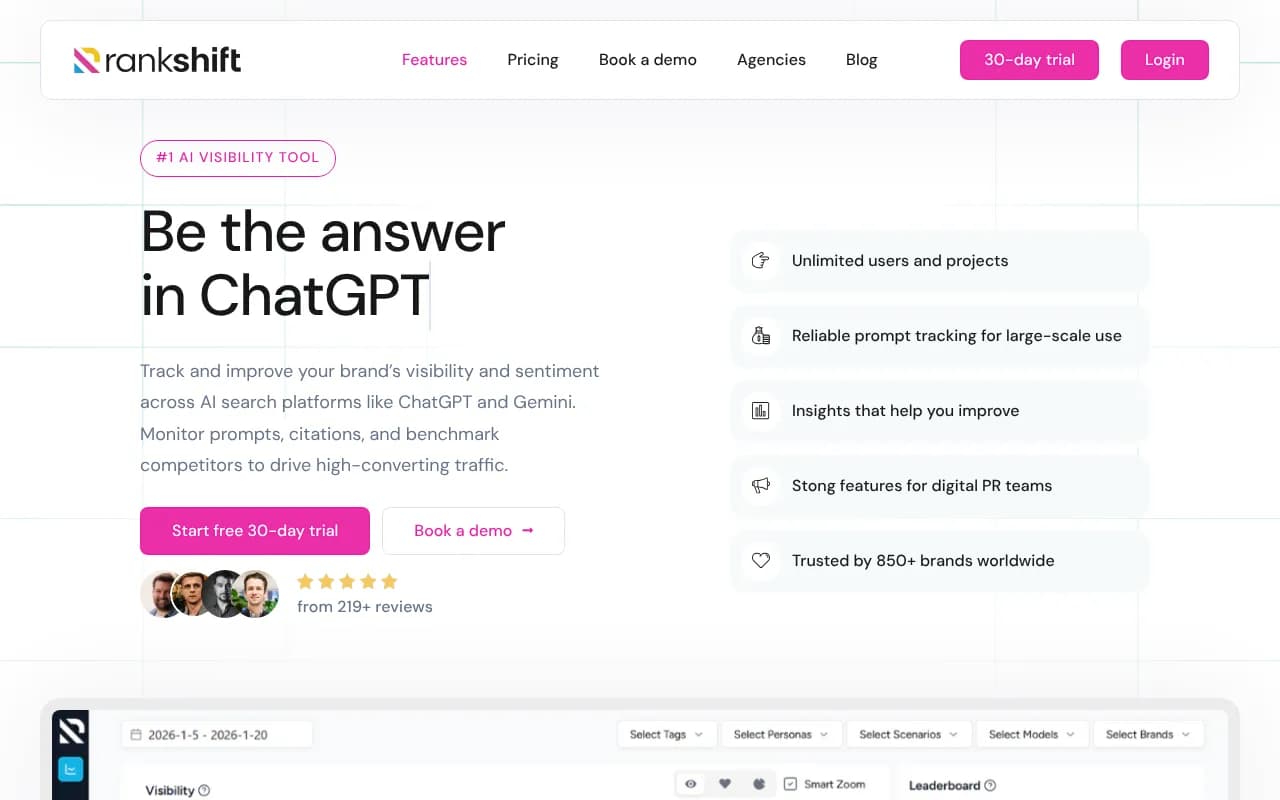
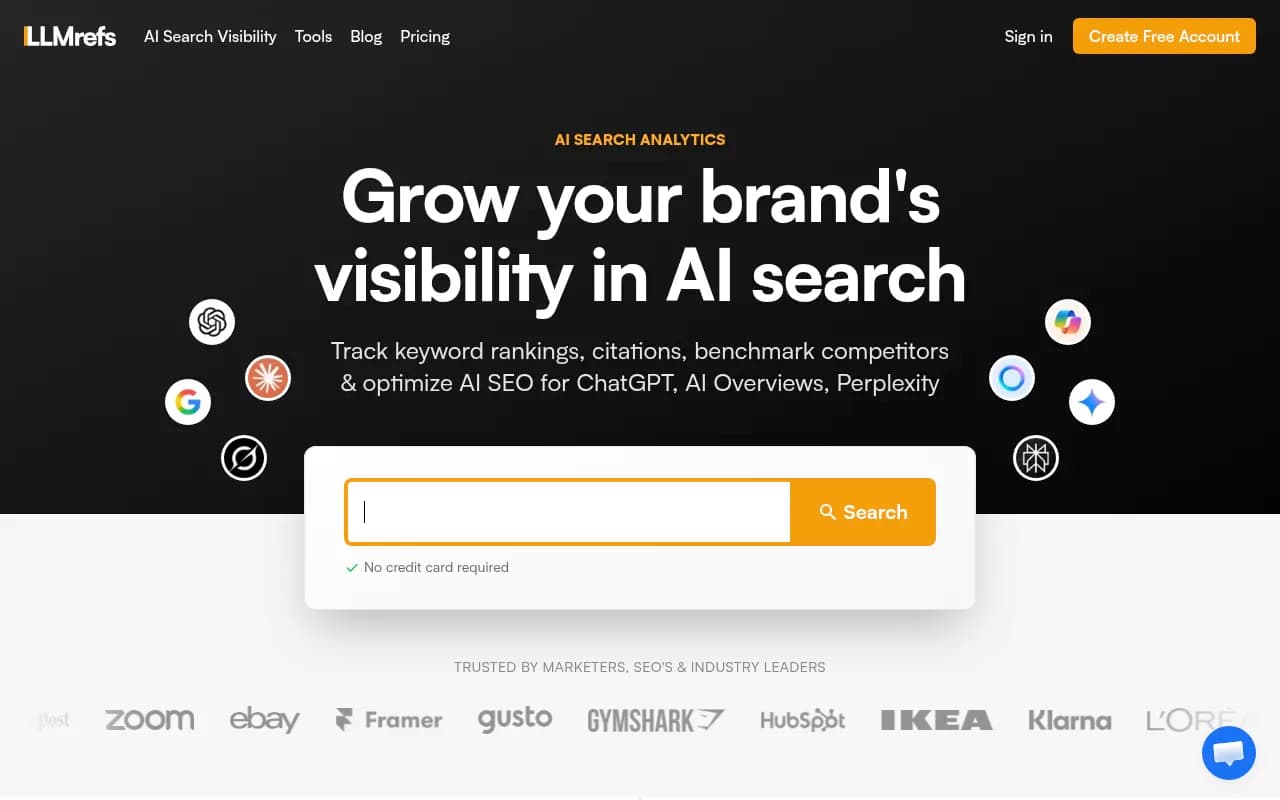
These tools automate the prompt-running process and give you trend data over time. The manual audit above is a great starting point, but it's a snapshot -- not a monitoring system.
One last thing
The brands that will win in AI search over the next two years aren't necessarily the ones with the best products. They're the ones that understand how AI models form opinions about brands and actively manage that process.
Running this audit is step one. What you do with the results is what actually moves the needle. The gaps you find are content opportunities -- specific topics, use cases, and comparisons that your website isn't currently addressing but that AI models are looking for.
Fix those gaps, and the next time you run this audit, you'll see the difference.