Key takeaways
- Team size and client count matter more than feature lists when you pick an AI search platform. A solo consultant and a 200-person agency are solving different problems.
- Boutique teams need low setup cost, fast reporting and tools that act on the data. Large agencies need multi-client workspaces, white-label reporting, role controls and security certifications.
- Agency retainers for AI search run from about $1,000 a month at the low end to $12,000-$50,000+ for enterprise programs, so the platform you pick has to fit the margin of the engagement.
- Monitoring-only trackers are fine for pitching and light reporting. Teams that sell outcomes need crawler logs, traffic attribution and content workflows too.
- Measure each AI engine separately. Promptwatch Data shows the number of sources cited per answer differs a lot between ChatGPT, AI Overviews and Perplexity.
Why team size changes the tool decision
Most AI search tool roundups rank products on features. That is useful, but it skips the question that actually decides whether you keep using a tool six months later: how many people will touch it, and how many clients or brands will it cover?
A boutique agency of three to ten people usually has senior staff doing hands-on work. They want to spend their hours on strategy and content, not on wrangling a dashboard. A large agency has account managers, analysts, strategists and sometimes a separate reporting team. Their pain is coordination: many clients, many stakeholders, many report formats.
The same split shows up in agency buying guides. Minuttia's 2026 roundup of AI SEO agencies tells readers outright that a franchise-scale shop like Ignite Visibility is not a fit if you prefer "a boutique, senior-only agency with a small, capped client roster." The agencies themselves are sorting by size. Your tooling should too.
What boutique and large agencies actually sell
Before choosing software, be clear about what the agency sells, because the tool has to support that product.
Boutique agencies
Boutiques tend to sell senior-only execution on a limited roster. In the agency lists I read for this guide, the pitch repeats: bespoke strategy, quarterly goal planning, a small number of clients, direct access to specialists. Pricing varies. GEO Toolbox's 2026 buyer's guide lists boutique-style GEO retainers starting around $3,500 a month, and one mid-market B2B SaaS specialist offers a roadmap from $7,500 with retainers from $3,000 a month.
Large agencies
Large agencies sell breadth and capacity. Go Fish Digital pairs SEO and AI visibility with paid media and social commerce under one program and asks for a $5,000 minimum. Tinuiti manages media and organic together at enterprise scale. Victorious says its enterprise clients typically spend $20-$45K a month. The catch, as GEO Toolbox points out about Tinuiti, is that AI search can sit inside a broad program and get lost unless someone owns it in the contract.
Cost bands to anchor your margins
| Engagement | Typical cost | Time to visible results |
|---|---|---|
| One-off audit | $1,000-$10,000 | Days |
| Small or local | $1,000-$5,000 | Citations in 2-4 weeks |
| Mid-market | $5,000-$12,000 | Movement in 3-6 months |
| Enterprise | $12,000-$50,000+ | Revenue impact in 6-12 months |
These figures come from GEO Toolbox's 2026 buyer's guide. If your retainers sit at the low end, a $799 a month platform eats a large share of your margin. At the enterprise end, it is a rounding error.
What each team size needs from a platform
| Need | Solo or boutique (1-10 people) | Mid-size (10-50) | Large (50+) |
|---|---|---|---|
| Setup time | Hours, not weeks | A few days | Onboarding project is fine |
| Client workspaces | A handful | Dozens | Unlimited, with roles |
| Reporting | Clean PDF or dashboard | White-label, scheduled | Custom, API and BI export |
| Action layer | Essential, you have no spare hands | Useful | Useful, but staff exist |
| Security review | Rarely asked | Sometimes | Often required (ISO 27001, SSO) |
| Budget tolerance | Low | Moderate | High |
The action layer is the row people underweight. A ten-person team cannot hire an analyst to turn charts into tasks. If the tool does not tell you what to fix and help you fix it, the data just piles up.
Tools for solo operators and boutique teams
The boutique buyer wants fast setup, fair pricing and clear recommendations. A few options in our catalog fit that profile.
Otterly.AI is a low-cost monitoring option that Profound's agency roundup recommends for solo marketers and small agencies starting out, with clear recommendations and content briefs, though it has no real prompt-volume data and no in-platform content generation.

Peec AI is popular for clean client dashboards and daily tracking with screenshot audit trails, but it is monitoring only.

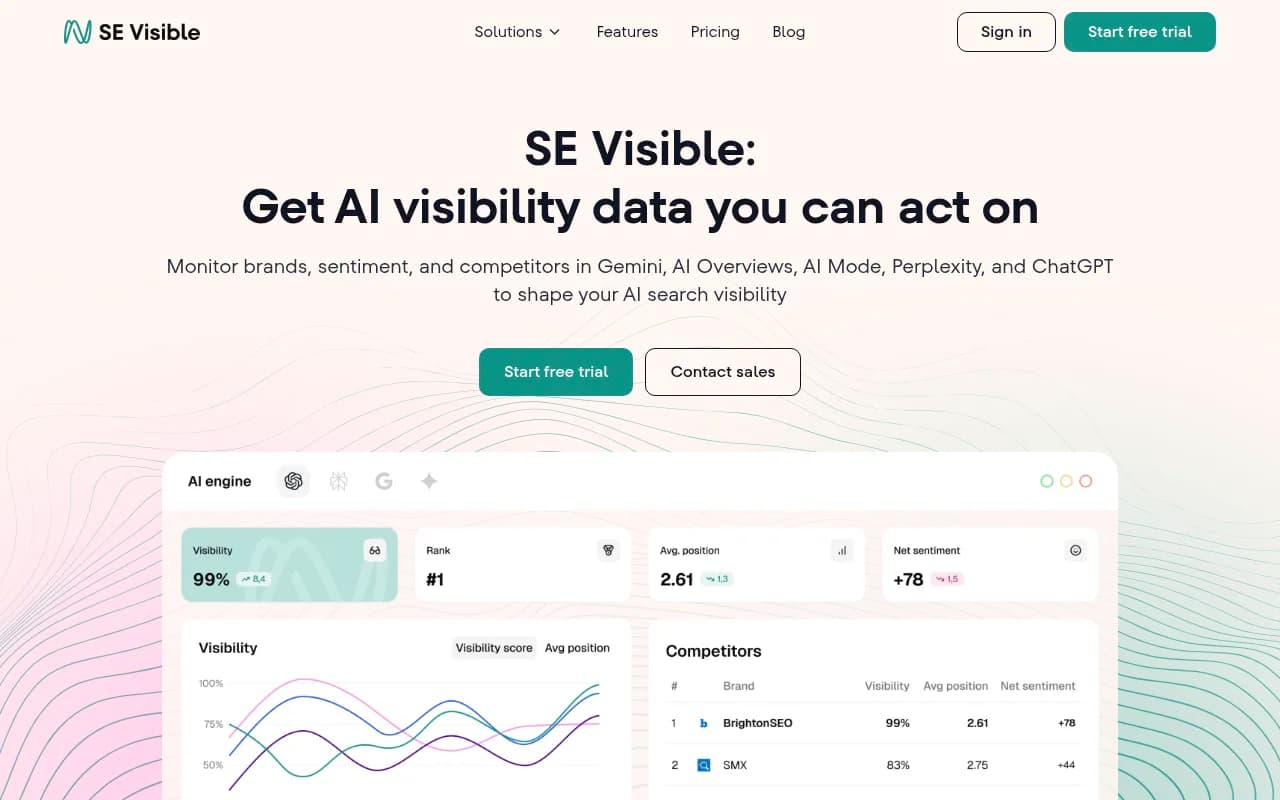
SE Visible has the lowest entry price in that same roundup and builds multi-brand support into every tier, though its engine coverage is the thinnest on the list.
For teams that want the tool to do more than report, Promptwatch is the option I would look at first. Its Essential plan starts at $95 a month and includes all AI models, 500 Agent Credits, site audit, content gap analysis and an MCP server and API. Agent Chat works like an analyst you can query, and the Action Board turns findings into a prioritized to-do list. For a three-person shop, that is the difference between a tracker and a junior hire.

Promptwatch also has a free Explore tier (10 prompts, ChatGPT only), which is enough to test a pitch before you pay for anything.
Tools for mid-size agencies
Once you run 10 to 40 clients, workspace management and white-label output start to matter more than the lowest price.
Promptwatch's agency plans are built for this: Kick-off at $199 a month, Growth at $399 and Scale at $799, all with unlimited projects and prompts, ten seats, pitch projects, white-label PDF reports and branded read-only client access. The caveat is worth knowing. Agency plans do not include the Content Agent, the Knowledge Base or 360 Insights, which sit on the Business and Enterprise plans.
Profound is the other name that comes up for agencies running AEO as a scaled service. It offers Agency Mode with client workspaces and pitch environments, plus content creation and crawler-to-conversion attribution. Its own roundup says it is overkill if you only want a light visibility score.

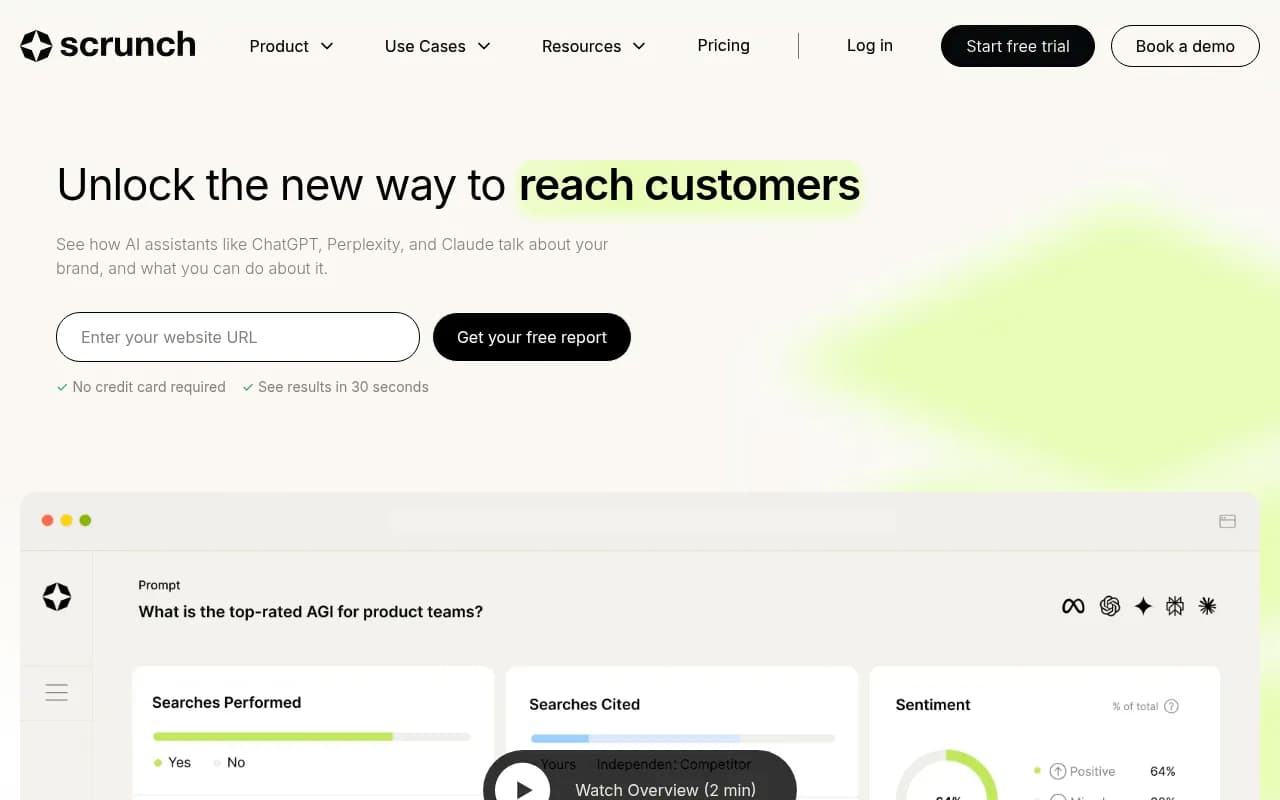
Scrunch pitches strong referral economics and an AXP that serves AI-optimized pages to crawlers, but it has no content generation yet.
If your team already lives in an SEO suite, Semrush puts AI metrics next to the reports you already use, with narrower engine coverage than the SEO product implies.
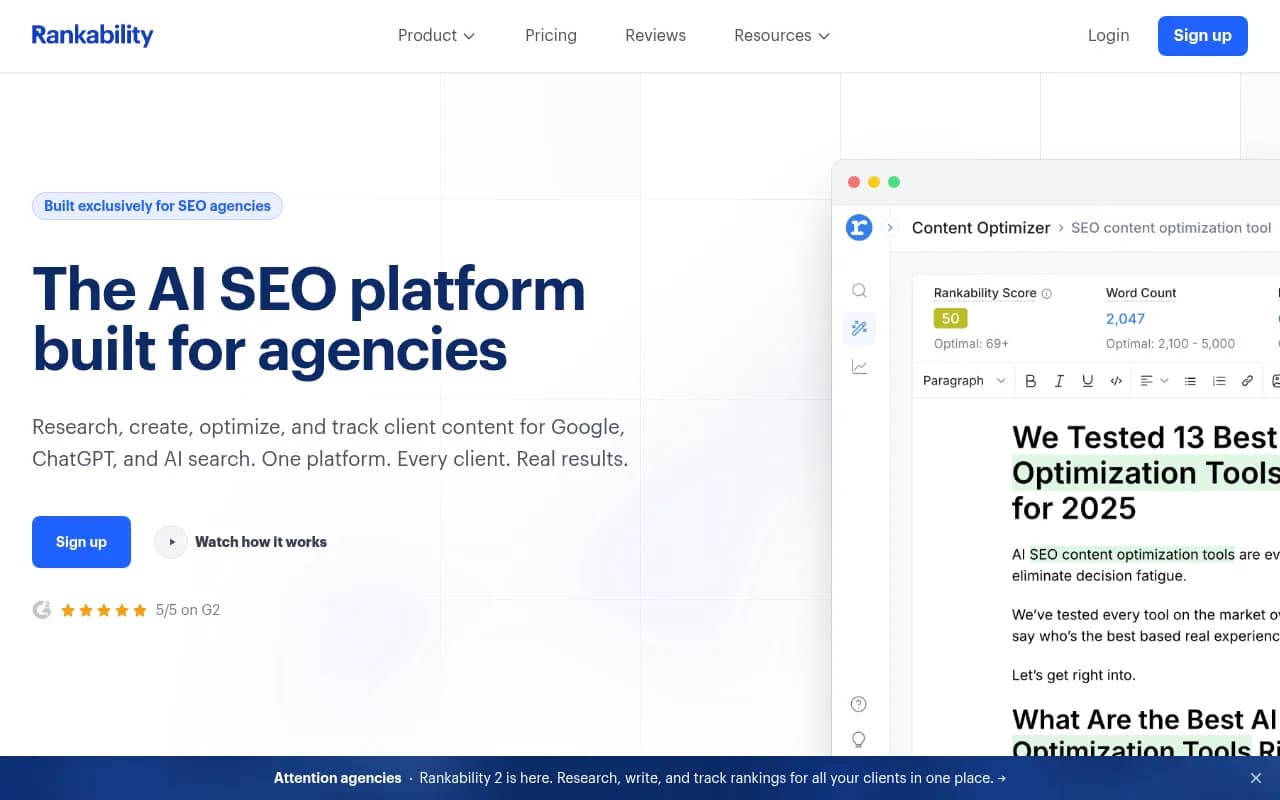
For agencies that want an agency-focused tracker, Rankability and Cairrot are also in the catalog.
Tools for large agencies and enterprise programs
Large teams hit different walls: procurement, security review, global coverage and integration with an existing enterprise SEO stack.
Conductor extends an enterprise SEO platform with 160+ countries and city-level tracking, but its prompts are keyword-derived rather than pulled from real conversations.
BrightEdge is strong on entity and knowledge-graph work for structuring citable content, with coverage skewed to three engines.
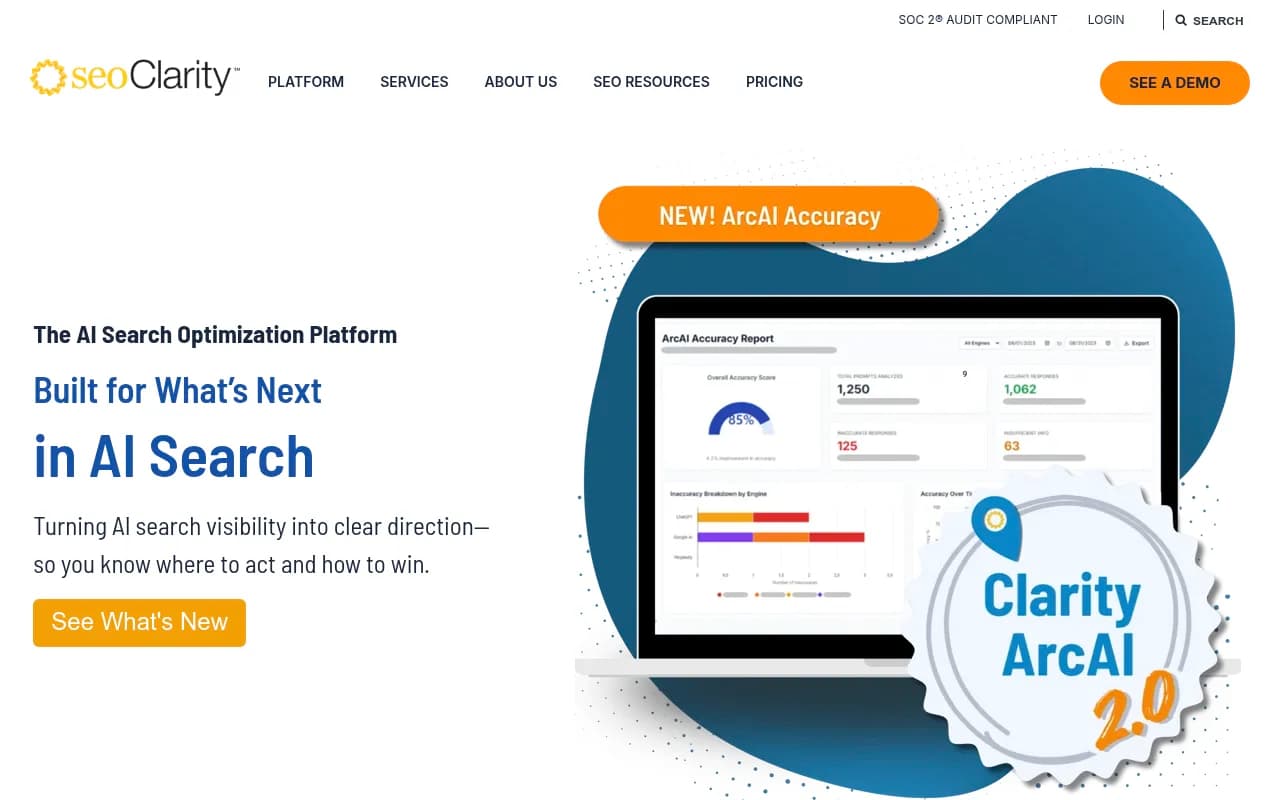
SeoClarity and Botify are other enterprise SEO platforms with AI visibility layers.
Promptwatch Enterprise adds SSO, audit logs, custom prompt and crawler volumes, a dedicated success manager and priority support. The platform is ISO/IEC 27001 certified and GDPR compliant, which tends to matter once a procurement team gets involved. Monks, WPP and iO Digital are among the agencies using it.
Comparison table
| Platform | Best team size | Agency workspaces | Acts on findings | Starting point |
|---|---|---|---|---|
| Otterly.AI | Solo, small | Partner program | Briefs only | Low-cost |
| Peec AI | Small to mid | Yes | No, monitoring only | Mid |
| SE Visible | Small, budget | Multi-brand in every tier | No content workflows | Lowest entry price |
| Promptwatch | Small to enterprise | Yes, white-label | Yes (Action Board, Content Agent on Business+) | Free, then $95/mo; agency from $199/mo |
| Profound | Mid to large agencies | Agency Mode | Content creation | Higher |
| Conductor | Large | Enterprise | Limited | Enterprise |
| BrightEdge | Large | Enterprise | Limited | Enterprise |
Always confirm current numbers on each vendor's pricing page. Promptwatch's are at promptwatch.com/pricing.
How AI engines differ, and why it affects tool choice
Small teams cannot cover everything, so it helps to know where the differences are largest. Promptwatch Data on average sources per response shows ChatGPT cites about 5 sources per web-search answer, while Google AI Overviews cites about 10 and Perplexity almost exactly 10 every day. Copilot swung from under 2 to nearly 17 within weeks. The practical lesson: measure each engine separately, and do not trust a single blended score.
Citation spread matters too. In Promptwatch's unique domains per ChatGPT response report (Sep 28 to Oct 4, 2026), 47.6% of responses cited 10 or more domains, and organic prompts with no brand named hit 52.5%. Brand-specific prompts were different: only 21.3% cited 10 or more, and 5 domains was the most common count.
What does that mean by team size?
- A small team should pick two or three prompt types and own them. Comparison and alternatives pages are a sensible start, since answers are crowded and third-party listicles matter.
- A larger team can cover organic, brand and competitor-comparison prompts at once and track which competitors are cited alongside the client.
That is also a good test for a platform. Can it split prompts by type and engine? Promptwatch does, along with volumes, difficulty and query fan-outs. Many trackers do not.
The agency-hire question
Sometimes the right answer is not a tool at all. If your team is a marketing department of two and the budget is $5,000 a month, hiring a boutique shop may beat buying software you will not have time to use. If you want a partner who covers technical SEO, content, digital PR and AI visibility together, that is the work 1001 SEO Media does, with senior specialists, no long-term contracts and monthly reporting.
GEO Toolbox's red flags are worth borrowing for any agency conversation:
- They cannot name which AI platforms they monitor separately.
- Reporting is only rankings and traffic, with no AI-specific metric.
- Retainers under roughly $1,000 a month that look like automated output with no human review.
- A "best agency" list written by the agency itself. Read those with suspicion, including this kind of roundup.
The agency roundups I read also show how self-interested the genre is. LoudFace's enterprise SaaS list ranks LoudFace first. Minuttia's list ranks Minuttia first. That does not make them wrong, but verify claims against case studies you can check.
A decision framework
Work through these in order.
- Count clients and stakeholders. One to five brands: a single-project plan is fine. Ten or more: you need agency workspaces and white-label exports.
- Check your margin. If a client pays $2,000 a month, tool cost per client should be a small fraction of that.
- Decide who turns data into work. If the answer is nobody, buy a platform with an action layer, not a tracker.
- Ask about attribution. Clients with revenue targets want AI-referred traffic and conversions, not mention counts. Tools with visitor analytics and crawler logs can show that. Most pure trackers cannot.
- Check security needs. Enterprise clients may require ISO 27001, SSO and audit logs.
- Trial before committing. Use free tiers and 7-day trials. Promptwatch offers a free Explore plan and a 7-day trial on monthly Essential, Professional and agency plans.
For wider browsing, the GEO software directory at bestgeosoftware.com lists more options by category.
What I would do at each size
Solo or two-person team: start with a free scan, then a $95 plan with an action layer. Spend your hours on content, not dashboards.
Boutique of five to fifteen: use an agency plan with white-label reports, and pick two or three prompt types per client rather than tracking everything.
Large agency: standardize on one platform for reporting, keep a second specialist tool only where a client's stack demands it (Adobe, Conductor), and write AI search scope into every contract so it does not vanish inside a broad retainer.
Team size is not about prestige. It decides who has time to read the dashboard, and that is what should pick your platform.