Key takeaways
- Bloomreach announced its acquisition of AthenaHQ on November 16, 2026. The price was not disclosed, and I found no public statement on pricing changes, the free Essential plan, or a standalone roadmap.
- Treat any AthenaHQ price or engine list you saw before November 16 as a pre-deal snapshot. Verify it before you build a budget around it.
- For product visibility, check three things on the plan you would actually buy: ChatGPT Shopping tracking, Google AI Mode coverage, and whether the tool helps you fix gaps or only reports them.
- Several tools list AI Mode as an add-on or a higher-tier feature (Otterly.AI, Writesonic, Profound's trial). That matters if your buyers use Google.
- Shortlist three tools, not twelve, and run the same 20 to 30 commercial prompts through each trial.
What the Bloomreach deal actually changes
Bloomreach, the commerce search and personalization company, announced on November 16, 2026 that it is acquiring AthenaHQ, an answer engine optimization platform. The price was undisclosed. PitchBook lists the acquisition date as the same day, and the Y Combinator page now marks AthenaHQ as acquired.
The strategic logic is easy to read. Bloomreach CEO Raj De Datta frames AI agents as the new front door for how products get found, and Bloomreach wants to help brands decide which products sit "on the shelf" for AI. Its AI, Loomi, already serves 1,400+ brands including American Eagle, Red Bull and Pandora. AthenaHQ CEO Andrew Yan said several companies were interested and he picked Bloomreach for its global reach, enterprise track record, and a commitment to keep investing in Athena.
What we do not know is the part that matters for buyers:
- Whether the free Essential plan (300 credits) continues
- Whether the $295/month Starter plan and its credit model stay as they are
- Whether AthenaHQ stays a standalone product or gets folded into Bloomreach's commerce suite
My read: if you are a Bloomreach customer, this probably becomes interesting. If you are not, you are now evaluating a tool whose future shape is set by a commerce platform's priorities. That is not automatically bad. It is a reason to keep an exit option and to avoid annual prepayment until the plan structure settles.
AthenaHQ's own technology is worth noting. Its Athena Citation Engine (ACE) is a machine-learning model that forecasts how likely content or products are to be cited by AI, and it integrates with Shopify, Google Analytics 4, and ChatGPT and Claude through MCP.

What product visibility tracking needs that brand tracking does not
Most AI visibility tools were built to answer "Was my brand mentioned?" Product visibility is a narrower and more commercial question. You want to know whether specific SKUs show up when someone asks ChatGPT for the best running shoe under $150, and what the shopping card looks like when they do.
ChatGPT Shopping is not the default
Promptwatch Data's ChatGPT Shopping usage report shows that ChatGPT attaches product cards and shopping recommendations to only a low single-digit percentage of web-search responses across all prompts. The rate moves in steps, not smoothly. In the window shown, it roughly doubled overnight in late May, then fell back weeks later, which looks like OpenAI tuning when cards appear. Trigger rates are far higher on commercial and transactional prompts than on the all-prompt average.
Two practical consequences. First, if you track a generic prompt set you will see almost no shopping data and conclude the feature does not matter. Track commercial prompts. Second, shopping features only appear when ChatGPT runs a web search, so only responses with citations count.
Citations still decide who gets named
Product pages are the most cited content type in ChatGPT, at 22.4% of citations between Sep 28 and Oct 4, 2026, followed by landing pages and listicles, according to Promptwatch's content type data. In automotive prompts, marketplaces like Autotrader and Cars.com outrank every car brand in August 2026. So for products, the retailer and marketplace pages that carry your listing can matter as much as your own site.
AI Mode is a separate surface
Google AI Mode answers differently from AI Overviews and from ChatGPT. Promptwatch publishes monthly citation share reports per surface, for example Google AI Mode citation share for June 2026. A tool that merges everything into one "AI score" hides this. You want per-engine reporting, and you want AI Mode on the plan you pay for, not as an add-on you discover later.
One more point from the research: about 75% of brands named via APIs did not match what the real AI interfaces showed, according to Surfer's testing. Tools that collect from the actual user interface give you something closer to what shoppers see.
Comparison: platforms for product visibility in ChatGPT and AI Mode
Prices and engine lists below come from vendor pages and third-party roundups checked in October 2026, before the AthenaHQ deal. They change often. Confirm on each vendor's site.
| Platform | Entry price | AI Mode | ChatGPT Shopping | Does it help fix gaps? |
|---|---|---|---|---|
| Promptwatch | $95/mo (Essential, 50 prompts); 7-day trial | Yes, all models on every plan | Yes (Business and Enterprise) | Yes: content gap analysis, Content Agent, crawler logs |
| AthenaHQ | Free Essential (300 credits); Starter $295/mo (pre-deal) | Starter and up (pre-deal) | Not confirmed in research | Content recommendations, ACE forecasting |
| Profound | Custom; 7-day trial (preset prompts) | Enterprise only | Yes (reported) | Agents draft and stage content |
| Otterly.AI | $29/mo (15 prompts) | $9/mo add-on on Lite | Not confirmed | Recommendations, GEO URL audits |
| Peec AI | From about EUR 85-89/mo | Yes on supported plans | Not confirmed | Analytics focused |
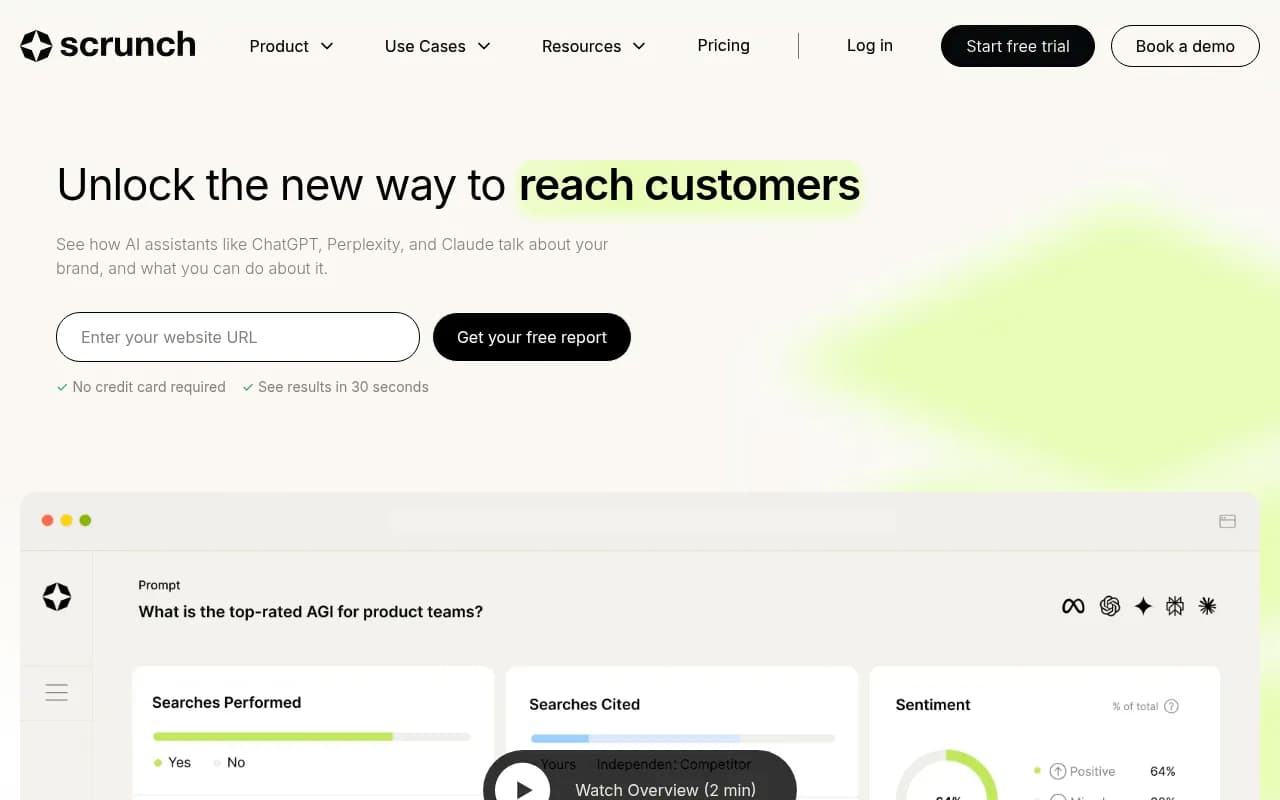
| Scrunch | $250-300/mo | Enterprise per one roundup; listed on others | Not confirmed | Page audits, AXP |
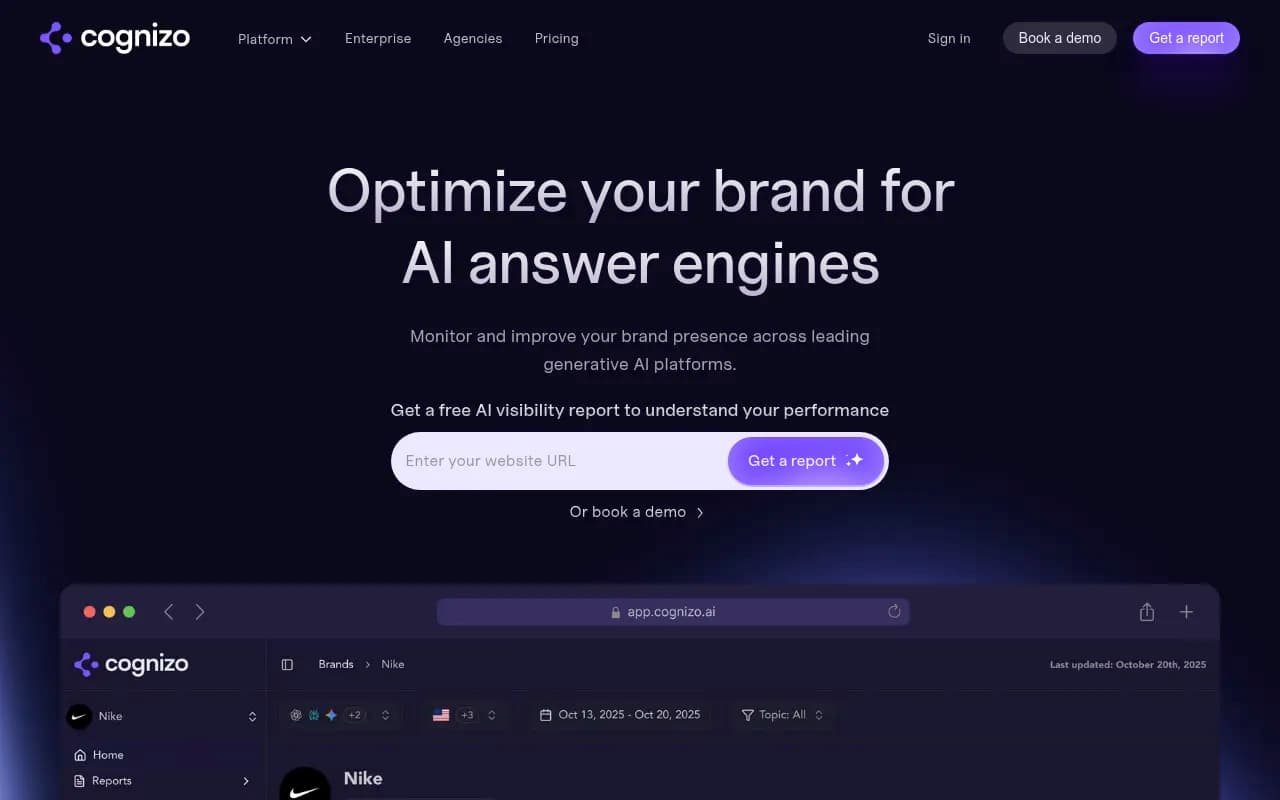
| Cognizo | $499/mo (150 prompts); demo | Yes on Growth | Ads management, not Shopping tracking | Content agent |
| Hall AI | Check vendor | Check vendor | Tracks product appearances in ChatGPT shopping (per Mint's write-up) | Technical SEO and e-commerce focus |
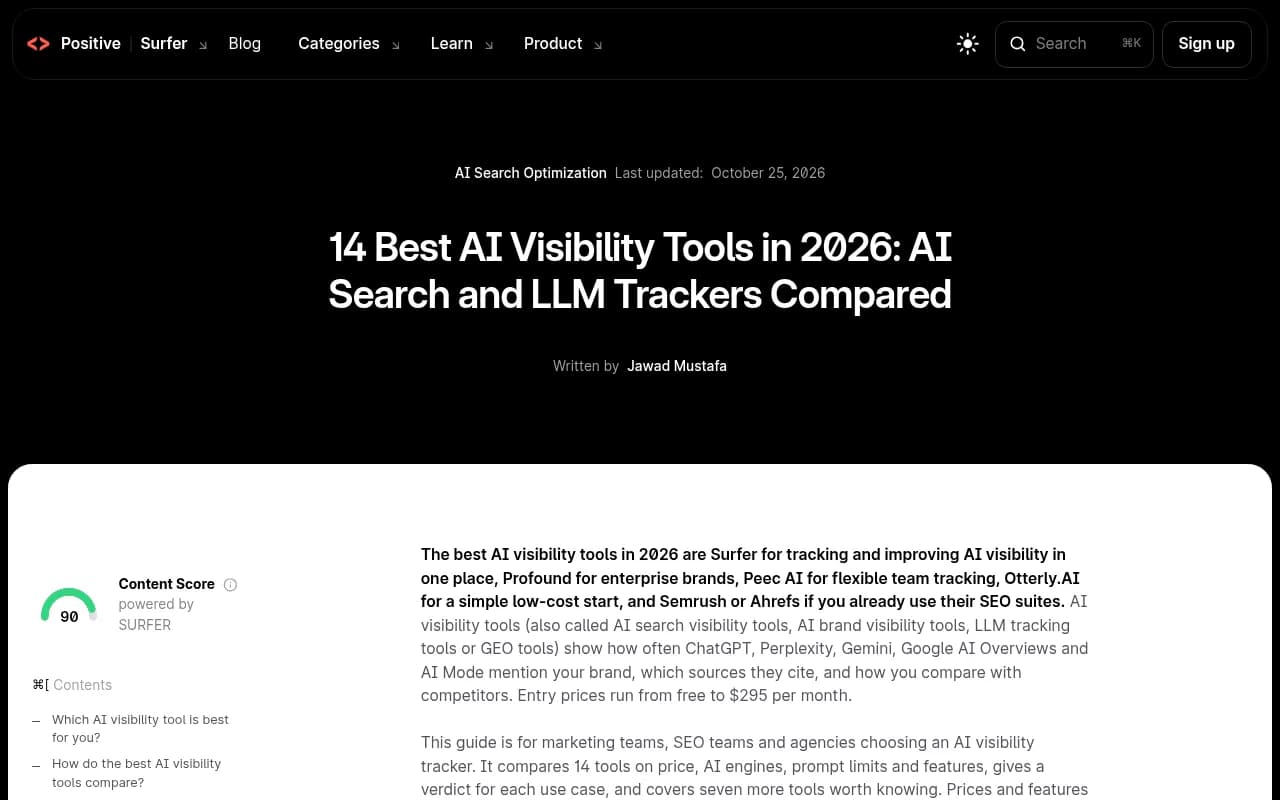
A caution on the table: the research sources disagree in places (Scrunch's AI Mode coverage, for instance, differs between roundups). Several of these roundups are published by competing vendors. Use them to build a shortlist, not to make a final decision.
The platforms worth shortlisting
Promptwatch
Promptwatch is the option I would put first if your goal is to act on product visibility, not just watch it. It collects answers from the real interfaces of ChatGPT, Google AI Overviews, Google AI Mode, Gemini, Perplexity, Copilot, Alexa and Meta AI, in each country and language you choose, and every plan covers all supported models. That removes the add-on problem for AI Mode.
For product teams, the relevant pieces are ChatGPT Shopping tracking, which shows which products AI recommends and which competitors it picks instead (Business and Enterprise), plus AI crawler logs that tell you whether bots can read your product pages at all. Content gap analysis maps your pages against the prompts AI answers, and the Content Agent can publish fixes to WordPress, Webflow or Framer. Visitor analytics then show whether AI traffic converts.
The honest caveats: Shopping insights start on the $579/month Business plan, and the Content Agent too. Essential at $95/month is a monitoring entry point without crawler logs. Confirm current pricing at promptwatch.com/pricing. You can start with the 7-day free trial or the free AI visibility report.
If you are comparing against the Bloomreach-owned option directly, see the Promptwatch comparison page for a side-by-side.

AthenaHQ (now Bloomreach)
Still a credible product. The free Essential tier made it the easiest way to try prompt tracking, and ACE is a differentiated idea. The Shopify and GA4 integrations suit e-commerce teams. The risk is purely uncertainty: pricing, plan tiers and roadmap are unannounced. If you already run Bloomreach for search and personalization, wait for the integration story. If not, a trial is fine but skip annual billing for now.
Profound
The enterprise pick. Profound covers up to nine engines on Enterprise, including AI Mode, with API access, SSO/SAML and SOC 2. It also reports ChatGPT Shopping tracking. The trial is limited: 50 prompts daily in ChatGPT, Gemini and AI Overviews, with preset prompts you cannot customize, so you cannot properly test product queries before talking to sales.

Otterly.AI
The cheapest published start at $29/month for 15 prompts, covering ChatGPT, AI Overviews, Perplexity and Copilot. AI Mode and Gemini cost $9/month each as add-ons on Lite. For a small catalog and a tight budget it works. For product visibility at any scale, 15 prompts disappear quickly.

Peec AI
Clean analytics, popular with SEO teams, supports ChatGPT, AI Mode, AI Overviews, Copilot, Perplexity and Gemini. It is a monitoring tool, so you will need a separate process (or tool) to produce the content fixes.

Hall AI and the shopping-specific tools
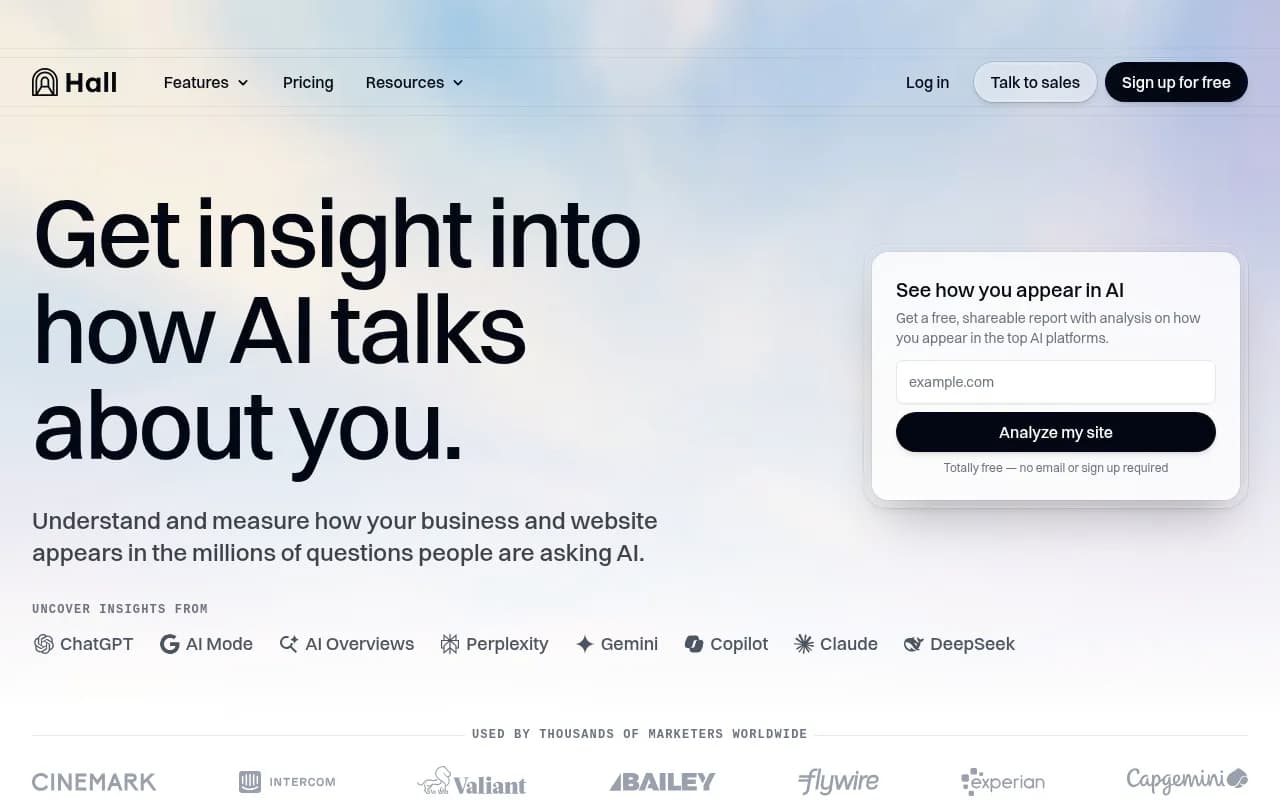
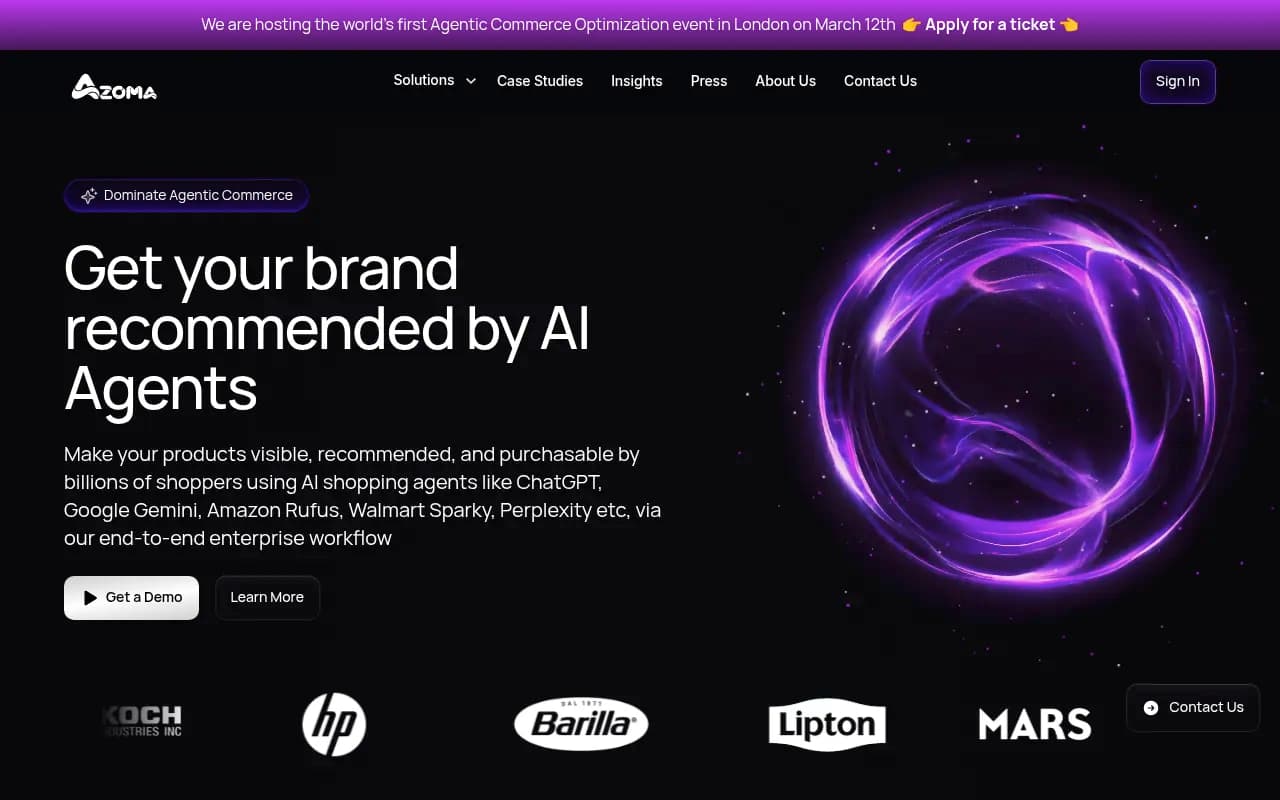
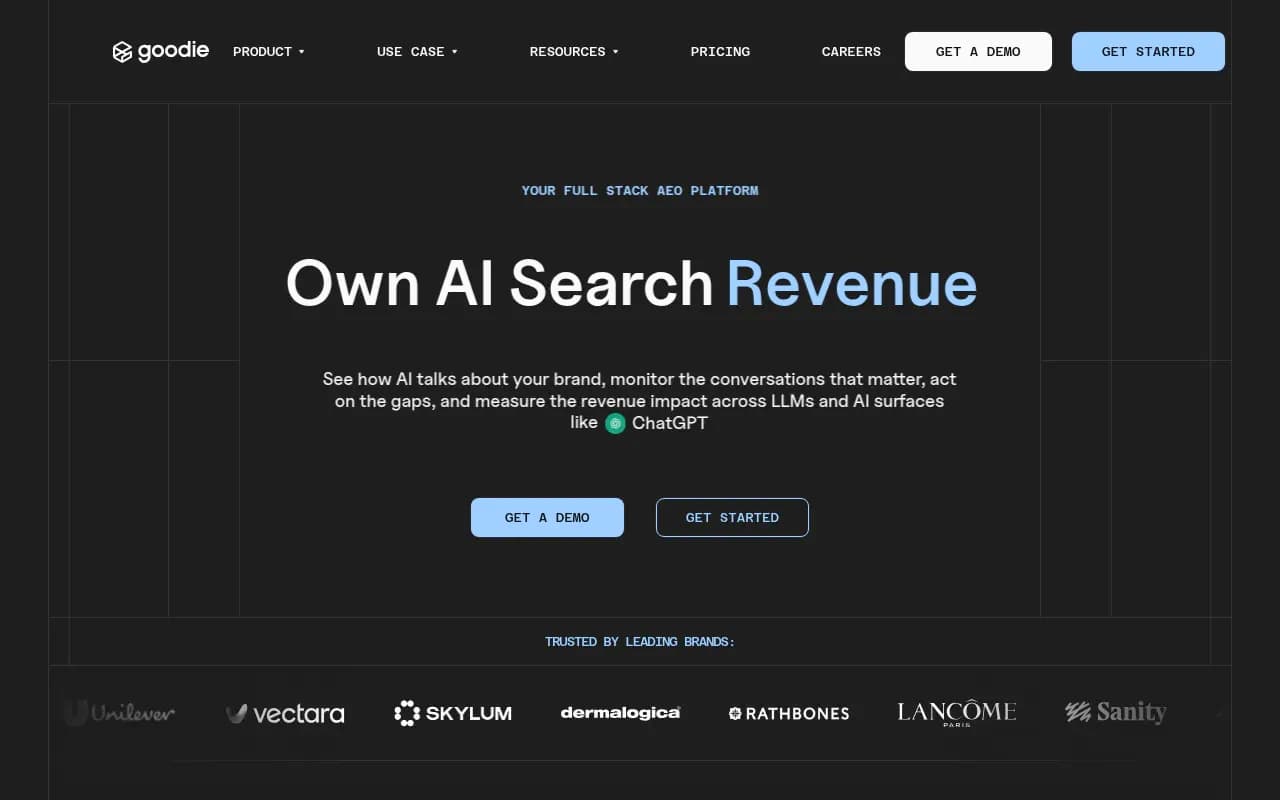
Hall AI is described as tracking whether your specific products appear in ChatGPT's shopping interface, rather than generic brand mentions. Other catalog entries aimed at commerce include Azoma (AI shopping optimization for ChatGPT, Rufus and others), Goodie AI (agentic commerce optimization) and Yotpo Discover (product discovery for e-commerce). I have not verified their pricing, so treat these as a second-wave shortlist if your problem is mainly shopping surfaces.
Scrunch and Cognizo
Scrunch ($250-300/month) adds an AI-agent version of your site (AXP) next to monitoring. Cognizo ($499/month, demo only) pairs tracking with ChatGPT Ads management and a content agent, and cites a case where Hat Club found about 1 in 50 visitors came from AI referrals while AI-driven sales grew 20x. That is one vendor-reported case, so weigh it accordingly.
If you already pay for an SEO suite
Semrush's AI Visibility Toolkit starts at $99/month per domain, and Ahrefs Brand Radar is an add-on to an Ahrefs plan. Both are reasonable if you want to avoid another vendor. The tradeoff is shallower AI-specific data and no crawler-level view.

How to run a fair trial
Vendor trials are not equal. Profound's locks your prompts. Others limit engines. So do the work yourself before you buy.
- Build one prompt set of 20 to 30 commercial and transactional prompts. Include category queries ("best standing desk for small spaces"), comparison prompts, and a few branded product queries.
- Run the same set in every trial, over at least a week, because ChatGPT's shopping behavior shifts in steps.
- Record per engine, not blended: ChatGPT, AI Mode, AI Overviews. Note whether product cards appear and which brands fill them.
- Check which of your pages get cited and which retailer or marketplace pages are cited instead.
- Test the action layer. Ask each vendor to show what it recommends for one gap, and see whether the tool can help you ship it.
- Get the post-deal answer in writing if AthenaHQ is on your list: pricing, credit allowances, and engine coverage for the next 12 months.
Prepare your product data regardless of tool
Tracking does nothing if the pages are weak. Promptwatch's advice from its Shopping data is sensible and tool-independent: complete Product schema markup, accurate prices and availability, and a clean merchant feed. Also confirm AI crawlers can read your product pages. The AI crawler URL inspector is a free way to check a single URL.
Which one should you pick?
| Situation | Start with |
|---|---|
| You want to track and fix, with AI Mode included | Promptwatch |
| You use Bloomreach already | AthenaHQ, after the roadmap is clear |
| Enterprise procurement, SSO, large catalog | Profound |
| Tight budget, small prompt set | Otterly.AI |
| Already on Semrush or Ahrefs | Their AI add-ons, as a first step |
| Your main problem is shopping surfaces | Hall AI, Azoma or Goodie AI |
For wider browsing, the GEO software directory at bestgeosoftware.com lists many more options, and AI rank tool directory covers trackers specifically.
The bottom line
The AthenaHQ acquisition does not make the product bad. It makes its pricing and roadmap unknown, and that is enough reason to run a parallel trial of one or two alternatives before the next renewal. For product visibility, ignore headline engine counts and check three things on the exact plan you would buy: AI Mode coverage, shopping tracking, and a way to act on what you find. Then verify everything on the vendors' pricing pages, because every number in this guide is a snapshot.