Key takeaways
- Gauge Chat has one public tier, Growth, at $599/month, and on the official pricing page it covers 3 platforms (ChatGPT, Google AI Mode, Microsoft Copilot). Six platforms, sentiment and exports are Enterprise only.
- Open-source options like Elmo (MIT, managed cloud from $29/month) and Voyage cost far less, but you supply LLM API keys and infrastructure if you self-host.
- Budget hosted trackers such as Airefs, Otterly.AI, Rankscale and LLMrefs are cheaper than Gauge, but most only monitor. Check current prices on their sites, because they change often.
- A tool that only tells you whether you were cited misses most of the picture. Position, tone and competitor co-citation across many prompts matter more.
- Prefer permissive licenses and projects with more than one active contributor. A repository can go private, as Notra's did in October 2026.
Why people look for Gauge alternatives
Gauge is a solid platform with a closed-loop idea: it collects how AI platforms describe a brand, suggests actions, and has a content engine to act on them. The issue for most small teams is price and scope, not quality.
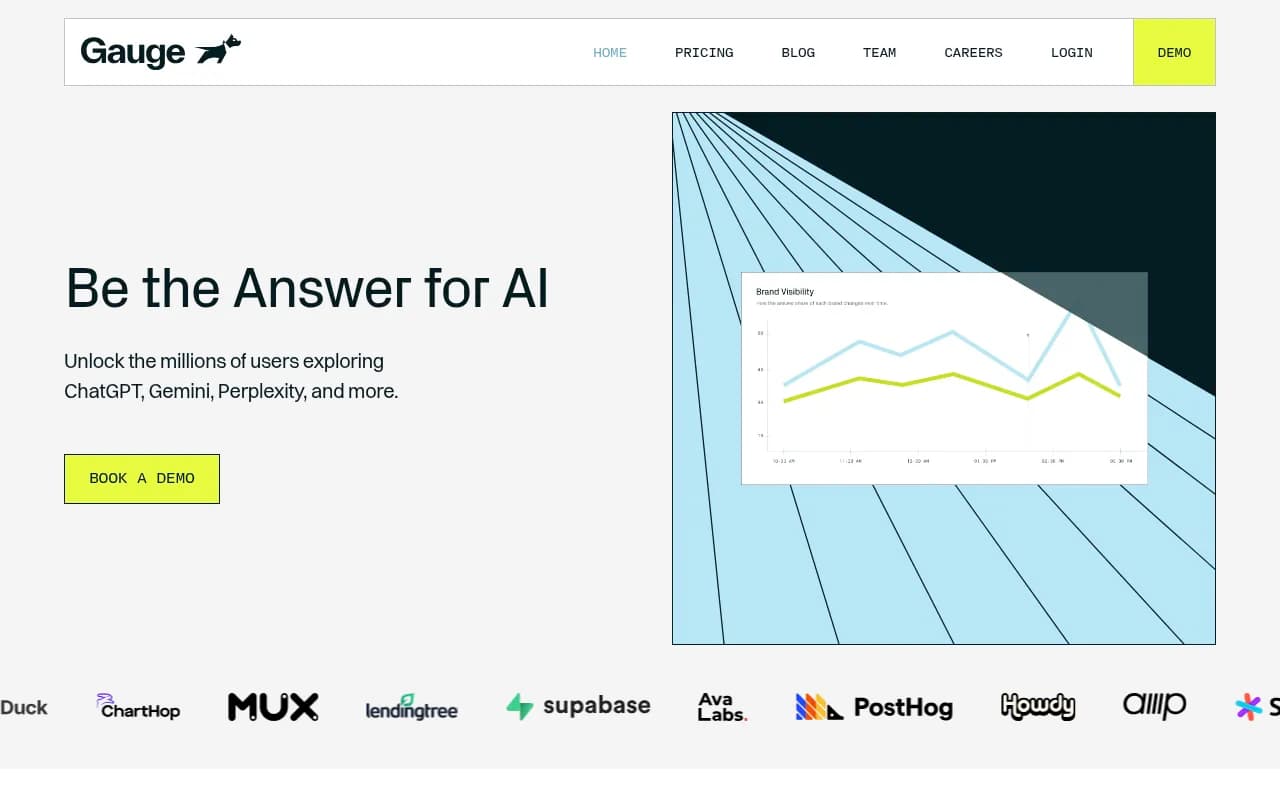
According to Gauge's official pricing page, the public Growth tier is $599/month for 600 prompts run daily (about 54,000 answers a month), 18 articles per month, 3 seats, and one location. It tracks ChatGPT, Google AI Mode and Microsoft Copilot. Enterprise is custom-priced and adds AI Overviews, Gemini, Perplexity, sentiment analysis, exports and multiple locations. Claude and Grok are optional on any plan using your own API keys.
A heads-up: some third-party roundups still say Growth covers six platforms with five seats. That looks outdated against the current pricing page, so check before you build a budget around it.
Gauge also sells a separate Agents product, with a free hosted plan, paid plans from $499/month and an open-source local CLI. That one evaluates coding agents and has nothing to do with brand visibility, so don't mix the two up when you read reviews.
The usual reasons to look elsewhere:
- You want monitoring only and don't need an article engine at $599.
- You need Gemini, Perplexity or AI Overviews and don't want to jump to custom Enterprise pricing.
- You publish on WordPress or Shopify. Gauge's CMS publishing covers Webflow, Framer, Sanity and GitHub.
- You want to inspect or own the data and the code.
How to compare these tools fairly
Before the list, a few things worth checking, because the sticker price hides a lot.
First, what a response actually is. Promptwatch's data on unique domains per ChatGPT response (Sep 28 to Oct 4, 2026) found that 47.6% of responses cite 10 or more domains, and only 6% cite three or fewer. So a tool that just answers "was I cited?" misses most of what happens. Look for position, tone and competitor co-citation across many prompts, since one prompt tells you little.
Second, fan-outs. Promptwatch's ChatGPT query fanout report shows ChatGPT runs its own web searches per response, and averages shifted between about 2.15 and 1.0 per response across the months it tracked. Tools that don't capture those queries miss what ChatGPT actually searched.
Third, how data is collected. Real interface monitoring and API calls can return different answers. Ask each vendor which one they use.
Fourth, the hidden cost. Open source means "free to self-host," not "free to run." Your LLM API bill and server time are on you.
Quick comparison
| Tool | Type | Starting point | Best for |
|---|---|---|---|
| Elmo | Open source (MIT) | Free self-host, cloud from $29/mo | Teams that want auditable metrics and control |
| Voyage (OnVoyage) | Open source | Check onvoyage.ai | Developers building on GEO infrastructure |
| Airefs | Hosted, budget | Check getairefs.com | Cheap, simple tracking |
| Otterly.AI | Hosted, budget | Check otterly.ai | The cheapest simple start |
| LLMrefs | Hosted, budget | Check llmrefs.com | More prompts for less money |
| Rankscale | Hosted, budget | Check rankscale.com | Prompt-level tracking at low cost |
| Promptwatch | Hosted, full platform | See promptwatch.com/pricing | Teams that want to fix gaps, not just see them |
I did not verify current pricing for Voyage, Airefs, Otterly, LLMrefs or Rankscale while writing this, so confirm on each vendor's site.
Open-source alternatives
Elmo
Elmo is the best-known open-source option right now. It is MIT-licensed, deploys with a CLI on Docker and PostgreSQL, and covers ChatGPT, Google AI Mode, AI Overviews, Gemini, Perplexity, Claude and any OpenRouter model. A managed Elmo Cloud runs the same software from $29/month, and you can move between the two.
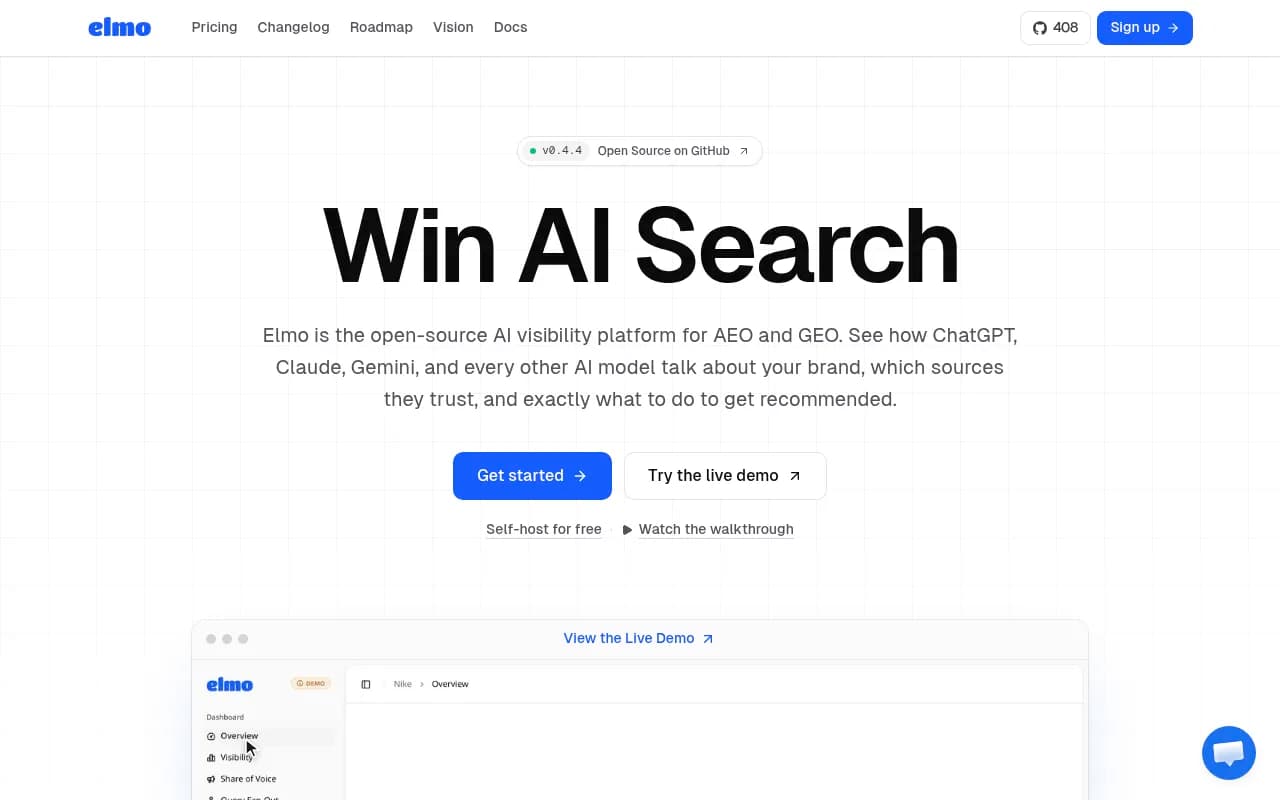
A caveat on sourcing: most of the Elmo claims out there, including the "36 releases since July 2025" figure, come from Elmo's own directory, which ranks Elmo first. Treat the GitHub stats as vendor-reported and check the repository yourself before you rely on them.
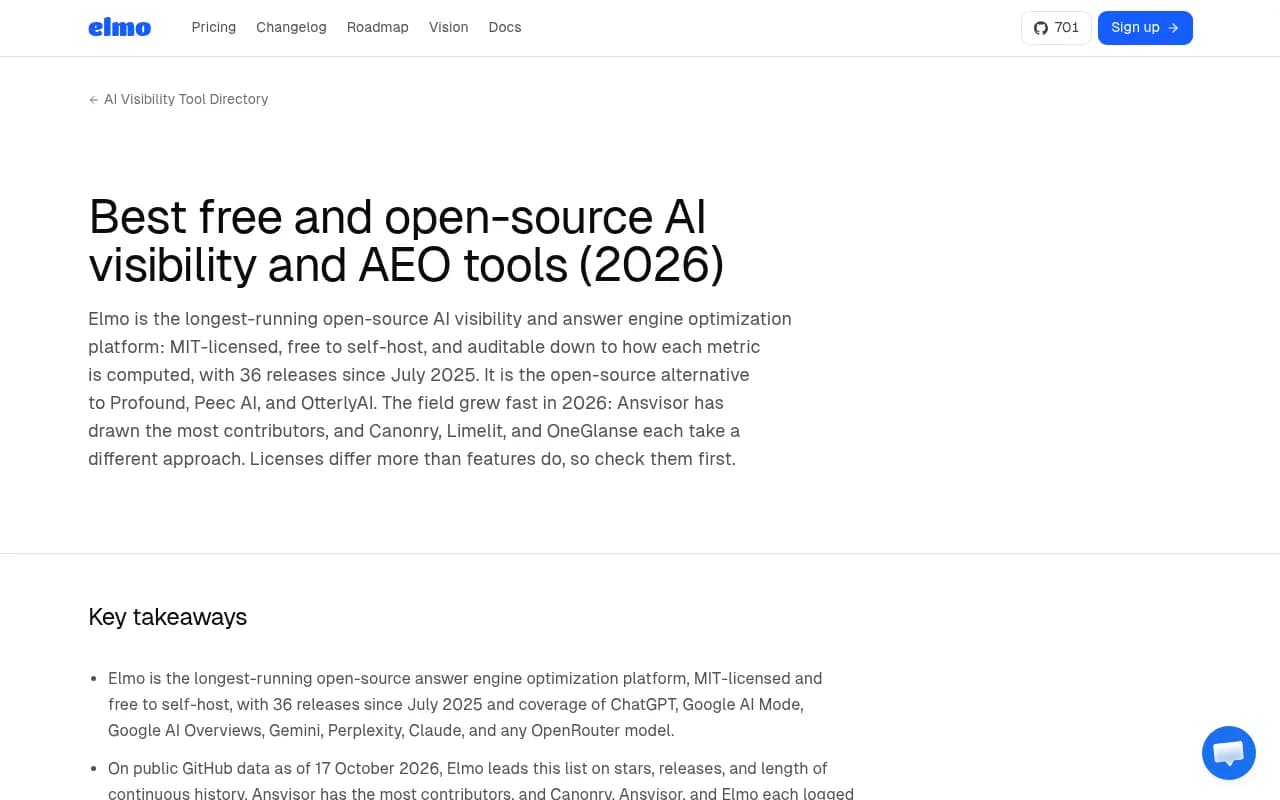
That same directory is still useful for the license comparison, which matters more than features:
| Project | License | Note |
|---|---|---|
| Elmo | MIT | Managed cloud from $29/mo |
| Ansvisor | MIT | Hosted from $49/mo, many contributors |
| Canonry | MIT | Active commit history |
| OneGlanse | MIT | No managed cloud, scrapers need upkeep |
| GEO/AEO Tracker | MIT | Quick single-browser checks |
| Limelit | Apache-2.0 | Permissive |
| Gego | GPL-3.0 | Waitlist for cloud, adds conditions on modified versions |
| Cited | AGPL-3.0 | Adds conditions on modified versions |
Voyage (OnVoyage)
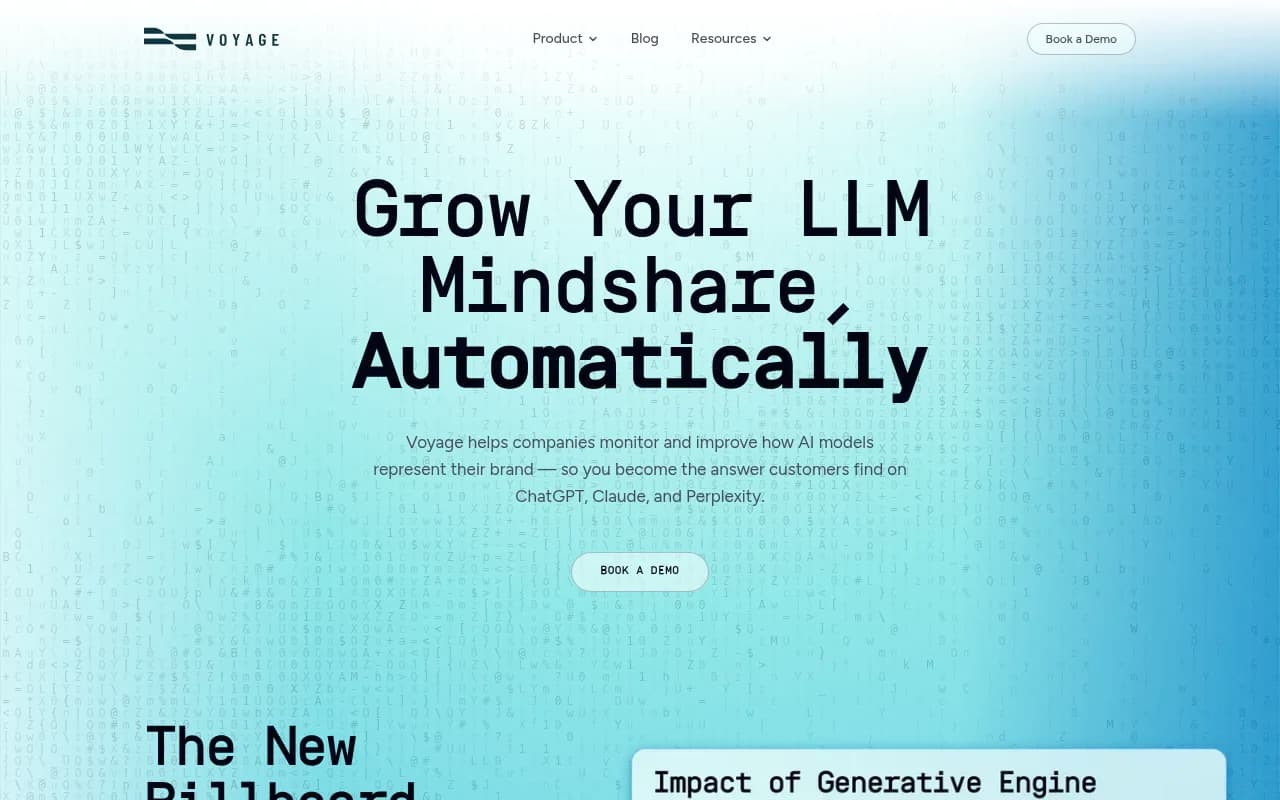
Voyage describes itself as open-source GEO infrastructure for growing LLM mindshare. I'd treat it as a builder's tool: if your team wants to extend the code and wire it into your own stack, it fits. If you want a polished dashboard on day one, a hosted product will feel faster.
The risks of going open source
Open source protects you from a vendor shutting down. It doesn't protect you from a project going closed. Notra took its AGPL repository private in October 2026. So favor permissive licenses (MIT, Apache-2.0), look for more than one active contributor, and keep your own export of the data.
Also be wary of projects that rebuild themselves repeatedly. One tracker in the tools catalog reportedly went from a minimal tracker to an Elmo fork to a from-scratch rewrite. That kind of churn is a signal about stability, not about features.
Budget hosted alternatives
Airefs
Airefs is positioned as affordable AI search visibility tracking. It suits teams that want a dashboard without running servers.
Otterly.AI
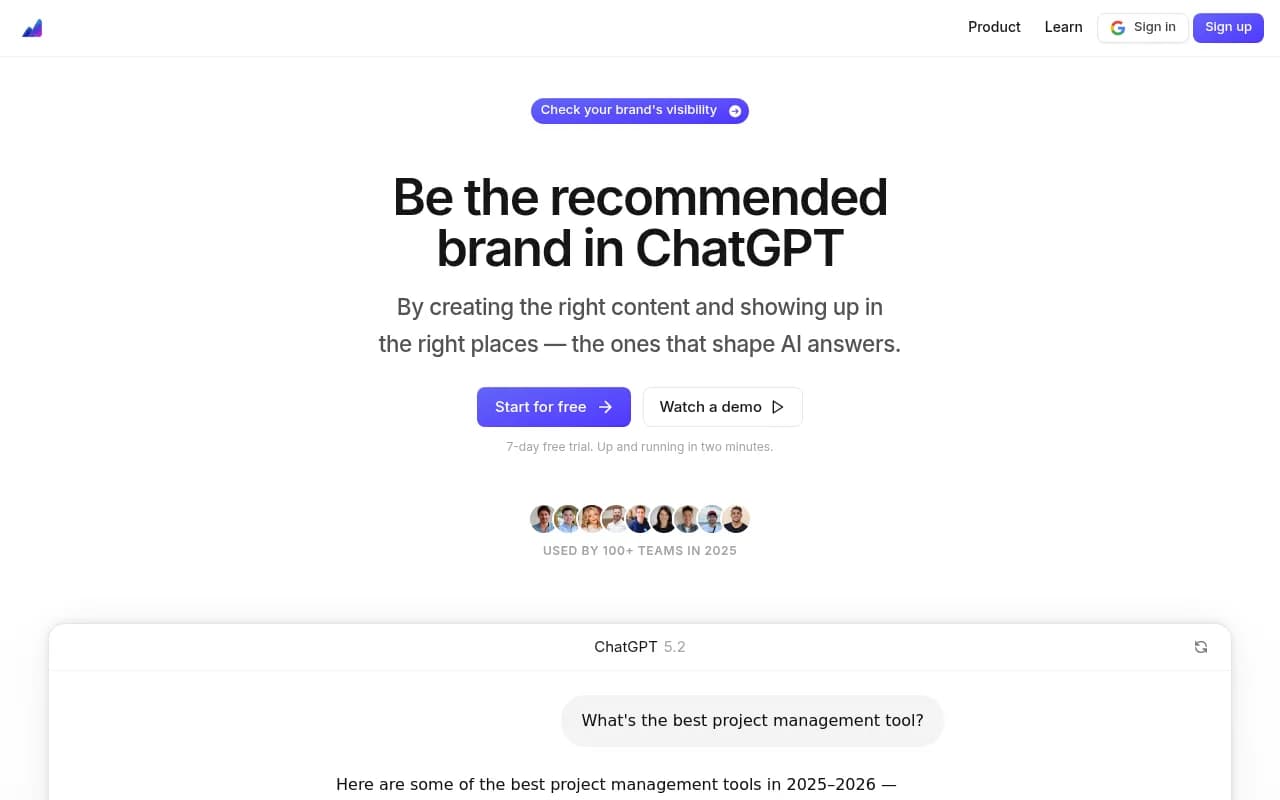
Otterly is a lightweight tracker for mentions, citations and sentiment, and a common pick for the cheapest start. It is monitoring-focused, so expect to do the content work yourself.

LLMrefs
LLMrefs is often recommended when you want more prompts for less money.

Rankscale
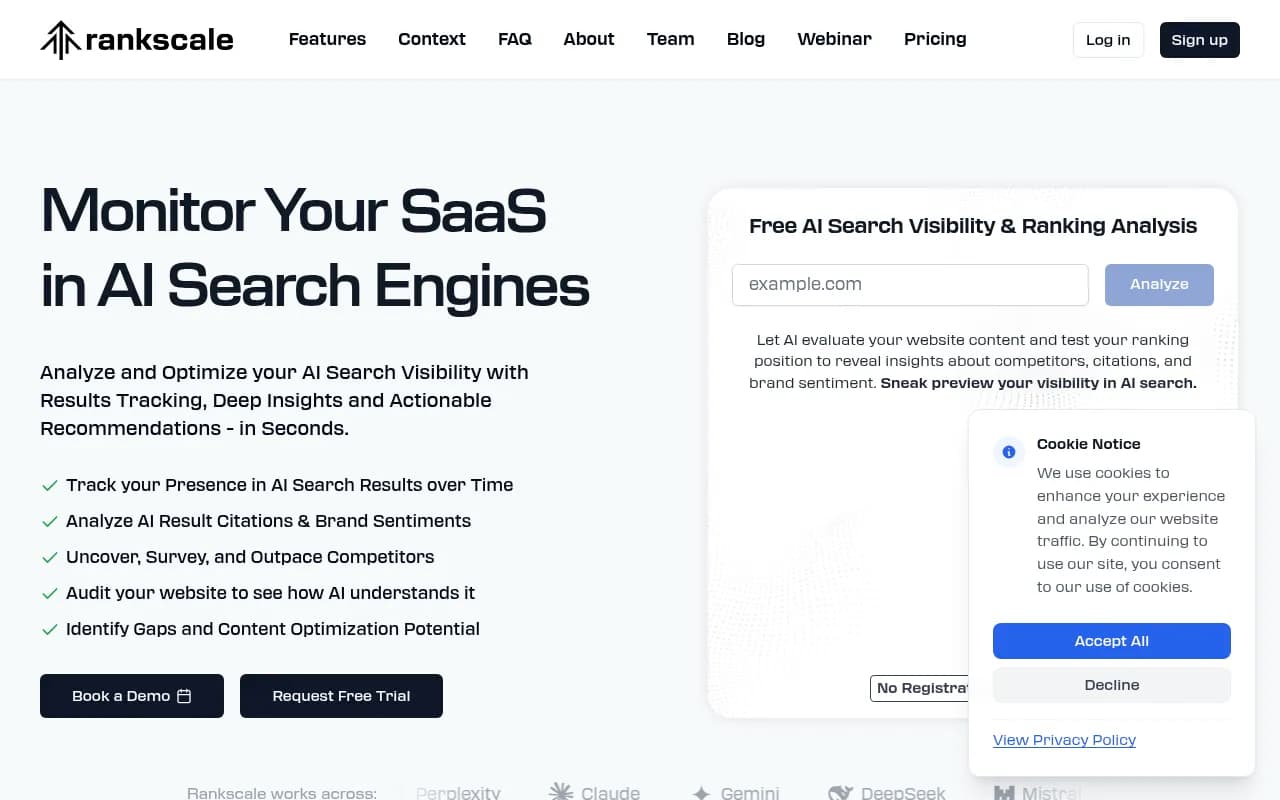
Rankscale does prompt-level tracking and citation analysis at a low cost.
Peec AI
Peec AI starts around 89 euros per month according to Gauge's comparison guide, with multi-language support and benchmarking. The base plan covers three AI platforms and extras cost more, so read the credit system carefully.

More budget trackers are worth a look in the catalog: Radix AI, BrandAxis, Atyla, Geoptie and Answer Socrates all position themselves on price. For broader browsing, the GEO software directory at bestgeosoftware.com lists many more.
When monitoring is not enough
Here's my honest opinion. Most of the cheap tools, open source included, answer "where am I invisible?" and then stop. That's fine if you have a content team ready to act. If you don't, you've bought a very accurate report about a problem you can't fix.
Promptwatch is the option I'd point to when the goal is fixing gaps rather than watching them. It tracks ChatGPT, Gemini, Perplexity, Claude, AI Overviews and AI Mode from real interfaces, shows which pages AI cites, and then its Content Agent writes and publishes to WordPress, Webflow or Framer. IP-verified crawler logs and visitor analytics show whether bots read the page and whether AI sends traffic. That crawler data is something most trackers in this article lack.

Pricing is $95/month for Essential, $245/month for Professional and $579/month for Business, which is the first tier with the Content Agent. That puts Business just under Gauge Growth, with more models and content automation included, though confirm current numbers at promptwatch.com/pricing. There is a 7-day free trial, and a free AI visibility report if you want a first look with no commitment. Compare directly in Promptwatch vs Peec or Promptwatch vs Otterly.
Which one should you pick?
- You have an engineer and want control: Elmo self-hosted, MIT license.
- You want open source without ops: Elmo Cloud from $29/month.
- You want to build on top of GEO infrastructure: Voyage.
- You want the cheapest hosted dashboard: Airefs, Otterly or Rankscale.
- You want more prompts per dollar: LLMrefs.
- You want the gaps fixed, not just reported: Promptwatch.
- You want to stay with Gauge but pay less: ask about Enterprise only if you need the extra platforms, otherwise Growth's three engines may be enough.
A practical test before paying anyone: run the same 30 prompts through two tools for a week and compare. If the answers and positions differ widely, find out whether one is using APIs and the other the real interface.
For more tools in this category, the AI rank tracking directory is a good place to keep browsing.
Final word
Gauge is not overpriced for what it does, but it is priced for teams that use the content engine. If you only want monitoring, an open-source tool or a $29 to $100 hosted tracker will do the job. Just budget for API keys, check licenses, and decide up front who will act on the data.