Key takeaways
- Pharma brands are often named by AI but rarely cited. Gradial's study of 25 manufacturers found a 7.8% average mention rate and only a 3.2% first-party citation rate.
- ChatGPT's healthcare answers lean on government, research and association sites, so your own domain is competing against NIH, the FDA and the NHS.
- The best tool for a pharma team is one that traces citations and crawler access, then helps you fix gaps. A dashboard that only reports a score is not enough.
- Compliance claims (SOC 2, HIPAA, ISO 27001) differ by vendor. Verify them directly in procurement rather than trusting a listicle.
- Agencies can help with MLR-heavy workflows, but a platform still gives you the measurement layer.
Why pharma GEO is a different problem
Most GEO advice is written for SaaS and ecommerce. Pharma is stricter. Claims need medical, legal and regulatory review. Content that would be trivial to publish elsewhere can take weeks to clear. And the questions people ask AI systems are not casual. They ask about eligibility, dosing, side effects, biomarkers and treatment selection.
That changes what you need from a tool. Tracking whether your brand name appears is the easy part. The harder questions are these: which source does the AI cite instead of you, which of your pages can the AI actually read, and which content fixes can survive MLR review.
What the data says about pharma visibility
Gradial ran GEO reports across 25 pharmaceutical manufacturers, testing 20 neutral, discovery-oriented prompts per company, about 4,000 searches in total. The average brand mention rate was 7.8% and the average first-party citation rate was 3.2%. The median company was cited in just 2% of searches.
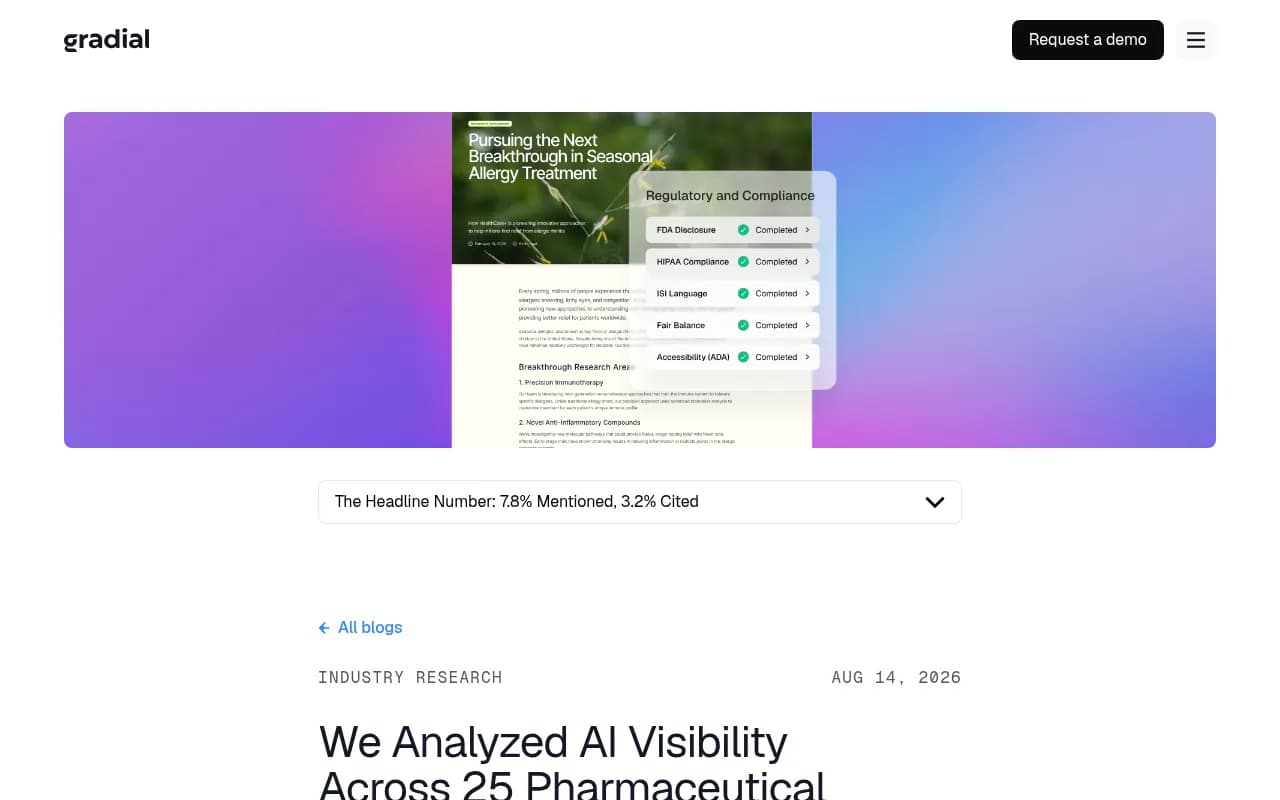
The gaps between awareness and citation are the interesting part. Novo Nordisk appeared in 6% of answers but was cited in 1%. CSL Behring reached 11% mentions and 2% citations. Four companies, including Sanofi, got no citations to their corporate domain at all. Gradial's takeaway is that the best opportunity is often citation conversion, not more mentions. I agree. If the AI already knows your drug, the job is to make your corporate domain the source it quotes.
Promptwatch's own data points the same way. In Promptwatch Data's healthcare citation report (Sep 9 to Oct 8, 2026), nih.gov was the top ChatGPT source at 5.46% of citations, followed by fda.gov at 1.76% and nhs.uk at 1.1%. Government and public health sites earned 7.06% and the top 20 domains together earned only 15.54%. No pharma brand domain made the top 20.
One caveat: that report covers consumer-style healthcare prompts, not HCP or B2B life science queries. Treat it as a directional signal about which sources ChatGPT trusts, not as a pharma-specific benchmark.
What to look for in a GEO tool for pharma
For a regulated marketer, I would score tools on six things.
- Real interface data. Answers from the actual ChatGPT, AI Overviews and Gemini interfaces can differ from API outputs, and patients and clinicians use the interfaces.
- Citation tracing. You need to see which URLs get cited, including regulators, journals and associations, so you know where to earn presence.
- Crawler visibility. Pharma sites are full of PDFs, gated content and event pages. Logs showing whether AI bots can read your pages separate an access problem from a content problem.
- Claim monitoring. What AI says about your drug (efficacy, safety, pricing) matters as much as whether it mentions you. Look for sentiment and claim-level analysis.
- Workflow fit. Can the output turn into briefs and content your MLR team can review, or is it just a score?
- Security and procurement. Check SOC 2, ISO 27001, GDPR and any HIPAA claims directly with the vendor. Listicle claims go stale quickly.
The best GEO tools for pharma and life sciences in 2026
Promptwatch
Promptwatch is the platform I would start with for pharma teams that want to fix visibility, not just watch it. It monitors the real interfaces of ChatGPT, Google AI Overviews, AI Mode, Gemini, Perplexity, Copilot and others, by country and language, which matters for global launches where the same drug has different labeling and messaging by market.

Three features map directly onto the pharma problems above. Citation and Offsite Mention tracking shows which third-party pages AI cites and where your brand is named without a link. IP-verified AI crawler logs show whether bots can read your drug and corporate pages. And Brand Narrative pulls out the individual claims AI makes about you, grouped into themes like Pricing, Features and Reputation. On Business plans, Fact Check lets you mark a claim inaccurate and finds the pages on your site that state it or its opposite, which is useful when an AI repeats outdated dosing or indication language.
On the action side, the Action Board prioritizes fixes and the Content Agent plans and publishes to WordPress, Webflow or Framer, with a review inbox so nothing goes live without approval. For a pharma team that review inbox is the point, because it fits an MLR step instead of bypassing it. Promptwatch is ISO/IEC 27001 certified and GDPR compliant, with an EU-based entity, which helps in security reviews.
Pricing starts at $95/mo (Essential), $245/mo (Professional) and $579/mo (Business, the first plan with the Content Agent and Fact Check). Confirm current numbers at promptwatch.com/pricing. There is a 7-day free trial and a free AI visibility report if you want a baseline first. See also Promptwatch vs Profound.
Profound
Profound is the name that comes up most for regulated industries. A third-party roundup (nicklafferty.com) lists it as starting at $99/mo and claims SOC 2 Type II and HIPAA compliance, 10+ AI engines and a large prompt volume dataset. I could not independently confirm the pricing or compliance claims, so ask Profound for current documentation. It is a strong monitoring product, though it is more expensive at the enterprise end and does not do the agentic execution side the way Promptwatch does.

Scrunch and AthenaHQ
Both are credible monitoring platforms for larger brands. They suit teams that mainly want reporting and competitive benchmarking and already have a content process elsewhere.

Enterprise SEO suites with AI modules
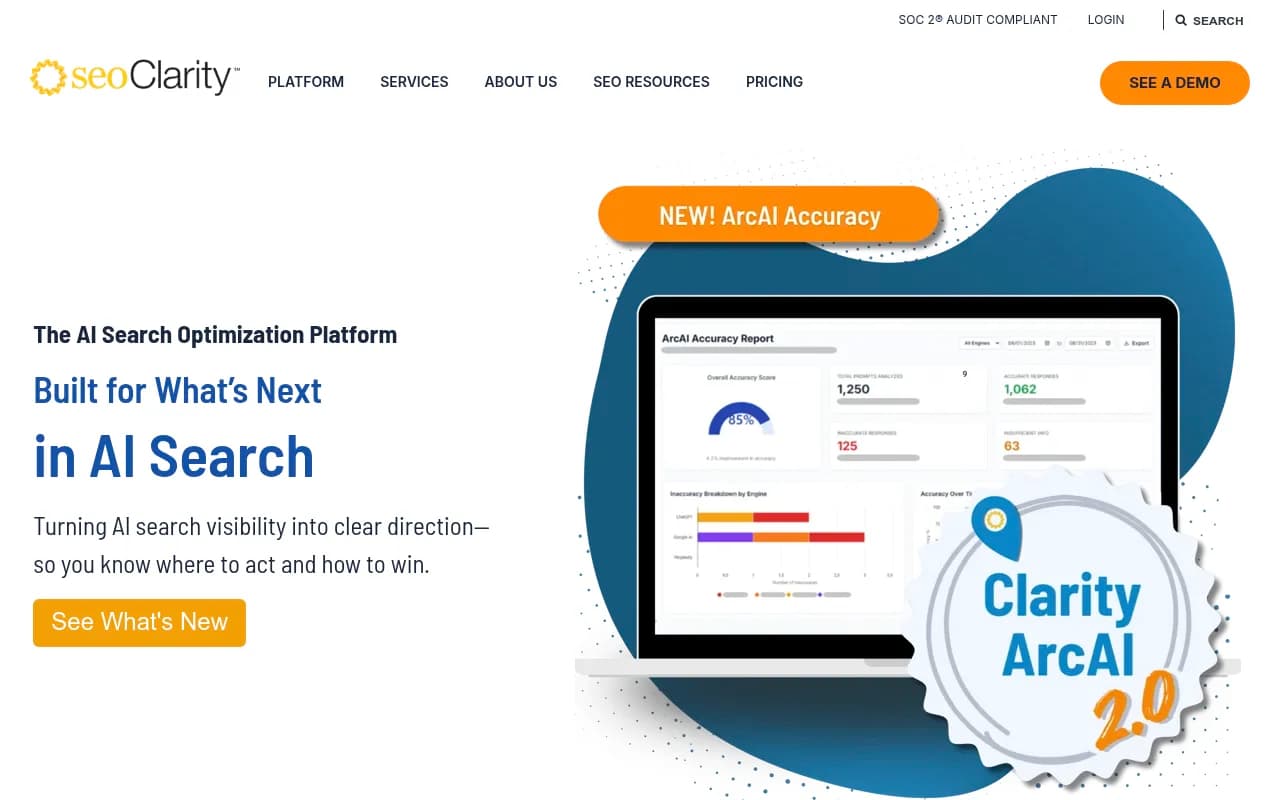
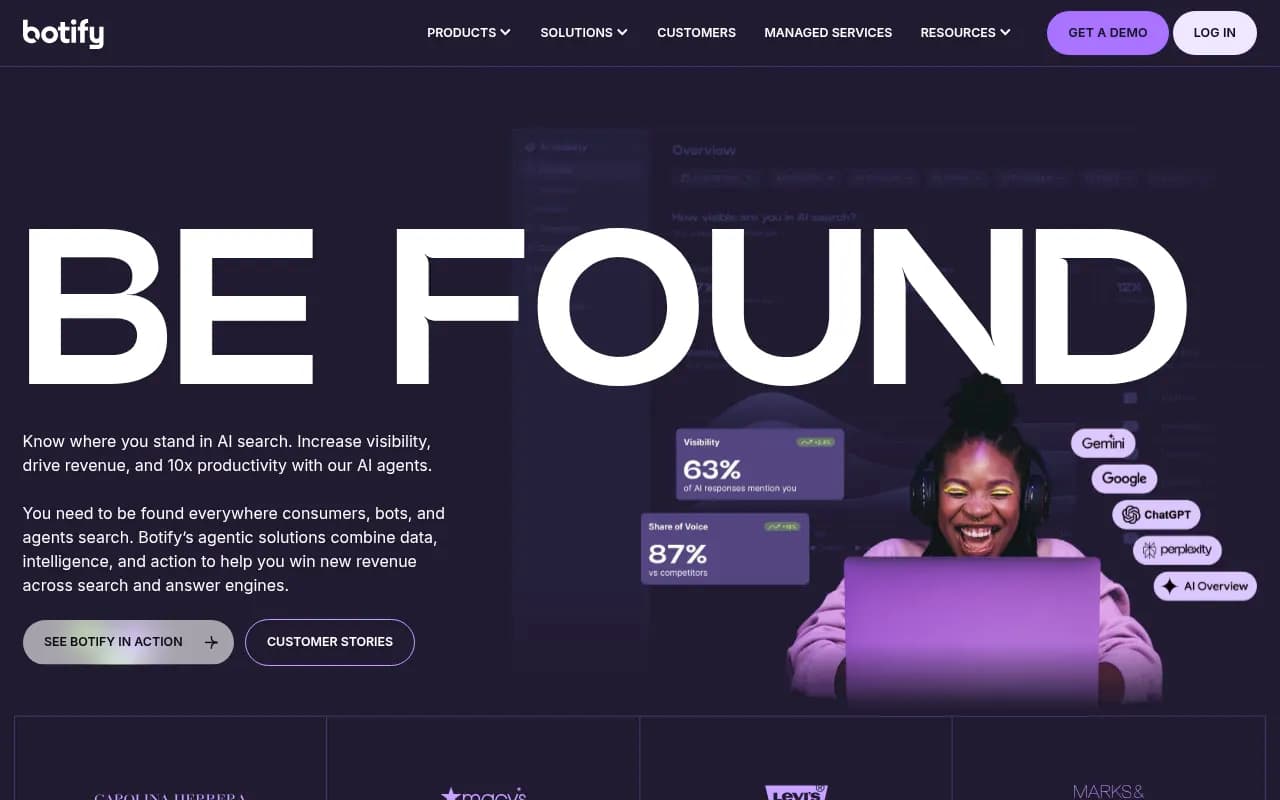
If you already run a large SEO platform, the AI add-ons may be the path of least resistance in procurement. BrightEdge, seoClarity and Botify all have AI visibility features. The trade-off is usually less depth on AI-specific data, such as crawler logs and citation tracing, than a dedicated platform.
Semrush and Ahrefs Brand Radar
Good for teams that want AI visibility next to classic SEO data. Prompt sets tend to be more fixed, so they are better as a starting point than as your main GEO system.

Free and lightweight starting points
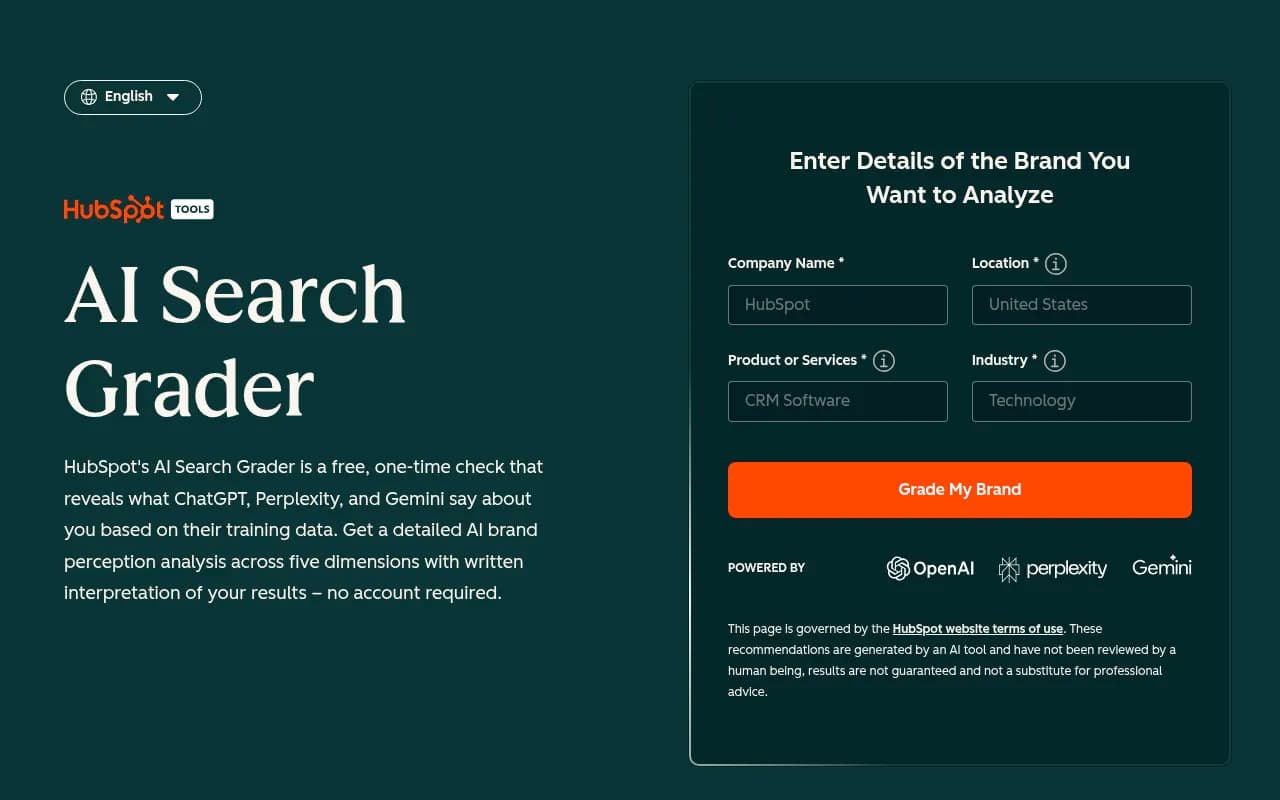
NoGood's roundup of healthcare tools names the HubSpot AI Search Grader as a free baseline. It scores brand recognition, competitive positioning, contextual relevance, sentiment and AI search readiness across a few engines. It is a snapshot, not a monitoring system, but it is a quick way to get a first reading before you pitch a budget.
For smaller teams, budget trackers like Otterly.AI and Peec AI cover basic prompt monitoring. They lack crawler logs and visitor analytics, so you will hit their ceiling quickly in pharma.


To browse more options, the GEO software directory at bestgeosoftware.com lists dozens of platforms.
Comparison table
| Tool | Real interface data | Crawler logs | Content execution | Best for |
|---|---|---|---|---|
| Promptwatch | Yes | Yes, IP-verified | Content Agent with review inbox, CMS publishing | Pharma teams that want to monitor and fix |
| Profound | Multi-engine tracking | Agent analytics | Workflows and strategist support | Large regulated enterprises (verify compliance) |
| Scrunch / AthenaHQ | Yes | Limited | Limited | Monitoring and benchmarking |
| BrightEdge / seoClarity / Botify | Varies | Via SEO crawl data | Via suite | Teams already on an enterprise SEO suite |
| Semrush / Ahrefs Brand Radar | Fixed prompt sets | No | No | Adding AI data to SEO workflows |
| HubSpot AEO Grader | 3 engines | No | No | Free one-off baseline |
| Otterly.AI / Peec AI | Yes | No | No | Small budgets, basic tracking |
A practical pharma GEO workflow
Tools only help if you know what to do with them. Gradial's recommendations are sensible, and they line up with what ChatGPT cites.
Build neutral, question-led hubs
Organize content around the questions people ask: eligibility, treatment selection, biomarkers, administration, monitoring and safety. Neutral disease and treatment hubs are more likely to be cited than promotional product copy, and they are easier to get through review.
Connect products to the corporate source
AI often knows the product but credits someone else. Use consistent manufacturer attribution, canonical URLs, internal links and structured organization and product data across corporate and brand sites.
Make evidence extractable
Add concise answer blocks, comparison tables, trial summaries, visible review dates, named medical reviewers and direct references to primary evidence. Link out to PubMed or PubMed Central and keep pages consistent with FDA, CDC, NHS and NICE guidance. Promptwatch's healthcare data recommends exactly that, since those are the domains ChatGPT cites most.
Keep product pages and docs complete
In Promptwatch's content type data (Sep 28 to Oct 4, 2026), product pages earned 22.4% of ChatGPT citations and landing pages 16.8%, together 39%. Branded prompts lean on product pages and reviews. News fades faster: per the content half-life report, news pages lose half their citations in about five weeks while landing pages and docs hold on for months. For pharma that means your evergreen drug and disease pages matter more than press releases.
Plan for MLR
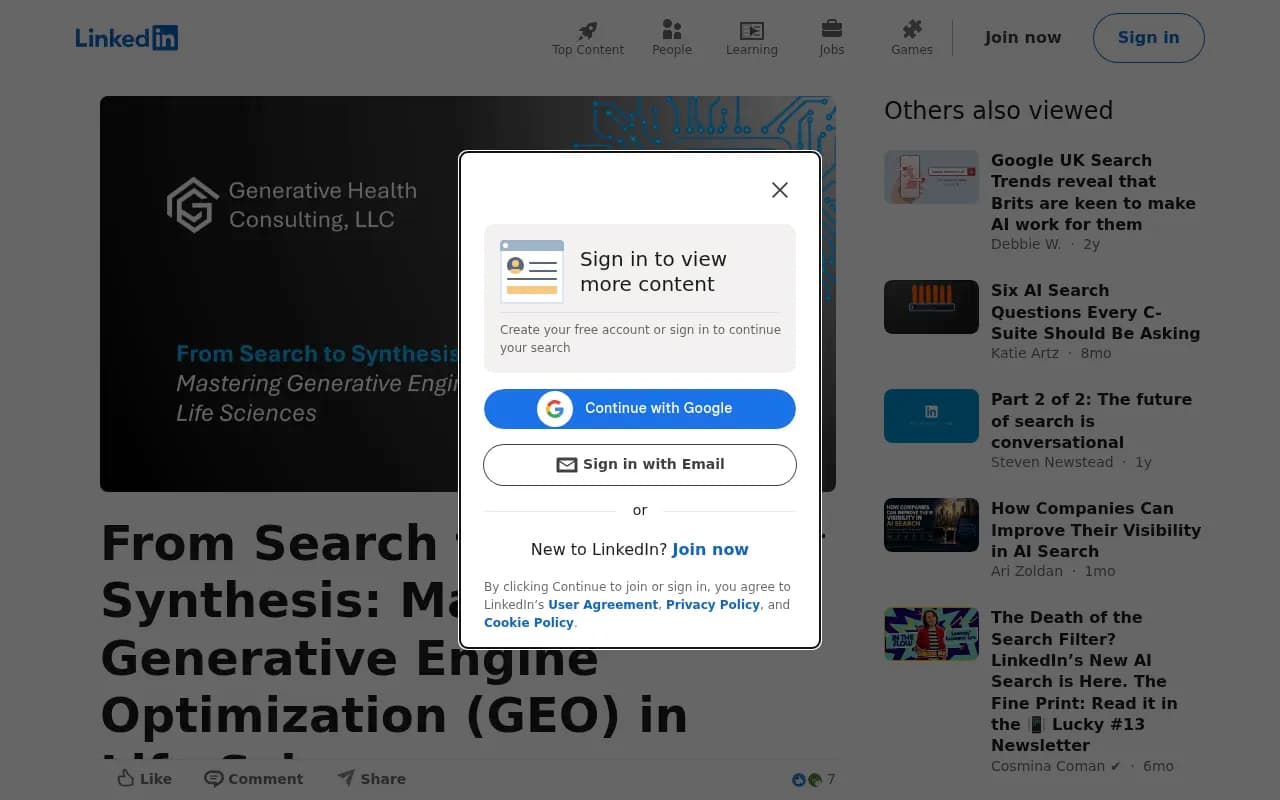
A LinkedIn piece on GEO in life sciences suggests building a GEO compliance playbook that aligns MLR processes with AI optimization requirements so content moves faster. I think that is right. Agree on pre-approved templates, claim libraries and reviewer SLAs before you scale content production.
Tools vs agencies
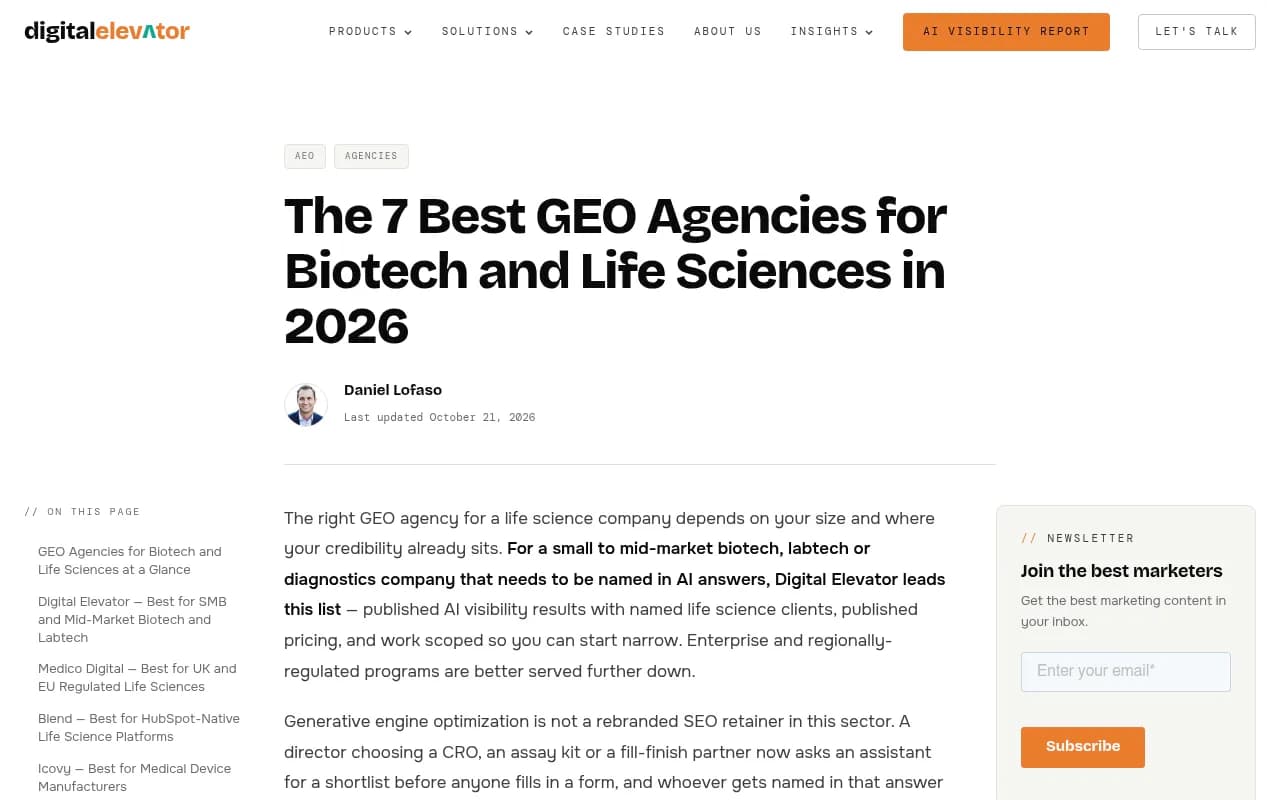
Some life science teams hire a specialist instead. Digital Elevator's roundup names agencies such as Medico Digital for UK and EU regulated programs, Forma Life Science Marketing for drug development and instrumentation, and Digital Elevator itself for SMB and mid-market biotech and labtech. That list is published by one of the agencies on it, so read the ranking with that in mind.
If you want outside help with strategy and execution, an agency like 1001 SEO Media can run GEO programs and uses Promptwatch for AI visibility measurement. Either way, own the measurement layer yourself so you can check the work.
How to choose
- Small biotech or labtech, little budget: start with the free HubSpot grader and Promptwatch's free report, then move to a tracker with a 7-day trial.
- Mid-market pharma or device brand: pick a platform with crawler logs and a review-gated content workflow. Promptwatch Business is the fit.
- Global enterprise with strict security review: shortlist two or three vendors, request SOC 2, ISO 27001 and HIPAA documentation, and test how each handles multi-country monitoring.
- Already on an SEO suite: try the suite's AI module first, but run a dedicated platform alongside it for one quarter to compare depth.
Whatever you choose, set a baseline before you change anything. Track mention rate, first-party citation rate and the gap between them. Gradial's 4.6-point average gap is a useful benchmark to beat. Then check whether each published page gets crawled, cited and clicked. For more on how AI cites sources, browse the Promptwatch Data hub.