Key takeaways
- Gyms are local, commercial, and review-driven, so the GEO tool you pick has to cover three jobs: tracking AI answers, fixing listings and reviews, and publishing the pages AI cites.
- Promptwatch's data (Sep 28 to Oct 4, 2026) shows product and landing pages earn about 39% of ChatGPT citations. For a gym, that means membership, class, pricing, and location pages.
- For organic prompts like "best gym in Austin", 52.5% of ChatGPT responses cite 10 or more domains. You get in through third-party listicles, reviews, and directories, not just your own site.
- A solo studio does not need an enterprise stack. A tracker, a review tool, and a clean Google Business Profile cover most of it.
- Multi-club operators should budget separately for listings and prompt tracking. They are different jobs.
Why gyms need GEO, not just local SEO
Someone types "best gym near me with childcare" into ChatGPT or Gemini. They get a short, synthesized answer with a handful of names. If yours is not one of them, you never even see the lost lead. There is no ranking position to check, no impression in Search Console that explains it.
That is the problem GEO (generative engine optimization) tools try to solve. They run prompts across AI engines, record which brands get named and cited, and in the better cases tell you what to fix.
Gyms have a few quirks that make this different from a SaaS company chasing AI visibility:
- Almost every query is local. "Near me" and neighborhood phrasing dominate.
- Trust signals matter more than features. Reviews, hours, and class schedules decide whether an engine recommends you.
- Your data lives in many places: website, Google Business Profile, Mindbody or Glofox pages, Yelp, ClassPass, Instagram. When those disagree, AI answers get shaky and so do you.
- Seasonality is real. January and September surges mean fresh content matters.
I would also be skeptical of any fitness-specific citation statistics floating around. Promptwatch has no fitness-specific report yet, and I would not invent numbers. What we do have is solid cross-industry data on what ChatGPT cites, and it maps well onto gyms.
What the citation data says about gym websites
Promptwatch Data looked at which content types ChatGPT cites from Sep 28 to Oct 4, 2026. A few findings matter for gym owners:
- Product pages are the most cited type at 22.4% of classified citations. Landing pages follow at 16.8%.
- For commercial prompts (think "best gym near me"), product pages get 26.0%, landing pages 20.6%, listicles 15.0%, and comparisons 7.9%. Those four are almost 70% of commercial citations.
- For branded prompts ("is [gym name] good"), reviews jump to 5.6%, more than triple their overall share. Social posts rise to 3.0% and FAQ pages to 4.8%.
Translate that to gym pages: membership and pricing pages, class pages, location pages, and a real FAQ. Then get listed in "best gyms in [city]" roundups, and collect reviews on sites AI trusts.
A second report, on unique domains per ChatGPT response, explains why third parties matter. In the same week, 52.5% of organic-prompt responses cited 10 or more domains. For brand-specific prompts, only 21.3% did, and the most common count was 5 domains. So for "best gym in Austin" you are fighting for a spot among many sources. For "is YourGym good", just a few sources, mostly your own site and review platforms, shape how the engine describes you.
The practical takeaway: track your position and how you are described, not only whether you were cited.
The three jobs a gym GEO stack has to do
Most tool confusion comes from lumping these together.
- Prompt tracking and citation analysis. Which prompts mention you, which competitors win, which pages get cited.
- Listings, reviews, and local data hygiene. Google Business Profile, directories, review velocity, consistent NAP (name, address, phone) and hours.
- Content execution. Writing and publishing the class, location, and comparison pages that AI cites, then checking whether they worked.
A US Tech Automations breakdown of the category makes the same split: listings-plus-local tools (Yext, Uberall, BrightLocal) versus prompt-tracking tools (Profound, Peec AI, Semrush), and chains need both without sharing one budget line. I agree with that framing.
Best GEO and AI visibility tools for gyms in 2026
Promptwatch: tracking plus content execution
Promptwatch is an end-to-end AI visibility platform rather than a dashboard that stops at a score. It monitors the real interfaces of ChatGPT, Gemini, Perplexity, Google AI Overviews, AI Mode, Copilot, and others, in the country and language you choose. For gyms, a few pieces stand out:
- Local GEO/SEO targeting pins a monitor to exact coordinates (accuracy radius from 20 m to 5 km), so ChatGPT, AI Overviews, and AI Mode answer as if asked from your neighborhood. That is built for "near me" queries and multi-location brands. It is on Business, Agency Scale, and Enterprise.
- Brand Narrative pulls out the individual claims AI makes about you, like "great classes but crowded" or "pricey". That is useful when your reputation is the product.
- Content gap analysis and the Content Agent (Business plan and up) plan, write, and publish pages to WordPress, Webflow, or Framer, then track whether they get crawled and cited.
- Crawler logs show whether AI bots can read your class schedule pages at all. Many gym sites hide schedules behind booking widgets that bots cannot parse.
Plans start at $95/mo (Essential, 50 prompts), $245/mo (Professional), and $579/mo (Business). Check Promptwatch pricing to confirm, and use the 7-day free trial or the free AI visibility report to see where you stand first. A franchise with 10 locations will want Business for local targeting and the Content Agent. A single studio can start on Essential.

Agencies serving gyms should look at the agency plans, which start at $199/mo with unlimited projects.
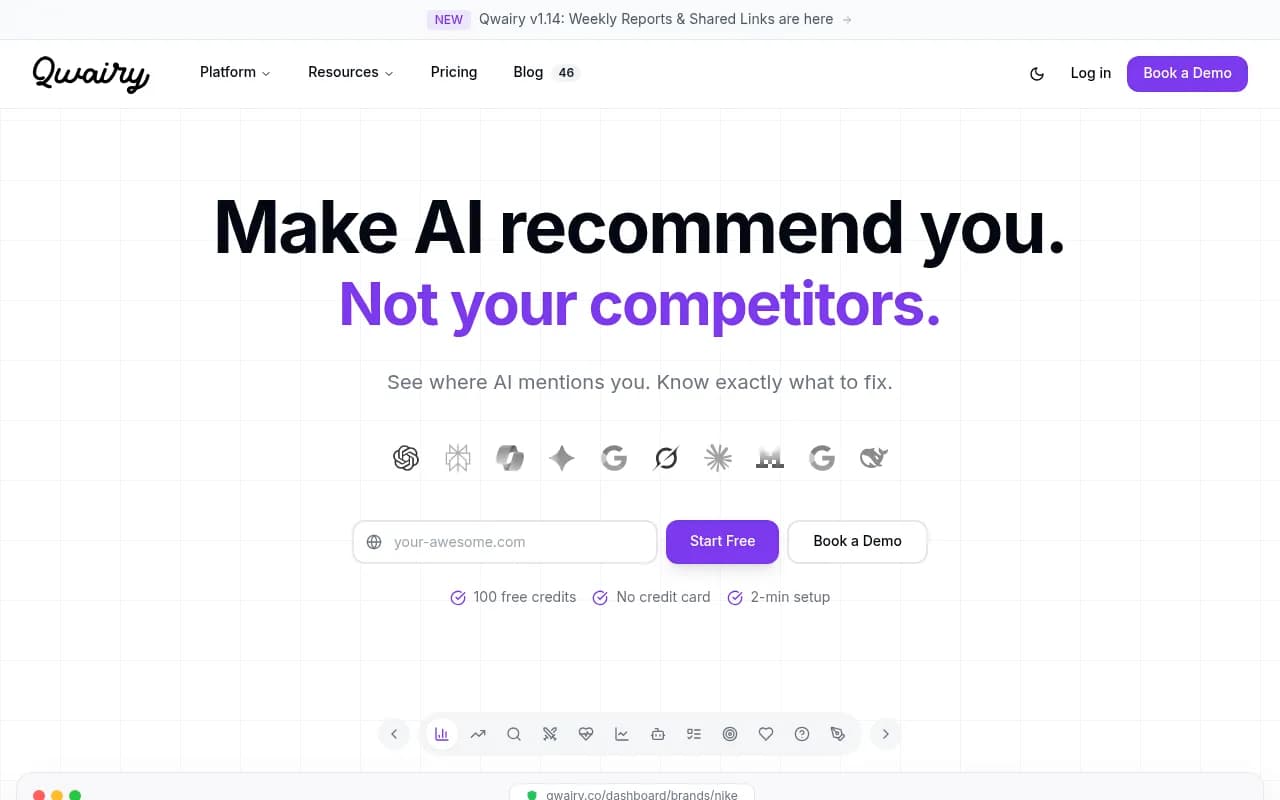
Qwairy: a GEO playbook aimed at fitness
Qwairy publishes a fitness and wellness GEO playbook, including schema examples for SportsActivityLocation and ExerciseGym types with amenity features like sauna and parking. It is a monitoring and strategy platform, and the playbook content is genuinely useful even if you never buy it.
Frizerly: cheap AI visibility with auto-publishing
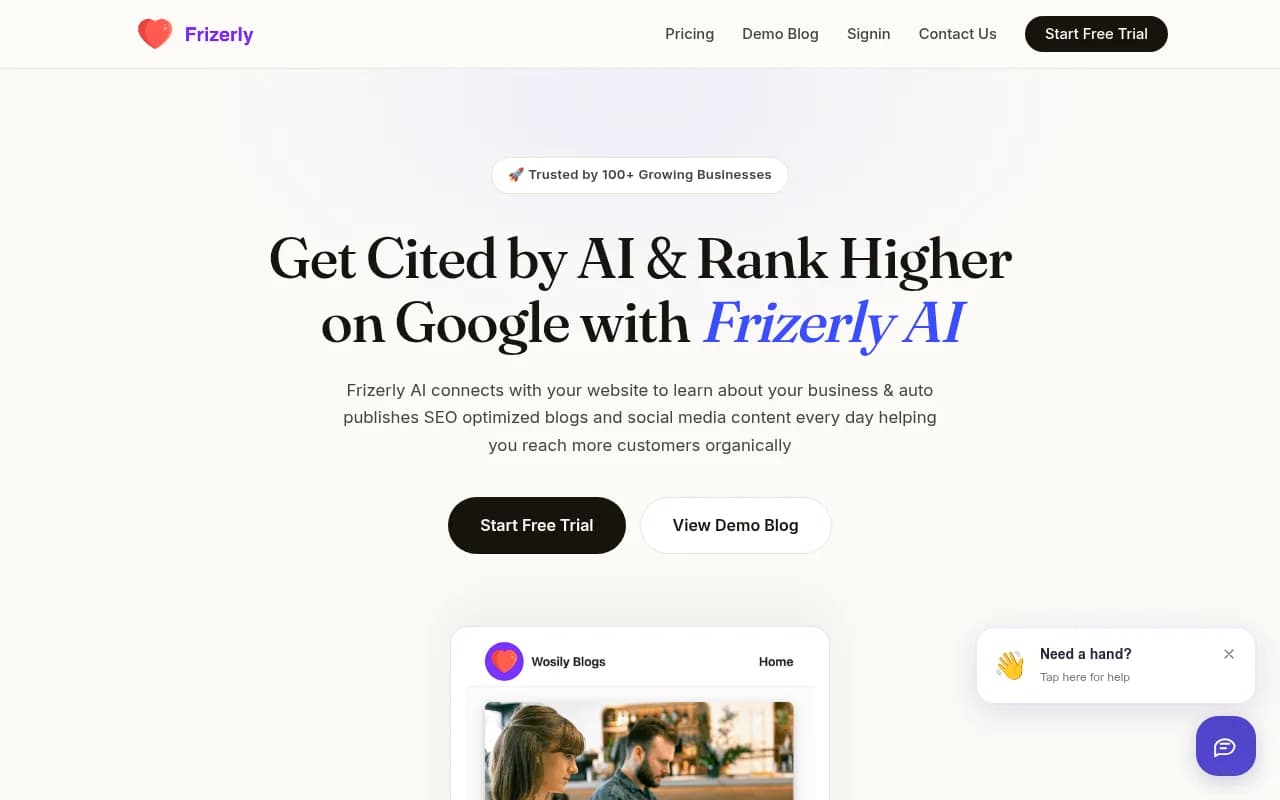
Frizerly pitches itself directly at gyms and studios. It combines automated blog publishing from your own site data, AEO optimization, and brand mention tracking across ChatGPT and Gemini. Note the source is Frizerly's own blog ranking itself first among seven tools, so treat the claims as marketing. For a tiny studio that wants hands-off content, it is worth a look.
Profound, Peec AI, and Semrush: prompt tracking
US Tech Automations lists Profound's Starter at $99 and Semrush's Starter at $199, though its numbers come from its own fetch and prices change, so verify them. These tools track prompts well. Profound's tracking depth is a plus for larger chains, but expect to write your own prompts and do the fixing yourself. Peec AI is simpler and multi-language.


Yext, BrightLocal, and Uberall-style listing tools
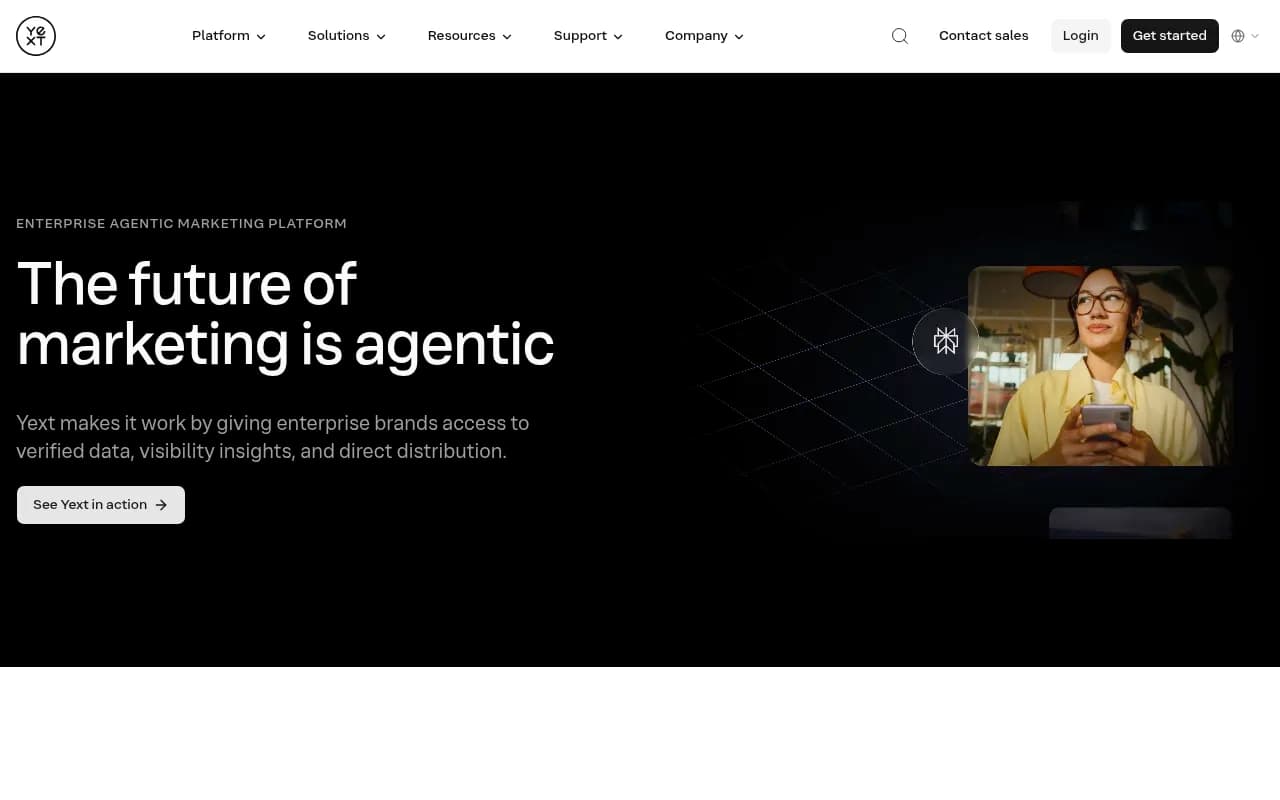
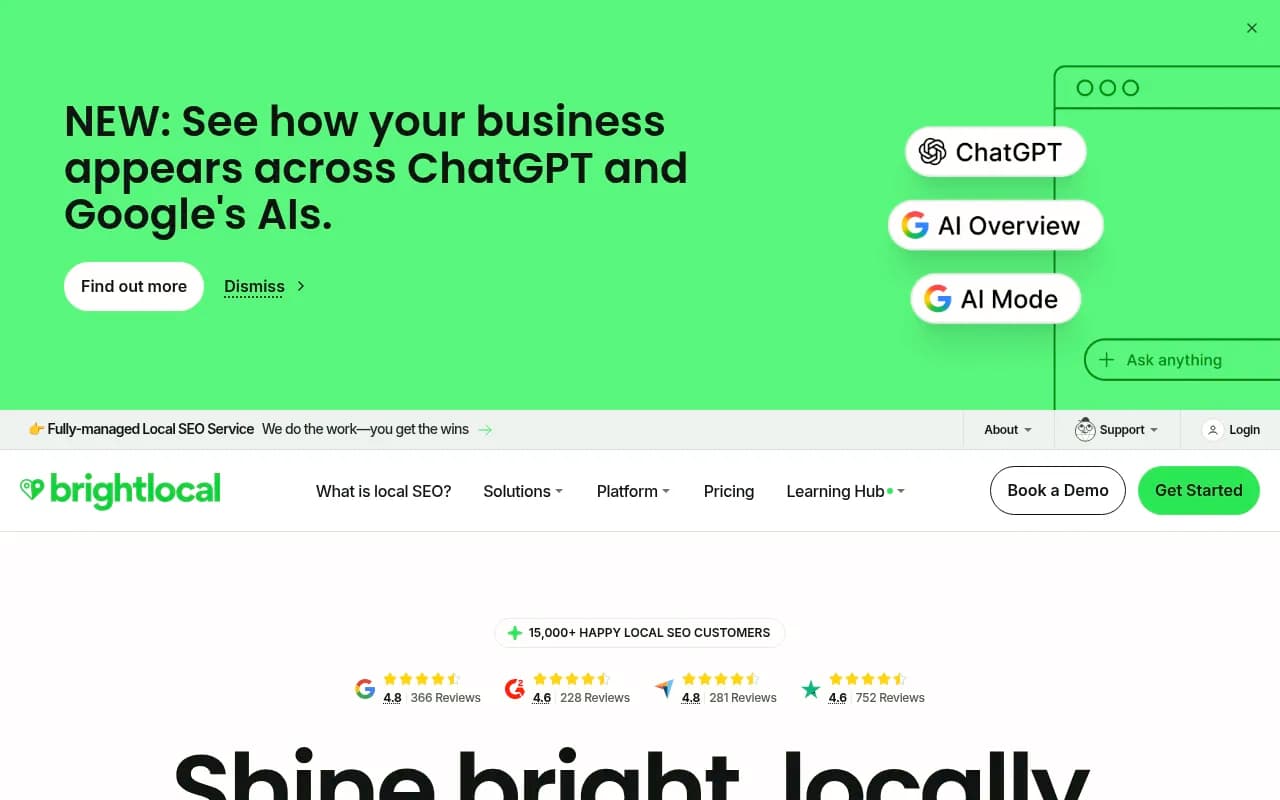
If your data is inconsistent across directories, no tracker will fix that. Yext acts as a knowledge graph pushing consistent data everywhere. BrightLocal covers local rankings, listings, and reviews, with a Citation Builder reportedly from $3.20 per site. For a multi-club chain these are not optional.
Review tools: NiceJob, GatherUp, ReviewTrackers
Reviews matter more for branded prompts, per the Promptwatch data above. Review automation tools help you collect them steadily rather than in bursts.


Budget trackers for single studios
Otterly.AI, Airefs, and BrandAxis are lower-cost trackers aimed at small teams. They tell you whether you are mentioned. They will not write your pages or analyze crawler access, so pair them with some manual work.

Comparison table
| Tool | Main job | Local targeting | Content execution | Best for |
|---|---|---|---|---|
| Promptwatch | Tracking, tracing, content, measurement | Exact-coordinate monitors (Business+) | Content Agent, CMS publishing | Multi-location gyms, agencies |
| Qwairy | Monitoring and GEO strategy | Limited | Playbooks | Teams wanting a fitness playbook |
| Frizerly | Auto-published blogs plus mention tracking | Basic | Yes | Tiny studios, hands-off owners |
| Profound | Prompt tracking | Varies by plan | No | Chains with a dedicated SEO lead |
| Peec AI | Prompt tracking | Country level | No | Simple multi-language tracking |
| Yext | Listings and knowledge graph | Yes | No | Multi-club chains |
| BrightLocal | Local rankings, listings, reviews | Yes | No | Single studios to mid-size chains |
| Otterly.AI / Airefs | Basic monitoring | Country level | No | Budget-conscious studios |
Software your gym already uses matters too
Your member management platform (Mindbody, Glofox, PushPress, Zen Planner, Wodify) is often where your schedule, pricing, and booking pages live. Those pages are what AI engines try to read. Wodify's own guide estimates gym management software at $75 to $150+ per month, with reputation management $50 to $200+, so a GEO tool adds to an already crowded stack. Pick one that replaces something rather than adds another dashboard.
Check whether your booking widget is crawlable. If the class schedule only loads via JavaScript inside an iframe, AI crawlers see nothing. A plain HTML schedule page, even a simplified one, helps.
A practical 30-day plan for a gym
Week 1: baseline
Run a free visibility report or trial. Write 20 to 30 prompts real members would type: "best gym in [neighborhood]", "yoga studio with beginner classes near me", "is [your gym] worth it", "[your gym] vs [competitor]". Include branded, organic, and comparison types.
Week 2: fix the foundation
Audit your Google Business Profile and listings so hours, address, and services match your website exactly. Add schema markup for your location. Qwairy's playbook example uses a SportsActivityLocation type with geo coordinates, hours, and rating, plus an ExerciseGym type listing amenities:
{
  "@context": "https://schema.org",
  "@type": "ExerciseGym",
  "name": "Your Gym Name",
  "amenityFeature": [
    {"@type": "LocationFeatureSpecification", "name": "Group Classes", "value": true},
    {"@type": "LocationFeatureSpecification", "name": "Sauna", "value": true}
  ]
}
Week 3: build the pages AI cites
Write or tighten membership and pricing pages, one page per class type, and one per location. Add an FAQ page with real answers on cancellation, childcare, guest passes, and parking. Create one honest comparison page, such as "personal training vs group classes". Complete pricing information gets cited more than vague "contact us" pages.
Week 4: earn third-party mentions
Get into local "best gyms" roundups, ask for reviews on the platforms your prompts surface, and check which sites AI actually cites for your queries. A tool that shows cited sources saves hours here. The GEO software directory at bestgeosoftware.com lists more options if you want to shop around.
Seasonality and freshness
January resolution traffic and September back-to-routine traffic are when prompts spike. Update pricing promos, class schedules, and "new year" content a few weeks before, not during. Promptwatch's content half-life data found landing pages and docs stay cited longest, while news loses half its pages within 36 days. So put your effort into durable pages and skip chasing news-style posts.
Which setup fits you
- One studio, tight budget: BrightLocal or a review tool, a free visibility check, a budget tracker like Otterly.AI, and manual page fixes.
- Two to ten locations: Promptwatch Business for local monitors and content execution, plus a listings tool.
- Large chain or franchise: Promptwatch Enterprise or Business, Yext for listings, and governance over who approves schema and hours.
- Agency serving gyms: Promptwatch agency plans or a tracker with white-label reporting, plus local listing tools.
If you want a human to do the work instead, an agency like 1001 SEO Media handles GEO and local SEO for multi-location brands. That is an option, not a requirement.
What to do first
Start by checking what AI says about you today. Ask ChatGPT and Gemini five real member questions, write down who gets named, then fix the page types the data says get cited: membership, class, pricing, location, and FAQ. Tools speed up each step, but the pages and the listings consistency still decide the result.