
Key takeaways
- Country coverage and language support are different requirements. A translated prompt and a country-specific AI answer are not the same thing, so check language, country and engine together.
- Write prompts locally instead of translating an English master list, and tag every prompt by language, market and funnel stage.
- Most platforms stop at monitoring. For a multi-market team the real cost is the content work in every language, so ask whether a finding can become a published fix.
- Entry-level trackers like Otterly and Peec are cheap per prompt, but check country-engine matrices and plan limits before you scale across markets.
- Run a trial on your two or three hardest markets before signing anything. No tool can guarantee citations, because retrieval stays with the AI system.
Why multi-market GEO is harder than English-only GEO
Tracking your brand in ChatGPT for one English-speaking market is already fiddly. Add German, Japanese, Brazilian Portuguese and Arabic and the problem multiplies. Answers differ by country. Sources differ by language. Some engines are barely present in certain markets, and others (Naver AI, ERNIE) only matter in specific regions.
The market is also messy. A thread on r/SEO_for_AI put it bluntly: every demo claims to cover everything. The vendor roundups are not much better. Profound, Searchable, Dageno and Brandlight each publish rankings that favor themselves, and Publive's own comparison puts Publive first because it publishes the guide. I treat all of those as vendor claims, and you should too.
So this guide is about the questions to ask, then a fair look at the tools.
What multilingual GEO actually requires
Five things separate a multi-country setup that works from one that produces a pretty but misleading dashboard.
Locally written prompts, not translations
A translated prompt tests how a model handles your translation. A prompt written by a native speaker tests what a buyer in that market would ask. Dageno's guidance on this matches what I have seen: one topic per buyer decision, prompts written locally, and tags for language, market and funnel stage. Otterly, for example, monitors prompts exactly as written, so native-language lists work fine there, although its Prompt Research feature supports a different set of languages than monitoring does.
Real country and location targeting
Country-specific answers come from the interface in that country. Tools that call an API from one data center and swap the prompt language are measuring something else. Look for monitors pinned to a country, state or city, with the language fixed per monitor so markets never mix.
Engine coverage per market
Ask for the country-engine matrix. ChatGPT, Google AI Overviews and AI Mode behave differently across regions, and regional engines matter in some markets. Peec AI lists Naver AI, ERNIE and Bing AI Mode among its engines, which is useful if you sell in Korea or China.
Per-market measurement
A single global visibility score hides the problem. Your brand might be strong in the US and invisible in Spain. Share of voice, position and sentiment should be reportable by language and market, with a heatmap or breakdown you can hand to a regional marketing lead.
Content in every language
This is where most teams stall. Finding out you are absent from French AI answers takes a dashboard. Fixing it takes French pages, written for French search behavior and published to your CMS. One more detail worth knowing: Promptwatch's ChatGPT query fanout data shows ChatGPT's background searches are short and keyword-like. Average fanout length fell from about 117 characters in early December to about 53 characters in April. The report does not break fanouts out by language, so treat this as my inference: localized headings should read like local search queries, not translated conversational questions.
How the main platforms compare
Pricing below comes from third-party roundups and I did not verify it on vendor pages. Confirm every number before you buy.
| Platform | Entry price (monthly) | Multi-market strengths | Where it stops |
|---|---|---|---|
| Promptwatch | $95 Essential, $245 Professional, $579 Business | Real-UI tracking per country and language, state/city and exact-coordinate targeting, content agents, crawler logs | Content Agent and local targeting start on Business |
| Peec AI | $95 / $245 / $495 | Prompts organized by market, language and client, per-prompt location, unlimited users | Monitoring focus, translation quality needs a native reviewer |
| Otterly.AI | $29 / $189 / $489 | 65+ countries and languages on every plan, cheap | Small prompt counts, no execution layer |
| Profound | Custom enterprise | Claims daily tracking in 50+ countries | No free trial, published entry plans carry language and region limits |
| Semrush AI Visibility | $99 per domain | Location and language targeting inside a familiar suite | Weekly refresh on some reports, most expensive per prompt |
Entry-plan cost per tracked prompt runs from roughly $1.19 to $3.96 according to Searchable's roundup: Otterly about $1.45, Peec about $1.90 and Semrush about $3.96. Cheap per prompt is not the same as cheap per market, though. Ten markets at 50 prompts each is 500 prompts, and that changes which tier you are on.
Promptwatch: the option that also does the work
Promptwatch is the platform 1001 SEO Media uses, and it is the one I would shortlist first when the hard part is acting on the data in several languages. It monitors the real interfaces of ChatGPT, Google AI Overviews, Google AI Mode, Gemini, Perplexity, Copilot, Meta AI and others, in each country and language you choose. A monitor's language and location are fixed when you create it, so German and Dutch results never blur together.

What matters for multi-market teams:
- Country tracking is on every plan. State and city tracking, plus local GEO/SEO targeting at exact coordinates, comes with Business and the higher agency plans.
- Prompts can run every 12, 6 or 1 hours on Business, which helps around a launch in a specific market.
- The Content Agent writes in the prompt's language and publishes to WordPress, Webflow or Framer, with a review inbox so a native speaker can approve before anything goes live.
- IP-verified AI crawler logs show whether bots can read each localized page. That separates an access problem from a content problem, which is exactly the diagnosis you need when one market underperforms.
- Brand Narrative and Fact Check show what AI claims about you per model, so you can catch a wrong claim that only appears in one language.
- Personas let you prompt like buyers in a specific segment, and heatmaps can put countries on one axis and models on the other.
The honest caveats: the Content Agent and faster tracking start on Business at $579 a month, and native review of AI-written content in each language is still your job. Details and a head-to-head with Peec and with Profound are on the site. Confirm current plans at promptwatch.com/pricing. There is a 7-day free trial on monthly billing.
The monitoring-first alternatives
Peec AI
Peec is the one I see agencies pick for several brands and markets. Prompts can be organized by market, language, project or client workspace, each prompt gets its own location, and all plans include unlimited users. Starter reportedly lets you pick any three engines on a 7-day trial. Profound criticizes Peec for showing prompt volume as a relative score rather than a count of real conversations, which is fair to keep in mind. Country limits depend on plan and project.

Otterly.AI
Otterly is the cheapest honest read at $29 a month, with about 20 prompts on three engines (one source says 15). It supports tracking across 65+ countries and languages on every plan. The catch is scale: 20 prompts is one market and one topic. The $189 tier gets you about 160. Vendor docs publish a languages page and a country-engine matrix, so check those first.

Profound
Profound is enterprise-only with custom pricing and no free trial. It claims daily tracking across 50+ countries and 1.9B+ real user prompts, which is a vendor claim I could not verify. Good fit for a large brand with a procurement process, a poor fit if you want to test on a Tuesday afternoon.

Semrush AI Visibility Toolkit
Semrush starts at $99 per month per domain for 25 prompts, with 50 more for $60. Language and location targeting exist, but research databases, Brand Performance and Prompt Tracking have different coverage and limits, so read the fine print. It makes sense if your team already lives in Semrush and wants one vendor.
Goodie and others to test
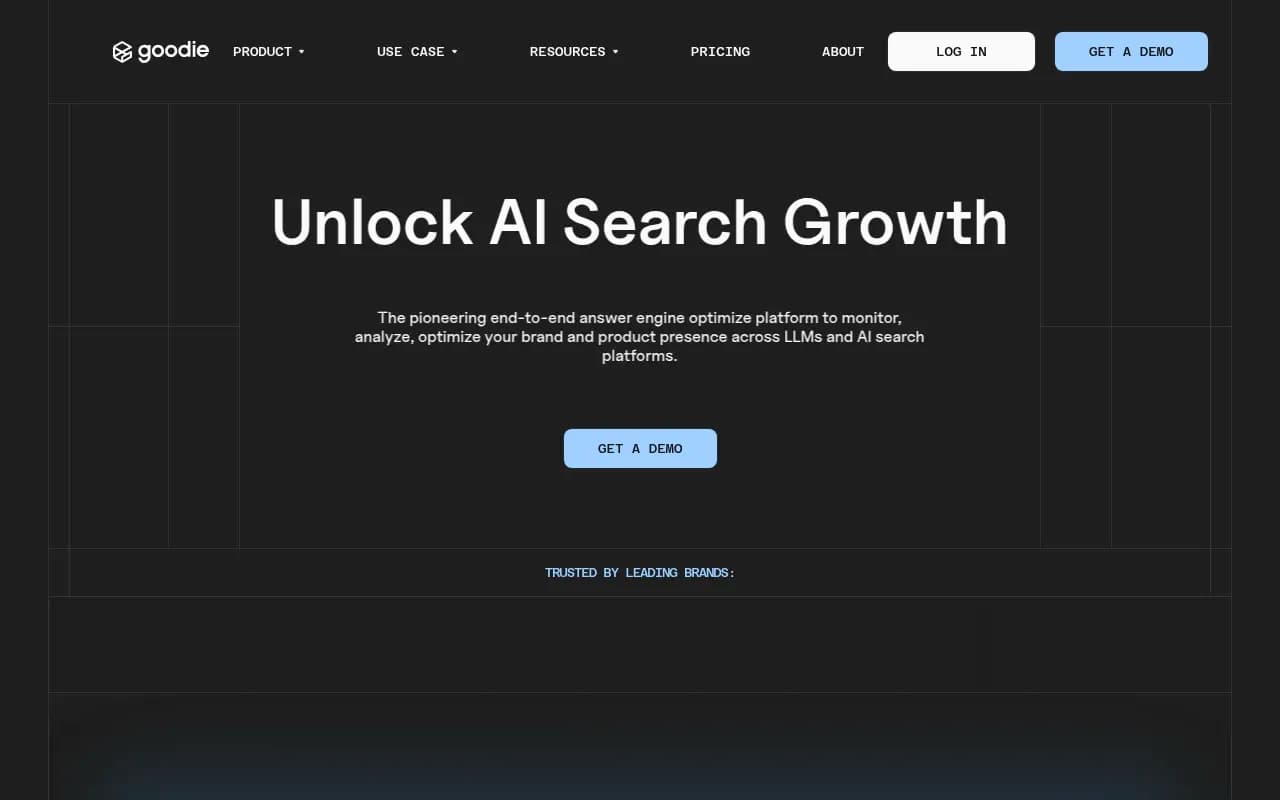
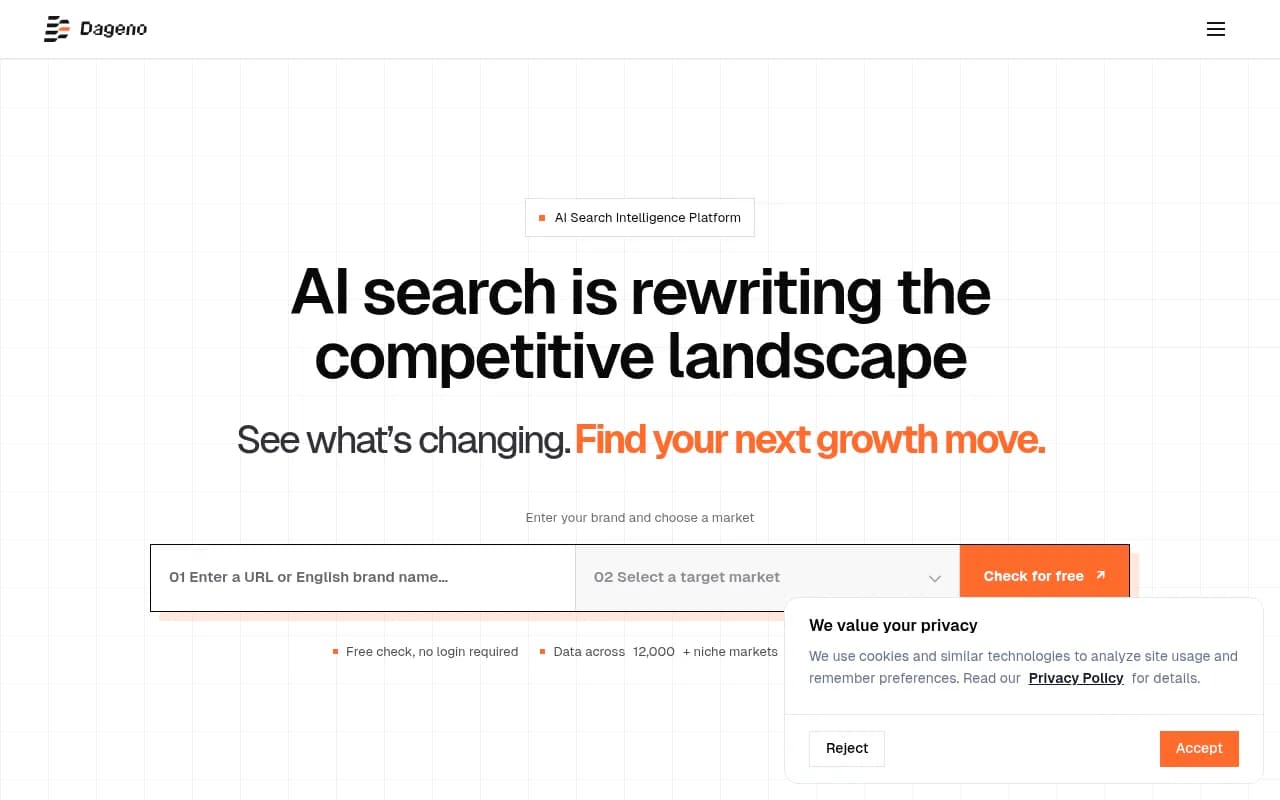
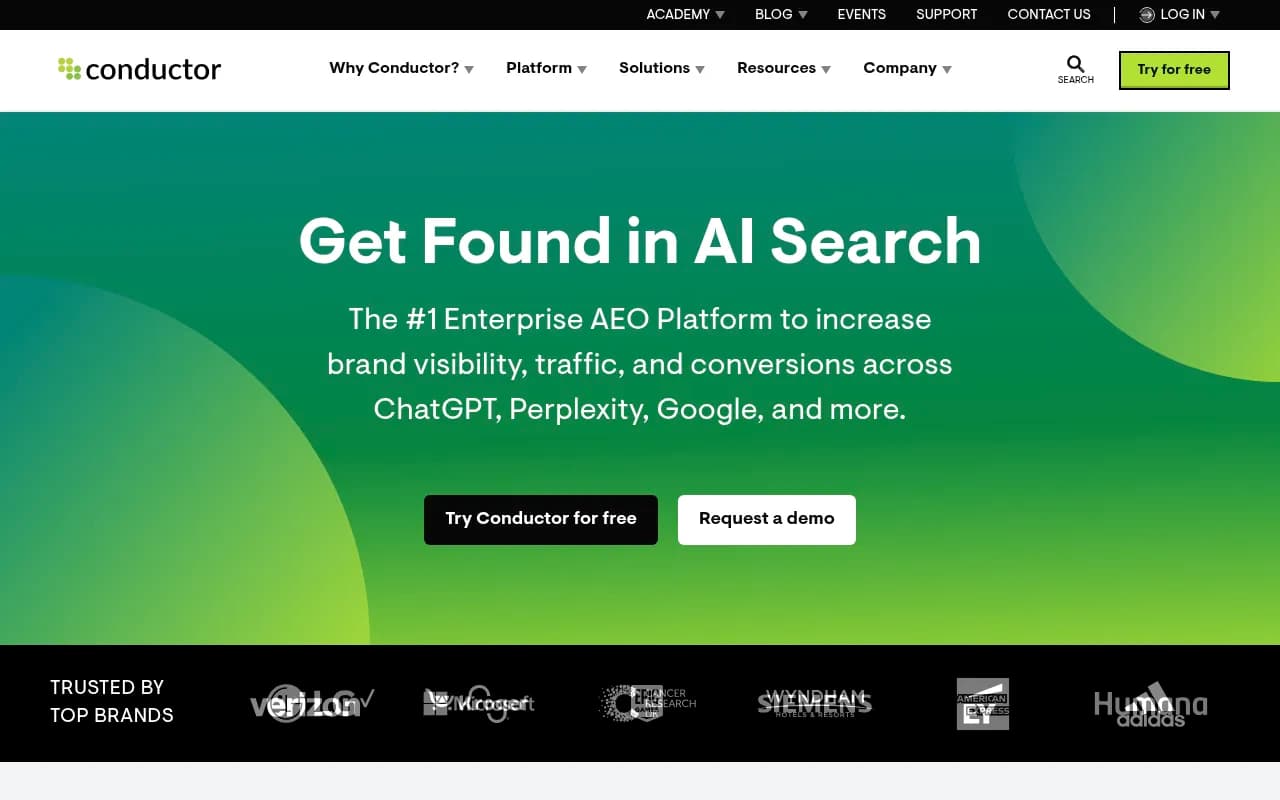
Evertune's roundup lists Goodie as its pick for teams needing multi-country and multi-language support, though I could not confirm current pricing. Dageno AI pitches regional monitoring tied to content work, and Conductor claims 160+ countries with city-level tracking, though its prompts are synthetic and keyword-derived. Addlly AI claims multilingual content generation. Treat all of these as shortlist candidates, not recommendations.
For a wider view, the GEO software directory lists far more options than any single roundup.
How to run a fair trial across markets
A demo shows the happy path. A trial in your hardest markets shows the truth.
- Pick two or three markets with different scripts or engines, such as Germany, Japan and Brazil. Avoid choosing only the ones where English results are decent.
- Have a native speaker write 15 to 20 prompts per market. Do not translate.
- Open the country-engine matrix and confirm the engines you need are tracked in those countries, not just in the US.
- Compare the answers the tool records with answers you get manually from a browser in that country. If they diverge a lot, ask why.
- Tag every prompt by language, market and funnel stage, then check whether reporting can slice by those tags.
- Ask the execution question from Publive's comparison: can a finding travel from the dashboard to an approved change on the live site?
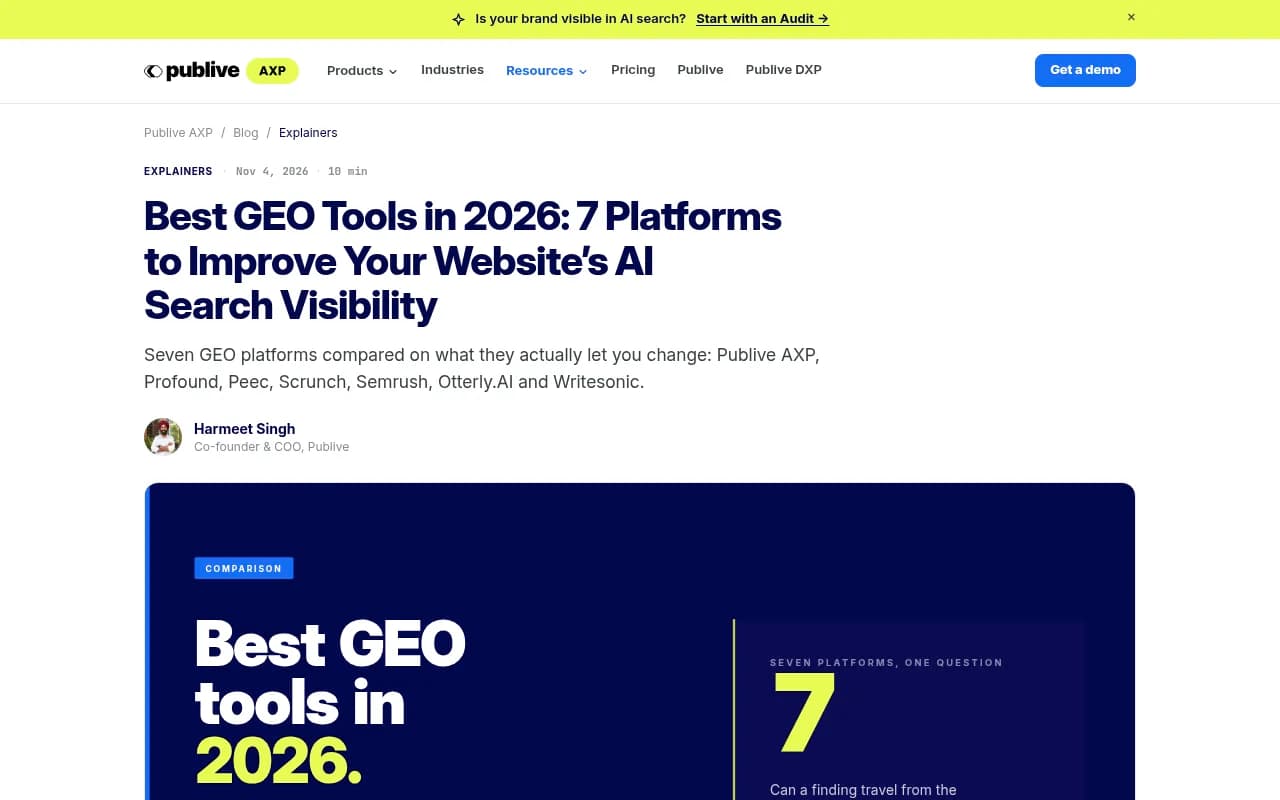
The point of that screenshot is the framing, not the ranking. Publive publishes the guide and puts itself first, but the question about execution is the right one regardless of who asks it.
Agency or platform?
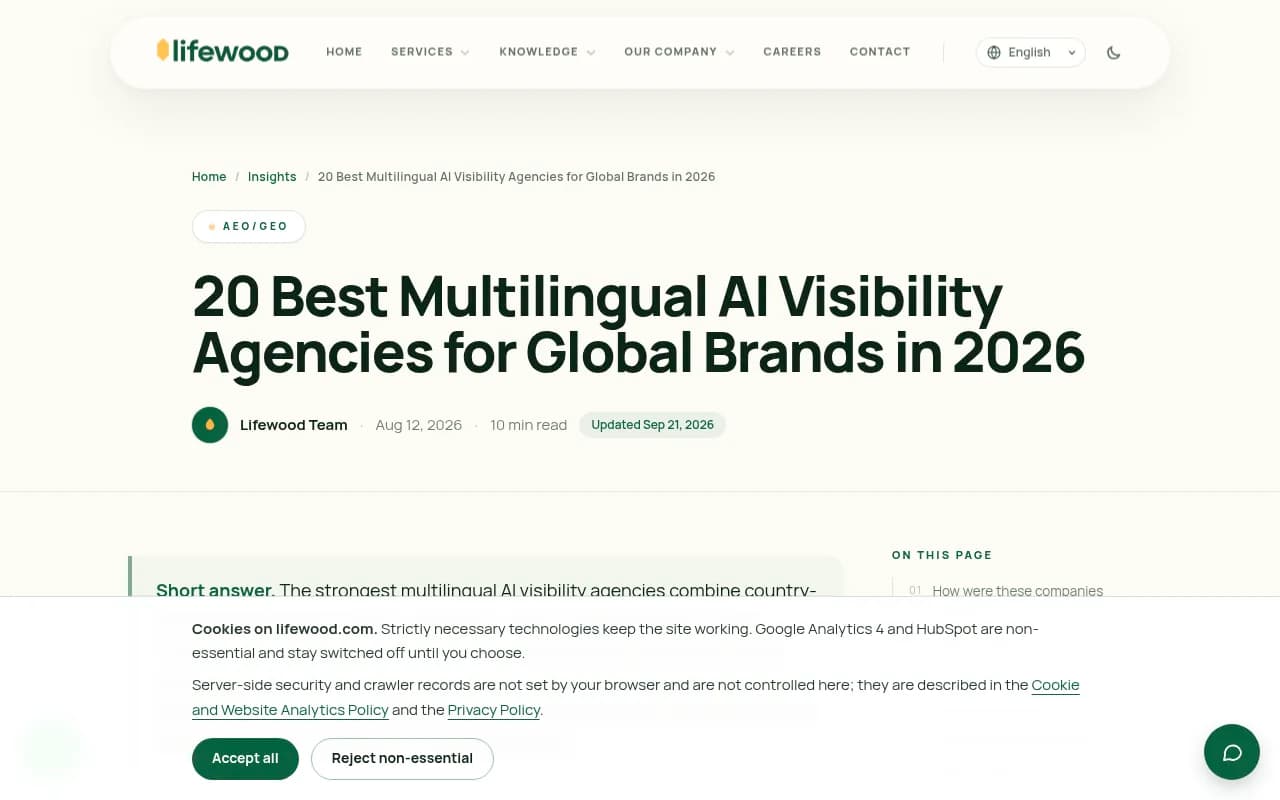
Some brands skip the software decision and hire for it. Lifewood's list of multilingual AI visibility agencies is useful here, though Lifewood publishes it and ranks itself fourth. Its takeaways match the platform advice above: localize prompt research per market, use native reviewers, and measure share of voice by language rather than as one global number. It also says to verify language and result claims with named case studies or a pilot.
If you want a partner rather than just a license, 1001 SEO Media runs GEO programs on Promptwatch, with senior specialists and no long-term contracts. Agencies managing several clients can look at Promptwatch's agency plans, which start at $199 a month with unlimited projects and prompts.
Which setup fits which team
| Situation | Start with |
|---|---|
| Two or three markets, tight budget | Otterly or Peec Starter, native-language prompt lists |
| Agency with many client brands | Peec AI or Promptwatch agency plans |
| In-house team that must ship content in many languages | Promptwatch Business |
| Already deep in an SEO suite | Semrush AI Visibility toolkit |
| Large enterprise with procurement | Profound or Promptwatch Enterprise |
What I would do first
Pick two real markets, write prompts locally, and test three tools against them for a week each. Count how many answers match what you see in a browser in-country, and how much of the fix you could ship without leaving the tool. The platform that wins that test is rarely the one with the longest country list on its pricing page. If you want a baseline before you spend anything, Promptwatch's free AI visibility report scans how ChatGPT, Gemini and Perplexity describe a brand with no login.
FAQ
Does a GEO tool that supports 65+ countries cover 65 languages?
Not necessarily. Country coverage and language support are separate, and Prompt Research language support can differ from monitoring support. Ask for both lists.
Should I translate my English prompts?
No. Write them locally. Translation tests your wording, not buyer behavior in that market.
Can any platform guarantee citations in a given country?
No. Retrieval stays with the AI system. Platforms show you gaps and, in some cases, help you fix them, but none controls the outcome.
How many prompts do I need per market?
Plan on 15 to 50 per market to start. Multiply by your market count before you pick a tier, because prompt limits are what push multi-country teams into higher plans.
Is a cheap tracker enough?
For monitoring a few markets, yes. If your bottleneck is producing and publishing localized content, you need a platform with an execution layer or an agency alongside it.