Key takeaways
- Pharma brands are often named by AI but rarely cited. Gradial's Aug 2026 study of 25 manufacturers found an average 7.8% mention rate and just a 3.2% first-party citation rate.
- Healthcare citations sit on third-party authority sources. In Promptwatch Data's October 2026 report, NIH leads ChatGPT healthcare citations at 5.46%, ahead of the FDA (1.76%) and the NHS (1.1%).
- Pick a platform that shows which domains get cited for your prompts, supports multiple markets and approval workflows, and helps you act on gaps. A share-of-voice chart alone is not enough.
- No vendor in the research publishes a verified MLR (medical, legal, regulatory) workflow, so test that in a pilot instead of trusting a feature page.
- Security certifications matter in procurement. Check ISO 27001, SOC 2 status, and data residency before you shortlist.
Why healthcare and pharma need a different evaluation
Most AI visibility guides assume the goal is to get mentioned more. Healthcare is different. People ask AI systems about treatment options, eligibility, side effects, and dosing. Those answers can shape what a patient says to a clinician. A wrong claim about a drug is a compliance problem, not just a lost lead.
Usage is already large. SearchEye's October 2026 roundup cites an Ipsos survey where 31% of consumers used generative AI for healthcare information between doctor appointments, yet only 38% somewhat or generally trusted it on health topics. High usage with middling trust is why claim accuracy and source transparency are buying requirements here.
The second difference is who gets cited. Look at the data from Promptwatch Data's October 2026 healthcare report, which covers organic healthcare prompts in ChatGPT from Sep 9 to Oct 8, 2026:
- NIH is first at 5.46% of healthcare citations, spread across six nih.gov subdomains. PubMed Central (2.38%) and PubMed (2.33%) follow.
- The FDA is next at 1.76%, then the NHS at 1.1%.
- Government and public health sites earn 7.06% in total. Medical associations earn 1.39%, hospitals and clinics 0.89%, reviews and directories 0.46%, and pharmacies 0.28%.
- The 20 charted domains together earn only 15.54%, so the citation base is fragmented and no single site dominates.
The implication for a pharma brand is blunt. Your corporate site competes with regulators, journals, and associations for the same citation slots. A platform that only counts brand mentions will tell you that you are visible while hiding that someone else is the source.
What the pharma data says about the problem
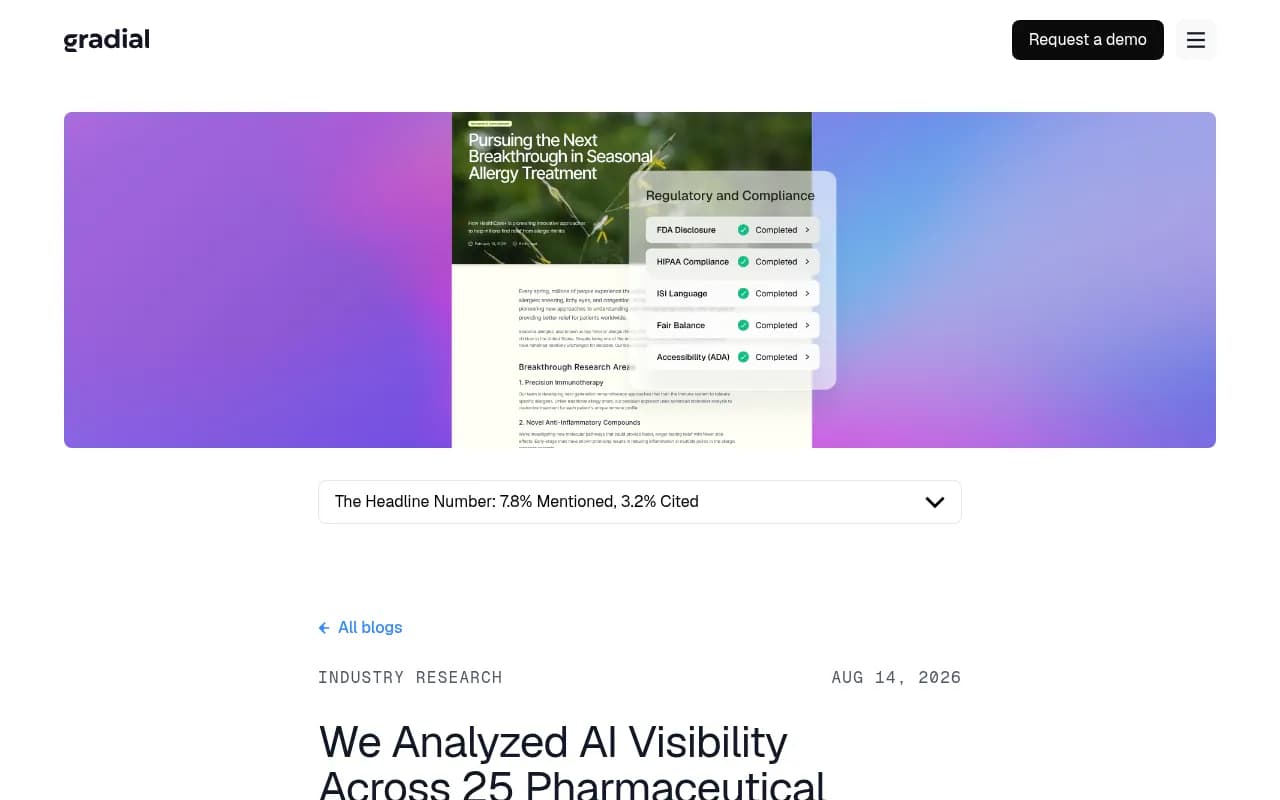
Gradial ran GEO reports across 25 pharmaceutical manufacturers from the Fierce Pharma Week 2025 attendee list. Each report tested 20 neutral, discovery-style prompts across leading AI providers, which produced 4,000 searches in total.
The findings are sobering:
- Average brand mention rate: 7.8%. Average first-party citation rate: 3.2%.
- The median company was cited in only 2% of searches.
- Across all 4,000 searches there were 315 brand mentions and 127 first-party citations.
- Four companies, Sanofi, Endo, Exelixis, and Zambon Group, got no citations to their corporate domain at all.
- Amneal was the outlier at a 41% mention rate and 24% citation rate. Without it, most manufacturers earned first-party citations in 0% to 4% of searches.
Gradial's framing is useful: this is an evidence ownership problem. AI may recognize a therapy but cite a regulator, journal, or advocacy group instead of the manufacturer.
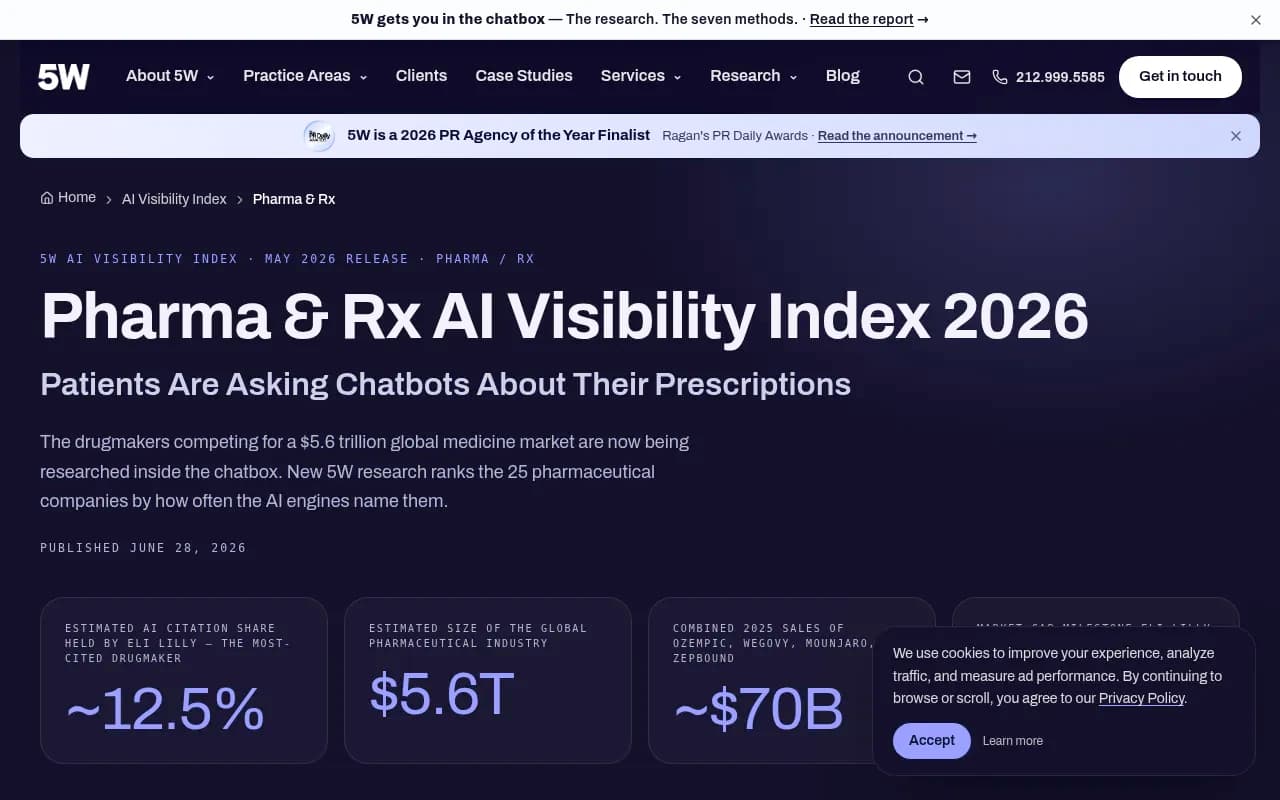
A separate view comes from 5WPR's Pharma and Rx AI Visibility Index 2026, which ranks who AI names first. Eli Lilly leads with an estimated 12.5%, driven by consumer prominence of Mounjaro and Zepbound, followed by Novo Nordisk at 11.5%, Pfizer at 8.5%, Johnson & Johnson at 7.0%, and Merck at 6.0%. Treat those as one agency's estimates rather than a measured benchmark, but the pattern matches Gradial's: consumer-facing categories like GLP-1 drugs dominate, and everyone else fights for scraps.
What to require from an enterprise platform
SearchEye's evaluation framework asks five questions, and they translate well to pharma procurement:
- Can you inspect the source behind an answer?
- Can you control which prompts and claims are monitored?
- Can you separate locations and markets?
- Can your team approve the work?
- Can the platform help you act after it finds a gap?
I would add three more for regulated buyers.
Claim-level monitoring. You need to see the specific statements AI makes about your drug or company, not only a score. Indication, dosing, and safety claims are where the risk is.
Real interface data. User-facing answers and citations can differ from API outputs. If a vendor only queries APIs, you may be auditing a different answer than the one patients see.
Security and procurement fit. Ask for ISO 27001 or SOC 2 status in writing. One vendor in SearchEye's comparison lists SOC 2 as still in progress, which is the kind of detail that stalls a security review.
A caveat on compliance. The research I reviewed contains no verified detail on HIPAA positioning or built-in MLR routing for any platform. Assume none of them replace your medical-legal review. The practical pattern is to use the platform to find gaps and draft, then run output through your existing approval process.
Comparison of the main options
| Platform | Best for | Strength | Watch out for |
|---|---|---|---|
| Promptwatch | Teams that want to find and fix gaps in one product | Claim-level Brand Narrative, Fact Check, IP-verified crawler logs, ISO 27001 | Content Agent and Fact Check start at the Business plan |
| Profound | Regulated enterprises prioritizing governance | Enterprise governance and security, prompt-demand data | Pricing has changed; follow-up work happens outside the platform |
| Scrunch AI | Technical teams needing agent-readable delivery | Site audits, bot traffic, edge delivery | Higher entry price; needs your own content and approval strategy |
| Peec AI | Analytics-heavy teams | Broad engine and country coverage, daily tracking | Measures more than it executes; SOC 2 in progress per SearchEye |
| BrightEdge | Large healthcare enterprises already on BrightEdge | AI visibility alongside enterprise SEO data | Quote-only pricing; steep learning curve reported on G2 |
| Adobe LLM Optimizer | Adobe Experience Cloud shops | AI visibility inside existing Adobe stack | Best only if you are already invested in Adobe |
Platform by platform
Promptwatch
Promptwatch is the option I would put first on a pharma shortlist when the goal is closing gaps, not just reporting them. It monitors the real interfaces of ChatGPT, Google AI Overviews, Google AI Mode, Gemini, Perplexity, Copilot, and others, by country and language, which matters when a drug is approved and labeled differently across markets.
Three features map directly onto the pharma problem. Brand Narrative pulls out the individual claims AI makes about you and competitors and groups them under themes like Features or Reputation. Fact Check lets you mark a claim Accurate or Inaccurate, then finds the pages on your site that state it or its opposite, so you know which page AI is learning the wrong thing from. And citation tracking shows which domains get cited for your prompts, which is exactly what the NIH-dominated healthcare data says you need.
IP-verified AI crawler logs help separate an access problem (bots cannot read your page) from a content problem (they read it and cite someone else). For teams with heavy compliance, the Content Agent has a review inbox where you approve, edit, or decline drafts before anything publishes, rather than running hands-off. Promptwatch is ISO/IEC 27001 certified and GDPR compliant, with data handled by an EU-based company.

Pricing is public. Business is $579/month and is the first plan with the Content Agent, Fact Check, state and city tracking, local targeting, and an audit log; Enterprise is custom and adds SSO and a white-label portal. Confirm current numbers at promptwatch.com/pricing. You can start with the free AI visibility report or the 7-day free trial, and the Promptwatch vs Profound page lays out the head-to-head.
Profound
Profound is the strongest fit when governance and security controls drive the decision. SearchEye ranks it first for regulated enterprises needing extensive controls, and it has a prompt-demand dataset and agent workflows. The downsides: its pricing has changed over time (historical reports list Starter at $99/month and Growth at $399/month, with Enterprise custom), and the data volume can mean a lot of follow-up work outside the platform.

Scrunch AI
Scrunch combines monitoring with site audits, AI referral and bot traffic measurement, and the ability to serve agent-readable pages at the edge. Entry pricing is $250/month and the agency plan is $500/month, per SearchEye. Your team still needs its own content and approval strategy, which in pharma is the hard part.
Peec AI
Peec AI wins on granular analytics: broad engine and country coverage, daily tracking, and strong citation and competitor-gap analysis. The trade is that it measures more than it executes, and SearchEye notes extra models cost more on standard tiers and SOC 2 certification was still in progress.

BrightEdge
BrightEdge makes sense for a large healthcare system or pharma company that already runs its SEO program there and wants AI visibility in the same reports. It does not publish pricing for its AI-search package, so expect a custom enterprise quote, and G2 reviewers report a steep learning curve and high cost. There is also a dedicated AI Catalyst product in the catalog.
Healthcare-specific and adjacent options
SEOPital Vision is positioned around healthcare-specific, high-compliance checks, per one AEO ranking in the research. I could not verify depth beyond that, so run a pilot before relying on it.
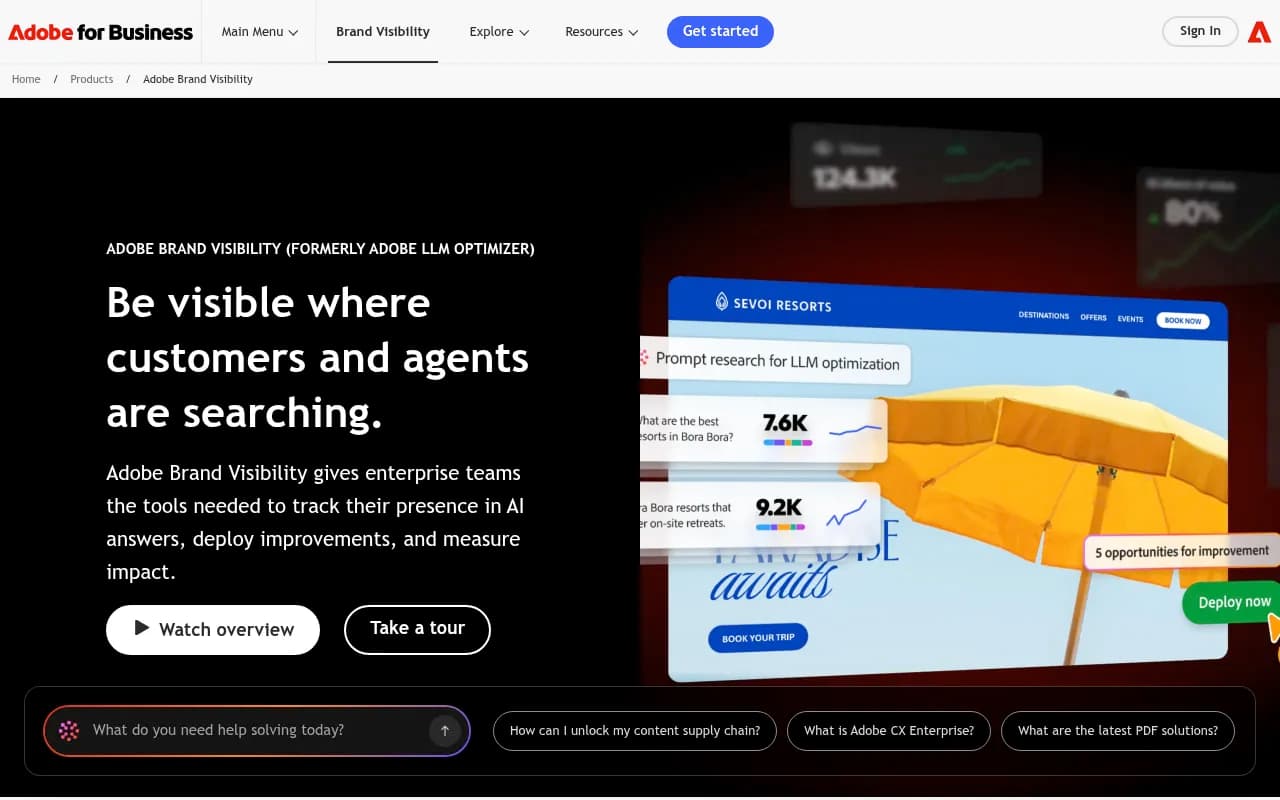
If you already use Adobe Experience Cloud, Adobe LLM Optimizer keeps AI visibility inside that environment.
For larger tool lists, the GEO software directory at bestgeosoftware.com is a good place to keep browsing.
A practical rollout plan for pharma teams
Start with the citation map, not the dashboard
Pull the sources AI cites for your top 20 therapy-area prompts. Expect NIH, the FDA, PubMed, associations, and a few hospitals. That list is your real competitor set, along with other manufacturers.
Close the evidence gaps you control
Promptwatch's own takeaways from the healthcare report are sensible and apply to brands generally:
- Back medical claims with peer-reviewed studies and link to them on PubMed or PubMed Central.
- Make sure your pages agree with FDA, CDC, NHS, and NICE guidance, and link to it.
- Work with the medical associations in your specialty. The AAD and ASPS together earn 1.18% of citations, more than Mayo Clinic and Cleveland Clinic combined.
- Keep Doctify and WebMD doctor profiles complete.
Keep humans in the approval loop
Whatever platform you choose, route drafted content through medical, legal, and regulatory review. Use the platform for gap detection, drafting, and measuring whether the published page was crawled and cited.
Measure by claim and by market
Track mention rate and first-party citation rate separately, as Gradial does. A rising mention rate with a flat citation rate means you are present but not trusted as the source. Also keep monitors separate per country, since label language and approved indications differ.
How to run a vendor pilot
- Give each vendor the same 30 prompts, including branded, competitor, and unbranded discovery questions.
- Ask each to show the cited source behind five specific answers.
- Ask for written security documentation and a data residency statement.
- Check whether it can surface a wrong claim and point to the page behind it.
- Time how long it takes to get from a found gap to a published, approved page.
Promptwatch Data also covers how AI sources differ by vertical, so it is worth scanning the Promptwatch Data hub for new reports before you finalize your prompt set.
Bottom line
For pharma and healthcare, the winning platform is the one that shows you who gets cited and why, flags inaccurate claims, and helps you ship corrected content through your own approval process. Profound and BrightEdge suit governance-first or SEO-suite-first buyers. Peec AI suits analytics depth. Promptwatch is the pick if you want monitoring, claim checking, crawler evidence, and content execution in one product. Whatever you choose, start from the citation map: in healthcare, most of the answer lives on someone else's domain.