Key takeaways
- Developer-tool buyers increasingly ask AI assistants and coding agents what to adopt, so classic rank tracking no longer shows the full picture of where you are found.
- For software prompts, ChatGPT leans on docs, GitHub, and review sites. Your tracker should show which of those pages get cited, not only whether your name appears.
- Most trackers stop at a dashboard. Dev-tool teams with tiny marketing headcount get more from tools that also show crawler access and help produce the fixes.
- Coding agents (Codex, Claude Code, OpenCode) are a recommendation channel of their own, and very few tools track them.
- Start with a free visibility check, shortlist two or three tools, and run them on the same 30 to 50 prompts for a month before you commit.
Why dev-tool startups need a different kind of tracker
If you sell an API, SDK, CLI, or observability product, your buyer does not start with a Google search for "best vendor." They open ChatGPT or Claude and type something like "what's the best way to add feature flags to a Next.js app?" The answer names two or three products, and that is your shortlist, often with no click at all.
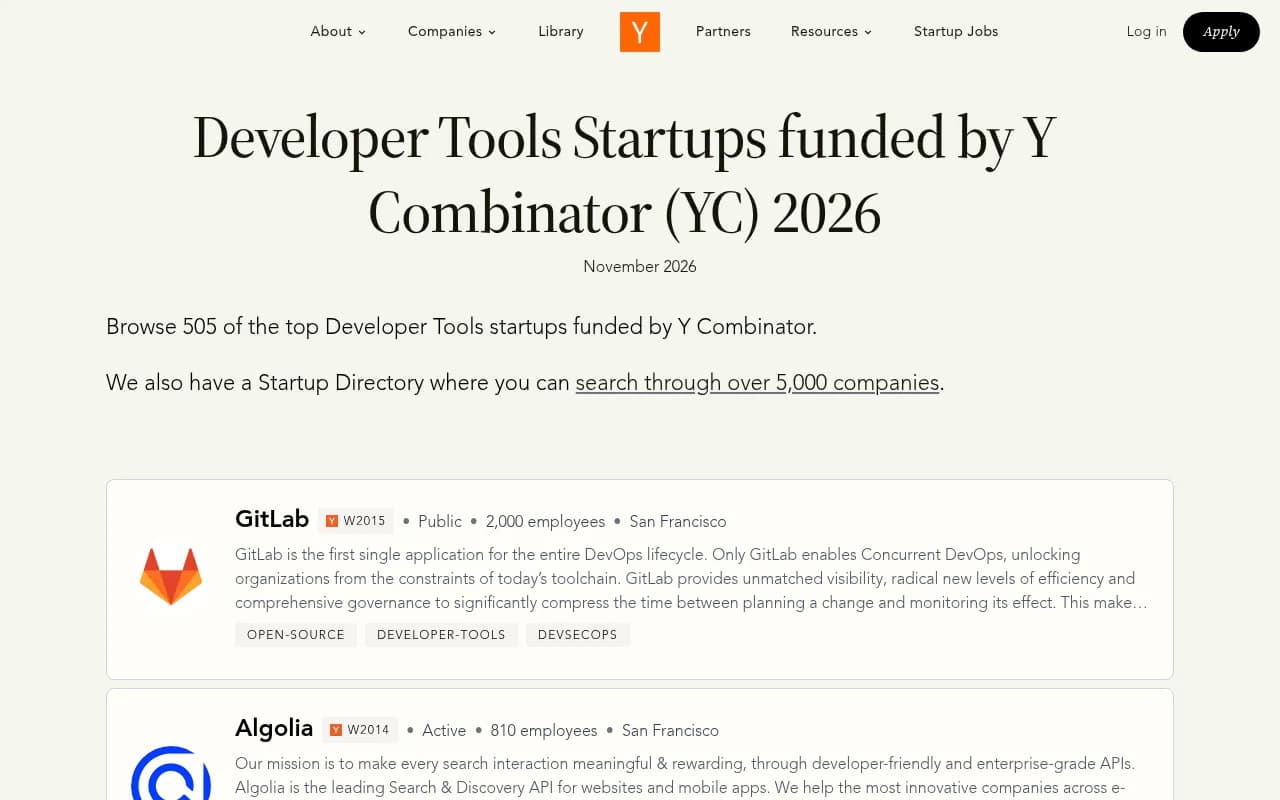
The Y Combinator directory alone lists 505 developer-tools startups in November 2026. That is a lot of companies fighting for the same two or three slots in an AI answer.
Brand-health tools built for consumer goods (the YouGov BrandIndex style of panel tracking) do not help much here. Developers do not fill in brand surveys. They ask a model, read the docs it points to, and try the quickstart. So what you need to measure is narrower and more technical: do models mention you, which pages do they cite, can their crawlers actually read your docs, and what happens to the traffic that arrives.
What the data says about software prompts
Promptwatch Data looked at which sites ChatGPT cites for organic software prompts between Sep 28 and Oct 4, 2026. The software citation report is the closest thing we have to a map of your category:
- GitHub is the most cited software domain at 1.2% of software citations. learn.microsoft.com follows at 0.98% and G2 at 0.73%.
- AWS docs (0.41%), Google Cloud docs (0.35%), Gartner (0.34%) and Capterra (0.32%) come next.
- By source type, docs and help centers earn 2.64%, vendor sites 2.01%, review sites and analysts 1.57%, GitHub 1.2%, and app stores 0.47%.
- Vendor sites plus docs earn 4.65%, about three times the share of review sites and analysts.
The practical read: your own docs and your GitHub presence matter more than a glossy marketing page. Keep G2 and Capterra profiles current too, but do not expect them to carry you.
Social is another trap. In Promptwatch's November 2026 social citations report (Oct 11 to Nov 9), social platforms made up only 0.64% of ChatGPT citations, versus 13.16% for Google AI Overviews, where YouTube alone was 6.71%. Perplexity sat at 1.94%, with Reddit at 0.82% and LinkedIn at 0.66%. One caveat: the earlier report covered 7 days and this one covers 30, so the change is not like for like. Still, a YouTube walkthrough of your quickstart helps with Google-driven buyers, and a Reddit thread helps little in ChatGPT.
Also worth knowing: content type matters. Product pages were ChatGPT's most cited type at 22.4% in the Sep 28 to Oct 4 window, and landing pages and docs stay cited longest while news pages lose half their citations within 36 days.
What to look for in a tracker as a dev-tool startup
A generic checklist (coverage of ChatGPT, Gemini, Perplexity, AI Overviews, competitor share of voice) applies, and every serious tool covers it. The things that separate tools for a developer audience are these:
- Real interface data, not just API calls. What a user sees in ChatGPT with search on can differ from the raw API response. Ask how the tool collects its answers.
- Citation-level detail. You want to know that the answer cited your docs page for the auth guide, or that it cited a competitor's GitHub README instead.
- AI crawler visibility. Docs sites are often behind aggressive bot protection, JavaScript rendering, or login walls. If GPTBot or ClaudeBot gets a 403, no amount of content work helps. Few trackers show this.
- Coding agent coverage. Developers increasingly let Codex, Claude Code, or OpenCode pick the library. Tracking those is rare.
- Traffic attribution. Does the tool tie AI referrals to signups? Without it, you are reporting mentions to a founder who wants pipeline.
- Something to do on Monday. A team of one or two marketers cannot act on a 40-chart dashboard.
- Price per tracked response. Dev-tool startups are usually cash-conscious, so check what the plan actually covers.
One caution on research: most listicles ranking these tools (including one from Leapd that crowns itself number one, and a few with obvious date errors in their titles) are written by vendors. Treat rankings as a source of tool names, not verdicts. Pricing for several tools below was not verified by us at publication time, so always check the vendor pages.
Quick comparison
| Tool | Type | Strongest for | Watch out for |
|---|---|---|---|
| Promptwatch | End-to-end AI visibility platform | Crawler logs, content fixes, coding agent tracking, traffic attribution | Content Agent starts at Business tier |
| Profound | Enterprise monitoring | Large brands wanting deep monitoring | Higher price point, less execution |
| Peec AI | Prompt tracker | Multi-language tracking on a budget | No crawler logs or content generation |
| Otterly.AI | Entry-level tracker | First experiment with prompt tracking | Basic feature set |
| Scrunch | Monitoring platform | Brands wanting structured AI visibility monitoring | Monitoring focus |
| AthenaHQ | Monitoring and GEO | Multi-engine tracking | Less execution tooling |
| Semrush / Ahrefs Brand Radar | SEO suite add-ons | Teams already living in these suites | Fixed prompt sets, shallower AI data |
The shortlist
Promptwatch
Promptwatch is the one I would put first for a developer-tool company, mainly because it covers the parts of this problem that other tools skip. It monitors the real interfaces of ChatGPT, Gemini, Perplexity, Google AI Overviews, AI Mode, Copilot, and Meta AI, and it tracks how Codex, Claude Code, and OpenCode recommend tools, SDKs, and docs. For an API company that last piece matters more than any dashboard color.

The second reason is crawler logs. Promptwatch's AI crawler logs are IP-verified, so you can see whether GPTBot, ClaudeBot, or PerplexityBot are reading your docs and where they hit errors. If you suspect your docs host is blocking them, that is a one-afternoon diagnosis instead of a month of guessing. Visitor analytics then show what AI referrals do on your site, and the Action Board turns the gaps into a prioritized to-do list.
On the content side, the Content Agent plans, writes, and publishes to WordPress, Webflow, or Framer, then tracks whether the new page gets crawled and cited. That agent is on the Business plan ($579/mo) and up. Essential is $95/mo (50 prompts) and Professional is $245/mo (150 prompts, crawler logs, 5 AEO articles); confirm current pricing at promptwatch.com/pricing. There is a 7-day free trial on monthly billing, and a free AI visibility report if you only want a first look.
For a head-to-head view against the big names, see Promptwatch vs Profound and Promptwatch vs Peec.
Profound
Profound is the name that comes up most in enterprise conversations. Its monitoring is thorough, and it fits a company with a dedicated GEO owner and budget to match. The tradeoffs for a seed-stage dev-tool team are price and the fact that it is mostly a monitoring product. It does not track coding agents or run crawler logs the way Promptwatch does.

Peec AI
Peec AI is a clean, multi-language prompt tracker. If you ship docs in several languages, or sell into DACH and France, that is useful. It is a monitoring tool, though: expect to do the content and technical work somewhere else.

Otterly.AI
Otterly.AI is the entry-level pick. A Reddit thread on AI visibility tools in r/SaaS described it as a good starting option covering prompt tracking, citations, links, and competitors, and that matches my read. It suits a founder who wants to see whether the problem exists before paying for more.

Scrunch and AthenaHQ
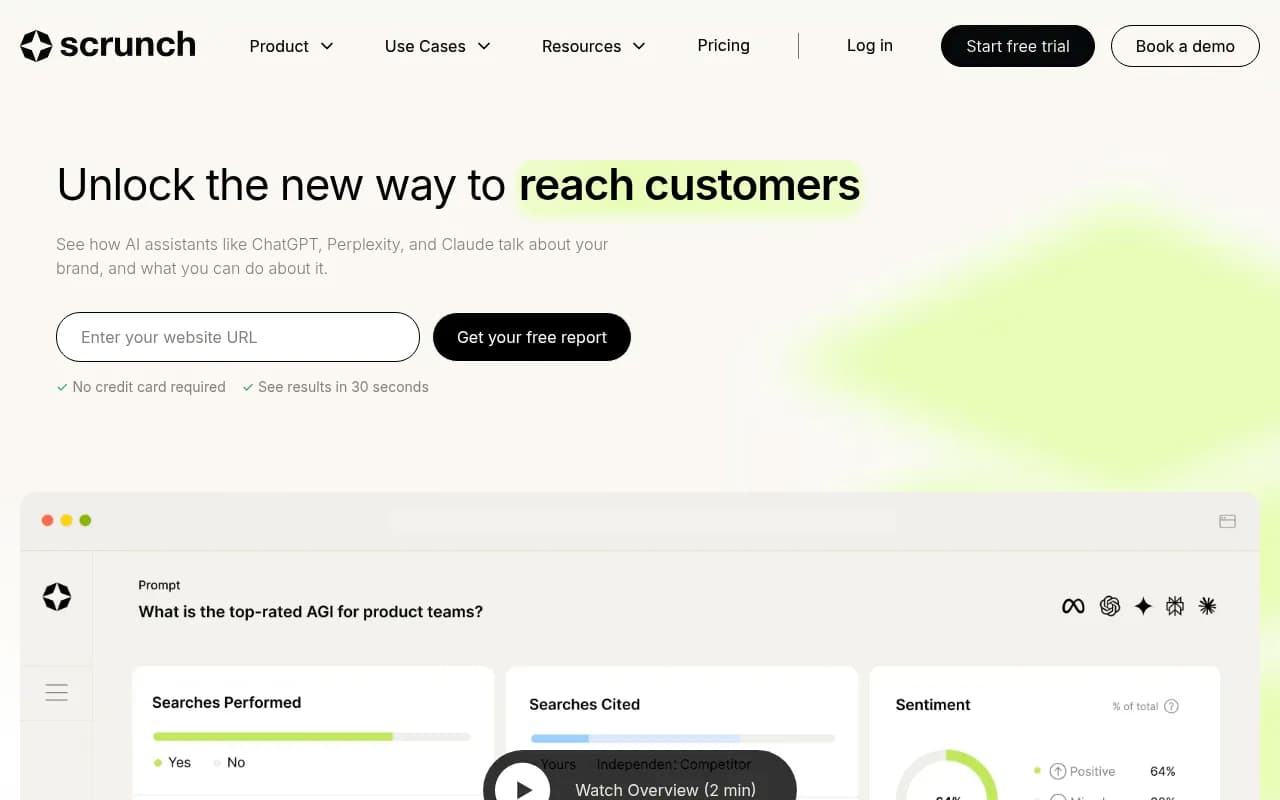
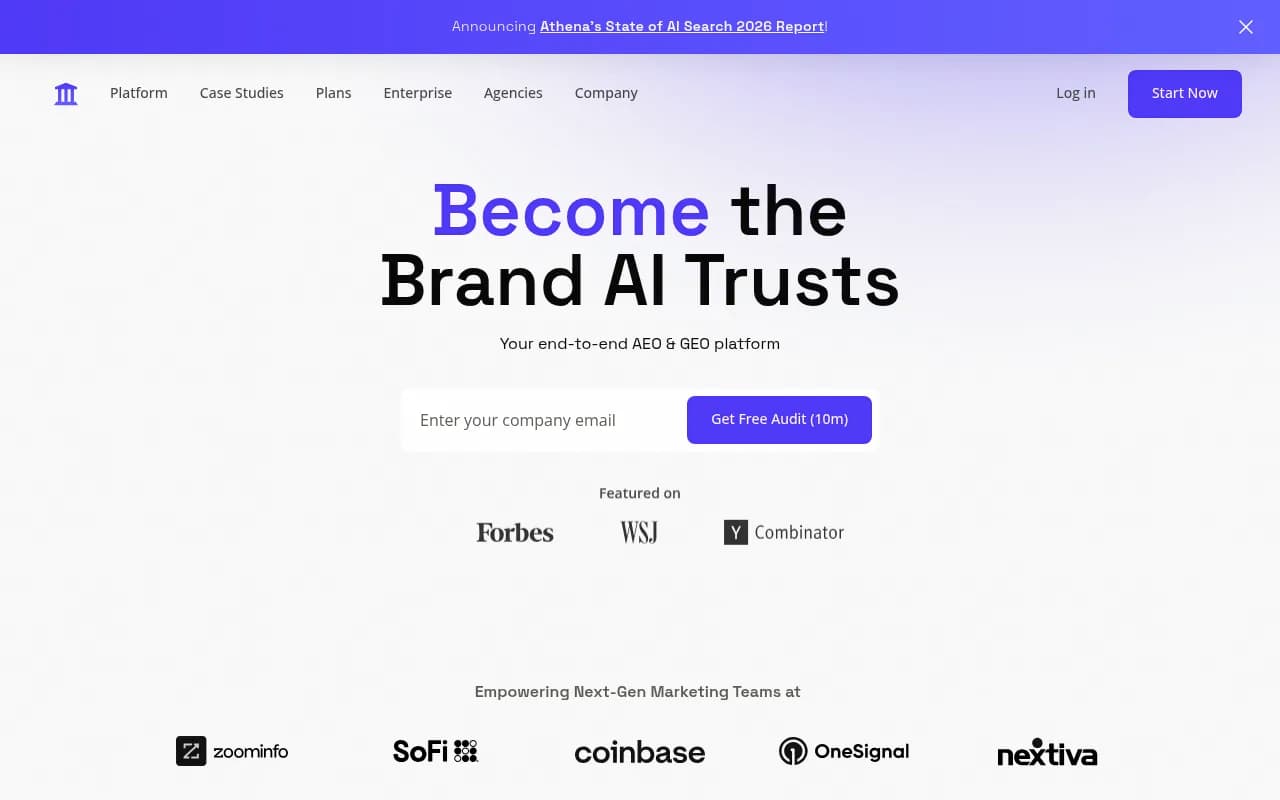
Both are monitoring-first platforms with solid multi-engine coverage. They make sense if you have already decided to buy a tracker and want to compare dashboards. Neither gives you the crawler-level or coding-agent view that makes a difference for docs-heavy products.
Semrush and Ahrefs Brand Radar
If your team already pays for Semrush or Ahrefs, adding their AI modules is the lowest-friction way to get a baseline. Expect fixed prompt sets and less depth in AI-specific data. Good for a quarterly look, thin for a dev-tool launch where you need to see changes weekly.

Smaller and budget options
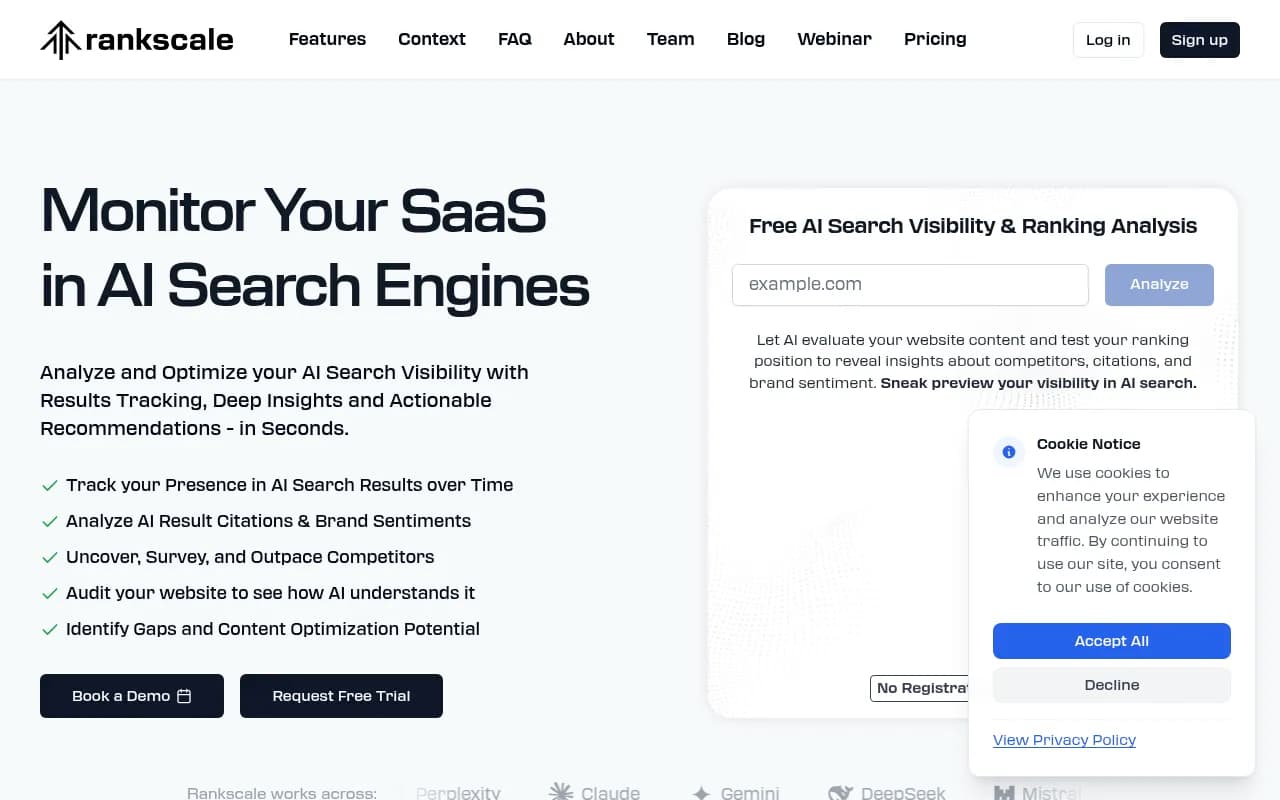
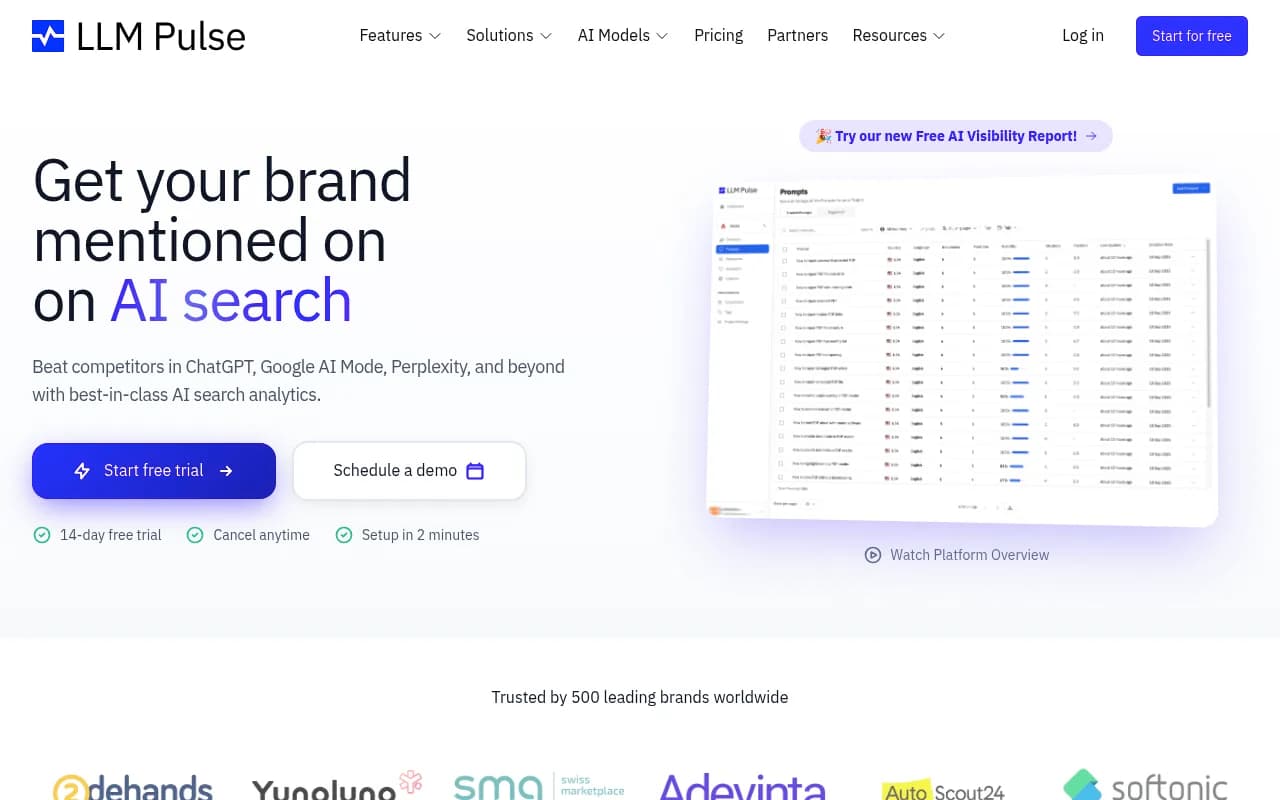
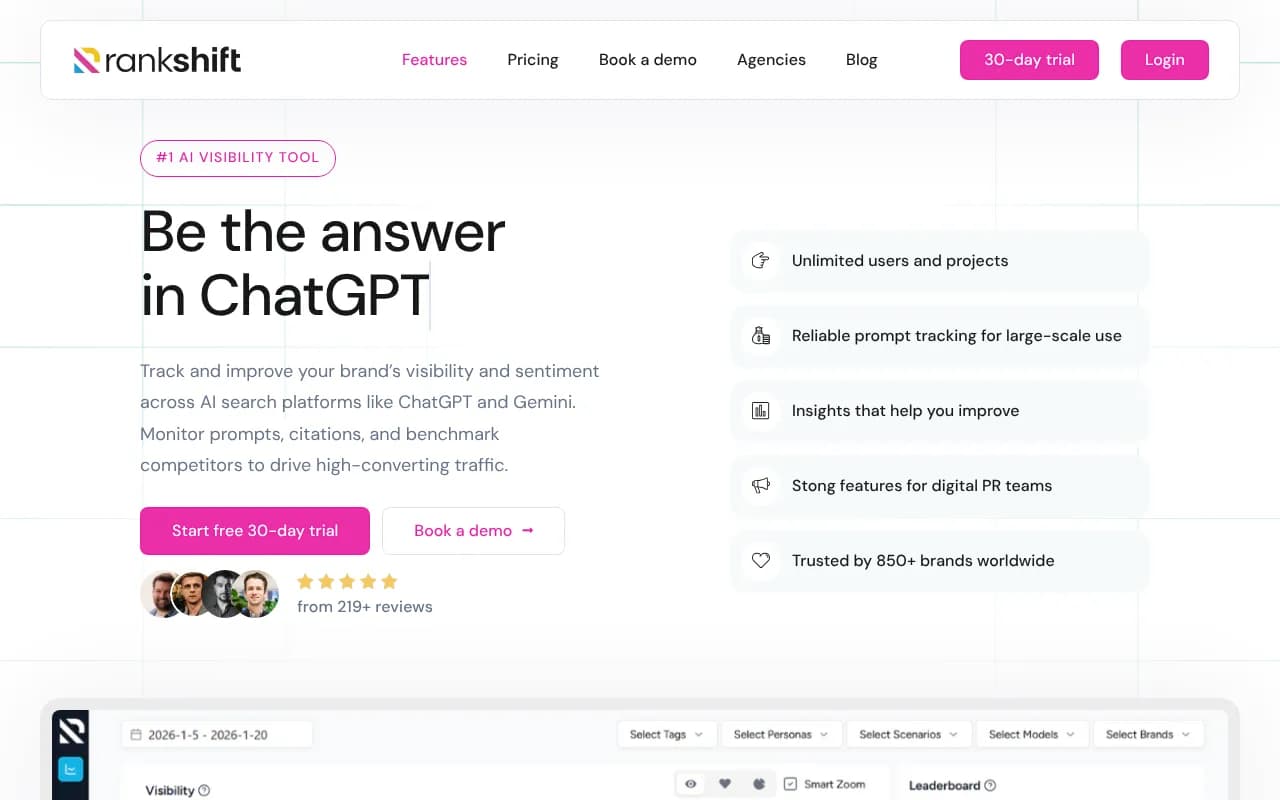
The catalog is crowded with lighter tools. Rankscale, LLM Pulse, and Rankshift are worth a look if you only need monitoring. For broader scans, the GEO software directory at bestgeosoftware.com lists many more.
Do not confuse these with LLM observability tools
A quick note, since developers will search for this. Tools like LangSmith, Helicone, and PromptLayer trace and evaluate the LLM calls inside your product. They are useful, but they tell you nothing about whether ChatGPT recommends your product to someone else. Brand visibility trackers answer that second question. Different job, different buyer.
How to run a useful 30-day test
Build a prompt set that matches how developers ask
Write 30 to 50 prompts across four types: category discovery ("best X for Y"), comparison ("A vs B"), how-to ("how do I add X to a Rails app"), and brand-specific ("is [your tool] production ready?"). Add framework and language variations, because answers change with context. Tools like Promptwatch can pull suggestions from Search Console and query fan-outs so you are not guessing.
Check access before content
Before writing anything, confirm AI crawlers can read your docs. Run your site through a free check such as the Agentic Readiness Check, and review your robots.txt rules. Many dev-tool sites block bots by accident through a CDN default.
Read the citations, not just the score
When a competitor is named instead of you, open the cited sources. Is it their docs, a GitHub repo, a G2 listing, a YouTube tutorial? That tells you which asset to build. Per the software citation data above, docs and GitHub tend to beat marketing pages.
Measure what arrives
Set up AI referral tracking so you can see signups from ChatGPT, Perplexity, and Claude. Note that ChatGPT stopped sending a referrer on October 8, 2026, so tagging links with utm_source=chatgpt.com is now worth doing where you control the link.
Decide with numbers
After a month, compare tools on three things: did the tracker surface something you did not already know, did it tell you what to fix, and did the fix move citations. If a tool only gave you a chart, that is your answer.
Which tool for which team
| Your situation | Pick |
|---|---|
| Seed-stage, one marketer, need fixes not charts | Promptwatch (Essential or Professional to start) |
| Just testing whether AI visibility matters | Otterly.AI or the free Promptwatch visibility report |
| Multi-language docs and markets | Peec AI or Promptwatch |
| Enterprise with a GEO team | Profound or Promptwatch Business |
| Already deep in an SEO suite | Semrush or Ahrefs Brand Radar as a baseline |
| Developer-tool company where coding agents pick libraries | Promptwatch |
For more category browsing, the rank tracker directory at ai-rank-tools.com is a handy second stop.
A note on working with an agency
If you would rather not run this in-house, a specialist agency can set up tracking, fix crawler access, and produce the docs and comparison content. 1001 SEO Media, which publishes this site, does GEO and technical SEO work and uses Promptwatch as its AI visibility platform. It is one option among several, and worth a conversation mainly if you lack in-house SEO time.
Final thoughts
The trick with developer audiences is that visibility is mostly an engineering-adjacent problem: crawlable docs, a healthy GitHub presence, and pages that answer the exact question a model is fanning out. Pick the tracker that shows you those things and helps you act, run it against the same prompt set for a month, and keep the one that changes what you ship.