Key takeaways
- Classic mention trackers (Google Alerts, Brand24, Mention) watch the open web and social. They do not read AI answers, so they can't tell you what ChatGPT says about your brand.
- Social platforms are a small slice of what AI cites. In Promptwatch Data for Oct 11 to Nov 9, 2026, social earned 13.16% of Google AI Overviews citations, 1.94% for Perplexity and 0.64% for ChatGPT.
- Most teams need two layers: a web and social listener for PR and reputation, and an AI visibility platform that reads the answers themselves.
- Pick AI trackers on what happens after the report: crawler data, content gaps, and whether fixes get cited.
- A caveat up front: I did not run a controlled hands-on test of every tool. This guide compares them on what each is built to track, using vendor and third-party sources, and tells you where the claims are unverified.
Two different jobs that get called brand mention tracking
The phrase covers two things that barely overlap.
The first is classic brand monitoring: finding pages, posts, reviews and articles that name your company. Google Alerts does this for free. Brand24, Brandwatch, Meltwater and Awario do it with sentiment, reach and alerts layered on.
The second is AI brand monitoring: asking ChatGPT, Gemini, Perplexity, Claude and Google AI Overviews the questions your buyers ask, then recording whether you appear, where, with what tone, and which sources the model cited. There is no page to crawl. The mention exists only inside a generated answer.
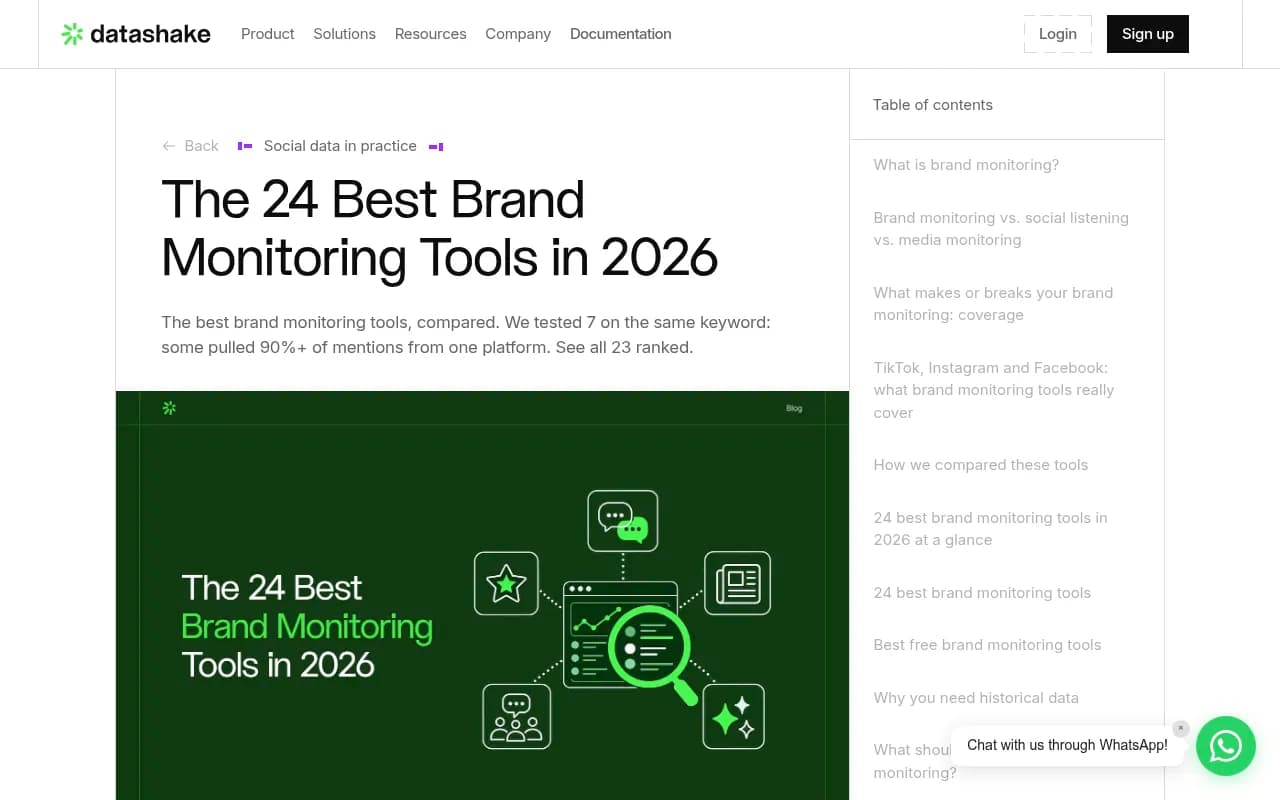
A tool built for the first job can't do the second. A Datashake test of seven brand monitoring tools on the same keyword found one pulled 92% of its results from a single platform, so even within the first category, coverage varies a lot.
Why web mention tools miss most of AI search
The gap is easy to see in the citation data. Promptwatch's November 2026 social citation report (Oct 11 to Nov 9, 2026) found:
- Google AI Overviews: 13.16% of citations come from social platforms (YouTube 6.71%, Facebook 2.34%, Reddit 2.10%).
- Perplexity: 1.94% (Reddit 0.82%, LinkedIn 0.66%).
- ChatGPT: 0.64% (Reddit 0.40%, LinkedIn 0.20%).
AI Overviews cites social about 20 times as often as ChatGPT. So a social listener gives you partial coverage of AI Overviews and almost none of ChatGPT. The report's own advice is not to rely on social posts to reach ChatGPT: your own site, plus the listicles, guides and comparisons it cites, matter more.
There is a second problem. Even if a listener finds the page ChatGPT cited, it can't tell you that ChatGPT cited it, or that the answer ranked you fourth behind two competitors. And answers vary by model, country and wording, so a single check means little. Per Promptwatch's sources-per-response data, ChatGPT cites about 5 sources per web-search answer while AI Overviews and Perplexity cite about 10, so the pool of pages shaping an answer is wider than your own mentions.
Google Alerts: still useful, with limits
Google Alerts is free and takes two minutes to set up. For a first pass on press coverage and new web pages, it is fine. I'd keep a few alerts running for your brand name, your CEO's name and your top product regardless of what else you buy.
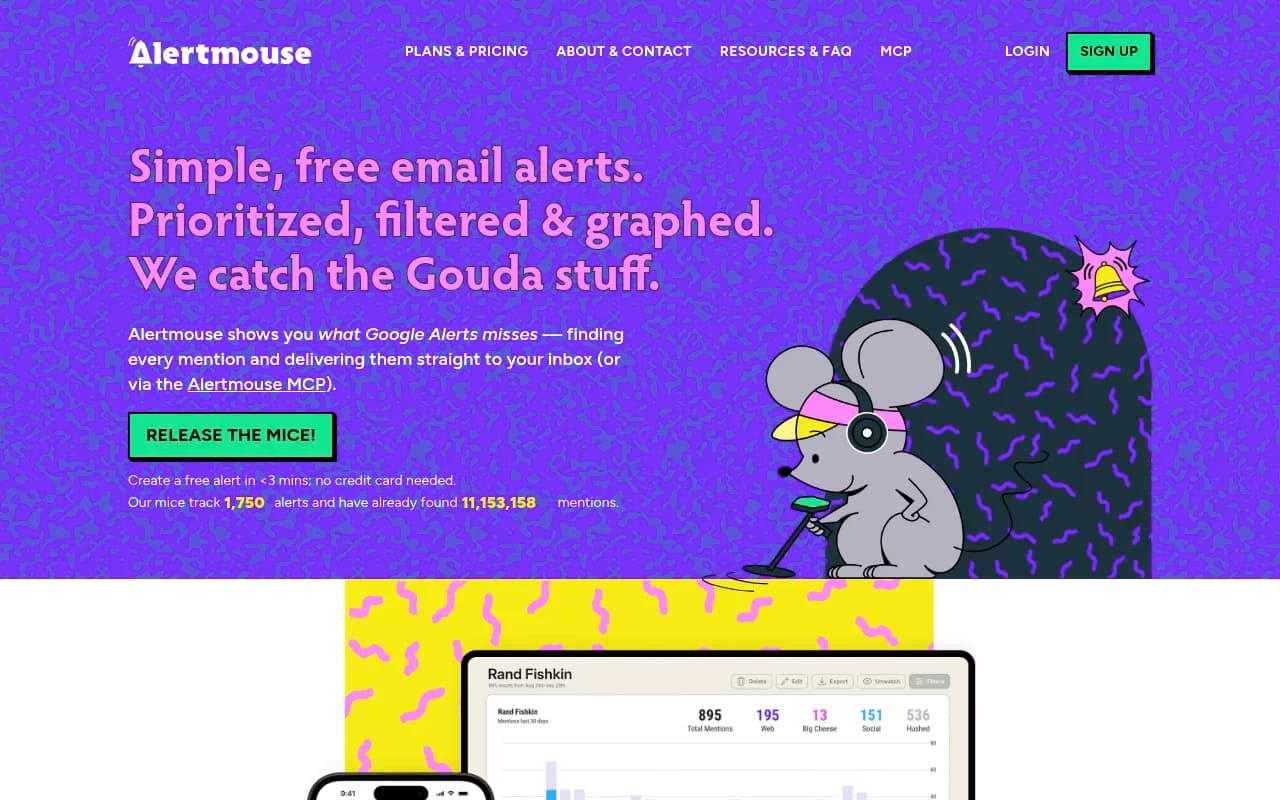
What it doesn't do: sentiment, share of voice, reliable social or forum coverage, and anything about AI answers. It can't see inside ChatGPT. Treat it as a tripwire, not a monitoring program. Alertmouse positions itself as a low-cost upgrade for people frustrated with Google Alerts.
Brand24 and the classic listening group
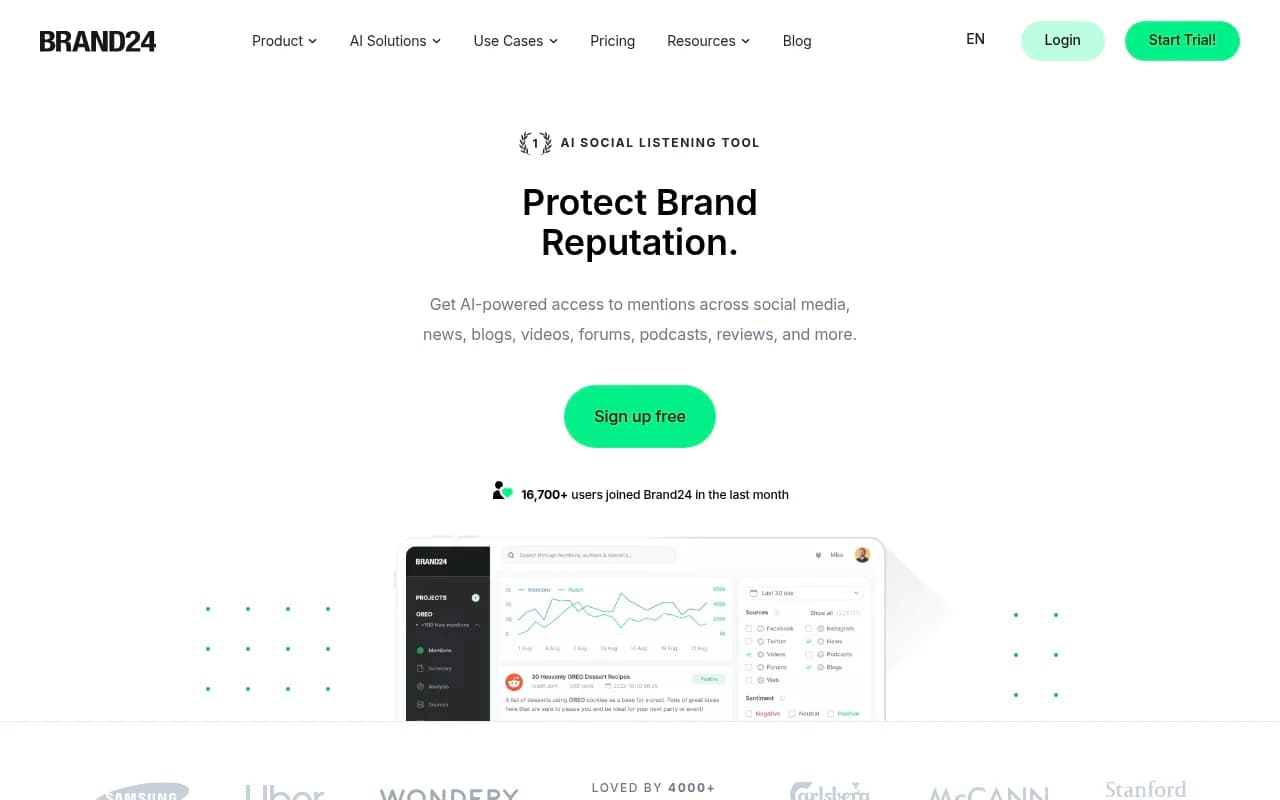
Brand24 is the best-known mid-market listener. By its own guide (updated July 8, 2026) it covers 25M+ sources, starts at $199/month, and holds a 4.6/5 G2 rating, with AI sentiment, an AI assistant, and share-of-voice and reach analytics. Note that Brand24 wrote that guide and is a vendor in this comparison, so read its rankings with that in mind. SitePoint's comparison lists Brand24 as covering ChatGPT references and AI summaries; I could not verify how deep that goes, so test it on a few of your own prompts before relying on it.

Other classic options worth knowing:
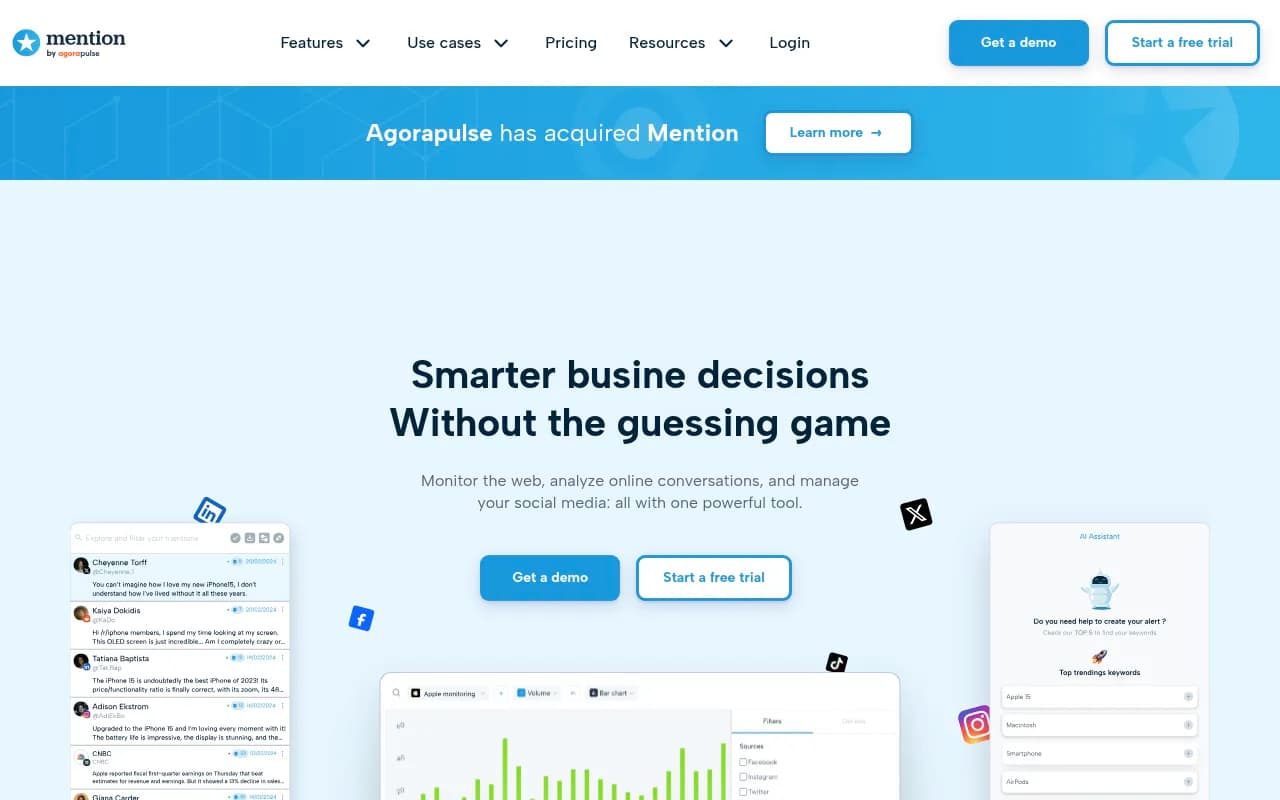
Mention is real-time media monitoring. Rework's comparison says its "AI" feature only helps draft Boolean search strings and does not track AI-answer mentions. That is a good example of a legacy tool with an AI label that doesn't monitor AI.
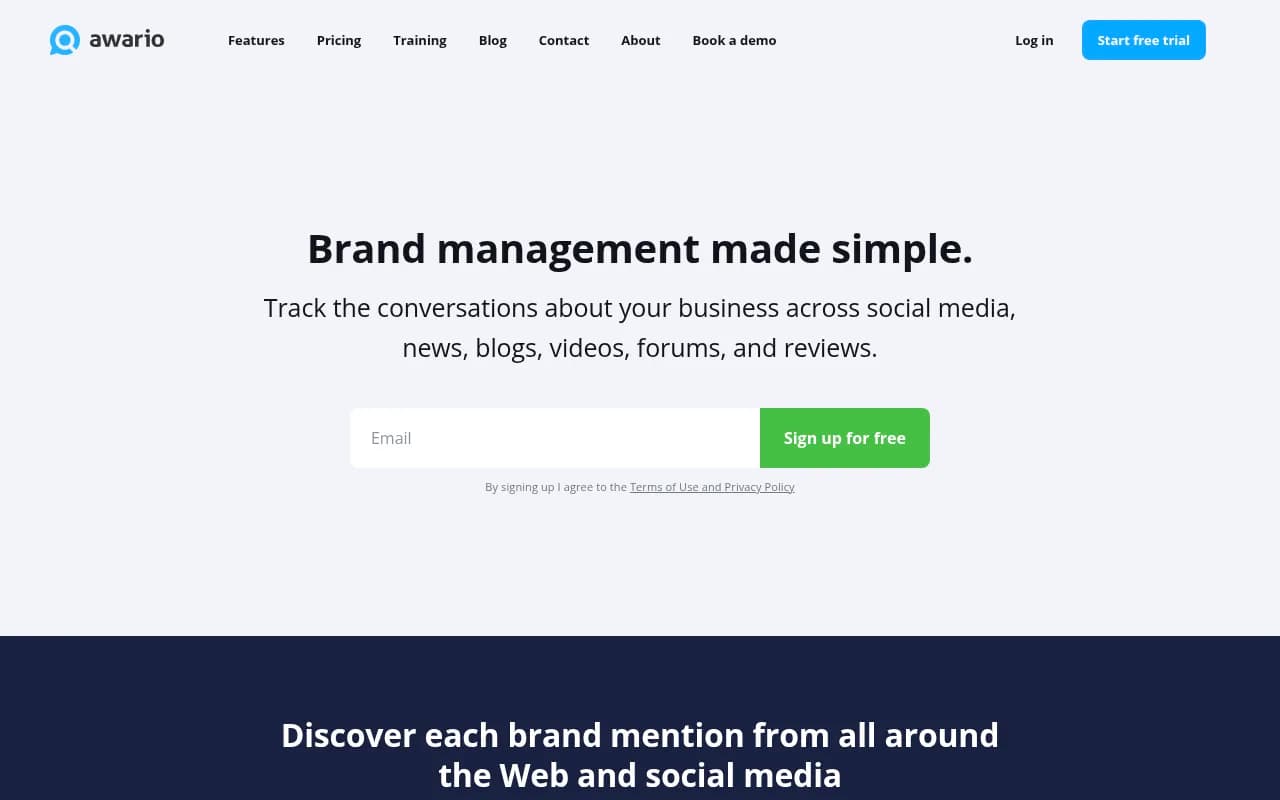
Awario covers social and web mentions at a lower price point than the enterprise suites.
Brandwatch Consumer Intelligence
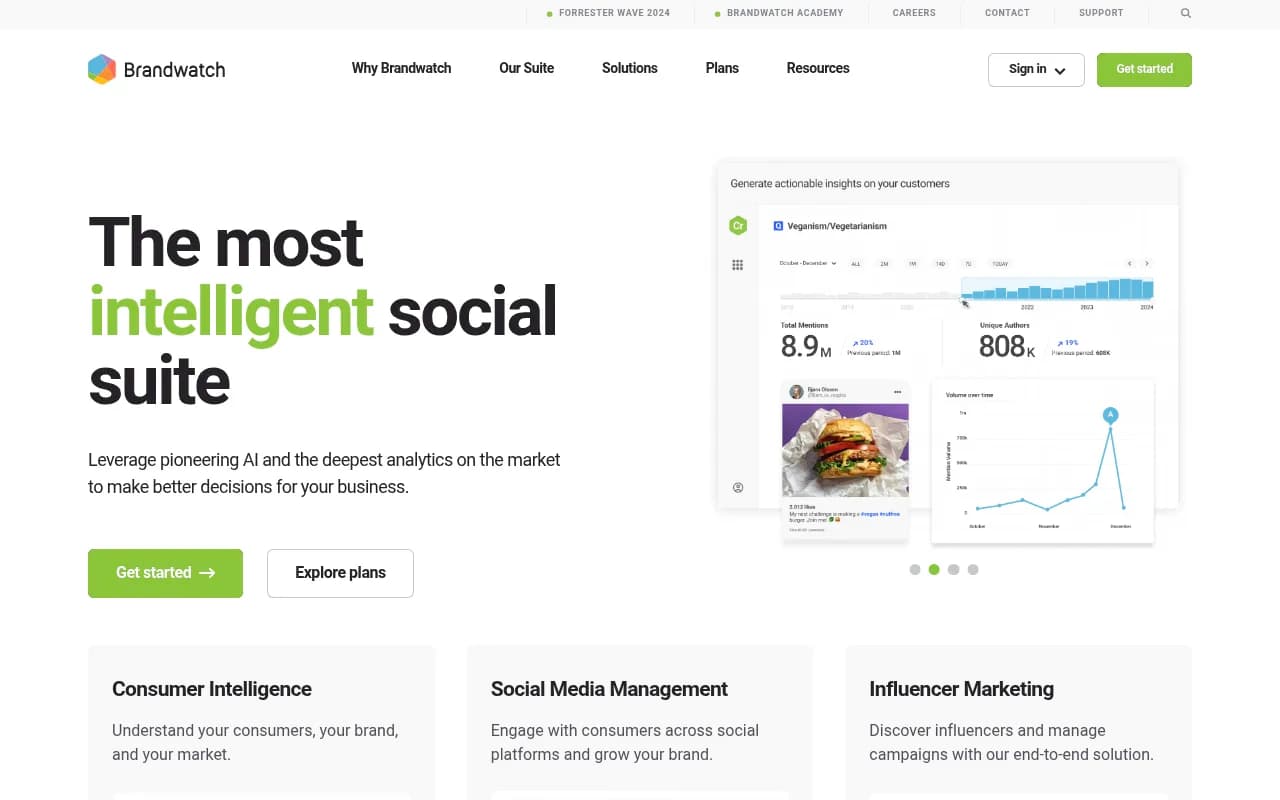
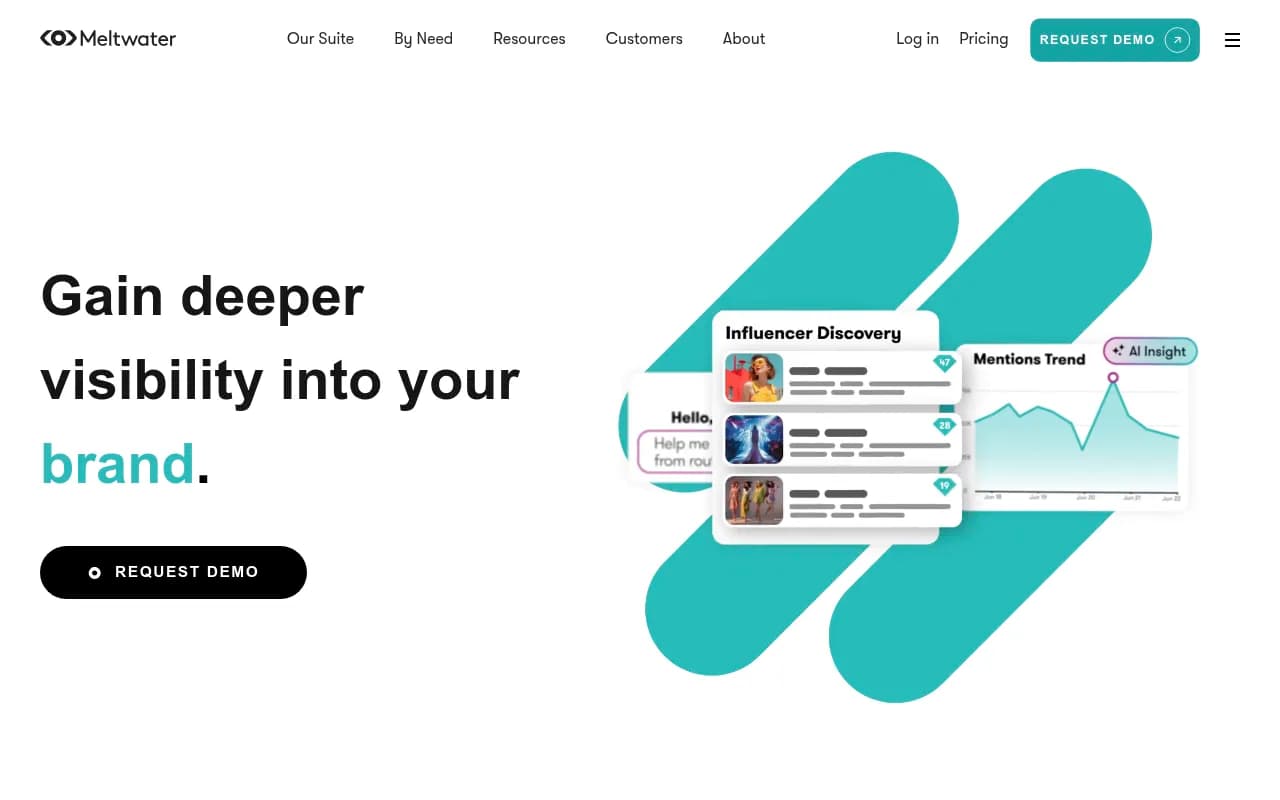
Brandwatch (100M+ sources) and Meltwater are enterprise platforms priced by custom quote, built for PR and consumer intelligence teams.
BrandMentions was listed from $79/month in one table and about $99/month in the text of the same Brand24 guide. Check the vendor's own pricing page.
AI-native brand mention trackers
These tools send prompts to AI engines and record the answers. They differ on three things: whether they use the real consumer interface or an API, how far they go beyond a dashboard, and what they cost.
Promptwatch
Promptwatch is an end-to-end AI visibility platform rather than a prompt tracker alone. It monitors ChatGPT, Google AI Overviews, Google AI Mode, Gemini, Perplexity, Copilot, Meta AI and others from their real interfaces, by country and language, and scores each answer for visibility, position and sentiment. Brand Narrative pulls out the individual claims AI makes about you and groups them by theme, which is the closest AI equivalent to a sentiment report.
Where it separates from most tools is what comes after. IP-verified AI crawler logs show whether bots can read your pages, the Action Board prioritizes fixes, and the Content Agent writes and publishes pages to WordPress, Webflow or Framer, then tracks whether they get cited. Plans start at $95/month (Essential) with a 7-day free trial; confirm on the pricing page. A no-login free AI visibility report is the quickest way to see what ChatGPT, Gemini and Perplexity currently say about you.

Head-to-head pages exist for Promptwatch vs Profound, vs Peec and vs Otterly.
Ahrefs Brand Radar
Gumloop's roundup recommends Brand Radar for tracking brand mentions in AI search engines. It suits teams already inside Ahrefs who want AI mention data next to their SEO data, though it is a bolt-on to an SEO suite rather than a dedicated optimization platform.

Peec AI
Peec AI is the affordable, multi-language tracker that Gumloop highlights, with a free trial. It reports on mentions; it doesn't write content or log crawlers.

Profound
Profound is a strong monitoring product aimed at larger budgets.

Semrush and others
Semrush's AI visibility toolkit is the natural pick if Semrush is already your SEO stack. Otterly.AI is a budget monitor, and Scrunch and AthenaHQ sit in the monitoring-focused group.

Comparison table
| Tool | Reads AI answers? | Web and social mentions? | Starting price | Best for |
|---|---|---|---|---|
| Google Alerts | No | Basic web | Free | A tripwire on press and new pages |
| Alertmouse | No | Yes | Low cost (check site) | Teams outgrowing Google Alerts |
| Brand24 | Partial (unverified depth) | Yes, 25M+ sources | $199/month | Real-time social listening and PR |
| Mention | No (AI is for query drafting) | Yes | Check vendor | Media monitoring |
| Brandwatch / Meltwater | Limited | Yes, enterprise | Custom quote | Large PR and insights teams |
| Ahrefs Brand Radar | Yes | Limited | Check vendor | Ahrefs users |
| Peec AI | Yes | No | Check vendor | Affordable AI mention tracking |
| Promptwatch | Yes, real interfaces | AI citations incl. Reddit, YouTube, LinkedIn | $95/month | Tracking and fixing AI visibility |
How I'd choose
If you need PR and reputation alerts
Use a listener: Google Alerts for free coverage, Brand24 or Awario for mid-market, Brandwatch or Meltwater if you need enterprise reach. Add the AI layer separately.
If you want to know what AI says about you
Pick an AI-native tracker. Ask each vendor three things. Does it query the real UI or only the API, since answers and citations can differ? Can it set country and language per monitor? And does it show the sources cited, not just a mention count?
If you need results, not a report
Look for crawler data, content-gap analysis and publishing. A tracker that says you are invisible is only half the product. The pages ChatGPT cites are mostly product pages, landing pages and listicles, per Promptwatch's content type data, with product pages at 22.4% (Sep 28 to Oct 4, 2026). That points to content you control.
A simple two-layer setup
- Set three Google Alerts: brand, founder, flagship product.
- Run a web and social listener if reputation or PR is a priority.
- Build 30 to 50 buyer prompts and track them in an AI visibility tool across the models your audience uses.
- Review Share of Voice, position and cited sources weekly; treat a single day's change with suspicion.
- Feed gaps into content, then check that fixed pages are crawled and cited.
For more options, the GEO software directory lists dozens of AI visibility trackers.
What I couldn't verify
I found no head-to-head test that ran identical prompts across all these tools, and I did not verify current pricing for Ahrefs Brand Radar, Peec AI, Profound or Semrush. Treat the table as a map of capabilities and confirm price and coverage on each vendor's site before buying. Run the same ten prompts through two or three shortlisted tools during their free trials. That is the only test that reflects your market.