Key takeaways
- If you do your own PR, AI visibility is a PR problem as much as an SEO one. ChatGPT and Perplexity answer "best tool for X" by quoting third-party listicles, reviews, and your own product pages.
- Start with a free check before you pay for anything. Then pick a tool based on whether it shows you the source URLs behind each citation, because those URLs are your pitch list.
- Cheap trackers (Otterly.AI, Peec AI, Airefs, BrandAxis) tell you where you stand. Platforms that also write and publish content, like Promptwatch, tell you what to do about it.
- Press releases are a small slice of what ChatGPT cites. Product pages, landing pages, listicles, and reviews matter far more.
- Prices in this space change monthly. Confirm every number on the vendor's own page before you buy.
Why founders doing their own PR should care
When you are the founder, the PR person, and the content team, you have maybe four hours a week for this. Spending them on a press release that nobody cites is a bad trade.
Here is what the data says about where ChatGPT gets its answers. In Promptwatch's data on ChatGPT citation share by content type (Sep 28 to Oct 4, 2026), product pages were the most cited type at 22.4% of classified citations, and landing pages came next at 16.8%. So about 39% of citations go to pages describing what a company sells. Editorial formats combined (listicles at 13.6%, how-tos at 8.7%, comparisons at 5.9%, news at 5.7%, and general articles at 6.1%) add up to roughly 43%.
For commercial prompts like "best CRM for small businesses", product pages hit 26.0%, landing pages 20.6%, listicles 15.0%, and comparisons 7.9%. Those four types make up almost 70% of commercial citations.
For branded prompts like "is HubSpot good for startups", reviews are 5.6% of citations, more than 3x their overall share. Press releases are 2.1% there, which is higher than their share across all prompts but still tiny.
What that means for a founder: your PR time is best spent on (1) a complete, factual product page, (2) getting into the "best of" roundups AI already cites, and (3) collecting reviews on sites your category trusts. A visibility tool earns its fee by showing you which roundups and review sites those are.
What to look for before you buy
Most listicles on this topic are written by vendors who put their own product first. One of the sources I read (Sightivo's) says so openly, which is to its credit, and another is a consultancy promoting its services. Treat all of them as self-interested, including this one where I mention a platform I recommend. Judge tools on these criteria instead:
- Source URLs behind each citation. This is the single most useful output for PR. If a tool only says "you were mentioned 12% of the time", you have a number and no next step.
- Engines covered. ChatGPT, Perplexity, Google AI Overviews, and Gemini at minimum. Ideally the real interfaces, since user-facing answers can differ from API output.
- Price at the tier you would actually buy. Entry prices often exclude the prompt count you need.
- Competitor tracking. Your buyers compare you to named rivals, so your tool should too.
- Whether it turns a gap into a task. Some tools stop at a dashboard. Others give you a to-do list or draft the content.
- Whether it works without a specialist. You have no analyst. Setup should take an afternoon, not a week.
Run a free check first
Before paying anyone, spend 30 minutes on this:
- Write 10 to 15 prompts your buyers would really type. Mix "best [category] for [persona]", "[your brand] vs [competitor]", and "is [your brand] good for [use case]".
- Run each in ChatGPT, Perplexity, and Google (with AI Overviews). Log whether you are named, where you appear in the list, and which sources are cited.
- Open every cited source. Note which listicles, review sites, and Reddit threads show up repeatedly.
- Check what AI says about you. Is it accurate on pricing, features, and who you are for?
Several free options can do part of this for you. Promptwatch's free AI visibility report scans how ChatGPT, Gemini, and Perplexity talk about your brand with no login. HubSpot AEO Grader is a free one-off grader.
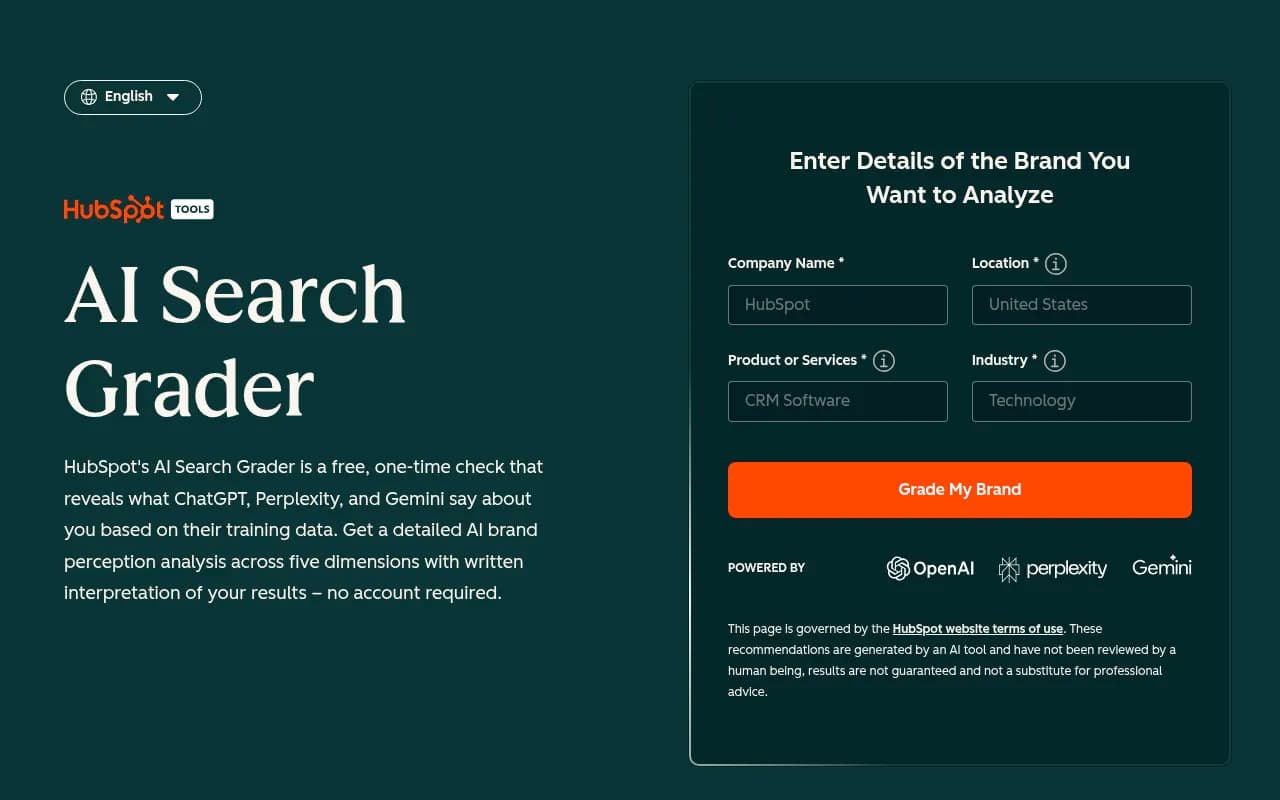
If the free check shows you are not named anywhere, you probably need a content and mentions fix, not a dashboard yet. If you are named sometimes, tracking over time starts to pay off.
The best AI visibility tools for founders, by what they are good at
Promptwatch: tracking plus the work that changes the number
Promptwatch is my pick for a founder who wants one place to see the problem and fix it. It tracks ChatGPT, Gemini, Perplexity, Google AI Overviews, Google AI Mode, Copilot, Claude, and others from the real interfaces, then shows which pages and third-party sources AI cites. That source list is what a founder-led PR effort needs: the roundups to pitch, the Reddit threads and YouTube videos AI cites, and Offsite Mentions that catch your brand being named in third-party pages without a link.
What separates it from a pure tracker is the action layer. The Action Board gives you a prioritized to-do list, and Agent Chat answers questions about your data in plain language. On Business, the Content Agent plans, writes, and publishes to WordPress, Webflow, or Framer, then checks whether the page got crawled and cited. Brand Narrative pulls out the individual claims AI makes about you, which matters if a model keeps saying you lack a feature you shipped last quarter.
Pricing, per the vendor: Essential is $95/mo (1 project, 50 prompts), Professional is $245/mo, and Business is $579/mo. There is a 7-day free trial on monthly billing. Confirm at promptwatch.com/pricing. Honest caveat: Essential has no crawler logs or AEO articles, and the Content Agent starts at Business. A solo founder on a tight budget may start on Essential and treat the content work as manual until revenue justifies the upgrade.

If you are comparing it against a specific rival, there are head-to-head pages such as Promptwatch vs Peec and Promptwatch vs Profound.
Otterly.AI: cheapest serious monitoring
Otterly.AI is the usual answer to "what is the least I can spend and still track this over time." Sightivo's roundup lists it at $29/mo as of August 2026, though that is a secondhand number, so check it. It is a monitoring tool: good for a solo operator who wants a trend line, thin on telling you what to publish.

Peec AI: competitor-focused tracking
Peec AI sits in the middle: more approachable than enterprise suites, more capable than a basic checker. It suits a small growth team that lives on competitor comparisons and multi-language tracking.

Profound: the heavyweight
Profound is the choice for well-funded brands that want deep AI search analytics. For a founder doing their own PR, it is usually more than you need and more than you want to pay, but it is worth knowing it is the benchmark others get measured against.

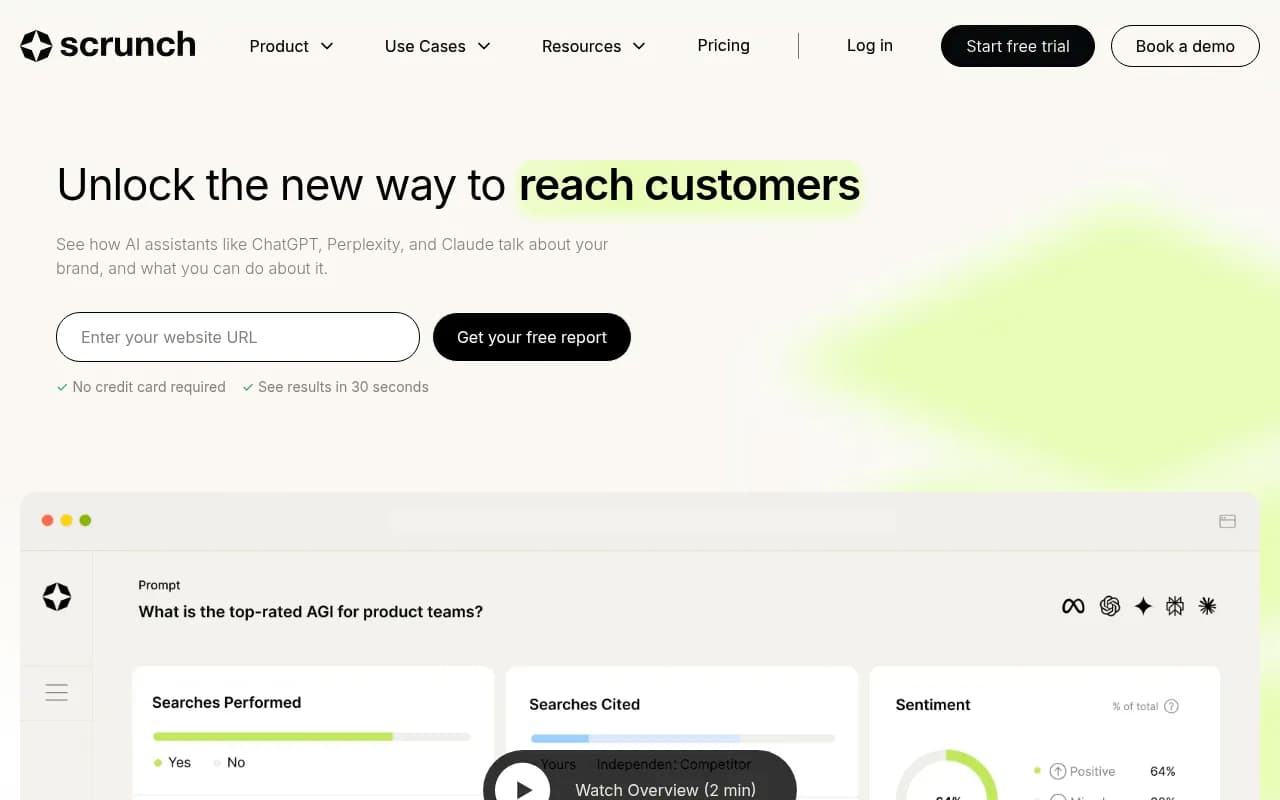
Scrunch
Scrunch works for teams that treat AI visibility as part of a wider content and experience strategy rather than a standalone number. Two entries exist in the catalog, so check which product you land on.
Semrush and Ahrefs Brand Radar: if you already pay for them
If you already have a Semrush or Ahrefs subscription, use what is included before buying anything new. The trade-off is that these suites bolt AI tracking onto an SEO product, so prompt sets tend to be more fixed and the AI-specific depth is shallower.

Budget trackers worth a look
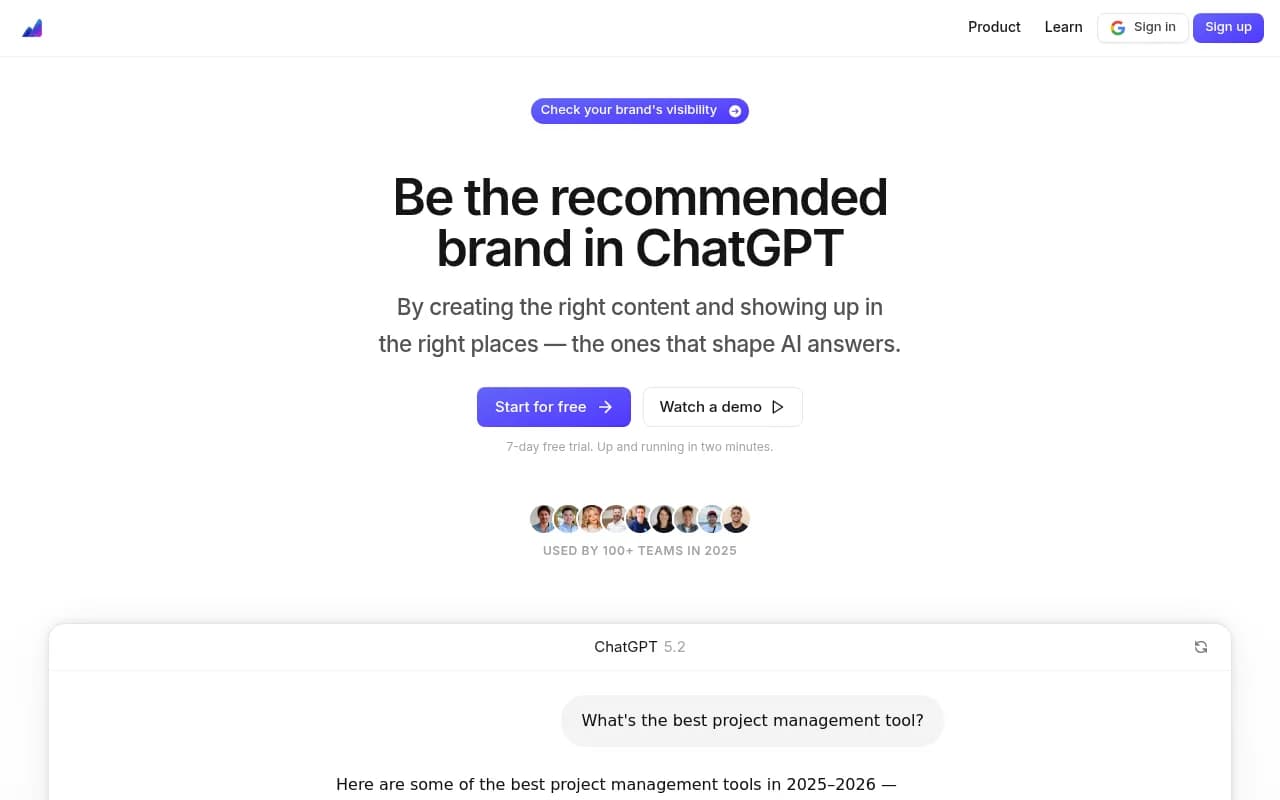
The catalog has several low-cost options aimed at small teams. I have not tested pricing or accuracy on these, so treat them as a shortlist to trial rather than a recommendation.
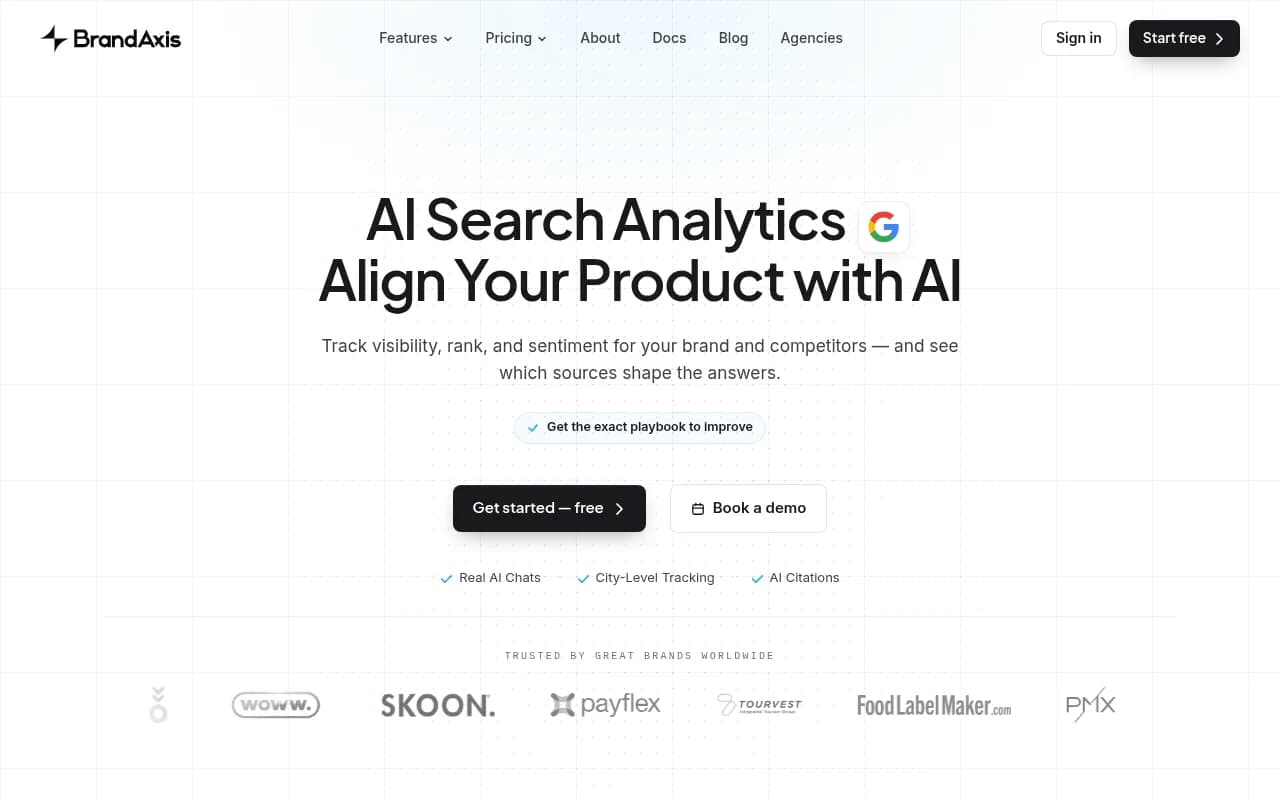
- Airefs for affordable tracking
- BrandAxis for lower-cost tracking for small teams
- Answer Socrates for a low-cost brand tracker with content ideas
- Atyla for budget AI search optimization
Traditional PR monitoring is a different job
Brand24, Mention, and Meltwater monitor press and social mentions. They do not tell you what ChatGPT says about you. A founder doing PR may want both, but do not assume one replaces the other.
Comparison table
| Tool | Best for | Shows cited sources | Helps you fix gaps | Starting price (confirm on vendor site) |
|---|---|---|---|---|
| Promptwatch | Founders who want tracking plus action | Yes, plus Offsite Mentions | Action Board, Agent Chat, Content Agent (Business) | $95/mo Essential |
| Otterly.AI | Lowest-cost monitoring | Basic | Limited | About $29/mo per a third-party roundup |
| Peec AI | Competitor benchmarking | Yes | Limited | Check vendor |
| Profound | Well-funded teams | Yes | Enterprise workflows | Sales-led |
| Semrush / Ahrefs | Existing subscribers | Partial | Limited | Bundled or add-on |
| HubSpot AEO Grader | One-off free snapshot | No | No | Free |
Turning visibility data into PR actions
A tool gives you data. The PR work is what you do with it. Here is a loop that fits into a founder's week.
1. Fix your own pages first
Because product and landing pages earn about 39% of ChatGPT citations, make sure yours state pricing, specs, integrations, and who the product is for in plain text. Add an FAQ page. Keep docs public and crawlable. If your page says "contact us for pricing", the model will fill the gap with whatever a third party says.
2. Get into the roundups AI already cites
Pull the listicles that appear repeatedly for your category prompts. Write a short, specific pitch to each author: what you do, one data point or customer outcome, and a free account for them to try. This is regular PR. The tool just tells you which 10 publications are worth the email.
3. Collect reviews where your category trusts them
For branded prompts, reviews carry more weight than usual. Ask happy customers for reviews on the sites that show up in your citation reports, such as G2 or Capterra for software.
4. Pick social platforms by engine
Promptwatch's social media citations by AI model report (Oct 11 to Nov 9, 2026) shows how different the engines are. Social platforms made up 13.16% of Google AI Overviews citations, 1.94% of Perplexity's, and 0.64% of ChatGPT's. Within AI Overviews, YouTube alone was 6.71%, more than the other six platforms combined. On Perplexity, Reddit (0.82%) and LinkedIn (0.66%) led. X was 0.02% of AI Overviews citations.
For a founder, that reads as: a YouTube walkthrough is worth more for Google than a thread on X, and Reddit and LinkedIn matter more for Perplexity. A caveat: the October report covered 7 days and the November one covers 30, so the month-over-month change is not like for like. Related context: reddit.com's share of ChatGPT citations collapsed from roughly 4% to 0.5% on August 14, 2026, so do not build a ChatGPT plan around Reddit.
5. Do not overinvest in news-style content
News pages lose citations fast. Promptwatch's content half-life report found landing pages and docs stay cited longest, while news lost half its pages within 36 days. A launch announcement gets you a spike. A durable landing page and a good comparison page keep earning.
6. Check what AI says is true about you
Read the actual answers. If AI gets your pricing wrong, find the page it learned that from. Promptwatch's Fact Check (Business plan and above) does this by matching a claim you mark inaccurate to the crawled pages that state it. Without a tool, you can do a rough version by searching for the wrong claim on your site and on the top cited third-party pages.
Which tool for which founder
- Pre-revenue, zero budget: run the free checks above, repeat monthly in a spreadsheet.
- Solo founder, small budget: Otterly.AI or another budget tracker for the trend line, plus manual PR.
- Founder who wants fewer tools: Promptwatch Essential to start, upgrade when the content workload outgrows you.
- Already on Semrush or Ahrefs: turn on their AI features first, then decide if you need more depth.
- Marketing team of two to five with content demands: a platform with content generation and CMS publishing, which means Promptwatch Business or a comparable tool.
If you outgrow DIY and want a team to run technical SEO, content, and digital PR for AI search, 1001 SEO Media offers that, and it uses Promptwatch for AI visibility work. For more options by category, the GEO software directory at bestgeosoftware.com and the AI rank tracking directory list far more tools than this guide can.
Mistakes I would avoid
- Buying an enterprise tool because the demo is polished. If you cannot act on its output in a week, it is shelfware.
- Tracking 300 prompts on day one. Start with 20 to 50 that match real buying questions.
- Treating the visibility score as the goal. The goal is pipeline. Look at AI-referred traffic and signups, not just mentions. Note that ChatGPT stopped sending a referrer on October 8, 2026, so tag links you control with utm_source=chatgpt.com where you can.
- Skipping the pitch step. Data without outreach is a report you wrote for yourself.
The short version
Run the free check this week. Then pick a tool that shows you the sources behind each citation, since that list is your PR plan. If you want tracking and the work in one product, start with Promptwatch's 7-day free trial and see whether the Action Board gives you a to-do list you would actually do. If you only want a trend line for the lowest price, a budget tracker is fine. Whatever you pick, spend the saved hours on product pages, roundup pitches, and reviews, because that is where the citations come from.