Key takeaways
- A board does not care that you were mentioned 412 times. It cares whether AI search drives pipeline, how you compare to competitors, and whether the trend is real or noise.
- Pick a tool on four things: trustworthy data (real UI monitoring, not just APIs), per-engine reporting, traffic and conversion attribution, and exports your finance team can open.
- Report each AI engine separately. Promptwatch Data shows engines behave very differently, so a blended score hides swings.
- Monitoring-only tools are fine for a first quarter. After that, the board will ask what you did about the gaps, so you need a tool that connects insight to action.
- Most vendor listicles rank their own product first. Treat them as marketing and test with your own prompts.
What boards actually want from AI visibility reporting
I have sat through enough marketing reviews to know how this goes. A CMO shows a slide with a visibility score of 34, up from 29. Someone in finance asks what 34 means. Nobody has a good answer. The slide dies.
Board-ready reporting answers four questions:
- Are we showing up where our buyers ask questions, compared with competitors?
- Is it getting better or worse, and is the movement real?
- Does it produce visits, leads or revenue?
- What are we doing about it, and what did the last round of work achieve?
Most AI visibility tools handle question one well. Questions two to four are where they separate. A thread on r/SaaS about this made the same point: share of voice, recommendation rate and ranking position are far more useful in a report than one vague visibility score.
Why per-engine reporting matters more than one blended number
This is the part most tools get wrong, and it is the part that will embarrass you in a board meeting if you ignore it.
AI engines behave differently and change without warning. Promptwatch's average sources per response data shows Google AI Overviews citing about 10 sources per answer and Perplexity almost exactly 10 every day, while ChatGPT sits around 5 and drifts with model updates. Copilot's average swung from under 2 to nearly 17 within a few weeks. Weekly Copilot numbers are noise. Monthly trends are the most you can defend.
Social citations show the same problem. In Promptwatch's October 2026 social media citations report (Sep 28 to Oct 4, 2026), social platforms made up 0.46% of ChatGPT citations but 12.2% of Google AI Overviews citations. Reddit's share of ChatGPT citations collapsed from about 4% to 0.5% on August 14, 2026. If your visibility story leaned on Reddit, your blended score would have dropped overnight for reasons that had nothing to do with your brand.
So the practical rule: report per engine, use stable engines (AI Overviews, Perplexity) as your benchmark lines, and annotate known platform changes on the chart. A board forgives a dip with an explanation. It does not forgive a mystery.
The criteria that matter for a CMO
Forget the feature checklists. For board reporting, I would score tools on these:
- Data source. Does the tool monitor the real consumer interfaces, or only API responses? What users see can differ from API output.
- Metric clarity. Share of voice, position, sentiment and citation share are explainable. An opaque composite is not.
- Competitor context. A number without a competitor benchmark is meaningless to a board.
- Business attribution. Can you connect AI visibility to sessions and conversions?
- Export and presentation. PDF reports, scheduled reports, Looker Studio, CSV. If you rebuild every chart in PowerPoint, the tool is costing you hours.
- Action layer. Does it tell you what to fix, and measure whether the fix worked?
- Security posture. Enterprise procurement will ask about ISO 27001, GDPR and SSO.
Comparison table: the main options
Pricing below is directional. Vendors change plans often, so confirm on each pricing page before you put a number in a budget request.
| Tool | Best for | Attribution to traffic | Reporting and exports | Acts on the data |
|---|---|---|---|---|
| Promptwatch | CMOs who need visibility, traffic and action in one place | Yes, visitor analytics plus crawler logs | PDF, scheduled and white-label reports, Looker Studio, API, MCP | Yes, Content Agent and Action Board |
| Profound | Enterprise analytics and compliance | Limited | Strong dashboards | Limited |
| SE Visible | Strategy-focused CMOs and agencies | No | Clean, presentable reports | Via SE Ranking |
| Peec AI | Mid-market analytics, multi-language | No | Dashboards and exports | No |
| Semrush AI Toolkit | Teams already on Semrush | Limited | Semrush reporting | Limited |
| Ahrefs Brand Radar | Backlink-first SEO teams | No | Ahrefs exports | No |
| Otterly.AI | Budget monitoring | No | Basic | No |
| Brandlight | Multi-brand enterprises | Varies | Enterprise views | Varies |
The tools, from a board-reporting angle
Promptwatch
Promptwatch is where I would start for a CMO whose board has already asked, "so what is this doing for revenue?" It is the one on this list that covers the whole chain: what AI says, which pages it cites, whether AI crawlers can read your site, and whether AI-referred visitors convert.

For reporting specifically, a few things matter:
- It monitors the real interfaces of ChatGPT, Google AI Overviews, Google AI Mode, Gemini, Perplexity, Copilot, Meta AI and others, per country and language, so the numbers match what buyers see.
- Visibility Score, Share of Voice, position, sentiment and citation rank are separate metrics. Read together they locate the problem: low share of voice is a coverage problem, late position is a prominence problem, mentions without self-citations point to content or crawlability.
- Visitor analytics track real traffic and conversions from AI platforms. Crisp reported 2x higher conversion rates from AI traffic than traditional channels, and TreeHouse (Pararius) grew AI search to about 25% of organic conversions. That is the kind of line a CFO reads.
- IP-verified crawler logs, with spoofed bots filtered out, explain why you are or are not being cited.
- Dashboards export to PDF (scheduled, white-labeled if you are an agency), plus Looker Studio, Excel and CSV. Agent Chat can build a custom dashboard or PDF on request.
- It is ISO/IEC 27001 certified and GDPR compliant, which shortens procurement.
Then the part the board cares about in quarter two: the Action Board lists prioritized fixes, and the Content Agent can plan, write and publish content to Webflow, Framer or WordPress, then track whether those pages get crawled, cited and clicked. Pricing runs from a free Explore tier (ChatGPT only) through Essential at $95/mo, Professional at $245/mo and Business at $579/mo. The Content Agent sits in Business and Enterprise. Check promptwatch.com/pricing for current numbers.
The honest downside: it is a lot of platform. If all you need is a monthly mention count, you will not use most of it.
Profound
Profound is a serious enterprise option with strong analytics and a compliance-minded pitch. It tracks seven or more platforms and is popular with large brands. The trade-off is price and a thinner action layer: it is strong at showing where you stand, less so at fixing it.

SE Visible (by SE Ranking)
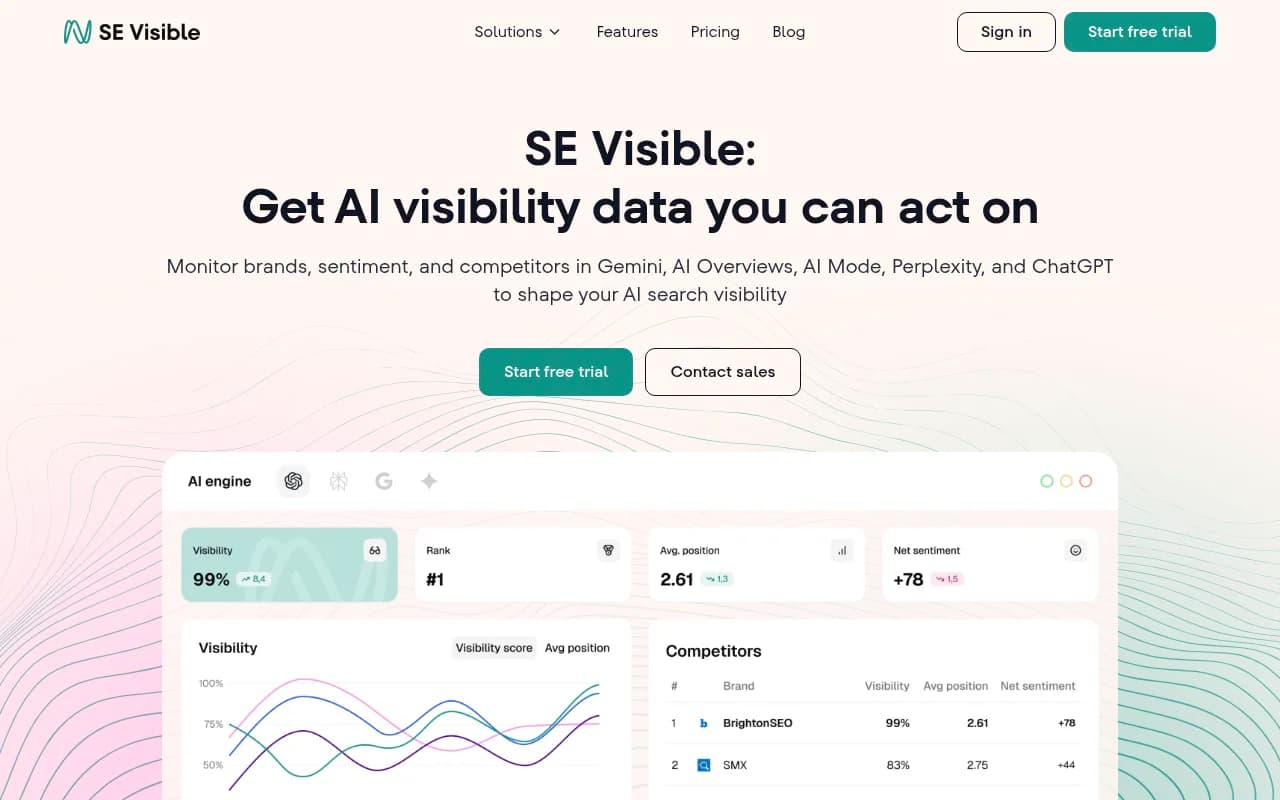
Vendor-sourced reviews describe SE Visible as one of the more immediately presentable tools for CMOs and agencies who want clean, client-ready reporting without wading through noise. That is a fair read of its positioning. It suits strategy-first leaders who will hand execution to another team. It does not give you the crawler or visitor-level attribution a revenue-minded board will eventually ask for.
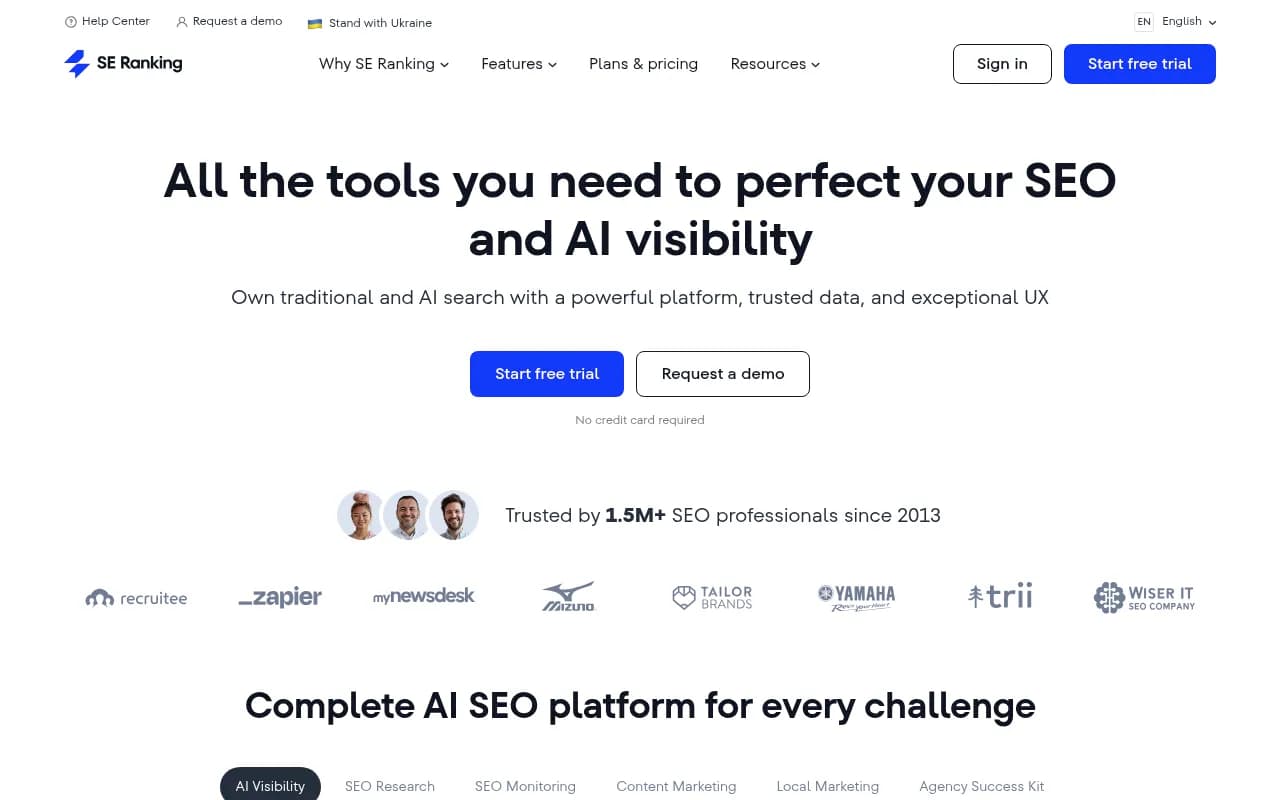
Its parent suite is worth a look if your team already lives there.
Peec AI
Peec AI is a clean analytics tool with good multi-language support, which helps global brands that need to report by market. It tracks share of voice and citation sources. It stops at reporting, which is fine if another tool handles execution.

Semrush and Ahrefs Brand Radar
If your team already pays for Semrush or Ahrefs, the AI add-ons are the lowest-friction way to get a first board slide. They are SEO suites adding AI tracking, so expect shallower AI-specific data and no crawler-level evidence.

Otterly.AI and other budget trackers
Otterly.AI is a reasonable way to prove the concept cheaply. Budget trackers answer "were we mentioned?" and little else. Use them for a pilot, not as the system of record for a board.

Brandlight and Enterprise-leaning options
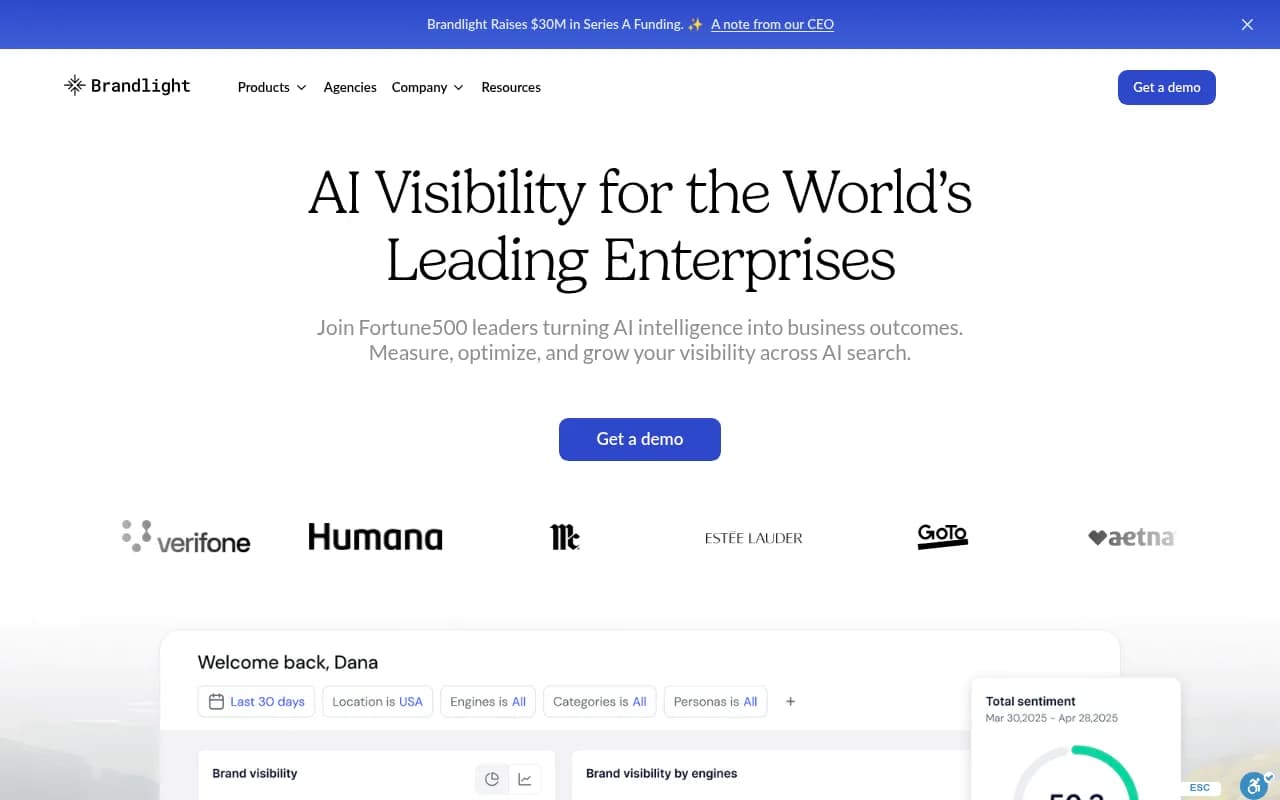
Brandlight positions itself for multi-brand enterprises that need governance across engines, markets and products. If you run a portfolio of brands, ask for a walkthrough and test it against your own prompts.
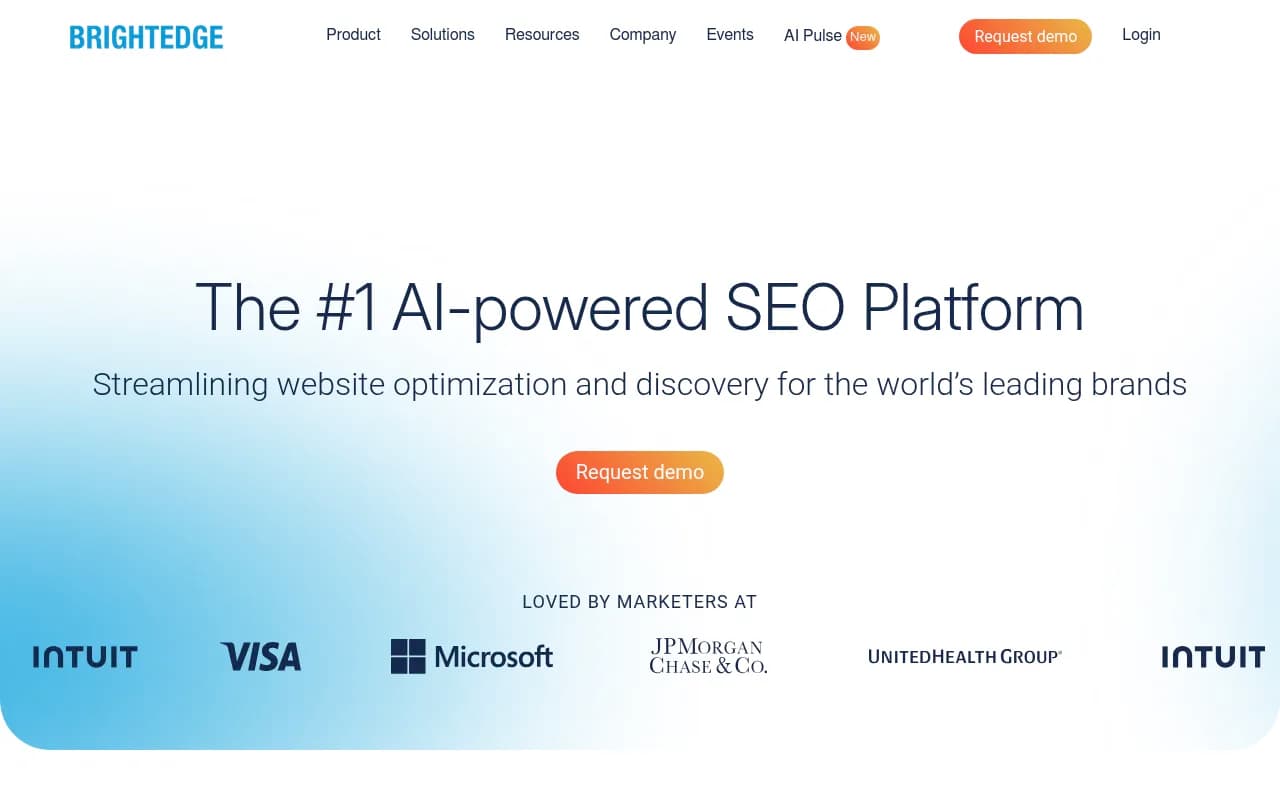
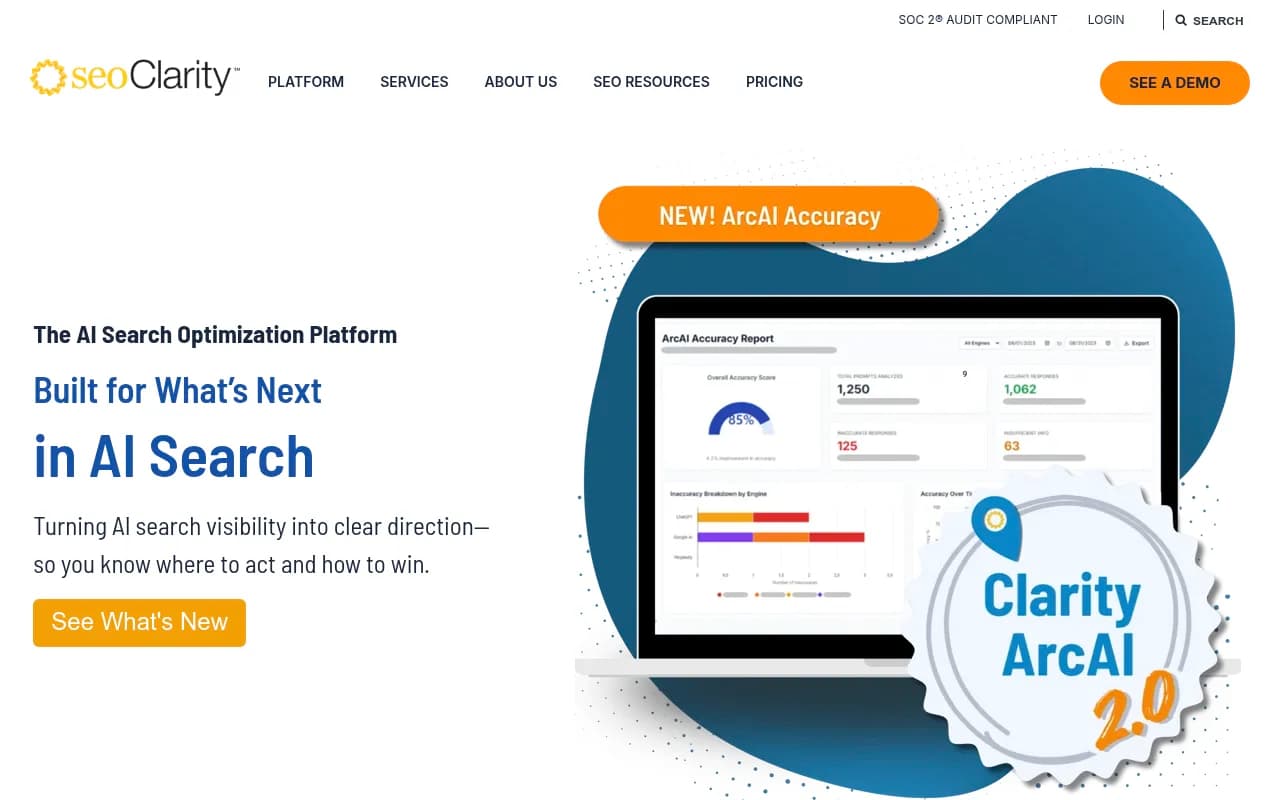
Other enterprise suites worth a look if you already own them are BrightEdge and seoClarity, both of which have added AI tracking to existing SEO platforms.
Be skeptical of vendor rankings
Most of the roundups you will find on this topic are written by the vendors. The Vismore piece ranks Vismore first, Leapd ranks Leapd first, Brandlight ranks Brandlight first. That does not make them useless, since the evaluation criteria are often sensible, but never accept a ranking from someone who sells item number one.
The Perspective AI article that shows up for similar searches is about voice-of-customer research, not AI visibility tracking. It is a different category, so do not let it confuse your shortlist.
A reporting template that survives a board meeting
Whatever tool you choose, build the report around the same few pages.
Page 1: share of voice by engine against three competitors
One chart per engine, not a blended line. Mark platform changes (the ChatGPT Reddit drop, model rollouts) as annotations. Use monthly data for volatile engines like Copilot.
Page 2: what AI says about you
Sentiment trend and two or three representative responses. Boards remember quotes, not scores.
Page 3: traffic and conversions from AI
Sessions, conversion rate and revenue where you can attribute it, compared with organic search. This is the page that gets budget approved. If your tool cannot produce it, you will need analytics work to fill the gap.
Page 4: what we shipped and what happened
Pages published or refreshed, whether they were crawled, whether they are now cited. This closes the loop and turns the report from a scoreboard into a story about decisions.
Page 5: next quarter's priorities
Three actions, with the evidence for each. Keep it short.
Questions to ask in vendor demos
- Do you monitor the actual consumer UI or the API? Show me both for one prompt.
- How do you handle volatility? Can I see data by engine and by week?
- How is your visibility score calculated, and can I see the components?
- Can you show AI-referred sessions and conversions inside the product?
- What does a scheduled PDF report look like, and can it carry our branding?
- What certifications do you hold, and is there SSO?
- If I publish a page tomorrow, how will I know whether it worked?
If the answers to the last two are vague, you are looking at a tracker, not a platform.
How to choose
If you want a pilot with minimal commitment, start with a free tier or a budget tracker, and run it for a month with 30 to 50 prompts that reflect real buying questions.
If you already live in an SEO suite and need a first slide, turn on its AI add-on and see how far it gets you.
If your board is asking about revenue and you need a system that reports, explains and acts, Promptwatch is the strongest fit of the group. That is the one to put through a proper trial.
If you are comparing more options, the directories at bestgeosoftware.com and ai-rank-tools.com list far more tools than fit here. Many CMOs also bring in an agency to run the program; 1001 SEO Media handles GEO and AI search work for teams that would rather not staff it internally.
The short version
Pick the tool whose data you can defend to a skeptical CFO. Report per engine. Tie visibility to traffic. Show what you shipped. A single score with an arrow next to it is not a board report, no matter how nice the dashboard looks.