Key takeaways
- Most AI visibility tools track brand mentions, not citations. These are different signals with different strategic implications.
- URL-level citation tracking tells you which specific pages AI models pull from -- that's the data you need to act on.
- A handful of platforms go beyond monitoring to help you close citation gaps with content analysis and generation.
- Promptwatch is one of the few tools that combines citation tracking, content gap analysis, and AI-powered content creation in one platform.
- Choosing the right tool depends on your team size, budget, and whether you need monitoring only or a full optimization workflow.
There's a gap in how most teams think about AI search visibility, and it costs them. They check whether their brand name appears in ChatGPT or Perplexity responses, see it does (or doesn't), and stop there. That's brand mention tracking. It's useful the same way knowing your name is in a newspaper is useful -- it tells you something happened, but not much about why or what to do next.
AI citation tracking is a different thing entirely. It answers: which specific URL did Perplexity pull when it recommended your product category? Why is ChatGPT citing your competitor's comparison page instead of yours? Which of your pages are actually being read and referenced by AI models, and which are invisible to them?
That distinction -- mention vs. citation -- is the most important thing to understand before choosing a tool in 2026.
Why citation tracking matters more than mention tracking
When an AI model generates a response, it often pulls from specific sources. Perplexity shows numbered citations explicitly. ChatGPT Search links to pages. Google AI Overviews attribute content. The page that gets cited gets the authority signal and, increasingly, the referral traffic.
Here's the uncomfortable reality: your brand can appear in an AI answer while someone else's content gets cited as the source. You get the name-drop; they get the trust signal and the click. That's not a win.
The reverse is also true and often overlooked. If your content is frequently cited as a source -- even when your brand name isn't front and center -- you're building authority with AI models in a way that compounds over time. AI search traffic converts at roughly 14x the rate of traditional Google search clicks, according to data cited in Search Engine Journal. Citation placement is what drives that conversion gap.
So the question isn't just "does AI mention us?" It's "which of our pages are AI models actually using, and what do we need to publish to get cited more?"
The two types of tools in this space
Before getting into specific platforms, it helps to know that AI citation tools fall into two broad categories:
Monitoring-only tools run your prompts across AI engines, capture responses, and report on mention frequency, sentiment, and sometimes citation sources. They're dashboards. They tell you what's happening.
Optimization platforms do the monitoring, then help you do something about it. They identify which prompts you're missing, which competitors are winning those prompts, and what content you'd need to create to close the gap. Some even generate that content for you.
Most tools on the market right now are monitoring-only. That's fine if you just need visibility data. But if you're trying to actually improve your citation rate, you'll hit a wall quickly -- you'll have the data but no clear path to acting on it.
The top AI citation tracking tools in 2026
Promptwatch
Promptwatch is one of the few platforms that tracks citations at the page level across 10 AI models (ChatGPT, Perplexity, Claude, Gemini, Google AI Overviews, Grok, DeepSeek, Copilot, Meta AI, and Mistral) and then helps you do something about what you find.
The citation tracking itself is solid: you can see which specific pages are being cited, how often, and by which models. But what separates it from most competitors is the action loop built around that data. The Answer Gap Analysis shows you exactly which prompts competitors are visible for but you're not -- with the specific content your site is missing spelled out clearly. From there, a built-in AI writing agent generates articles grounded in real citation data (880M+ citations analyzed) to help you close those gaps.
It also has AI Crawler Logs, which show you in real time when ChatGPT, Claude, or Perplexity crawl your site, which pages they read, and any errors they hit. That's a feature most competitors don't have at all.

Semrush AI Visibility Toolkit
Semrush added AI visibility tracking to its existing platform, and the integration is useful if you're already a Semrush customer. The toolkit runs prompts across AI engines, tracks brand mentions and citation sources, and surfaces competitive data through dashboards like Visibility Overview and Competitor Research.
The limitation is that Semrush uses fixed prompt sets rather than letting you define your own. For teams with specific niche queries or long-tail prompts, that's a real constraint. It's also worth noting there's no AI traffic attribution built in -- you can see citations but can't easily connect them to actual site traffic or revenue.
Profound
Profound is a well-built monitoring platform with strong multi-model coverage and clean reporting. It tracks citations across the major AI engines and gives you competitive heatmaps showing who's winning for which prompts. The data quality is good.
Where it falls short is on the action side. Profound doesn't have content gap analysis or content generation tools -- it shows you where you're losing but doesn't help you fix it. For teams that just need solid monitoring data to feed into their own content workflow, that's fine. For teams that want a more complete solution, it's a starting point rather than an endpoint.

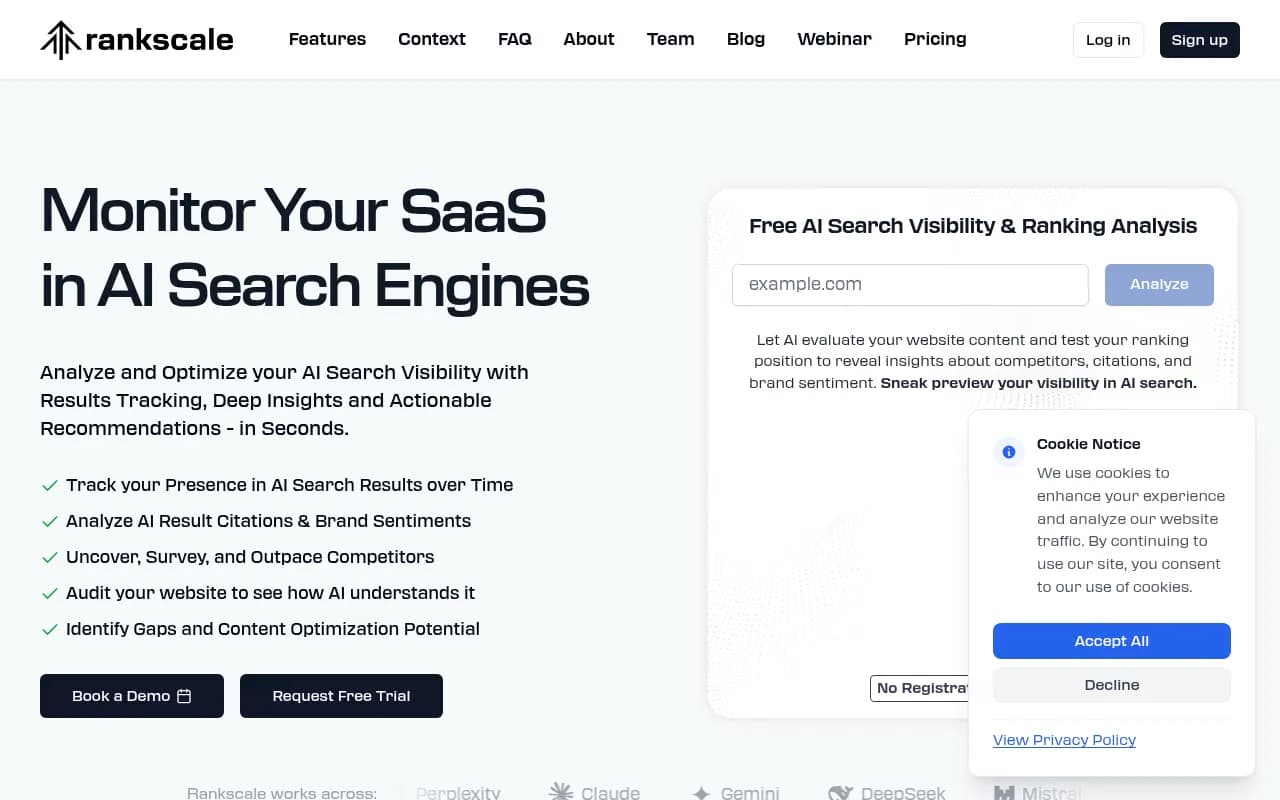
Rankscale
Rankscale focuses specifically on AI search ranking and is worth considering for teams that want clean, focused citation data without a lot of extra features. It tracks how your pages rank across AI responses and gives you prompt-level visibility into citation sources.
Otterly.AI
Otterly.AI is one of the more affordable options in the space and covers the core monitoring use case well. It tracks brand mentions and citation sources across the main AI platforms and is straightforward to set up. The trade-off is depth: no crawler logs, no content generation, no traffic attribution. It's a solid entry point for smaller teams or those just starting to think about AI visibility.

Peec AI
Peec AI is worth a mention for teams with international audiences. It handles multi-language tracking better than most platforms, which matters if your customers are prompting AI models in German, French, Spanish, or other languages. The core monitoring features are solid, though like Otterly it doesn't extend into content optimization territory.

AthenaHQ
AthenaHQ covers 8+ AI search engines and has a clean interface for tracking brand visibility and citation sources. It's monitoring-focused, which means it's good at showing you the state of play but doesn't help you change it. Teams that want to feed data into their own content strategy will find it useful; teams looking for an end-to-end solution will need to pair it with other tools.

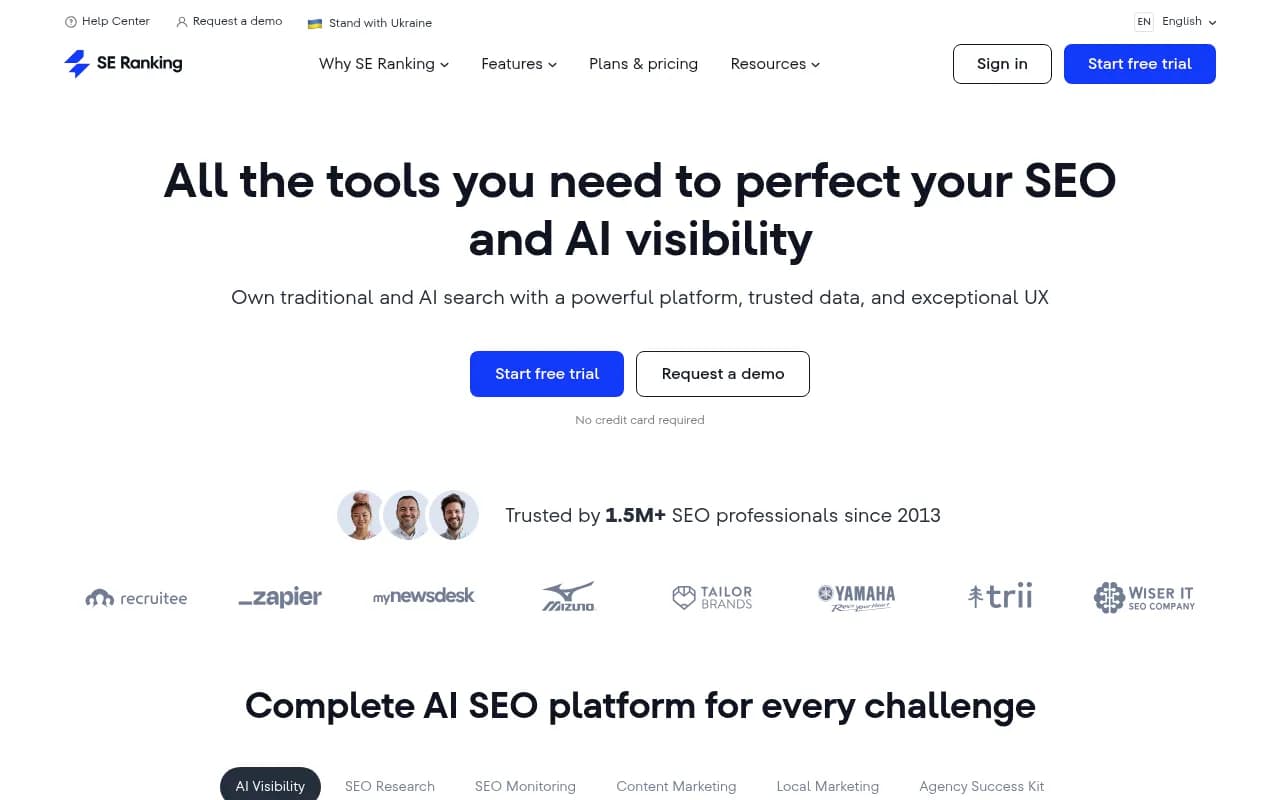
SE Ranking AI Visibility
SE Ranking added an AI visibility module to its existing SEO platform. If you're already using SE Ranking for traditional SEO, the AI visibility data integrates cleanly with your existing workflow. Citation tracking is included, though the depth of analysis is more limited than dedicated AI visibility platforms.
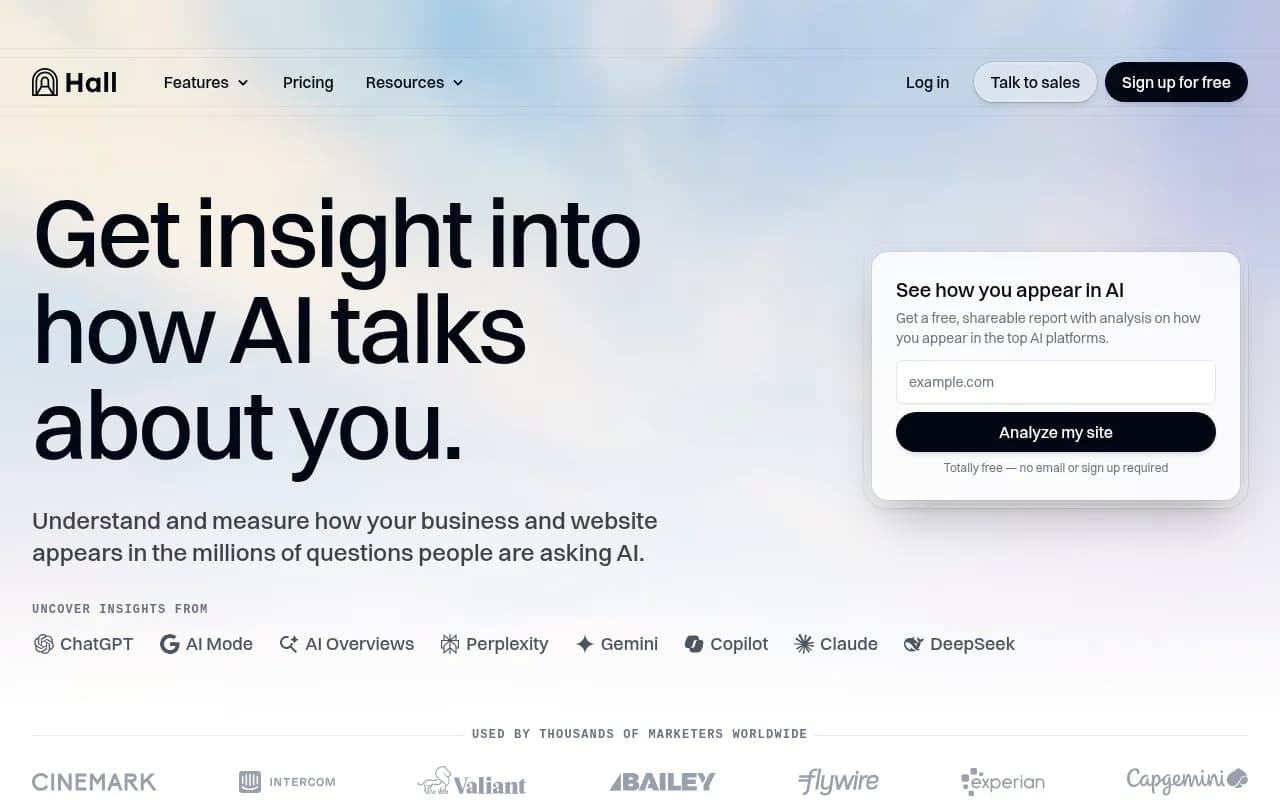
Hall AI
Hall AI is specifically built around tracking how AI platforms cite and discuss your brand. It's a narrower tool than some of the others here, but that focus means the citation-specific features are well-developed. Good option for teams whose primary concern is citation monitoring rather than broader AI visibility analytics.
LLM Clicks
LLM Clicks is built specifically for citation tracking in AI-powered search, with a focus on connecting citation data to actual click-through behavior. It's a more specialized tool that works well as part of a broader analytics stack.
Feature comparison
Here's how the main platforms stack up across the dimensions that matter most for citation tracking:
| Tool | URL-level citation tracking | Cross-model coverage | Content gap analysis | AI content generation | Crawler logs | AI traffic attribution | Starting price |
|---|---|---|---|---|---|---|---|
| Promptwatch | Yes | 10 models | Yes | Yes | Yes | Yes | $99/mo |
| Semrush | Partial | 4-5 models | No | No | No | No | ~$140/mo |
| Profound | Yes | Multiple | No | No | No | No | Higher |
| Otterly.AI | Partial | Multiple | No | No | No | No | Lower |
| Peec AI | Yes | Multiple | No | No | No | No | Mid-range |
| AthenaHQ | Yes | 8+ models | No | No | No | No | Mid-range |
| SE Ranking | Partial | Limited | No | No | No | No | ~$65/mo |
| Hall AI | Yes | Multiple | No | No | No | No | Varies |
| Rankscale | Yes | Multiple | No | No | No | No | Varies |
The pattern is clear: most tools stop at monitoring. The gap between "we can see where we're being cited" and "we can help you get cited more" is where Promptwatch and a small number of other platforms differentiate themselves.
What to actually look for when evaluating these tools
URL-level vs. domain-level tracking
Some tools tell you your domain appears in AI responses. That's not very useful. You want to know which specific page -- because that tells you what content is working and what format AI models prefer. A tool that only reports at the domain level is giving you a fraction of the actionable information.
Which AI models are covered
ChatGPT and Perplexity get most of the attention, but Google AI Overviews drives significant traffic, and Claude, Gemini, and Grok are growing fast. A tool that only covers two or three models will give you an incomplete picture. Check the model list carefully before committing.
Prompt customization
Fixed prompt sets (like Semrush uses) are a real limitation. Your customers don't all ask the same questions, and the prompts that matter for a B2B SaaS company are completely different from those that matter for a travel brand. Look for tools that let you define your own prompt library.
What happens after you see the data
This is the question most teams don't ask until they've been using a monitoring tool for three months and realized they don't know what to do with the data. If a tool shows you that competitors are being cited for 40 prompts you're not, what's the next step? Does the tool help you figure out what content to create? Does it help you create it? Or does it just show you the gap and leave you to figure out the rest?
For teams with strong content operations already in place, monitoring-only tools work fine. For teams that need more guidance or want to move faster, an optimization platform is worth the higher price.
Traffic attribution
Citation tracking tells you which pages AI models read. Traffic attribution tells you whether those citations are actually sending people to your site. Without attribution, you're optimizing for a proxy metric. Look for tools that offer a code snippet, Google Search Console integration, or server log analysis to close the loop between AI citations and actual visits.
A practical setup for 2026
If you're starting from scratch with AI citation tracking, here's a reasonable approach:
-
Pick 30-50 prompts that represent how your actual customers discover your category. Not brand queries -- category and problem queries. "Best project management software for remote teams" not "Acme Software reviews."
-
Run those prompts across at least ChatGPT, Perplexity, and Google AI Overviews. Note which URLs are being cited -- yours and competitors'.
-
Identify the gaps: prompts where competitors are cited and you're not, and the specific content types that seem to be getting cited (comparison pages, how-to guides, listicles, etc.).
-
Create content to fill those gaps. This is where tools with built-in content generation (like Promptwatch) save significant time -- the content is engineered around actual citation data rather than guesswork.
-
Track changes in citation rate over 4-8 weeks as new content gets indexed and crawled by AI models.
The cycle -- find gaps, create content, track results -- is what actually moves citation metrics. Monitoring without the action loop is just watching your competitors win.
Which tool should you actually use?
It depends on what you need.
If you want the most complete solution -- citation tracking, gap analysis, content generation, crawler logs, and traffic attribution in one place -- Promptwatch is the strongest option in 2026. It's the only platform that covers the full cycle from monitoring to optimization to measurement, and the 880M+ citations in its dataset give the content recommendations real grounding.
If you're on a tight budget and just need to start monitoring, Otterly.AI gets you in the door affordably. If you need strong multi-language support, Peec AI is worth a look. If you're already deep in the Semrush ecosystem, the AI Visibility Toolkit adds value without adding another tool to manage.
What you want to avoid is spending months in a monitoring-only tool, accumulating data, and then realizing you need a separate workflow to act on any of it. The tools that integrate monitoring with optimization are more expensive, but they're also the ones that actually move the needle.
AI search is not slowing down. The brands that figure out citation tracking now -- and more importantly, figure out how to act on it -- will have a meaningful head start on everyone who's still treating AI visibility as a future problem.