Key takeaways
- This guide does not contain a benchmark scoreboard. We have published entry-tier specs for some tools and a test protocol, but no head-to-head results, and we won't invent any.
- AEO tools are sampling systems. They run prompts repeatedly and report how often answers mention or cite you, so how a tool collects answers matters more than its dashboard.
- Citation counts differ a lot by engine: ChatGPT cites about 5 sources per web-search answer, Google AI Overviews and Perplexity about 10, and Copilot swings wildly. Compare tools by engine, never pooled.
- Entry prices run from $79/mo to $295/mo, and prompt allowances run from 50 to 200. Prompts per dollar and engine coverage are the two numbers to check first.
- Run the same 50 prompts on a free trial of two or three finalists, three times each, before paying for anything.
What this guide is (and isn't)
The original idea was simple: put 12 AEO platforms through the same 50 prompts and rank them. I'm not going to pretend that data exists here. What we have is published pricing and coverage for a handful of tools, Promptwatch Data on how AI engines behave, and a protocol that makes your own test fair.
That's less flashy than a leaderboard. It's also more useful, because vendor rankings of AEO tools (including the ones on vendor blogs) tend to put the vendor first. Your prompts, your market and your competitors decide which tool wins for you.
What AEO tools actually do
Answer engine optimization tools, also called AI visibility or GEO tools, test how AI answer engines talk about your brand. They run a set of prompts again and again across ChatGPT, Perplexity, Gemini, Google AI Overviews and AI Mode, Copilot and sometimes Claude, then report how often answers mention or cite you.
Why bother? Because clicks behave differently when an AI summary shows up. A Pew Research study of 900 U.S. adults in March 2025 found users clicked a traditional result in 8% of visits with an AI summary, versus 15% without one. It was observational and Google-only, so it shows an association, not cause. Still, it explains why rankings alone stopped telling the whole story.
SEO, AEO and GEO overlap heavily. Vendors sell the same product under all three names, so don't filter your shortlist by label.
The 12 contenders
Here are the tools we'd put in a serious shortlist. Entry specs come from a comparison published by Olostep and checked on October 15, 2026. We did not independently verify them, so confirm on each vendor's pricing page. Tools without a published figure in our research show a dash rather than a guess.
| Tool | Entry price | Entry-tier prompts | Engines at entry tier | Trial |
|---|---|---|---|---|
| Peec AI | EUR 85/mo (Starter) | 50 | 3 models of your choice | Free trial, length not stated |
| Scrunch | $250/mo (Core) | 125 | ChatGPT, Perplexity, AI Overviews, Copilot | 7 days |
| Goodie | $295/mo (Core) | 110 | ChatGPT, AI Overviews, Perplexity, AI Mode, Copilot | 7 days |
| SE Visible | $99/mo ($79/mo annual) | 200 (about 30,000 answers/mo) | ChatGPT, Gemini, AI Mode, Perplexity, AI Overviews | 10 days |
| Writesonic | $79/mo billed annually | 50 | ChatGPT, Gemini, AI Overviews | Free trial |
| Promptwatch | $95/mo (Essential) | 50 | All supported models on every plan | 7 days |
| Profound | not verified | - | - | - |
| Otterly.AI | not verified | - | - | - |
| AthenaHQ | not verified | - | - | - |
| Semrush One | not verified | - | - | - |
| Ahrefs Brand Radar | not verified | - | - | - |
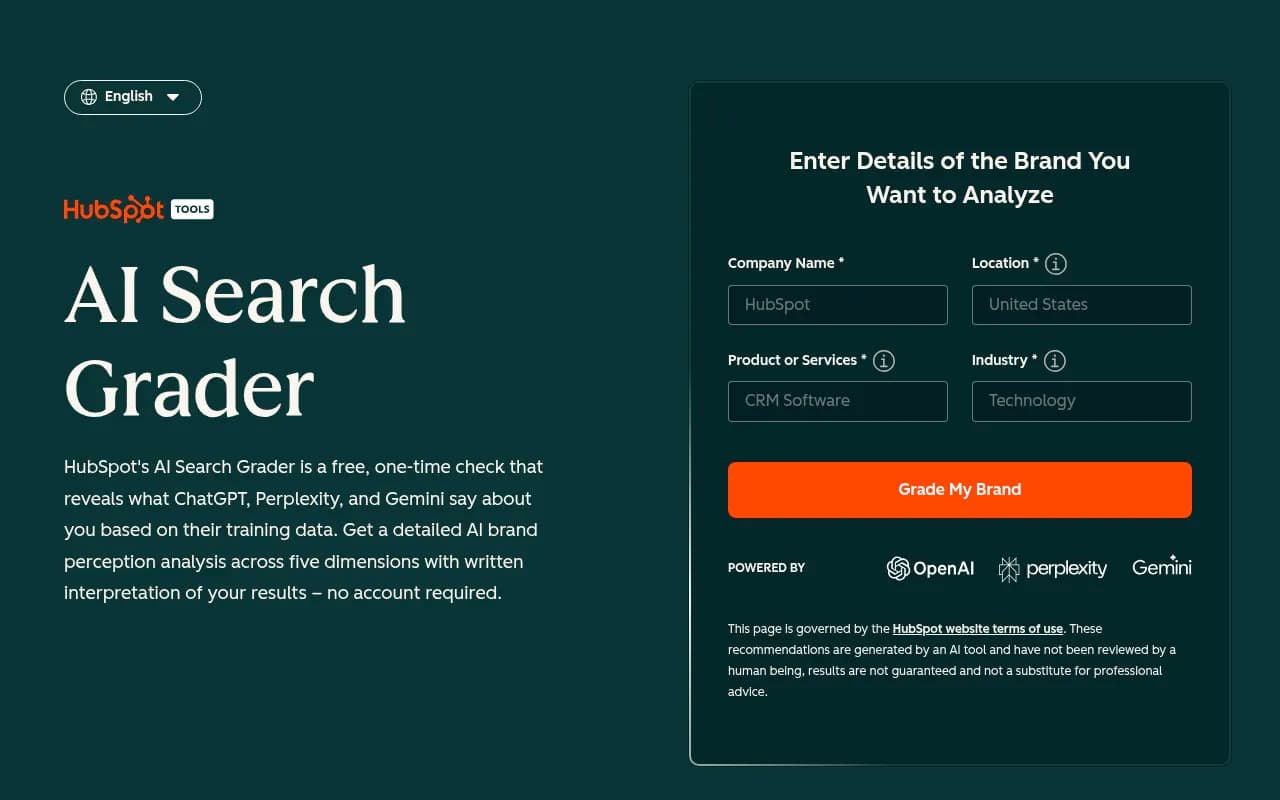
| HubSpot AEO | reportedly from $50, unverified | - | - | - |
Budget trackers
Peec AI is the pick when you want daily tracking and a clean interface on a small budget, though you choose only three models at the entry tier.

SE Visible, from SE Ranking, gives the most prompts per dollar in the published data: 200 prompts and roughly 30,000 answers a month for $99, or $79 billed annually.
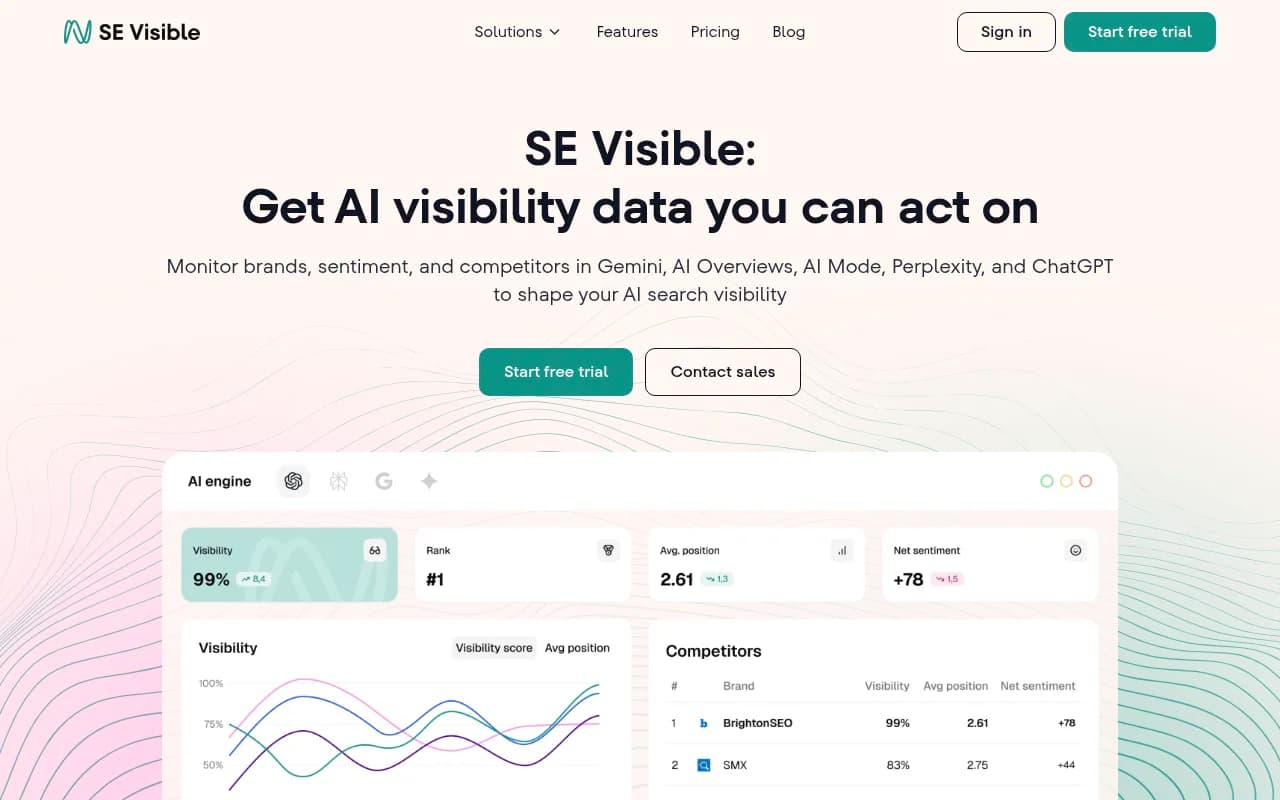
Otterly.AI sits in the same affordable-monitoring bracket.

Monitoring plus bot data or content
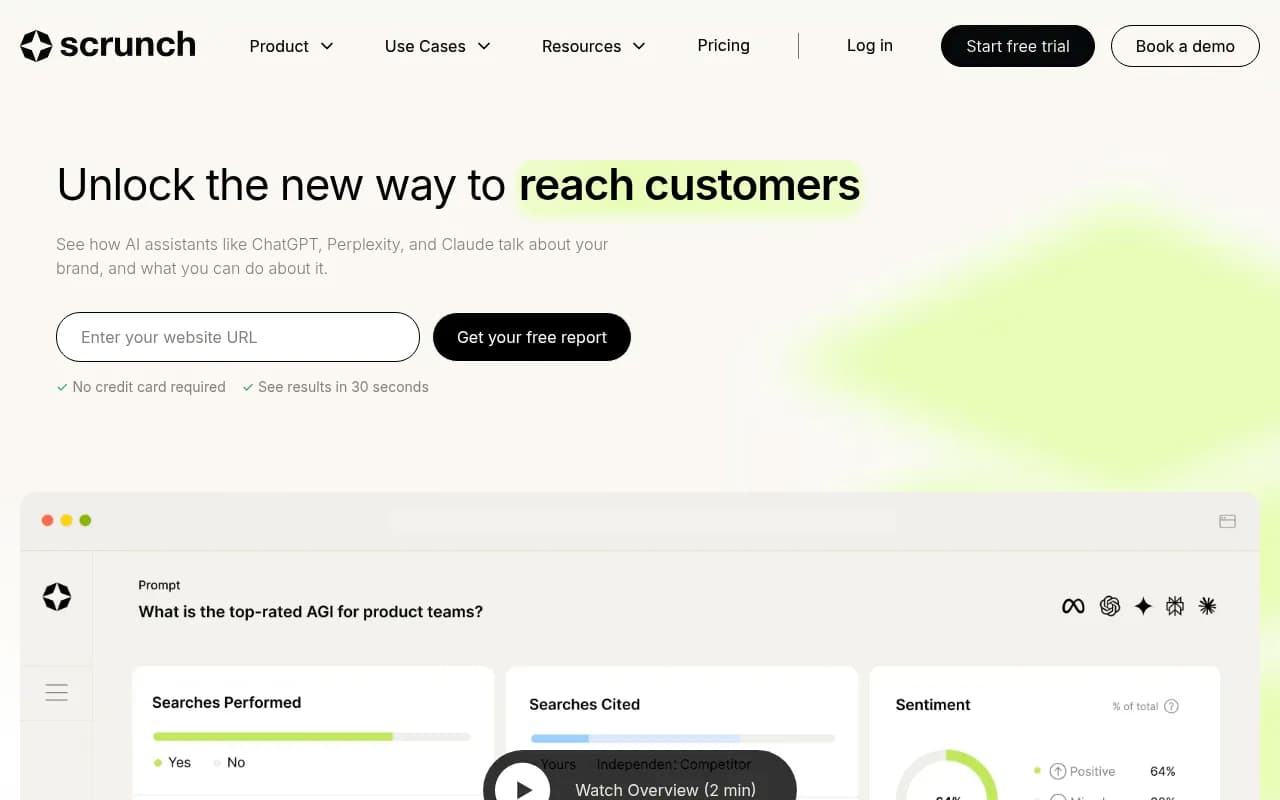
Scrunch pairs visibility tracking with AI bot traffic, which helps separate "the bot never read this page" from "the bot read it and chose someone else."
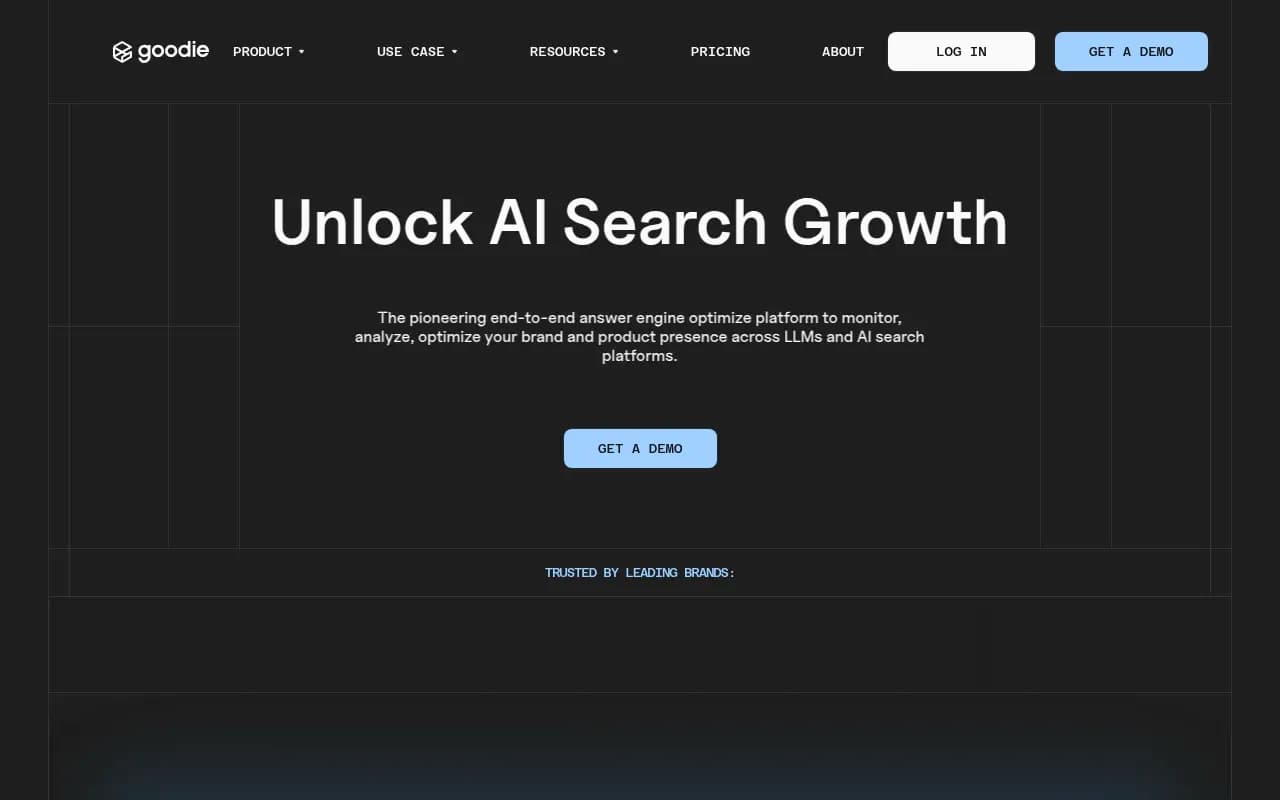
Goodie adds content agents on top of tracking, at the highest entry price in the published set.
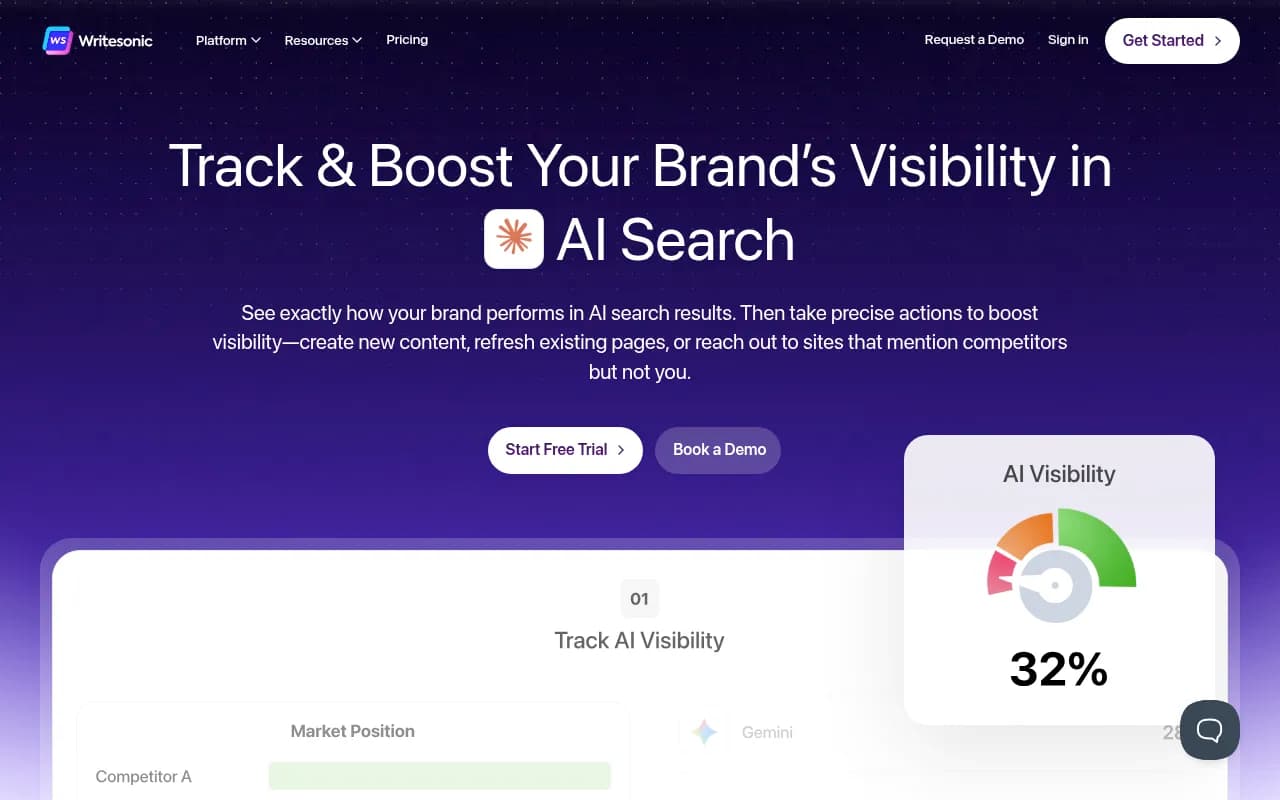
Wriesonic is the choice if you want tracking and an AI writer in one login.
Enterprise and suite options
Profound and AthenaHQ are the names you'll hear most in enterprise evaluations.

If you already pay for an SEO suite, check what the add-on gives you before buying a separate tool. Semrush One and Ahrefs Brand Radar are the two to look at. Expect fixed prompt sets in some suite add-ons, which matters when you want to test your own 50.
HubSpot's free AEO Grader is a one-off check, not continuous tracking, but it's a decent zero-cost sanity test.
The end-to-end option
Promptwatch is the one on this list that goes past reporting. It tracks prompts through the real interfaces of ChatGPT, Google AI Overviews, AI Mode, Gemini, Perplexity, Copilot and others, then traces citations, shows IP-verified AI crawler logs, and has a Content Agent that writes and publishes pages to WordPress, Webflow or Framer. Visitor analytics then show whether those pages drive traffic. The Essential plan is $95/mo with 50 prompts and every model; the Content Agent starts at Business ($579/mo). Confirm current numbers at promptwatch.com/pricing. A 7-day free trial and a free AI visibility report are the cheapest ways in. We recommend it for teams that want to fix gaps, not just see them, and 1001 SEO Media's own work runs on it.

For wider shopping, the GEO software directory lists far more tools than any single article can cover.
Why you can't pool results across engines
This is the part most test write-ups skip. Engines behave differently, and a single blended "visibility score" hides it.
From Promptwatch's average sources per response data:
- ChatGPT cites about 5 sources per web-search answer, and the number drifts with model updates.
- Google AI Overviews cites about 10 sources per answer, steadily.
- Perplexity cites almost exactly 10 per answer every day. That makes it the most stable test bench: if your Perplexity citations change, your content probably caused it.
- Copilot swung from under 2 to nearly 17 sources per response within a few weeks. Judge it on monthly trends.
So a tool showing you 40% visibility on Perplexity and 12% on ChatGPT isn't broken. Those are different games. Any platform that only gives you one blended number deserves suspicion.
Why your 50 prompts should look like search queries
The second trap is writing prompts the way people chat. ChatGPT doesn't send your sentence to the web. It splits it into fanout searches. Promptwatch's ChatGPT query fanout data found a single prompt can trigger 3 to 8+ separate searches. Average fanout queries fell from about 117 characters in December 2025 to roughly 53 characters (6 to 8 words) once fanouts returned in April 2026. They are short and keyword-like.
Three consequences for the test:
- Include some short, keyword-style prompts alongside conversational ones.
- Prefer tools that show you the fanout queries, not just the final answer.
- Re-run after major ChatGPT updates. Promptwatch also documented ChatGPT adopting the site: operator at scale on August 8, 2026, which changed how many searches each response runs.
The 50-prompt protocol
Here is the mix I'd use. Adjust the counts to your market.
| Prompt group | Count | Example pattern |
|---|---|---|
| Category discovery | 15 | "best [category] tools" |
| Comparison | 10 | "[you] vs [competitor]" |
| Problem-led | 10 | "how do I [job to be done]" |
| Branded | 10 | "is [you] good for [use case]" |
| Short fanout-style | 5 | "[category] pricing 2026" |
Then follow these rules:
- Paste the identical 50 into every tool you trial. If a tool caps prompts below 50, split the set the same way across tools and say so.
- Run each tool for at least three separate days. One snapshot is noise.
- Record results per engine, never pooled.
- Pick one engine you can check manually (Perplexity is easiest) and compare each tool's reported answer to what you see in the real interface.
How collection method changes results
This is the question I'd ask every sales rep: do you collect from the real user interface, or from an API? User-facing answers, citations and shopping recommendations can differ from API outputs. Neither is wrong, but API data tells you what a model believes from training, while interface data tells you what a searcher sees. Promptwatch, for one, collects from real interfaces and tracks API-only models alongside. Ask each vendor, and test it against your manual check.
Scoring sheet
Score each tool from 1 to 5 on these, and weight them to your needs:
| Criterion | What to check |
|---|---|
| Accuracy | Does the reported answer match what you see manually? |
| Engine coverage | Are the engines your buyers use included at your tier? |
| Prompt economics | Cost per prompt and per answer sampled |
| Citation depth | Which URLs get cited, and where in the source list |
| Diagnosis | Crawler logs, page tracking, or sentiment claims that explain why |
| Action | Does it tell you or help you do something about gaps? |
| Reporting | Exports, scheduled PDFs, API access |
Most cheap trackers score well on the first four and zero on the last three. That's fine if you have a team to do the work. It's a poor deal if you don't.
Which one to pick
- Tight budget, small prompt set: Peec AI or Writesonic.
- Lots of prompts per dollar: SE Visible.
- Need bot-level data: Scrunch, or Promptwatch if you also want crawler logs verified against operators' published IP ranges.
- Want the fixing handled too: Promptwatch, or Goodie if its content agents suit your stack.
- Already deep in an SEO suite: trial the add-on first, then decide.
For other categories, the AI rank tools directory covers pure rank trackers.
What to do this week
Pick two or three finalists, load the same 50 prompts into each trial, and log results per engine across three days. If the manual Perplexity check disagrees with a tool, that tool is out. Whatever survives, check its price again on the vendor's own page. Everything in the table above was a snapshot from October 2026.