Key takeaways
- AthenaHQ's Growth plan starts at $399/month and covers 100 prompts across ChatGPT, Perplexity, and Google AI Overviews -- solid coverage, but the credit-based model means costs can climb fast.
- The platform is monitoring-focused. Content generation exists, but optimization workflows, crawler logs, and traffic attribution are limited or absent depending on the plan.
- Several features that matter most for ROI -- Reddit/YouTube tracking, ChatGPT Shopping visibility, AI crawler logs -- are either missing or locked behind enterprise tiers.
- For teams that want to act on their data (not just watch it), the price-to-value ratio gets harder to justify as you scale.
- Alternatives like Promptwatch cover more models, include content generation and crawler logs at lower price points, and close the loop from visibility gap to published content.
What AthenaHQ actually is
AthenaHQ is a GEO (generative engine optimization) and AI visibility platform. The core idea is straightforward: instead of tracking where you rank on Google's blue links, you track how often AI engines like ChatGPT, Perplexity, Claude, and Gemini mention your brand, cite your content, or recommend your products in their generated answers.
That's a real problem worth solving. AI search is eating traditional search traffic fast, and most brands have no idea whether they're showing up in those answers or not.
AthenaHQ monitors your visibility across 8+ AI models, surfaces content gaps, benchmarks you against competitors, and gives you some tools to act on what it finds. The question isn't whether the category is valuable -- it obviously is. The question is whether AthenaHQ's specific pricing and feature set make sense for your situation in 2026.

The pricing tiers, broken down honestly
AthenaHQ doesn't publish a full pricing page with every detail, which is itself a small red flag. What's confirmed from multiple third-party reviews:
- The Growth plan runs around $399/month and includes 100 prompts tracked across ChatGPT, Perplexity, and Google AI Overviews, plus AI content generation tools.
- Higher tiers (Pro, Enterprise) exist but pricing requires a sales conversation.
Here's a comparison of what's known across tiers:
| Feature | Growth (~$399/mo) | Pro (custom) | Enterprise (custom) |
|---|---|---|---|
| Prompts tracked | 100 | More (unspecified) | Custom |
| AI models covered | ChatGPT, Perplexity, Google AI Overviews | More models | 8+ models |
| Content generation | Yes | Yes | Yes |
| Competitor benchmarking | Yes | Yes | Yes |
| Sentiment/framing analysis | Yes | Yes | Yes |
| AI crawler logs | No | Unclear | Likely |
| Reddit/YouTube tracking | No | No | Unclear |
| ChatGPT Shopping tracking | No | Unclear | Unclear |
| Traffic attribution | Limited | Limited | Unclear |
| API access | No | Unclear | Yes |
The honest read: the Growth plan is functional for a brand that wants to start monitoring AI visibility. But 100 prompts goes faster than you'd expect once you start tracking branded, category, and competitor-related queries across multiple models.
The credit model and why it matters
One thing that catches buyers off guard is the credit-based system. Some actions inside AthenaHQ -- running queries, generating content, pulling competitor data -- consume credits. When you hit your limit, you either wait for the next billing cycle or pay more.
This isn't unusual in SaaS, but it changes the math on "how much does this actually cost." A team actively running gap analyses, generating content briefs, and monitoring multiple competitors can burn through credits faster than the plan headline suggests.
The practical implication: the $399/month number is a floor, not a ceiling, for teams using the platform seriously.
What AthenaHQ does well
To be fair about this, AthenaHQ has genuine strengths.
The monitoring dashboard is clean and gives you a real picture of AI share of voice across the models it covers. The competitor benchmarking is useful -- seeing where rivals are winning AI citations and where gaps exist is genuinely actionable information.
The sentiment and framing layer is something a lot of competitors skip. Knowing you're mentioned in AI answers is one thing. Knowing whether you're being framed as a leader, a budget option, or a cautionary tale is different and more useful.
Content gap analysis is also present, and for teams that need to justify GEO investment internally, having a dashboard that maps your content against AI responses makes that conversation easier.
What AthenaHQ doesn't do (and where that hurts)
This is where the pricing conversation gets complicated.
No AI crawler logs. You can't see which AI crawlers are hitting your site, which pages they're reading, how often they return, or whether they're encountering errors. This matters because crawling and citation aren't the same thing -- a page can get crawled without ever being cited, and you need to know why. Most platforms at this price point don't offer this either, but it's a real gap.
No Reddit or YouTube tracking. AI engines like ChatGPT and Perplexity heavily cite Reddit threads, YouTube videos, and community discussions. If a Reddit thread is driving negative AI citations about your brand, AthenaHQ won't surface that. You'd need a separate tool to catch it.
No ChatGPT Shopping visibility. As ChatGPT's shopping recommendations become a meaningful traffic source for e-commerce brands, tracking whether your products appear there is increasingly important. AthenaHQ doesn't cover this.
Limited traffic attribution. Knowing you're cited in AI answers is useful. Knowing that AI citations drove 340 sessions and 12 conversions last month is what actually moves budget decisions. Attribution from AI visibility to revenue is thin on AthenaHQ's current plans.
Monitoring-heavy, action-light. The platform shows you data well. The gap between "here's what's missing" and "here's the content that will fix it, published and tracked" is wider than the price suggests.
Who the Growth plan actually makes sense for
If you're a mid-sized brand with a dedicated SEO or content team, you already have content workflows, and you mainly need visibility data to inform them -- AthenaHQ's Growth plan is defensible. You get clean monitoring, competitor benchmarks, and enough prompt coverage to understand where you stand.
If you're an agency managing multiple clients, the math gets harder fast. You'd need multiple seats or a custom enterprise deal, and the lack of transparent pricing on those tiers makes budgeting difficult.
If you're a brand that wants to close the full loop -- find gaps, generate content, publish it, track crawler behavior, and attribute revenue -- you'll hit AthenaHQ's ceiling quickly and need to either supplement with other tools or look elsewhere.
How AthenaHQ compares to alternatives in 2026
The GEO platform market has gotten crowded. Here's how AthenaHQ sits relative to the main alternatives:
| Platform | Starting price | Models covered | Content generation | Crawler logs | Reddit/YouTube | Attribution |
|---|---|---|---|---|---|---|
| AthenaHQ | ~$399/mo | 8+ | Yes | No | No | Limited |
| Promptwatch | $99/mo | 10 | Yes (AI agents) | Yes (Pro+) | Yes | Yes |
| Profound | Custom | ChatGPT, Perplexity, Google | Yes | No | No | Limited |
| Otterly.AI | Lower | Fewer | No | No | No | No |
| Peec AI | Lower | Several | No | No | No | No |
A few things stand out from that table. AthenaHQ sits in an awkward middle position: more expensive than monitoring-only tools, but missing features that would justify the premium over platforms like Promptwatch.
Promptwatch covers 10 AI models (including DeepSeek, Grok, Mistral, and Meta AI that AthenaHQ doesn't fully cover), includes AI crawler logs from the Professional plan at $249/month, tracks Reddit and YouTube citations, covers ChatGPT Shopping, and connects visibility to traffic attribution. The content generation isn't just a brief generator -- it's grounded in real prompt data, citation patterns, and competitor analysis.

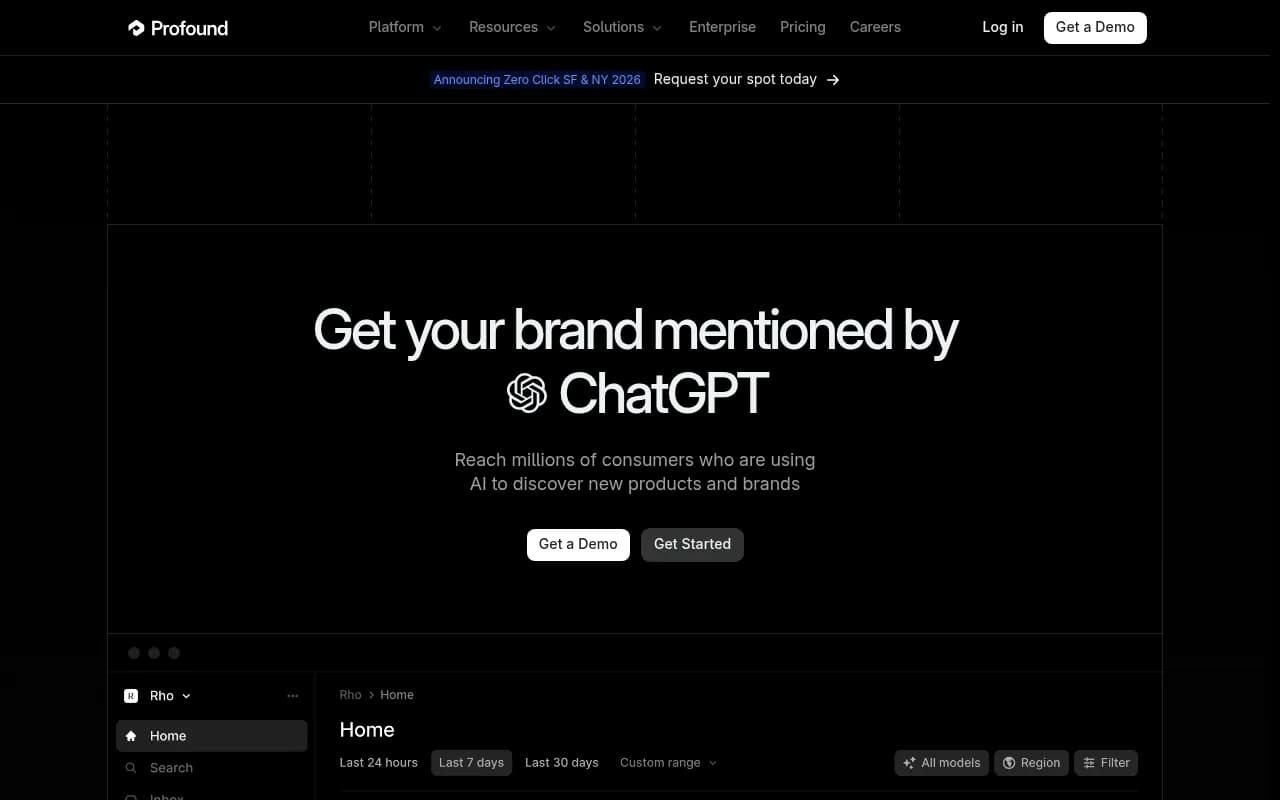
Profound is worth mentioning for enterprise teams that need deep integration and don't mind custom pricing conversations. It's a strong platform with good content generation, but it shares AthenaHQ's gap on Reddit/YouTube and crawler logs.
For teams that are earlier in their GEO journey and mainly need monitoring without the overhead, Otterly.AI and Peec AI are cheaper entry points -- though both are genuinely monitoring-only with no content generation at all.


The "is it worth it" question
At $399/month, AthenaHQ is asking for roughly $4,800/year for the Growth plan. That's not outrageous for a GEO platform -- the category is genuinely valuable and the tooling is real. But the credit limits, the missing features (crawler logs, Reddit tracking, attribution), and the opacity around higher-tier pricing make it hard to recommend without caveats.
The clearest case for AthenaHQ is a brand that's already evaluated the alternatives, specifically needs the sentiment/framing analysis, and has a content team that can act on gap data independently. In that narrow scenario, the monitoring quality is good enough to justify the cost.
For most teams, though, the math favors platforms that close more of the loop at a lower starting price. Spending $399/month to know where you're invisible, then needing additional tools to actually fix it, adds up fast.
What to look for before signing up
A few things worth checking before committing to any plan:
- Ask specifically how credits are consumed and what happens when you hit the limit mid-month.
- Request a demo that shows the content generation workflow end-to-end, not just the monitoring dashboard.
- Ask whether AI crawler logs are on the roadmap and when.
- Get clarity on which AI models are covered at your specific tier -- "8+ models" can mean different things depending on how queries are routed.
- If you're an agency, push for transparent multi-client pricing before getting deep into a sales process.
The GEO space is moving fast. Platforms that were ahead six months ago have been caught by competitors shipping faster. Whatever you choose, make sure the vendor has a clear roadmap and is adding features at a pace that matches how quickly AI search itself is evolving.
Bottom line
AthenaHQ is a legitimate platform doing real work in a real category. The monitoring is solid, the competitor benchmarking is useful, and the sentiment analysis is a genuine differentiator. But the pricing structure -- credits, opaque higher tiers, and a feature set that stops short of the full optimization loop -- means you need to go in with clear eyes about what you're buying.
If your primary need is monitoring and benchmarking, and you have a team that can independently act on the data, AthenaHQ is worth evaluating seriously. If you need the full cycle from gap identification to content creation to crawler tracking to revenue attribution, the platform's current ceiling will frustrate you before long.
The good news is that the alternatives have gotten genuinely strong in 2026. You don't have to settle for monitoring-only or overpay for features you can get elsewhere.