Key takeaways
- AI visibility measures how often your brand is cited or mentioned in AI-generated answers. AI traffic measures how many people actually click through to your site from those answers.
- You can have high visibility with almost no traffic (AI mentions you but doesn't link to you), or traffic without visibility (direct AI referrals that bypass citations entirely).
- AI search traffic converts at roughly 14x the rate of traditional Google organic traffic, according to Exposure Ninja's 2026 data, making even small volumes of AI traffic commercially significant.
- Most marketing teams are only tracking one of the two, which means they're making decisions with half the picture.
- The right strategy in 2026 is to build visibility first, then optimize the content and citation structure to convert that visibility into measurable traffic.
There's a conversation happening in marketing teams right now that goes something like this: "We're getting mentioned in ChatGPT answers, but I can't see any traffic from it in GA4. Is this actually doing anything?"
It's a fair question, and the confusion is understandable. AI visibility and AI traffic are related, but they're not the same thing. Conflating them leads to bad decisions, whether that's dismissing AI search as irrelevant because you can't see traffic, or over-investing in visibility metrics that never translate to business outcomes.
This guide breaks down what each concept actually means, where they overlap, where they diverge, and how to build a strategy that captures both.
What AI visibility actually means
AI visibility is the measure of how often your brand, content, or website appears in responses generated by AI-powered search engines and assistants. That includes ChatGPT, Perplexity, Google AI Overviews, Google AI Mode, Claude, Gemini, Grok, DeepSeek, Copilot, and Meta AI.
When a user asks Perplexity "what's the best project management tool for remote teams?" and your product appears in the answer, that's AI visibility. When ChatGPT recommends your brand in a comparison, that's AI visibility. When Google AI Overviews cites your blog post as a source, that's AI visibility.
The key metrics for AI visibility are:
- Citation rate: how often your content is cited as a source
- Mention frequency: how often your brand name appears in responses (even without a direct link)
- Response position: whether you appear early or late in an AI-generated answer
- Share of voice: your mentions compared to competitors across a given set of prompts
Unlike traditional SEO, where ranking position 1 vs. position 5 is a clear, measurable difference, AI visibility is fuzzier. An AI might mention your brand positively, neutrally, or in a list of five alternatives. It might cite your page or just paraphrase it without attribution. The nuance matters.
What AI traffic actually means
AI traffic is simpler to define: it's the sessions that arrive at your website from AI search engines. In practice, this means referral traffic from sources like perplexity.ai, chatgpt.com, claude.ai, or traffic attributed to Google AI Overviews through Search Console.
AI traffic is a downstream consequence of visibility, but it's not automatic. An AI engine can mention your brand without linking to you. It can summarize your content without sending anyone to read it. It can recommend your product without giving users a reason to click.
This is the core tension: visibility is about being known by AI systems, traffic is about being chosen by the users those systems serve.
Why they diverge (and why that matters)
Here's where it gets interesting. There are four distinct scenarios a brand can find itself in:
High visibility, low traffic. The AI mentions you frequently but rarely links to your pages. This happens when your brand is well-known enough to be referenced by name, but your content isn't being cited as a source. You're getting brand awareness without the click. Common for large, established brands that AI models have absorbed into their training data.
Low visibility, some traffic. Your brand isn't mentioned much in AI answers, but when it is, users do click through. This often happens with niche or technical content where AI models cite specific pages because they're the only authoritative source on a topic.
High visibility, high traffic. The ideal state. Your content is cited, your brand is recommended, and users follow through to your site. This requires both strong content and a citation structure that gives users a reason to click.
Low visibility, low traffic. You're essentially invisible to AI search. This is where most brands were in 2024, and where a surprising number still are in 2026.
Understanding which scenario you're in changes what you should do next. If you're in the first bucket, the problem isn't awareness, it's content structure and citation optimization. If you're in the second, you need to scale what's already working. If you're in the fourth, you need to start from scratch on AI-oriented content.
The conversion rate gap that makes AI traffic disproportionately valuable
Here's a number worth sitting with: AI search traffic converts at 14.2%, compared to Google organic's 2.8%, according to Exposure Ninja's 2026 research. That's roughly five times more valuable per session.
Why? Because when someone asks an AI a specific question and follows a citation to your site, they've already been pre-qualified. The AI has answered their question and pointed to you as the source or solution. They're not browsing. They're arriving with intent.
This means even modest AI traffic volumes can have real commercial impact. A brand getting 500 AI-referred sessions per month at a 14% conversion rate is outperforming a brand getting 5,000 traditional organic sessions at 2.8%. The math changes the priority calculus entirely.
How AI visibility translates (or doesn't) into traffic
The path from visibility to traffic has several potential breakpoints.
The citation link problem. Not all AI citations include clickable links. ChatGPT's web-browsing responses often cite sources with links, but its base responses frequently mention brands without any URL. Perplexity is more consistent about linking, which is one reason it tends to drive more measurable referral traffic than other AI engines.
The answer completeness problem. If an AI gives a thorough, complete answer, users have less reason to click through. This is the zero-click problem that traditional SEO has been dealing with for years, now amplified. The implication: content that answers part of a question well, while signaling there's more depth on your site, tends to drive more traffic than content that tries to be exhaustive.
The brand mention vs. citation distinction. An AI saying "brands like HubSpot, Salesforce, and [your brand] offer this feature" is a mention. An AI saying "according to [your brand]'s research..." with a link is a citation. Citations drive traffic. Mentions build awareness. Both matter, but they serve different goals.
The model behavior variation. Different AI engines have different citation behaviors. Perplexity cites aggressively. Google AI Overviews cite selectively. ChatGPT's behavior varies by query type. Tracking visibility across models without understanding their different citation patterns leads to misleading conclusions.
Why most teams are measuring this wrong
The most common mistake is treating AI visibility as a vanity metric and AI traffic as the only thing that counts. This misses the brand-building dimension of visibility entirely.
When an AI recommends your brand in a response, even without a link, that's an impression. The user sees your name in a context of authority and relevance. Over time, repeated exposure in AI answers builds the kind of brand familiarity that influences purchase decisions, even when the user doesn't click through immediately. This is the same dynamic that made TV advertising valuable before digital attribution existed.
The opposite mistake is tracking visibility without ever connecting it to downstream outcomes. Visibility scores that never translate to traffic, leads, or revenue are a signal that something is broken in the chain, whether that's content structure, citation quality, or the prompts you're targeting.
The right approach is to track both, understand the relationship between them, and optimize the conversion from one to the other.
What actually drives AI visibility in 2026
AI engines don't cite randomly. They cite sources that meet a set of implicit criteria:
- The content directly and specifically answers the question being asked
- The source is perceived as authoritative (based on backlinks, brand signals, and how often the source is cited by other sources)
- The content is structured in a way that's easy for AI models to parse and excerpt
- The page has been crawled by AI agents recently enough to be current
The authority piece is worth emphasizing. In 2026, being the source that other people cite is what builds AI authority. If your research, data, or frameworks are referenced by other sites, Reddit threads, YouTube videos, and industry publications, AI models pick that up. It's not just about your own content quality.
What actually drives AI traffic in 2026
Given that visibility doesn't automatically produce traffic, what does?
Perplexity and citation-heavy models. Perplexity is currently the most reliable driver of AI referral traffic because it consistently links to sources. Optimizing for Perplexity citation is one of the most direct paths to measurable AI traffic.
Specific, query-matched content. Content that matches the exact phrasing and intent of prompts users are actually asking tends to get cited with links. Vague, general content gets mentioned without attribution.
Content that invites further reading. Pages that provide a clear answer but also signal depth (through internal links, data tables, or explicit "read more" prompts) give users a reason to click through even when the AI has summarized the key point.
Schema markup and structured data. AI models and their citation systems favor pages with clear structure. FAQ schema, how-to schema, and article schema all help AI systems understand what your content is about and how to attribute it.
How to track both metrics properly
Tracking AI visibility requires a different toolset than traditional SEO. You can't see your AI citation rate in Google Search Console. You need tools that actually query AI engines and monitor responses.
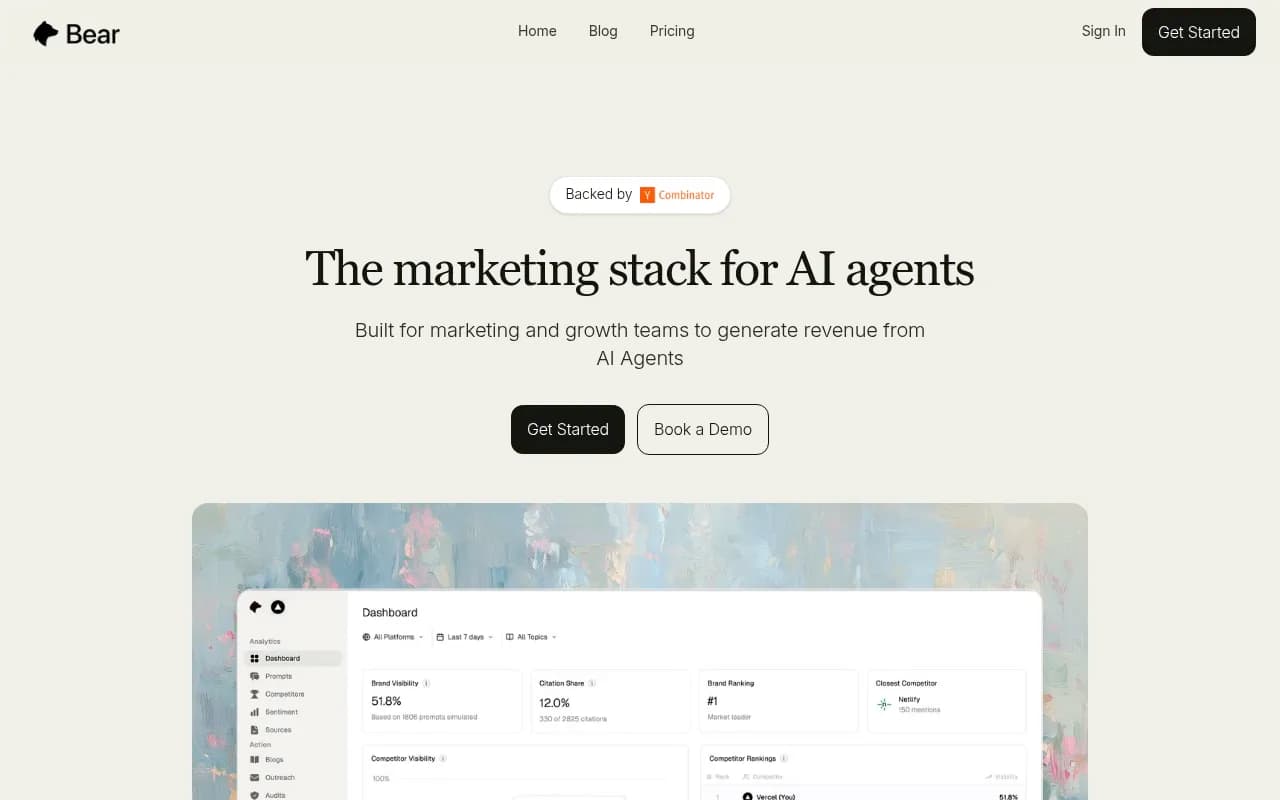
Promptwatch is one of the more complete options here because it tracks both sides of the equation: visibility (citation rates, mention frequency, share of voice across 10 AI models) and traffic (AI crawler logs, page-level citation tracking, and traffic attribution that connects AI visibility to actual revenue). The distinction matters because most tools only do one or the other.

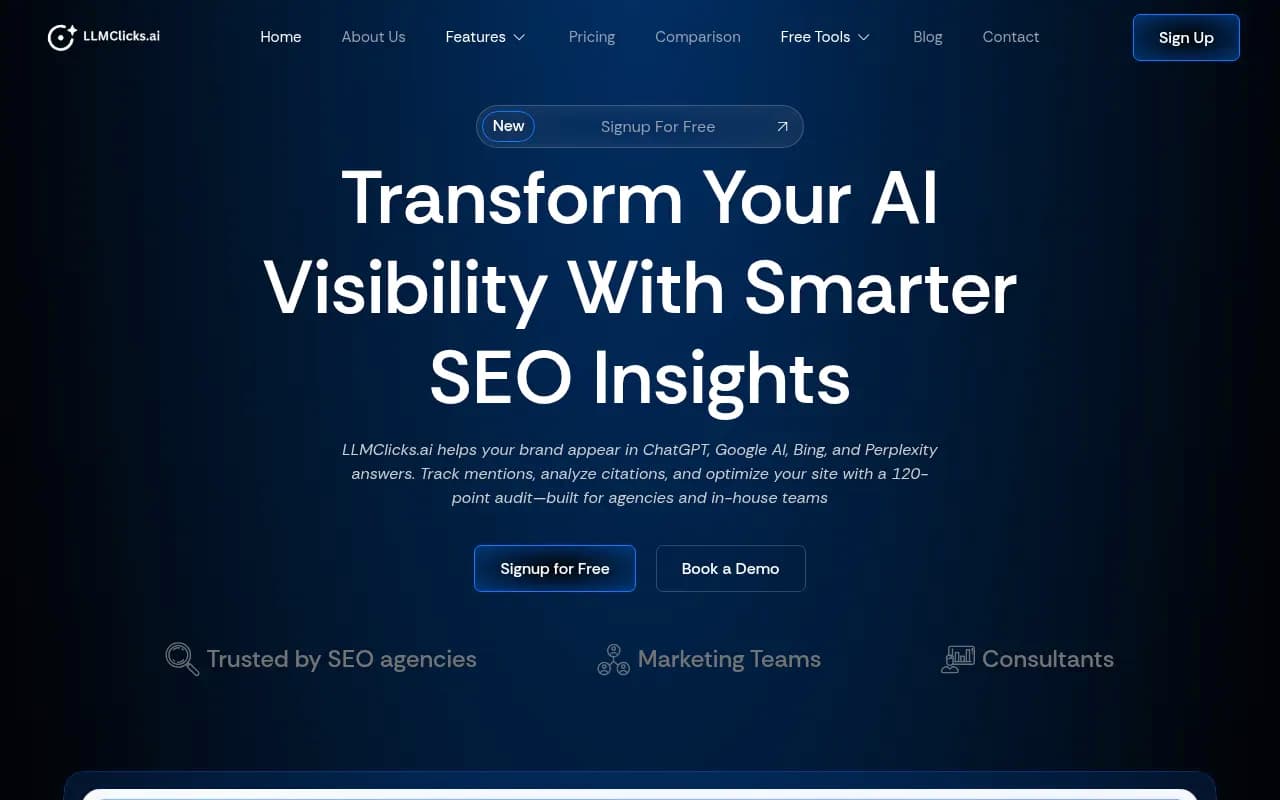
For teams that want to start with visibility monitoring before investing in a full platform, there are several more focused options:



For AI traffic specifically, the starting point is your existing analytics. In GA4, look for referral traffic from perplexity.ai, chatgpt.com, claude.ai, and you.com. Google Search Console now shows some AI Overview data. But these sources are incomplete, particularly for ChatGPT, which doesn't always pass referrer data cleanly.
More complete AI traffic attribution requires either server-side tracking or a dedicated tool that can match AI crawler activity to subsequent user sessions.
A practical framework for 2026
Here's how to think about building an AI search strategy that captures both visibility and traffic:
Step 1: Establish your baseline
Before optimizing anything, know where you stand. Run a set of prompts relevant to your category through the major AI engines and record whether your brand appears, how it's described, and whether your pages are cited with links. Do this for your top 20-30 most important queries.
Step 2: Identify the gap between visibility and traffic
Cross-reference your visibility data with your referral traffic data. If you're being cited but not getting traffic, the problem is in the citation structure. If you're not being cited at all, the problem is in content coverage and authority.
Step 3: Fix content coverage first
AI engines can only cite content that exists and answers the question being asked. Run an answer gap analysis to find the prompts where competitors are being cited but you aren't. These gaps represent specific content you need to create.
Step 4: Optimize for citation with links
Once you have the content, structure it for citation. This means:
- Clear, direct answers early in the page
- Specific data, statistics, or frameworks that AI models want to reference
- Proper schema markup
- Internal links that signal depth
- External citations that build your own authority
Step 5: Track the full funnel
Measure visibility scores, citation rates, AI referral traffic, and conversion rates from AI traffic separately. Watch how they move together over time. A visibility improvement that doesn't eventually produce traffic improvement is a signal to investigate, not celebrate.
The comparison table: AI visibility vs. AI traffic
| Dimension | AI visibility | AI traffic |
|---|---|---|
| What it measures | Citations, mentions, share of voice in AI answers | Sessions arriving from AI search engines |
| Where you track it | AI visibility platforms, prompt monitoring tools | GA4 referrals, Search Console, attribution tools |
| Time to see results | Weeks to months after content changes | Days to weeks after citation appears |
| Business impact | Brand awareness, consideration, authority | Direct leads, conversions, revenue |
| Main risk if ignored | Competitors own the AI narrative for your category | Missing a high-converting traffic channel |
| Optimization lever | Content quality, authority signals, prompt coverage | Citation structure, link inclusion, page depth |
The LinkedIn post that captures the shift
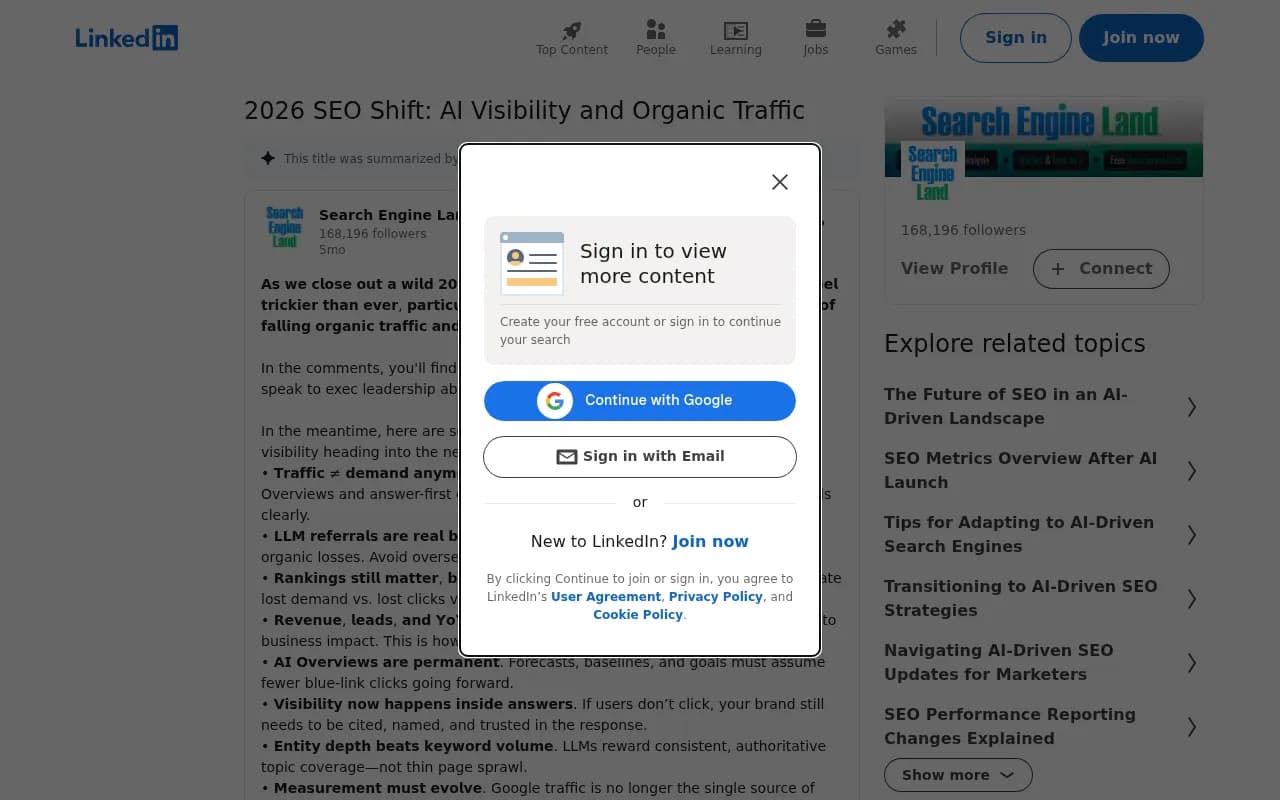
Search Engine Land put it plainly in a 2026 post: "You're no longer optimizing just for clicks. You're being evaluated." That's the mental model shift. Traditional SEO was about ranking. AI search is about being trusted enough to be recommended. The click is a consequence of trust, not the primary goal.
The bottom line
AI visibility and AI traffic are not interchangeable metrics. Visibility is a leading indicator of brand authority in AI search. Traffic is the downstream outcome that connects that authority to business results. You need both, and you need to understand the relationship between them.
The brands winning in AI search in 2026 are not the ones with the highest domain authority or the most backlinks. They're the ones who understand what prompts their customers are asking, have content that answers those prompts specifically, and have built enough authority that AI engines trust them as a source worth citing and linking to.
That's a content and authority problem, not a technical SEO problem. And it requires a different set of tools, metrics, and strategies than most marketing teams have built so far.