Summary
- B2B AI visibility focuses on thought leadership, long-tail technical queries, and building authority in niche topics—tracking must prioritize citation quality over volume
- B2C AI visibility emphasizes product recommendations, transactional queries, and brand mentions in shopping contexts—tracking centers on conversion-driving prompts
- Both strategies share core principles (structured data, citation-worthy content, crawler access) but differ dramatically in content focus, platform priorities, and success metrics
- B2B brands should track LinkedIn visibility, technical documentation citations, and comparison page performance; B2C brands need ChatGPT Shopping monitoring, product recommendation tracking, and review aggregation visibility
- The right tracking platform depends on your business model: B2B needs deeper persona customization and competitor positioning analysis; B2C requires real-time product mention alerts and shopping carousel tracking
The fundamental split: How B2B and B2C brands show up in AI search
AI search engines don't treat all brands the same. When someone asks ChatGPT "What's the best marketing automation platform for enterprise SaaS companies?" versus "What's the best running shoe for marathon training?", the AI pulls from completely different content types, citation sources, and recommendation patterns.
B2B brands appear in AI responses through:
- Technical documentation and implementation guides
- Thought leadership content from executives and subject matter experts
- Comparison pages and "vs" content that positions solutions against competitors
- Case studies and ROI calculators that demonstrate business value
- Industry reports and research that establish authority
B2C brands appear through:
- Product reviews and user-generated content aggregated from Reddit, YouTube, and review sites
- Shopping recommendations in ChatGPT's shopping carousel and product cards
- Lifestyle content, how-to guides, and use-case demonstrations
- Price comparison data and availability information
- Brand mentions in influencer content and social discussions
The tracking strategy has to match where your brand actually lives in the AI citation ecosystem.
Why B2B tracking requires a different lens
B2B AI visibility isn't about volume—it's about precision. A single citation in response to "best enterprise data warehouse solutions" from a CTO researching vendors carries more weight than 50 mentions in generic "top software tools" listicles.
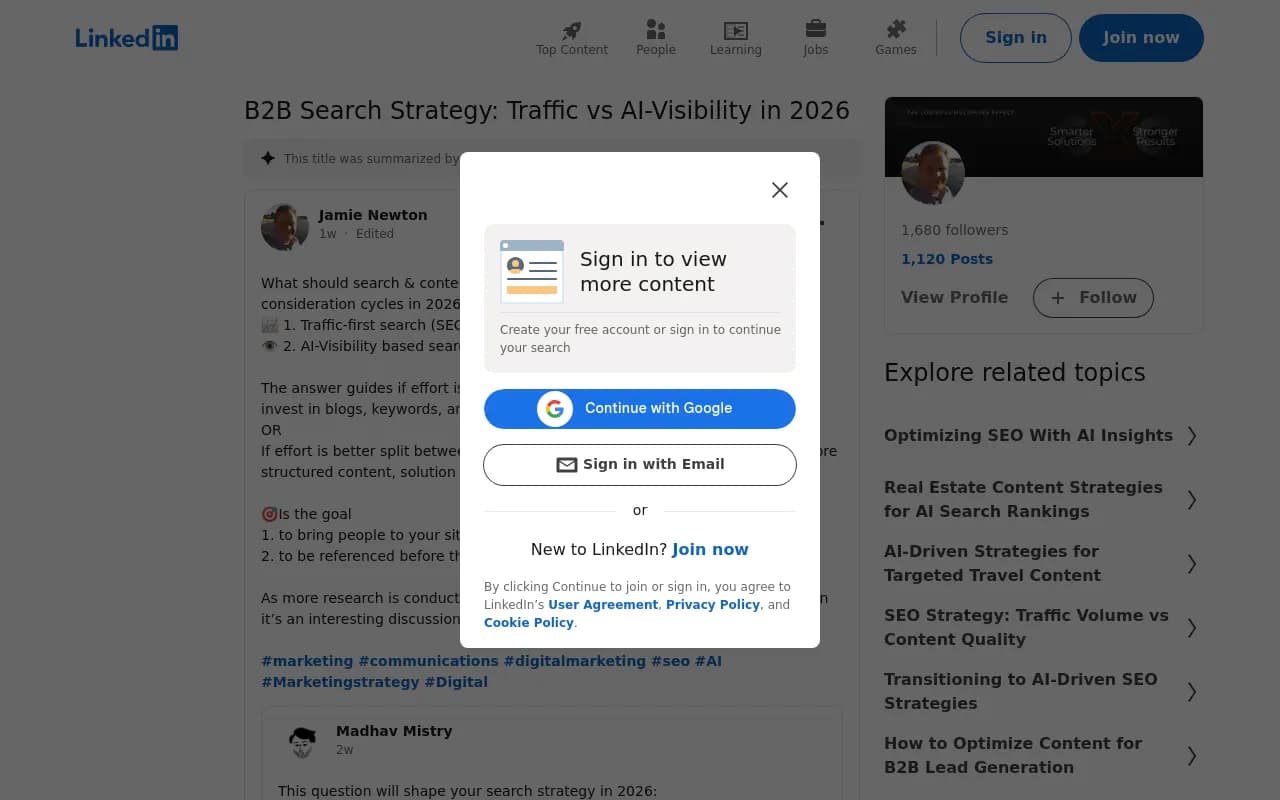
Jamie Newton's analysis of B2B search strategy in 2026 frames it clearly: AI visibility for B2B is reputation work. You're earning mindshare before the query even finishes. The brands dominating the next decade won't chase every prompt—they'll own the specific prompts that matter to their ICP.
What B2B brands should track
Long-tail technical queries: Track prompts like "how to implement SSO with SAML for enterprise SaaS" or "data warehouse migration strategy for 100TB datasets". These aren't high-volume searches, but they're exactly what your buyers ask.
Competitor positioning: Monitor every "[Your Brand] vs [Competitor]" and "[Your Brand] alternative" prompt. B2B buyers research alternatives obsessively. If you're not cited in these comparisons, you're invisible during the consideration phase.
Thought leadership citations: Track whether AI models cite your executives, whitepapers, and research reports when answering industry questions. A citation from your CEO's LinkedIn post or your annual industry report signals authority.
Documentation and implementation content: AI models love citing official documentation, API references, and setup guides when answering technical questions. Track whether your docs appear in responses to "how to" queries.
LinkedIn visibility: B2B decision-makers use LinkedIn heavily. Track whether your company page, executive profiles, and employee content appear when AI models answer questions about your industry or solution category.
Platform priorities for B2B
B2B tracking should emphasize:
- Perplexity: Heavily used by technical audiences and researchers
- Claude: Popular among developers and technical decision-makers
- ChatGPT: Broad reach, but focus on GPT-4 responses (free tier users aren't your buyers)
- Google AI Overviews: Still matters for initial research queries
- LinkedIn AI features: As LinkedIn integrates more AI, track visibility there
Promptwatch offers the persona customization B2B brands need—you can track how AI models respond to prompts from different job titles, company sizes, and industries. This matters because "best CRM for startups" and "best CRM for enterprise" trigger completely different citation patterns.

Success metrics for B2B
B2B tracking should measure:
- Citation quality score: Not just volume, but authority of sources cited alongside you
- Competitor displacement rate: How often you appear instead of competitors in comparison queries
- Technical content visibility: Percentage of implementation/how-to queries where your docs are cited
- Thought leadership reach: Citations of executive content, research, and original data
- Conversion-adjacent prompts: Visibility in late-stage queries like "[solution] pricing" or "[solution] implementation timeline"
Why B2C tracking demands speed and volume
B2C AI visibility is a numbers game. When someone asks "best wireless earbuds under $100", they're not reading whitepapers—they want a quick recommendation they can buy now. The AI model pulls from product reviews, Reddit threads, YouTube unboxings, and shopping data.
B2C brands need to track:
- High-volume transactional queries
- Product recommendation patterns across multiple price points and use cases
- Shopping carousel and product card appearances
- Review aggregation and sentiment
- Seasonal and trending query visibility
What B2C brands should track
Product recommendation prompts: Track every "best [product category]" and "[product category] for [use case]" query. These drive purchase decisions. If you're not in the AI's top 3-5 recommendations, you're losing sales.
ChatGPT Shopping visibility: ChatGPT now shows product cards and shopping carousels in responses. Track when your products appear, at what price points, and with what descriptions.
Reddit and YouTube citations: AI models cite Reddit threads and YouTube reviews heavily for product recommendations. Track which discussions mention your brand and whether the sentiment is positive.
Review aggregation: Monitor whether AI models surface your product reviews from Amazon, Trustpilot, or other platforms when answering product queries.
Seasonal and trending queries: B2C search patterns shift fast. Track visibility for "best gifts for [occasion]" or "[trending product category]" as these queries spike.
Platform priorities for B2C
B2C tracking should emphasize:
- ChatGPT: Dominant for shopping and product research
- Google AI Overviews: High visibility for product searches
- Perplexity: Growing for research-heavy purchases (electronics, appliances)
- Meta AI: Integrated into Instagram and Facebook, where product discovery happens
- Shopping-specific AI: Track Amazon's Rufus and other retail AI assistants
Success metrics for B2C
B2C tracking should measure:
- Recommendation frequency: How often your product appears in top 5 recommendations
- Shopping carousel appearances: Visibility in ChatGPT Shopping and other product cards
- Price point coverage: Whether you appear across budget, mid-range, and premium queries
- Review sentiment in citations: Positive vs negative mentions in AI responses
- Conversion rate from AI referrals: Actual sales driven by AI search traffic (requires proper attribution)
Where B2B and B2C strategies overlap
Despite the differences, both B2B and B2C brands need the same technical foundation:
Structured data and schema markup
AI models parse structured data to understand your content. Both B2B and B2C sites need:
- Organization schema with clear brand information
- Product schema (B2C) or SoftwareApplication schema (B2B SaaS)
- FAQ schema for common questions
- Review/Rating schema where applicable
- BreadcrumbList for site structure
AI crawler access
AI models can't cite content they can't access. Both need:
- robots.txt configured to allow AI crawlers (GPTBot, Claude-Web, PerplexityBot, etc.)
- Fast page load times (AI crawlers are impatient)
- Mobile-friendly, accessible content
- No aggressive rate limiting that blocks AI crawlers
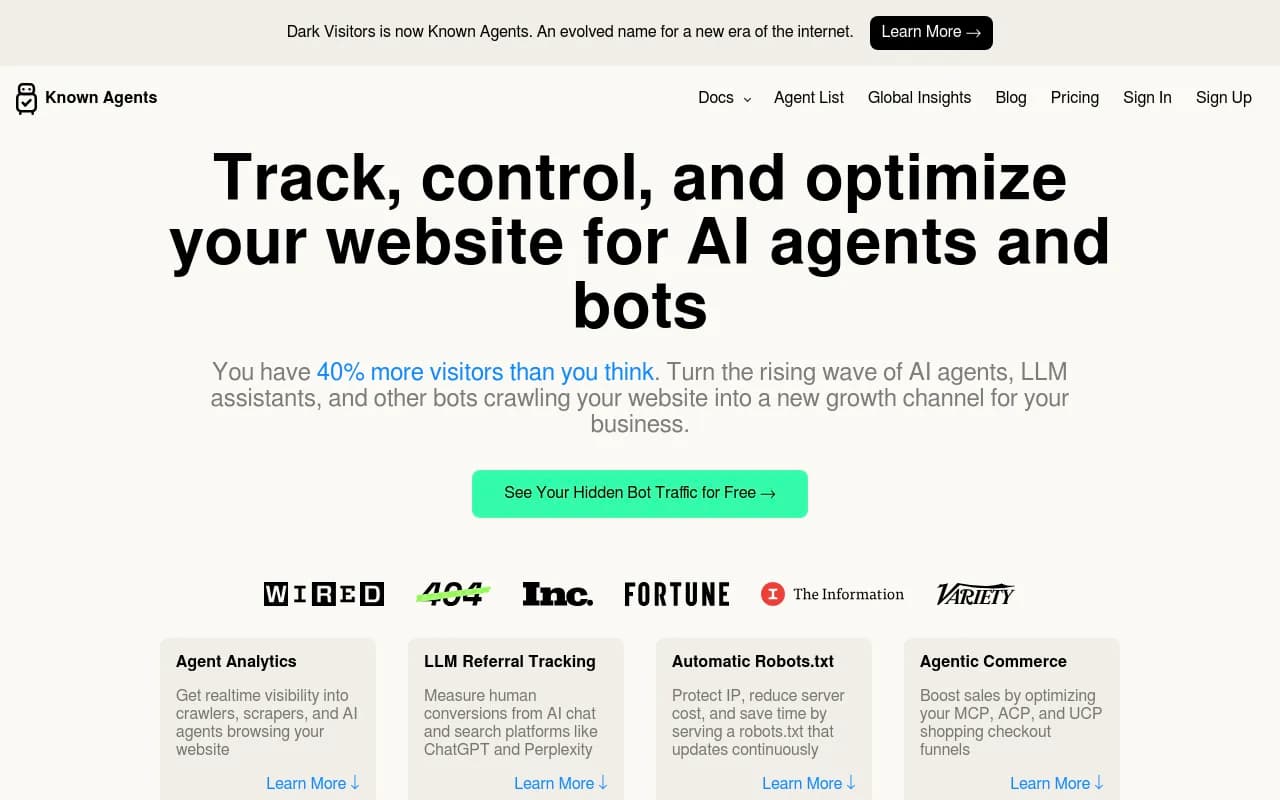
Tools like DarkVisitors help you track which AI crawlers are accessing your site and identify access issues.
Citation-worthy content format
AI models prefer content that's:
- Clearly structured with headings and lists
- Factual and specific (not marketing fluff)
- Up-to-date (2026 content beats 2023 content)
- Comprehensive without being bloated
- Properly attributed (cite your sources, AI models notice)
Comparison and alternative pages
Both B2B and B2C brands need "vs" and "alternative" pages. When someone asks "Salesforce vs HubSpot" or "iPhone vs Samsung Galaxy", AI models pull from comparison content. If you don't have these pages, competitors control the narrative.
The tools that actually work for each strategy
Not all AI visibility platforms are built for both B2B and B2C. Here's what matters:
For B2B brands
B2B needs deeper customization and competitor analysis:
Promptwatch: Best for B2B because of persona-based tracking (track how different job titles and company sizes see your brand), competitor heatmaps, and content gap analysis. The platform shows exactly which prompts competitors rank for but you don't—critical for B2B where missing one key comparison query costs you deals.
Profound: Strong competitor positioning features and thought leadership tracking. Good for B2B brands that need to monitor executive visibility.

AthenaHQ: Tracks 8+ AI engines with good B2B-focused prompt libraries. Lacks content generation but solid for monitoring.

For B2C brands
B2C needs speed, volume, and shopping-specific tracking:
Promptwatch: ChatGPT Shopping tracking is critical for B2C. The platform monitors when your products appear in shopping carousels and product cards, plus Reddit/YouTube citation tracking.
Otterly.AI: Affordable monitoring for B2C brands that need to track product mentions across multiple AI platforms without breaking the budget.

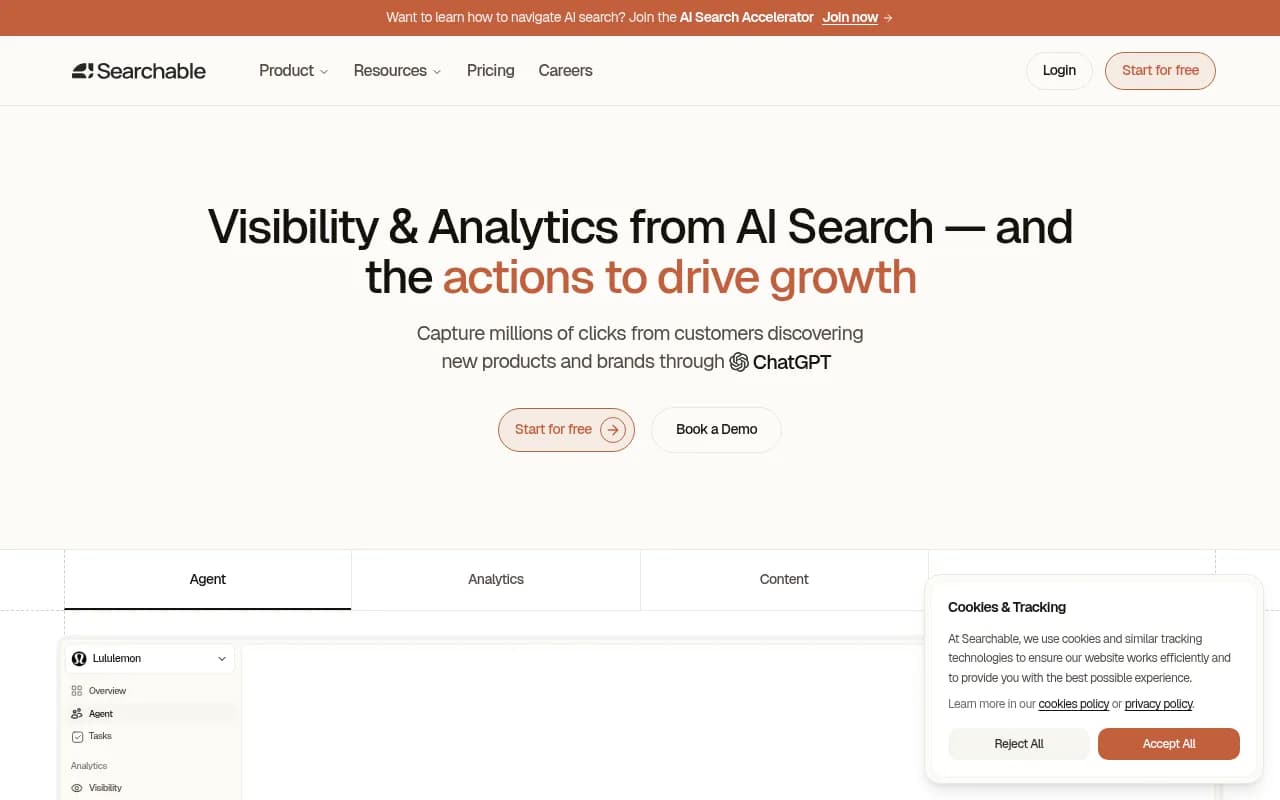
Searchable: Good for B2C brands that need both monitoring and content tools. Includes product recommendation optimization.
For both B2B and B2C
Semrush One: Unified platform that tracks both traditional SEO and AI visibility. Good for brands that need one tool for everything, though AI features are less specialized than dedicated platforms.
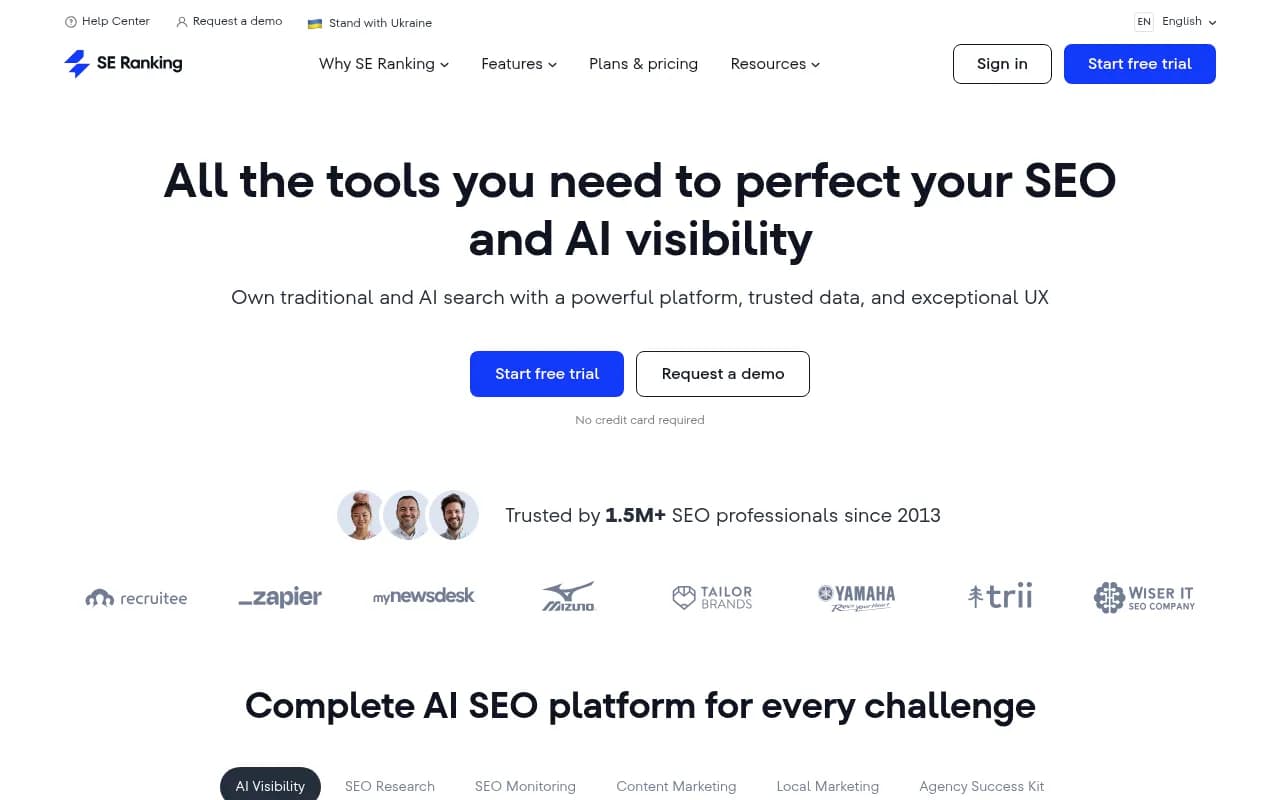
SE Ranking: All-in-one SEO platform with AI visibility toolkit. More affordable than Semrush, good for mid-market brands.
Platform comparison: What to track where
| Platform | B2B Priority | B2C Priority | Key Differentiator |
|---|---|---|---|
| ChatGPT | High | Very High | Shopping features, broad reach |
| Perplexity | Very High | Medium | Technical audience, research-heavy |
| Claude | High | Low | Developer/technical users |
| Google AI Overviews | High | Very High | Still dominant for initial searches |
| Gemini | Medium | Medium | Growing but inconsistent |
| Meta AI | Low | High | Instagram/Facebook integration |
| Grok | Low | Low | Limited reach, X/Twitter audience |
| DeepSeek | Medium | Low | Technical/developer audience |
The tracking workflow that works for both
Regardless of B2B or B2C, follow this process:
1. Establish baseline visibility
Run an initial audit across all major AI platforms. Track:
- Brand mention frequency
- Citation sources (which pages/content AI models cite)
- Competitor comparison visibility
- Sentiment (positive, neutral, negative mentions)
- Topic coverage (which queries you appear for)
2. Identify content gaps
Find prompts where competitors appear but you don't. For B2B, focus on technical and comparison queries. For B2C, focus on product recommendation and shopping queries.
Prompwatch's Answer Gap Analysis shows exactly which prompts competitors rank for but you're missing—this is the fastest path to improvement.
3. Create citation-worthy content
B2B: Write technical guides, comparison pages, implementation docs, and thought leadership pieces.
B2C: Create product guides, use-case content, comparison pages, and ensure your product pages have detailed specs and reviews.
AI writing agents like Promptwatch's built-in content generator can speed this up—they're trained on real citation data and know what format AI models prefer.
4. Fix technical barriers
Check AI crawler logs to see if models are accessing your content. Fix:
- robots.txt blocks
- Slow page load times
- Mobile usability issues
- Broken links and 404s
- Missing structured data
5. Track results and iterate
Monitor visibility changes weekly. Look for:
- New citations and mentions
- Improved positioning in recommendations
- Increased AI referral traffic
- Revenue attribution from AI search
Close the loop by connecting visibility improvements to actual business outcomes. Use UTM parameters, server log analysis, or platforms like Cometly to track conversions from AI referrals.
The research that matters: What the data shows
SparkToro's 2026 research on AI brand recommendations found something critical: AI models are highly inconsistent when recommending brands. The same prompt asked multiple times can yield different results. This inconsistency matters more for B2C (where volume and frequency matter) than B2B (where a single authoritative citation carries weight).
For B2C brands, this means you need to track:
- Recommendation frequency (how often you appear across multiple queries)
- Position variance (do you appear in top 3 or buried at position 8?)
- Consistency across AI models (are you visible in ChatGPT but invisible in Perplexity?)
For B2B brands, inconsistency is less critical—if you're cited once in a high-value technical query, that's often enough. But you still need to track whether you're cited at all.
The mistake both B2B and B2C brands make
The biggest error: treating AI visibility like traditional SEO. You can't just optimize for keywords and hope AI models cite you. AI search is fundamentally different:
- Traditional SEO: Optimize for keywords, build backlinks, improve technical performance
- AI visibility: Create content AI models want to cite, ensure crawler access, build authority in specific topics, appear in the right citation sources (Reddit, YouTube, official docs)
B2B and B2C brands both need to shift from "ranking for keywords" to "being cited in AI responses". The tactics differ, but the mindset is the same.
What actually works in 2026
After analyzing hundreds of B2B and B2C brands, the patterns are clear:
B2B winners:
- Own comparison and alternative pages for every competitor
- Publish technical documentation that AI models cite in how-to responses
- Build thought leadership through executive LinkedIn content and original research
- Track competitor positioning obsessively and fill gaps fast
- Focus on citation quality over volume
B2C winners:
- Appear in ChatGPT Shopping carousels and product cards
- Get cited in Reddit threads and YouTube reviews (or create them)
- Cover every price point and use case with dedicated content
- Monitor product recommendation prompts daily and optimize fast
- Track volume and frequency across all AI platforms
Both need:
- AI crawler access and fast page loads
- Structured data and schema markup
- Citation-worthy content format (clear, factual, specific)
- Regular tracking and iteration
- Attribution to connect visibility to revenue
The brands winning in AI search aren't guessing—they're tracking systematically, identifying gaps, creating content that gets cited, and measuring results. The strategy differs between B2B and B2C, but the discipline is the same.
Start with a baseline audit, identify your biggest gaps, and fix them. Whether you're B2B or B2C, the brands that dominate AI search in 2026 are the ones that started tracking in 2025.